

Flaws Tua Tagovailoa and CFB's Biggest Superstars Must Fix This Offseason
The conclusion of the 2018 college football season came much too quickly for diehard fans. With Clemson's win in the national championship game over Alabama, we're left waiting for the recruiting cycle to finish up and then the spring game circuit before FBS football finally returns in late August.
The nation's top returning talent will spend the offseason grinding away in the classroom, weight room and film room as they improve their mental and physical prowess. Even stars such as Alabama's Tua Tagovailoa, Clemson's Trevor Lawrence and Travis Etienne, and Wisconsin's Jonathan Taylor can continue their development as they chase Heisman dreams and NFL futures.
We've identified the biggest flaws of next year's top stars and how they can address them this offseason. Each put together a terrific 2018 campaign, but they can further cement their legacies and standings by shoring up their weaknesses.
Some of their weaknesses are related to physical limitations, while others are a product of usage and team scheme. Taking on a bigger role can help answer questions about the well-roundedness and upside even for current superstars.
Tua Tagovailoa: Arm Strength
1 of 9
There aren't many knocks on Alabama gunslinger Tua Tagovailoa. The athletic quarterback eviscerated defenses throughout 2018, and an ankle injury that later required surgery was the biggest reason for his one bad game against Georgia. His biggest flaw is a physical limitation: average arm strength.
There's no question Tagovailoa has compensated for an arm that no one would confuse with the nation's elite. He was the catalyst for Alabama's transformation from a run-first, pulverizing offense to a high-scoring passing attack that had defenses constantly on their heels.
Tagovailoa possesses elite anticipation, ball placement, decision-making and comfort reading defender leverage. Because of his immense mental gifts and football intelligence, he's overcome an arm best compared to Chad Pennington's.
The zip on his passes is good enough but could certainly improve. As the windows get smaller against top-notch defenses and NFL talent, the margin for error also shrinks. If he can improve the strength in his back, shoulders and quads, it's possible his velocity will increase.
Arm strength is not something that routinely improves, and being too rocked up can cause issues with accuracy (remember Brady Quinn?). However, it may help to increase the power in muscles associated with the passing motion.
Trevor Lawrence: Accuracy Beyond 10 Yards
2 of 9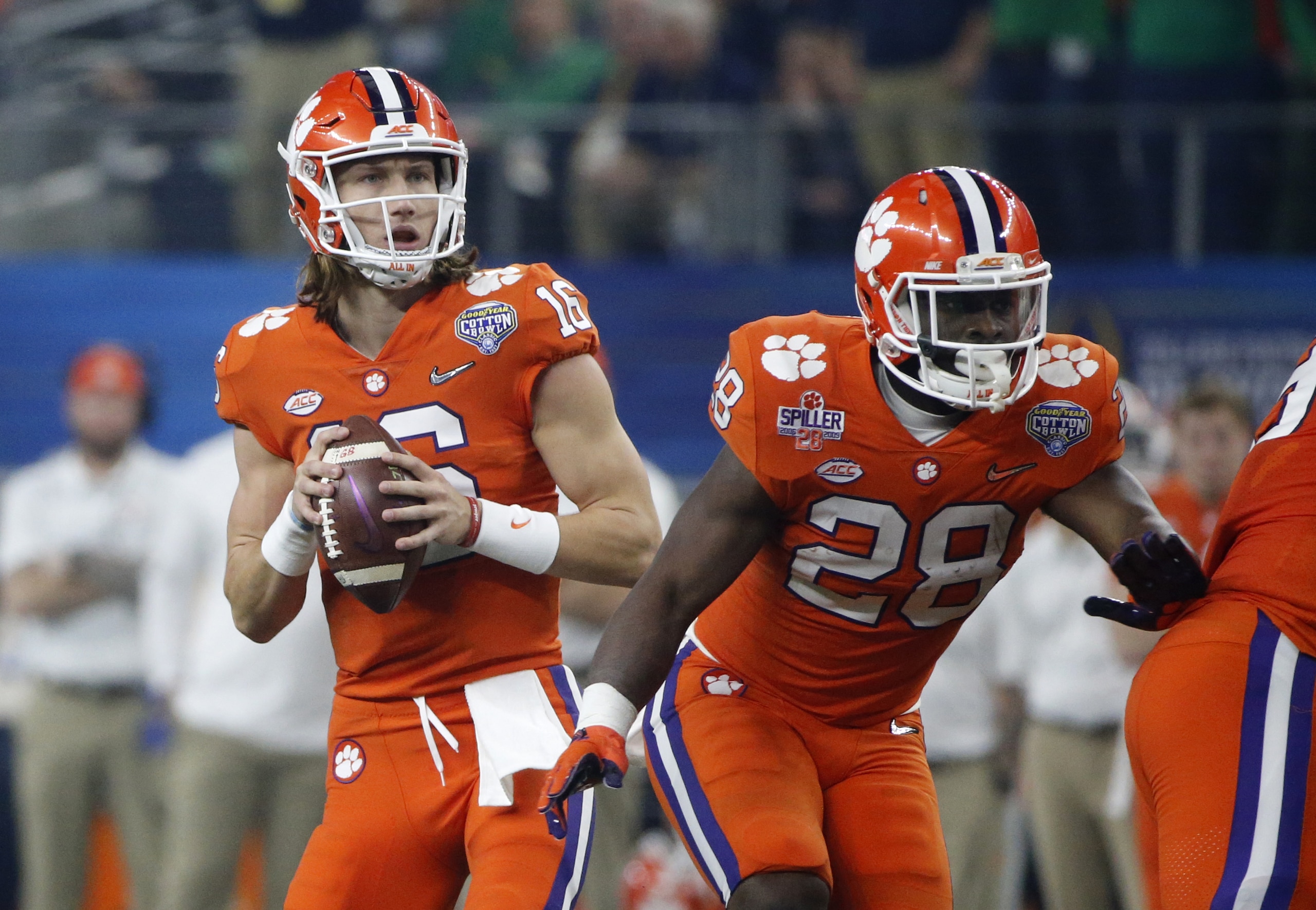
Clemson superstar quarterback Trevor Lawrence is and always has been destined for greatness. The former 5-star gunslinger matched the hype as a freshman, helping his team win the national championship and breaking Deshaun Watson's school freshman touchdown record. He was the catalyst for the offensive turnaround the Tigers needed to beat Alabama and finish 15-0.
For Lawrence to continue his ascent into college football lore, his development will be around the edges. Slight improvements to his game can put him on track to continue making history and be one of the strongest prospects the NFL has seen.
His task in 2019 is to continue sharpening his accuracy beyond 10 yards. His adjusted completion percentage of 57.5 percent, per Pro Football Focus, is an average number compared to quarterbacks drafted who I've also charted since 2013. He compares to Riley Ferguson, Ryan Tannehill and Jimmy Garoppolo in his current range.
Getting over 60 percent would be a big accomplishment for Lawrence. NFL prospects such as Robert Griffin III, Andrew Luck, Josh Rosen, Jared Goff, Dwayne Haskins and Baker Mayfield all crossed that threshold and were all well-regarded because of their accuracy. Considering the embarrassment of riches the Tigers receiving corps possesses, it's a reasonable jump for him to make.
Justin Herbert: Play Under Pressure
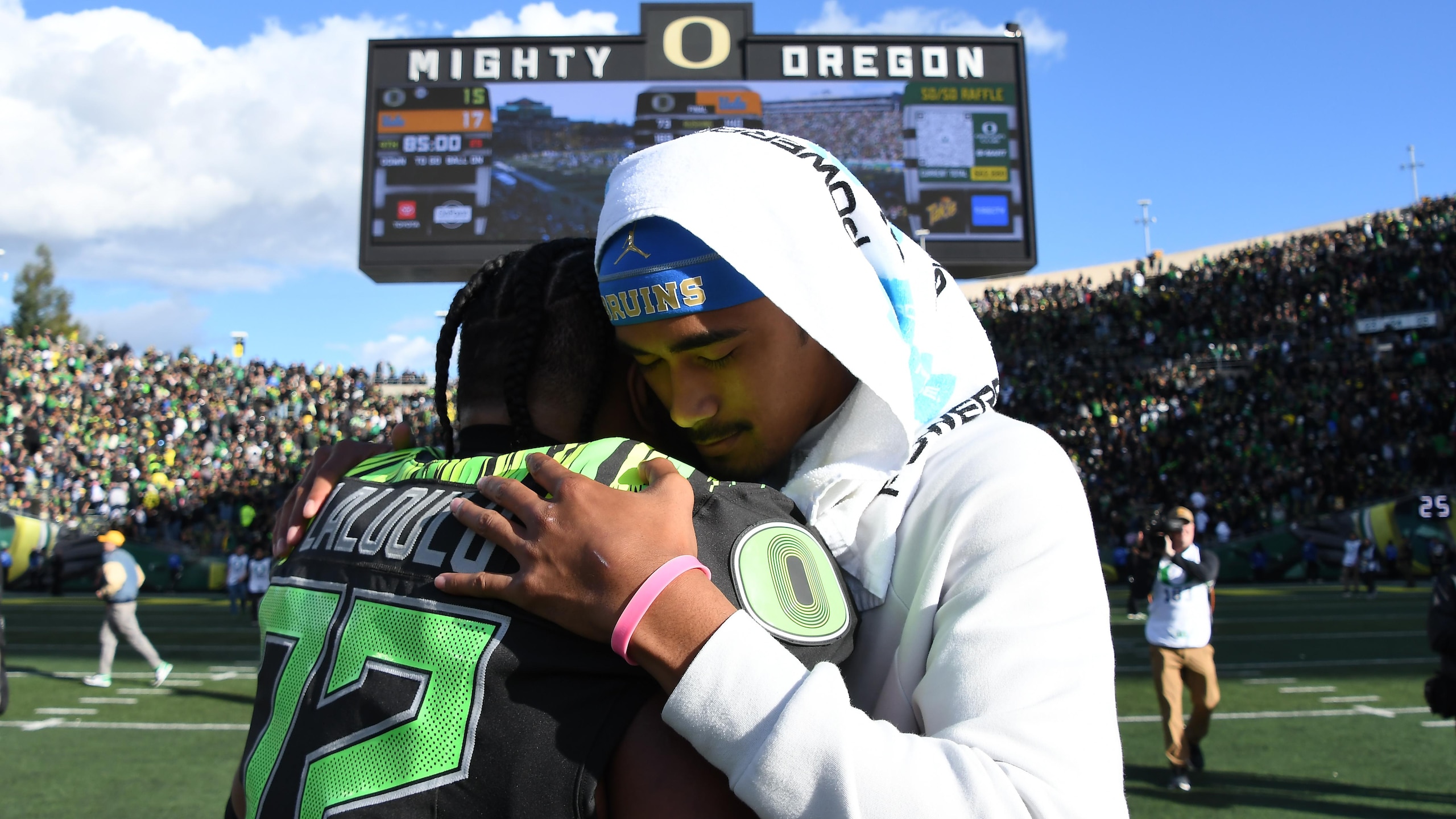
3 of 9
The 2019 Pac-12 outlook became stronger than expected after Oregon quarterback Justin Herbert decided to stay in school for his senior season instead of jump to the NFL. Herbert was penciled in as the No. 1 quarterback prospect prior to the year but never found the same rhythm and knack for playmaking he showed in 2017 as a sophomore.
Herbert's pocket passing is his bread and butter, but even that took a dip in 2018. In charting all of his 2017 and 2018 throws, his adjusted completion percentage dropped 8 percent on throws from 0-10 yards, 2 percent on passes 11-19 yards, 18 percent beyond 20 yards and 4 percent when pressured.
His play under pressure is especially notable. Throwing a catchable ball on just 44 percent of throws while pressured is decidedly poor and must improve for him to help Oregon compete for a conference title and boost his draft stock.
Too often he'll fade away from throws as soon as a rusher starts to come free, and his throws will sail on him. He also threw five interceptions within his 81 pressured attempts. If his poise doesn't improve, the Ducks have no chance in 2019, and his NFL stock will drop.
The good news for Oregon is that it addressed offensive line issues in recruiting and should field a healthier unit overall. Some of his statistics dropped as the offense asked Herbert to throw beyond 10 yards 7 percent more, which is a significant change.
Chase Young: Run Defense
4 of 9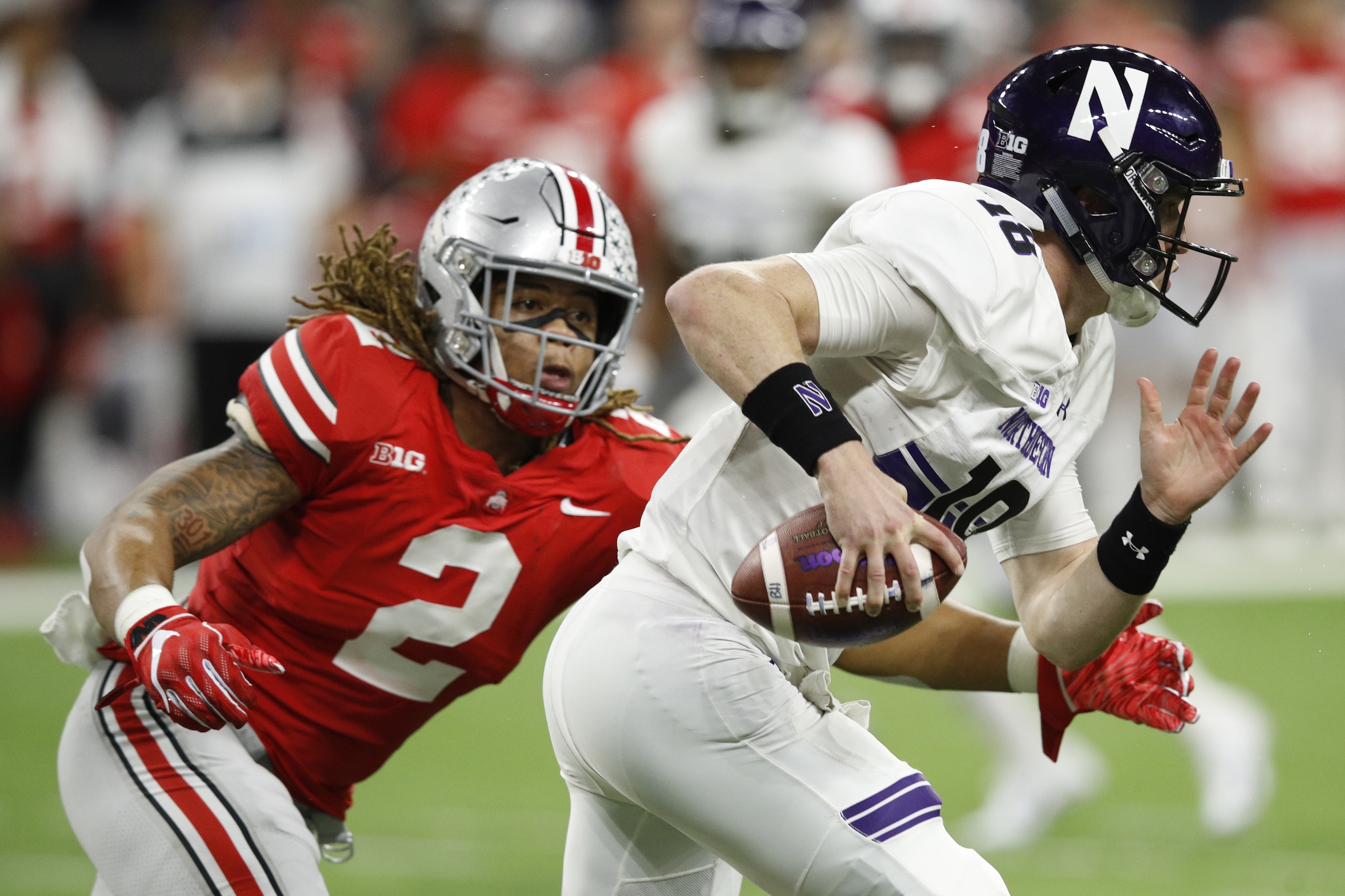
The Ohio State Buckeyes weren't able to secure a College Football Playoff spot the past two seasons but have still produced top-five draft talents. Denzel Ward went fourth overall in 2018, Nick Bosa is a projected top-two pick in 2019 and Dwayne Haskins also should go in the top 10.
The Buckeye most likely to continue the streak in 2019 is defensive end Chase Young.
Young made his presence known even without Bosa in the lineup, showing off elite athleticism, speed and advanced hand usage as a sophomore pass-rusher. He finished the year with 14.5 tackles for loss and 9.5 sacks in 2018 even as teams focused on him.
Young and the rest of the Buckeyes defense struggled to stop the run despite possessing so much talent on the roster and coaching staff. They were far too aggressive individually, and it led to easy big plays for offenses throughout the year.
While Young has the pass-rushing skill and body to land an All-American spot, the defensive unit will benefit from having Young improve his run keys. Being more sound in the run game and holding the edge for crashing linebackers takes discipline and play strength that Young has flashed but not yet mastered.
Grant Delpit: Missed Tackles
5 of 9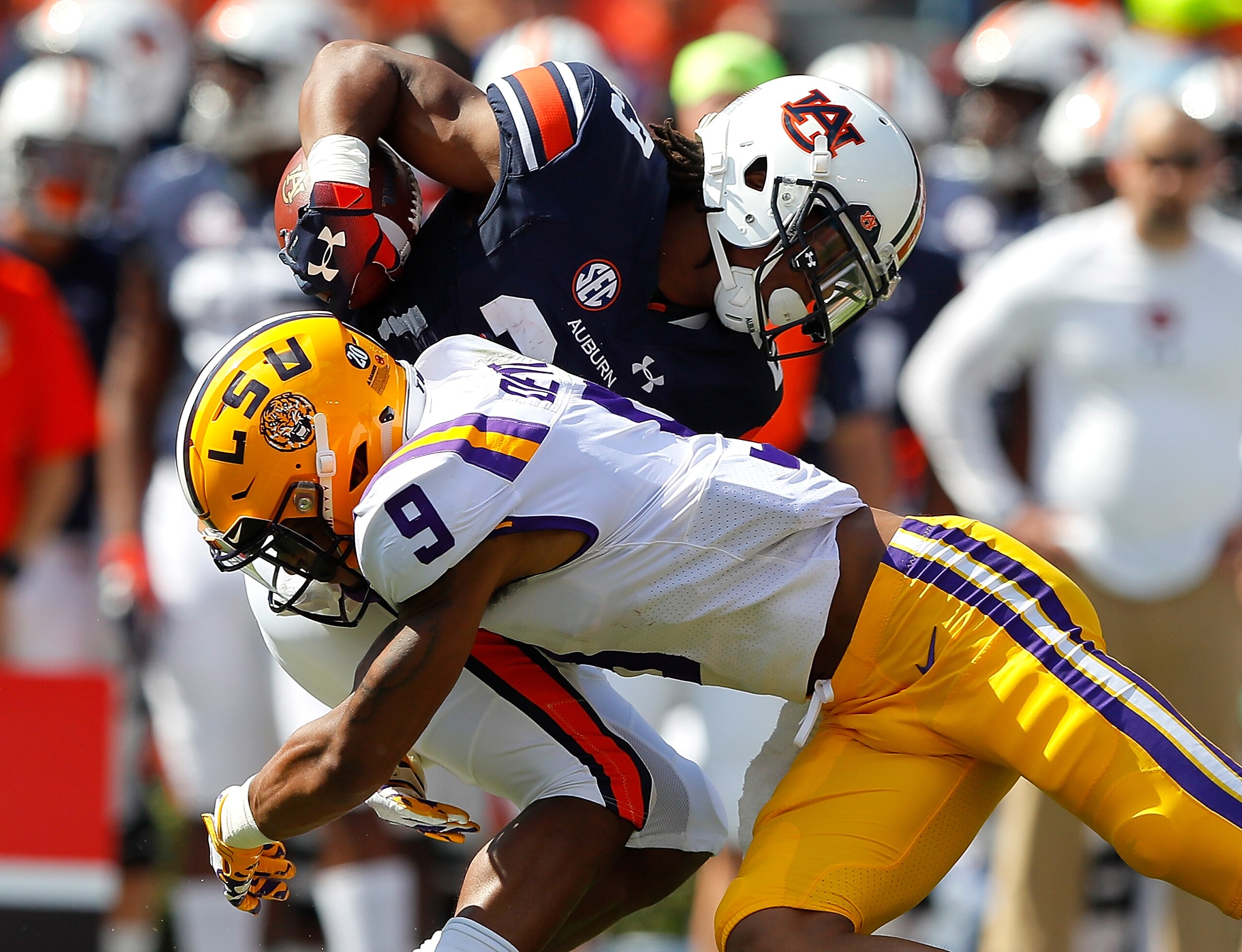
LSU Tigers sophomore safety Grant Delpit asserted himself as the next great defensive back as a freshman in 2017. The 6'3", 203-pound playmaker dazzled with his hard-hitting ability mixed with the speed that allows him to cover tight ends and receivers. He followed his debut season by producing at a historic level, tallying 74 tackles, five interceptions and five sacks.
His 2018 campaign earned him an All-America nod, and he seems destined to be on the team again next season as he leads the Tigers defense in his third year.
The one flaw Delpit can improve upon is finishing his tackles better. His play speed leads to highlight plays and impactful moments, but he can get reckless at times. He finished with the second-most missed tackles on the Tigers with 10 in 2018 and third-most with nine misses in 2017, per CFB Film Room.
Wrapping up, being technically sound and taking the right angles on tackle attempts isn't something that'll make his highlight film, but he could become an all-time collegiate safety with improved efficiency.
Sam Ehlinger: Anticipation
6 of 9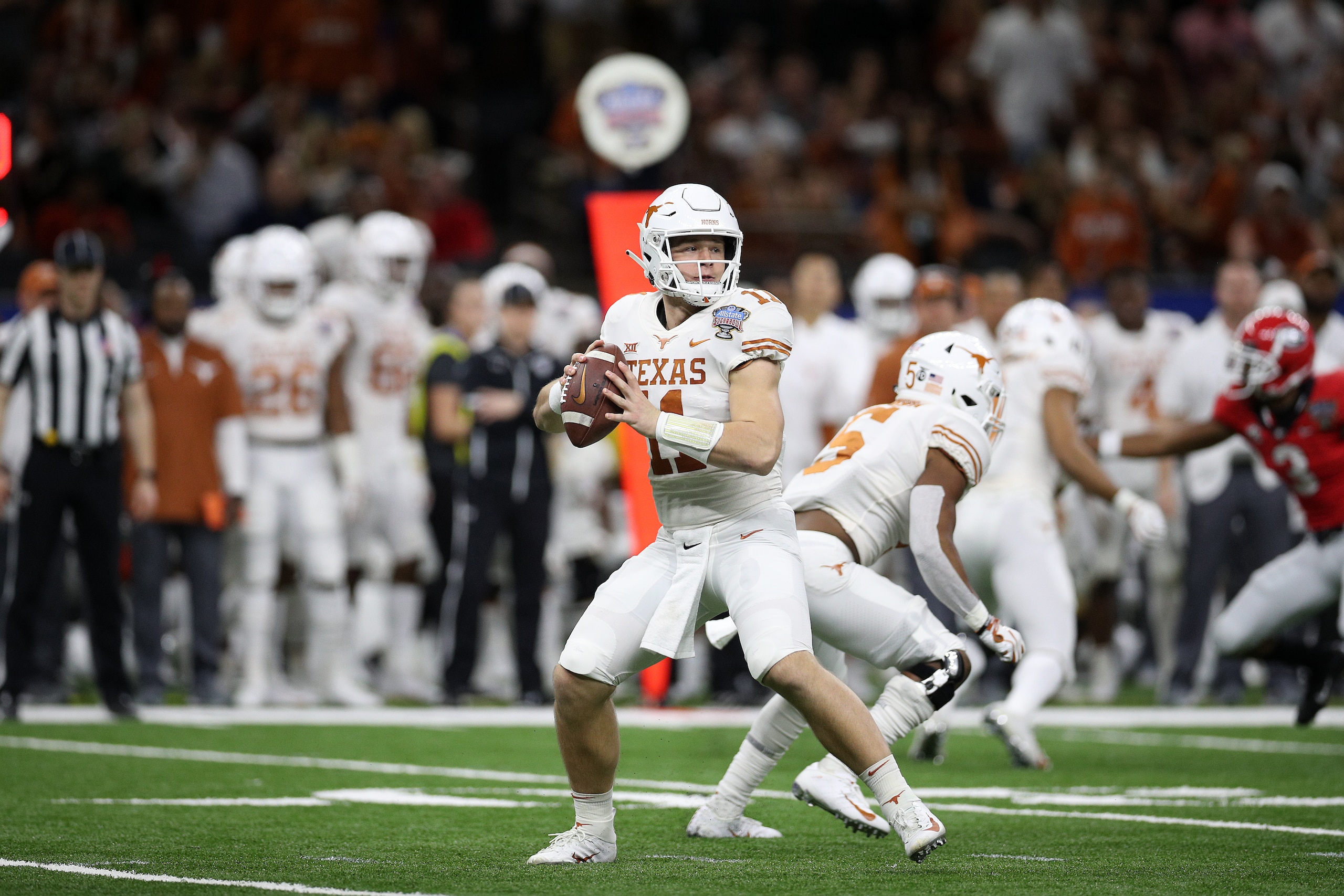
Texas is back! Or at least the Longhorns are close to reestablishing themselves as the power they were in the 2000s.
One reason for that has been the growth of offensive playmakers under head coach Tom Herman. Quarterback Sam Ehlinger has been a perfect embodiment of individual growth through his first two seasons.
His statistics took a massive leap from 2017 to 2018, including a 7.2 percent increase in completion percentage, nearly two more adjusted yards per attempt and a decrease in interception rate from 2.5 percent to 1.2 percent.
The numbers show Ehlinger's growth but also indicate how dominant his massive receivers were. The sophomore quarterback can continue his development from a quality vertical passer into a more nuanced one who utilizes anticipation and timing to surgically pick apart defenses.
If Ehlinger can continue rounding out his game and become a more advanced player in the pocket, there's no doubt Texas can win the Big 12 and end up in the playoff race in 2019. Currently, he's an efficient big-play threat. But defenses that slow his 50-50 balls downfield can stifle Texas' offense.
Herman must incorporate more timing-based routes that push Ehlinger's comfort throwing into tight windows and beating oncoming defenders who read his eyes. If unsuccessful, Texas may stagnate despite expectations.
Travis Etienne: Receiving Impact
7 of 9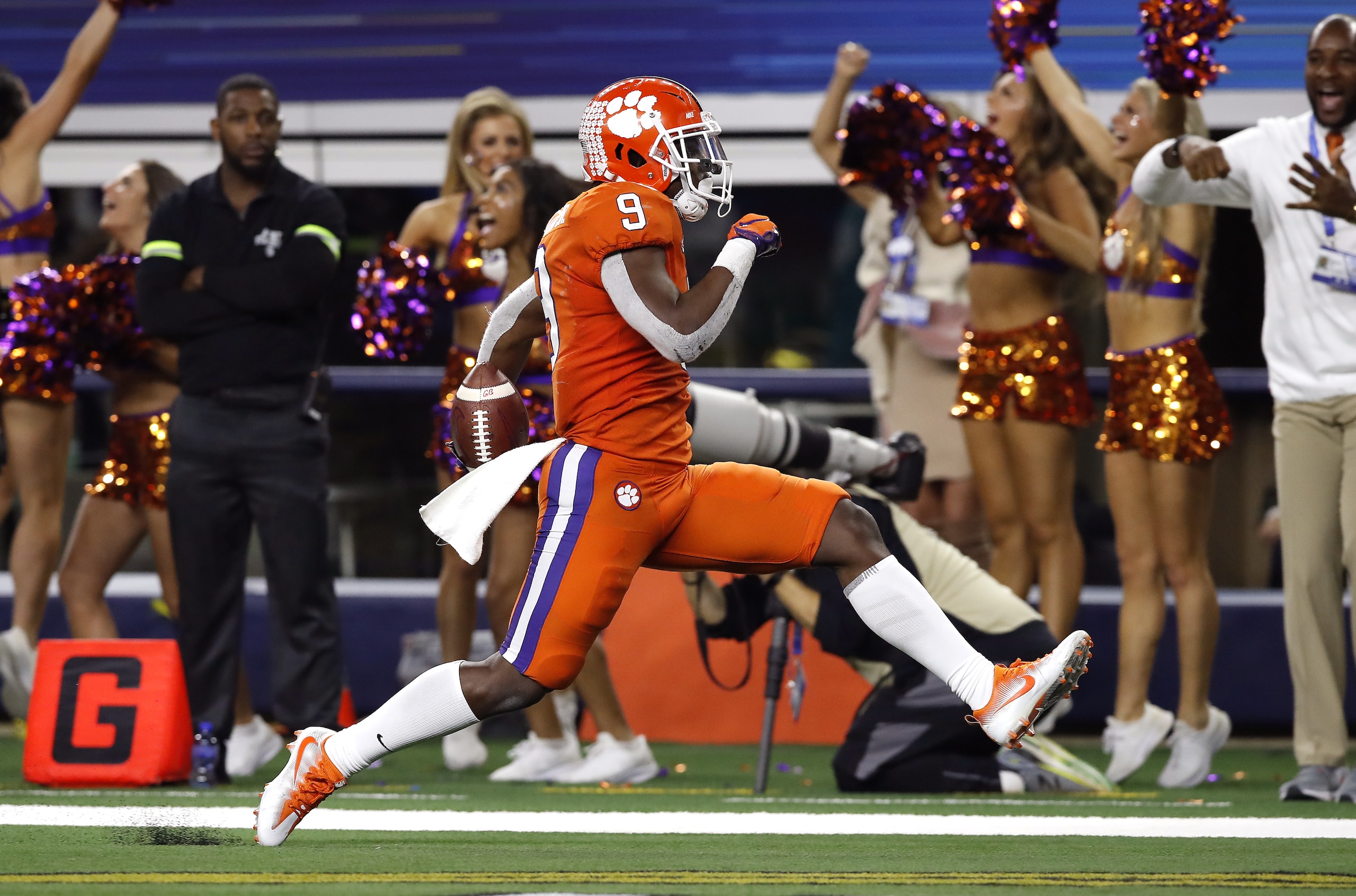
It's been a good decade filled with game-changing running backs, but there may not have been a faster one with the talent to be an every-down back than Clemson's Travis Etienne. Etienne received the reins to the offense in 2018 and improved his yards per carry from a terrific 7.2 average to an absurdly impressive 8.1. His ability to turn blazing speed into power and force yards after contact is better than anyone we've seen since Chris Johnson at East Carolina.
He earned ACC Player of the Year honors in 2018 as he accumulated 1,737 total yards and 26 touchdowns on only 216 touches. But only 78 yards and two touchdowns came as a receiver, highlighting the area where Etienne can blossom even more.
Some of the onus is on Clemson's play-calling and offensive design to manufacture receiving opportunities for the back. Tigers running backs accumulated just 189 receiving yards on the year. Calling a few screens or Texas routes is an easy way to help Etienne bolster his NFL stock as well as create massive mismatches and chunk gains.
Jonathan Taylor: Pass-Blocking
8 of 9
The most productive running back in the country is one with few flaws in his game. Wisconsin playmaker Jonathan Taylor has accumulated 4,171 yards and 29 touchdowns on the ground in his first two seasons. He should break into college football's top six of all-time rushers with another season around 2,000 yards.
Similar to how Travis Etienne doesn't get the opportunities to prove his receiving talent, Taylor plays in an offense that won't showcase his pass-blocking talent. He'll have to make the most of his chances to prove he's a legitimate three-down back in the NFL.
Taylor's limited usage on passing downs also shows as a receiver with only 16 receptions in two seasons. It's unrealistic the Badgers will start to feed him a lot, and they shouldn't shoehorn him touches like that.
However, prioritizing Taylor's development as a pass-blocker can benefit both parties now and in the future. With his 5'11", 221-pound frame, Taylor has upside to be a tremendous blocker if he's given more experience reading blitzes and engaging defenders. It's a craft that takes a ferocious attitude and repetitions—two things both Taylor and Wisconsin can control.
Jake Fromm: Playmaking
9 of 9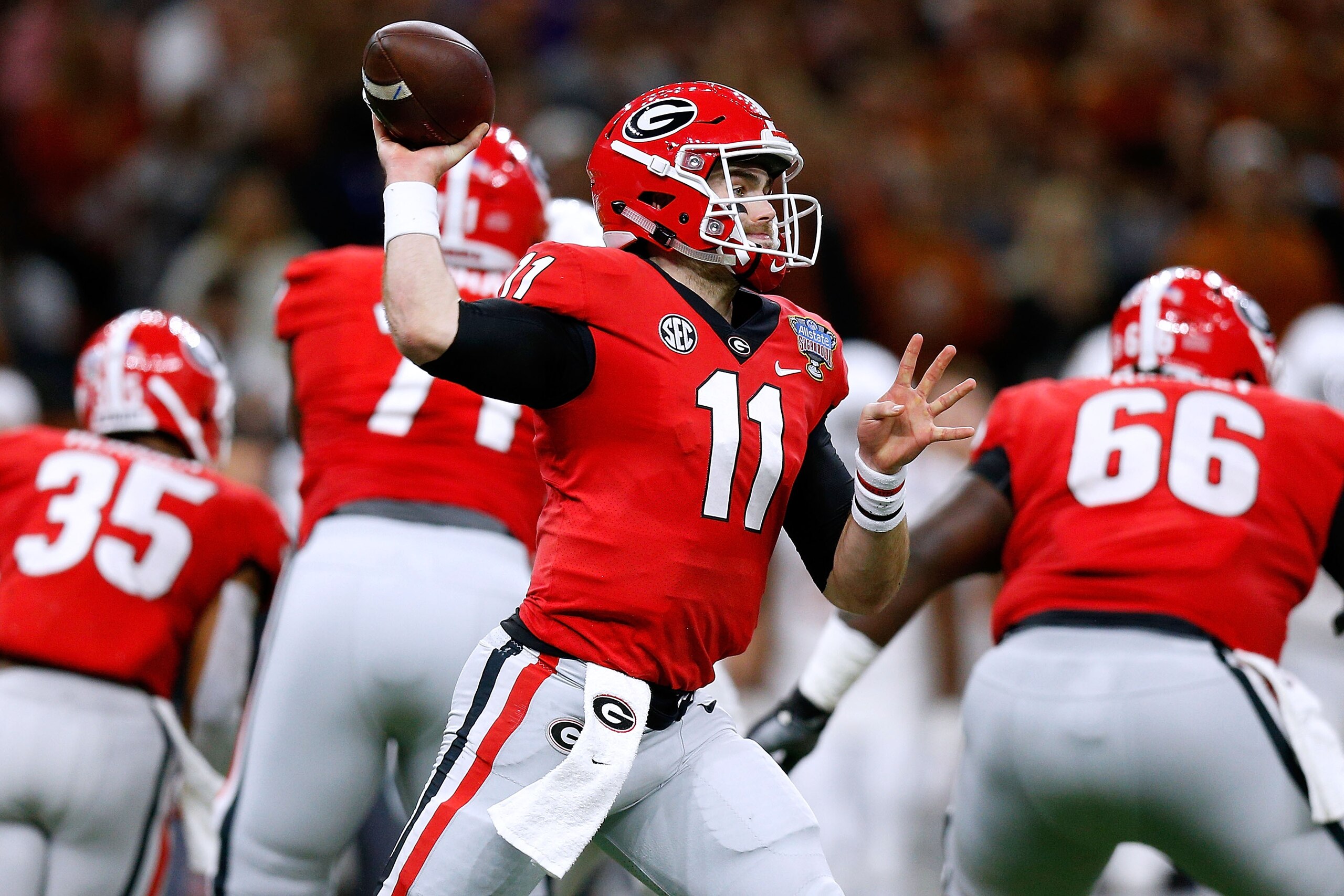
Georgia fans weren't happy when I ranked Jake Fromm the ninth-best quarterback in college football heading into next season, but his biggest flaw is a crucial one: He lacks playmaking skill.
In the Bulldogs' five losses since Fromm took over in 2017, he's had his worst statistical games. He completed 50 percent or less of his passes against both Alabama and Auburn in 2017 and LSU in 2018, and he disappeared for an entire half in his other two losses against Alabama and Texas this season.
When everything is on schedule and the Bulldogs give Fromm time to throw, he's shown a great arm and accuracy to all levels. But when things go haywire and he has to create on his own outside the pocket, his consistency dips and the offense falters in key moments. His playmaking, or lack thereof, is going to make or break him in 2019.
There's little question Fromm has the tools to evade pressure and make clutch plays because he's done it against Tennessee and Oklahoma. To make the leap into superstardom, he'll have to become more dynamic and less of a game manager. If he can't, don't expect the Bulldogs to live up to their talent once again.
.jpg?w=2560 "Grading WWE Raw 🔠")
.png?w=2560 "Allen's BRUTAL 1H Stats 🫤")

.jpg?w=2560 "Aaron Donald Fights Bills OL😳")