Eternal Outsiders: The Colour, Chaos and Catharsis of Life as a Napoli Fan
Felice Bracco is familiar with the aftermath of a big Napoli match. One of the tell-tale signs is that his chairs need replacing.
Bracco, 59, is the kindly owner of a cafe in central London that has been a home from home for Neapolitan football fans for around 10 years. Nestling between upmarket restaurants, smart gastropubs and contemporary art galleries on a stylish Fitzrovia street, it is the kind of place that most Londoners walk past without a second glance. But on match nights, it comes alive.
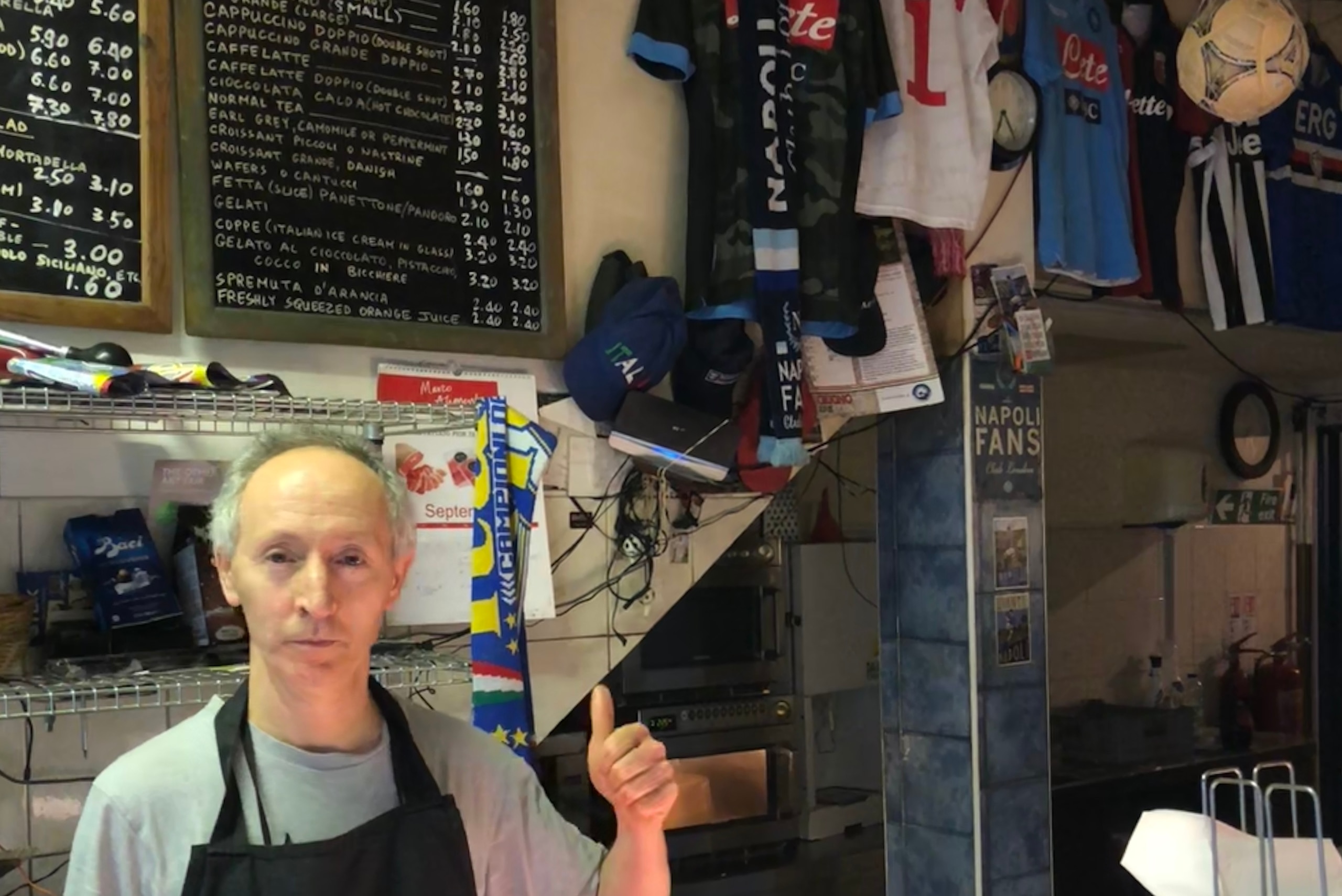


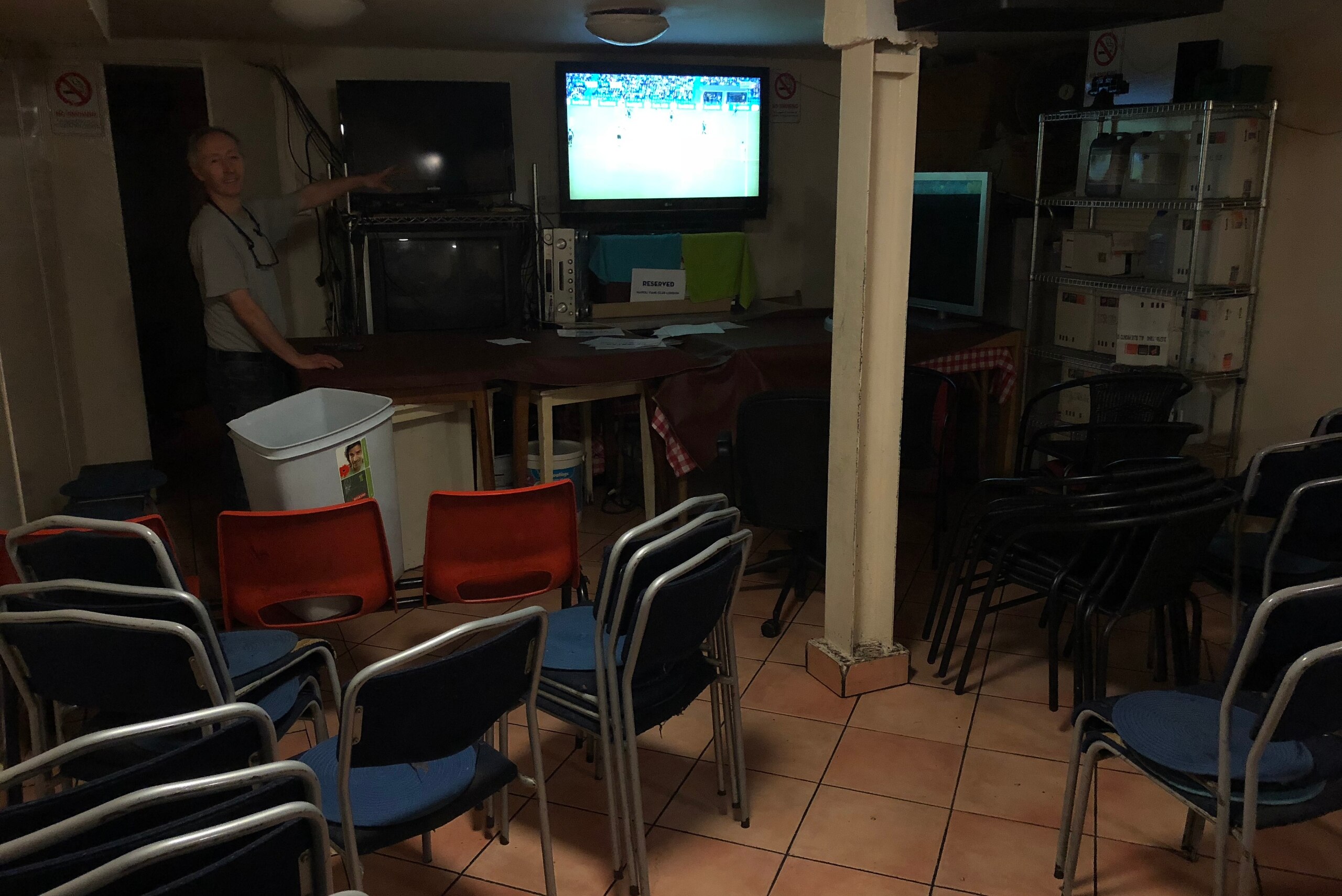
Enter the cafe, sidle around the corner of the service counter and then squeeze down a narrow staircase, and you find yourself in a dimly lit, medium-sized basement room with three televisions arranged haphazardly alongside each other at one end. There is a white pillar in the middle of the room and a metal sink at the far end.
The floor is terracotta tiling, the walls white plasterboard and there are chairs everywhere—red plastic seats, blue fabric-padded chairs, folding wooden stools, black garden chairs and at least one office swivel chair.
The room fills when Italian football is on TV, and it is packed to the rafters when Napoli are playing, with close to 50 passionate fans cramming themselves into the low-ceilinged space to roar on their team. Bracco has strategically positioned a row of tables in front of the TVs to prevent irate supporters from taking their frustrations out on the screens, but he can do nothing to protect his chairs.
"They break the chairs every now and again," he says with a rueful smile. "Even if they win, they'll be banging the chairs on the floor or just pushing them over. They go crazy, because they're so happy to win. When Juventus score, their fans are happy, but when Napoli score, it's like two goals at a time."
Bracco was born in Bari, on Italy's Adriatic coast, but fell in love with the team that played 140 miles to the west on the Gulf of Naples. Having grown up on a street called Via Napoli, it could hardly have been any other way. He moved to England 30 years ago and has owned his cafe in London for 22 years. Although he is not a Naples native, he talks about the city as though he is.
"It's a city where there's not much," he says. "There's quite a lot of poverty and there's a lot of people who've got nothing else to do. There's water polo, but there's no other sports in Napoli—there's no basketball or cricket or golf or tennis. Maybe you can't afford to go to the theatre, but you can afford to go to the stadium. Football is the thing for everybody."
A group called Napoli Fans Club London has been convening at Bracco's cafe for the past 10 years or so. Its members enjoyed an unforgettable night there last April when Kalidou Koulibaly's last-minute header earned Napoli a 1-0 win at Juventus that seemed to have put the club on the brink of a first Italian title in 28 years. The reaction to the goal—and to the final whistle minutes later—was one of tearful, joyous, cathartic delirium.
With a cruel sense of inevitability, Napoli stumbled and Juventus surged, Maurizio Sarri's side eventually finishing four points below the Turin giants in second place. To miss out on the title was one thing, but to lose out to Juve really hurt.
For Napoli fan Gennaro Di Franco, Juventus—rich, prosperous Juventus from the richer, more prosperous north—represent everything his club is not. It is why Diego Maradona, who led Napoli to the scudetto at Juve's expense in 1987 (and followed it up with a second title triumph in 1990), remains a revered figure.
"Juventus is a symbol of the wealth and power of the Agnelli [business] group," he says. "That's why we saw Diego Maradona as a Che Guevara figure, and he felt like that too. He enabled us to fight back against the powerful." Another Napoli fan goes even further, citing the Calciopoli corruption scandal and describing Juventus as "the cancer of Italian football."
A Naples resident, Di Franco has been a Napoli fan "since birth" and saw his first game at Stadio San Paolo when he was nine years old. For him, as for so many Napoli fans, the club's outsider status is central to its identity.
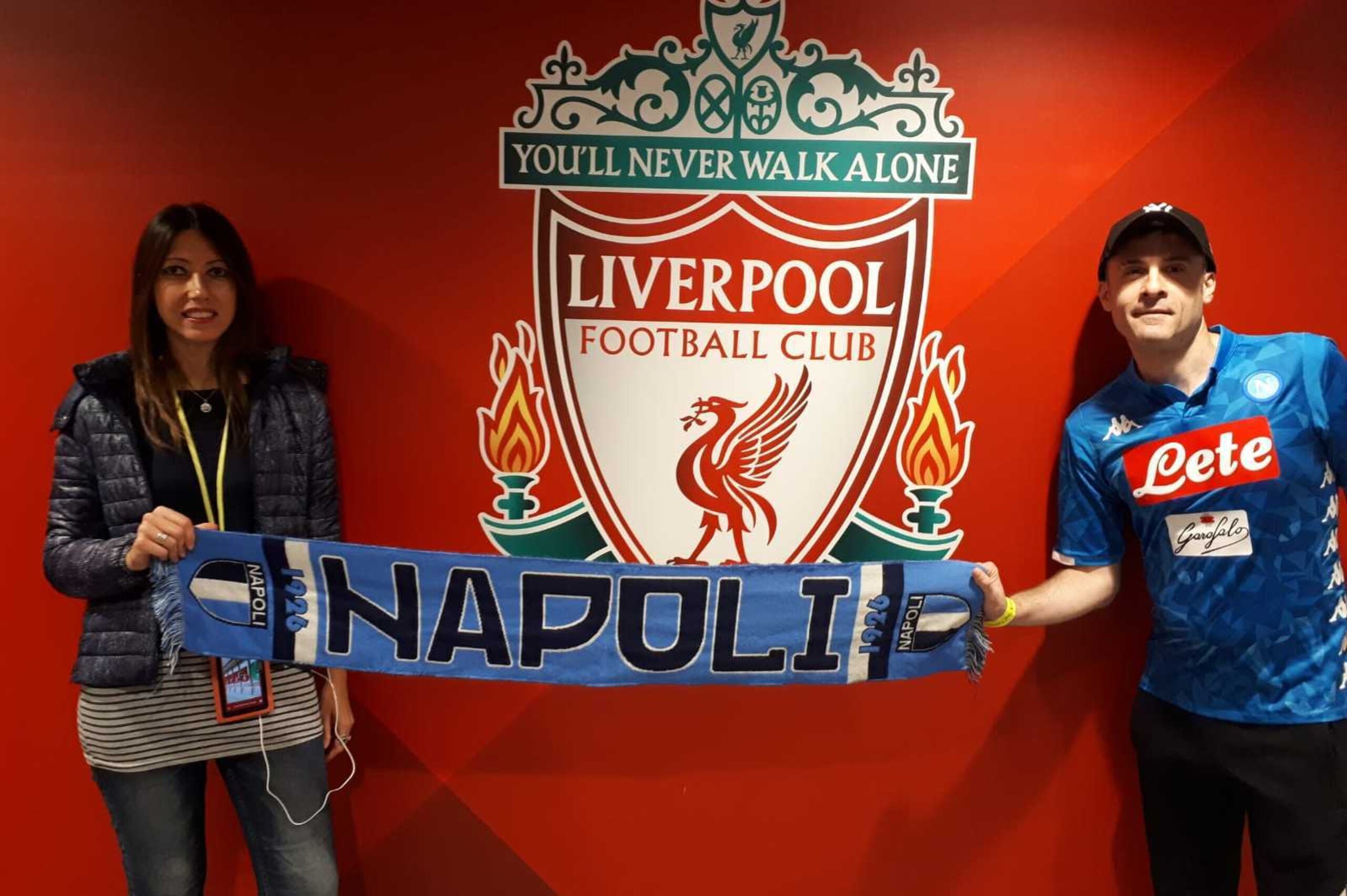
On a recent football pilgrimage to England with his wife, Roberta (a fellow Napoli die-hard), it was rickety old stadiums like Goodison Park and Craven Cottage that captured their imaginations rather than the giant, gleaming edifices of Wembley and the Emirates Stadium. Among Napoli supporters, there is an affinity with traditionally working-class clubs such as Celtic, Borussia Dortmund and Wednesday's Champions League opponents, Liverpool.
"Napoli is a tribe," Di Franco, 42, explains. "When we were young and we watched 'Cowboys and Indians' films, we always rooted for the Indians, because they were the outsiders. We feel like a different nation—a nation within a nation."
Like all Italian clubs, Napoli's fanbase has its ultras—its hardcore fans—who colonise Curva A and Curva B at the two ends of the San Paolo. While they do not have the same reputation for violence as the fans of some clubs, there is a thuggish element to their support. Liverpool supporters travelling to Naples this week will not need reminding that when their team last played in the city, in October 2010, three visiting fans were hospitalised with stab wounds following unprovoked attacks.
A former member of the ultras group Vecchi Lions, who asked for his name not to be published, said that being a Napoli ultra was all about defending the heritage of the city of Naples.
"To be Neapolitan means to be proud of being born on this wonderful soil," said the 44-year-old, who first stood on the Curva B as a 14-year-old and now takes his children to watch matches from the same spot.
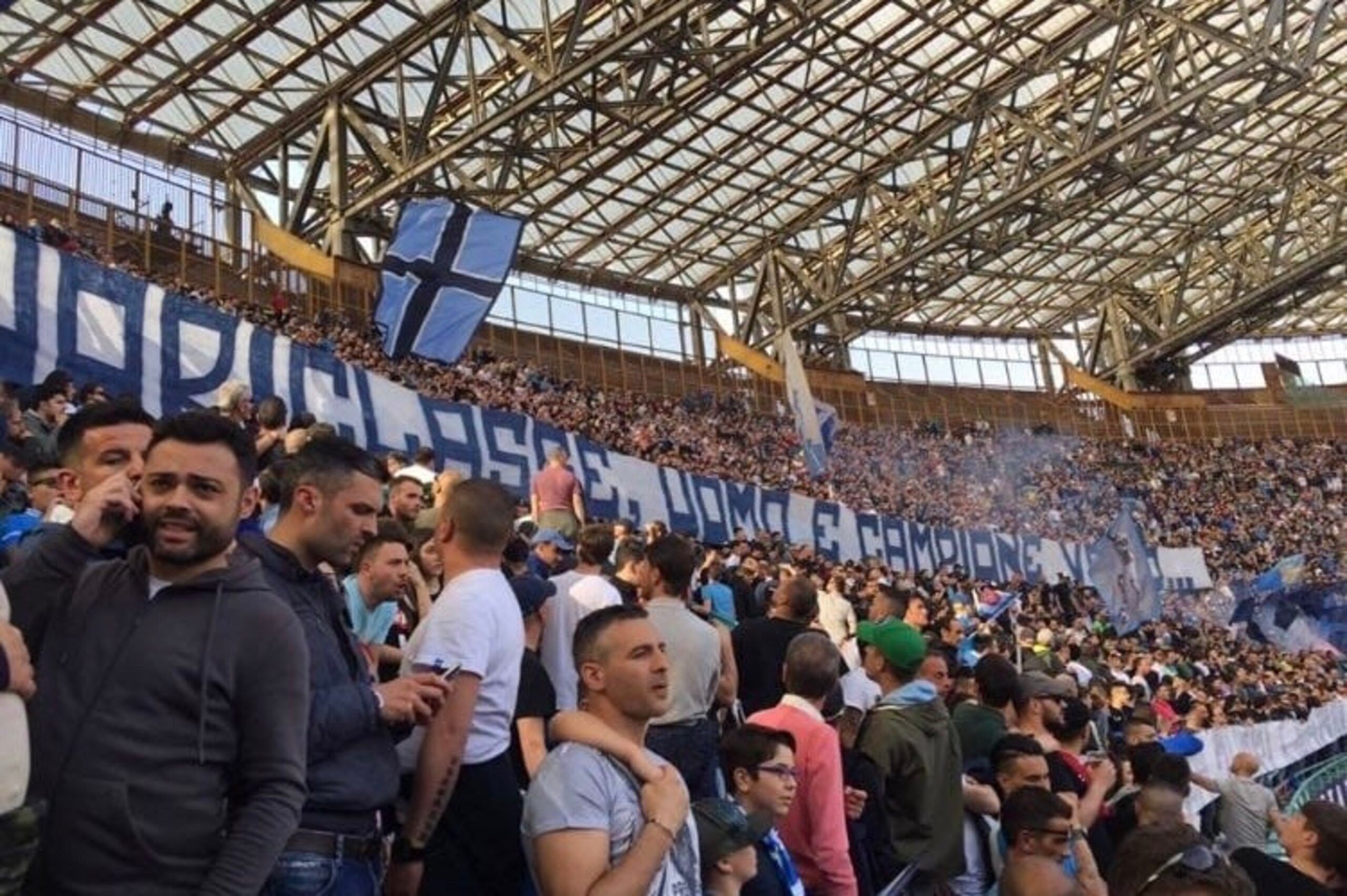
"If rival fans come to encourage their team in a respectful way, I don't see any reason for them to be afraid. But if they disrespect our shirt, our city, with violence and destroy things and people who we will never get back, they will pay the consequences both inside and outside the stadium."
One area where Napoli's fans say they stand apart is their stance on racism. For years, supporters of rival clubs have taunted them with chants about their supposedly poor, crime-plagued and disease-ridden city (entreaties to Mount Vesuvius to "wash Naples away" are one recurring refrain), and it has helped create a sense of solidarity with oppressed minorities.

When Senegal international Koulibaly was racially abused by Lazio fans in February 2016, thousands of Napoli supporters donned masks of his face for the team's next match against Carpi. The message was that racism was not welcome at the San Paolo, which Di Franco describes as a "point of pride" for Napoli supporters. (Nonetheless, a recent rise in attacks on African migrants in the city of Naples suggests that racism is a real problem in the wider area.)
Back at his cafe in London, Bracco is looking ahead to Napoli's trip to Serie A leaders Juventus, where a 3-1 defeat will leave the Partenopei six points off the pace in second place.
For all the enmity he feels towards Juventus as an institution, he is at pains to point out that the club's fans are more than welcome at his cafe. So if Gonzalo Higuain—the man whose move from Napoli to Juventus in July 2016 turned him into a hate figure at the San Paolo—walked in one day, would he serve him an espresso?
"Of course," Bracco says. "I mean, I'd tell him what Napoli fans think of him first..."

.jpg?w=2560 "Colts Football")
.jpg?w=2560 "NFL House in Paris Closes for Protests (AP)")



.jpg?w=2560 "Trevon Diggs Cut by Seahawks")