

Good news: It will be really, ridiculously, unusually difficult for your favorite team to screw up in free agency.
All sighs of relief should be directed retroactively toward the league's 2016 shopping spree. It takes cap space for a franchise to spend itself into oblivion, and more than two-thirds of the league won't have money to burn.
Some teams will find a way to get it wrong this summer anyway. The non-taxpayer and mini-mid-level exceptions carry atypical clout in a market light on cash flow. Desperate buyers will invariably allocate their best offseason tool to the wrong player.
But we're more interested in the larger blunders—expensive moves that could set back organizations for years. And only a handful of squads have both the money and motivation to trick themselves into making those kinds of mistakes.
That doesn't mean they will. Let's make that clear. But if the offseason doesn't cooperate with initial hopes and blueprints, some of the most flexible teams are more likely to avoid detrimental contingencies than others.
For a select few, expensive gaffes might even be part of their original plans.
Chicago Bulls
1 of 5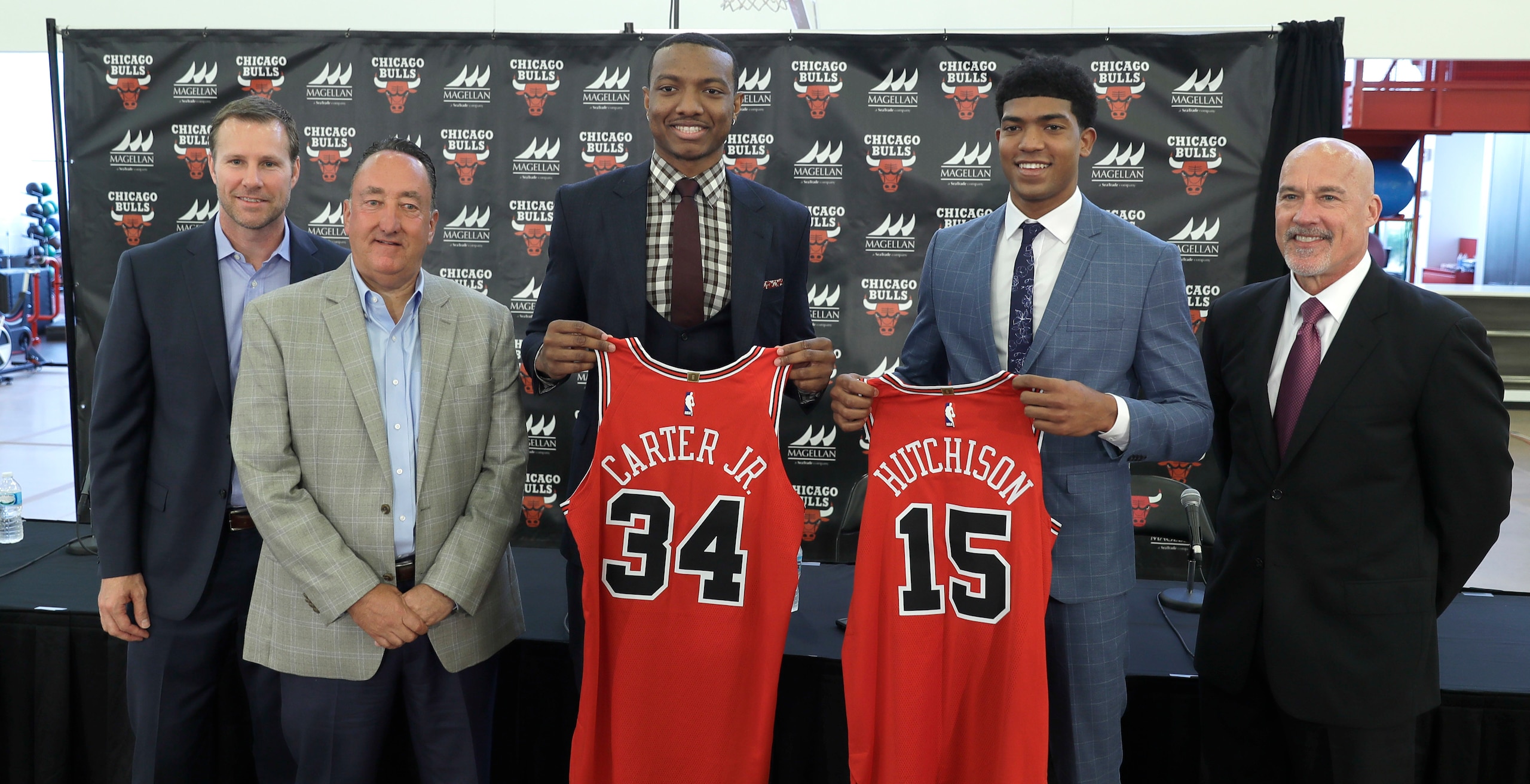
Re-signing Zach LaVine alone could validate the Chicago Bulls' inclusion on this list. He didn't make his 2017-18 debut until Jan. 13 after an ACL injury and finished the season on the shelf, after just 24 appearances, with tendinitis in that same left knee.
Paying him anything substantial would be an unnecessary gamble. Head coach Fred Hoiberg said in March the team has no long-term concerns about LaVine's health, but the 23-year-old is hardly a sure thing at full strength. His defense has more holes than flat-Earth theories, and he's easily seduced into junky pull-up jumpers.
A skimpy buyer's market could save the Bulls from themselves. Few teams have the coin to tender over-the-top offers. The Bulls might even be prepared to save themselves from themselves. LaVine no longer has the "universal support" he once enjoyed throughout the organization, according to ESPN.com's Nick Friedell.
Still, we're talking about one of the crown jewels from the Jimmy Butler trade. General manager Gar Forman and executive vice president of basketball operations John Paxson could be married to LaVine out of sheer stubbornness.
Plus, this isn't just about one player. The Bulls have more than $20 million in cap space and could eclipse $25 million even after accounting for LaVine's free-agent hold ($9.6 million). Most teams in their situation, at the onset of a rebuild, wouldn't blow through that flexibility now. They're not most teams.
"They're going to be sneaky in free agency," ESPN's Adrian Wojnarowski said (h/t Def Pen Hoops' Rob Lopez). "They've got a young core that people want to play with. It's Chicago. They have sped up that rebuild in Chicago. They're going to be, I think, a factor in July, too."
Spending like a contender would be an objectively bad decision. The Bulls will not land one of the four or five players who can ferry them back to the postseason. They'd be better off letting their young core marinate and re-assessing the landscape in 2019. They'll have money to burn then if they don't crap the bed during the LaVine negotiations.
Rational lines of thinking don't always win the day, though. The Bulls may see a cap-strapped market as an opportunity to expedite their transition and hook semi-recognizable names—in which case Rodney Hood might yet get a $15 million-per-year offer after all.
Dallas Mavericks
2 of 5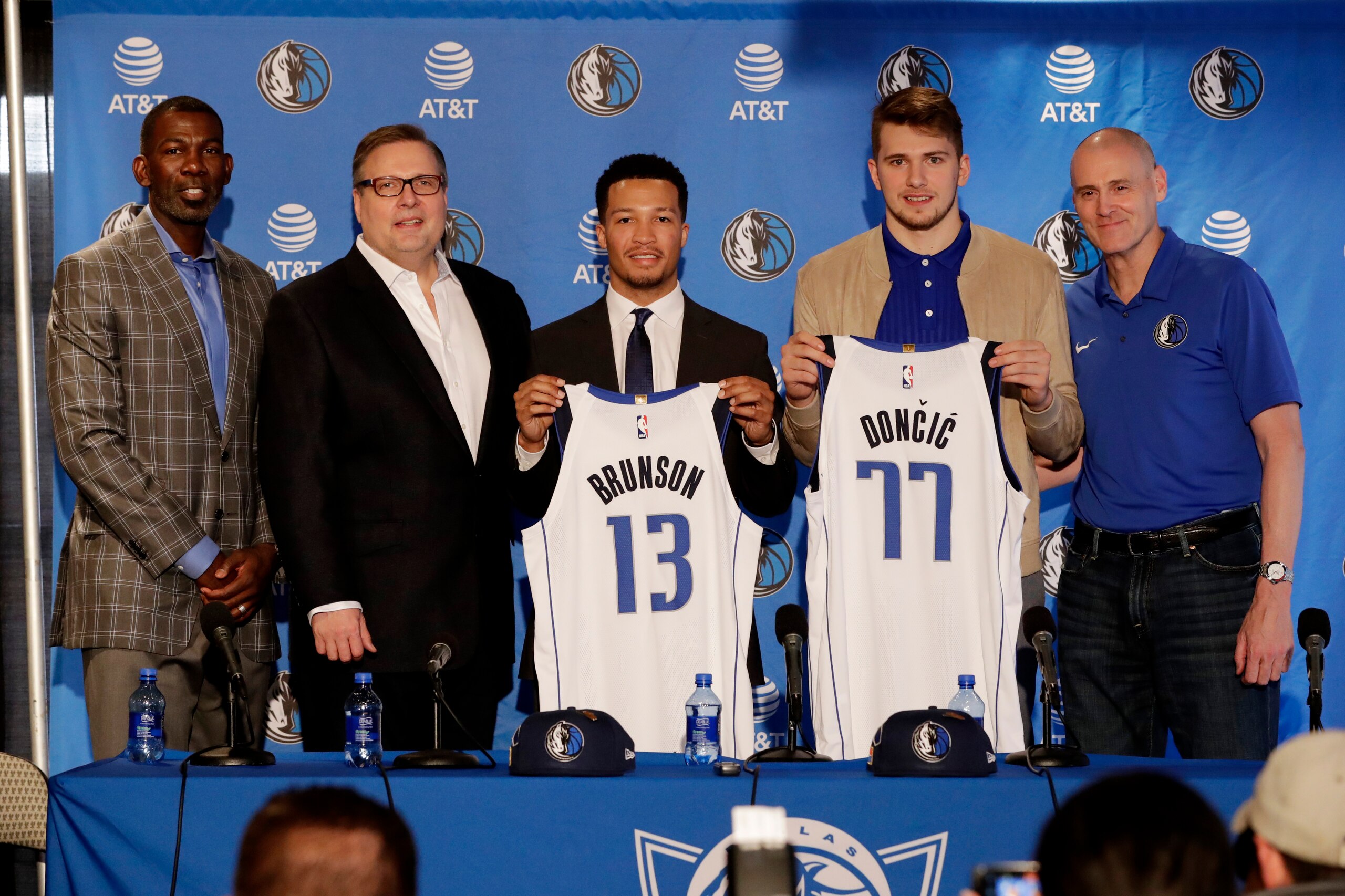
Restraint is not the Dallas Mavericks' strong suit. They haven't needed it to be. They own the NBA's second-highest winning percentage since Dirk Nowitzki entered the NBA...in 1998-99. And that's with their 57-107 record since 2016-17 caked in.
Impatience is bound to be a symptom of the past two seasons. The Mavericks are accustomed to being in the playoffs—or, at the very least, in the conversation for a postseason bid. With an open-ended invite to more than $25 million in cap space, they've always been among the teams most likely to get overly frisky this summer.
Chances of their treating free agency as a lifeline only mushroomed on draft night. They flipped a protected first-round pick to the Atlanta Hawks in the Luka Doncic deal when they could have taken on Kent Bazemore's contract instead, according the New York Times' Marc Stein.
Giving up next year's selection (top-five protected) tipped Dallas' hand. The 2019 draft isn't particularly deep, but the Mavericks, as currently constructed, will be a lottery team. That pick could feasibly settle somewhere inside the top 10. And rebuilding squads just don't surrender top-10 choices to climb two spots in the draft—unless they have more immediate goals in mind.
Swapping Bazemore for Wesley Matthews would have cut around $500,000 from next season's bottom line. But the former has an extra year worth $19.3 million on his contract (player option). Even with Matthews recovering from a right leg fracture, he'll be easier to move than Bazemore. That matters.
Dallas is interested in trading for DeAndre Jordan—yes, him—if he opts into the final year of his deal with the Los Angeles Clippers, per Stein. Stein described that scenario as unlikely, but preliminary interest in a soon-to-be 30-year-old signals a larger agenda: The Mavericks are ready to start winning again.
Insta-turnarounds are hard. And expensive. The Mavericks have money to spend and the ability to grab another impact player by dangling Matthews' expiring pact. This year's cap climate assures them face time with preferred targets. They might even land them.
But executing Plan A doesn't portend success just because it's Plan A. Dallas can only feel so good about maxing out Clint Capela (restricted) or Aaron Gordon (restricted). Paying post-recovery DeMarcus Cousins wouldn't guarantee anything. Jordan would be a low-risk acquisition if he were on an expiring contract, but sniffing around him in free agency, with a multiyear commitment, is a different story.
Signing anyone of significance would consign the Mavericks to a tighter timeline—a risk unto itself with Doncic and Dennis Smith Jr. learning the ropes. They need to be sure they're spending on the right players. And they can't be. Those investments aren't out there. Not this summer. So even if they get their guy(s), the Mavericks won't promise themselves much of anything.
Los Angeles Lakers
3 of 5
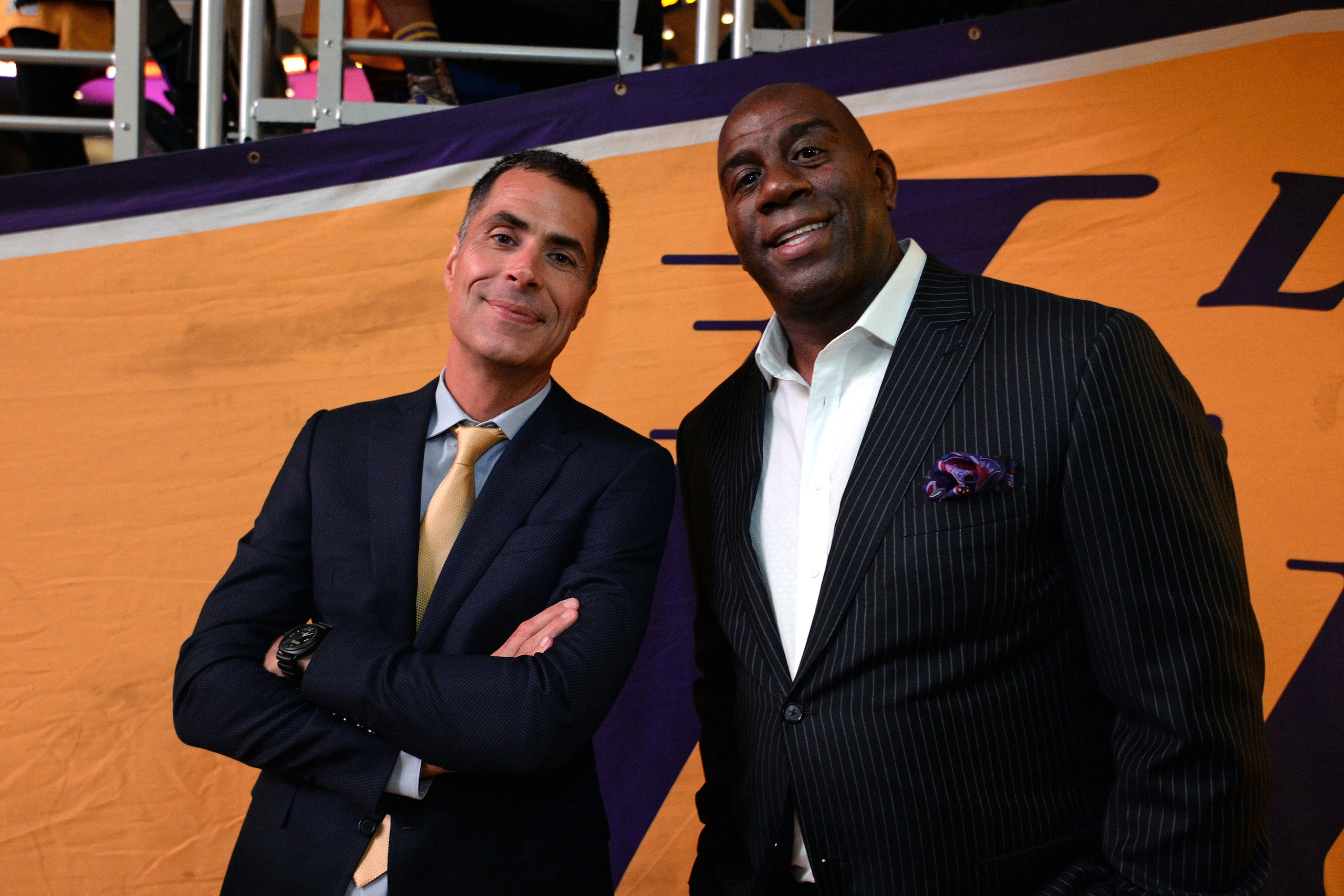
Though team president Magic Johnson would have us believe otherwise, the Los Angeles Lakers belong here.
"It's going to be a two-summer thing for the Lakers," he told reporters, per the The Athletic's Bill Oram. "This summer and next summer. That's it. If I can't deliver, I'm going to step down myself. [Jeanie Buss] won't have to fire me; I'll step away from it, because I can't do this job."
"I'm not going to try to win [the media] over or the fans over by making stupid deals just to say I did something," he continued, per Lakers.com's Joey Ramirez. "I'm not gonna do that. I'm gonna still be smart. I know this game of basketball frontward and backward."
Those sentiments are encouraging on the surface. Even with a tidy, youthful base in place, the Lakers have firmly fixed their fortunes to free agency. They'll enter July with more cap space than any other team and have easy-breezy paths to carving out two max-contract slots. Johnson's indicating they have no plans to overreact if they whiff on Paul George and LeBron James should be a relief.
Except it'll be exponentially harder for the Lakers to stick with that line of thinking should they actually emerge empty-handed from the free-agency fray.
Next year's class will have its fair share of prizes, beginning with Jimmy Butler (player option), Kawhi Leonard (player option) and Klay Thompson. Kicking the can shouldn't be that difficult. The formula is simple: Play the placeholder game for another year, groom the kids and skate into 2019 with no less than $50 million to throw around.
But what happens if the Lakers are compelled to match an expensive offer sheet for Julius Randle (restricted)? What if Johnson feels they need at least one established name in place to pitch the biggest names one year from now? What if they talk themselves into riskier ventures (DeMarcus Cousins) or expensive youngsters (Aaron Gordon, Jabari Parker) just to say they did something constructive?
Poaching a star wouldn't immunize the Lakers against recklessness, either. Neither George nor James is especially likely to become a Purple and Gold convert on his own. They'll want more than a budding infrastructure in place.
That's fine if they're coming together, but it opens up the Lakers to pricey second-tier additions if they can only land one. And after a bold proclamation like Johnson's, delivering a roster built around one star, developing kiddies and the Will Bartons and Kentavious Caldwell-Popes of free agency just won't cut it.



Phoenix Suns
4 of 5
The Phoenix Suns do not have the profile of an organization ready to indulge ill-advised spending. They were the NBA's youngest team last season and added three rookies on draft night who figure to play prominent roles right away: Deandre Ayton (No. 1), Mikal Bridges (No. 10) and Elie Okobo (No. 31).
And yet the Suns are operating with a clear sense of urgency. It took the Miami Heat's unprotected 2021 first-rounder, along with Zhaire Smith (No. 16), to get Bridges. That isn't the move of a franchise championing patience and process.
The league might overturn its one-and-done rule in time for the 2021 draft, according to ESPN.com's Zach Lowe. The Philadelphia 76ers could be choosing from a deep class that includes both high school seniors and college freshmen. The Suns forfeited that tasty trade chip to acquire one of this year's most NBA-ready rookies.
Toss in Phoenix's malleable cap sheet and general manager Ryan McDonough's pointed comments in January, and the dots connect themselves.
"The Suns have cap space and look poised to make a run at a veteran free agent or two that they can pair with their young kids," ESPN.com's Brian Windhorst wrote. "They want to win now, and it's a buyer's market. Could be a surprise name they go after and land."
Joining the most lucrative summertime sweepstakes is not without its appeal. At least two-thirds of the Association won't be working with appreciable cap room, and the Suns will be at max-contract capacity if they can move the expiring salaries of Tyson Chandler or Jared Dudley into another team's space. They'll never be more in play for the offseason's top prizes.
More buyers will have cap space in 2019. The Suns may not be good enough to compete with an expansive field of suitors. Devin Booker's cap hit will also explode entering 2019-20. They can mitigate the aftereffects of his next contract by letting his situation ride out into restricted free agency, but he's among the most likely extension candidates. Penciling him in for a max salary before next summer would make it more difficult for them to dredge up max money even with Chandler and Dudley off the books.
Submitting to the win-now urge would still be a mistake. The Suns finished dead last in offensive and defensive efficiency last season. Bankrolling long-term deals without taking the youngsters, both new and old, for another test drive would be an overestimation of their position. But with opportunity knocking and an eight-year playoff drought threatening to become nine, the pull to pay for second-tier roster upgrades may be too strong to resist.
Sacramento Kings
5 of 5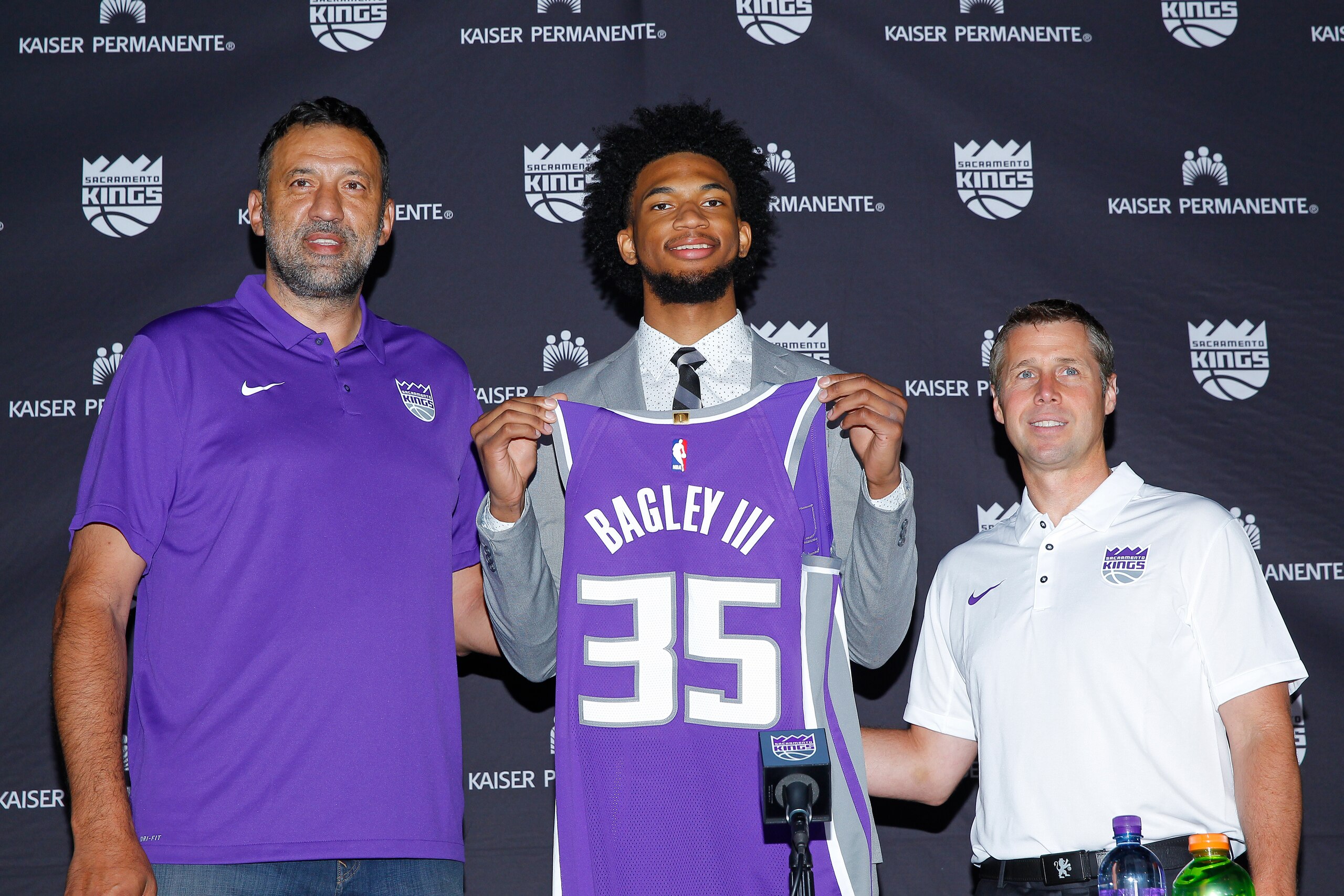
It would not be surprising if the Sacramento Kings watched free agency unfold from the sideline. They're on course for more than $60 million in cap space next year, and that number could creep past the $70 million marker if they part ways with Willie Cauley-Stein (restricted) and their non-guaranteed fliers.
This summer will be a litmus test for the Kings' self-governance acumen. They're looking at just over $17 million in space with relative proximity to more than $25 million. Garrett Temple would get them there by declining his player option, but his $8 million salary will be easy enough to offload if he comes back.
Holding serve remains in the Kings' best interests. They can circle back to free agency next year, when they'll have tandem max slots and a firmer grasp on the trajectory of their youngsters. If they're itching to do something, they should lease cap space to buyers.
Certain teams will pay premiums in the form of picks and prospects to duck the luxury tax or manufacture some extra room of their own. Sacramento is among the scant few capable of swallowing the largest bad-money contracts and can set its price accordingly.
Of course, the Kings are the Kings. Counting on self-control or conventional wisdom to shape their actions is never the safe assumption. These punchlines are getting old, but they haven't yet done anything to not deserve them.
Arming them with top-seven, and potentially top-five, cap space before a season in which they don't own their first-round pick is just asking for monkey business. That they drafted Marvin Bagley III at No. 2 will probably dissuade them from overpaying for a big man, but they'll have plenty of opportunities to compromise their future elsewhere.
Would they consider tossing significant money Kentavious Caldwell-Pope's way? Outbidding other teams for a starting-level wing like Will Barton? Could they find themselves doing a hatchet imitation of the Brooklyn Nets from the past two summers as the team that haphazardly doles out big offer sheets to restricted free agents?
Rodney Hood, Zach LaVine and Marcus Smart sure hope so.
Unless otherwise noted, stats courtesy of NBA.com or Basketball Reference. Salary and cap-hold information via Basketball Insiders and RealGM.
Dan Favale covers the NBA for Bleacher Report. Follow him on Twitter (@danfavale) and listen to his Hardwood Knocks podcast, co-hosted by B/R's Andrew Bailey.

.png?w=2560 "Week 8 Winners & Losers 📊")


.jpg?w=2560 "Jonathan Taylor Landing Spots")