

NBA Metrics 101: How Will Simmons, Mitchell Rank Among Rookie Playoff Debuts?
The 2018 NBA playoffs have been fast and furious, featuring tremendous showings from LeBron James, James Harden and so many other stars. But a crop of first-year players are stealing headlines as well, seemingly ready to leap up the individual hierarchy and prove they belong in that celestial category.
Royce O'Neale has been an impressive defensive presence for the Utah Jazz, and Toronto Raptors swingman OG Anunoby has proved capable of handling a number of different roles. But our focus rests on two burgeoning stars, with one more lagging just behind them.
In the interest of full disclosure, Jayson Tatum originally wasn't going to be anything more than an honorable mention here. Then came his 22 points in a Game 6 loss to the Milwaukee Bucks, a 20-spot in Game 7 as his Boston Celtics soldiered on to the second round and a 28-point masterpiece to kick off a second-round clash with the Philadelphia 76ers in victorious fashion.
Tatum is still in a clear-cut third place behind Donovan Mitchell and Ben Simmons—yes, despite the head-to-head result in Monday's Game 1—but he deserves some credit. To determine just how much he and the others receive, we're turning to the formula for playoff score used by NBA Math to determine the all-time standings of every single postseason performer in league history, revealing the top 10 before looking at where this first-year trio could eventually rank.
3 Different Scores
1 of 14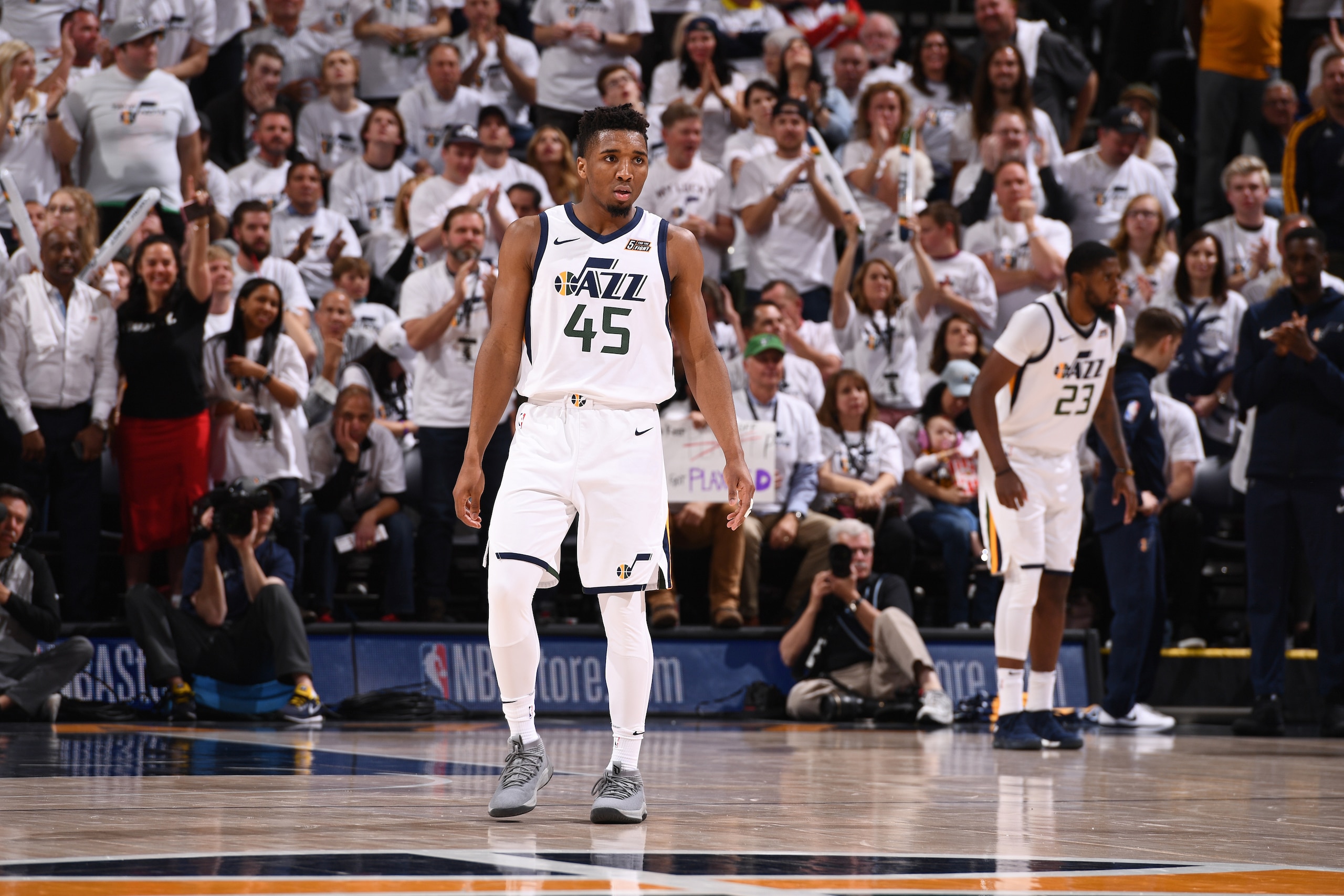
Playoff score can be broken down into multiple elements, and we'll briefly cover what those entail, as well as what determines this particular hierarchy:
Game Score
Created by John Hollinger, game score blends together box-score stats to create a single number that details how impressive a given performance is. A game score of 10 indicates an average performance, while 40 is phenomenal. For the sake of simplicity, it's built to work on the same scale by which we'd evaluate points per game.
We do have to make one small modification, though.
Because offensive and defensive rebounds weren't tracked throughout the early portion of basketball history (they were instead recorded as generic rebounds), we can't make the differentiation contained within the original game score formula—a 0.7 multiplier for offensive boards, as compared to a 0.3 multiplier for defensive rebounds. To approximate scores, we're instead treating all rebounds the same and giving total rebounds a 0.4 multiplier (skewed more toward defensive rebounds because those have occurred much more frequently throughout NBA history).
Once that's done, game score shows individual excellence on a per-contest basis with no regard to the number of outings over which the mark was compiled. A player with a 15 game score over two showings isn't viewed any lower than someone with the same result over a 12-game stretch.
Individual Score
Individual score adjusts for volume simply: multiplying game score by the number of contests played. We'll turn to NBA Math for examples:
"As such, these three players will receive the same score:
- Player A has an average Game Score of 20.0, earned over the course of a single five-game series.
- Player B has an average Game Score of 10.0, but he played in 10 contests during a single postseason before elimination.
- Player C has an average Game Score of 2.0, and he suited up 50 times over the course of multiple seasons"
All three players would have individual scores of 100, although they're compiled in far different manners. With this methodology, we can give credit both to players who were stunningly successful over a short stretch and to those who were less dominant but maintained that level for a lengthier period.
Playoff Score
This is the metric listed as the featured number and used to determine the order in this countdown, which focuses on the 10 best rookie playoff runs throughout history. It adds a player's advancement share to his individual score to account for the amount of success his team experienced, as well as an approximation of the credit he should receive for said success.
Now, cue the explanation of advancement share I wrote for NBA Math:
"Players receive up to 50 points for reaching the conference finals, 100 for making the NBA Finals and 250 for winning a championship, and the share of those totals is based on their minutes played. For example, LeBron James played 39.1 minutes per game during the Cleveland Cavaliers' 2016 title run, so he earns 203.65 points for the championship (39.1/48 times 250). Dahntay Jones, meanwhile, earns just 17.19 points for the same feat (3.3/4 times 250)."
This naturally gives an advantage to players who won titles (or at least came close), and the vast majority of the 10 featured contributors here did indeed earn championships. Our current rookies will likely need to make similarly deep runs to keep pace, but don't rule that out.
Anything can happen in the playoffs.
10. Johnny Davis, Portland Trail Blazers: 303.73 Playoff Score
2 of 14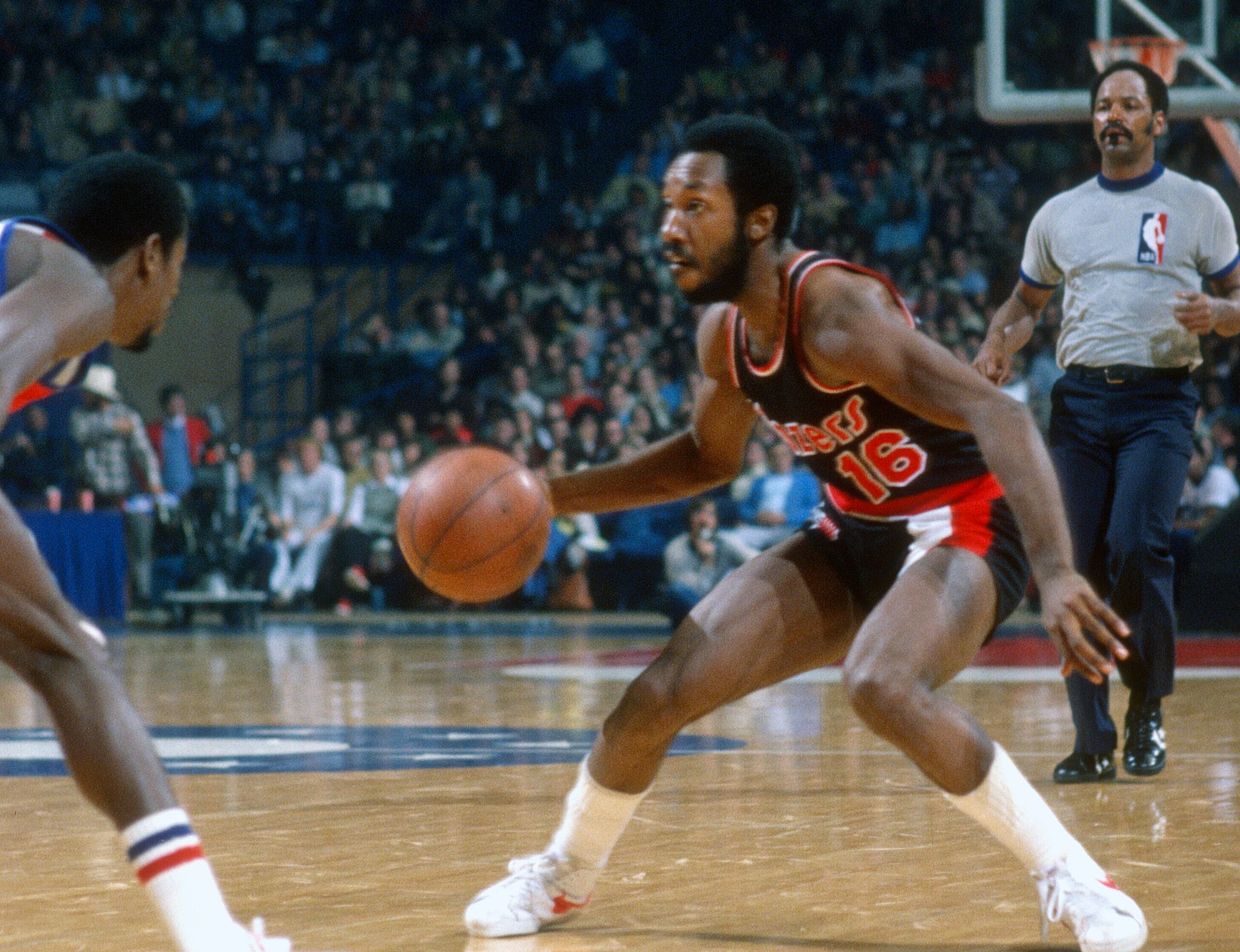
Per-Game Stats: 10.5 points, 2.1 rebounds, 3.3 assists, 1.8 steals, 0.2 blocks
Game Score: 10.11
Individual Score: 161.8
Team Result: Won NBA Finals
Playoff rotations tend to contract and hand more minutes to big-name players, but rarely do you see a contributor earn an uptick as significant as Johnny Davis did as a rookie. After recording just 18.4 minutes per game during his inaugural regular season, he saw an uptick to 27.3 in the playoffs—one that came at the expense of non-notable rotation members such as Herm Gilliam, Larry Steele, Robin Jones and Lloyd Neal as the Portland Trail Blazers went smaller in the postseason.
Davis still wasn't a star for Rip City in the playoffs. Far from it. He averaged just 10.5 points per game, which left him trailing Maurice Lucas (21.2), Bill Walton (18.2), Lionel Hollins (17.3), Bob Gross (14.1) and Dave Twardzik (10.9). But he did so while shooting 48.9 percent from the field and 71.7 percent at the charity stripe, serving as a quality secondary distributor and holding his own defensively.
Plus, Davis gained more responsibilities as the playoff run went on and culminated in a Game 6 victory over the Philadelphia 76ers to win the title.
He played in just one contest during the opening series against the Chicago Bulls, and he then sat out Game 3 against the Denver Nuggets. But he moved into the starting lineup by the end of the second series, and he wouldn't look back from there. Over his final 11 appearances, he averaged 13.1 points, 2.6 rebounds, 4.3 assists and 2.5 steals for the Blazers while draining half his field-goal attempts.
Davis might not have been a star, but he was a valuable member of a title-winning rotation during his inaugural campaign.
Honorable Mentions: Wilt Chamberlain (295.53), Red Kerr (276.48), Jack Sikma (272.88), Jerry West (271.72), Ricky Sobers (271.13)
9. Tom Gola, Philadelphia Warriors: 307.8
3 of 14
Per-Game Stats: 12.3 points, 10.1 rebounds, 5.8 assists
Game Score: 12.03
Individual Score: 120.3
Team Result: Won NBA Finals
One of the greatest collegiate players in the sport's history, Tom Gola could do everything for the La Salle Explorers. He had the size, rebounding acumen and interior scoring ability of a bigger forward (which he was at 6'6" in the '50s), but he also had shooting range and ball-handling skills that belied his size. A consensus All-American and Player of the Year in 1955, he even averaged a whopping 24.2 points and 19.9 rebounds during his senior season.
Still, Gola had to sacrifice as a rookie in the NBA.
He deferred to the more experienced Neil Johnston and Paul Arizin throughout the 1955-56 campaign and became one of the Philadelphia Warriors' leading distributors. Only Jack George (6.3) recorded more assists per game during the regular season, and Gola took over first place throughout the run to a title. He might not have served as one of the go-to scorers, but that didn't stop him from making a monumental impact.
Only Arizin (0.262) and Johnston (0.191) earned more win shares per 48 minutes than Gola's 0.139, which was already a slight step up from his regular-season efforts (0.132). And given the inability to record steals or blocks at this stage of NBA history—thanks for nothing, early-era scorekeepers!—the Hall of Famer's score here might have been even more impressive. He was a stout defender, after all.
Following a year off to serve in the U.S. Army, Gola would resume his basketball career and make five All-Star squads. But he'd never win another title, and the Warriors might not have been able to cruise past the Fort Wayne Pistons in five games without his rookie-year efforts.


8. Elgin Baylor, Minneapolis Lakers: 318.1
4 of 14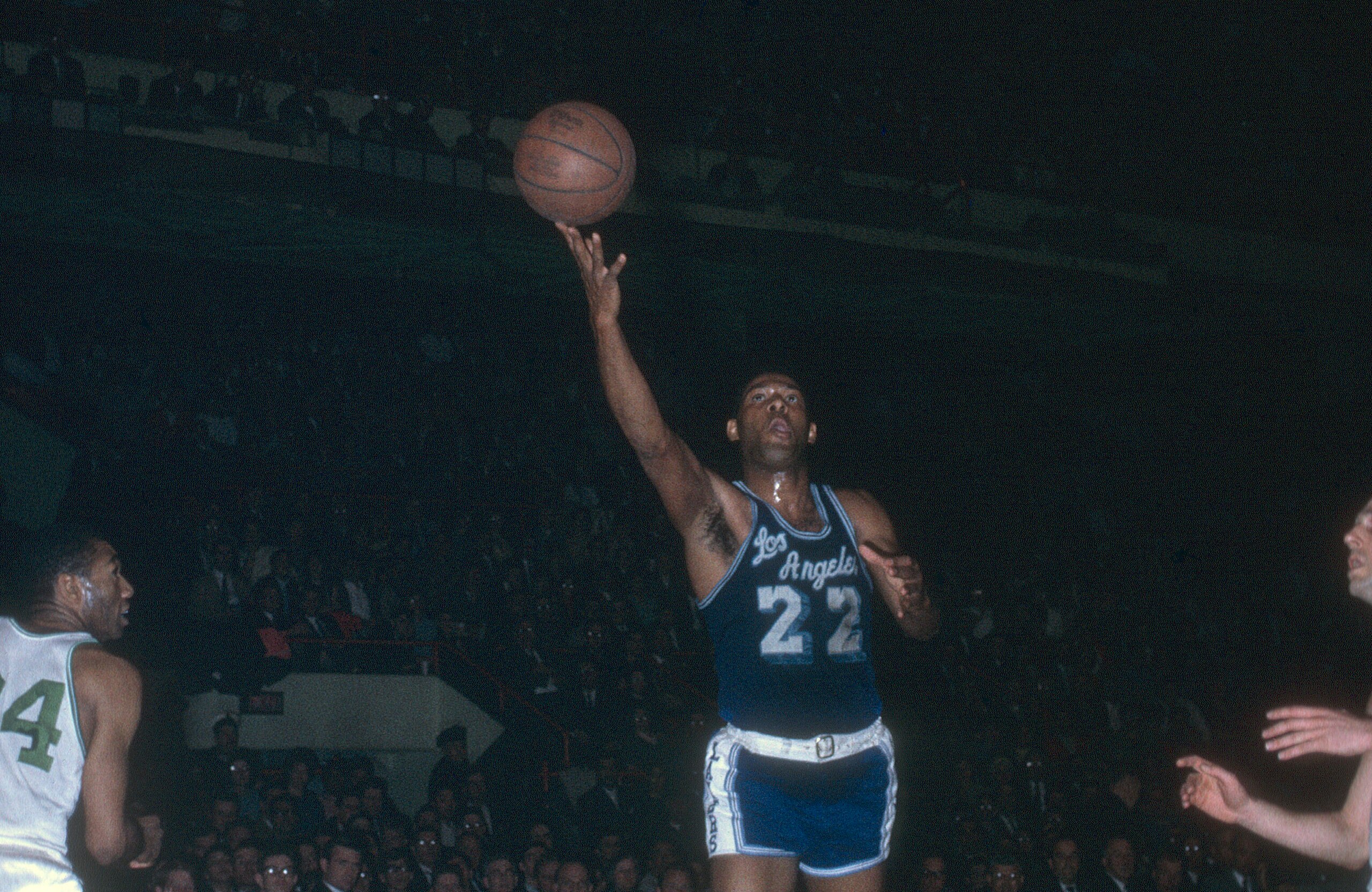
Per-Game Stats: 25.5 points, 12.0 rebounds, 3.3 assists
Game Score: 17.62
Individual Score: 229
Team Result: Lost NBA Finals
Elgin Baylor might not have won the 1959 title after getting swept by the Boston Celtics—he'd later go down as one of the premier players in NBA history with zero championships on his resume—but he made up for the final-round failure by thriving as an individual.
Except during that last series.
Though Baylor averaged 22.8 points and 11.8 rebounds against the C's, he did so while shooting a putrid 33.3 percent from the field and connecting on only 65.7 percent of his free-throw attempts. That stood in stark contrast to his work against the St. Louis Hawks and Detroit Pistons, against whom he posted 26.7 points per game with a 43.8 field-goal percentage.
But either way, this Hall of Famer, even as a 24-year-old rookie, was the clear-cut standout for the Minneapolis Lakers.
Vern Mikkelsen (15.5) and Dick Garmaker (14.5) were the only other double-digit scorers on the playoff roster. Larry Foust (10.5) was his lone counterpart averaging at least 10 boards. Slick Leonard (5.4) was the lone member of the Lakers who logged more assists per game. And wrapping it all up, Baylor's 1.2 win shares rather easily paced Minneapolis during the postseason.
That, in a nutshell, is how you post the No. 16 game score among all rookies in the NBA's lengthy playoff history.
7. Tom Heinsohn, Boston Celtics: 332.81
5 of 14
Per-Game Stats: 22.9 points, 11.7 rebounds, 2.0 assists
Game Score: 14.01
Individual Score: 140.1
Team Result: Won NBA Finals
In the present day, standout rookies rarely wind up on loaded teams. Exceptions exist because of traded draft rights and injury-sparked tankapaloozas (what's up, Tim Duncan?), but most first-year standouts are tasked with trying to drag their squads out of the lottery.
That wasn't the case in 1956.
The Boston Celtics were building upon a season in which they were eliminated from title contention by the Syracuse Nationals in the Eastern Division semifinals. Bob Cousy, Bill Sharman, Arnie Risen and Ed Macauley, all of whom would go on to populate the Hall of Fame, were already on the roster, while Frank Ramsey (another HOFer) was taking a year off to serve in the U.S. Army.
Then came the 1956 NBA draft.
The C's brought aboard Tom Heinsohn as a territorial selection after his collegiate dominance at Holy Cross. The St. Louis Hawks took Bill Russell with the No. 2 pick (behind Si Green) but traded him to Boston for Macauley and Cliff Hagan. As if that wasn't already enough for the Beantown representatives, they landed K.C. Jones in the second round.
Needless to say, Boston was loaded with talent. Heinsohn still led the team in points per game during the postseason, beginning his indelible career in sterling fashion as his Celtics swept the Nationals in the Eastern Division Finals before winning Game 7 and the championship against the Hawks one round later.
Oh, and he didn't even have his team's top rookie tally in this analysis.
6. Manu Ginobili, San Antonio Spurs: 333.93
6 of 14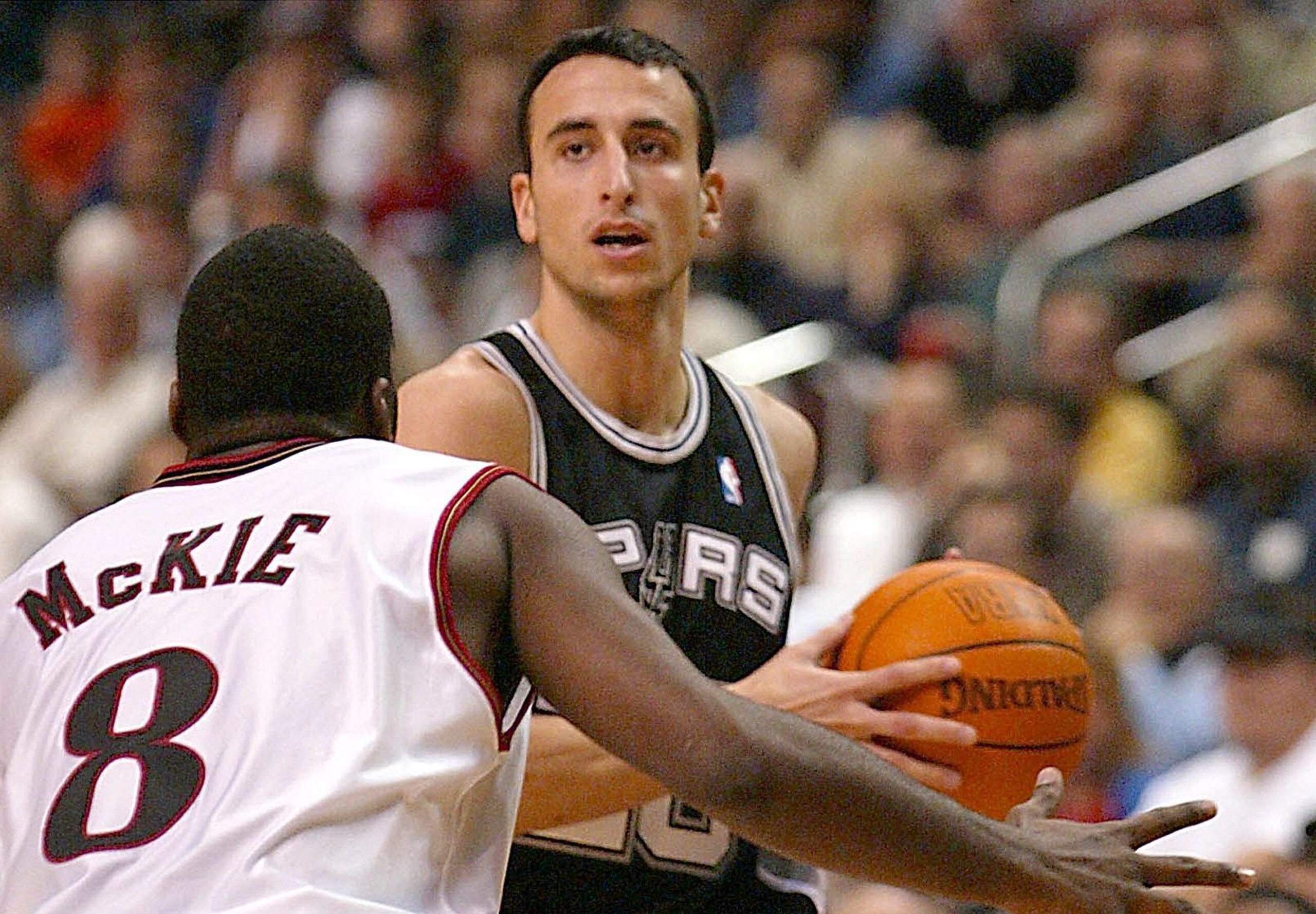
Per-Game Stats: 9.4 points, 3.8 rebounds, 2.9 assists, 1.7 steals, 0.4 blocks
Game Score: 7.95
Individual Score: 190.7
Team Result: Won NBA Finals
Nothing about Manu Ginobili's rookie efforts were historically impressive, except that he maintained a high level of play while helping the San Antonio Spurs survive the Western Conference gauntlet and emerge with the 2003 title.
The Argentine shooting guard may have come off the pine and submitted mediocre counting stats, but his impact was already palpable. His creativity with the ball opened up easier scoring avenues for his more high-profile teammates, and his quick hands and unrelenting effort allowed him to make a substantial defensive impact.
When Ginobili was on the bench, the Spurs could only muster a minus-7.0 net rating throughout the playoffs. That number skyrocketed to a staggering 15.9 when the 25-year-old played, giving him—rather easily—one of the Spurs' most impressive on/off differentials. Only Tim Duncan (plus-23.1) had a larger discrepancy, while Steve Kerr and Speedy Claxton (who combined for just 372 postseason minutes) were the only other men in positive double digits.
But the magnitude of Ginobili's accomplishments shouldn't be undersold for one simple reason: We have a dearth of modern-era players showing up in these rankings.
The ever-increasing depth of talent in the Association makes it tougher for first-year standouts to have a monumental impact on their teams, and the best rookies tend to enter the fray as leaders of bottom-feeding squads. Ginobili is the rare exception as an international dynamo who joined the Association as a second-round pick.
To drive that home, consider this: Daniel Gibson (No. 40), Courtney Lee (No. 43), Dwyane Wade (No. 49), Richard Jefferson (No. 52) and Kawhi Leonard (No. 54) are the only other members of the all-time top 60 who suited up as rookies since Y2K.
5. Jamaal Wilkes, Golden State Warriors: 355.41
7 of 14
Per-Game Stats: 15.0 points, 7.0 rebounds, 1.6 assists, 1.5 steals, 0.8 blocks
Game Score: 11.84
Individual Score: 201.3
Team Result: Won NBA Finals
From the standpoint of game score, Jamaal Wilkes wasn't quite as impressive as some of the men who occupy the spots directly behind him in this countdown. His mark of 11.84 is "only" the 77th-ranked tally among all rookie efforts in the NBA's lengthy history, most comparable during the current millennium to Brandon Jennings' efforts for the Milwaukee Bucks in 2010 and Dwyane Wade's 2004 showing.
But Wilkes didn't just post that number during a single series. He instead maintained it over the course of 17 appearances as his Golden State Warriors fought past the Seattle SuperSonics in six games, won a battle against the Chicago Bulls in the conference finals that went the distance and then swept the Washington Bullets in the 1975 NBA Finals.
To be clear, these Dubs belonged to Rick Barry. However, no clear-cut secondary star emerged to serve as his primary running mate, which allowed Wilkes to finish the postseason ranked second on the Bay Area roster in points per game while hitting 44.6 percent of his attempts from the field and 70.2 percent of his free-throw tries.
First, the forward won Rookie of the Year. Then, he won a title.
What more could you want in an inaugural season while operating alongside one of the era's greatest offensive talents in Barry?
4. Kareem Abdul-Jabbar, Milwaukee Bucks: 356.51
8 of 14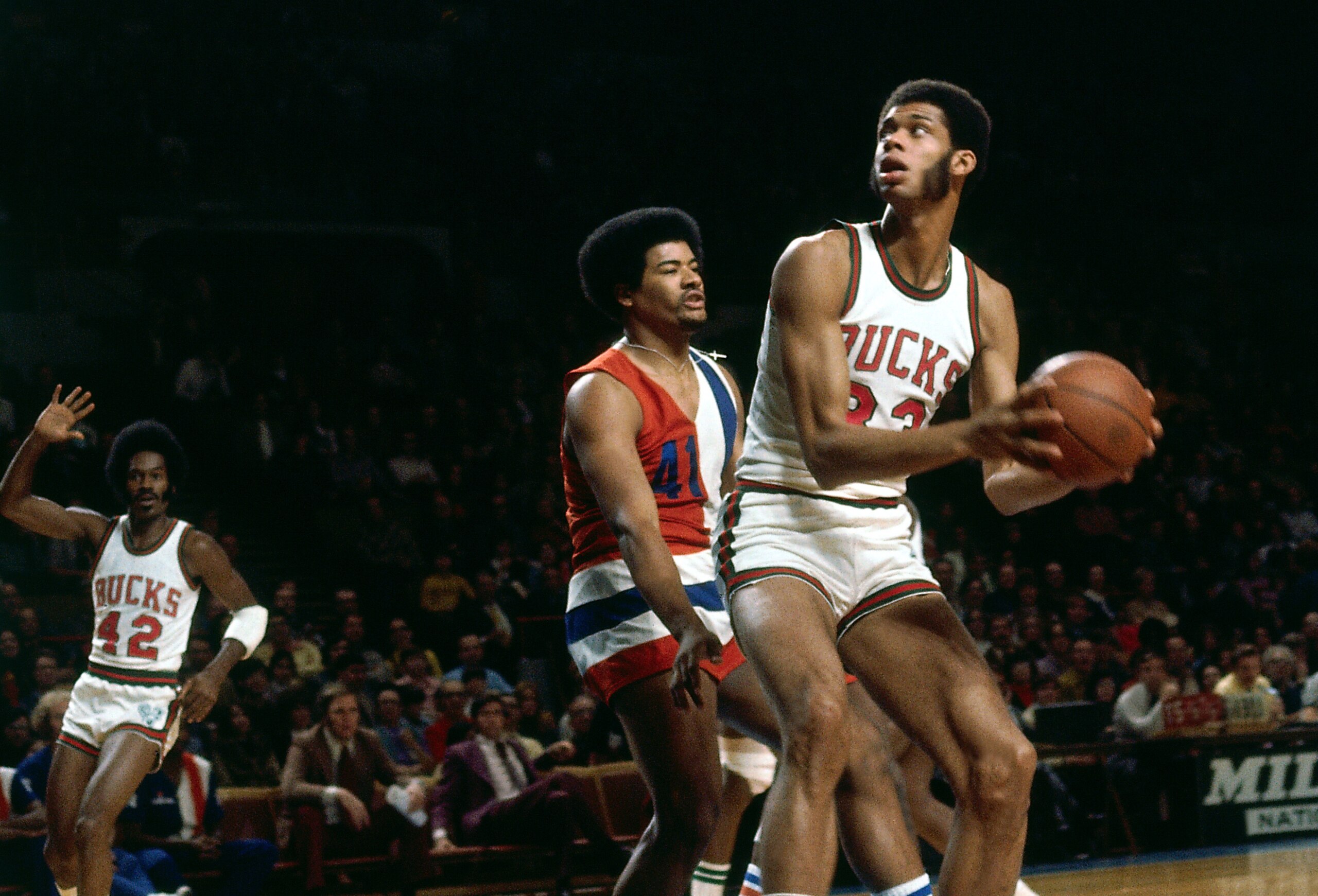
Per-Game Stats: 35.2 points, 16.8 rebounds, 4.1 assists
Game Score: 31.12
Individual Score: 311.2
Team Result: Lost Eastern Division Finals
Just imagine what might have happened if Kareem Abdul-Jabbar's Milwaukee Bucks hadn't lost during the Eastern Division finals. He'd win the first title of his career one year later while teaming up with Oscar Robertson, but the triple-double machine was still on the Cincinnati Royals during this big man's rookie campaign—during which he was still known as Lew Alcindor.
Instead, Abdul-Jabbar was forced to do a disproportionate amount of the heavy lifting. Bob Dandridge (16.3), Jon McGlocklin (14.9), Flynn Robinson (12.8) and Greg Smith (10.7) joined him as double-digit scorers during the playoff run, but that wasn't enough to get by a deep New York Knicks squad that featured Willis Reed, Walt Frazier, Dave DeBusschere, Bill Bradley and Dick Barnett while winning its way to a championship.
Still, the master of the skyhook did his darnedest. Even in the 4-1 series loss, Abdul-Jabbar averaged 34.2 points per game. It just wasn't enough to move on and earn an even better advancement share.
This legendary center still has the top game score (with room to spare) of any first-year player in postseason history. Wilt Chamberlain (27.5 before losing in the East Division finals) and Michael Jordan (24.45 in a first-round loss) remain his closest competitors. His individual score of 311.2 also trails only the top two finishers in this countdown, even though he had far fewer opportunities to rack up more stats.
Had Abdul-Jabbar advanced to the Finals and lost in a sweep while maintaining his exact individual numbers, he'd move up to No. 2 overall. Even a single victory on the biggest stage, though, would have allowed him to overtake everyone else.
3. Bill Russell, Boston Celtics: 361.62
9 of 14
Per-Game Stats: 13.9 points, 24.4 rebounds, 3.2 assists
Game Score: 14.86
Individual Score: 148.6
Team Result: Won NBA Finals
How many rebounds? All the rebounds.
Only one rookie in playoff history has averaged more than Bill Russell's 24.4 boards per contest, and no one else is even particularly close. Take a gander at the top 10:
- Wilt Chamberlain, 25.8
- Bill Russell, 24.4
- Wes Unseld, 18.5
- Eddie Miller, 18.0
- Kareem Abdul-Jabbar, 16.8
- Clifford Ray, 16.5
- Dave DeBusschere, 15.8
- Ray Scott, 14.5
- Elvin Hayes, 13.8
- Hakeem Olajuwon, 13.0
The Boston Celtics legend wasn't a prolific scorer. His 13.9 points per game came while he shot just 36.5 percent from the field and 50.8 percent from the stripe, though he'd make up for those offensive deficiencies with clinical passing out of the post.
But he thrived on the glass, and his heroic defensive efforts keyed one Boston victory after another. If anything, he'd fare better in this analysis if he were a bit worse on the preventing end, since his unrelenting excellence allowed the C's to breeze through the playoffs and prevent him from having more games in which he could rack up counting stats.
Seriously. The Celtics went 44-28 in 1956-57, which gave them the NBA's best record and a bye through the first round. Then they swept the Syracuse Nationals in three outings before winning 4-3 against the St. Louis Hawks in the NBA Finals.
Russell was just too good for his own good.
2. Alvan Adams, Phoenix Suns: 409.95
10 of 14
Per-Game Stats: 17.9 points, 10.1 rebounds, 5.2 assists, 1.3 steals, 1.1 blocks
Game Score: 17.72
Individual Score: 336.7
Team Result: Lost NBA Finals
"I remember looking around at the old guys in the locker room—guys like Pat Riley—and feeling sorry for them because they only had a year or two left. I thought I'd have lots of chances to win the championship, but in 12 years with Phoenix, I never got back to the Finals," Alvan Adams reminisced about the aftermath of a Game 6 loss to the Boston Celtics in the 1976 NBA Finals, per Sports Illustrated's Jennifer Zajac in 1998. "Magic Johnson showed up."
His first postseason run may have ended unsuccessfully, but what a run it was.
One year removed from thriving at the University of Oklahoma, Adams earned Rookie of the Year for his regular-season efforts and then validated the accolade with more superlative showings in the playoffs. Not only was he an efficient player who rarely took bad shots and capably guarded the interior for the Phoenix Suns, but he compiled plenty of points and assists each time he took to the court.
In fact, he remains one of only 42 rookies in NBA history to average a double-double during the postseason. But he's one of just seven to do so while playing in more than 10 games, joining Charles Barkley, Elgin Baylor, Magic Johnson, Red Kerr, Tom Meschery and Nate Thurmond.
Adams was never able to replicate the success of his rookie campaign. Not only did it lead to his lone Finals appearance, but it was also the only season in which he represented the Suns with an All-Star selection.
Nevertheless, he still made his mark, outplaying Paul Westphal and Gar Heard to become the best player on an NBA runner-up in spite of his youth.
1. Magic Johnson, Los Angeles Lakers: 542.99
11 of 14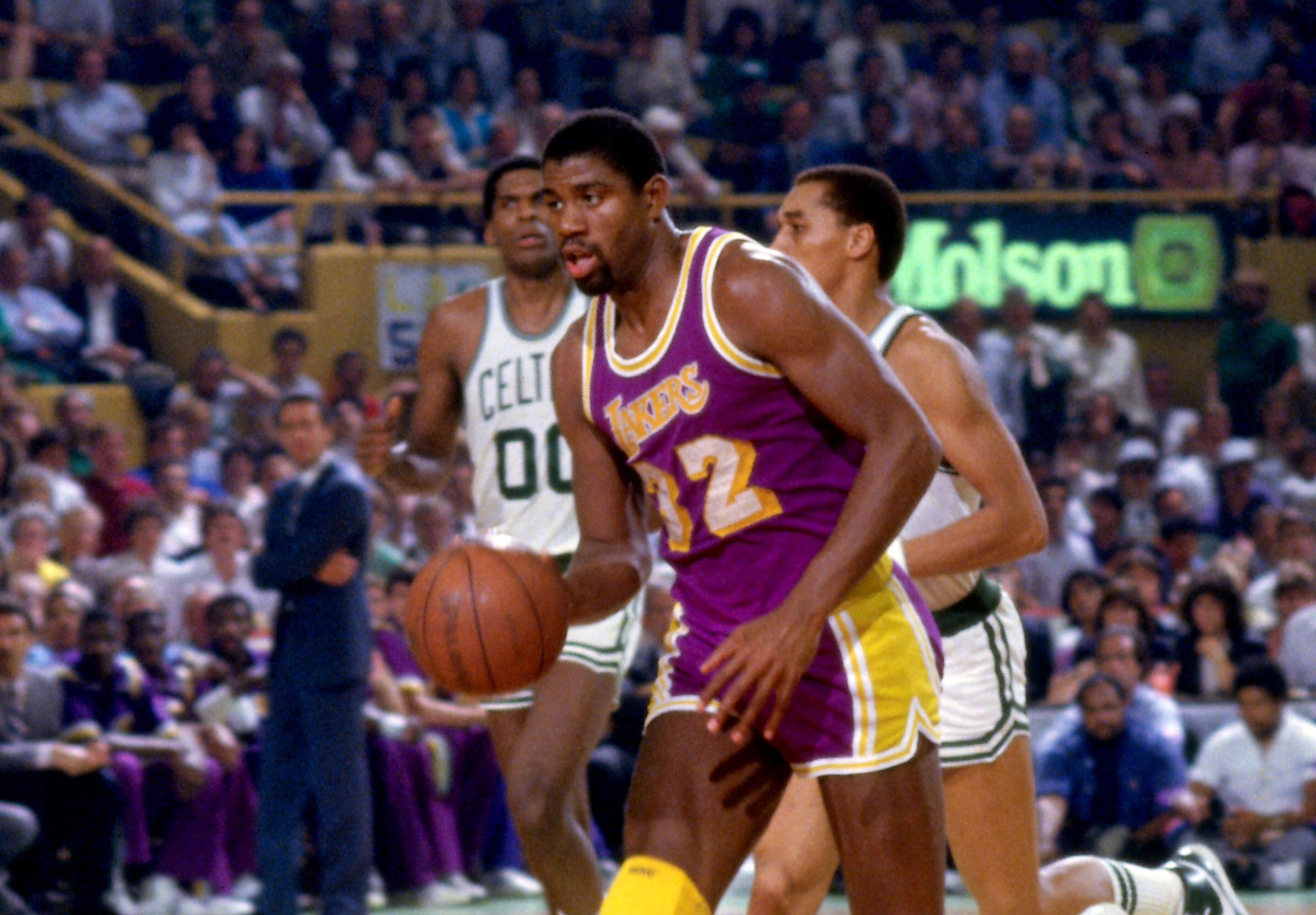
Per-Game Stats: 18.3 points, 10.5 rebounds, 9.4 assists, 3.1 steals, 0.4 blocks
Game Score: 20.55
Individual Score: 328.8
Team Result: Won NBA Finals
Did you expect anything else?
Magic Johnson's legend began—or continued, if you want to include his Michigan State heroics—with his sensational rookie campaign for the Los Angeles Lakers. It culminated in him jumping for the opening tip and logging minutes at center throughout the decisive Game 6 clash with the Philadelphia 76ers to win the NBA Finals. As NBA.com explained while listing this as one of the greatest moments in league history:
"Game 6 looked like it would be a different story. When the team gathered at the airport for the flight to Philadelphia, [Kareem] Abdul-Jabbar stayed home. Not to worry, said Johnson, who boarded the plane and planted himself into Abdul-Jabbar's customary front-row seat. He winked to coach Paul Westhead and then playfully announced to his teammates: 'Never fear, E.J. is here!'"
Kareem Abdul-Jabbar wasn't available after spraining his ankle in the previous contest, so Johnson came through with 42 points, 15 rebounds, seven assists, three steals and a block while shooting 14-of-23 from the field and a perfect 14-of-14 from the stripe. Not only was he rewarded for his efforts with a Finals MVP trophy, but he remains the only rookie in league history to win that coveted award.
But Johnson doesn't take the No. 1 spot because of one outing. He was magnificent throughout the postseason, nearly averaging a triple-double while leading the field in steals per contest. Only five players have bettered his game score, and just Alvan Adams has posted a superior individual score.
Of course, no one has come within spitting distance of his overall mark in playoff score. The gap between Johnson and No. 2 Adams (133.04) is nearly equivalent to the yawning chasm between Adams and No. 12 Red Kerr (133.47), though Kerr is relegated to the honorable mentions and could potentially be surpassed by one of the current first-year standouts.
Where Will Jayson Tatum Finish?
12 of 14
Per-Game Stats: 17.0 points, 5.0 rebounds, 3.0 assists, 1.4 steals, 0.6 blocks
No Kyrie Irving and Gordon Hayward? No problem. Jaylen Brown missed Game 1 against the Philadelphia 76ers with a hamstring issue? Next man up! The Boston Celtics have proved capable of milking talent out of every single player under the purview of head coach Brad Stevens, and Jayson Tatum has recently served as the leading example.
The Duke product enjoyed a strong regular season—a shooting lull in January notwithstanding, as it might have been caused by a lingering finger injury—but he clearly wasn't showcasing the full extent of his skills. He didn't need to while the C's were inordinately deep and featured an egalitarian offensive scheme.
But now, the wealth of injuries has created more offensive opportunities for him, and he's responded by putting all of his scoring talents on display. Whether he's creating looks for himself, fooling defenders with dekes and backdoor cuts or spotting up with confidence, he's proved capable of carrying the Boston offense.
Game Score: 12.84 (No. 61 among all historical rookies in the playoffs)
This is already an impressive mark, one that leaves Tatum sandwiched between No. 62 Dean Garrett and No. 60 Doc Rivers. His closest comparisons from the current millennium stem from No. 67 Derrick Rose (12.46) and No. 55 Nenad Krstic (13.38).
But here's the scary part: Tatum is getting better.
If we isolate only his last three games, during which he scored at least 20 points each time against either the Milwaukee Bucks or 76ers, he'd be at 16.55. And that mark would leave him behind only the scores earned by 26 first-year playoff contributors.
Individual Score: 102.7 (No. 63)
Right now, Tatum doesn't have the requisite volume necessary to climb any higher up the ladder. He isn't even the top-ranked player with his last name; that honor belongs to No. 36 Earl Tatum, whose individual score of 128 helped the 1977 Los Angeles Lakers advance to the Western Conference Finals.
But this is also where we get to start having some fun—and please note, all fun operates under the assumption Tatum maintains his exact level of play no matter how many more times he suits up for the C's.
If in spite of the Game 1 beatdown, the former Blue Devil winds up losing to the Sixers in five contests, he'd finish with an individual score of 154.05 (No. 23). A loss to Philadelphia in Game 7 would take him all the way to 179.73 (No. 15).
Rising into the top 10 and displacing Jamaal Wilkes from that exclusive club would require eight more games and take Tatum into the Eastern Conference Finals. And if he somehow played in the maximum allowable contests by suiting up seven times in each remaining round while maintaining his current level of play, his individual score would rise to 359.45 and take over the No. 1 spot. It's highly unlikely, but it is technically possible.
Playoff Score: 102.7 (No. 94)
If he loses in Game 7 of the current round while maintaining his current level: With an individual score of 179.73 and no bonus points from the advancement share, Tatum would finish at No. 36 in rookie playoff history, directly behind Nate Thurmond (181.78) and Tom Sanders (181.9).
To get into the top 10: To move past Johnny Davis and earn the No. 10 spot, Tatum would need to advance to the Eastern Conference Finals. If he kept playing exactly the same way, took seven games to work past the Sixers and suited up in all seven possible contests during the penultimate round, his score of 305.11 would do the trick regardless of the final outcome.
To get to No. 1: Displacing Magic Johnson is a tricky endeavor, but it's still possible. It also can't happen if Tatum's Celtics fail to win a title, since playing out every remaining series in seven games, maintaining his current level of play and finishing as a runner-up would leave him with a score of 430.49 that beats Alvan Adams' 409.95 but trails Johnson's 542.99. Worse still, Tatum would fall just shy if he won every outstanding series in seven-game fashion (537.05).
To displace the rookie legend from 1980, he needs to up his game score, as he's done in the past three outings, and hope every series goes the distance.
Prediction: Despite Boston's impressive effort in Game 1 of the second round, I still don't see them knocking off the Sixers, who can't possibly shoot as poorly as they did during that opening contest. Elimination in Game 6 while playing exactly the same way would jump Tatum up to No. 39 with a score of 166.89, placing him between Anthony Roberts and Marc Iavaroni.
Where Will Ben Simmons Finish?
13 of 14
Per-Game Stats: 18.2 points, 10.0 rebounds, 8.5 assists, 2.3 steals, 0.7 blocks
Though his jumper still isn't developing, Ben Simmons hasn't been hindered from showcasing everything that makes him such a special basketball player.
He's served as the tip of the spear for a suffocating Philadelphia 76ers defense that makes the most of his switchability and knack for covering any position on any given possession. He's driven toward the rim on innumerable trips down the floor and picked up easy points with backdoor cuts and crashes into the paint that leverage his unique combination of size and speed. He's found one open teammate after another with a preternatural understanding of passing lanes and the tools necessary to make the extraordinary look routine.
Simmons should remind you of Magic Johnson in so many different ways—among them, the potential to become the first rookie in NBA history to average a triple-double during the postseason.
Game Score: 17.5 (No. 17 among all historical rookies in the playoffs)
Only 16 rookies have every posted superior game scores during their initial forays into the postseason, and that number is small enough for us to list them all out. From worst to best: Elgin Baylor, Donovan Mitchell (spoiler alert), Alvan Adams, Maurice Cheeks, Tom Burleson, Wes Unseld, Archie Clark, Jerry West, Elvin Hayes, Chuck Person, Magic Johnson, David Robinson, Marques Johnson, Michael Jordan, Wilt Chamberlain and Kareem Abdul-Jabbar.
When over half of the players placed ahead of you have made the Hall of Fame, you're probably doing something right.
Or, in Simmons' case, he's doing quite a few things right.
Individual Score: 105.0 (No. 59)
Because the 76ers needed only five games to dispatch the Miami Heat in the opening round—thanks in large part to Simmons' all-around excellence—this potential Rookie of the Year is still lagging well behind in the volume department. He's snuck into the top 60, but he still sits directly behind nondescript first-year players such as Courtney Lee and Rodney Stuckey who made deep runs on the shoulders of superior teammates.
But Simmons' score will only keep climbing.
Should he maintain his exact level of play and wind up getting swept out of postseason contention by the Boston Celtics, the LSU product will still gain enough volume to climb into 23rd place with a score of 157.5. There, he'd fall in just after Sam Cassell and Maurice Cheeks. Elimination at the hands of the Beantown representatives in Game 7 would allow him to vault up to No. 8.
In fact, Simmons only needs this current clash to go the distance while he maintains his current level to rise into the top 10. Could he get to No. 1 in individual score? If he suited up 14 times without changing his per-game output, yes. Essentially, he'd require a trip to the NBA Finals.
Playoff Score: 105.0 (No. 87)
If he loses in Game 7 of the current round while maintaining his current level: Six more games would allow Simmons to lift his individual score to an even 210. But without the benefit of anything other than a goose egg in advancement share, he'd still sit at No. 23, trailing David Robinson (214.4), Richard Dumas (216.5) and 20 other first-year standouts.
To get into the top 10: If Simmons logs 10 more appearances for the Sixers, he'll be there. Obviously, that would guarantee a trip to the Eastern Conference Finals, which would benefit this overszied point guard immensely while he's playing an impressive 38.2 minutes per game.
To get to No. 1: Without elevating his current level of play, Simmons can't quite get past Magic sans a title. Should he produce the same per-game output and go to seven games in every series before losing a heartbreaker in Game 7 of the NBA Finals against the Houston Rockets or Golden State Warriors, he'd fall just shy of Johnson's 542.99 with a playoff score of 534.58.
But with a championship, everything changes. So long as he plays at least 14 more games before earning his ring—basically, he can't just win the next four games against Boston and sweep each of the next two series—he'll surpass the unsurpassable floor general.
Prediction: Even though the youthful Sixers are in a 0-1 hole to the Celtics, they're still the most talented team in the Eastern Conference. I'm not deviating far from my original prediction, which had them beating Boston in five games, toppling the Toronto Raptors in seven and losing to the Rockets in five. I'll lend the C's an extra win after their Game 1 exploits, which would give Simmons 17 more appearances and a berth in the Finals.
At his current level, that would be enough for the do-everything floor general to finish with a playoff score of 482.08 and lag behind only Johnson.
Where Will Donovan Mitchell Finish?
14 of 14
Per-Game Stats: 27.4 points, 6.6 rebounds, 3.0 assists, 1.3 steals, 0.6 blocks
Though you can see flashes of Donovan Mitchell's all-around potential when he locks down opposing guards, hauls in rebounds or sets up his teammates on the fast break, he's at his best scoring the basketball. And he can do so in myriad manners.
Need a clutch jumper from above the break? Mitchell can rise and fire with unwavering confidence. But he's even better attacking the hoop and showing off his impressive level of body control through traffic, contorting until he has an open avenue to kiss the ball off the backboard and through twine.
Mitchell's 27.4 points per game are misleadingly low, believe it or not, since a left foot contusion forced him to miss some of his first playoff game and limited him to "only" 27 points. It might even have hindered him a bit in Game 2 against the Oklahoma City Thunder, though he still went for a 28-spot. Either way, Mitchell's scoring average leaves him trailing only Kareem Abdul-Jabbar (35.2), Wilt Chamberlain (33.2), George Mikan (30.3) and Michael Jordan (29.3) among all rookies in playoff history.
Game Score: 17.69 (No. 15 among all historical rookies in the playoffs)
Mitchell isn't just scoring a lot of points. He's playing with remarkable efficiency for a first-year backcourt member who's tasked with serving as a nightly source of volume scoring on a Utah Jazz squad without any other players capable of challenging him for alpha-dog responsibilities.
Somehow, the 21-year-old is only coughing up the ball 2.9 times per contest, and head coach Quin Snyder surely can't be displeased with his shooting. Mitchell is draining 45.5 percent of his field-goal attempts, 33.3 percent of his triples (while taking 7.3 per game) and 92.6 percent of his free-throw tries—all adding up for a 54.3 true shooting percentage.
Volume scoring alone won't yield the No. 15 game score among all rookies in the NBA playoff archives.
Individual Score: 123.8 (No. 37)
Mitchell already ranks well here, as he's played eight games at a high level for the Jazz. But he isn't done ascending the leaderboard quite yet, even if he sits sandwiched in a solid spot between No. 38 Daniel Gibson (121.5) and No. 36 Earl Tatum (128).
Utah pulled off an upset win Wednesday night over the Rockets to tie the series 1-1, but even if Mitchell and his Jazz had been swept in the second round after first eliminating the Oklahoma City Thunder, he'd have finished with a 176.86 individual score that placed him at No. 15 among all rookies in NBA history.
That's already nothing to be ashamed of. Yet prolonging the inevitable and losing to Houston in seven games would boost his score further, pumping him all the way up to No. 6 if he maintains his current level of play. And if he's somehow destined for the No. 1 spot in individual score, he can get there by playing in 13 more contests with the same typical output—something that could be accomplished without even going to the NBA Finals if the series against the Rockets and the Western Conference Finals both go seven games.
Playoff Score: 123.8 (No. 72)
If he loses in Game 7 of the current round while maintaining his current level: Another six games would lift Mitchell's individual score to a stately 229.91. Even without a single point earned in advancement share, that would be enough for him to sit at No. 17, neatly between John Lucas (227.73) and Sam Cassell (270.76).
To get into the top 10: Much like Simmons, Mitchell can ensure his placement in the top 10 by making it to the penultimate round and playing at the same level. He just needs eight more games to get there and displace Johnny Davis.
To get to No. 1: Unlike Simmons and Tatum, Mitchell can move beyond Magic Johnson without winning a championship. Playing at the exact same level while beating the Rockets in seven games, toppling the Golden State Warriors (or New Orleans Pelicans) in seven and losing to the Eastern Conference representatives in seven would give him a playoff score of 557.93.
Granted, winning some jewelry would make the task easier. Again assuming the same per-game output, Mitchell would only need to suit up in 13 more contests to claim the No. 1 spot if he were to earn a ring.
Prediction: This is where playing in the Western Conference comes back to bite Mitchell. Even though his score can rise higher than those of his leading rookie counterparts, it likely won't. The Jazz stole a game, but there's a very real scenario where Houston wins out in Round 2.
If we assume the worst—that Utah's winning days are done in 2017-18—Mitchell's current level of play would give him a playoff score of 194.54, which ranks him 30th overall.
Unless otherwise indicated, all stats from Basketball Reference, NBA.com, NBA Math or ESPN.com and current heading into games on May 2.



.jpg?w=2560 "Love's Body Already 'Tired'")

.jpg?w=2560 "Mahomes' Wife Trolls Kubiak 💀")
.jpg?w=2560 "Tyreek Deal May Come Soon")