


Championship Week provides one of the most exciting stretches in men's college basketball, but conference tournaments are not universally loved.
Despite the jam-packed slates featuring nearly all 351 Division I teams fighting for a March Madness bid, a vocal group of viewers would prefer the tournaments did not happen.
The reason is simple: Why should the best regular-season champions from one-bid conferences be at risk of missing March Madness? Eliminate these, and that's no longer a concern.

.jpg?w=2560 "Steelers Saints Football")
.jpg?w=2560 "Rams Raiders Football")
But that frustration feels misdirected.
While conference tournaments are not perfect and can be improved, they're a hugely enjoyable, significant part of the college basketball season.
From an entertainment perspective, there isn't a more captivating week all year. We needn't set the time-travel dial beyond Thursday for that evidence.
TCU's Desmond Bane drilled a three-pointer at the horn to force overtime against Kansas State. Within a half-hour, Collin Sexton saved Alabama's season with a buzzer-beating scoop. A little later, Alpha Diallo's putback helped Providence even the score and eventually clip Creighton during the extra frame.
After all that action, it was finally time for dinner on the East Coast.
Do you really want that excitement to vanish?
Without conference tournaments, critical games for bubble teams would be spread among the final two weeks of the regular season. In the current setup, a few make-or-break contests often tip within an hour of each other multiple days in a row.
Regardless of whether the bubble is considered soft or strong in a given year, that system makes for a hectic stretch of important basketball.
Yes, we acknowledge that conversation is mostly limited to power conferences. The thrilling finishes mean nothing to the Rider Broncs, UNC-Asheville Bulldogs or Wagner Seahawks, regular-season champions who lost in their respective 2018 league tournaments. They're headed for the NIT, not the NCAA tournament.
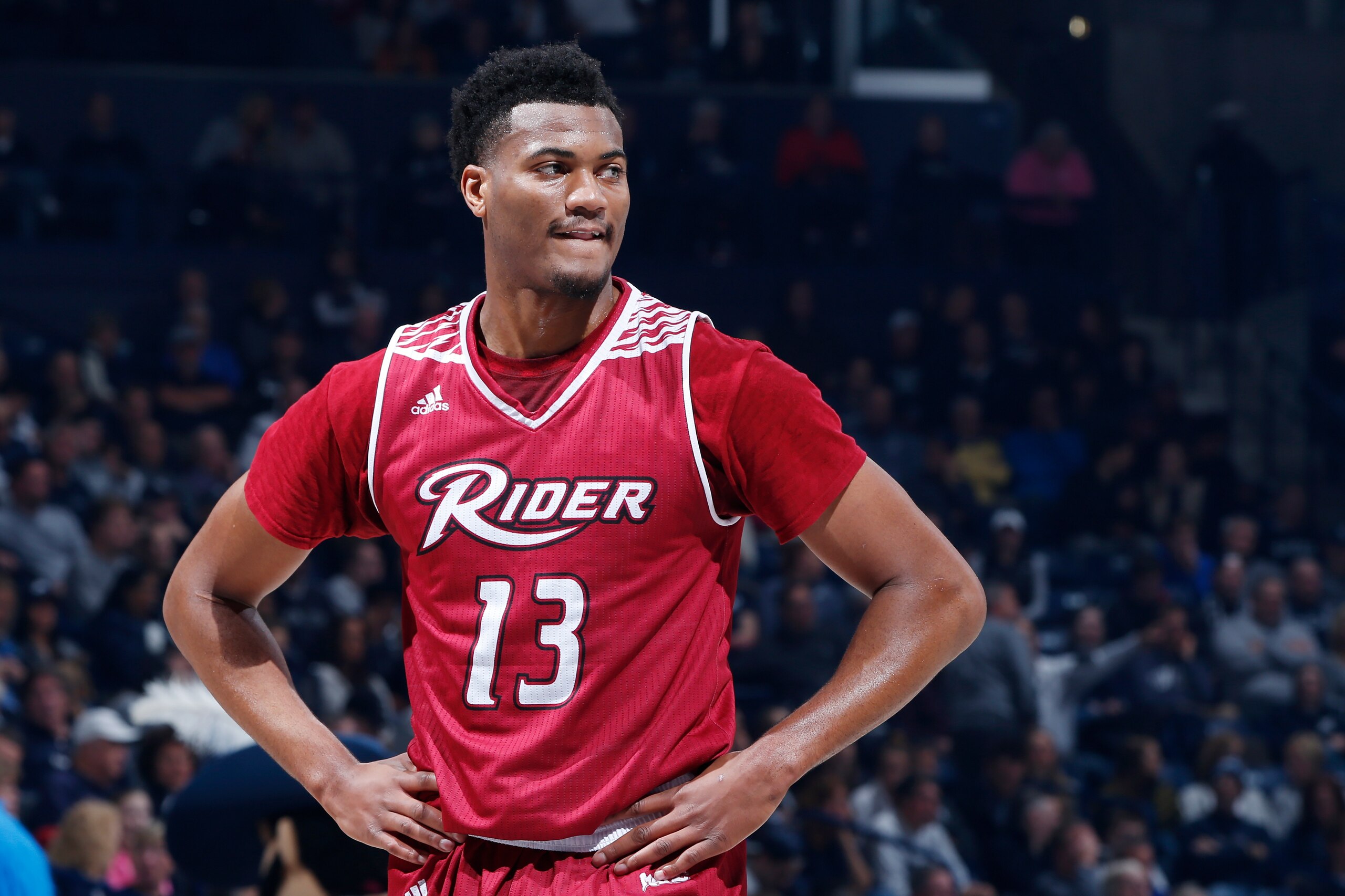
All of those conferences already hold the power to send the regular-season winner to the Big Dance; wouldn't they prefer to have the absolute best representation in March Madness? If so, why do they not?
Money, of course. Even the Ivy League caved in 2017.
It certainly stings when 2014 Green Bay (24-6), 2015 Murray State (27-5), 2016 Monmouth (27-7) or 2017 Texas-Arlington (25-8) miss the field. We'll never actually know how those popular potential Cinderella teams would've fared.
However, regular-season titles are typically decided by a small difference and don't always have an outright winner. If multiple teams are within a game or two, is the champion substantially better? With some exceptions, the answer is usually no.
Mid-major leagues can shape conference tournaments to benefit the favorite, such as high seeds hosting up to (or through) the semifinals. Granted, no method is foolproof; upsets will happen. That's the byproduct of all sports. The goal for one-bid leagues should be to send a top program as much as possible.
But really, that's already happening anyway.
During the last 10 years (which includes 2018 results to date) traditional one-bid conferences have held a combined 190 tournaments. Seed Nos. 1, 2 and 3 have accounted for 78.95 percent of the titles.
It's extremely rare for a 2013 Liberty (15-20) or 2016 Holy Cross (14-19)—seeded 11th and ninth in their leagues, respectively—to pull off a shocking run. Since the Big Dance expanded to 64 teams in 1985, only 23 teams with a losing record have secured an auto-bid.
Leaving an opportunity for second-seeded 2018 Radford, just one regular-season game behind UNC-Asheville, isn't a bad thing.
Note: The preceding data excludes the AAC, ACC, Atlantic 10, Big East, Big 12, Big Ten, Missouri Valley, Mountain West, Pac-12, SEC and West Coast.
After all, the ugly truth is mid-major conferences rarely have major success in the NCAA tournament even though top seeds regularly qualify.
Most of the memorable Cinderellas—2006 George Mason, 2011 VCU, 2013 Wichita State and 2014 Dayton—that reached the Elite Eight all earned at-large berths. Plus, 2011 Butler might've followed suit had it not won the Horizon League. The primary exception is 2008 Davidson led by Stephen Curry.
Without conference tournaments, 1991 Richmond wouldn't have become the first No. 15 seed to win a first-round game. 2013 Florida Gulf Coast finished No. 2 in the Atlantic Sun before its magical Sweet 16 run.
These are the Cinderella moments for 20-plus leagues every year. Nearly half of the No. 1 seeds have still celebrated and cut down the nets during the last decade, yet conference tournaments offer that one final opportunity for a surprise team.
If that auto-bid carrot at the end of the stick didn't exist, the level of competition in the NCAA tournament would only slightly be raised while one captivating week of action disappears.
And college basketball would miss it dearly.
Follow Bleacher Report writer David Kenyon on Twitter: @Kenyon19_BR.

.jpg?w=2560 "AP Poll Top Five Week 9")
.jpg?w=2560 "Packers Safety Slams Refs 🤬")
.jpg?w=2560 "Lamar Being Out Shocked Ravens")
.jpg?w=2560 "Mahomes Told Teammate to Leave Meeting")

