


If you have been watching men's college basketball this season and have gotten the feeling the game is more of a glorified three-point-shooting contest than ever, you're right.
Nationally, college basketball is relying on the long ball at a record level for a fourth consecutive season.
Maybe it's a trickle-down effect of the Golden State Warriors' style and everyone wanting to be the next Stephen Curry. Perhaps it's an inevitable result of asking power forwards and centers to occasionally (or frequently) shoot from the perimeter. It might be a continued realization that the three-point shot is the quickest, easiest way to get points when you don't have dominant big men.

.jpg?w=2560 "Steelers Saints Football")
.jpg?w=2560 "Rams Raiders Football")
The cause is up for debate.
The effect is not.
And the solution is to extend the three-point line.
Maybe "solution" isn't the right word. That makes it sound like I have a problem with three-pointers when nothing could be further from the truth. All of my favorite players while growing up were unconscious gunners, and nothing about this season has been more entertaining than watching Trae Young drain triples from several feet beyond the arc without even grazing the rim.
Yet, this year-over-year rise in perimeter dependency is an alarming trend that is both homogenizing the game and making it even more unpredictable than it already has been for decades. And the only logical way to curb it is to extend the line to make the shot more difficult.
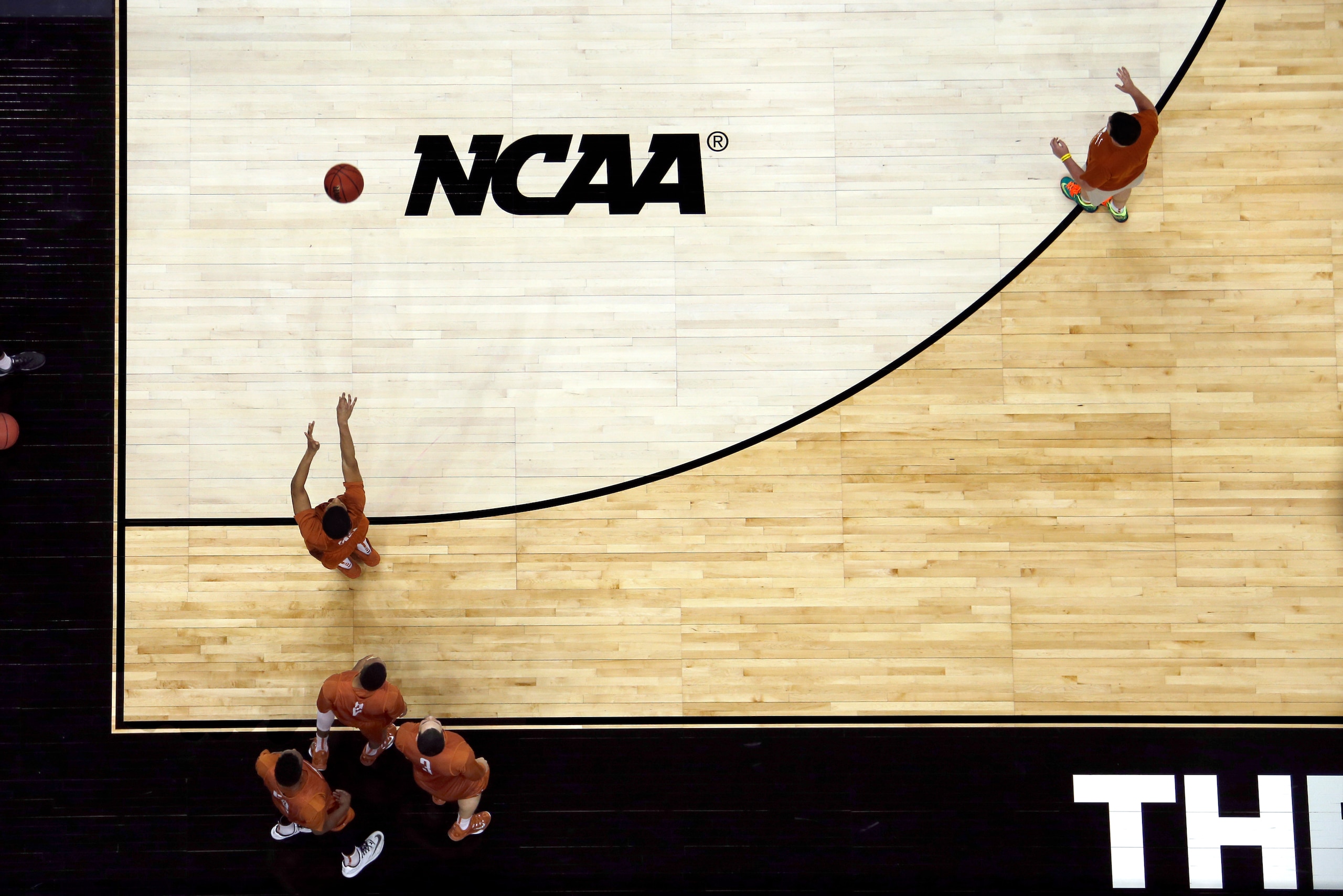
The KenPom.com database dates back to the 2001-02 season. That year, the national three-point rate was 32.1, meaning that 32.1 percent of all field-goal attempts came from three-point range. That number rose gradually from 2003 to 2008 until teams were taking 34.5 percent of their shots from downtown.
After the 2007-08 season, the NCAA moved the three-point line back one foot to its current distance of 20 feet, nine inches. The rate of attempts immediately dropped. And for six consecutive seasons, it hovered in the 32.6-33.1 range.
But it has been soaring over the past four years.
The national three-point rate in 2013-14 was 32.9.
The following season, it jumped to 34.2.
Then to 35.4.
Last year, it was 36.4.
Currently, we're at 37.4.
How much of a difference can a couple of percentage points make, though?
Well, with 351 teams playing 31-plus games per year—not to mention the increase in tempo when the shot clock was reduced to 30 seconds in 2015-16—it's a massive difference:
- 2013-14: 32.9 three-point rate, 6.31 made threes per game, 18.22 attempts per game
- 2017-18*: 37.4 three-point rate, 7.73 made threes per game, 21.93 attempts per game
*Through January 29
In four seasons, that's an increase of more than 20 percent in attempts and more than 22.5 percent in makes per game. At the current rate of made three-pointers per day, the number of made threes in this season will eclipse the number of made threes in the 2013-14 season on February 16—almost a full month before the NCAA tournament begins March 13.
Per Sports Reference, in the entire 2012-13 season, there were just eight games in which one of the teams attempted at least 40 threes—four of which only got that high because of an overtime period.
Already this season, there have been 68 instances when a team attempted at least 40 threes, including a Dec. 1 battle between Marist and The Citadel in which both sides tried at least 40 triples in regulation. Hell, Savannah State is averaging 40.8 three-point attempts per night.

The wild part is that despite the significant increase in volume, accuracy is at its highest point since the early 1990s. The national conversion rate is 35.1 percent, which has improved steadily since bottoming out at 33.9 percent in 2012-13.
Meanwhile, offensive rebounding numbers are in the toilet, as the concept of following one's shot has been abandoned in favor of falling back to prevent fast-break opportunities. From 2001 to 2007, teams consistently rebounded 35 percent of their misses. Over the last two-plus seasons, though, that number has been below 30 percent, and it's on the precipice of dipping below 29 percent this year.
To be fair, the drastic decrease in offensive rebounding may be as much a cause of the rise of three-point rate as it is an effect of it. Less crashing the glass means fewer two-point attempts on putbacks, impacting the denominator in that ratio. But it's clear from the aforementioned 20-plus percent increase in both three-point makes and attempts per game that the uptick in three-point rate is much more than just a decrease in total number of field-goal attempts.
Regardless, we're left with a game where it's far more common to see possessions end after one three-point attempt than it was even five years ago.
This also means the game is more random than ever, since even the best three-point shooting players/teams can go ice-cold, and since even a blind squirrel can find a nut on any given night. And we are repeatedly witnessing that randomness at the top of the polls.
Already this season, an unranked team has defeated an AP Top Five team 17 times. That's more than once per week.
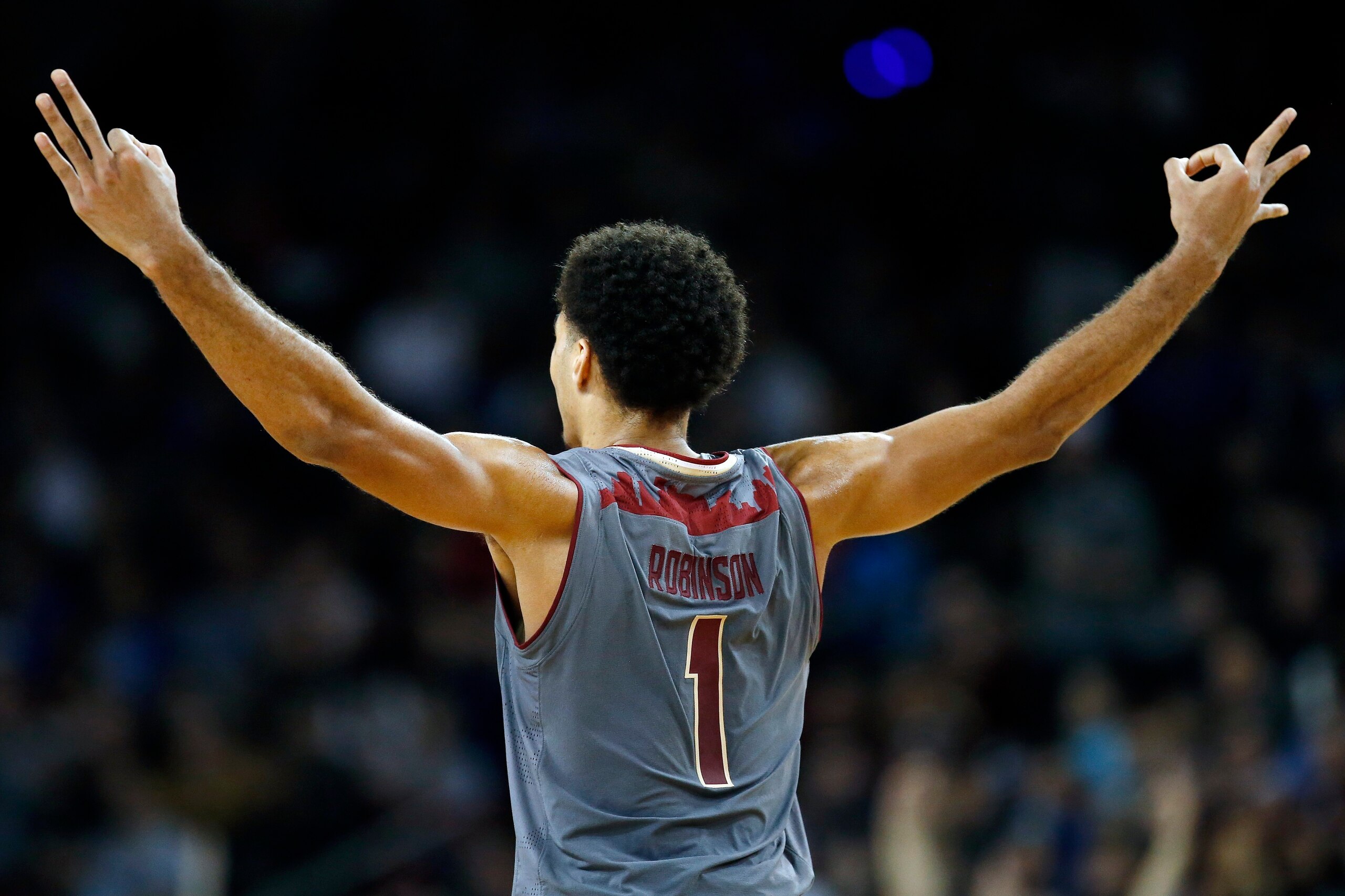
Comparatively, by the end of January in the 2013-14 season, it had only happened five times. And in 2014-15, it happened just six times by the finish of the year's first month—one of which was the result of Frank Kaminsky's absence for Wisconsin, and two of which led to erroneous thoughts that eventual national champion Duke maybe wasn't as good as we thought.
It's possible there aren't any elite teams this year. It's also possible the AP voters are paying less attention than usual and are either ranking teams too favorably or failing to recognize squads who deserve to be ranked, resulting in more upsets. But I would propose that the constant carnage is largely due to the ever-increasing reliance on the long ball—both to the detriment of the favorite and to the advantage of the underdog.
In each of the 17 AP Top Five upsets this season, the underdog shot better from three-point range than the favorite. Collectively, the Top Five teams shot 99-of-400 (24.8 percent) in those games while the underdogs were 150-of-371 (40.4 percent).
Even if the lack of predictability is what most draws you to this sport, there has to be a limit, right? And before we get to the point where every center is a stretch 5 and every team is taking more than half of its shots from three-point range, the most obvious way to impose that limit is by pushing the three-point line back to match the NBA distance of 23 feet, nine inches.
The move wouldn't eliminate the long ball—who wants that?—but it would make it more of a luxury than a necessity as coaches would get a bit hesitant to award the green light to just anyone. Moreover, it would help better prepare players for the NBA while also spacing the floor for more of that freedom of movement the NCAA has been preaching to its officials and fans for years.
And if the slight increase in predictability helps more of us survive into the second weekend of the NCAA tournament before ripping our brackets to shreds, even better.
Statistics courtesy of KenPom.com and Sports Reference.
Kerry Miller covers men's college basketball for Bleacher Report. You can follow him on Twitter @kerrancejames.

.jpg?w=2560 "AP Poll Top Five Week 9")
.jpg?w=2560 "Packers Safety Slams Refs 🤬")

.jpg?w=2560 "Lamar Being Out Shocked Ravens")

.jpg?w=2560 "Mahomes Told Teammate to Leave Meeting")