
By the Numbers: Who Should Be in the 2018 NBA 3-Point Contest?
We're not concerned with the players who will be suiting up in the NBA's three-point festivities in Los Angeles at All-Star Weekend on Feb. 17. The real-life field is coming together, but we're not going to let that sway our decision-making process.
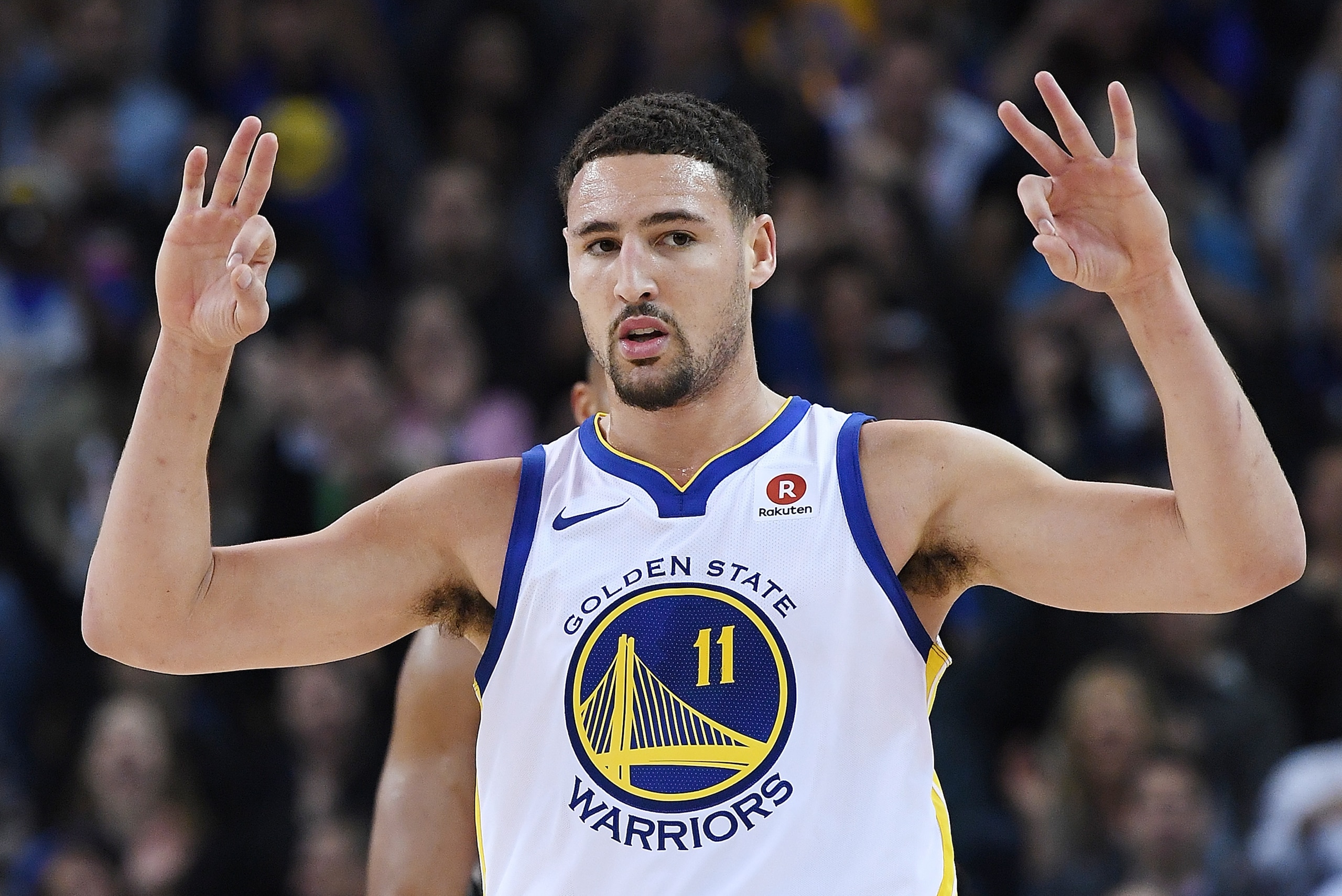
According to The Athletic's Anthony Slater, Stephen Curry won't be participating. He also reported that Klay Thompson will be included in the field two years after winning the competition. Meanwhile, Bradley Beal is in, per the Washington Post's Candace Buckner, while a report from ESPN.com's Adrian Wojnarowski expands the confirmed field to three with Devin Booker.
Should Curry be participating? Do Thompson, Beal and Booker deserve to be representing their squads by pulling balls off racks and quickly firing them at the basket?
We're turning to the numbers to find out, allowing results from the come-to-pass portion of the 2017-18 season to dictate the eight contestants. If you've played in at least 20 games and are among the eight leaders in three-point value added per game, congratulations! Your (fake) ticket is in the mail.
The league as a whole is shooting 36.11 percent from downtown during the current season. Since each successful triple is worth three points, that means they're providing, on average, 1.0833 points per three-point attempt. Subtract a player's actual points per three-point attempt from the average, and you have their value added per attempt. Multiply that by their attempts per game, and you have value added per game.
Simple enough?
We'll still give you an example.
Booker is shooting 38.2 percent from deep for the Phoenix Suns, which means he's scoring 1.146 points per three-point attempt—0.0627 more than average. He's taking an even seven treys per contest, so he's adding 0.4389 value above average per game with his threes.
Is that enough to gain entry to our hypothetical field? You'll find out soon enough.
8. CJ McCollum, SG, Portland Trail Blazers
1 of 8
Three-Point Percentage: 41.85
Three-Point Attempts per Game: 5.87
Three-Point Value Added per Game: 1.01
At this point, you shouldn't be surprised by CJ McCollum's success from beyond the rainbow. He's submitting numbers almost identical to the ones from each of the last two seasons. Seriously, look at how little differentiation exists between the years:
- 2015-16: 41.7 percent on 5.9 attempts per game
- 2016-17: 42.1 percent on 5.5 attempts per game
- 2017-18: 41.9 percent on 5.9 attempts per game
So does that make this his best three-point-shooting year to date?
In terms of value added, this would actually be the worst of the bunch because the leaguewide average has risen each of the last two campaigns. But from a more subjective standpoint, he's maintaining volume and efficiency while creating more shots off the bounce than ever before.
That self-creation aspect may not factor into our analysis, but it's still notable that McCollum is requiring assists on just 66.4 percent of his made triples after sitting at 74.1 and 72.1 percent each of the last two seasons. He's mixing together all the tools in a coveted three-point arsenal to continue pushing toward the upper echelon of professional snipers.
Alternates: Marvin Williams (1.0 value added per game), Wayne Ellington (0.98), Troy Daniels (0.98), Lou Williams (0.97), James Harden (0.94), Kevin Durant (0.91), Tobias Harris (0.9), E'Twaun Moore (0.89)
7. Joe Ingles, SF, Utah Jazz
2 of 8
Three-Point Percentage: 42.80
Three-Point Attempts per Game: 5.32
Three-Point Value Added per Game: 1.07
Joe Ingles doesn't have a flashy game, and he doesn't receive nearly enough hype outside of Salt Lake City. But as Dan Favale wrote during the small forward portion of our joint positional rankings, he's become one of the league's most efficient marksmen, among other things:
"Joe Ingles' performance is rooted in balance and proportion. His game takes many forms for the Utah Jazz, shape-shifting based on opponents and lineups.
"Swish threes with absurd efficiency? Done. Jump-start pick-and-rolls with (occasional) sleight typically reserved for point guards? No problem.
"Rotate between defensive assignments from all walks of skill—big and small, explosive and slick, on-ball maestros and spot-up assassins—with seamlessness that belies his workaday athleticism? Sure thing.
"Few players are more underappreciated than Ingles. He's been billed as a modest-volume specialist, someone hardly worth his $52 million price tag. His absolute value, however, gets lost in the number of hats he wears."
Of course, we're not concerned with his switchability and knack for jump-starting the Utah Jazz offense with something other than his long-range shooting. Only the marksmanship matters here, and that's still good news for a player draining 42.8 percent of his triples while taking 5.3 per game.
Oh, and don't mistake Ingles for a pure catch-and-shoot wing. He's comfortable operating while dribbling, as evidenced by only 80.4 percent of his treys this go-round coming off a teammate's feed—the lowest mark of his four-year career.
6. Buddy Hield, SG, Sacramento Kings
3 of 8
Three-Point Percentage: 43.81
Three-Point Attempts per Game: 4.67
Three-Point Value Added per Game: 1.08
What's particularly amazing about Buddy Hield's performance as a sophomore with the Sacramento Kings is his ability to add so much three-point value while logging just 24.1 minutes per game.
Imagine if Sacramento entrusted him with 32 minutes during his average appearance. His score in this analysis—assuming he maintained his three-point rate and percentage—would skyrocket to 1.43, leaving him behind only the league's top three finishers. Not bad for a 24-year-old only a few years removed from connecting on his triples at a 35.9 percent clip as a junior at Oklahoma.
Throughout NBA history, 45 qualified shooters have taken at least four long-range attempts per contest and hit on no fewer than 43 percent of them. Stephen Curry and Kyle Korver have done so on six separate occasions. Hield and three players yet to appear in this countdown are all tracking toward the club in 2017-18.
But how many have ever done so as first- or second-year NBAers and without playing even 25 minutes per game? Now Hield stands alone.
Young contributors aren't supposed to shoot with such unrelenting frequency while still trying to carve out a featured role in the rotation, and they're certainly not supposed to do so while maintaining efficiency rates that challenge for the league lead.
The Kings have to be pleased with this development, even if they might've seen it coming after the 2-guard shot 39.1 percent from downtown as a rookie.



5. Kyle Korver, SG, Cleveland Cavaliers
4 of 8
Three-Point Percentage: 43.03
Three-Point Attempts per Game: 5.30
Three-Point Value Added per Game: 1.10
Death. Taxes.
Kyle Korver connecting on over 40 percent of his three-balls.
Seriously, shouldn't that be thought of as an unerring inevitably at this point? The last time Korver's three-point percentage fell into the 30s was back in 2015-16, when he made 39.8 percent of his triples while taking five per game. Before that, you have to go all the way to 2008-09, when the historically effective sniper was still with the Utah Jazz.
Since that 2008-09 campaign (38.6 percent on 3.4 attempts per game), he's led the league in percentage four times while knocking down 45.0 percent of his 4.8 attempts per game. You could argue that his current numbers with the Cleveland Cavaliers are a bit disappointing, particularly because he's been misfiring more frequently since Christmas, able to connect on only 38.3 percent of his attempts as his squad plummets down the Eastern Conference standings.
The overall marks still give him the league's No. 5 score.
Sure, Korver almost always relies on setup passes from LeBron James and Co., but it's not like he has to break down defenders or take rhythm dribbles before firing away in the midseason contest. The rack is assisting him, and defenders are scarce.
4. Paul George, SF, Oklahoma City Thunder
5 of 8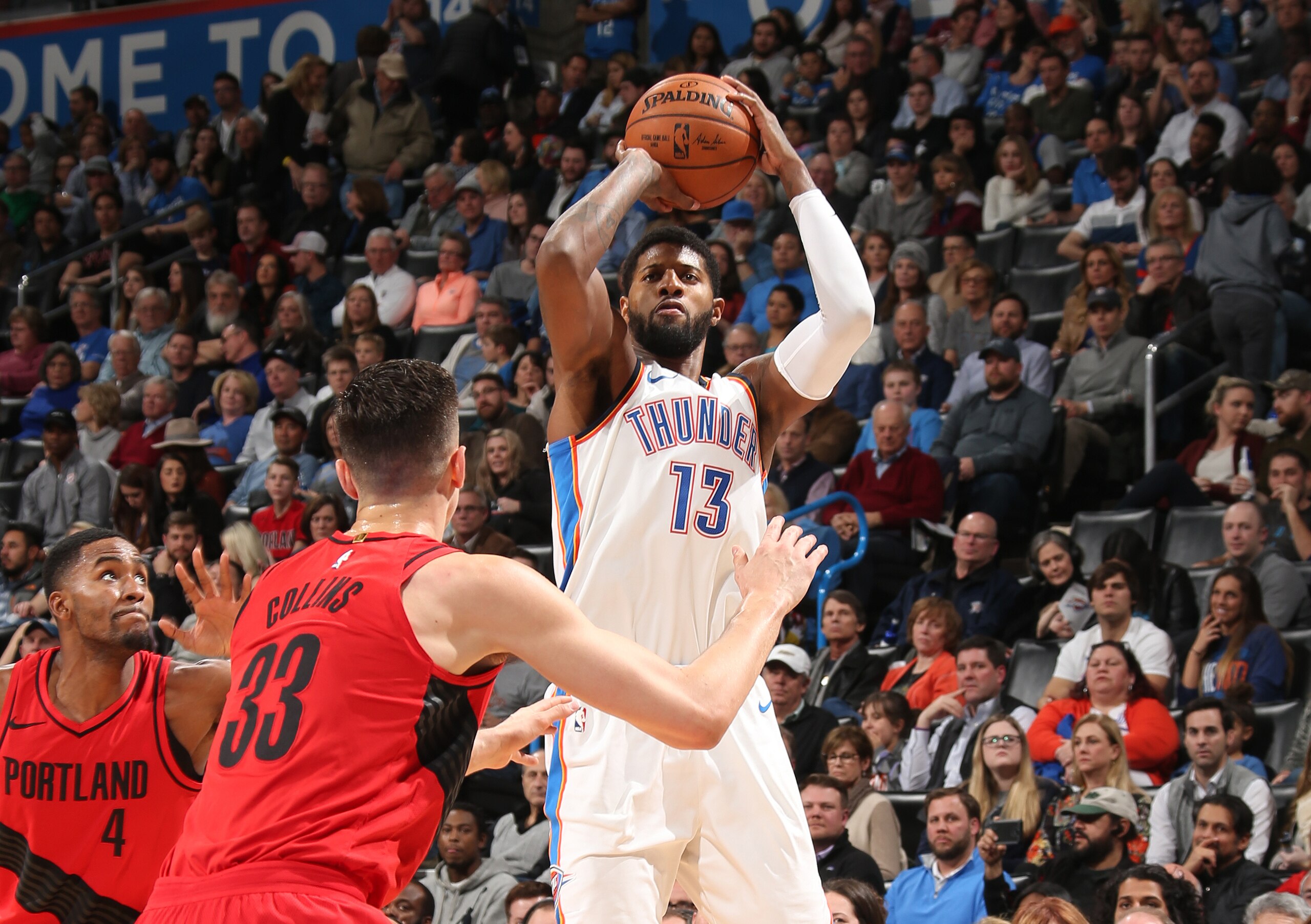
Three-Point Percentage: 42.24
Three-Point Attempts per Game: 7.32
Three-Point Value Added per Game: 1.34
Maybe Paul George would've been an All-Star in the Western Conference if he'd been knocking down more mid-range shots. That's served as the only weakness in his scoring profile, and he's paired an average of 20.9 points per game with Defensive Player of the Year-caliber work on the stopping side.
As ESPN.com's Zach Lowe wrote while picking him for the final spot on his All-Star ballot, "I like rewarding two-way guys, and George has been perhaps the best wing defender in the league this season."
Why highlight his defense and overall body of work when we're only concerned with three-point shooting? Because that narrows our focus to his big weakness—shots between the rim and the arc—thereby allowing for a contrast between strength and vulnerability. And that makes his efforts from distance look all the more ridiculous.
Players who knock down only 31.4 percent of their shots from between three and 10 feet, 36.3 percent of their looks between 10 and 16 feet and 33.9 percent of their takes on even longer twos aren't supposed to be sharpshooters even further from the hoop.
Among the 179 men hitting fewer than 34 percent of their two-pointers from at least 16 feet, George ranks second in total attempts (118), joined in the top five by John Wall (147), Giannis Antetokounmpo (114), De'Aaron Fox (93) and Michael Kidd-Gilchrist (88). They're shooting 34.8, 27.9, 30.9 and 0.0 percent, respectively, from deep and combining to take 7.2 relevant tries per game.
George, by himself, is lofting up 7.3 triples per contest and hitting 42.2 percent of them. His season has been one massive outlier.
3. Nikola Mirotic, PF, Chicago Bulls
6 of 8
Three-Point Percentage: 43.88
Three-Point Attempts per Game: 6.32
Three-Point Value Added per Game: 1.47
After suffering a fractured face in a fight with teammate Bobby Portis, Nikola Mirotic's 2017-18 debut was delayed until Dec. 8, when he played slightly under 15 minutes against the Charlotte Hornets. He's suited up in just 22 contests for the Chicago Bulls (and might not see that number increase too much if he's moved before February's trade deadline), but he's rocketed up the three-point leaderboard and completely turned around the Windy City offense while he's on the floor.
Without the Montenegrin power forward, Chicago is scoring 98.7 points per 100 possessions. Not only is that a putrid mark, but it would lag behind the No. 30 Sacramento Kings (100.3) for the Association's worst season-long score with room to spare.
When Mirotic plays, however, that offensive rating skyrockets to 111.0—easily beating out Portis (108.7) for the team's best on-court result. And this time, only the Houston Rockets (112.4) and Golden State Warriors (113.6) are superior. How's that for a drastic swing, nearly taking the Bulls from worst to first?
Mirotic aids the Bulls in numerous areas, but none are more impactful than the gravitational pull provided by the threat of his three-point shooting. He's firing away early and often, and the results are sound when the sphere spins off the tips of his fingers.
Perhaps his numbers will regress as the sample grows larger. Maybe they won't.
Fortunately for us, picking the field midway through the campaign, that's irrelevant.
2. Stephen Curry, PG, Golden State Warriors
7 of 8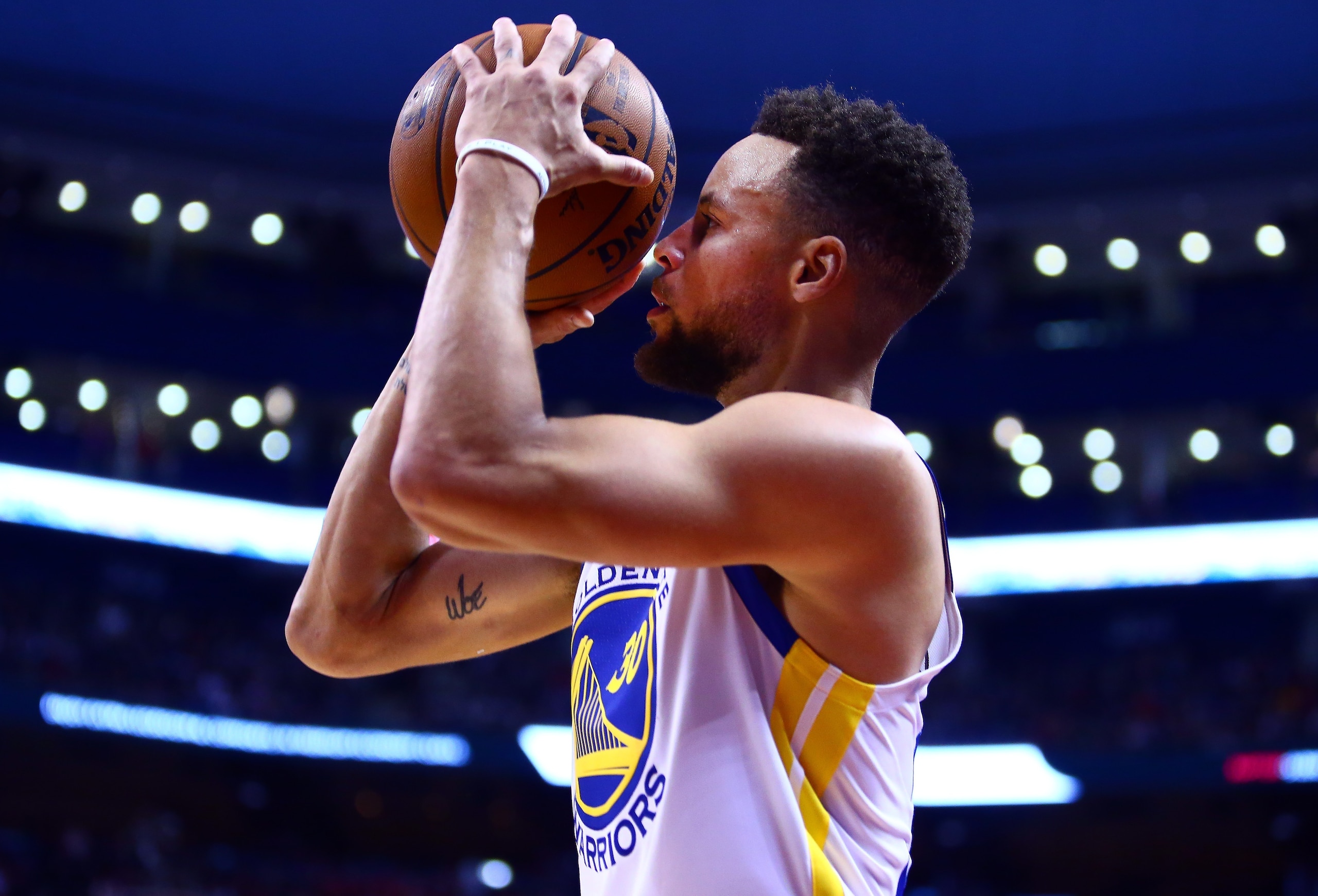
Three-Point Percentage: 41.96
Three-Point Attempts per Game: 10.18
Three-Point Value Added per Game: 1.79
Surprised? Don't be.
Stephen Curry's three-point numbers have been eye-popping throughout his career, and this year isn't that different. His percentage has ridden more of a roller coaster than in previous go-rounds and currently sits a bit below his lifetime mark (43.6 percent), but he's once again picking up the slack with unimaginable levels of volume.
If Curry plays in the rest of the Golden State Warriors' regular-season contests while maintaining his current rates, he'll overcome his 15 absences and make 286 triples before the playoffs begin. Here's where that would put him in the all-time hierarchy:
- 2015-16 Stephen Curry, 402
- 2016-17 Stephen Curry, 324
- 2014-15 Stephen Curry and 2017-18 Stephen Curry, 286
- 2015-16 Klay Thompson, 276
- 2012-13 Stephen Curry, 272
Maybe he hasn't seemed as remarkably dominant as in his MVP campaigns, but he's still brushing up against historic territory.
And the best news of all for the Dubs (and, correspondingly, the worst for the rest of the Association) is that he's getting even better as the year progresses. Since the calendar flipped to 2018, Curry has taken 11.7 triples per game and connected at a 45.7 percent clip.
1. Klay Thompson, SG, Golden State Warriors
8 of 8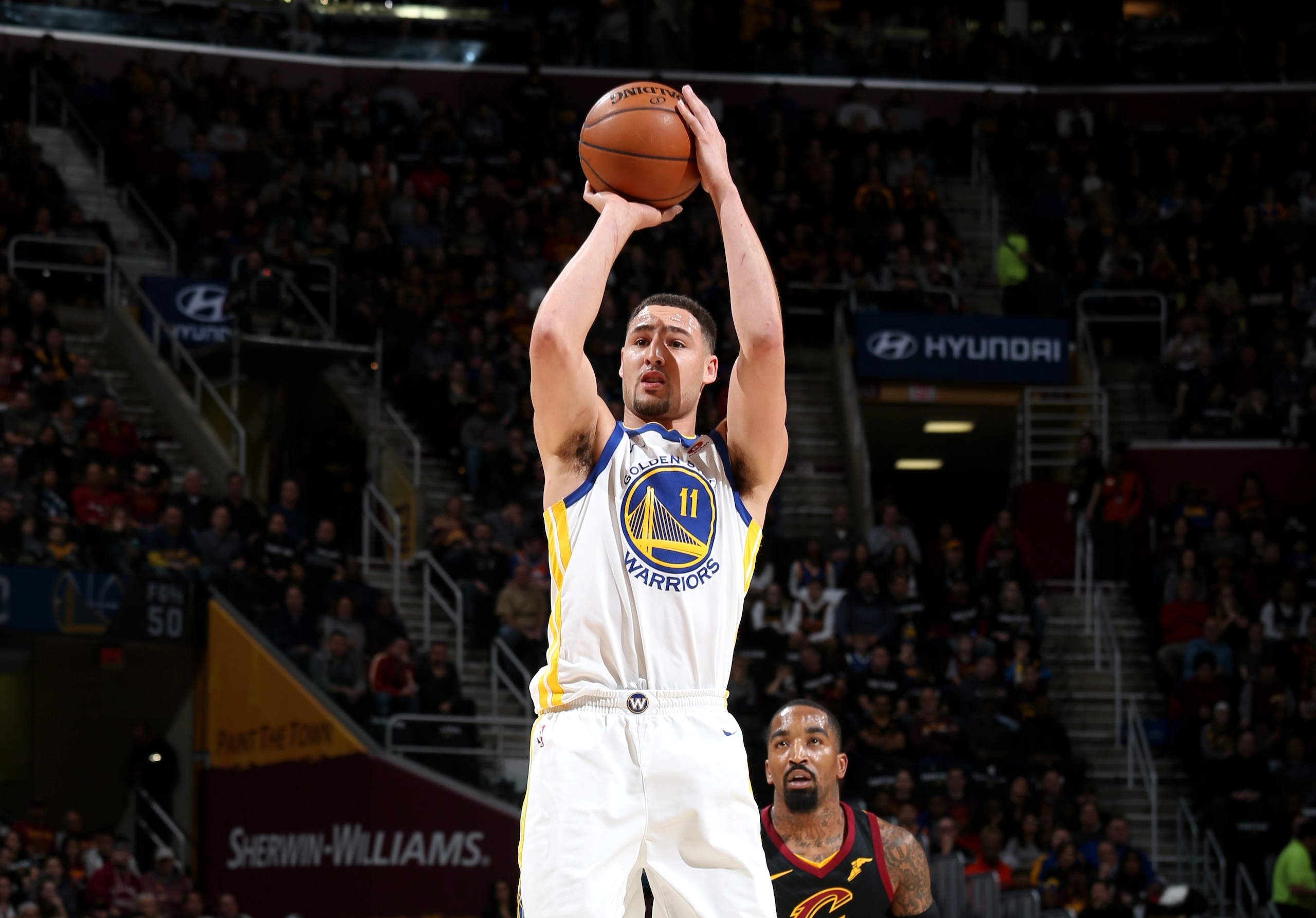
Three-Point Percentage: 44.90
Three-Point Attempts per Game: 7.30
Three-Point Value Added per Game: 1.92
Stephen Curry is on pace to make 286 threes while shooting 42.0 percent from deep if he maintains his current numbers and suits up in every possible game for the Golden State Warriors.
"That's cute," says Klay Thompson in this made-up scenario.
If Thompson, who has only missed a single outing during the 2017-18 campaign, winds up with 81 appearances under his belt and keeps his present pace, he'd finish with 265 successful long balls. While that total is beneath Curry's projected finish, it would also come in far more efficient fashion. Over the course of a full season, 2.9 percentage points can add up faster than you expect.
For the point guard to make his 286 triples, he'd need to fire away 681 times from beyond the rainbow. His backcourt counterpart would be using 91 fewer attempts, which is why Thompson can rise above his fellow Splash Brother in this particular analysis.
In a word: efficiency.
When Kevin Durant originally joined the Warriors, the 2-guard was expected to become the All-Star asked to sacrifice some of his touches. He didn't last year, but that's become a reality in 2017-18 as he's taken 1.3 fewer shots per game—the vast majority of which have come from downtown.
Thompson just hasn't let it affect him, instead upping his efficiency levels to stratospheric territory and turning in the best shooting campaign of his already impressive NBA career.
Unless otherwise indicated, all stats from Basketball Reference, NBA.com, NBA Math or ESPN.com and are current heading into games on Jan. 24.
.jpg?w=2560 "Raiders Could Start Mendoza")

.jpg?w=2560 "Rodgers Iced Out on Plane 💎")

.jpg?w=2560 "🚨 Week 8 AP Top 25 Poll")