

Are Real Madrid Really Being Robbed by Referees This Season?
Real Madrid are playing catch-up in La Liga, and many fans and media outlets are not entirely convinced the blame lies solely with the players and staff.
While points have been lost along the way due to a lack of a finishing touch, or a less-than-solid defensive outlook, there have been instances where the Santiago Bernabeu faithful feel they have been wronged by refereeing decisions.
Now, even the most ardent of supporters isn't going to insist every decision be spot on—the officials' job is a difficult one—but when big calls seem to consistently go against a particular team, it can be hard to take.

.jpg?w=2560 "Cardinals Giants Football")

But are there grounds for such complaints?
Are Real Madrid genuinely hard done by to the extent they can feel robbed of points and victories by referees in La Liga this term?
The Bernabeu fans believe so.

As reported by J.L. Calderon of Marca, they spent much of Saturday's game against Malaga jeering the Spanish Football Federation, suggesting "corruption" in the organisation and calling for Victoriano Sanchez Arminio—the president of the Referees' Technical Committee—to step down.
It's a difficult question to answer, though, as objectivity must be accompanied by subjectivity on the matter, and even then opinion can sway over whether a particular decision should have been awarded.
However, there have been plenty of match moments to look at specifically and many viewpoints to take into account.
So, have Real Madrid been denied closing the gap on their rivals Barcelona at the top thanks to refereeing decisions?
Recency bias
In any for-or-against argument, the natural response will be to look at what has happened most recently and draw immediate conclusions. For a half-season discussion, that's clearly not feasible—yet there are parallels and examples to be seen.
The most recent gameweek in La Liga saw Real Madrid at home to 19th-placed Malaga and Barcelona travel to second-placed Valencia. The outcomes saw Los Blancos claw back two points thanks to a 3-2 win and the Catalans' 1-1 draw, but were those two regained points justified from an officiating point of view?
Undeniably not.
Real Madrid went in at half-time 2-1 up, but Malaga had the ball in the net roughly one second after the referee's whistle went for the interval—Jesus Gil Manzano blew as the ball was looping through the air and into the net.
Initially, there was confusion over the decision, as it appeared no foul took place and the whistle was simply to signify half-time, but Radio Marca reported (h/t Marca) the ref gave a foul for a slight hand from Malaga's Paul Baysse on Real defender Dani Carvajal.
Injustice, perhaps, but that's the subjective side of giving fouls—there is no clear, linear process over how much force needs to be exerted.
In any case, the referee wasn't against Real Madrid in that moment or later in the match: Malaga equalised in the second half before Cristiano Ronaldo scored a rebound off a saved penalty.
For those who missed it, the spot-kick award was in no doubt—Luka Modric was fouled and the penalty was the correct call.

So, three points to Real Madrid in dubious, if not downright, nefarious circumstances.
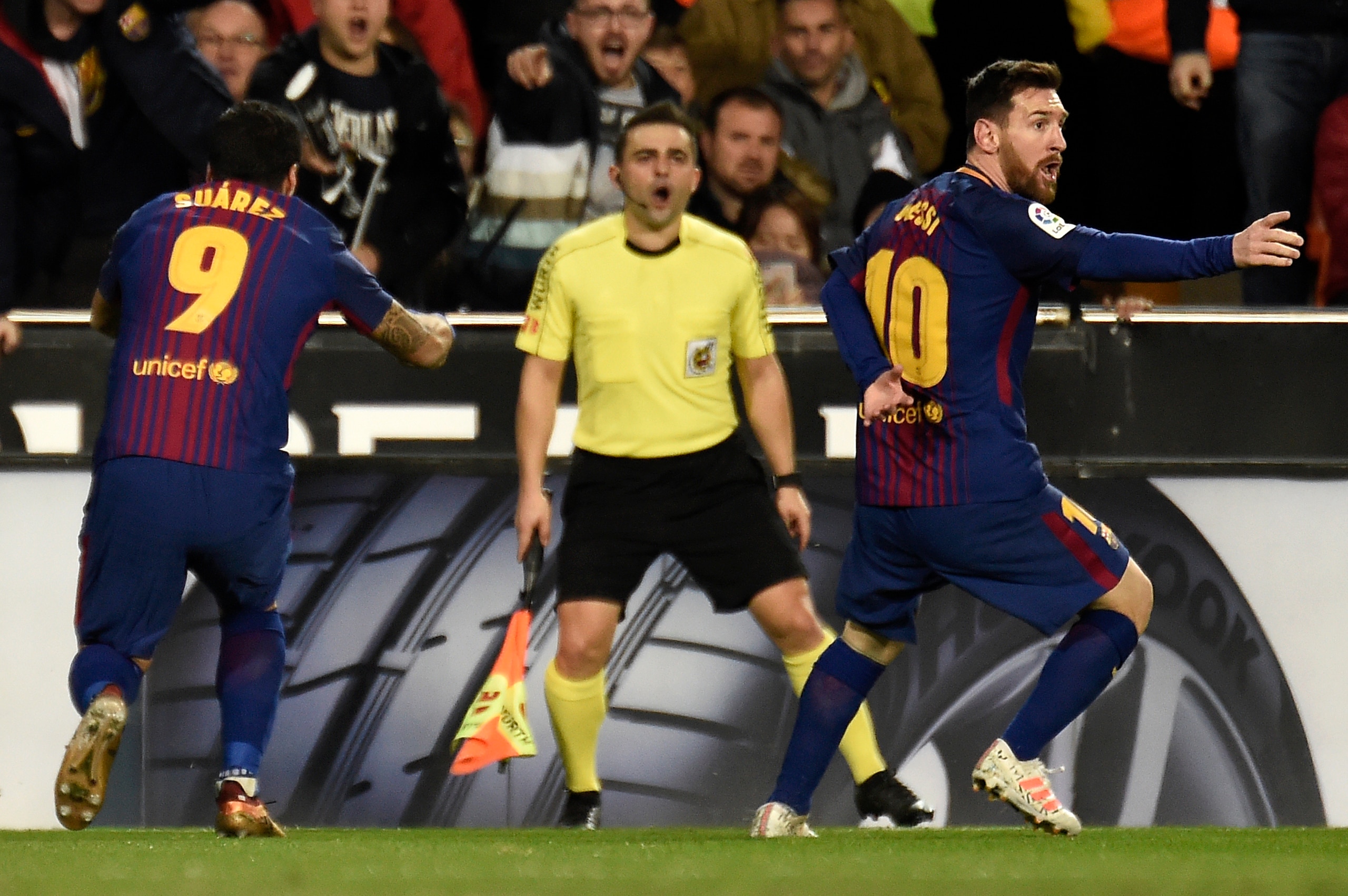
It was rather more clear-cut in Barca's match, late on Sunday at the Mestalla Stadium.
Lionel Messi's shot, fumbled by goalkeeper Neto, clearly bounced over the line and should have been awarded as a goal.
Somehow, out of every player on the pitch, thousands of fans in the stadium and many more watching on television, only the referee and his assistants failed to spot the ball was over the line.
Barca then fell behind and needed a late equaliser to salvage a point, and there's no way of telling how scoring first—in what was a tight game at the top of the table—might have seen the match pan out.
What is for certain, though, is Barcelona should have had two legitimate goals to their name instead of one, and quite possibly two points more than the one they earned.
Two points dropped for Barca and two points clawed back in the title race for Real Madrid—and strong evidence for question marks against officials.
But the suggestion isn't that Real Madrid (or Barcelona) have been favoured once or twice, it's that they have been repeatedly robbed throughout the campaign.
Cause for complaint
With the La Liga campaign 13 games old, how often do Real Madrid think they've been denied? To fall behind in the title race at this reasonably early stage is unexpected, given the 2016/17 season they had.
But regardless of how many points are won or lost due to refereeing decisions, not everything in the title race can be put down to officials getting their whistle-blowing right or wrong.
Real Madrid manager Zinedine Zidane and his players have to accept their own performances have been below that of last season. Start getting that right, and perhaps the calls going for (or against) them might start to make more of a realistic impact.

Still, it helps if not everything goes against the team.
AS' chief Real Madrid correspondent, Tomas Roncero, says Los Blancos have been denied a clear and accountable 10 points by erroneous referee calls this season.
Yes, a full 10—the difference between Barca and Real before the Week 13 matches.
Before getting into the decisions themselves, it's important to have context. Roncero is the club writer for AS and is unapologetically pro-Madrid. Indeed, partisan writing and impassioned points of view are to be expected far more than objectivity and covering every eventuality in his work; that's not a criticism or a dismissal of his work, rather an explanation of what he is there to do.
Roncero was responsible for a stinging attack on Gareth Bale for playing for Wales—in a Euro 2016 qualifier as the nation celebrated reaching the finals—rather than keeping himself fit to play for Los Blancos.
Real Madrid's fanbase is enormous, and Roncero airs his views solely from the perspective of a club-first approach.
He believes Madrid had been denied 10 points as of mid-November. He suggested 10 penalties had not been given to Los Blancos when they should have, resulting in a nine-point swing, and noted two goals that were allowed against Madrid were netted from offside positions.
Before even considering whether the decisions should have been penalties, there's one obvious flaw with Roncero's argument: It supposes a) Real Madrid netted every one of the would-be penalties, and b) the opposing team wouldn't bounce back against what they might feel was a harsh call.
The first point is easiest to lean on in voiding any so-called proof of the referees being to blame for nine points dropped: Real Madrid's first penalty of the season in La Liga came against Malaga, and Ronaldo missed it.

He scored the rebound, but that needn't always be the case—the issue is a penalty given doesn't automatically equal a goal and more points on the board.
Similarly, Roncero's argument that red-card decisions should have been given to opponents are based in subjectivity and not absolutes. The column speaks of "two clear red cards that Atletico avoided...[Angel] Correa should have received his marching orders for booting the ball at [Karim] Benzema's head as he lay on the turf, and [Stefan] Savic should have been sent off for a studs-up challenge on Toni Kroos' ankle."
The Correa incident could have gone either way. Another referee might have taken the view that the Atleti man took aim and got accurate to laser the ball at the prone Benzema. But it was a million miles away from definitive, and Savic's tackle—late, rushed, in an open midfield zone but not particularly high or two-footed—even less so.
Lastly, there's no mention of decisions which went Madrid's way, in the matches involving the nine penalty shouts or otherwise.
If referees are to blame for Madrid failing to pick up more points, then the decisions they get wrong in favour of Zidane's team have to be factored in as well.
A similar investigation by Marca's Jose Feliz Diaz at least acknowledged Real had benefitted and lost out through officials getting decisions wrong.
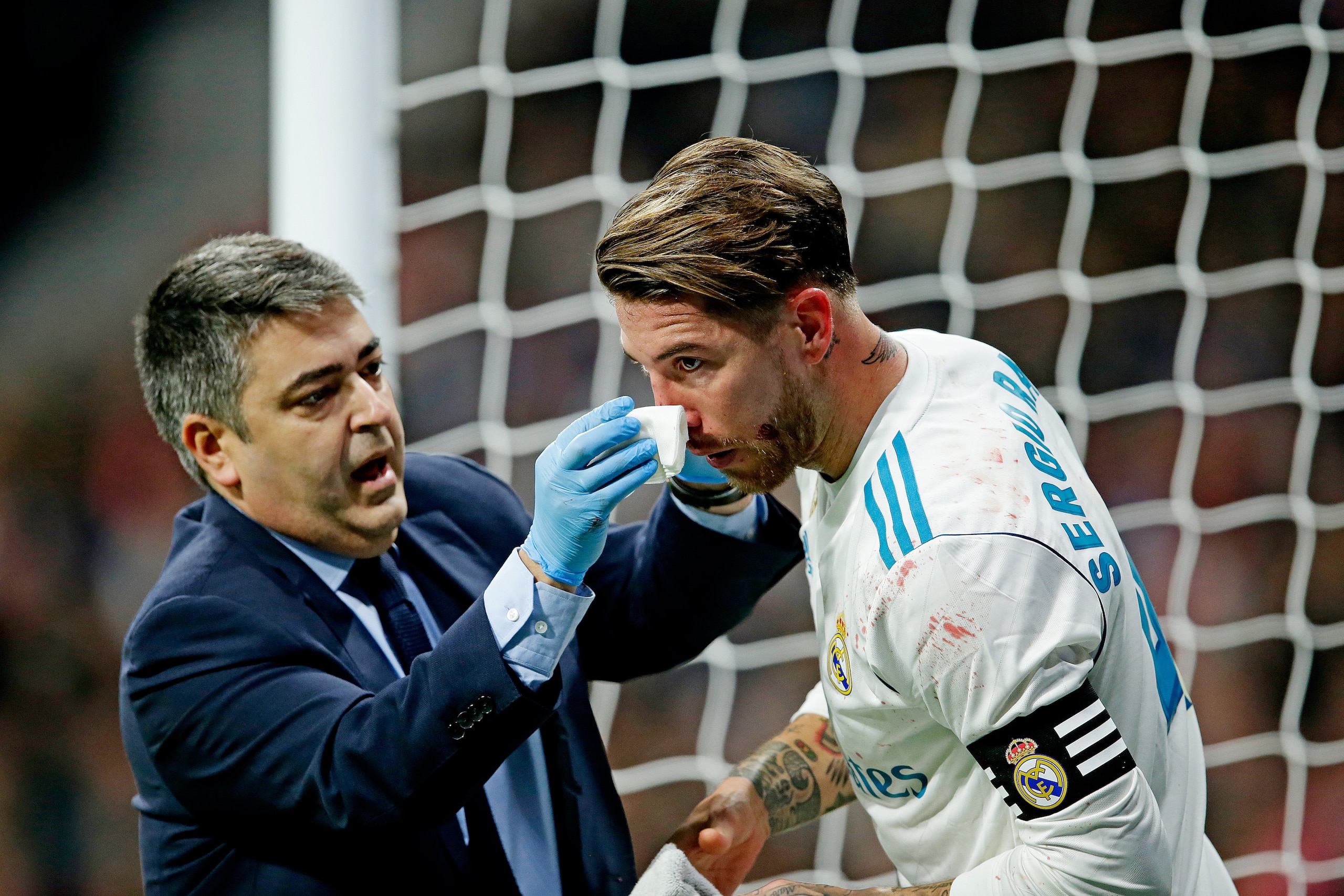
Sergio Ramos' opening-day red card is queried as "subjectively tame," while the defender getting clattered in the Madrid derby, breaking his nose, is highlighted as one of the key instances which might have gone Real's way and made a difference to the points tally.
Whether one agrees the decisions were all wrong and would all have altered Madrid's results and points tally, it's at least clear on one point: There are plenty of instances where referees are questioned and criticised in La Liga, and perhaps that's one half of the real story.
Always against
If the cries of foul play are against Madrid and come with frequency, isn't it a cut-and-dried case?
The answer is no for many reasons. Firstly this is a one-sided question mark. Madrid might well have had 10 legitimate penalties turned down, but does that mean Valencia haven't had 15 denied? Maybe Atletico Madrid should have had a red card or two, but is that proof Real Betis or Sevilla should have had three to give the other side a deserved advantage?

Whether the Madrid complaints are legitimate is one side of the story, but the other is whether every team misses out on advantageous moments due to officiating.
Of course, rivals being rivals, every action for (or against) one team will be used by supporters (and even by club staff at times) as "proof" that the federation, the referees or the entire league are against another side.
For Real Madrid, that goes double because their eternal rivals are Barcelona—also hugely supported and extremely successful. And also top of La Liga this season.
Rival comparisons are given as much importance as actual events. If Barcelona get a free-kick, so too should Real Madrid in their fans' eyes; if Real are handed a penalty, Barca supporters howl that it wouldn't be given at the Camp Nou.
It would have made uncomfortable viewing last weekend for those shouting loudest about Real Madrid's treatment by referees.
Spanish football journalist Dermot Corrigan negates the idea that any injustice has been done to the Bernabeu club this term.
"I've not noticed them being particularly hard done by at all, [it's the] same as usual—but when results [are] not going well, incidents [are] always highlighted," he wrote via his Twitter account.
"Plus, Madrid looking to use [Spanish football] federation chaos to push out refs chief," he added.
As noted above in the Marca report, the chants aimed at doing exactly that continued in the last league match.
And, more and more often, perhaps that's where any accepted conclusions lie. The individuals responsible aren't targeting Real Madrid (or Barca, or Villarreal, or Rayo Vallecano for that matter), they're simply not at the required standard.
More than that, they're not being allowed to be at the required standard, because the league organisations are not helping them to be.
There is still no goal-line technology in La Liga. Messi's "goal" at Valencia on Sunday would have saved embarrassment for officials with its introduction, while Real have had two goals scored against them this term from offside positions.
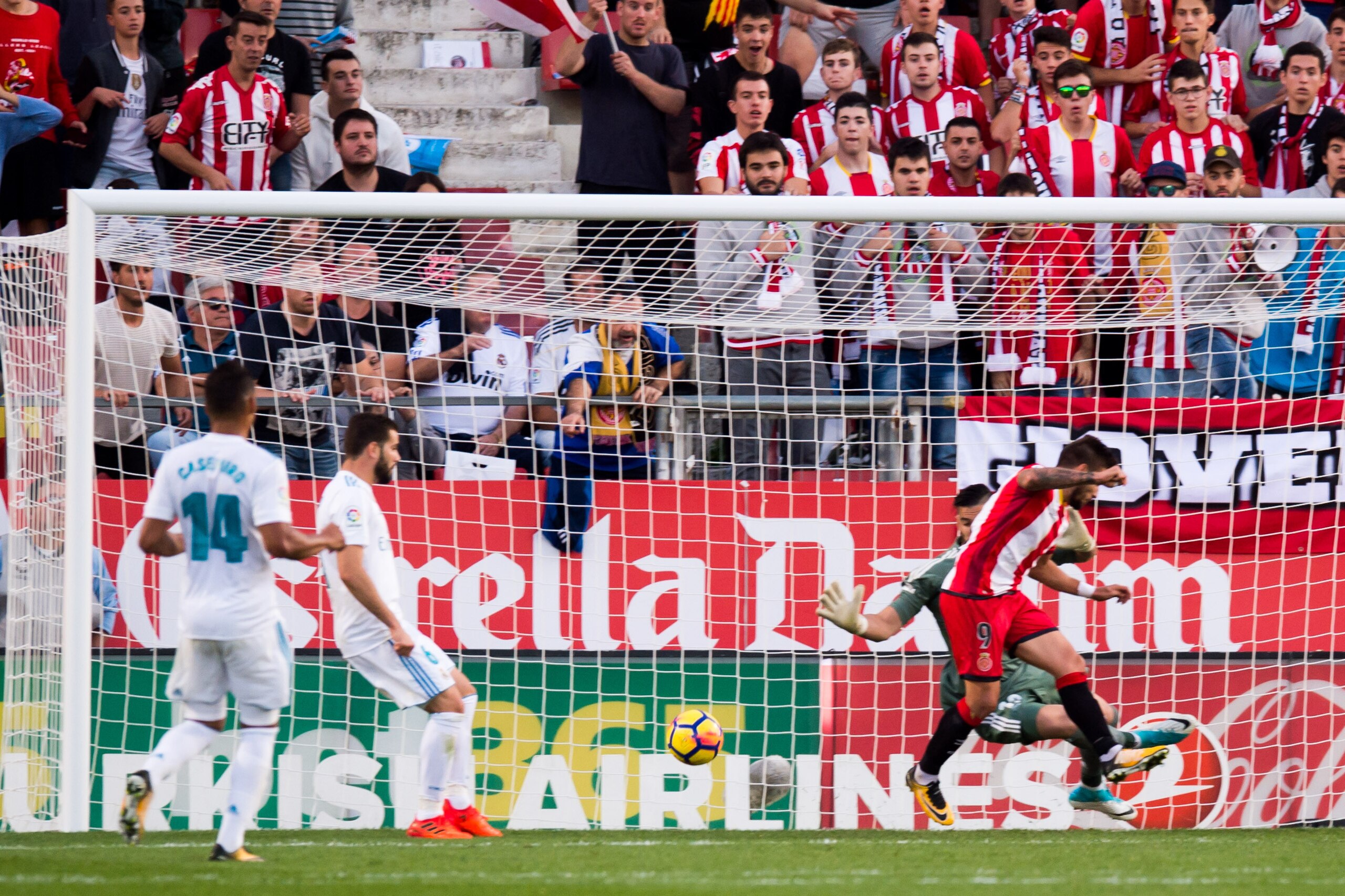
The scorer of one of those, Jorge Molina of Getafe, was clearly offside, while the other—Portu of Girona—was more difficult to see in real time as he was moving away from the goal, just two yards out, but a video assistant referee still may have cleared it up quickly.
Incredibly, La Liga sources have reportedly told Jose Felix Diaz of Marca that, even in the wake of the Mestalla debacle, goal-line technology is still not on the agenda until next term—though VAR will be trialed in Copa del Rey games this season.
Until every possible helping hand is available and every chance to get major decisions right is presented to La Liga referees, they will continue to fall below the required level in decision-making.
And with Real Madrid one of the most covered, vociferous and supported clubs on the planet, every decision which doesn't go their way is magnified tenfold. But that alone isn't proof of a witch-hunt against the club, nor is it conclusive evidence that referees and their assistants are to blame for defeats and draws this term.
There's still an eight-point gap to make up in the top flight, and it's Zidane and Co. who must take responsibility for that, not the officials of La Liga.
Quotes obtained firsthand unless stated.
.jpg?w=2560 "Jets Dolphins Football")

.jpg?w=2560 "Ward Nearly Walks Out of Presser ▶️")
