
Taking Stock of Pittsburgh Steelers at Halfway Point of Season
The Pittsburgh Steelers are coming off their Week 9 bye as the top-ranked team in the AFC, with a 6-2 record that includes a perfect 3-0 against divisional opponents.
So how did they get here? Here are the biggest takeaways from the first half of Pittsburgh's season and how they could inform the final eight games on their 2017 schedule.
Rookies Making Impacts
1 of 6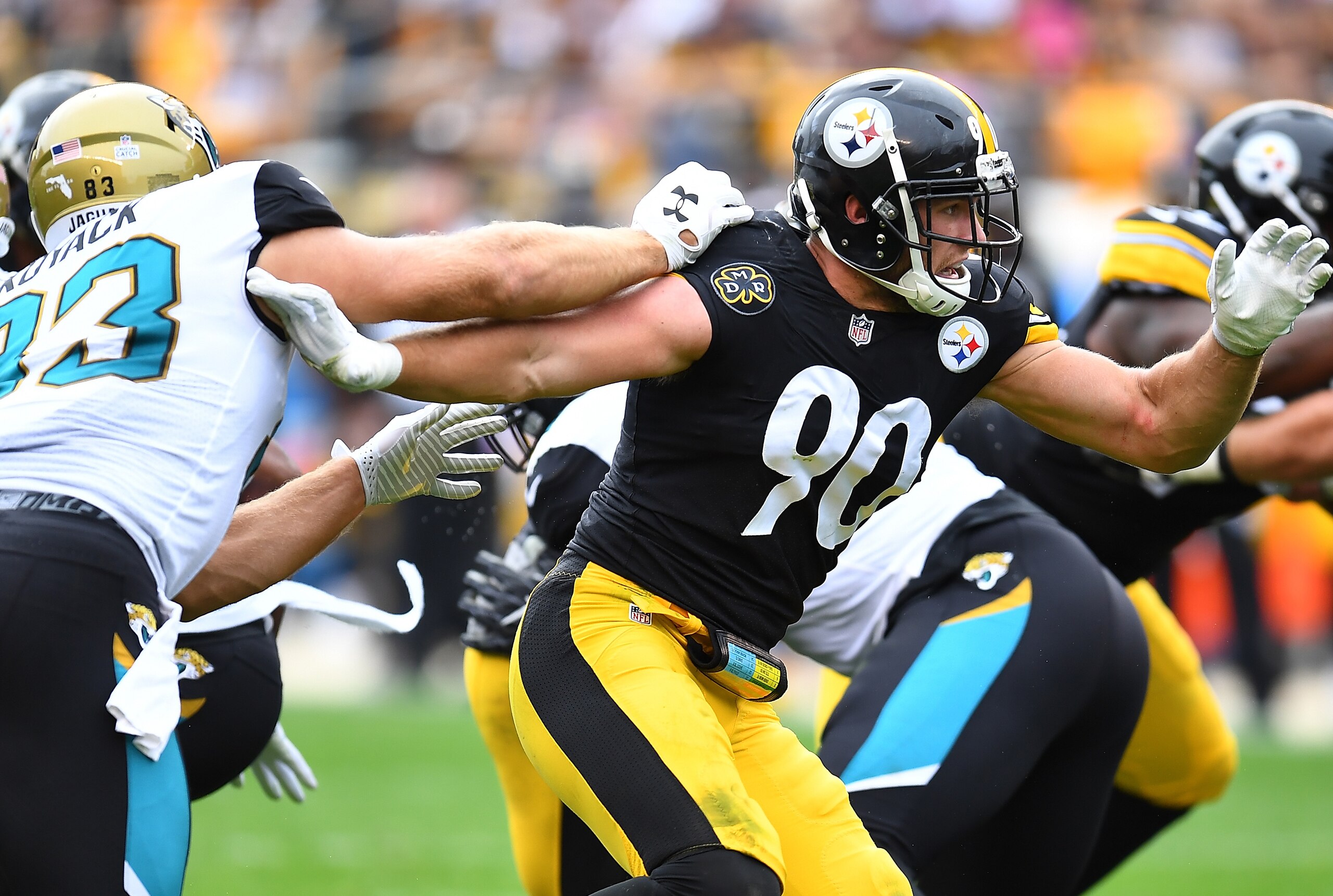
The Steelers selected eight players in the 2017 NFL draft, and though one is already off of the roster and two have landed on injured reserve, the top two selected have made significant positive contributions that have directly led to Pittsburgh's 6-2 record.
The first is Round 1 selection T.J. Watt. The outside linebacker has been a starter in every game he's appeared in thus far this season and with impressive results. He's the team's sixth-leading tackler, with 28 (22 of those solo), and has one interception and four passes defended. He is also tied with Vince Williams for the second-most sacks on the team, with four.
The second is receiver JuJu Smith-Schuster, selected in the second round. Smith-Schuster has quickly overtaken the importance of both slot receiver Eli Rogers and deep-threat wideout Martavis Bryant to become the team's second-leading receiver after Antonio Brown.
Smith-Schuster has caught 24 passes on 37 targets for 424 yards and leads the team with four receiving touchdowns in a season when Ben Roethlisberger has thus far thrown just 10 touchdown passes. He's also accounted for 233 yards after the catch and averages 17.7 yards per reception.
Without either, the Steelers would not likely be in such a good situation heading into the difficult second half of the season. Watt has helped boost a Steelers' front seven that needed it, while Smith-Schuster has become a go-to target in an up-and-down Pittsburgh passing offense.
Improved Pass Defense
2 of 6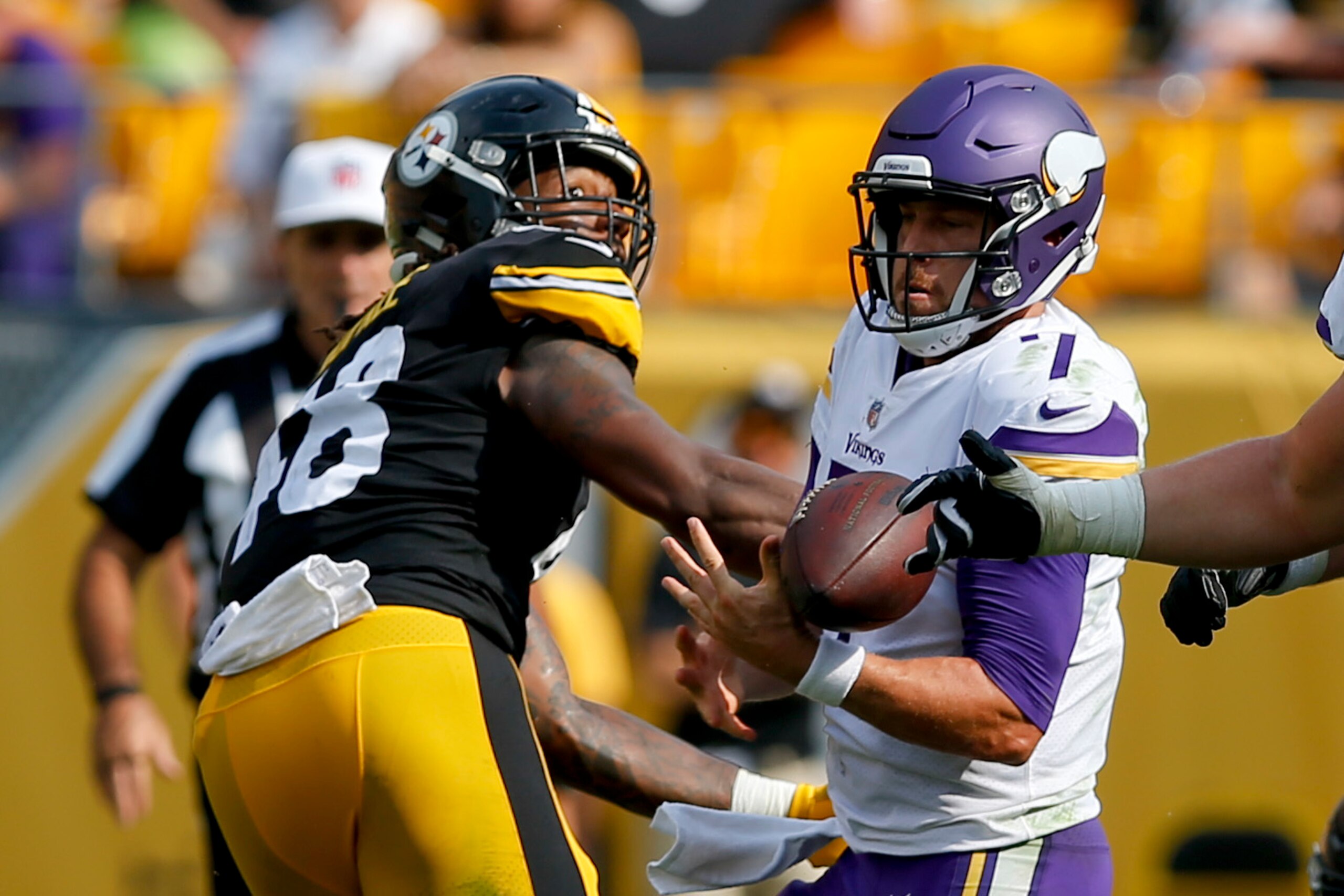
A season ago, the Steelers' biggest liability was its passing defense. Though it allowed just 20 passing touchdowns, ranking them fifth in the league, the team as a whole still ranked 12th in overall yards allowed and 16th in passing yards. It also totaled just 15 interceptions and 38 sacks on the season.
This year, things have changed significantly. Thanks to a shuffling at the cornerback position, a focus on more man coverage in the secondary and three- and four-man rushes up front, and the drafting of linebacker T.J. Watt in Round 1, Pittsburgh's passing defense is one of the very best in the league.
Pittsburgh's defense currently ranks second in points allowed and fifth in yards allowed, not coincidentally because they have given up the second-fewest passing yards and passing touchdowns this season. They have also totaled nine interceptions and 26 sacks through eight games, putting them on pace for 18 and 52, respectively, for the year.
Though not everything is perfect for Pittsburgh's defense—they lead the league in missed tackles, with Steelers Depot counting 93 (with 99 missed tackles in total, though six have been on special teams)—what was once the biggest weakness has been an area of strength in 2017. And when defenses can certainly win a team a championship, the Steelers are doubtlessly pleased that they were able to so drastically improve their ability to shut down passing games in the span of one offseason.
Scoring Issues
3 of 6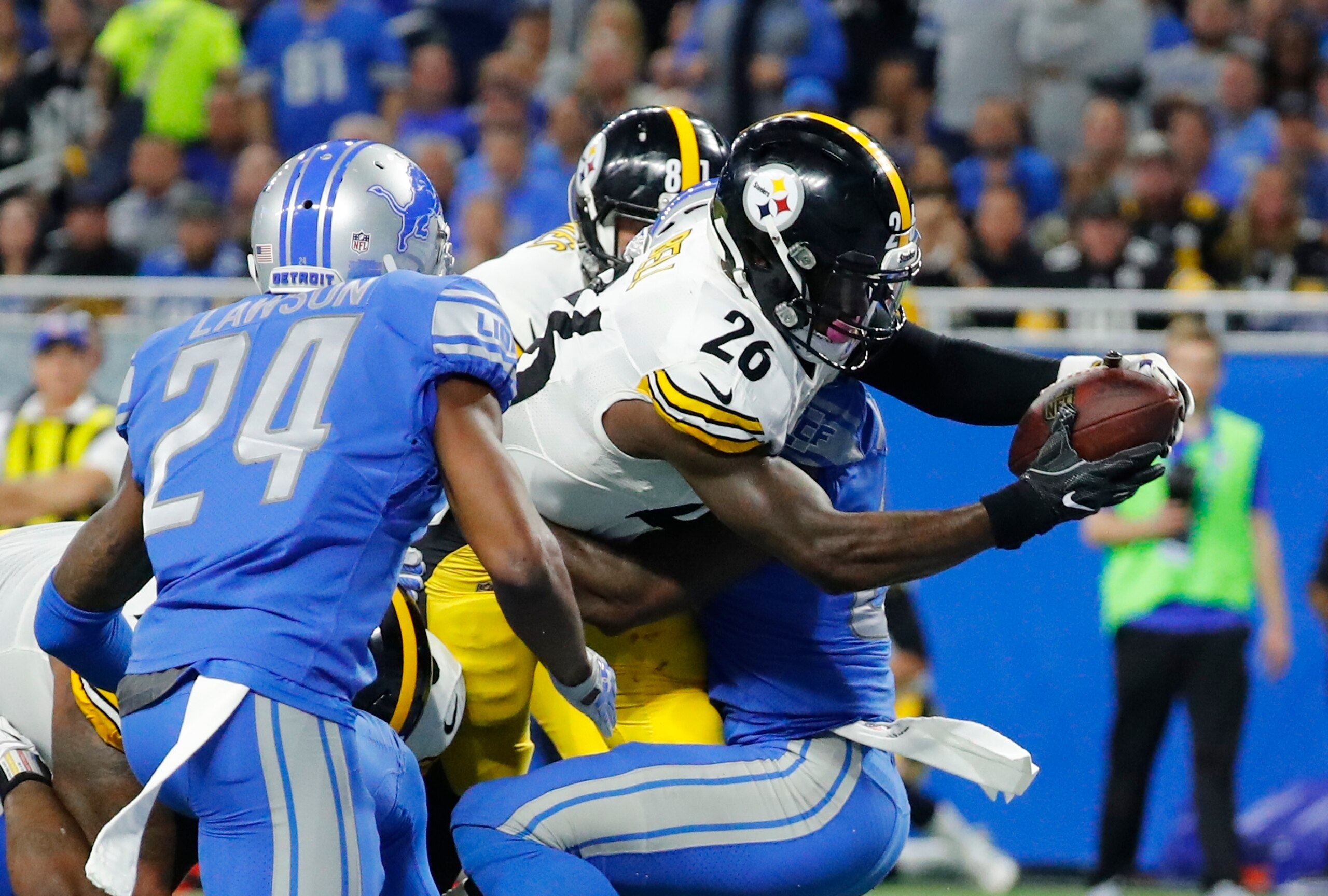
For years now, Pittsburgh's offense has sought to earn 30 points per game on a regular basis. But in 2017, the Steelers haven't scored that much even once. Though they have gotten close—29 points in Week 7, 26 points in both Weeks 2 and 4—this hasn't been the most prolific of the Steelers' recent scoring offenses.
So far this season, the Steelers are averaging 20.9 points per game, down from 24.9 in 2016. And it's not for a lack of opportunities; Pittsburgh is reaching the red zone a fourth-ranked 3.6 times per game on average (up from 3.1 a season ago). However, the offense ranks a dismal 31st in earning touchdowns off of those appearances, doing so only 41.38 percent of the time and a shocking 23.08 percent at home. In 2016, they were scoring touchdowns on 54.24 percent of their red-zone appearances, 72.41 percent of the time when at home.
Luckily for the offense, their defensive counterparts are doing a much better job of limiting opponents' touchdowns than a year ago. But that still does not change the fact that Pittsburgh's offense simply isn't as efficient, from a scoring perspective, as it was in 2016. The Steelers have scored just 15 offensive touchdowns this year—10 via the pass, five via the run.
While it hasn't done much to derail their season as of yet, it is something to keep in mind over the team's final eight regular season games. If the defense falters in the coming weeks, the offense's inability to score touchdowns when in position to do so could become even more of a glaring fault.
.jpg?w=2560 "Chiefs Giants Football")
.jpg?w=2560 "Steelers Buccaneers Football")
.jpg?w=2560 "Titans Colts Football")
The Martavis Issue
4 of 6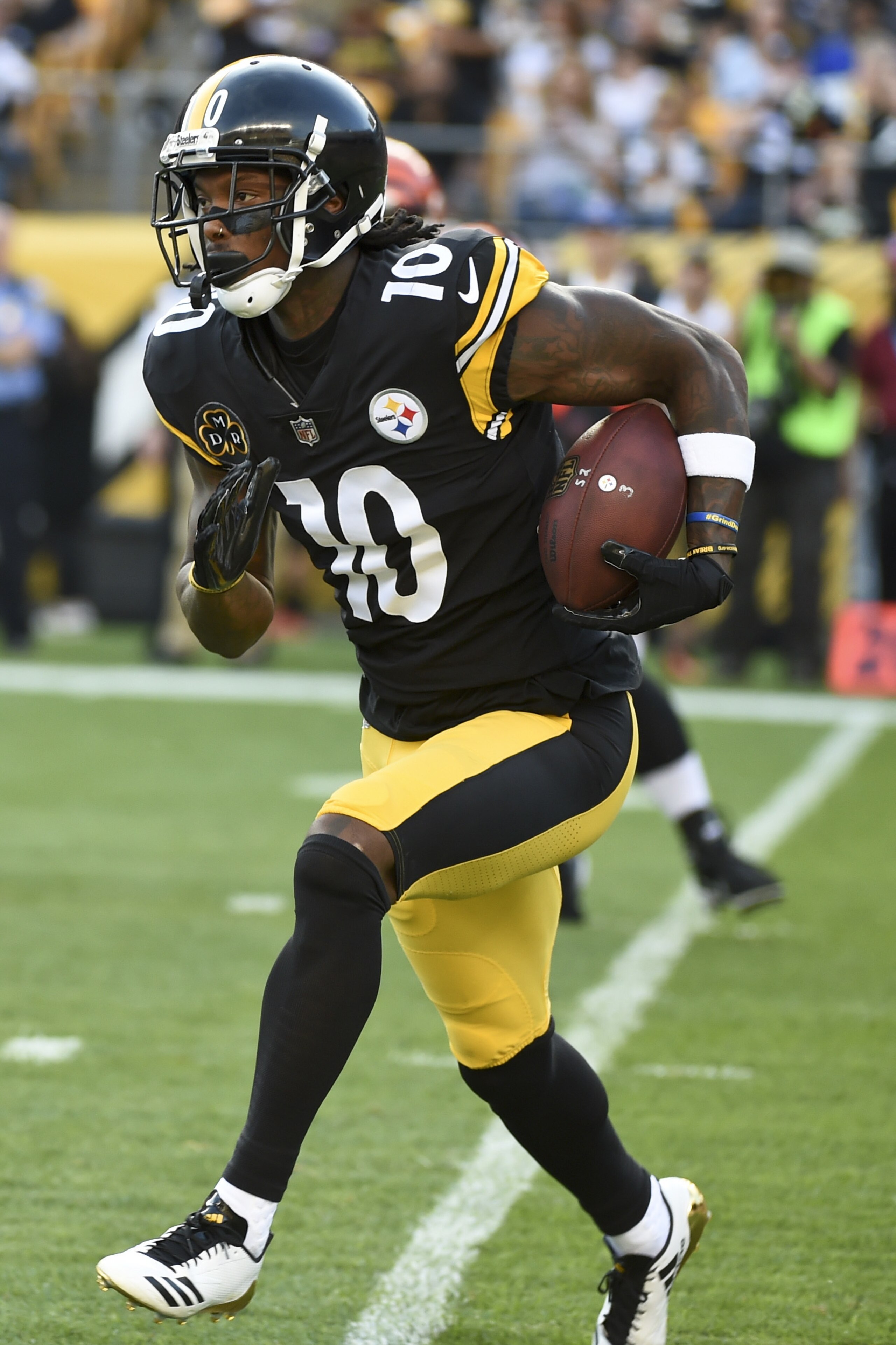
When Steelers receiver Martavis Bryant was reinstated after a year-long ban thanks to numerous violations of the NFL's substance abuse policy, it was assumed that he'd retake his role in the team's offense as a deep scoring threat to pair with the sure-handed Antonio Brown. After all, in Bryant's last season on the field, in 2015, he had six touchdowns and 756 yards on his 50 receptions and averaged 69.5 yards per game.
But 2017 has been a whole different beast for Bryant. Thanks in part to the Steelers drafting JuJu Smith-Schuster in the second round and in part because of Bryant's own behavior—including lashing out on social media—Bryant appears to have fallen out of favor as a key component of Pittsburgh's offense.
So far this year, Bryant has caught 18 passes on 36 targets—a 50 percent catch rate—for 234 yards and just one touchdown. He is averaging only 33.4 yards per game and has seen his snap count drop to the 50 percent range; however, he was also inactive in Week 8, with his post-bye week status still up in the air.
All signs seem to point to this being Bryant's last in Pittsburgh. But with (at least) eight games ahead, there is still time for Bryant to redeem himself and return to his 2015 form as a game-changing playmaker. As things currently stand, though, it appears the absence nor presence of Bryant are as crucial to Pittsburgh's offense as originally thought.
Ben Roethlisberger's Inconsistency
5 of 6
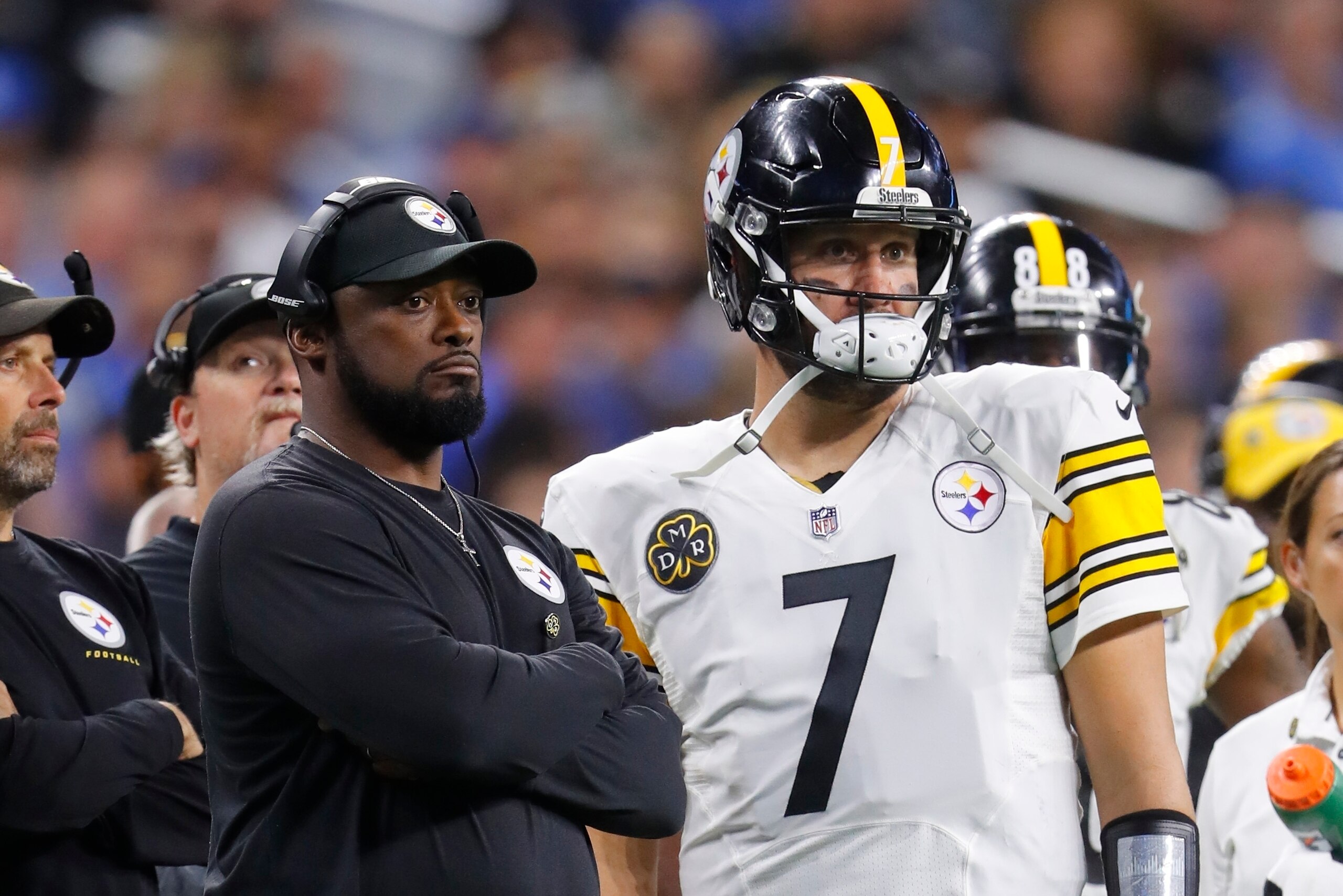
Pittsburgh's scoring issues have only been compounded by quarterback Ben Roethlisberger having an inconsistent season. He's only been a 300-yard passer twice this year and in his last three games he's had fewer than 20 completions. His completion percentage of 61.1 is down from 64.4 a year ago and he's already taken 10 sacks; in 2016, he was sacked 17 times through 14 regular-season games.
But most glaringly are Roethlisberger's touchdowns-to-interceptions. He's thrown 10 touchdown passes this year and nine interceptions. And while five of those came in one game, a Week 5 loss to the Jacksonville Jaguars, he's only had two games in which he's avoided throwing a pick.
Where Roethlisberger is struggling most are, unfortunately, the plays that matter the most—third downs and in the red zone. A year ago, Roethlisberger completed 58.65 percent of his third-down passes, with 11 resulting in touchdowns and two in interceptions. This year, his third-down completion rate is down to 55 percent, with five touchdowns thrown versus five interceptions.
In the red zone, Roethlisberger has completed only 42.42 percent of his passes this year, though it has resulted in six touchdowns and zero interceptions. However, a year ago his completion rate in the red zone was 52.63 percent, with 13 touchdowns thrown to two interceptions.
Not all of this can be easily explained. While it's clear that Roethlisberger is struggling relative to a season ago, the offense around him hasn't been consistent, either, as illustrated by the early-season reliance on Antonio Brown, JuJu Smith-Schuster only recently proving to be a go-to target, Martavis Bryant's disappearance and Le'Veon Bell's reduced usage as a receiver. Play-calling as well has been questionable, particularly on short third downs.
It's clear that Roethlisberger needs to play better but there are all-around adjustments that need to be made in order to get the quarterback's season back on track.
Le'Veon Bell Continues to Dominate
6 of 6
After a summer spent away from the Steelers, running back Le'Veon Bell's 2017 season got off to a slow start. In Week 1, he had only 10 carries for 32 yards. It took until Week 3 for him to score his first rushing touchdown of the season and until Week 4 for him to reach the 100-yards rushing mark. But as the season has unfolded, Bell has proven to yet again be indispensable to Pittsburgh's offense as well as one of the most prolific runners in the NFL.
In eight games, Bell has carried the ball more than any other running back in the league—194 times. Those carries have yielded 760 yards, the third-highest rushing total through nine weeks. His 95 rushing yards per game are the second-most of his career, only surpassed by his 105.7 per-game average a season ago. And he's responsible for all five of Pittsburgh's rushing scores and all but 111 of the team's rushing yards.
While Bell has yet to be the force he once was in the passing game (he's averaging 27.4 receiving yards per game this year, down from 51.3 a year ago), he's clearly the bell-cow in the run game. Rookie James Conner has had just 18 rushes for 89 yards, while Terrell Watson has netted only eight yards on his five carries.
Any concerns that Bell would have long-lingering rust stemming from missing training camp and the preseason have faded into the ether. While Week 1 was certainly a disappointment for him, the games that have followed have been productive. He is no less important to his team than he was a season ago, putting him firmly on track for a big payday in 2018, whether it comes from the Steelers or some other team.
.jpg?w=2560 "Eagles Jaguars Football")
.jpg?w=2560 "Steelers Saints Football")
.jpg?w=2560 "🚨 Week 8 AP Top 25 Poll")