

Who Would Win: Manchester United 2000s XI vs. Manchester United 2010s XI?
In the battle for bragging rights between Manchester United's best 2000s team and their best 2010s team, the older heads have the edge.
Most of the treble-winning 1998/99 team and all of the 2007/08 UEFA Champions League winners are eligible for selection in their XI. United also won many more league titles in the first decade of the 21st century than they have managed in the second.
They won in 1999/2000, 2000/01, 2002/03, 2006/07, 2007/08 and 2008/09 as compared with just 2010/11 and 2012/13 in the 2010s.

.jpg?w=2560)
But much of this was down to the presence of legendary manager Sir Alex Ferguson. This decade has seen many excellent players come through United's doors even though their success with the club has paled in comparison to their predecessors.
So the battle between the two best XIs of the 21st-century decades is competitive. Were, say, Sir Alex in charge of both sides, who would win?
While there are players who could represent both decades, we have imposed a restriction that means individuals can only be picked for one of the two sides. Otherwise, the only qualification is that you have to have played for United in the relevant decade.
We've selected the teams, and it's up to you to make the call on who would win.
Goalkeeper
Edwin van der Sar
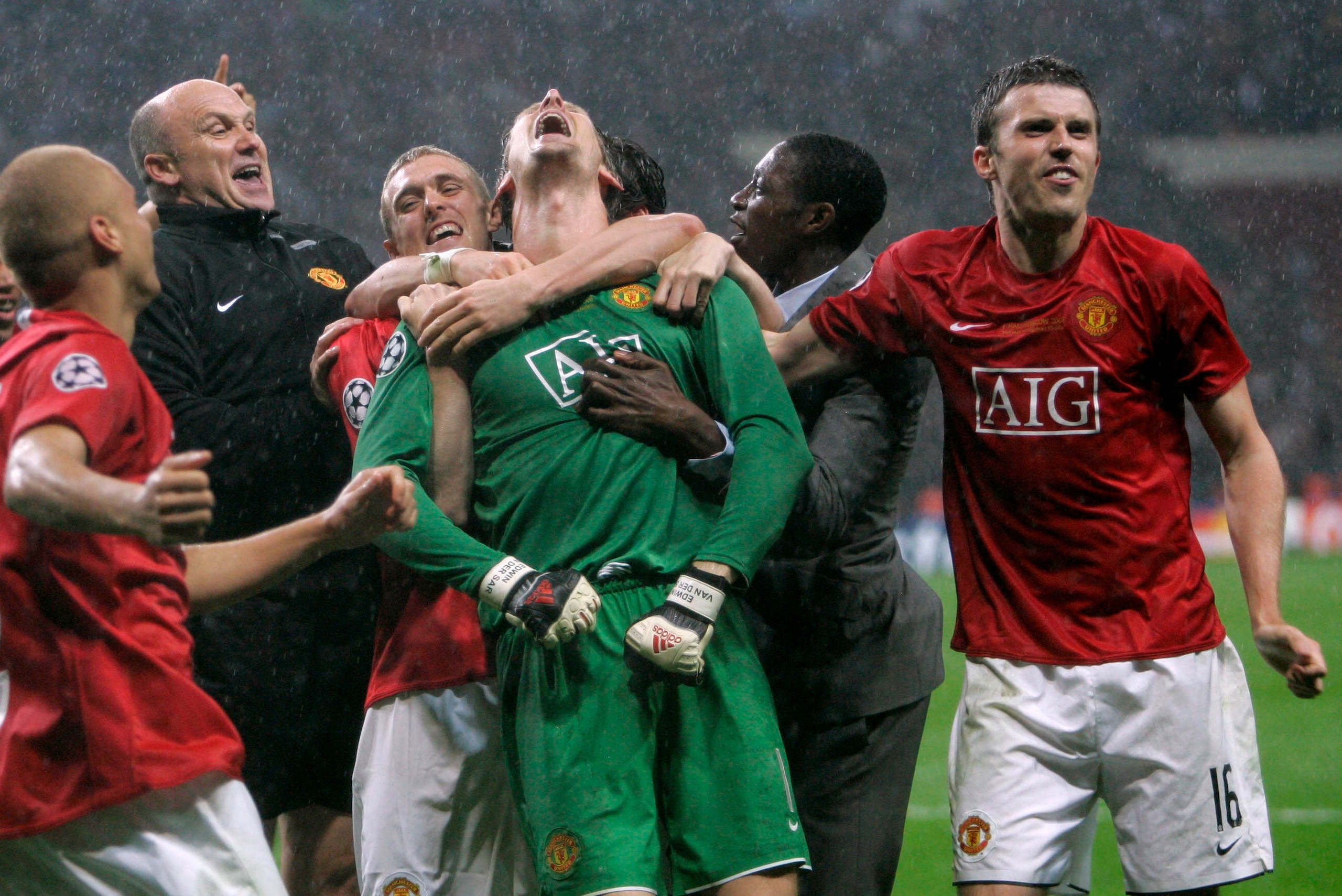
It took a while. When Peter Schmeichel left United in the wake of their treble, Ferguson scrambled to find a replacement.
Fabien Barthez, Mark Bosnich, Roy Carroll, Massimo Taibi and Tim Howard all got a crack, but it was Edwin van der Sar's arrival in 2005 that finally proved the solution. What followed was a period of unprecedented dominance, featuring a Champions League win and a run of three league titles in a row.
Van der Sar was steady more often than spectacular but had the latter in him too. He made few mistakes by this point in his career, and wishing he had arrived at the start of the decade became a common refrain. Who knows how much more silverware United would have amassed had that been the case. The Dutchman was one of the best ever to pull on United's 'keeper jersey.
Right-Back
Gary Neville
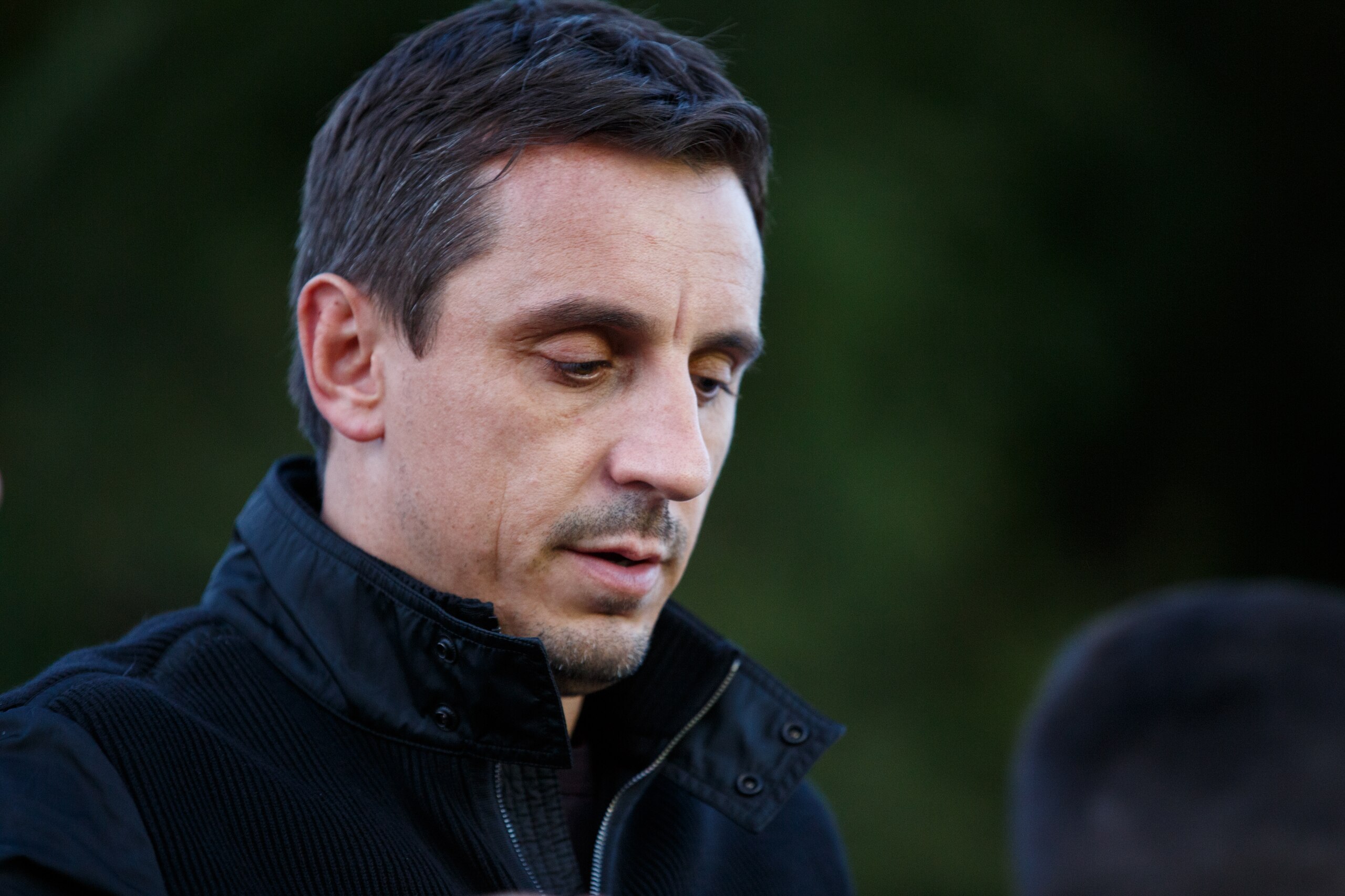
Mr Manchester United himself, Gary Neville is an easy choice here. There were others who filled in for him later in the decade as injuries made themselves felt—notably Wes Brown, who played right-back in the Champions League final in Moscow to stellar effect.
But the 2000s saw the best of Neville's career. He knew the value of practice, and after David Beckham left in 2003, he was probably the best crosser at the club. His positioning was exceptional, and his leadership skills continued to develop, with Neville being named club captain in 2005.
Centre-Backs
Rio Ferdinand and Nemanja Vidic
More easy picks. Other great central defenders played for United in this era—Jaap Stam and Ronny Johnsen, for example—but Rio Ferdinand and Nemanja Vidic were the perfect complement to one another and dominated the second half of the decade.
One Rolls-Royce and one battering ram—an oversimplified assessment, perhaps, but not a mile wide of the mark—they were the kind of partnership you would build if given the parts but also somehow more than the sum of those parts parts, particularly with Van der Sar behind them. The 2010s saw them past their primes, hence their selection here, but the more modern decade's team looks on enviously as they take their place in the 2000s lineup.
Left-Back
Denis Irwin
In truth, were this an exercise designed to pick the best United XI from the 00s based on their performances in that decade, Patrice Evra would get this spot over Denis Irwin. But in the interests of fairness, having given Ferdinand and Vidic to the 2000s, we should at least let the 2010s have Evra. And since Irwin did not leave United until 2002, he qualifies for a place here.
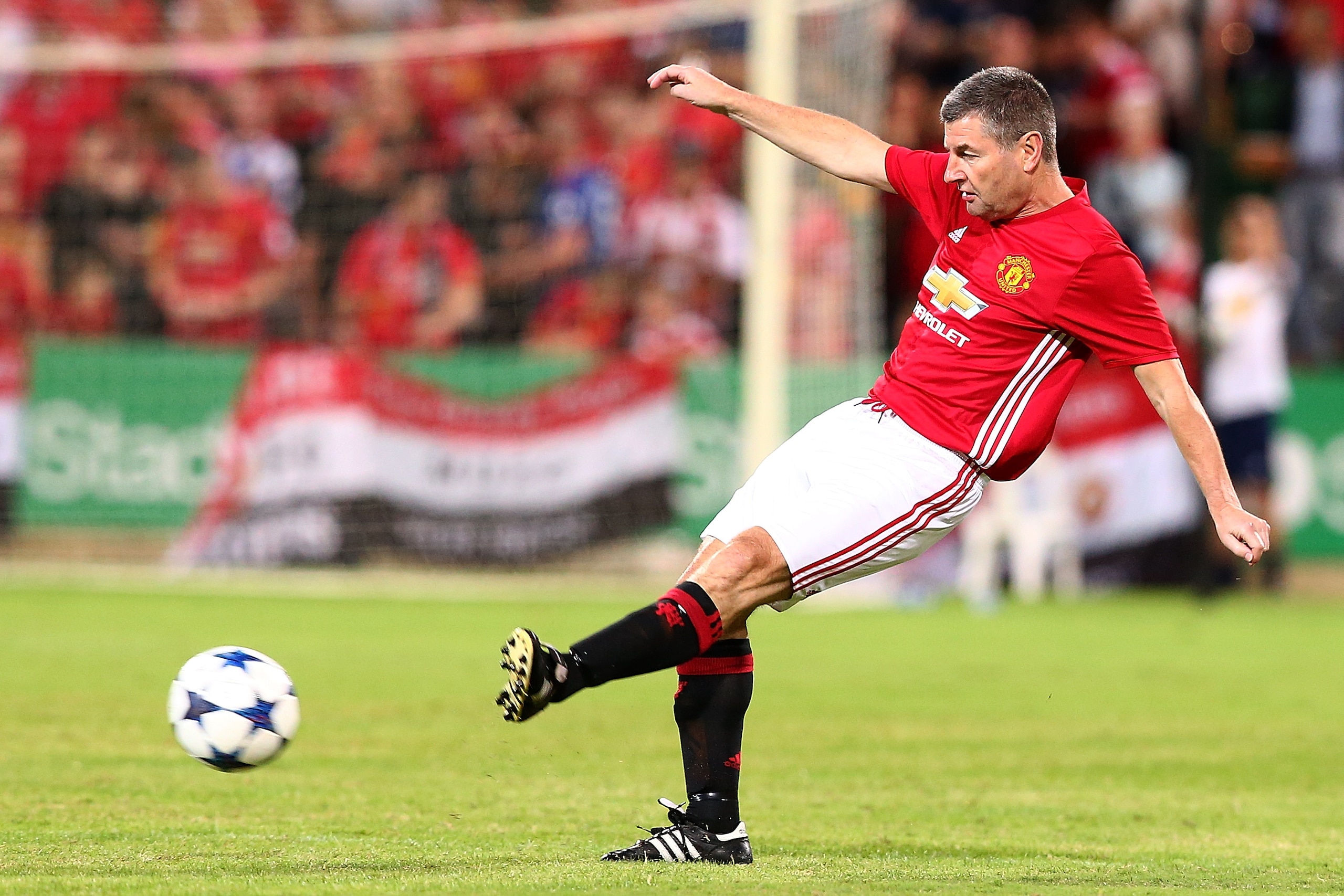
More associated with the 1990s, Irwin was one of Sir Alex's most important signings and a fine player. Posing a significant attacking threat, he was also disciplined and hardworking. It was not until Evra arrived in 2006 that he was truly replaced in United's squad.
Right Midfield
David Beckham
David Beckham was brilliant at football. His relationship with United's strikers was a vital part of the club's attacking success during his time at Old Trafford, and in this lineup, he would be able to provide cross after cross for two forwards who were fantastic at taking chances. Not to mention his opposite number on the left flank, who is also not too shabby in the air.
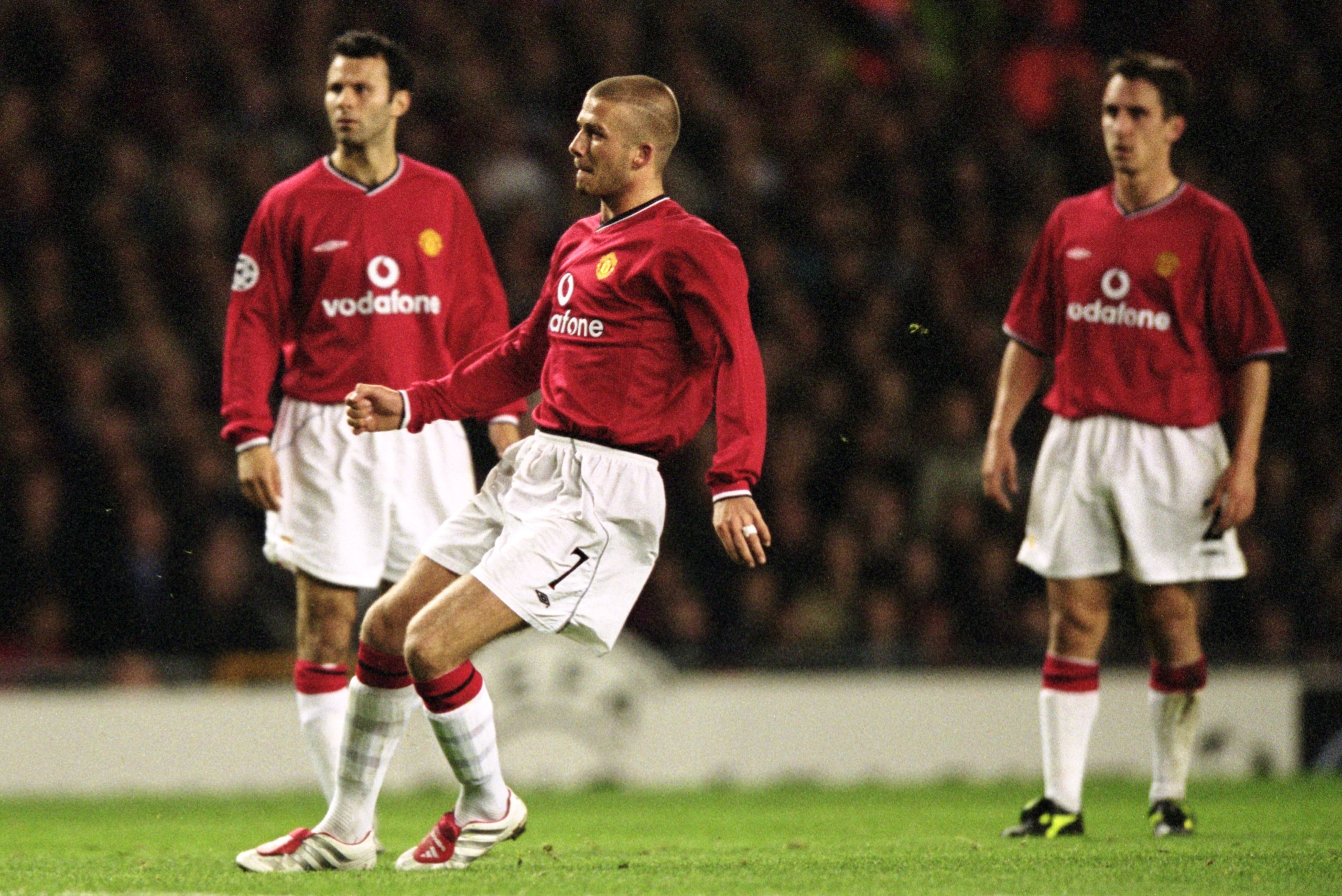
Plus there are the dead balls—relentlessly, remarkably and uniquely devastating in United's modern history. The kind of player any manager would be delighted to have in their team.
Central Midfield
Roy Keane and Paul Scholes
A midfield partnership with everything you could hope for in a midfield partnership.
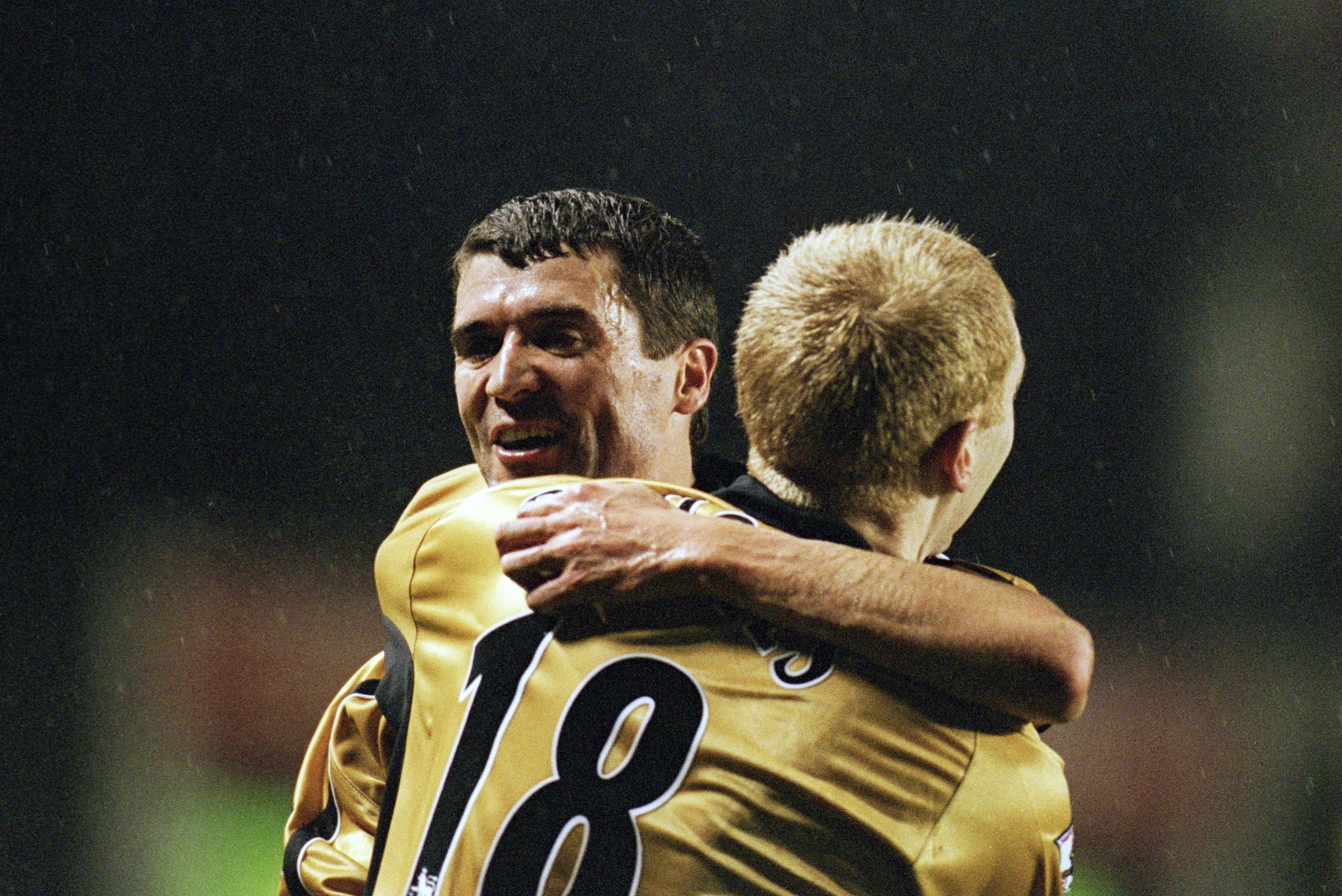
First, Paul Scholes, that most gifted technician with an apparently laser-guided passing ability, an eye for a goal and vision so good it was practically divine.
Then, Roy Keane, preternaturally driven to win with the capacity to pass that attribute on to those around him. He was no mere destroyer, either; his passing probably ranks behind only Scholes and Beckham in this lineup.
It is an incredible midfield in theory and was a brilliant one in practice.
Left Midfield
Cristiano Ronaldo
Not the position he settled in by any means, but it's the one he often played for United during the 2000s. With the utmost respect for Ryan Giggs, he misses out here to the player who might just be the best to have ever played for United.
A record-smashing, co-era-defining Goliath of the game, Cristiano Ronaldo first bestrode the world stage in United red. During the 2000s, he transformed from skinny, talented show pony into a physical marvel with a relentless appetite for goals. Headers, free-kicks, tap-ins and 30-yard-screamers—you name it, and he scored them. And lots of them too. It was incredible to watch his development and pretty heartbreaking to see him spend his peak years elsewhere.
Centre-Forwards
Ruud van Nistelrooy and Wayne Rooney
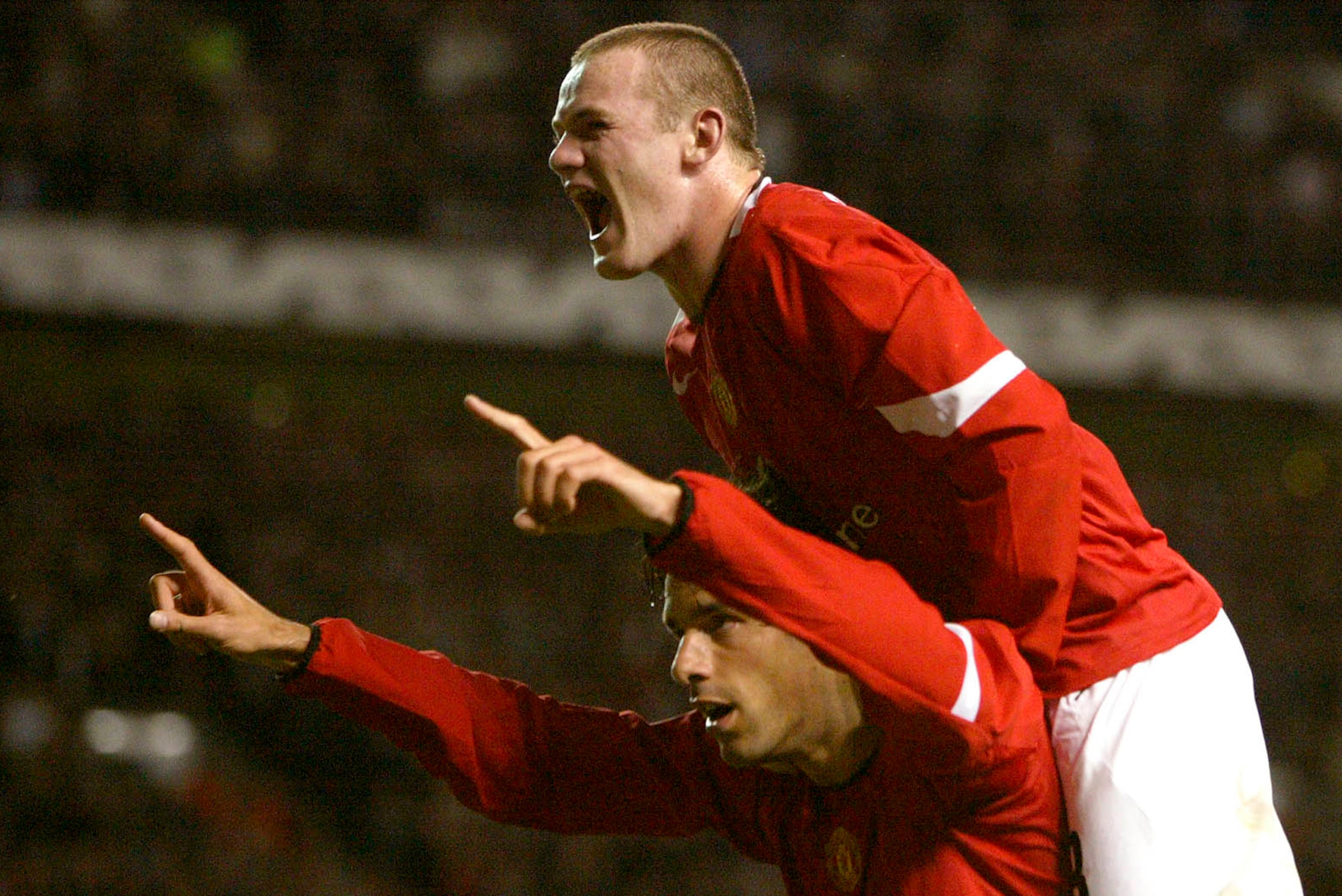
Wayne Rooney would play a little deeper than Ruud van Nistelrooy in this lineup but this would be a 4-4-2 with them both given licence to prioritise attacking play.
United's record goalscorer was probably at his best in the 2000s, when he was part of that amazingly fluid front three with Ronaldo and Carlos Tevez. He was a different player in those days. It might be a cliche to describe him as a street footballer, but that is what he was, full of improvisation and incredible competitive spirit.
Van Nistelrooy was generally at his best in lone-striker systems, but given Rooney's proclivity to roam, he would find himself up top alone a reasonable amount here. And he was United's best striker of the 2000s, bar none. An automatic selection in a team with devastating attacking potential.
And with that, the lineup for the 2000s is complete. Frankly, it is going to take some beating.
Goalkeeper
David De Gea
As he has been so often in real life, David De Gea would be busy in goal for United's 2010s XI. Fortunately for them, over the course of his time at the club, he has become one of the best goalkeepers, well, ever.
There are saves De Gea makes that defy logical explanation. The speed of his reactions and his ability to position his arms or legs between the ball and the goal in apparently impossible time are hard to process. De Gea looks sort of human when his best saves are shown in slow motion, but they are best appreciated at the speed they happened. In real time, they seem positively extraterrestrial.
He does not have the distribution of Peter Schmeichel or the quiet command of his area of Van der Sar, but his shot-stopping more than makes up for that. He is in the running for the title of United's best all-time 'keeper, even in the face of stiff competition.
Back 3
Jonny Evans, Phil Jones and Eric Bailly
Three at the back works here for a few reasons. First, the 2010s have not been great to United full-back-wise. Second, there is a bit of a shortage of wingers. Third, an extra defender would allow this team to offset some of the advantages of the 2000s by putting an extra man in midfield and having a spare centre-back to deal with Ronaldo when he comes inside.
Frankly, though, picking three centre-backs who make the grade has been a little tough. Eric Bailly is the cream of the current crop and might just be the best centre-half at the club since Ferdinand left in 2014. He gets in automatically.
Phil Jones is next in line because of what he is like when he is at his best. He reads the game brilliantly and possesses tremendous bravery. Injuries are his big issue, but in the fictional world of this one-off game, we do not have to worry about that.
The third spot could have gone to Chris Smalling, who has had his share of decent games in the 2010s, but it is a player deemed surplus to requirements by Louis van Gaal who makes it. Jonny Evans always divided opinion among United's fans but at his best looked like he could keep United at the top long after Vidic and Ferdinand departed.
He has had to settle for excelling for a mid-table Premier League side in West Bromwich Albion, but it would be no surprise if there were one more big move in Evans' future. His ability on the ball would be useful when starting counter-attacks here.
Right Wing-Back
Antonio Valencia
Antonio Valencia's conversion into a defender did not come without cost. There were extended ropey spells when his inexperience as part of a back line saw him make big positional errors. But that seems to have gone for now, and at wing-back, he could help pin Irwin and Ronaldo back by providing an attacking threat.
If his crossing were a little more reliable, he could be on an even higher level because the attributes he does possess make him a fine fit for this role.
Left Wing-Back
Patrice Evra
While Evra was at his best in the late 2000s, he was still an important player for United in the 2010s. And in this system, he could replicate the role he had at Juventus, linking up with Paul Pobga, who will operate on the left of a midfield three.
Evra still had plenty of quality and stamina during the latter days of his United career and even added regular goalscoring to his repertoire in the 2012/13 season. Given his competitors for this role are basically Daley Blind, Marcos Rojo, Matteo Darmian and Luke Shaw, there is little doubt he deserves the spot on merit.
Midfield 3
Ander Herrera, Michael Carrick and Paul Pogba
The early part of this decade was practically defined by Ferguson's unwillingness or inability to address ongoing issues in central midfield. Ryan Giggs played a lot of games there during the final few years of his career and was in contention for a spot thanks to his cerebral scheming. In the end, though, the following three players make sense as a unit.
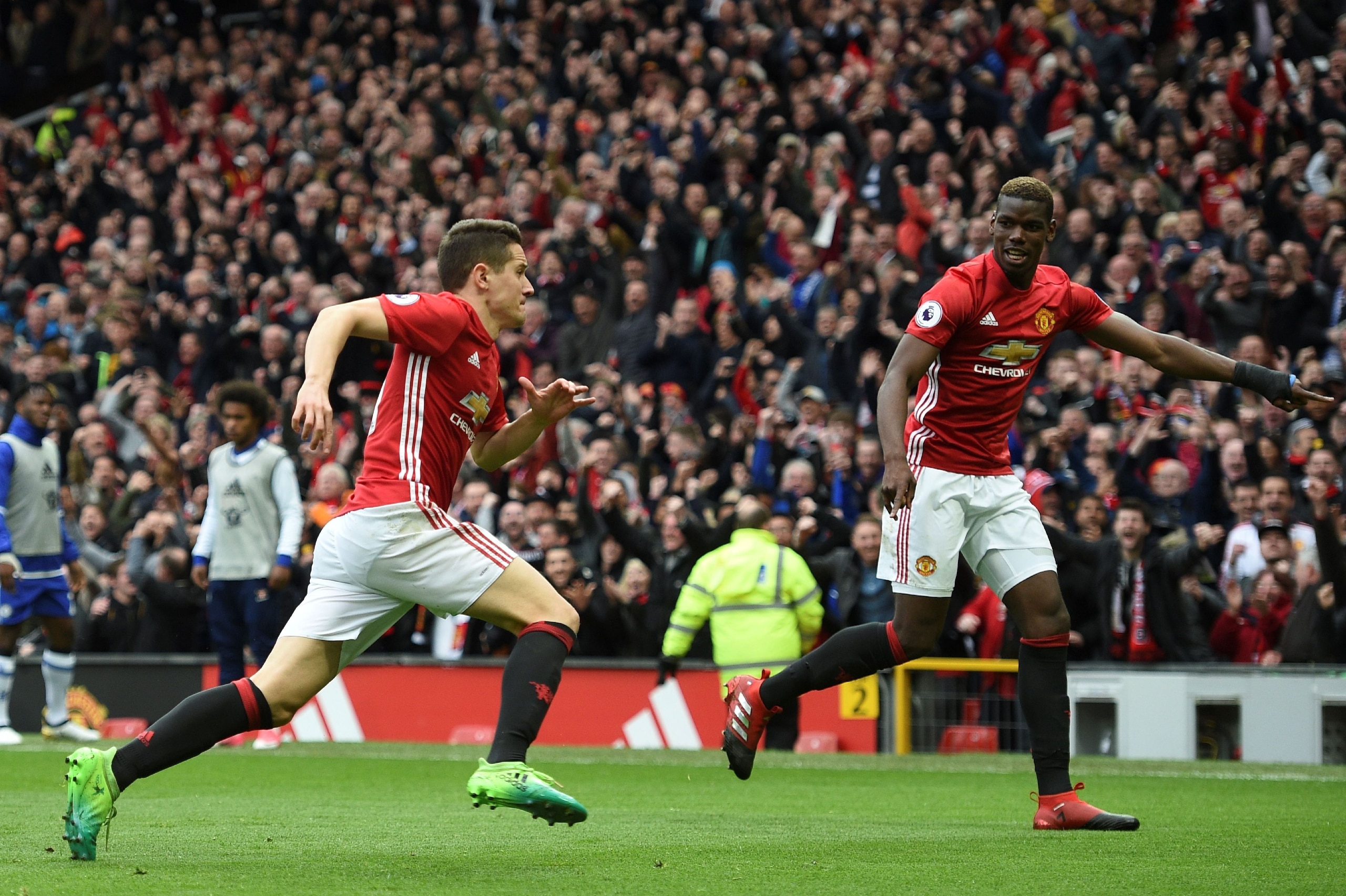
Ander Herrera is struggling for form, but last season's player of the year has generally excelled when played in a midfield three. He would be a box-to-box midfielder here, a role we know he can execute. His best spell at United came during Van Gaal's brief experiment with a 4-3-3, during which Herrera and Juan Mata worked together to dominate the right flank of the United attack. Against United's 2000s side, he could stick close to Scholes, denying the Ginger Prince time and space on the ball.
Michael Carrick has been one of the more consistent performers of this decade, peaking in 2012/13. That was the season in which the "hard to believe it's not Scholes" chant took hold. He would be the deepest of United's midfield here, trying to establish their passing rhythm and taking advantage of the space created by Pogba's runs.
Pogba would be there to provide the magic. He is more than capable of doing so but can also turn his attention to more prosaic midfield matters like tackling and tracking back. He is hardworking and a genius on the ball, a fairly rare combination. He would need to be at his best to have an impact here.
Centre-Forwards
Robin van Persie and Zlatan Ibrahimovic
Specifically, this is Robin van Persie circa 2012/13 and Zlatan Ibrahimovic circa 2016/17. The two one-season wonders, at their best, would be a proper handful for Ferdinand and Vidic.

Van Persie was electric during the one season he was at United when the team was anything other than a dysfunctional mess. It ended with him lifting the Premier League title and having his heart broken by Sir Alex's decision to retire. The player picked here is the 29-year old Van Persie, who still had the sharpness and speed of thought to break behind a line of defenders with perfect timing and all the technical gifts a striker could hope for.
Just behind him would sit Ibrahimovic, whose capacity to occupy defenders would test even the majestic centre-backs he would be up against. Between his eye for goal and his ability to create, a two-striker system could benefit him.
2000s XI (4-4-2): Edwin van der Sar; Gary Neville, Rio Ferdinand, Nemanja Vidic, Denis Irwin; David Beckham, Paul Scholes, Roy Keane, Cristiano Ronaldo; Wayne Rooney and Ruud van Nistelrooy.
2010s XI (5-3-2): David De Gea; Antonio Valencia, Phil Jones, Eric Bailly, Jonny Evans, Patrice Evra; Ander Herrera, Michael Carrick, Paul Pogba; Zlatan Ibrahimovic and Robin van Persie.
There you have our two Manchester United XIs, but which would emerge triumphant in a head-to-head game at Old Trafford? Join the debate on B/R Football's social media accounts.


.jpg?w=2560 "Viral Rams Coach Vid 🖕")

.jpg?w=2560 "Injury-stricken Seahawks signing veteran RB")
