

Who Would Win: Barcelona 2000s XI vs. Barcelona 2010s XI?
One of the great, never-ending debates among football fans is whether a current side is as good as that of yesteryear: Has the forward line improved, has the star midfielder ever been replaced, and so on.
After big defeats, it's far from uncommon to hear a critique along the lines of "none of these players would have got into our title-winning side," irrespective of context or the amount of time that has since passed.
But what if you could pick the best players from each era and pit them against each other? Barcelona have a huge talent pool to select from, and that's exactly what we've done here.


.jpg?w=2560)
We have chosen the top XIs from those who played in the 2000s and from the 2010s so far. We've selected the teams, and it's up to you to make the call on who would win.
As long as the players featured for Barca in either decade, they are eligible for selection, and choices have been made based purely on what they did for the Camp Nou side in that decade in particular, with cumulative achievements allowed for.
Seasons 2000/01 up to 2008/09 are considered for the 2000s team, while 2009/10 up to the present day count towards the 2010s side.
Players who transcend the decades are eligible for both teams, but only their performances and impact in each individual decade count toward selection for that side.
2000s XI
GK: Victor Valdes
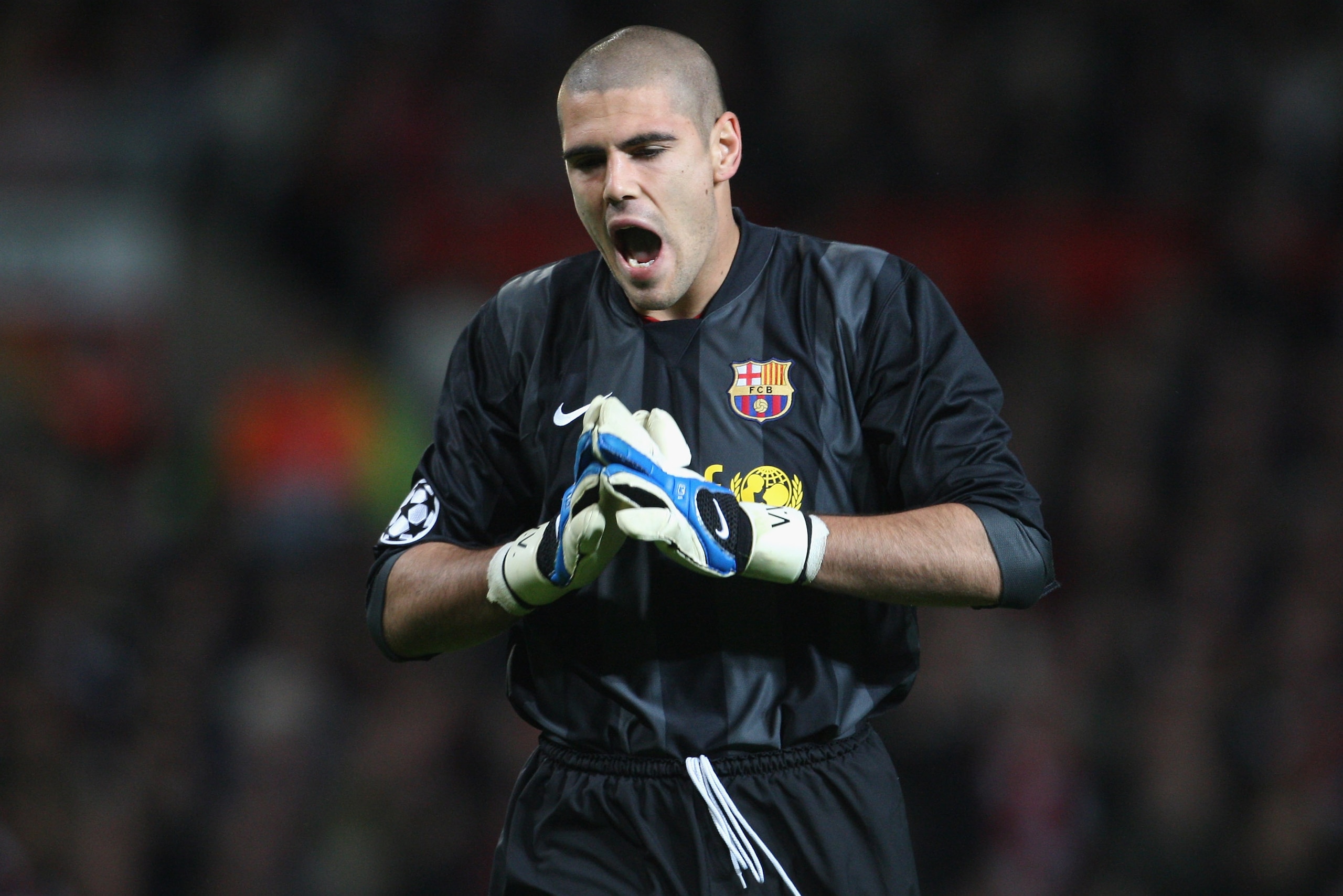
It's not a tough choice for the No. 1 Barcelona stopper of the 2000s. Victor Valdes was in place for much of the decade, a key component of the team Pep Guardiola built and stylistically suited to the direction the club wanted to take with their on-pitch methods.
Composed and technically good with the ball at his feet, Valdes was a regular thanks to his willingness to build from the back as well as perform his goalkeeping duties.
Good reflexes and agility made him a fine shot-stopper, and he was a Barca academy graduate who took pride in representing the club.
Valdes spent over a decade in the side, counting six La Liga titles and three UEFA Champions Leagues among his medal haul.
RB: Carles Puyol
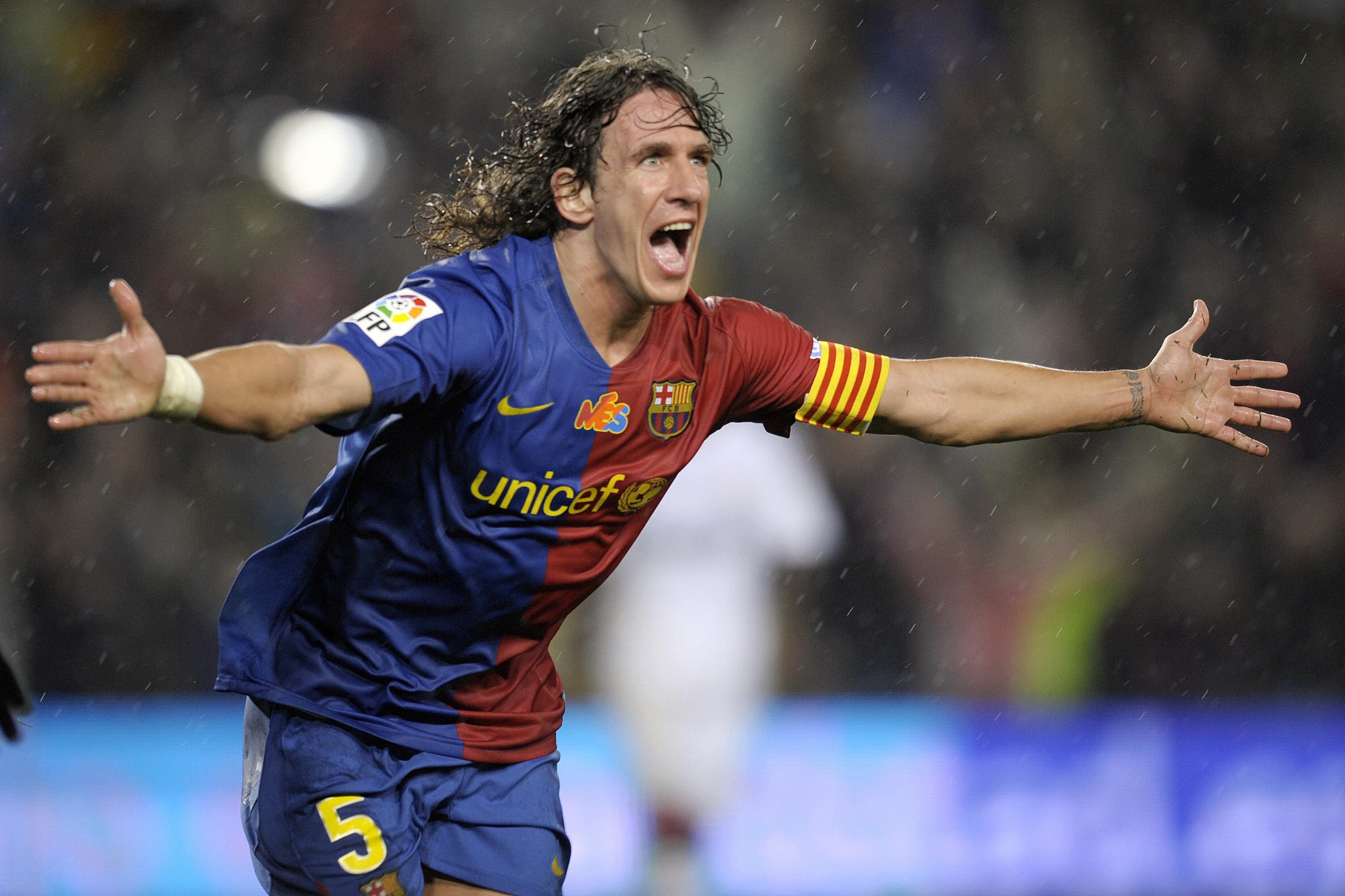
There was no question Carles Puyol would be in the side; the only debate was over his role in our 2000s team.
While he eventually made his name as a fearsome leader in the heart of the defence, his breakthrough came at full-back, and it's there, on the right, that we place him in the team.
Even then, Puyol was a charismatic figure, barking orders at his seniors and unafraid to embark on powerful raids down the flank—a far cry from his rigorous positional role in later years.
Competent in the air despite a small stature, Puyol was a figure to look up to almost from the moment he found a place in the team, thanks to his aggressive style, fearless nature and insatiable desire to win.
He's in ahead of the likes of Michael Reiziger and Dani Alves, who joined in the final eligible season for this decade but clearly can't match what Puyol did at Barcelona in that one year.
CB: Rafael Marquez and Frank de Boer
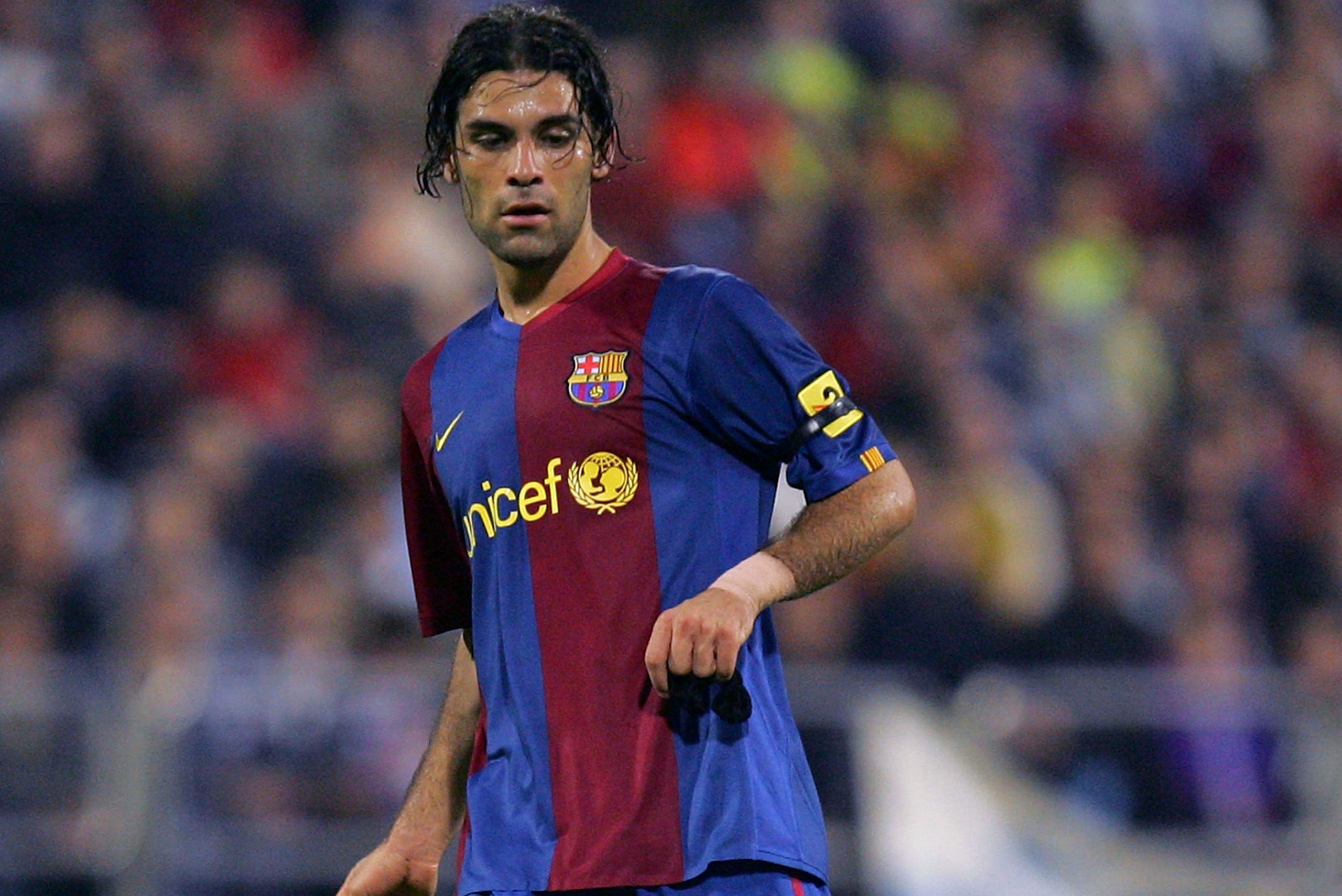
With Puyol on the right, we can fit two genuine Barcelona greats in the middle.
Rafael Marquez continues to play now at age 38, but from 2003 to 2010, he was a figure of enormous importance for Barcelona. Equally capable in central defence or holding midfield, his technique on the ball, aerial prowess and leadership skills made him a key part of the team.
The Mexico international would perhaps have played even more if not for injury, but four league titles and two European triumphs attest to his importance.
Alongside Marquez, it's Frank de Boer, the Netherlands defender who played both on the left and centrally during his five years at the Camp Nou.
Despite it being a lean period for the club, he still won the title in his debut campaign in 1998/99 and was a key figure for another four seasons beyond then.
Classy, strong and always aggressive, De Boer was a favourite of former Barca boss Louis van Gaal's and was one of several Dutchmen in the Barca team at the time.
He left in 2003 after more than 200 games with the Blaugrana.
LB: Giovanni van Bronckhorst
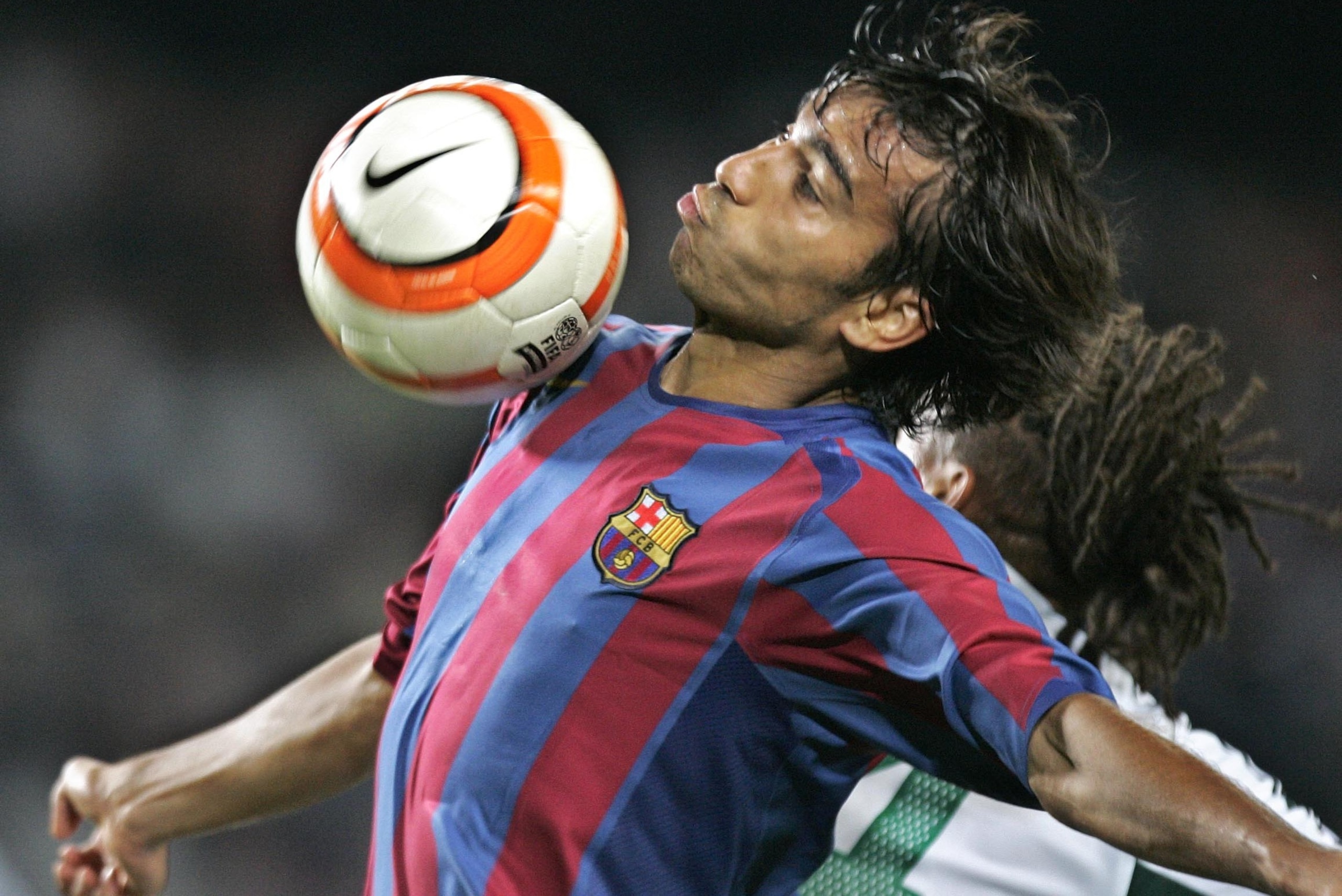
The left side of defence had plenty of competition, but nobody was both a standout performer and had longevity in the decade; Sergi Barjuan was just coming to the end of his career at the club, Eric Abidal only joined late on and the likes of Juan Pablo Sorin, Fernando Navarro and Sylvinho had only fleeting, if any, success.
Dutch defender Giovanni van Bronckhorst was a steady and reliable performer for four years, though. He initially joined from Arsenal on loan as a midfielder in 2003, but he impressed so much on the left side of defence that it became his full-time role once he signed permanently a year later.
Diligent about his defensive work, excellent in linking with the midfield thanks to his playmaking past and a great crosser of the ball, he provided a presence on that side of the pitch that counterbalanced the offensive talents ahead of him.
He won two league titles and the Champions League while at Barcelona.
DM: Xavi Hernandez
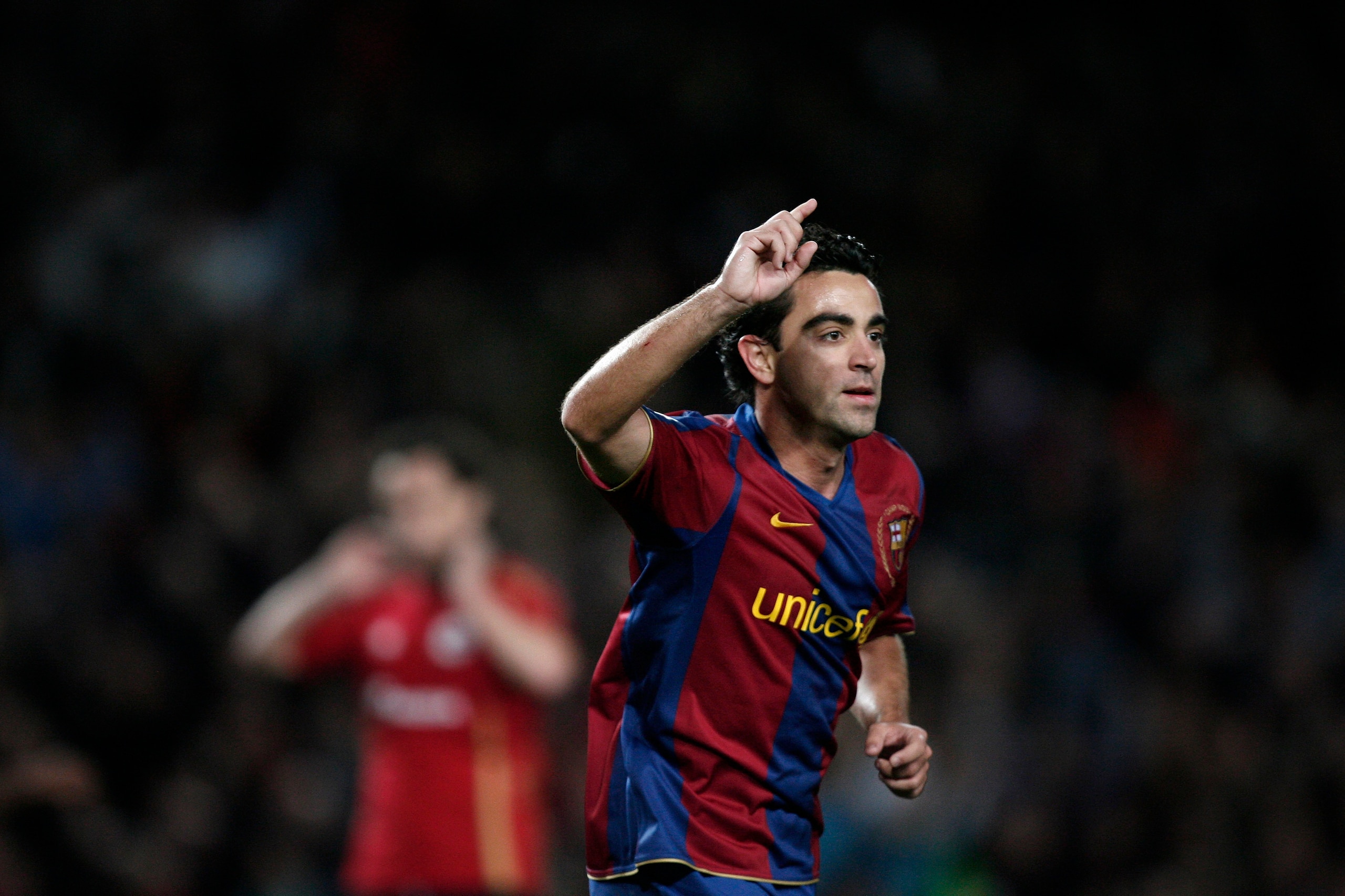
Unsurprisingly, there's plenty of choice for our midfield trio, but we have opted for the legendary Xavi at the base ahead of Guardiola or Phillip Cocu.
Xavi became a metronomic figure in the centre of the park for Barca, but his career spanned managers and styles that placed him both as a No. 10 and as a deeper playmaker, which is where he fits in this side.
Relentless with his all-round consistency as much as his ability to find team-mates during the match, he was a starting point for attacks, a creative hub who could prise apart opposition defences and perhaps above all else, one of the figures the fans looked to.
His career spanned a full 17 years in the first team; up until 2008/09, he had already won 12 major titles with the club.
CM: Andres Iniesta and Rivaldo
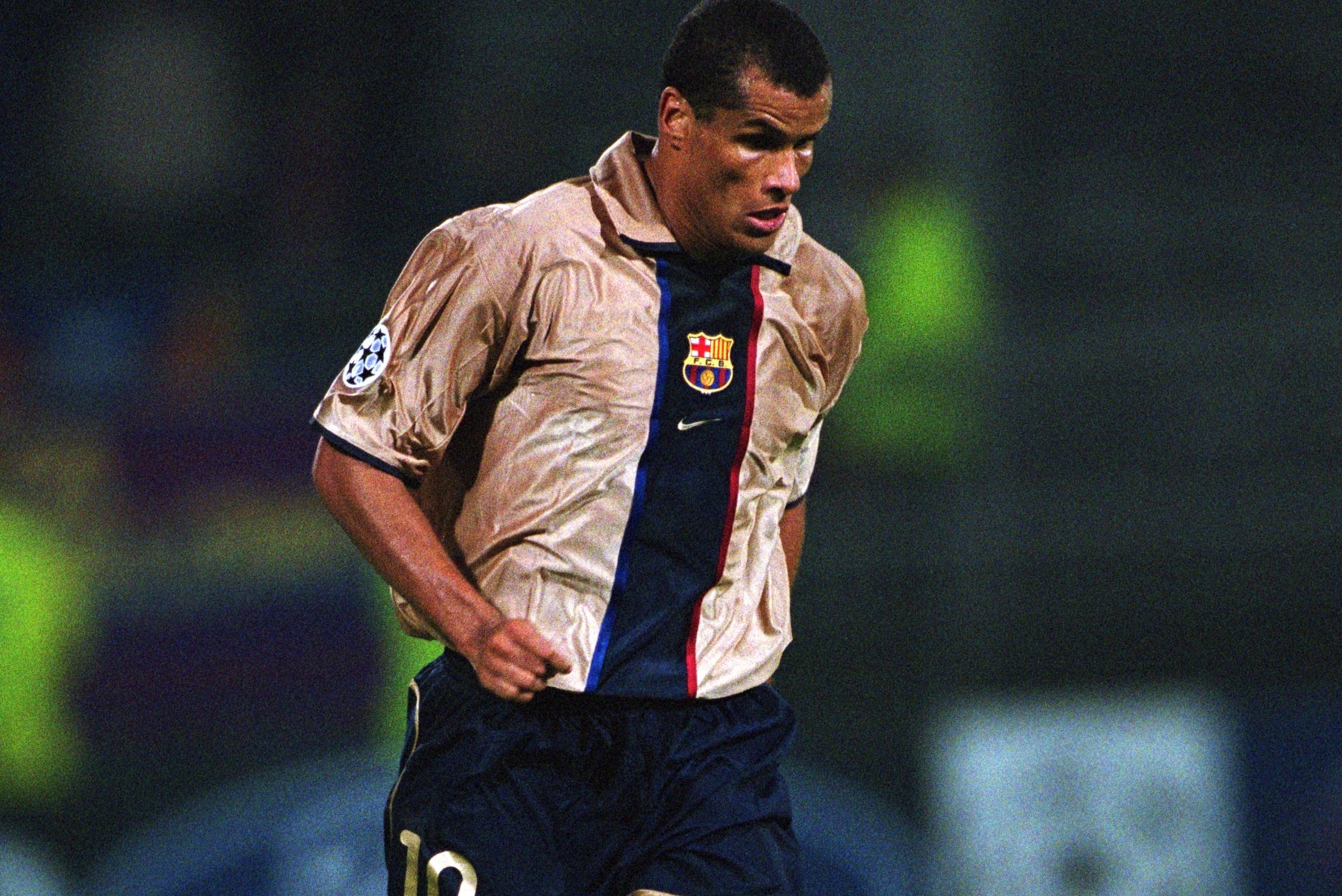
Attacking excellence doesn't come much closer to perfection than with these two: Andres Iniesta and Rivaldo.
The Spanish playmaker was a regular for Barca by 2004 and has been irresistible to watch ever since; playing both as a No. 8 midfielder and a left-sided threat cutting in, he has always seemed to have a magnet for the ball in his boots and is equally capable dribbling one-on-one or threading a pass between defenders.
Rivaldo, for his part, played almost every role in the middle and final third: central midfield, wide in the attacking line and even as a centre-forward. No. 8 or No. 10 were his preferred roles, though, right in the mix to be involved as often as possible, which is where we find space for him in our 2000s team.
Spectacular, strong, a scoring phenomenon from midfield positions and capable of dragging his team beyond what they looked capable of, Rivaldo was perhaps underappreciated given what he brought to his Barcelona side.
He won two league titles in his five seasons at the Camp Nou before departing in 2002.
Had he been around and at the same level three or four years later, it's tough to imagine how much havoc he could have wrought as Barcelona rebuilt.
WF: Lionel Messi and Ronaldinho
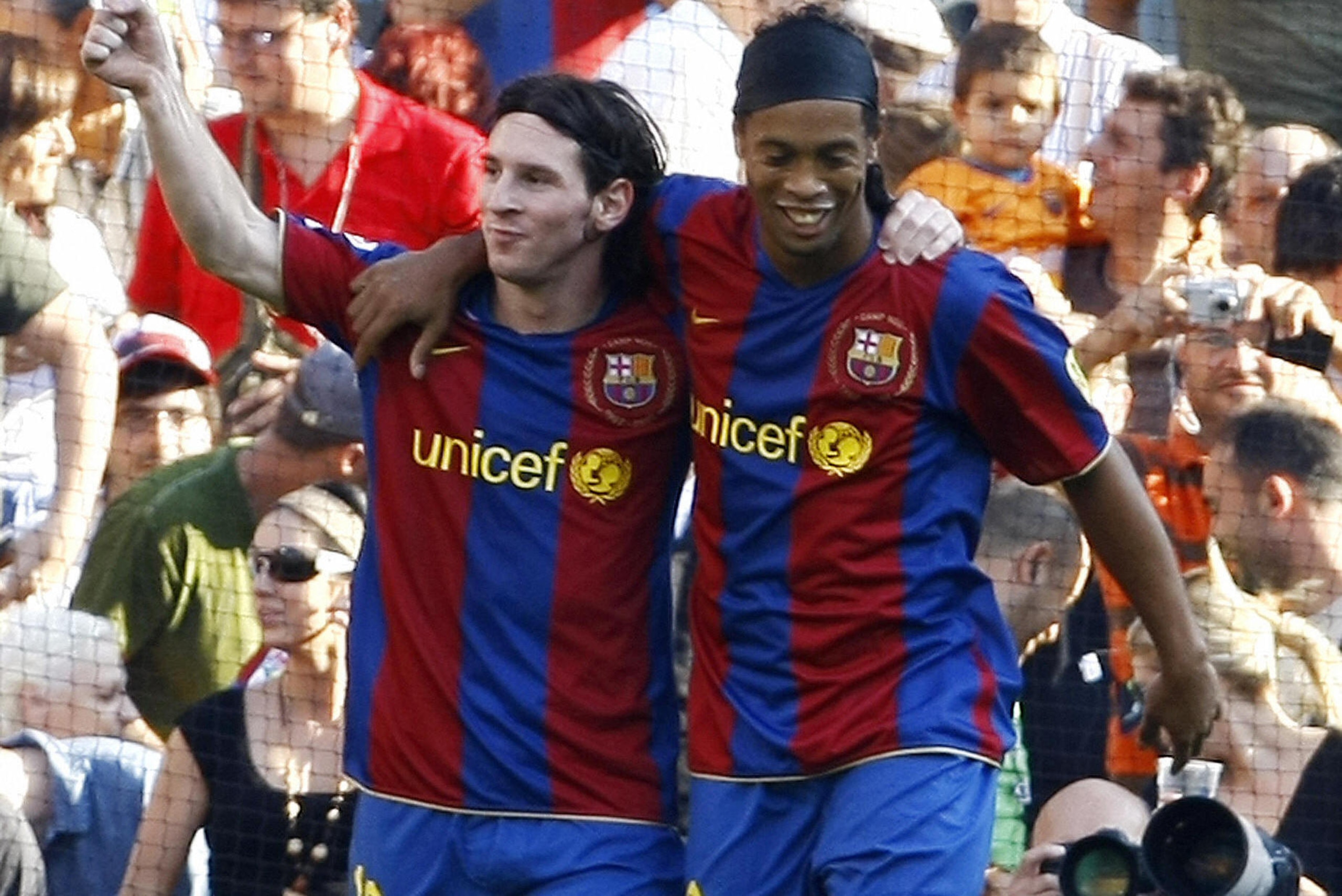
Just after Rivaldo left, there came a new Barcelona attack, with two world-class names playing a prominent role.
There is no question these two dominate the attacking line of the 2000s; Lionel Messi was in the side regularly by 2005, while Ronaldinho arrived in 2003 and stayed for five seasons, with three or four of those at his absolute peak.
And that peak was high, indeed.
Messi needs no further words to justify his place—he was among the world's best players then and remains so now—but it was perhaps Ronaldinho who became the player with the most recognisable look, style and substance in the world just beforehand.
The Brazilian possessed outrageous skill, tremendous pace and a goalscoring habit that wouldn't quit; he was the greatest for a period, and no defender could cope with him on his day. He just had too much to his game, too many options for beating opposing sides.
CF: Samuel Eto'o

The striker role goes to Samuel Eto'o, the lethal finishing touch between the brilliance and the brains of Messi and Ronaldinho from 2004 to 2009.
He scored well over 100 goals in that time. He was a predatory talent with lightning pace and great movement in the channels, who learned to attack the space in the penalty box over and over again, simply on the faith that chances would arrive. They did, and he rattled them home with ease and frequency.
Patrick Kluivert was the challenger from the early part of the decade, but Eto'o was a class above.
2010s XI
GK: Marc-Andre ter Stegen
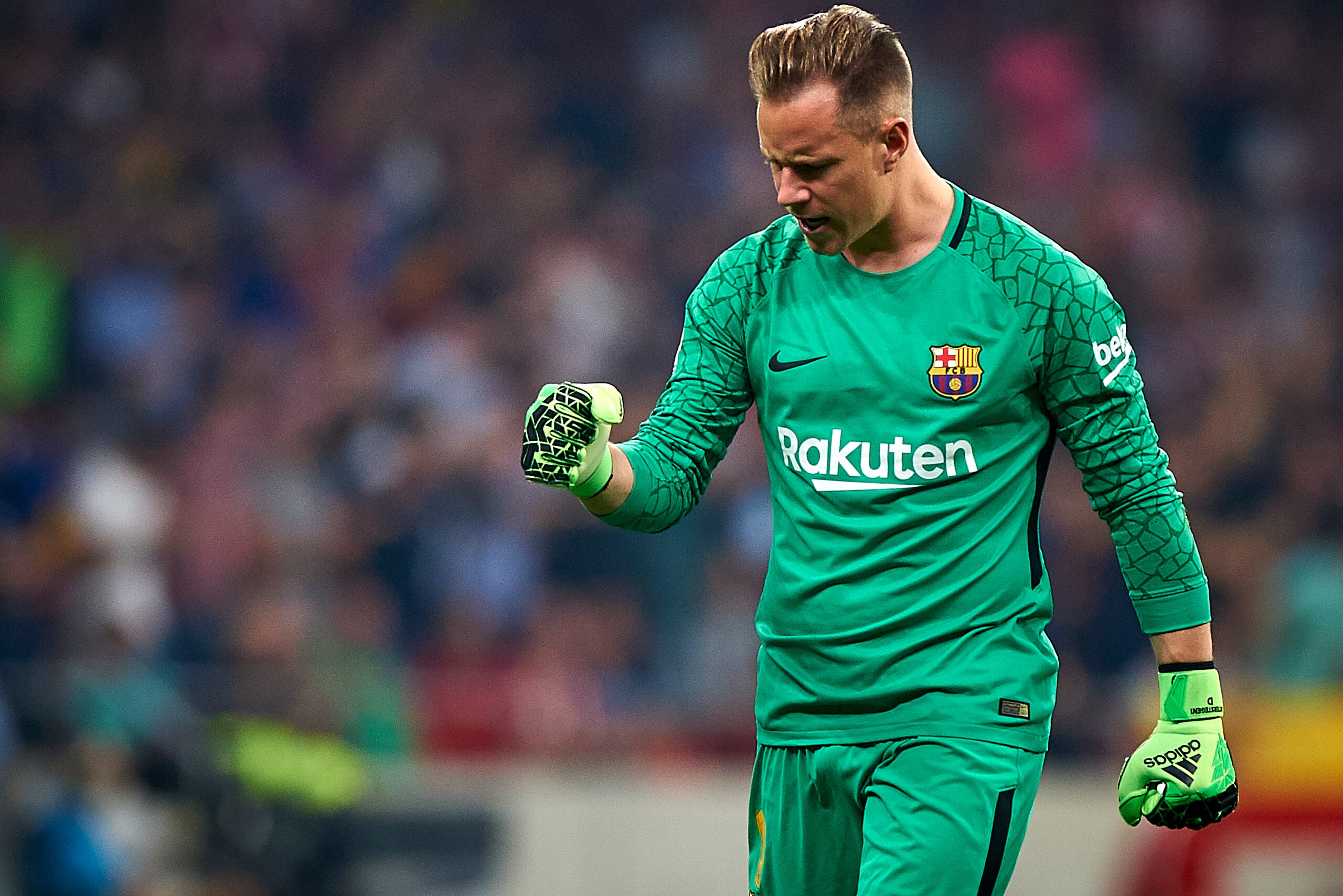
For the 2010s side, Marc-Andre ter Stegen has only been Barca's No. 1 for a couple of seasons but is already evidently a superior goalkeeper to the level Valdes attained.
He's a much more rounded and complete stopper, a huge presence with an iron mentality and tremendous consistency to his game.
The German is set to be the team's first choice for as long as he likes, and playing at the elite level he is, he'll soon be deserving of being spoken about in the same terms as compatriot Manuel Neuer.
He's a formidable first choice for the 2010s team.
RB: Dani Alves
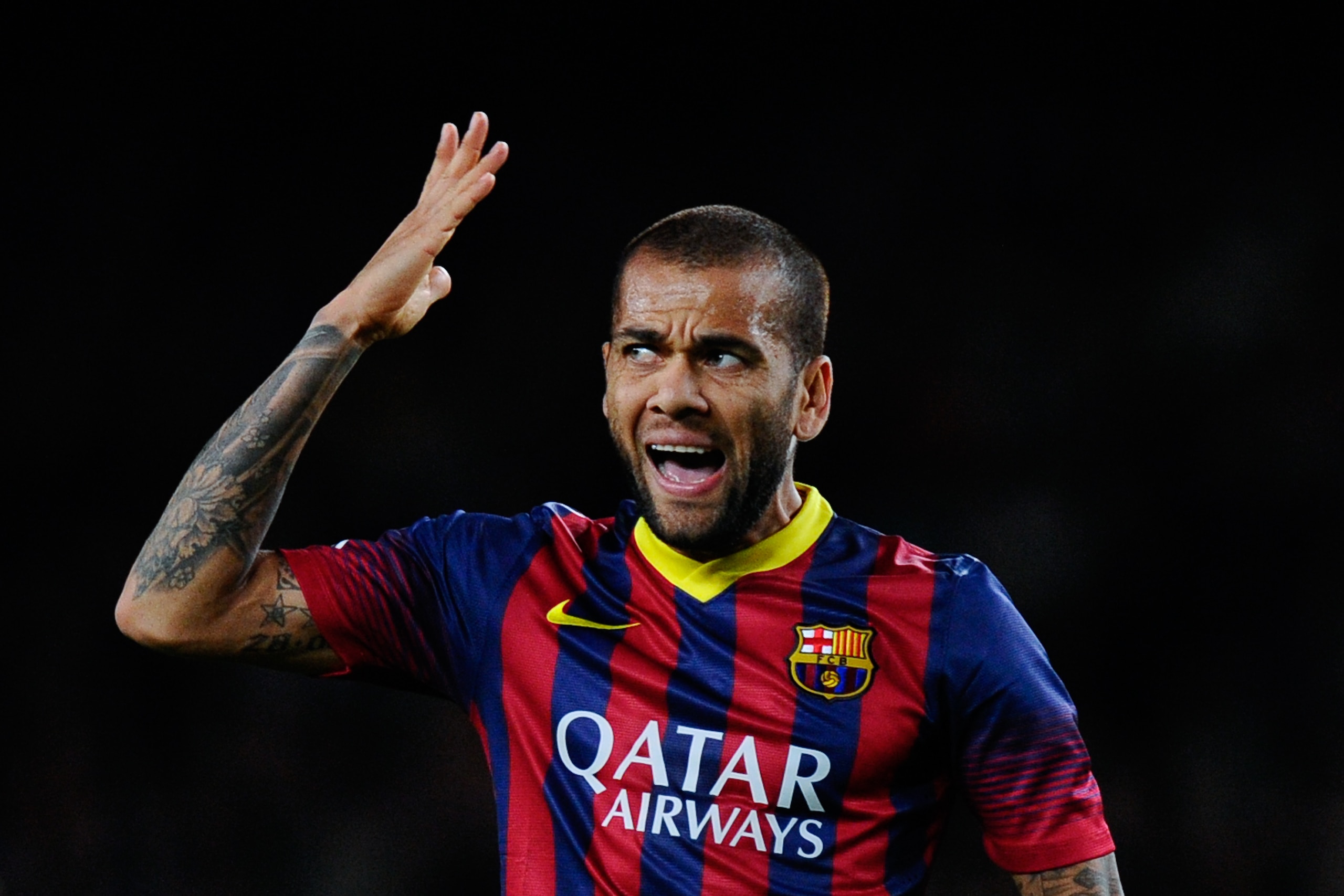
We mentioned earlier how Alves only just missed the cut on account of joining in the last eligible year for the 2000s side—but there's no questioning his productivity, his excellence and how much Barcelona relied on him after the turn of the decade.
Such was his impact at Barca that he was arguably responsible for an entire movement of teams searching for offensive-minded, athletic and powerful full-backs who could contribute to the attack and still be capable of defending.
Few players gave Barcelona such a problem to replace as Alves did, and his place in this side is untouchable.
CB: Gerard Pique and Javier Mascherano
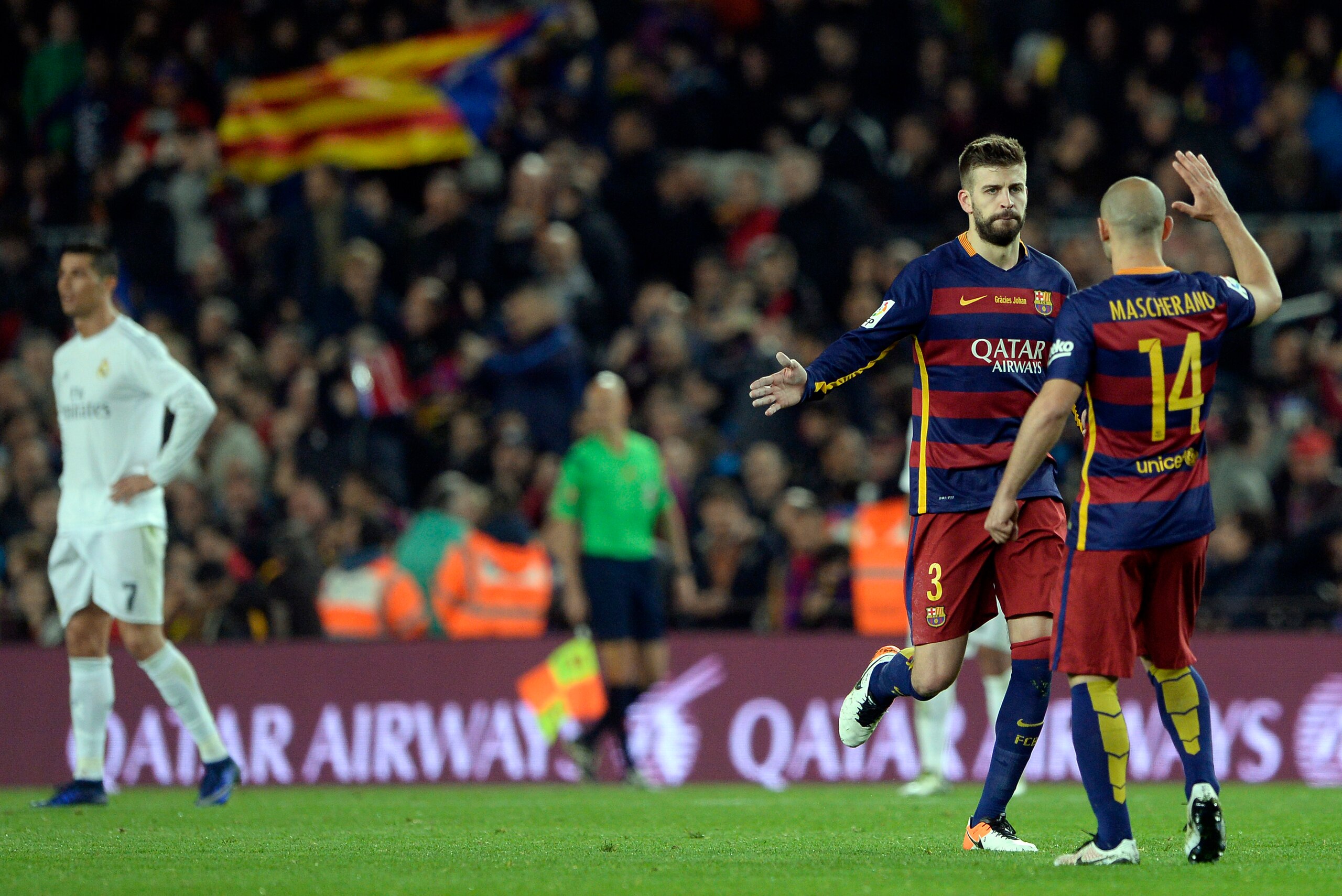
In the centre of the defence, Gerard Pique is a certainty.
He has been one of the key building blocks over the years, a fantastic presence who combines leadership, determination and pure footballing quality to ensure the team can play out from the back and be assured of protecting the goalkeeper.
His start to life back at Barca wasn't easy, and it has been far from plain sailing throughout, but overall there's no doubt Pique is one of the most complete centre-backs in world football.
Alongside him, we've opted for Javier Mascherano over a second appearance for Puyol.
The Argentinian has essentially filled Puyol's role: an aggressive organiser who is concerned with keeping the team tight at the back and letting others do the attacking work.
He started off as a defensive midfielder but has blossomed tremendously as a defender, showing longevity as well as quality. He's often the last line of defence against counter-attacks, yet he still comes out on top.
The 33-year-old might be ageing and slowing down now, but he is still a top performer after joining in 2010.
LB: Jordi Alba

On the left side, we opt for Jordi Alba over Abidal.
Like Alves on the right, Alba has provided the pace and power demanded of Barca's full-backs, overlapping constantly and providing both an out-ball and a supply line to the forwards while still being on hand to chase back defensively.
Alba doesn't have the consistency or the variance to his game that the Brazilian has, but he has still been a staple of the team for a reason.
DM: Sergio Busquets
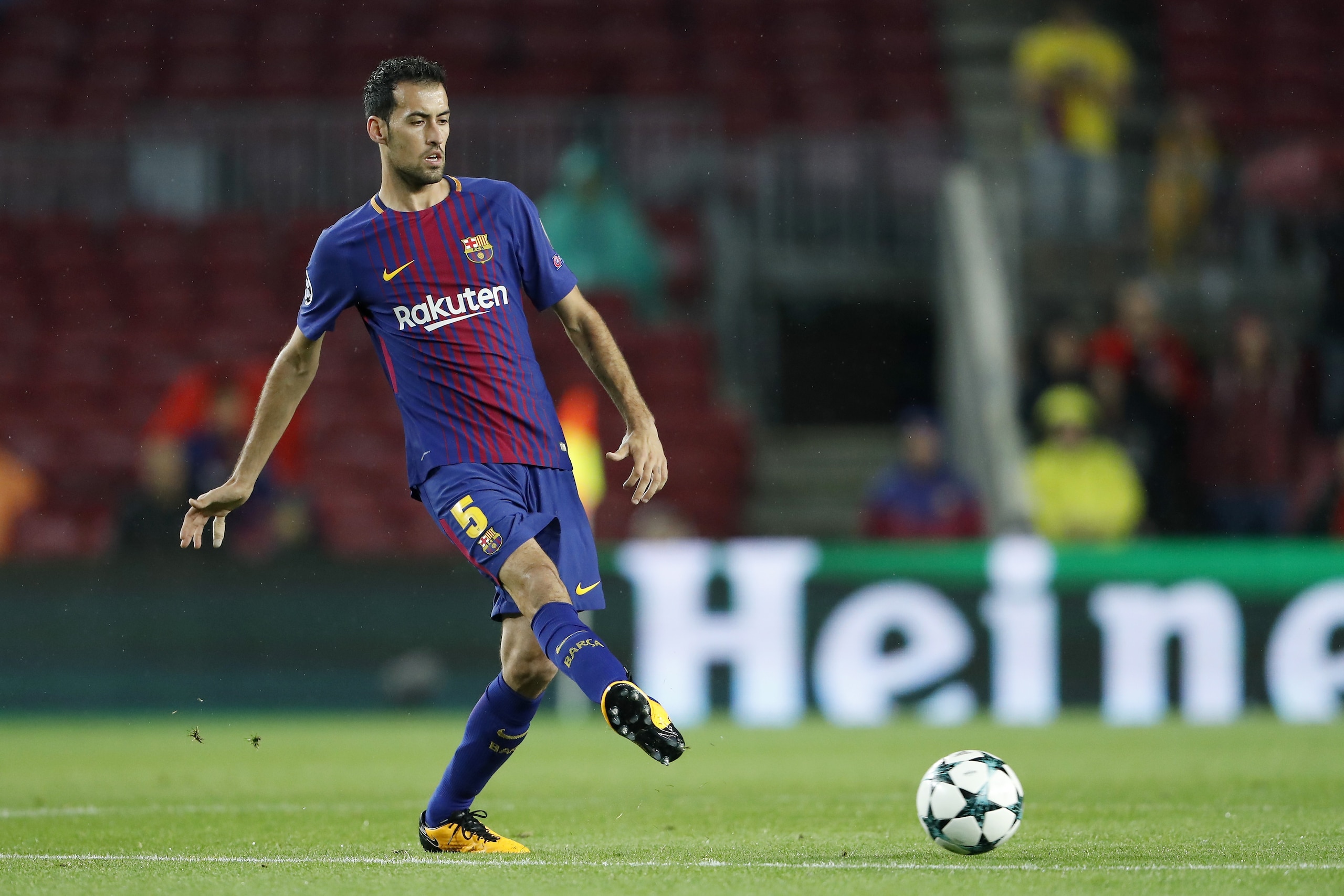
Into midfield and first up is the man who has been the greatest pure defensive-midfield player over the last decade—and not just at Barcelona.
Sergio Busquets has everything for the role: a tall frame, great positional sense, an ability to read danger and, essentially for Barca, the insightful, brave and accurate passing between the lines that allows others to find space and receive possession.
With him in the side, it becomes much harder for attacking midfielders and forwards to star in the way they do. Without him, leaving the defence as exposed as it sometimes is would be nothing short of disastrous.
Busquets has been the greatest, and even though that's acknowledged by many, he still perhaps doesn't get the praise the status merits.
CM: Xavi Hernandez and Andres Iniesta
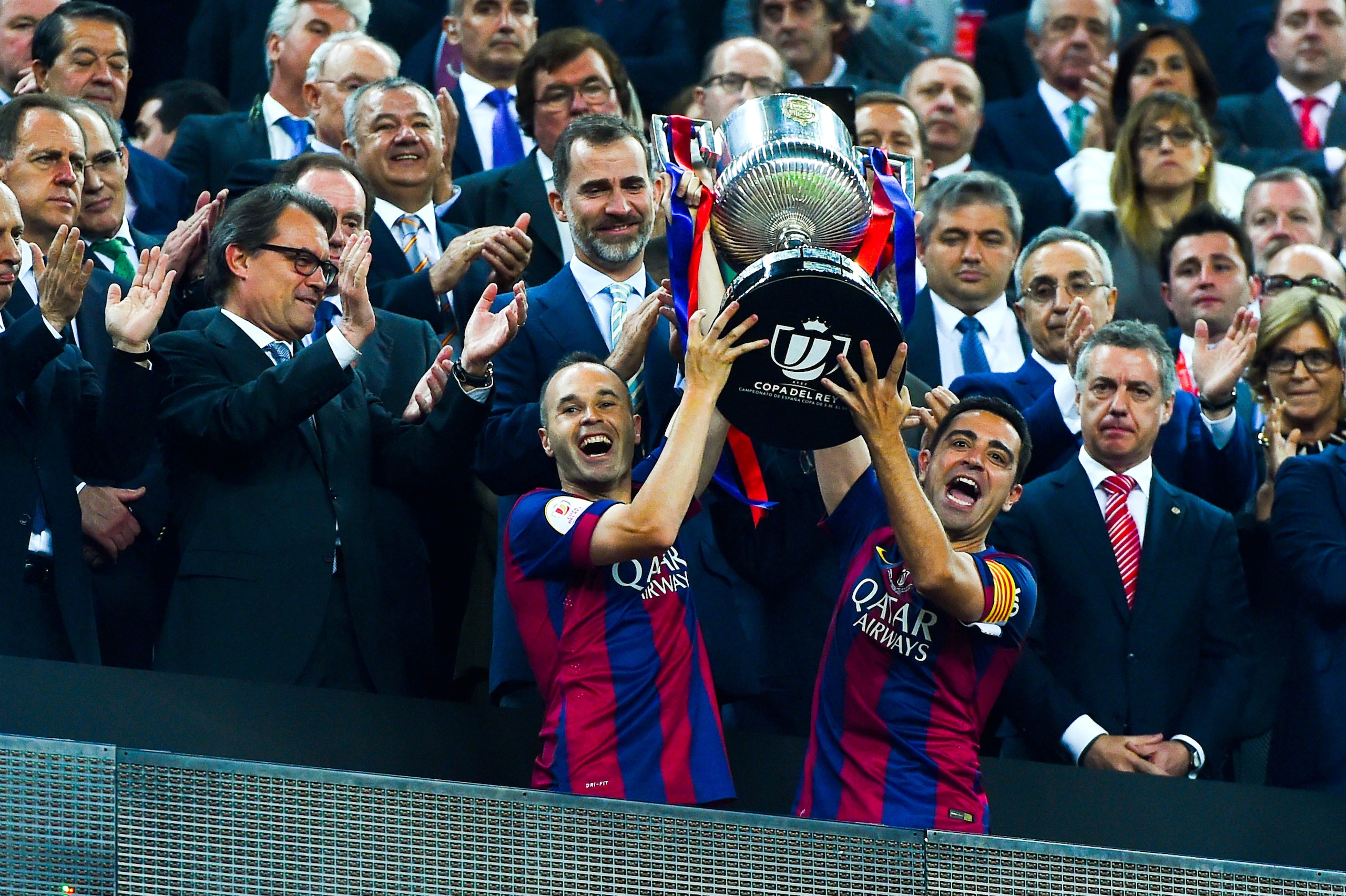
The legendary pairing go together in midfield—as they always will in people's minds.
Xavi and Iniesta, the dumbfounding duo who would not let the other team have the ball.
Between them, they dominated matches; recycling, creating and opening space as needed, always on their own terms and always in their own time.
Whether both playing centrally or one slightly more advanced, they combined as well as any pairing and intuitively knew how and when to release the pass and how to move to receive it back.
Size doesn't matter when the other team can't take the ball off you.
WF: Lionel Messi and Neymar
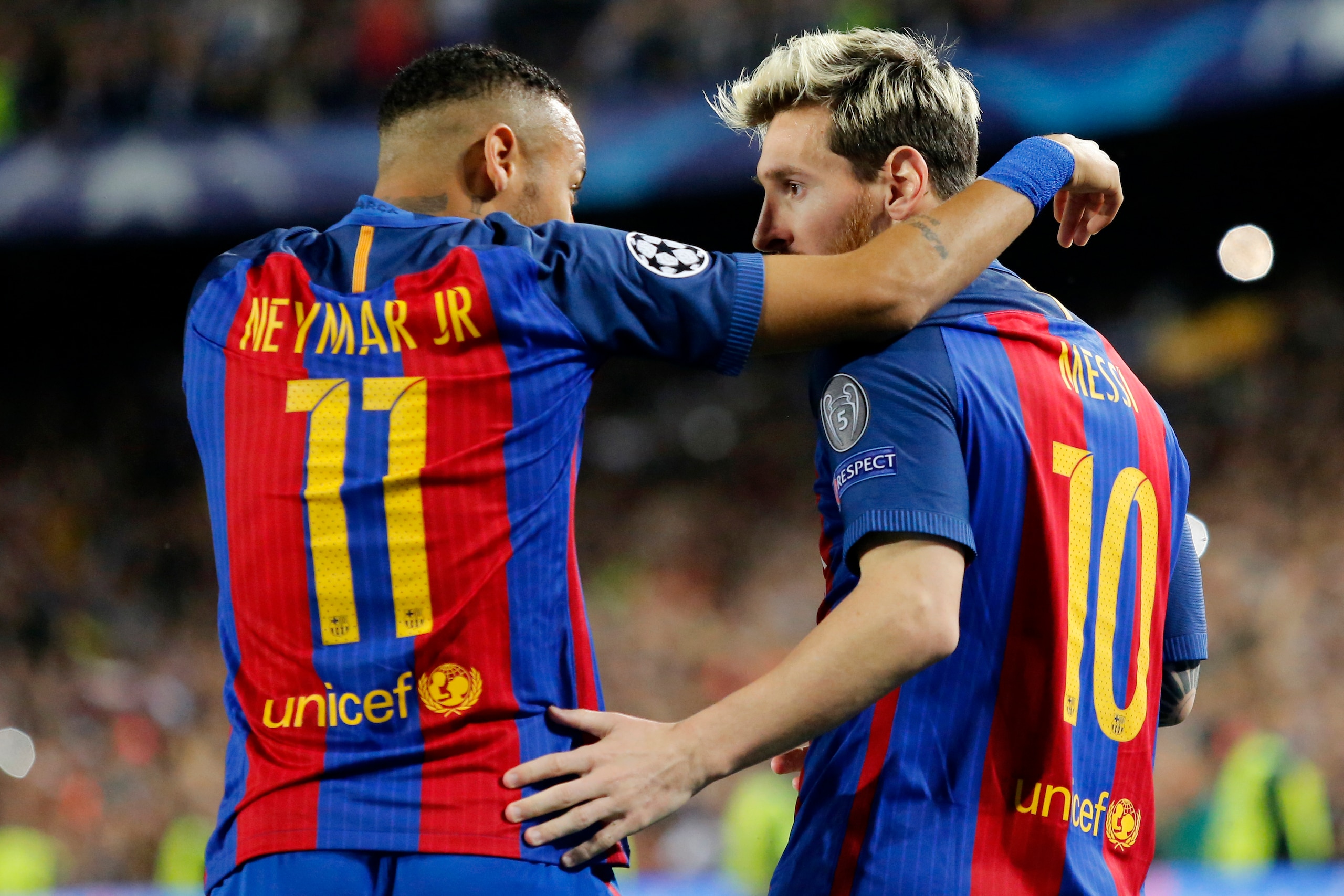
Messi continues to be one of the best on the planet. He might be second best this year, according to the most recent Ballon d'Or and similar trophies, but over a longer period of time, he is still comfortably far better than anyone else who wants to lay claim to the title.
His goal return is absurd (still), his on-the-ball technique, skill and unstoppable dribbling are astonishing to watch in full flight (still) and whether playing centrally or wide—as the main goal threat or creator—he carries the team to untold heights and beyond (still).
When Barcelona are struggling, Messi makes them win. When Barcelona are great, Messi makes them untouchable.
Alongside him, Neymar took over from Ronaldinho as the Brazilian star on the left, weaving and dancing his way into the adulation of supporters—at least until his summer departure to Paris Saint-Germain.
Regardless, his quality increased tenfold while at the Camp Nou. He won the biggest matches by himself when required and grew in self-belief, consistency and importance as time went on.
CF: Luis Suarez

Eto'o, David Villa and Thierry Henry were possible forward options, but Luis Suarez has blown them all out of the water with his exploits at Barcelona.
Don't let recency bias and his tough start to 2017/18 cloud his achievements over the past three years; he averages close to a goal per game during his time in Catalonia and netted 59 in a single season in 2015/16.
He's a lethal forward; his movement and aggression are as important as his finishing from any range and angle, and he'll still prove to be every bit as vital for this newest Barcelona side over the coming months.
Final teams
FCB 2000s: Valdes; Puyol, Marquez, De Boer, Barjuan; Xavi, Iniesta, Rivaldo; Messi, Ronaldinho, Eto'o.
FCB 2010s: Ter Stegen; Alves, Pique, Mascherano, Alba; Busquets, Xavi, Iniesta; Messi, Neymar, Suarez.
There you have our two Barcelona XIs, but which would emerge triumphant in a head-to-head game at the Camp Nou? Join the debate on B/R Football's social media accounts.
.jpg?w=2560 "Rams Eagles Football")
.jpg?w=2560 "Texans-Mixon Released Football")
.jpg?w=2560 "Bijan's INSANE 1st Half 🤩")

.jpg?w=2560 "2 NFL Officials Suspended")

