
Metrics 101 History: Best NBA Teams That Didn't Win the Title
The NBA doesn't hand out participation trophies. Only one team can walk away with a championship during any given season, which means plenty of dominant outfits get left out in the cold.
Maybe appearances in this countdown can serve as some sort of consolation prize, though that probably won't do much good for their psyches. They still lost when it mattered most, whether because the year in question featured another barn-burning bunch, injuries struck them at the worst time or they just declined during the playoffs.
Regardless, these 10 teams (and others that couldn't make the cut-off) deserve some credit. They didn't win titles, but they're not exactly also-rans. In fact, they're the 10 highest non-title-winning finishers in NBA Math's team rating, which looks at how a unit fared on each side of the court relative to the rest of the league that year and spits out an all-encompassing score.
Before we delve into the rankings, do note that while this analysis encompasses the entirety of NBA history, it'll feature far more modern squads than older ones. The league has gotten better over time, which allows for more historically excellent teams operating in the same era.
10. 2000-01 San Antonio Spurs
1 of 10
Adjusted Offensive Rating: 103.5
Adjusted Defensive Rating: 105.1
Record: 58-24
NBA Math rating: 104.3
Postseason Results: 3-1 victory over Minnesota Timberwolves, 4-1 victory over Dallas Mavericks, 0-4 loss to Los Angeles Lakers in Western Conference Finals
Can you really hold a loss to the 2000-01 Los Angeles Lakers against anyone?
Though that iteration of the Purple and Gold didn't turn on the afterburners until the playoffs, they're perhaps the best example in NBA history of a team flipping a switch. Despite going "just" 56-26 during the regular season, the Lakers swept the Portland Trail Blazers, Sacramento Kings and San Antonio Spurs en route to the Finals, then dropped just a single game against the Philadelphia 76ers.
These Spurs featured plenty of talent, but they weren't ready for a matchup with the uber-athletic duo of Kobe Bryant and Shaquille O'Neal. Not with a 35-year-old David Robinson still playing big minutes against a young version of The Diesel.
But throughout the regular season, San Antonio did the dominating. Robinson and Tim Duncan still made for a devastating frontcourt pairing, while Derek Anderson, Antonio Daniels, Terry Porter, Danny Ferry, Sean Elliott, Malik Rose, Steve Kerr and Avery Johnson helped provide depth at the smaller positions.
The Spurs could score from all over the floor and were ahead of their time by seeking out corner threes within the half-court set. But they were even better defensively, neglecting to gamble for steals to instead contest every field-goal attempt, prevent second-chance opportunities and never foul.
9. 2003-04 San Antonio Spurs
2 of 10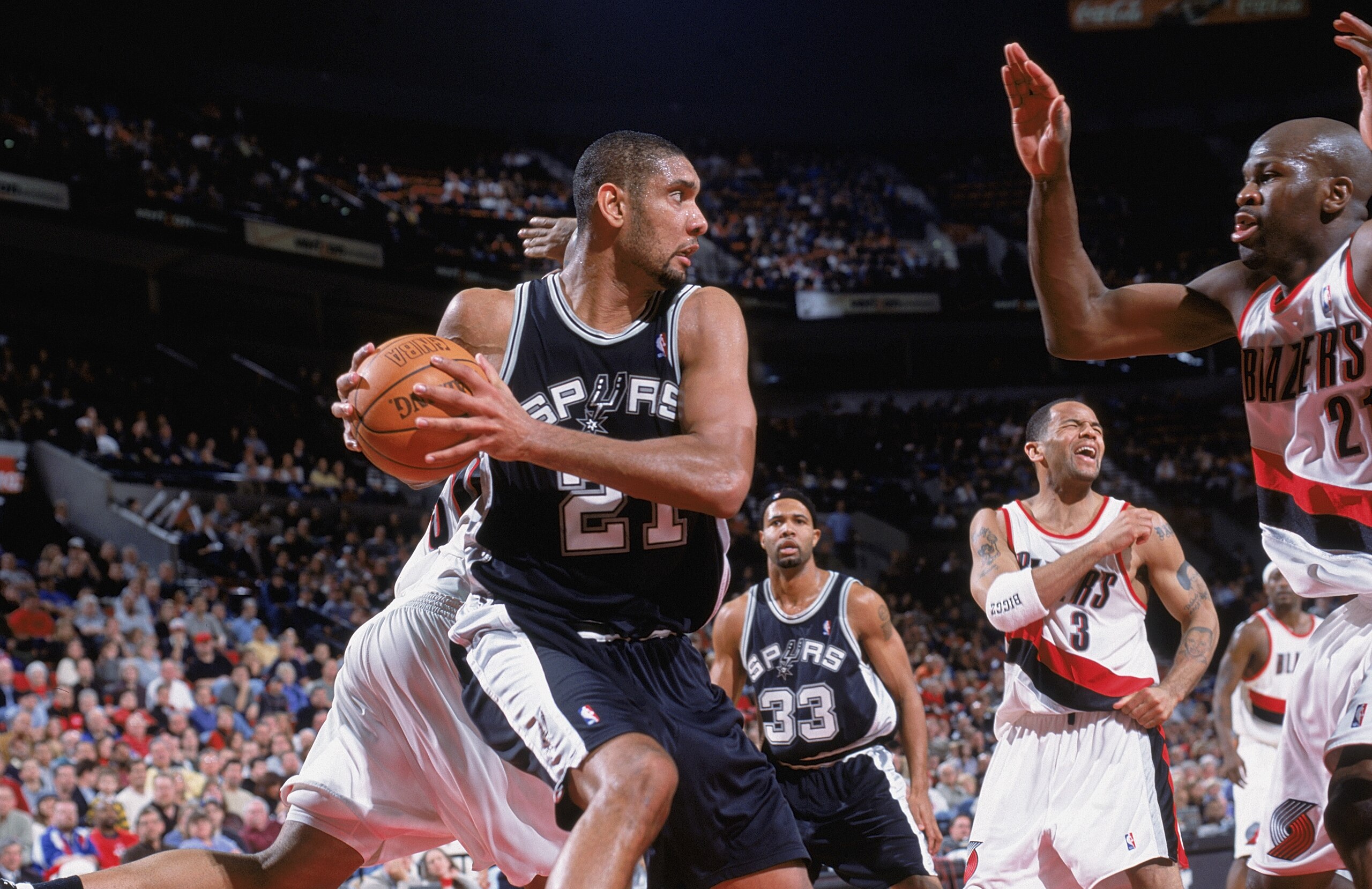
Adjusted Offensive Rating: 99.32
Adjusted Defensive Rating: 109.35
Record: 57-25
NBA Math rating: 104.34
Postseason Results: 4-0 victory over Memphis Grizzlies, 2-4 loss to Los Angeles Lakers in Western Conference Semifinals
Three years later, the Spurs weren't the same scoring machine. They actually featured an offense that churned out points at a below-average rate (16th in offensive rating) while Tim Duncan, Manu Ginobili and a 21-year-old Tony Parker were the only double-digit scorers.
And yet, they were even better than the previous iteration.
Teams dream of having this many capable stoppers. San Antonio boasted a whopping seven different contributors who played at least 1,000 minutes and posted positive defensive box plus/minuses (Duncan, Rasho Nesterovic, Robert Horry, Bruce Bowen, Ginobili, Hedo Turkoglu and Malik Rose), which helps explain how they emerged as not just 2003-04's premier defensive squad, but one of the best in NBA history. According to NBA Math's adjusted defensive rating, only four versions of the Bill Russell Boston Celtics and the 1951-52 Milwaukee Bucks have been more dominant relative to the landscape of the league at that time.
It ultimately didn't matter.
The Spurs kept the Los Angeles Lakers' offense in check during the postseason's second round, but they couldn't score enough to keep up with the star-studded opposition that had added Karl Malone and Gary Payton into the mix.
Duncan, Ginobili and Parker again checked in with double-digit scoring figures, but Devin Brown came next at a meager 8.5 points per game. That just wasn't enough against highly motivated versions of Bryant and O'Neal.
8. 1996-97 Utah Jazz
3 of 10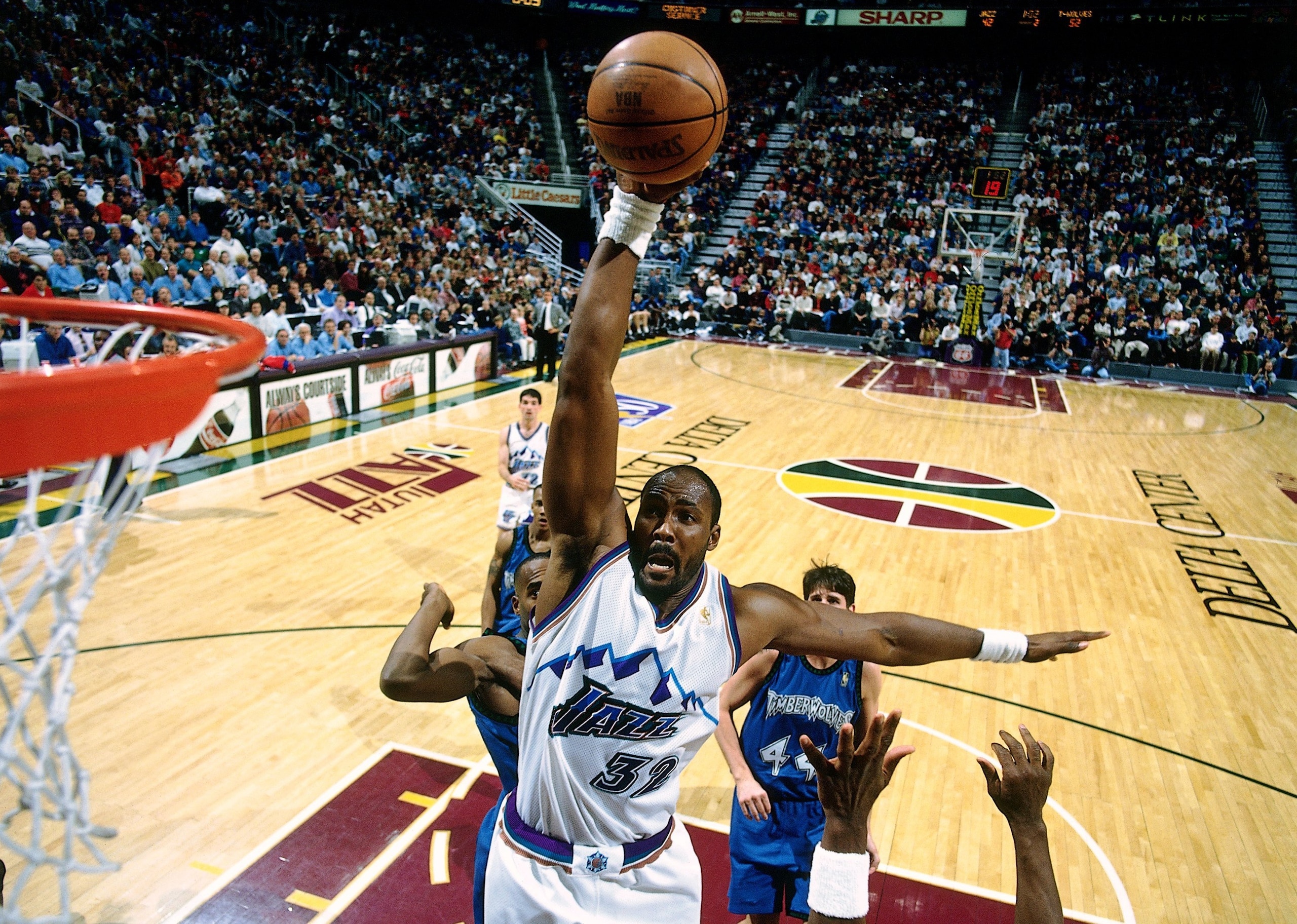
Adjusted Offensive Rating: 106.47
Adjusted Defensive Rating: 102.6
Record: 64-18
NBA Math rating: 104.53
Postseason Results: 3-0 victory over Los Angeles Clippers, 4-1 victory over Los Angeles Lakers, 4-2 victory over Houston Rockets, 2-4 loss to Chicago Bulls in NBA Finals
The Utah Jazz did everything they were supposed to do.
Karl Malone and John Stockton kept running pick-and-rolls that baffled the opposition, who couldn't figure out whether to hedge out and prevent jumpers from the point guard or drop back to cut off pocket passes to the rolling power forward. Jeff Hornacek and Bryon Russell were strong two-way figures, while Greg Ostertag added even more defense on the interior.
Throughout the regular season, it seemed precious few squads could find an exploitable weakness. The Jazz were too well rounded and won games on both sides of the floor. But they did have one kryptonite.
Michael Jordan.
After the Jazz continued their torrid pace while bull-rushing through the Western Conference field, they had to go up against the dreaded Chicago Bulls and try to prevent one of the (other) greatest teams in NBA history from going back-to-back. They failed.
Jordan was shockingly (note: heavy sarcasm) unstoppable on the biggest stage, averaging 32.3 points, 7.0 rebounds and 6.0 assists while shooting 45.6 percent from the field. Even as his teammates largely struggled—Scottie Pippen's inefficient scoring held him back, for example—the dominant 2-guard carried his troops to yet another Finals victory, this time at the expense of an all-time great.



7. 2011-12 Chicago Bulls
4 of 10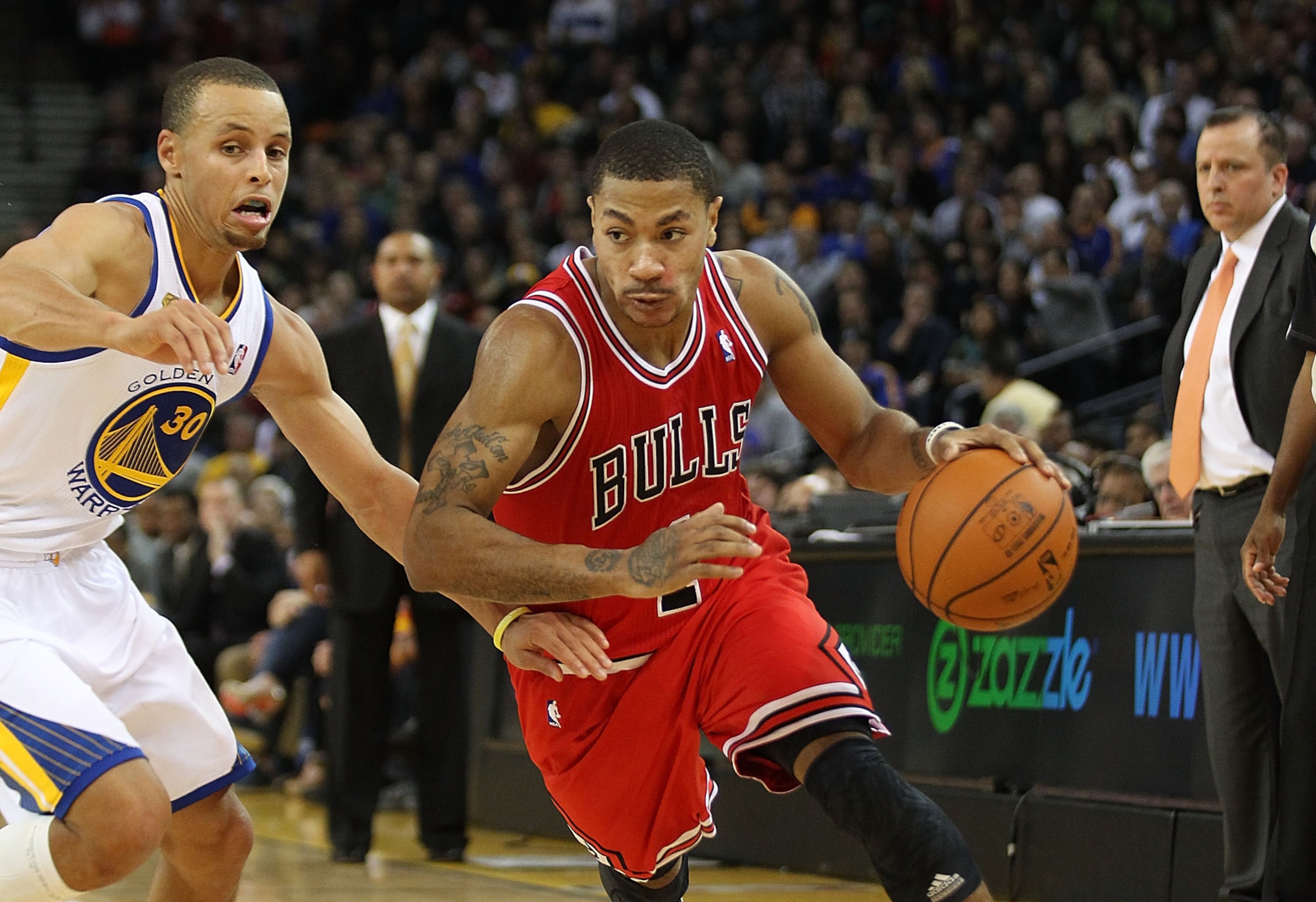
Adjusted Offensive Rating: 102.68
Adjusted Defensive Rating: 106.41
Record: 50-16
NBA Math rating: 104.54
Postseason Results: 2-4 loss to Philadelphia 76ers in Eastern Conference First Round
Don't be fooled by the first-round loss to Andre Iguodala, Jrue Holiday and Thaddeus Young's Philadelphia 76ers. Great teams don't typically drop out of contention for a title in the opening clash, but we have to deal with an extenuating circumstance here.
The Chicago Bulls were a juggernaut during the lockout-shortened regular season. Everyone bought into head coach Tim Thibodeau's pack-the-paint defensive schemes and found great success while prime Joakim Noah and—don't laugh—Omer Asik protected the interior. Kyle Korver provided plenty of spacing, and Derrick Rose validated the previous season's MVP honor by continuing to dominate on offense.
Well, until he got hurt.
First came a sprained big toe in January. Then a strained lower back and strained groin kept him out of the lineup in February and March, respectively. But he kept thriving while healthy, culminating in season-long averages of 21.8 points, 3.4 rebounds and 7.9 assists with a 43.5/31.2/81.2 slash line.
The devastating injury came with just over a minute left in Game 1 against Philly, when Rose landed awkwardly on a jump-stop and tore his ACL. Should he have been playing with a 12-point lead and little time remaining? That was debated incessantly in the following days, but no answer could change what happened.
The Bulls simply weren't the same team without their offensive spark and followed up that Game 1 victory by averaging a pathetic 80.6 points per game throughout the rest of the doomed series.
6. 1993-94 Seattle SuperSonics
5 of 10
Adjusted Offensive Rating: 104.52
Adjusted Defensive Rating: 104.73
Record: 63-19
NBA Math rating: 104.62
Postseason Results: 2-3 loss to the Denver Nuggets in the Western Conference First Round
As NBA.com recalled while pegging this No. 8-over-No. 1 playoff series as one of the league's greatest moments, the mentalities of the Denver Nuggets and Seattle SuperSonics were antithetical to one another:
"'I can't deny the butterflies felt like rocks,' said Sonics coach George Karl. [Denver head coach Dan] Issel, meanwhile, looked at his team and suggested, 'I don't think our kids knew they were supposed to be nervous.'
"Denver center Dikembe Mutombo put it this way: 'I don't like to be rude, but these are the playoffs. Nobody invites you into their house. You just have to go in and get comfortable.'
"Not even Seattle's tenacious full-court press could rattle the Nuggets, who played like battle-tested veterans and committed just 11 turnovers. On offense they slowed the pace of the game and worked the ball into their big men, Mutombo, LaPhonso Ellis and Brian Williams. On defense they focused on stopping Seattle's stars. Gary Payton was ineffective after an early foot injury while Shawn Kemp could manage only 19 points, including just six in the second half."
How much that foot injury to Gary Payton mattered is up for debate. Maybe that was the key. Perhaps Seattle just wasn't mentally prepared. Either way, the Sonics lost and squandered their tremendous regular season, one in which they'd finished second and third in offensive and defensive rating, respectively.
They had plenty of big names—Payton, Shawn Kemp, Nate McMillan, Detlef Schrempf, Kendall Gill and Sam Perkins chief among them. But the key pieces were largely on the early ends of their respective careers, and they couldn't maintain their levels of performance when the size of the stage swelled.
5. 2012-13 Oklahoma City Thunder
6 of 10
Adjusted Offensive Rating: 106.14
Adjusted Defensive Rating: 103.22
Record: 60-22
NBA Math rating: 104.68
Postseason Results: 4-2 victory over Houston Rockets, 1-4 loss to Memphis Grizzlies in Western Conference Semifinals
If the Oklahoma City Thunder were going to win a title while Kevin Durant and Russell Westbrook were playing alongside one another, 2012-13 was the season.
They'd made the Finals one year earlier before flopping against the Miami Heat's Big Three. But after an offseason of drastic changes that included the controversial departure of James Harden to the Houston Rockets, they actually managed to get better. Their adjusted offensive rating rose from 104.97 to 106.14. The adjusted defensive rating—remember, higher is better here—similarly grew from 101.36 to 103.22.
Durant and Westbrook continued to evolve and surrounded themselves with a high-quality supporting cast. Serge Ibaka expanded his range, while Thabo Sefolosha locked down the perimeter. Nick Collison and Kevin Martin were still useful pieces. Reggie Jackson thrived off the bench.
But everything fell apart against the Memphis Grizzlies—a grit-and-grind bunch that knew how to frustrate the opposition and slow down games to force foes out of their comfort zones. Maybe the Thunder could've adapted successfully at full strength, but they were already behind the eight ball.
Westbrook was lost to a torn meniscus after a Patrick Beverley steal attempt in Game 2 of the opening round, and the rest of his teammates just couldn't quite pick up the slack. Thus began the run of misfortune that prevented the world from truly seeing what the star duo could do together when consistently healthy for an entire prime year and subsequent postseason run.
4. 2008-09 Cleveland Cavaliers
7 of 10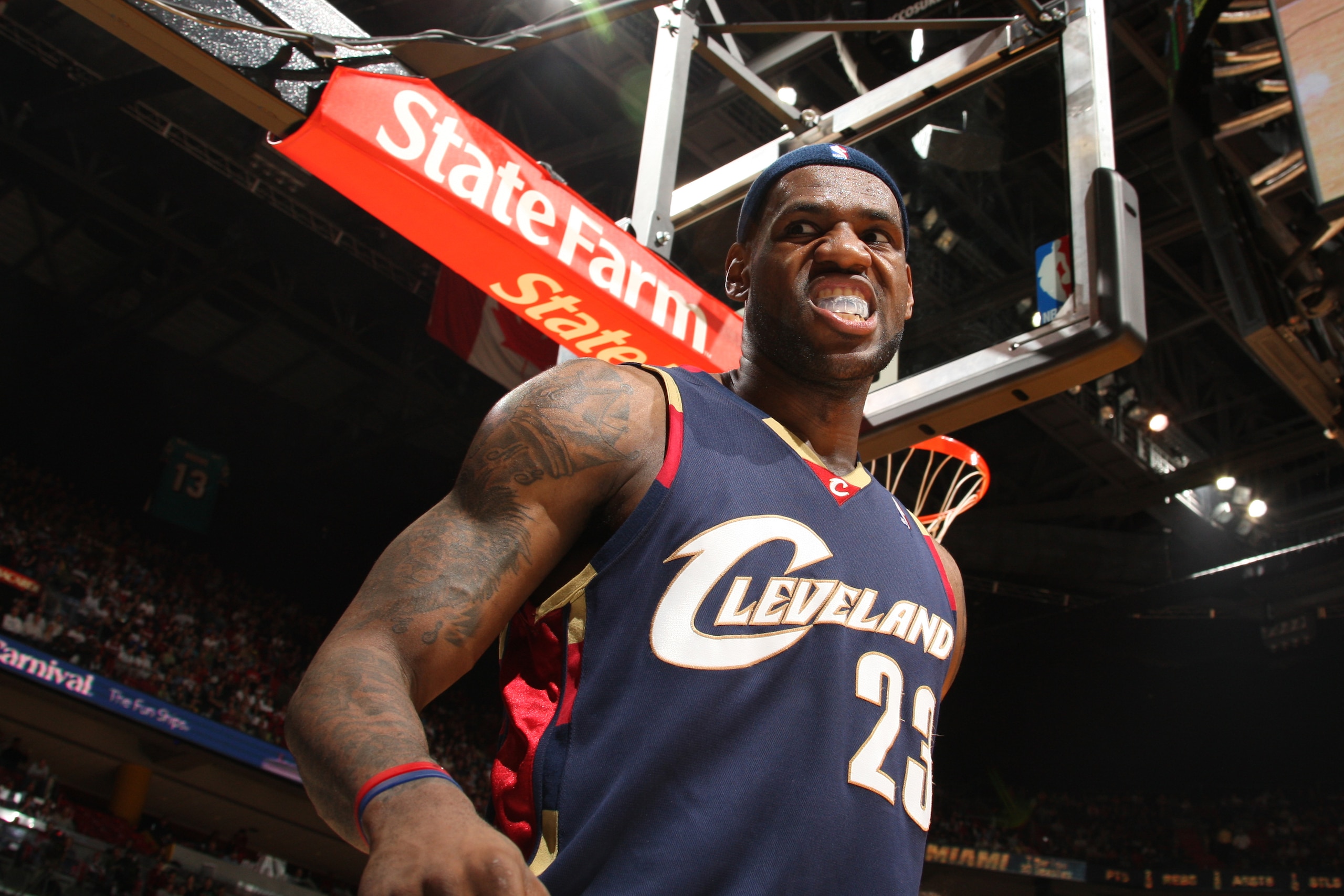
Adjusted Offensive Rating: 103.79
Adjusted Defensive Rating: 105.76
Record: 66-16
NBA Math rating: 104.77
Postseason Results: 4-0 victory over Detroit Pistons, 4-0 victory over Atlanta Hawks, 2-4 loss to Orlando Magic in Eastern Conference Finals
The title here is a little bit erroneous.
The 2008-09 Cleveland Cavaliers weren't one of the greatest teams of all time. LeBron James, who should now be firmly in the G.O.A.T. discussion, had arguably his best season, and the supporting cast did just enough to push toward the top and earn that status. This was a one-man show more than it was a team, even if James would almost assuredly reject that type of labeling.
Seriously, though. Let's turn to NBA Math's total points added for evidence.
James alone finished with a score of 733.72, which remains the fifth-best individual season since 1973. Only Mo Williams, Delonte West, Ben Wallace and Anderson Varejao joined him in the green, combining to produce 352.94 TPA. Meanwhile, the rest of the roster totaled minus-225.49, which means James (733.72) outproduced the rest of the Cavs (127.45) by a staggering amount.
The eventual MVP was on a different level, single-handedly pushing his troops to produce top-four finishes in both offensive and defensive rating. They took advantage of the Eastern Conference to win 66 games, but Dwight Howard and the Orlando Magic overwhelmed them just before the Finals.
James, though his shot from the perimeter betrayed him, was fantastic, averaging 38.5 points, 8.3 rebounds and 8.0 assists while knocking down 48.7 percent of his field-goal attempts. But not one of his teammates could provide much assistance.
Williams chipped in with 18.5 points per game, but he shot 37.1 percent. West forget how to knock down threes. Zydrunas Ilgauskas, Varejao and the other Cavalier bigs couldn't keep Howard contained, which forced other defenders to sag off the Magic's many marksmen.
Just when James needed help most, Cleveland was unable to provide it.
3. 2015-16 Golden State Warriors
8 of 10
Adjusted Offensive Rating: 107.61
Adjusted Defensive Rating: 102.51
Record: 73-9
NBA Math rating: 105.06
Postseason Results: 4-1 victory over Houston Rockets, 4-1 victory over Portland Trail Blazers, 4-3 victory over Oklahoma City Thunder, 3-4 loss to Cleveland Cavaliers in NBA Finals
Yes, it seems strange to have the team that set the regular-season record for most wins behind two other squads.
These Golden State Warriors were an absolute machine from the get-go, only falling off the rails after taking the infamous 3-1 lead in the NBA Finals. But we're not here to relitigate that series and figure out what went wrong. Instead, let's focus on how, counterintuitive as it may seem, finishing third is actually more impressive for the Dubs than a first-place ranking would've been.
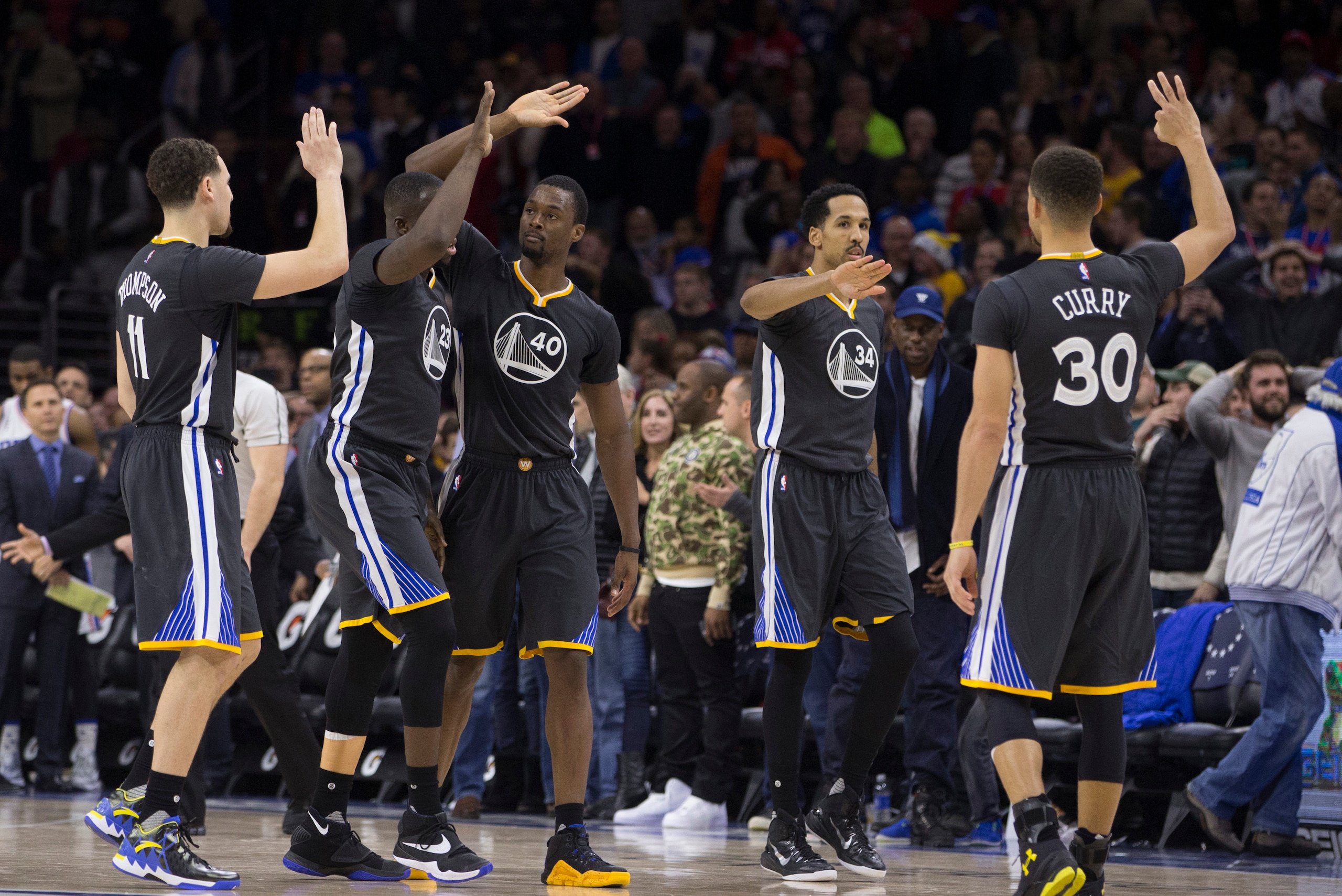
Behind Stephen Curry's unanimous-MVP campaign and record-setting shooting, Klay Thompson's sniping, Draymond Green's defensive prowess and the remaining contributions of a perilously deep roster, the Warriors were so ridiculously dominant that few teams had serious shots at winning after even three quarters. Golden State routinely got to rest its key players down the stretch, which led to lesser margins of victory and a declining net rating.
So, let's analyze where they would've sat if games only lasted 36 minutes.
These are rough estimates because NBA.com's per-possession numbers, necessary for quarter-by-quarter splits, deviate slightly from Basketball-Reference.com's, which are used for NBA Math's scores. But their approximate team rating stood at 110.07 during first quarters—well above the overall mark of 105.06. That fell to 104.29 in second quarters when the backups spent so much more time on the floor, but it elevated back up to 106.23 in third quarters.
Average those together—again, necessary due to the limitations of quarter data—and the Warriors' rough-estimate team rating for the first three periods was a staggering 106.86. Not only would that have dwarfed every other title-less squad in NBA history, but it would've surpassed the 1995-96 Chicago Bulls (106.38) for the top overall mark with room to spare.
Golden State was that good in 2015-16. Good enough that it could take its foot off the gas and fall behind two other teams despite playing like the best bunch ever for the majority of games.
2. 1971-72 Milwaukee Bucks
9 of 10
Adjusted Offensive Rating: 104.81
Adjusted Defensive Rating: 105.72
Record: 63-19
NBA Math rating: 105.26
Postseason Results: 4-1 victory over Golden State Warriors, 2-4 loss to Los Angeles Lakers in Western Conference Finals
The 1971-72 Milwaukee Bucks were just unlucky.
After all, this squad had everything.
The defense was dominant behind Kareem Abdul-Jabbar, Bob Dandridge, Lucius Allen and a whole system of quality stoppers. The offense thrived with Abdul-Jabbar's sky hooks, Oscar Robertson's all-around excellence and three more players—Dandridge, Allen and Jon McGlocklin—averaging in double figures. In fact, the Bucks actually paced the NBA in defensive rating while trailing only the Los Angeles Lakers in the offensive counterpart.
But sometimes, the NBA simultaneously features two all-time squads, and only one can win a title. The Lakers, behind Wilt Chamberlain, Jerry West, Elgin Baylor (for the first nine games), Gail Goodrich and other memorable names, were just better.
The '71-72 Bucks boast the No. 8 team rating in NBA history. But the '71-72 Lakers sit at No. 6 and were able to defeat their conference rivals in a six-game series before taking down the New York Knicks to earn a championship. At least most of the games in the Western Conference Finals were close, to the point that Milwaukee (636) actually outscored Los Angeles (622) during the series.
One of those two teams had to lose. And if the Bucks had emerged victoriously from the battle instead of just scoring the most points, the Lakers would've occupied this same spot in the countdown.
1. 2015-16 San Antonio Spurs
10 of 10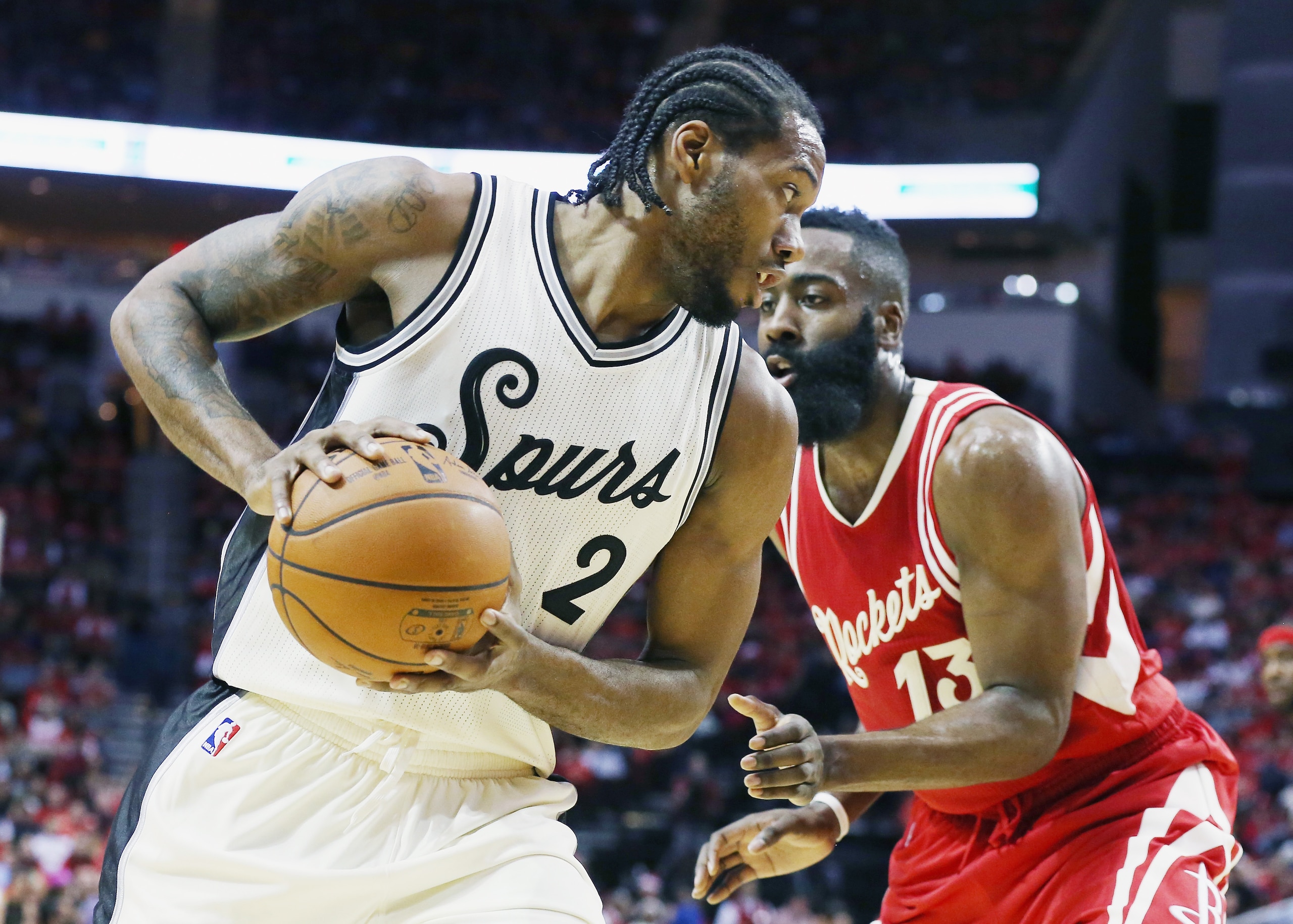
Adjusted Offensive Rating: 103.67
Adjusted Defensive Rating: 107.47
Record: 67-15
NBA Math rating: 105.57
Postseason Results: 4-0 victory over Memphis Grizzlies, 2-4 loss to Oklahoma City Thunder in Western Conference Semifinals
The San Antonio Spurs were largely overshadowed throughout the 2015-16 season, thanks to the Golden State Warriors' successful quest for 73 victories. But they weren't that far behind, winning enough games to tie for seventh on the historic leaderboard and—thanks partially to the aforementioned fourth-quarter decline of the primary competition—emerging with the stronger team rating.
Kawhi Leonard blossomed into a two-way superstar who was finally granted the flexibility to operate outside the rigid confines of head coach Gregg Popovich's vaunted system; Tim Duncan played fewer minutes but thrived on the defensive end, to the point that he should've received some fringe Defensive Player of the Year consideration; Manu Ginobili kept excelling, and Danny Green overcame an awry jumper with fantastic perimeter defense.
Everything worked, and the Spurs thrived as a point-producing machine that also happened to be one of the stingiest units the sport has ever seen. But they did have one weakness, and the Oklahoma City Thunder exploited it during the Western Conference Semifinals. By using their athletic advantage over and over in transition, they forced San Antonio into new lineup combinations.
Just don't let that take away how dominant this bunch was during the first 82 games of the year, as well as in the opening playoff series. Throughout the first 82 contests, only six outings saw the Spurs on the wrong end of a double-digit deficit, and half those blemishes came at the hands of the Warriors or Thunder.
No one else could figure out how to beat these troops.
Adam Fromal covers the NBA for Bleacher Report. Follow him on Twitter: @fromal09.
Unless otherwise indicated, all stats from Basketball Reference, NBA.com, NBA Math or ESPN.com.
.jpg?w=2560 "Raiders Could Start Mendoza")

.jpg?w=2560 "Rodgers Iced Out on Plane 💎")
.jpg?w=2560 "🚨 Week 8 AP Top 25 Poll")
