
When the dust settles on this FBI sting operation and we actually get back to thinking about the 2017-18 college basketball season, there are going to be a lot of high-ranking teams with tough decisions to make when it comes to setting a starting lineup.
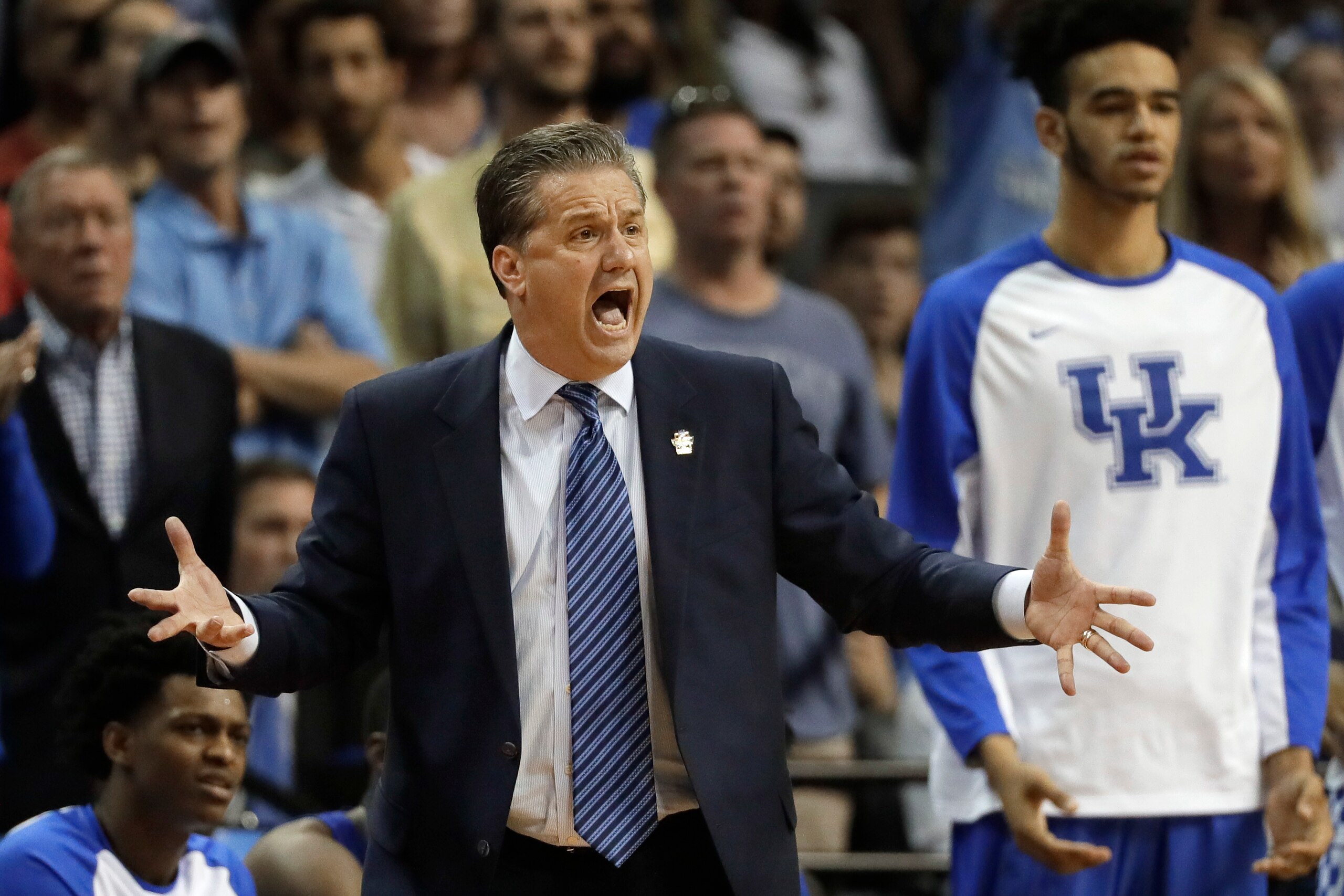
John Calipari, for instance, hauled in yet another huge crop of 5-star recruits at Kentucky and is now in the enviable position of needing to decide which future first-round draft picks he should bring in off the bench.
(Is going back to platoons the best option?)
For most of these position battles, there is no wrong answer for the coach. It's like trying to choose between the lobster and the filet mignon before realizing it's OK to get half of each by opting for the surf and turf.
In other cases, it's a tough call between the leftover meatloaf and that can of soup that's been in the cupboard for three years. Do you ride with the unproven big man at power forward or take your chances with a four-guard lineup? Do you play the redshirt freshman or the transfer who was squeezed out of a job at his previous school?
These are the questions that several coaches need to figure out in the remaining six weeks before the college basketball season begins.
Duke's Center
1 of 9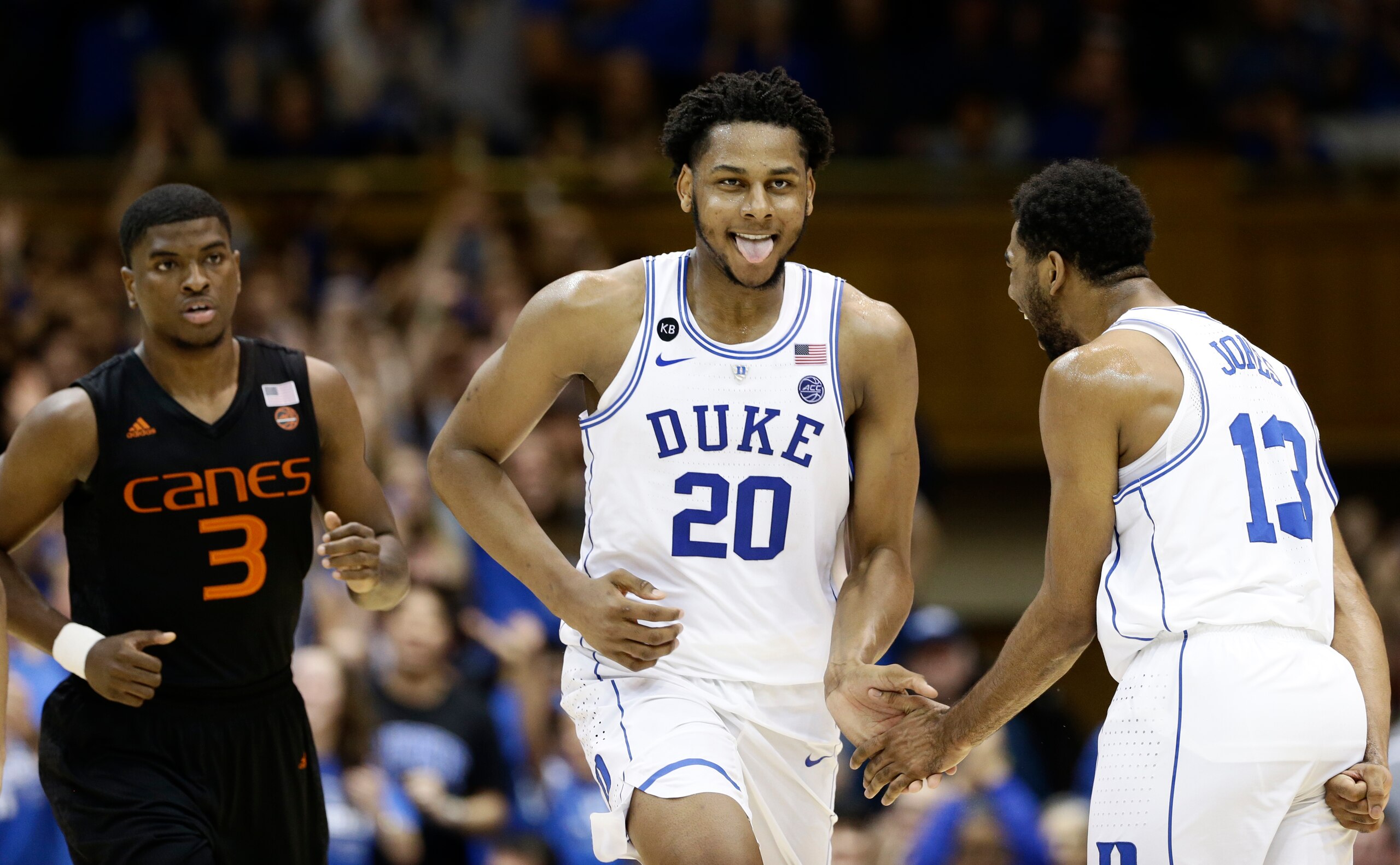
The Battle: Marques Bolden vs. Wendell Carter Jr.
Mike Krzyzewski signed four 5-star freshmen last season. Harry Giles, Jayson Tatum and Frank Jackson are all in the NBA, and Marques Bolden might not have a starting job for a second straight year.
Maybe the experts whiffed on this one, but Bolden was Scout's No. 8 recruit in a star-studded class. It ranked him ahead of Dennis Smith Jr., Bam Adebayo and five other guys who ended up getting drafted in the first round. But Bolden started the season injured and ended up averaging just 6.5 minutes per game. Early in the offseason, there were reports that he was going to transfer elsewhere before he ultimately decided to stay with the Blue Devils.
Will he be rewarded for his loyalty or is he headed back to the pine?
Prior to Marvin Bagley III's mid-August decision to reclassify and sign with Duke, it was hard to imagine a scenario in which Bolden wouldn't have a starting job. But now, it's looking like a toss-up between him and Wendell Carter Jr. as the starting center.
The one thing working in Bolden's favor is experience. Though he didn't play much last season, he has been with the program for a year longer than Carter has. And in a year where Grayson Allen is the only other noteworthy returning player, that could carry some weight.
All other things being equal, though, it's probably Carter's job to lose. The freshman isn't an elite rim protector, but he's an excellent rebounder with a more versatile offensive game than Bolden's. Even if the Blue Devils just use him as a decoy in the mid-range game, the need to respect his shot will open up lanes for Allen and Trevon Duval, which, in turn, will lead to additional space for perimeter jumpers.
The Hypothesis: Bolden plays about 20 minutes per game, but Bagley and Carter get the starting gigs and average closer to 30.
Texas A&M's Point Guard
2 of 9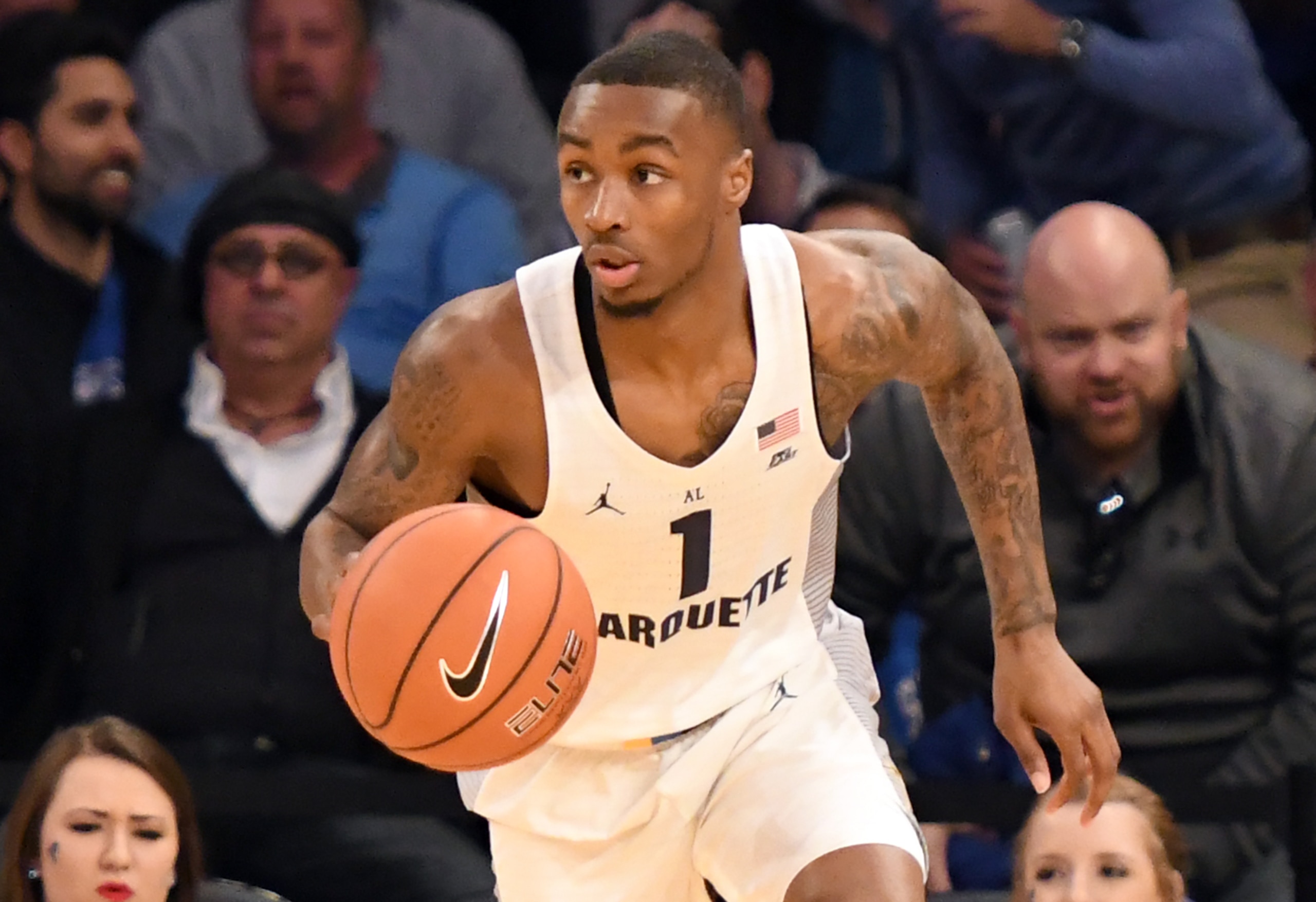
The Battle: Duane Wilson vs. JJ Caldwell
In terms of 2016-17 success, Texas A&M is one of the least noteworthy teams on this list. But the No. 1 reason the Aggies struggled was that they didn't have a true 1 on the roster.
Two years ago, they had both Anthony Collins and Alex Caruso doling out assists like hotcakes. But with Alex Robinson transferring to TCU before that season and both of those guys slated to graduate, point guard was always going to be a concern in 2016-17. They brought in JC Hampton as a graduate transfer from Lipscomb, but he was more of a shooter than a passer. Guys like Admon Gilder and DJ Hogg ended up accumulating assists out of necessity, but the team's turnover rate and free-throw shooting were terrible without a true lead guard.
Now, they might have two such players, and they might win the SEC.
JJ Caldwell was supposed to factor heavily into last year's mix, but he was ruled ineligible by the NCAA clearinghouse last September. Now a redshirt freshman, he's ready to fight for a starting job.
But after watching the 2016-17 season burn to the ground, head coach Billy Kennedy wanted some insurance at point guard, so he went out and got Duane Wilson as a graduate transfer from Marquette. With Markus Howard, Andrew Rowsey, Katin Reinhardt and Sam Hauser all joining the Golden Eagles and immediately becoming significant contributors, Wilson was forced out of a job. In the two previous seasons, though, he averaged better than 11 points per game along with a few assists as a secondary point guard.
Whether one guy wins the job or they split it 50/50, the player running the show will have a lot to work with. Hogg, Gilder, Robert Williams, Tyler Davis and Tonny Trocha-Morelos all return as last year's five leading scorers. They just need someone to get them the ball.
The Hypothesis: Wilson initially starts, but a brutal early schedule—West Virginia in Germany, road games against USC and Arizona, the Legends Classic—results in Caldwell getting the lion's share of the minutes beginning in mid-December.
Kansas' Power Forward
3 of 9
The Battle: Billy Preston vs. "Small Ball"
No, "Small Ball" is not one of LaVar's offspring, but it's an approach that Bill Self needs to consider, given the construction of this roster.
The Jayhawks have four proven perimeter weapons in Devonte' Graham, Malik Newman, Lagerald Vick and Sviatoslav Mykhailiuk, and they're hoping freshman wing-forward Marcus Garrett will be a fifth. To give all those guys the minutes they deserve, they might need to roll with a four-guard rotation more often than not. This would mean either Mykhailiuk or Vick as the de facto 4—which would be kind of hilarious to watch against Kentucky's front line in the Champions Classic.
But if Udoka Azubuike is healthy and effective for 25-30 minutes per game as a center and Billy Preston is finally the highly touted freshman power forward that actually pans out and becomes an instant star for Kansas, does this become a more conventional rotation?
The big question is fatigue and foul trouble in the frontcourt. There are only three legitimate forwards/centers on this roster, and they have a combined total of 244 minutes of collegiate experience. Depending on how well Preston and Azubuike do in preseason practices and early-season games, maybe the Jayhawks go 100 percent with a four-guard rotation.
The Hypothesis: Preston and Azubuike start at the 4 and 5, but for most of the game, only one of them is on the floor, surrounded by four wings.
.jpg?w=2560 "Steelers Saints Football")


Villanova's Shooting Guard
4 of 9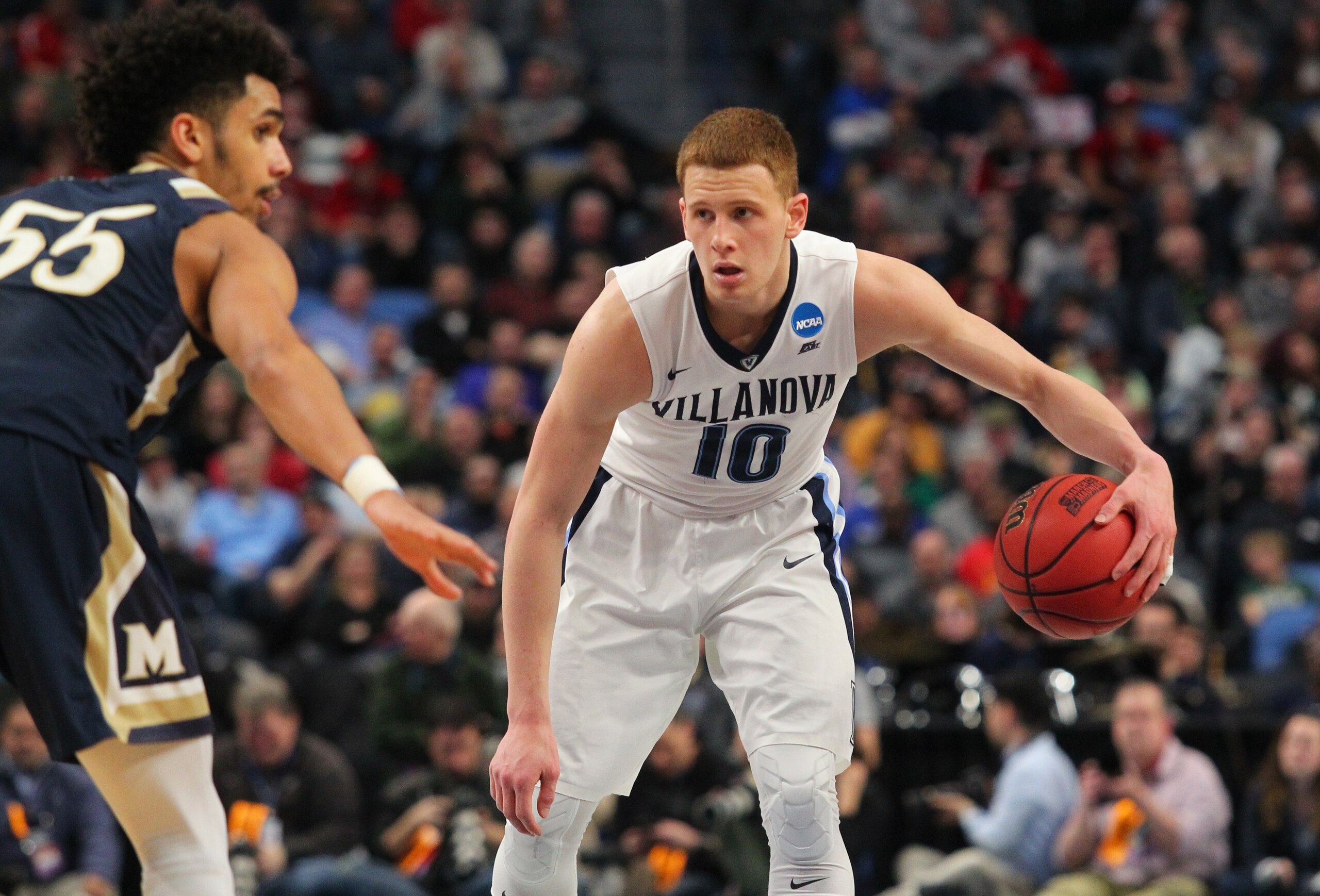
The Battle: Donte DiVincenzo vs. Phil Booth
Despite losing Josh Hart, Kris Jenkins and Darryl Reynolds, Villanova has six strong candidates for starting jobs—as well as a pair of incoming freshmen in Jermaine Samuels and Dhamir Cosby-Roundtree who should be solid contributors. Jalen Brunson is the no-brainer starter at point guard. Mikal Bridges, Eric Paschall and redshirt freshman Omari Spellman should have the 3-5 spots locked down, too.
That leaves Donte DiVincenzo and Phil Booth jostling for the final spot.
DiVincenzo was a surprising major contributor last season as a redshirt freshman. He played a little bit early in the 2015-16 season before a fractured foot put him on the shelf for the rest of that season. In those eight games, he had more turnovers (seven) than made field goals (six) while shooting 17.6 percent from three-point range. Not a whole lot there to suggest this guy would come back and average better than 25 minutes per game and become an integral reserve who put up 18.0 points and 9.5 rebounds in 'Nova's two NCAA tournament games.
Not a whole lot there to suggest this guy would come back and average better than 25 minutes per game and become an integral reserve who put up 18.0 points and 9.5 rebounds in 'Nova's two NCAA tournament games.
But the main reason DiVincenzo got so much run last year is because Phil Booth only played three games before suffering what turned out to be a season-ending knee injury. And if we're going to point out DiVincenzo's final two games of last season, it's hard not to love Booth averaging 15.0 points and 3.0 steals during 2016 Final Four weekend. He was the star sixth man of that championship team and was the obvious pick to move into the starting lineup after Ryan Arcidiacono graduated.
So, if both guys are healthy, who starts? And does it really matter when there's not another guard on the roster who has scored a point in Division I hoops?
The Hypothesis: Booth starts and DiVincenzo serves as the super-sub. Both guards and Brunson combine for close to 95 minutes per game.
Michigan's 4-Man
5 of 9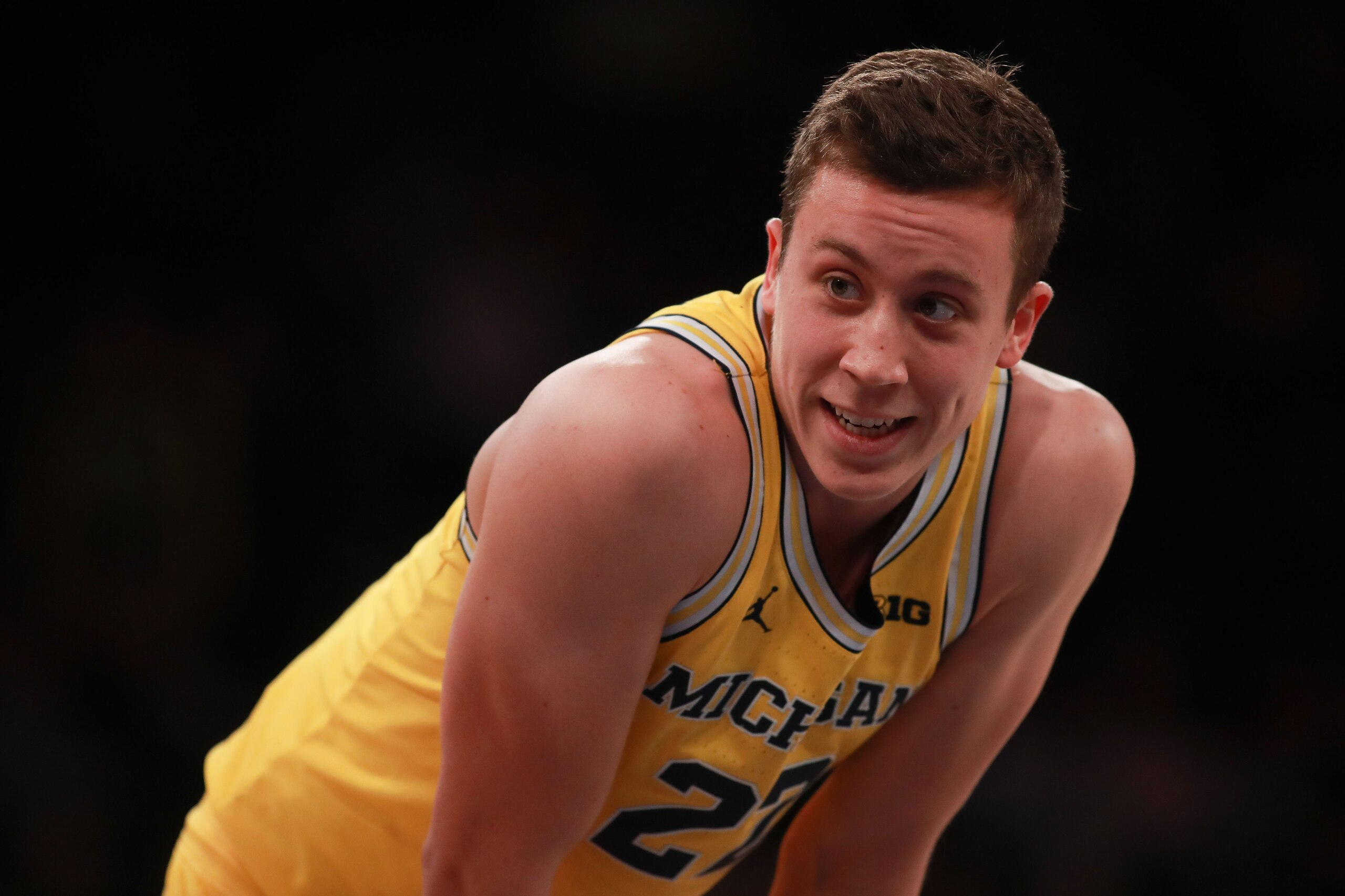
The Battle: Duncan Robinson vs. Isaiah Livers vs. Jon Teske
Despite losing Derrick Walton and Zak Irvin, Michigan is relatively loaded in the backcourt. Muhammad-Ali Abdur-Rahkman returns with 75 career games started under his belt. Xavier Simpson didn't play a ton last year as a freshman behind Walton, but he was a highly rated recruit who could run the point. If not, John Beilein brought in Ohio transfer Jaaron Simmons, who has tallied at least 200 assists in each of the past two seasons. There's also Kentucky transfer Charles Matthews, who could make a huge splash at shooting guard.
And then there's Duncan Robinson, the 6'8" wing who shot 42.4 percent from three-point range last season and was even more of a perimeter assassin in 2015-16. He's all but guaranteed a starting job, but will it be at the 3 or the 4?
Two years ago, Robinson started a lot of games as the de facto 4, but Irvin and (until he got injured) Caris LeVert did more rebounding than Robinson. And last year, Robinson had one of the worst rebounding rates on the roster, averaging just 3.5 boards per 40 minutes.
Based on this year's roster, Michigan is going to need a lot more than that out of its starting 4. It's possible the Wolverines turn to true freshman Isaiah Livers or bump Moe Wagner to the 4 and start sophomore Jon Teske at the 5, if only to get a little more height on the floor.
The one potential X-factor is Matthews. The 6'6" guard was a respectable rebounder in his limited time with Kentucky, averaging 6.4 per 40. If he can start at the 3 and inhabit the role Irvin played for the last two seasons, the Wolverines could start Robinson at the 4 without getting obliterated on the glass every night.
The Hypothesis: Beilein puts his five best offensive weapons on the floor at the start of the game, which would be Simpson, Abdur-Rahkman, Matthews, Robinson and Wagner. But we end up seeing a lot of Livers, Teske and redshirt freshman Austin Davis against teams with two legitimate post presences.
Oregon's Center
6 of 9
The Battle: M.J. Cage vs. Roman Sorkin vs. Paul White vs. Kenny Wooten
The frontcourt has been Oregon's biggest strength over the past few years, with guys like Chris Boucher and Jordan Bell owning the defensive paint. Per KenPom.com, the Ducks led the nation in block percentage last season after ranking third the previous year.
Tough to envision that trend continuing into 2017-18, though, given everything they lost. In addition to Bell and Boucher, even backup big man Kavell Bigby-Williams flew the coop, transferring to LSU. The remaining options all come with serious question marks.
Paul White, a 6'9" Georgetown transfer, plays more like a small forward than a center. He would get eaten alive by the likes of DeAndre Ayton, Thomas Welsh and Chimezie Metu. But in terms of career minutes played, he's easily Oregon's most experienced big man.
Roman Sorkin is the only other Duck taller than 6'7" with any collegiate experience, and while he has put up solid per-40 numbers in his career, he has only played a total of 36 minutes in games decided by a single-digit margin. After those two, it's redshirt freshman M.J. Cage and true freshman Kenny Wooten.
Wooten was a fantastic, late pickup for Dana Altman, but is the 6'9" forward ready to be a college center from day one?
The Hypothesis: Sorkin initially starts at center because he's a senior, but both Wooten and Cage eventually bypass him on the depth chart. White splits time at the 4 with Illinois State transfer MiKyle McIntosh.
Kentucky's Shooting Guard
7 of 9
The Battle: Hamidou Diallo vs. Jemarl Baker vs. Kevin Knox vs. Shai Gilgeous-Alexander
Aside from Quade Green almost certainly starting at point guard, Kentucky's entire rotation is a mystery. The Wildcats have six excellent players who are each 6'8" or taller, as well as three of the four guards listed above. (Kevin Knox is the exception as a 6'9" wing-forward.)
The crux of the starting lineup, though, appears to be shooting guard. As opposed to previous years when a guy like Malik Monk or Jamal Murray was a clear-cut starter who could make it rain from three-point range, Kentucky's perimeter plan for 2017-18 is up in the air.
Hamidou Diallo is the front-runner for the job, having joined the team last January and serving as arguably the best incoming player in this year's class. However, he's no guarantee to win and hold down a starting job.
Jemarl Baker is probably the best pure shooter on the roster, but can John Calipari seriously start the eighth-best and last-signed recruit in this freshman class? If starting Baker isn't an option, what about putting Shai Gilgeous-Alexander out there for the dual-combo guard approach that has been at the heart of so many title contenders as of late? Or what about embracing the size of this roster, starting Knox at the 2 and filling out the starting frontcourt with three of the other five big men?
Truth be told, Kentucky's best approach would be the platoon system that resulted in 38 wins a few years ago. Put Green, Diallo, Jarred Vanderbilt, PJ Washington and Sacha Killeya-Jones on the first unit, then call a hockey line change and bring in Gilgeous-Alexander, Baker, Knox, Wenyen Gabriel and Nick Richards. Adjust as necessary throughout the game/season to make sure guys stay fresh and the hot hands are on the court, but why wouldn't that work?
The Hypothesis: Diallo starts at the 2, Knox starts at the 3 and at least one of the 5-star freshmen in the frontcourt barely sees the floor—similar to Killeya-Jones last season.
North Carolina's Center
8 of 9
The Battle: Luke Maye vs. three freshmen
We knew North Carolina was going to lose seniors Kennedy Meeks and Isaiah Hicks, but not many expected Tony Bradley to leave for the NBA after his freshman season. At any rate, based on the construction of this roster, Roy Williams certainly wasn't expecting it. And it was a draft decision that leaves the reigning national champions in one heck of a pickle.
The Tar Heels do still have a lot of quality returning players—it just so happens that almost all of them are guards. Joel Berry II should be a preseason first-team or second-team All-American. Theo Pinson and Kenny Williams battled injuries last season, but they're both solid when healthy. Both Seventh Woods and Brandon Robinson are strong candidates for sophomore-year breakouts. And UNC even brought in the rare graduate transfer with two years remaining, Cameron Johnson, formerly with Pittsburgh.
The only true frontcourt player with any experience is Luke Maye, but at 6'8" with a 40 percent three-point stroke and a career block rate of 0.6 per 40 minutes, he's not exactly a rim-protecting center.
If the goal is to get the most talent on the floor, though, it would make sense to roll with Berry, Williams, Johnson, Pinson as a small-ball 4 and Maye as an undersized 5.
But that's assuming none of the incoming freshmen are immediately ready for a starting job, which may or may not be a poor assumption. The 6'9" Garrison Brooks, 6'9" Brandon Huffman and 6'10" Sterling Manley are all top-275 recruits, per 247Sports, though not one of them ranks in the top 125. The three players ranked in the same spots in last year's class were Jacob Larsen (Gonzaga), Milan Acquaah (Washington State) and Henry Baddley (Butler). Baddley played 117 inefficient minutes while Larsen and Acquaah redshirted.
The Hypothesis: One of the three freshmen (probably Huffman) quickly pans out and is the starting center by the start of ACC play. For the first six weeks, though, UNC goes with the smaller frontcourt of Pinson and Maye.
Texas' Entire Backcourt
9 of 9
The Battle: Matt Coleman vs. Andrew Jones vs. Kerwin Roach II vs. Eric Davis vs. Jacob Young vs. Jase Febres
To put it lightly, this one is a little messy. The Longhorns frontcourt seems to be set with Mo Bamba at the 5, Tulane transfer Dylan Osetkowski at the 4 and the trio of James Banks, Royce Hamm and Jericho Sims as the reserves. But there are about 10 plausible combinations for the starting backcourt.
Andrew Jones is almost certainly going to be a starter. Whether he gets another shot as the primary ball-handler after an inefficient freshman season remains to be seen, but this 5-star recruit started 23 games last year. It's hard to imagine he would become a reserve as a sophomore.
Other than that, it might just come down to who shoots the best in practices between now and Nov. 10.
Kerwin Roach II (28.4 percent), Eric Davis (25.9) and Jacob Young (22.7) all had major problems finding their three-point strokes last season. But at least Davis shot 38.2 percent as a freshman and had a somewhat respectable finish to the season after going 6-of-41 in the first eight games of his sophomore year. If we had to bet on any returning player to earn a starting job for his ability to score, Davis would be the one.
The best shooter among the six options, though, is probably freshman Jase Febres. Even if he doesn't initially get the job, this catch-and-shoot machine may be the savior for a team that darn near had the worst three-point percentage in the nation last season.
Speaking of freshmen who might start, it seems like everyone is buying Matt Coleman as the most likely candidate to start at point guard. He had eight points, eight assists and three steals at the Jordan Brand Classic, showing the world what head coach Shaka Smart had been seeing for years.
The Hypothesis: Coleman starts at point guard, Jones starts at the 2 and both Davis and Febres start at least 10 games at the 3, with Febres taking more of the lion's share as the season progresses.
Kerry Miller covers college basketball and college football for Bleacher Report. Follow him on Twitter: @kerrancejames.
Recruiting information courtesy of Scout.com. Advanced stats courtesy of Sports Reference and KenPom.com.
.jpg?w=2560 "Rams Raiders Football")
.jpg?w=2560 "Cowboys Packers Football")
.jpg?w=2560 "🚨 Week 8 AP Top 25 Poll")