


Kansas' Josh Jackson may be the 2017 NBA draft's top forward, but teams selecting in the Nos. 3-8 range—plus anyone looking to trade up—must also debate between Duke's Jayson Tatum and Florida State's Jonathan Isaac as well.
Based on their strengths, Tatum and Isaac each could fill needs for the Philadelphia 76ers, Phoenix Suns, Sacramento Kings, Orlando Magic, Minnesota Timberwolves and New York Knicks. That said, they also tout contrasting selling points.
Tatum was the bigger scorer on the better team. His workload was heavier and his offensive production was greater. Scouts saw him cook a lot more than Isaac, who took 109 fewer shots on the season.
But Isaac was the more efficient player, albeit having less responsibility. His flashes were just as exciting as Tatum's, even if they occurred less frequently.
When analyzing physical tools, athleticism and personality, teams must now decide to what degree Isaac's flashes become consistent occurrences, or whether Tatum's advanced skills give him the edge.
Comparing Tools
1 of 7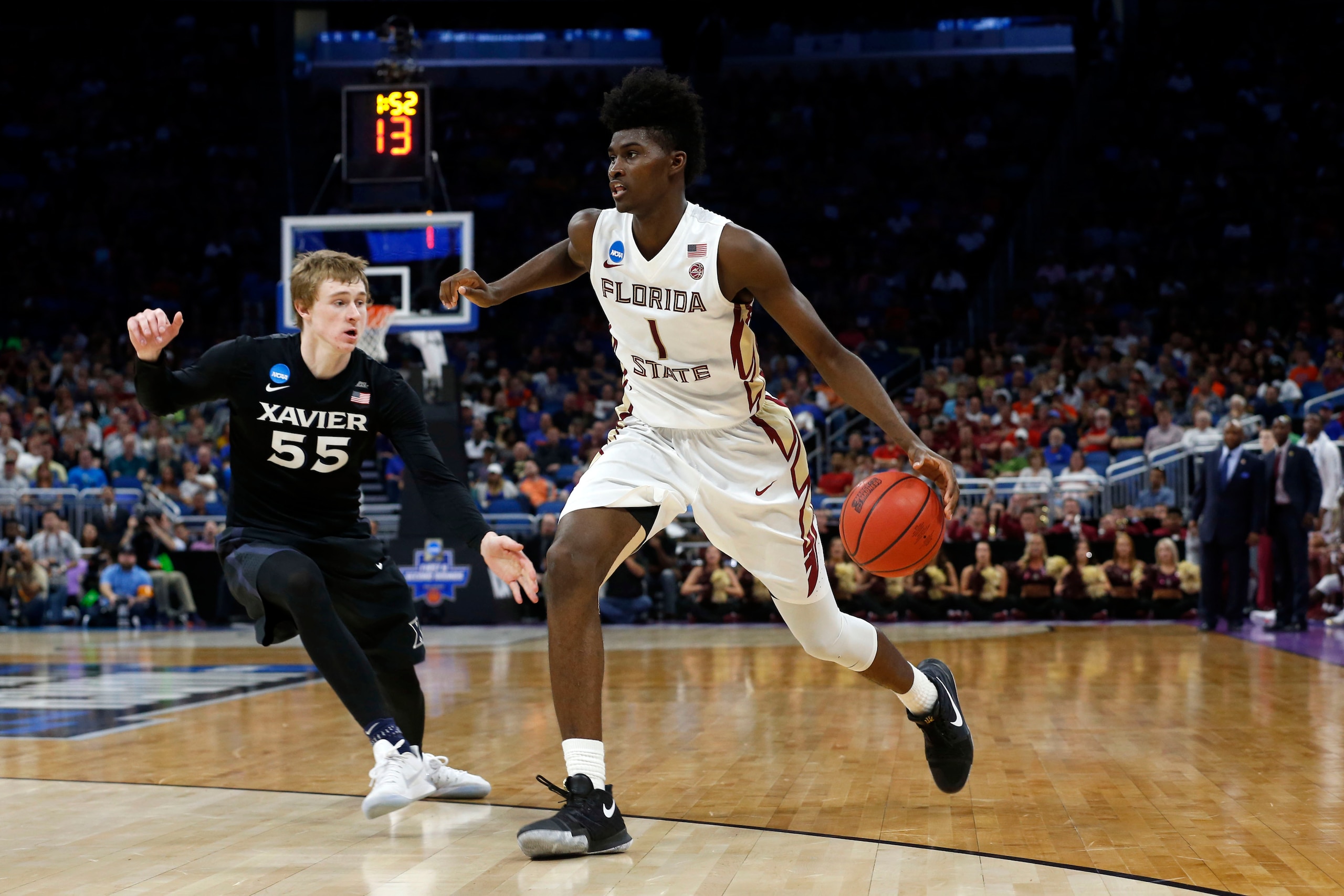
Tatum and Isaac both have impressive physical tools that stand out under the NBA's scouting lens.
Isaac wins the measurements competition. At 6'10 ½" with a 7'1 ¼" wingspan and 9'0 ½" reach, he's taller and longer, both horizontally and vertically. There isn't anything wrong with Tatum's 6'8 ¼" size and 6'11" length for a projected wing, but Isaac's numbers suggest he'll offer more positional versatility, with the potential to play the 4 and even small-ball 5. It helps fuel the intrigue tied to Isaac, who's less polished but more unique.
Tatum lacks explosiveness to a degree. He only shot 58.1 percent at the rim in transition compared to Isaac's 68.0 percent. Despite playing a lot of power forward, Tatum only recorded nine putback chances all season. Isaac had three times as many, showing good bounce off two feet.
Both players flashed excellent quickness, but it's more significant with Isaac, given his ability to match up against slower power forwards and centers.
Tatum's Sharp Skills vs. Isaac's Lack of Polish/Assertiveness
2 of 7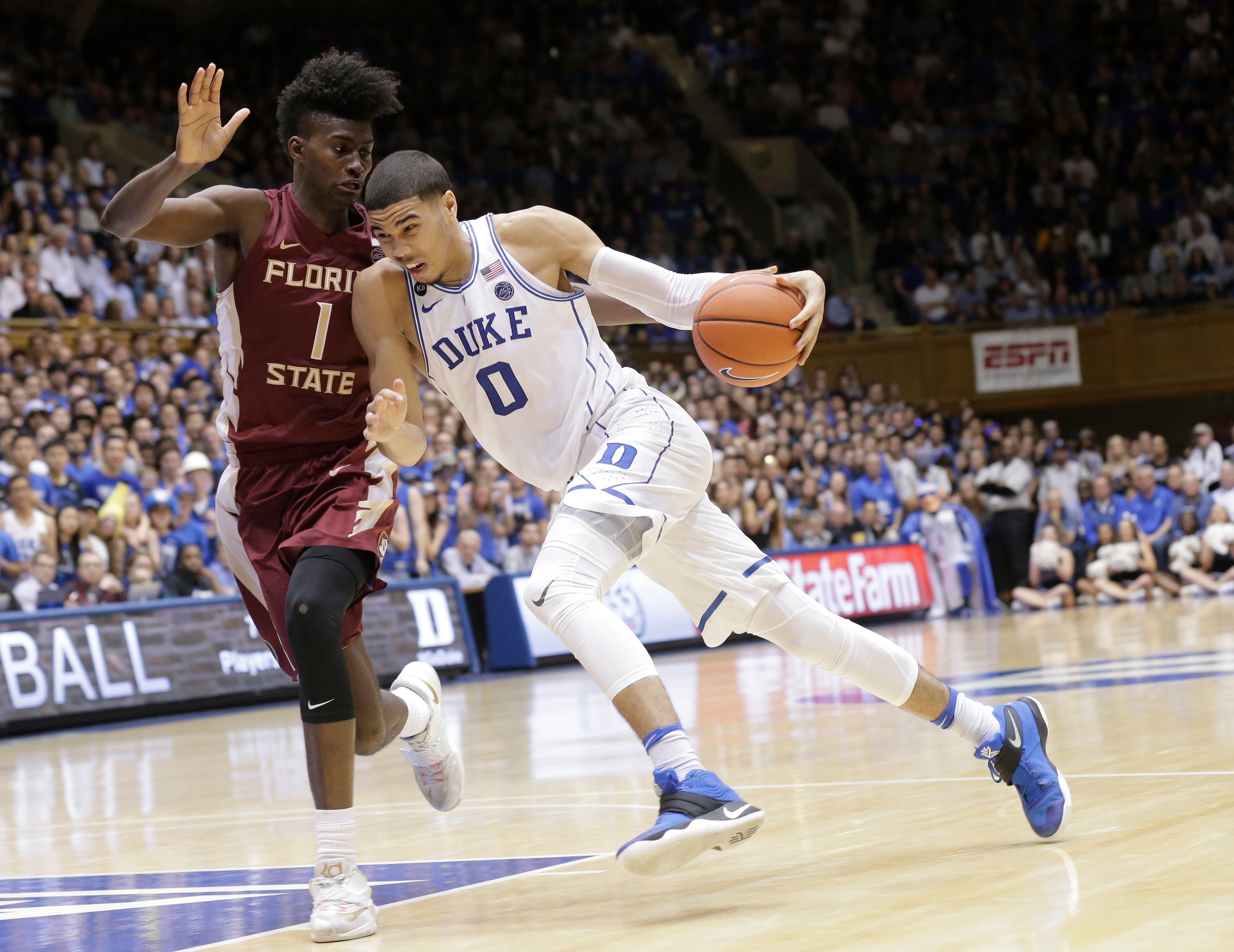
Despite playing similar positions in college, Tatum and Isaac's preferred methods for generating offense couldn't be more different.
Tatum's advanced skills set him apart. He's sharper than Isaac and therefore commanded (and converted on) more touches and scoring opportunities.
Isaac only used 20.3 percent of Florida State's possessions when he was on the floor, compared to Tatum's 26.2 percent at Duke. The more telling numbers, however, come from Synergy Sports (via Vice Sports' Sam Vecenie), which highlight Tatum spending 24.8 percent of his time in isolation.
Isaac only spent 4.0 percent of his minutes in isolation, according to Synergy (via Vecenie). Scouts don't have much film to go off of him trying to create, a fairly significant factor in determining scoring upside.
While Isaac often deferred, Tatum frequently showed the ability to separate one-on-one using next-level moves and footwork. Crossovers into drives, pull-back jumpers, fallways from the elbow—a successful career trajectory envisions Tatum blossoming into a go-to offensive option.
Isaac hasn't demonstrated that same knack for taking over. Scouts saw it occasionally, like in the second half against North Carolina on January 14, but not enough to feel good about him entering the league and being able to make a play against a set NBA defense.
Isaac's Efficient off-Ball Offense vs. Tatum's Shot Selection
3 of 7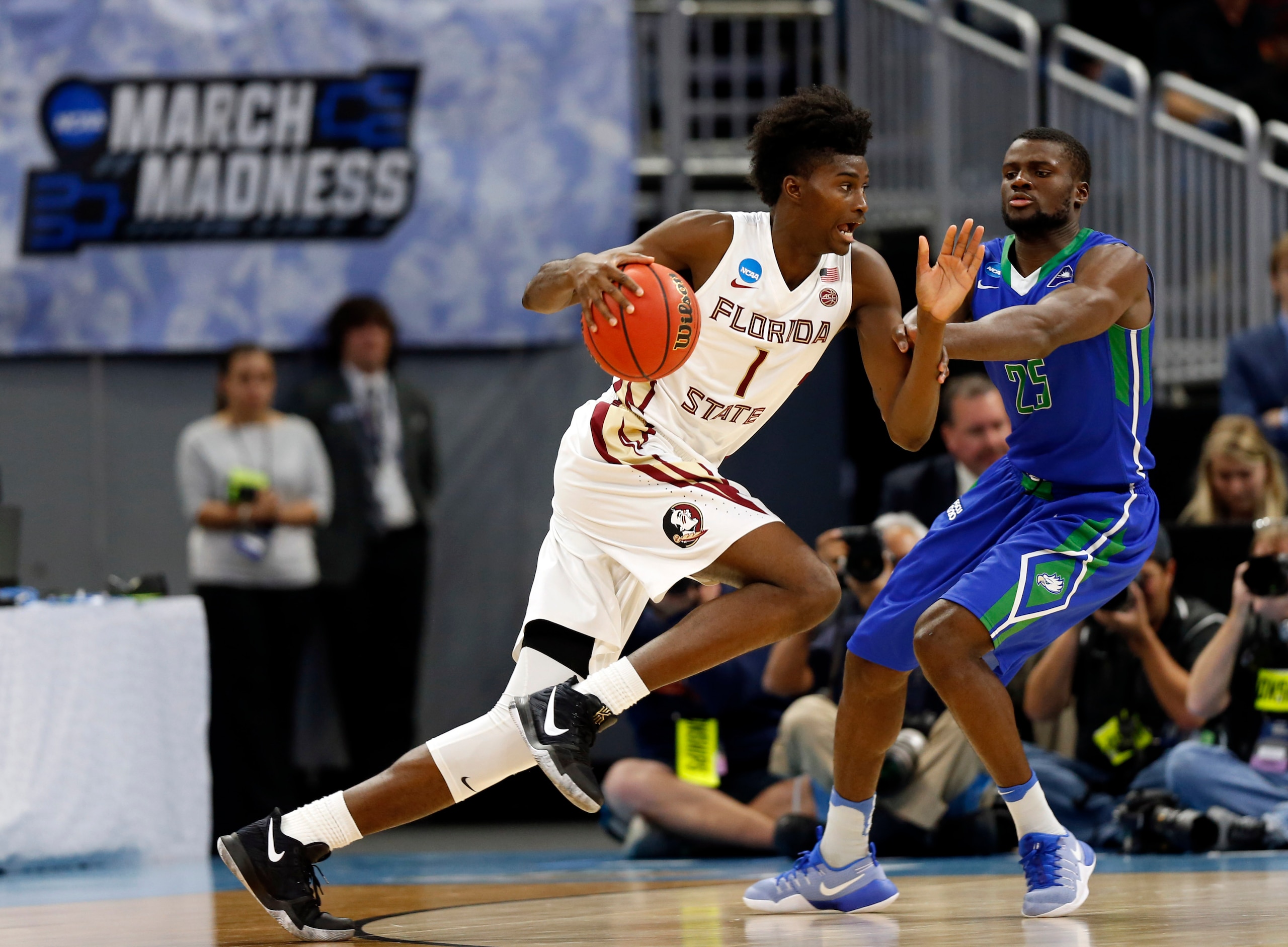
Isaac isn't as big of a threat with the ball out of triple-threat position in the half court, but he's the more efficient scorer.
Doing most of his work off the ball, Isaac shot a terrific 59.3 percent inside the arc compared to Tatum's 50.4 percent. Isaac rarely took bad shots. Most of them came within the flow of the offense.
Though not a sniper just yet, he looked comfortable as a catch-and-shooter (1.0 made threes per game) with a projectable stroke, as he shot 78.0 percent from the free-throw line. He capitalized on the attention his jumper drew by converting 10 of the 16 times he attacked a closeout, per DraftExpress' Mike Schmitz.
Isaac has enough handles, body control and touch to stop-and-pop or drive straight to the basket in one fluid motion without over-dribbling.
Tatum has the tendency to be a ball-stopper. He's most comfortable trying to score off his own dribble creativity. His shot selection also won't sit well with those who value analytics. Tatum took more two-point jumpers (127) than shots at the rim (121) and threes (117).


Isaac's Defensive Upside
4 of 7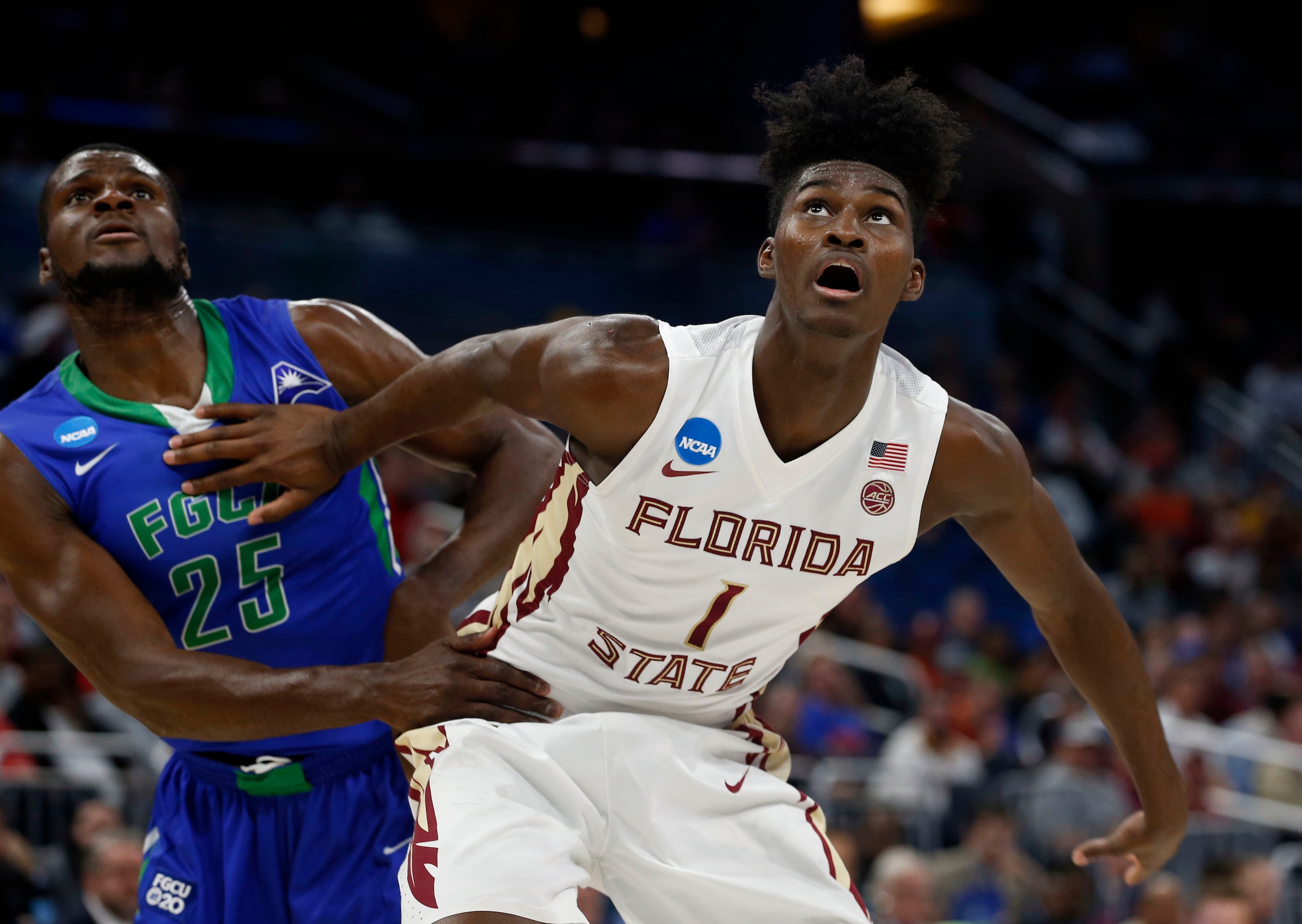
Isaac could wind up being the draft's most valuable defender.
He's built for pick-and-roll coverage, with the lateral foot speed to switch onto wings or ball-handlers and the size, athleticism and length to recover or rotate down for weakside rim protection. He covers an enormous amount of ground with speed and coordination from baseline to arc, and he could wind up spending time guarding three positions throughout a game. His 2.3 blocks and 1.8 steals per 40 minutes also reflect playmaking ability, both inside and away from the basket.
Isaac's 25.0 defensive rebounding percentage was encouraging as well. He grabbed 3.2 more boards per 40 minutes than Tatum. Isaac worked for loose balls and made an impact on the glass despite a skinnier frame. Tatum wasn't a liability on that front, as he grabbed the in-area rebounds he was supposed to, but Isaac has the edge here.
Tatum does have promising defensive tools and quickness for a 3 or small-ball 4. Per 40 minutes, he averaged 1.6 steals and 1.4 blocks of his own, as he showed flashes of pokeaways and athletic rejections. But he didn't always clamp down and got beaten too easily off the dribble. There were more lapses in concentration with Tatum than with Isaac, and opposing players were also able to play right through him at times. Physically strong NBA power forwards could feast against Tatum inside.
He could wind up being a fine defender, but Isaac's defensive potential is both greater and more convincing.
Tatum's Fit
5 of 7
Tatum's projects mainly as an NBA scorer, but that comes with a fear.
He relies heavily on isolation, which he won't see much of early in his NBA career. How will he adjust to joining a team as its third or fourth option? Can he learn to score off the ball without using too many one-on-one dribbles?
Tatum likes to think before making a move as opposed to reacting based on what the defense gives him. He'll need to become a quicker decision-maker to keep the offense flowing, and he must improve his spot-up shooting (29.3 percent on contested catch-and-shoots, per DraftExpress' Derek Bodner and Mike Schmitz).
He also offers little as a playmaker (2.6 assists per 40 minutes) or passer, which reduces his margin for error as a scorer even further. What if his jumper isn't falling or he isn't getting touches in space? Can he still make a positive impact?
On the other hand, he's a highly advanced shot-creator and shot-maker with textbook tools for a wing and mismatch quickness at the 4. In the best-case scenario, he'll thrive as a team's No. 2 option, and his body, game and skills suggest it's possible he gets there.
Isaac's Fit
6 of 7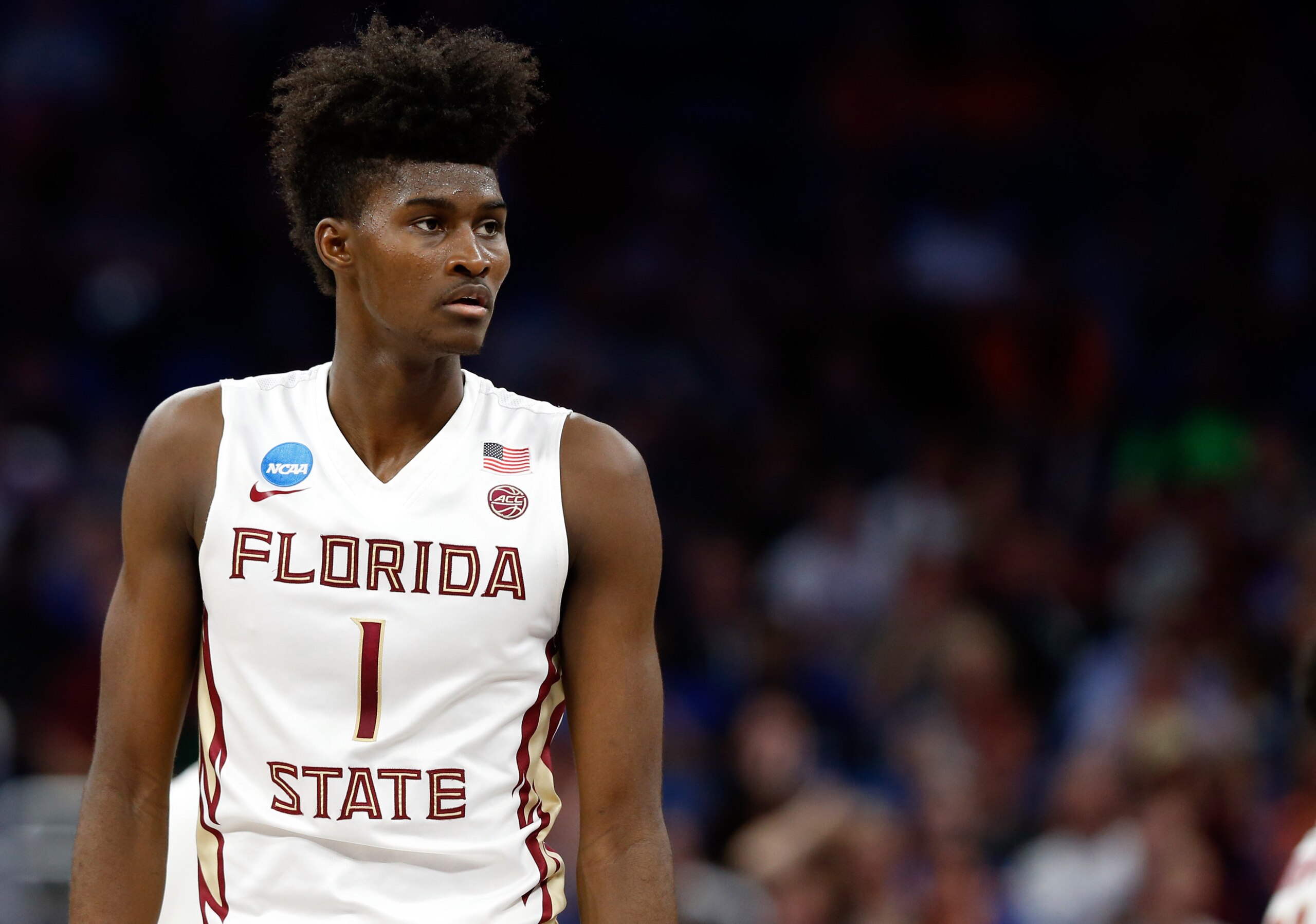
Isaac's patience and versatility are encouraging signs regarding his ability to fit in on an NBA roster.
Unlike Tatum, he doesn't require touches or plays drawn up for him. There was no shot-hunting with Isaac, who operated with an opportunistic approach but still managed to score a decent 18.3 points per 40 minutes on 50.8 percent shooting.
Isaac was more effective than Tatum using his tools and athleticism to score off the ball via cuts, finishes, transition and second-chance opportunities. Whereas Tatum can stall the offense on off days, a quiet Isaac will keep the ball moving while also bringing something as a defender and rebounder.
Like Tatum, Isaac doesn't provide much as a playmaker, and he rarely scored in bunches. The fear with Isaac revolves around how he doesn't excel in any one area offensively. He's a capable ball-handler and shot-maker, but he doesn't have a skill or move he can comfortably hang his hat on for consistent offense.
Who Ya Got?
7 of 7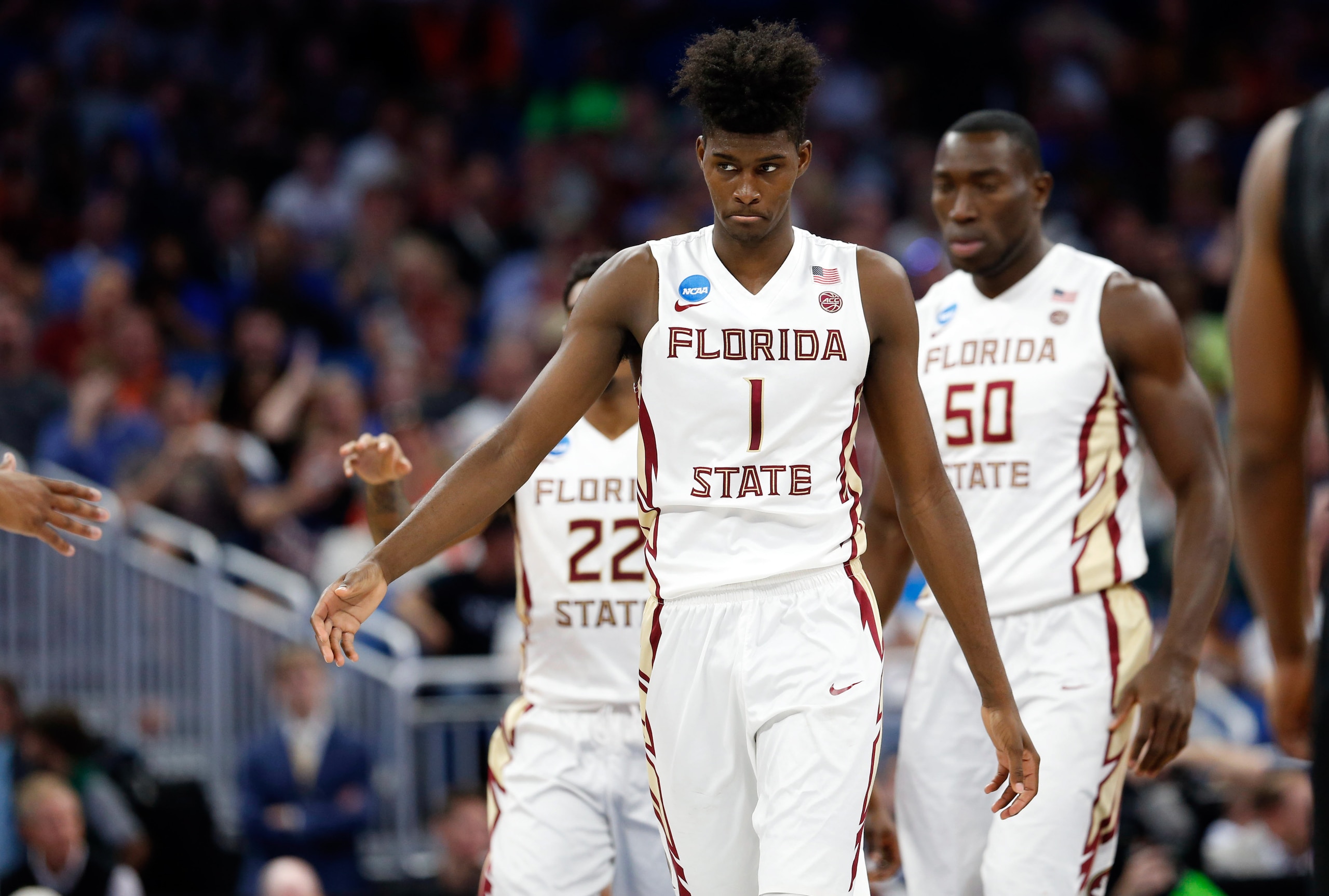
Both Isaac and Tatum come off as safe bets with high ceilings and questions about their potential to reach them.
Polished with NBA size and fluidity, Tatum is the better bet to compete for Rookie of the Year votes. He's sharper, and assuming he goes to either the Sixers, Suns, Kings or Magic, he'll be primed for early minutes and production.
But long term, Isaac jumps out as the more attractive play. Though Tatum is currently a few steps higher on the developmental ladder, both ladders reach the same height. Isaac could climb to the top by improving his shot-creation and confidence.
Tatum won't be able to match Isaac's defense, the deciding factor when placing both players in a vacuum.
They'll each make for fine picks in the draft, regardless of where they're taken. But Isaac has the chance to be unique at both ends, and he's given scouts enough reasons to buy into his development over the next few years.
Him checking more boxes across the board—namely defense, rebounding, tools, efficiency and fit—only acts as additional cushion.

.jpg?w=2560 "Mahomes Told Teammate to Leave Meeting")
.jpg?w=2560 "🚨 Week 8 AP Top 25 Poll")

.jpg?w=2560 "Baker Gets Glove From Rays 🧤")
.jpg?w=2560 "5 Teams Eyeing Jonathan Taylor")
.jpg?w=2560 "Steelers Roll Saints in Paris")

.jpg?w=2560 "NFL investigating Eagles")
.jpg?w=2560 "Updates from EVERY Game")