
Breaking Down Strengths, Weaknesses of Top Point Guards in 2017 NBA Draft
Point guards dominate the 2017 NBA draft discussion.
There will be a handful of teams in the lottery adding their next franchise floor general on June 22. It's possible three are gone by the time the Phoenix Suns pick at No. 4.
These cheat-sheet scouting reports highlight each point guard's core strengths and weaknesses. Don't expect any of the following five prospects to stray far from the top 10.
5. Frank Ntilikina (France, 1998)
1 of 5
NBA comparison: Dante Exum
Draft projection: Lottery
Strengths
Tools
At 6'5", Frank Ntilikina has enough size to play both backcourt positions, something he's done in France with Strasbourg IG all season. He's also the longest guard in the draft, with a reported wingspan near 7'0".
Defense
Ntilikina can suffocate opposing ball-handlers with his combination of foot speed and length, which also translates to versatility. He'll guard multiple spots, and he's difficult to shake or cleanly pass and shoot over. Defense could ultimately be Ntilikina's moneymaker in the NBA.
Shooting
Shooting 42.3 percent from three in LNB Pro A and 39.5 percent during Basketball Champions League play, Ntilikina has changed the reputation of his jumper. He's improved significantly over the years. It was never more evident than at December's U18 European Championships, where he sunk 17 of 29 threes and took home the MVP award.
Ntilikina gets good balance on his shot, which he looks comfortable making off the dribble.
Weaknesses
Without a blow-by first step, explosiveness or strength, Ntilikina could have some issues scoring and playmaking. He's not a strong shot-creator like the others at his position. Per 40 minutes overseas, he averages just 12.2 points and 3.5 assists. While Fultz, Ball, Fox and Smith appear to offer All-Star-type upside, Ntilikina looks more likely to settle in as a three-and-D role player.
4. Dennis Smith Jr. (North Carolina State, Freshman)
2 of 5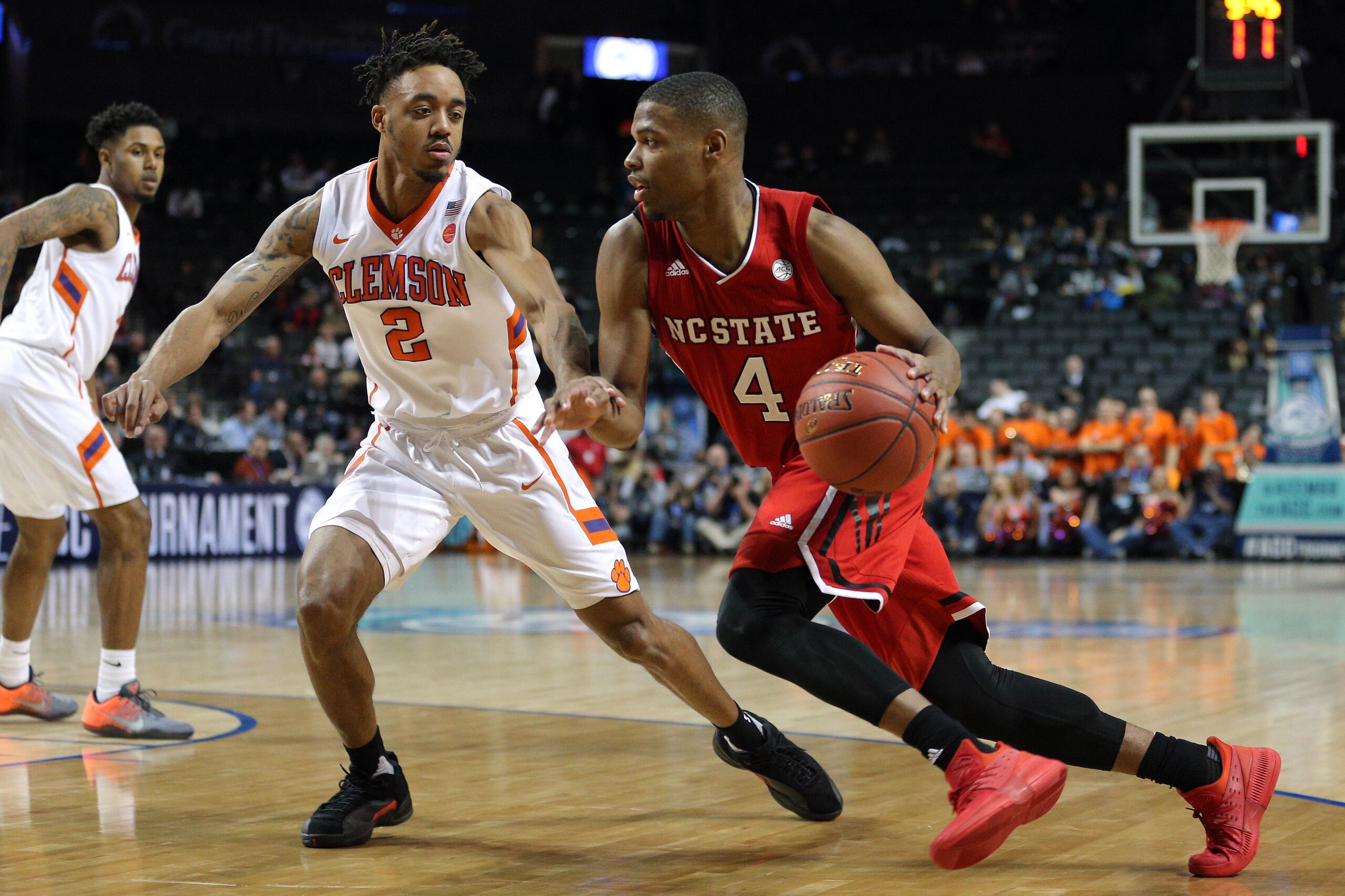
NBA comparison: Eric Bledsoe
Draft projection: Top 10
Strengths
Tools/Athleticism
Dennis Smith Jr. possesses strength and explosiveness that remind of Eric Bledsoe, another physical, scoring lead guard. Quick and shifty off the bounce, Smith can also launch himself at the rim, bounce off contact, hang in the air and finish.
Scoring
He averaged 18.1 points and showed he can take over games once in the zone. Confident and aggressive, he attacks the basket off hesitation moves and screens, and though inconsistent around the perimeter, he was still a threat to shoot off the dribble from out to 25 feet away (55 threes).
Playmaking
He's known for scoring, but Smith led the ACC with 6.2 assists per game. His passing skills are ahead of his decision-making. He tossed some beauties off screens, penetration and transition. Better NBA spacing should only help Smith continue playmaking for teammates, despite his tendency to hunt for shots.
Weaknesses
Overdribbling and shot-selection resulted in some unsettling possessions from Smith. Scouts have questioned his leadership and floor game.
Shot-making wasn't a problem, but we never saw consistent shooting. He was erratic overall, struggling or disappearing during a number of key games.
3. De'Aaron Fox (Kentucky, Freshman)
3 of 5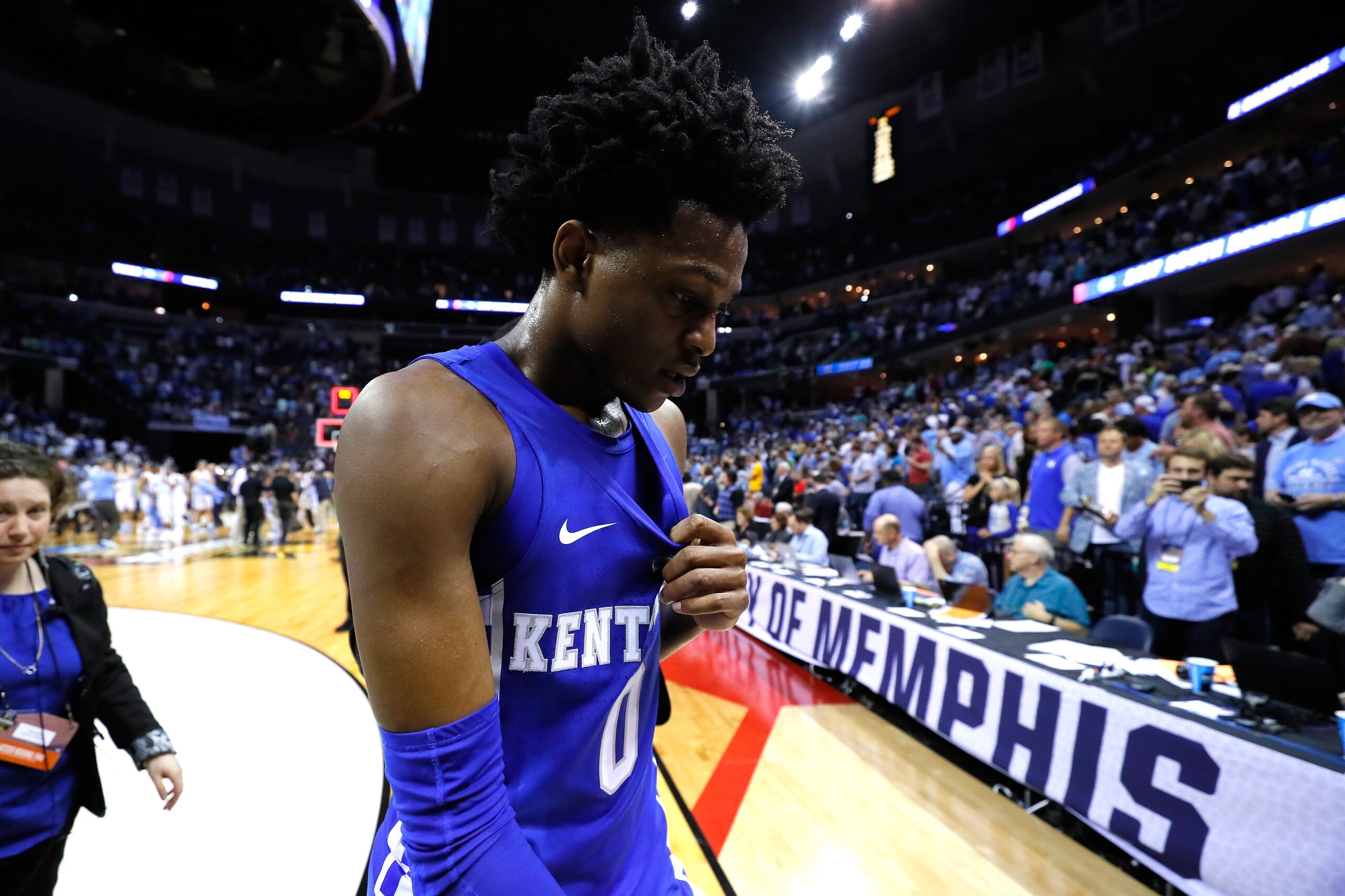
NBA comparison: Mike Conley
Draft projection: Top five
Strengths
Athleticism
Quick with standout athleticism for the position, De'Aaron Fox blows by defenders off the bounce and skies above the rim for finishes.
He puts pressure on the defense with a blazing first step and an explosive last one in the paint. Synergy Sports (via Draft Express) ranks Fox No. 1 among power conference guards in transition points per game (5.9).
He's disruptive at the other end as well, where he forces turnovers and bad decisions with tremendous foot speed and snapping hands.
Attacking
Fox wound up converting an astounding 138 field goals at the rim. Seventy-one of them came in the half court, while the other 67 were in transition. A sharp ball-handler, Fox's speed and shiftiness off the dribble caused problems for defenses unable to bottle him up around the perimeter.
He uses screens and space to penetrate. He's demonstrated touch with his runners and floaters, as well as the ability to improvise with crafty finishes and midair adjustments.
Playmaking
Being able to shake free and break down defenses naturally leads to playmaking chances for Fox. And he's flashed vision and passing accuracy on the move, both in transition and the half court. Most dangerous in space, he's still looked competent facilitating off ball screens and drives.
Weaknesses
Fox's shooting development could determine whether a team gets an All-Star or average starter. He made just 17 threes through 36 games at a 24.6 percent clip. He's capable pulling up inside the arc, but he'll need to drastically improve his range to become a bigger NBA scorer.
At 170 pounds, he also lacks strength for a player expected to frequently visit the rim. He can crumble after contact, and at 6'3" with a thin frame, Fox will only be able to guard one position on most nights.



2. Lonzo Ball (UCLA, Freshman)
4 of 5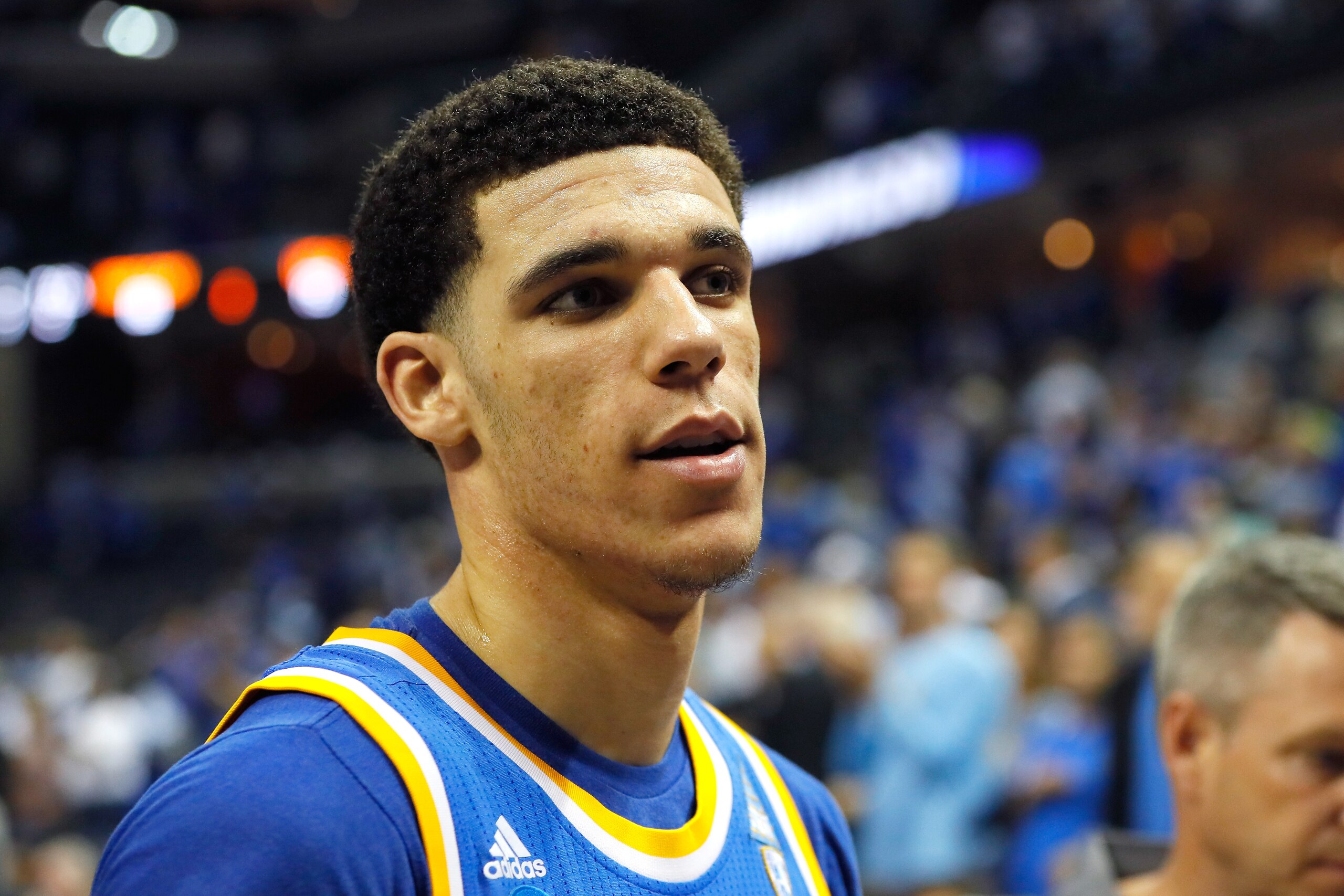
NBA comparison: Jason Kidd
Draft projection: Top three
Strengths
Tools/Bounce
Lonzo Ball uses his 6'6" height like a step stool to see and make plays over point guards who are typically a few inches shorter. He isn't known for explosive athleticism, but Ball has bounce around the rim, which resulted in numerous alley-oop finishes, something you don't typically see from players at his position.
Despite lacking great burst, he's best in transition. Ball converted 53 of his 97 made field goals at the rim within the first 10 seconds of the shot clock.
Vision/Passing
His 7.6 assists per game led the country. He sees and finds teammates with unteachable vision and the ability to deliver accurate, well-timed passes, whether they're outlets, bounces through traffic, pick-and-roll dimes, crosscourt skips or simple drop-backs to trailers on the break.
His basketball IQ and quick decision-making consistently lead to open shots for others, while his unselfishness inspires team ball movement.
Three-point shooting
Questionable mechanics didn't stop Ball from drilling 80 threes at a 41.2 percent clip. He has unbreakable confidence in his shot, as well as deep NBA range. Many of his triples were up to five feet behind the arc. Ball also hit 21 unassisted threes, looking comfortable separating and releasing off step-back footwork.
Weaknesses
Ball lacks a mid-range game without a pull-up and floater, having converted just 12 shots all season that didn't come at the rim or from downtown. It raises concerns over his scoring potential, particularly out of pick-and-rolls and isolation. His average of 16.6 points per 40 minutes was the lowest of the top NCAA point guard prospects.
Defensively, he's shown impressive instincts and timing in terms of jumping lanes, creating turnovers and blocking shots, but he's still relatively stiff around the perimeter and struggles to fight through screens.
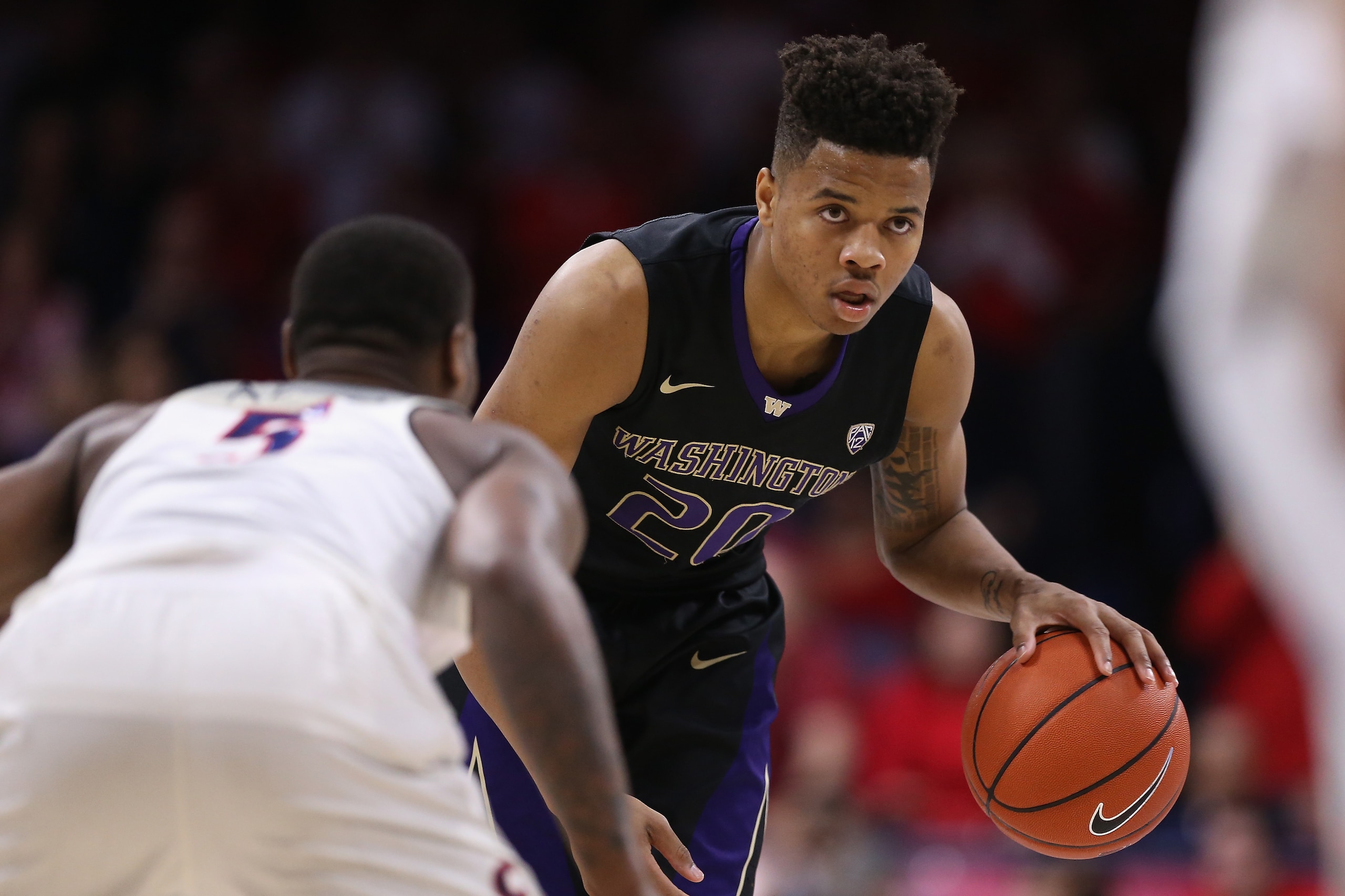
1. Markelle Fultz (Washington, Freshman)
5 of 5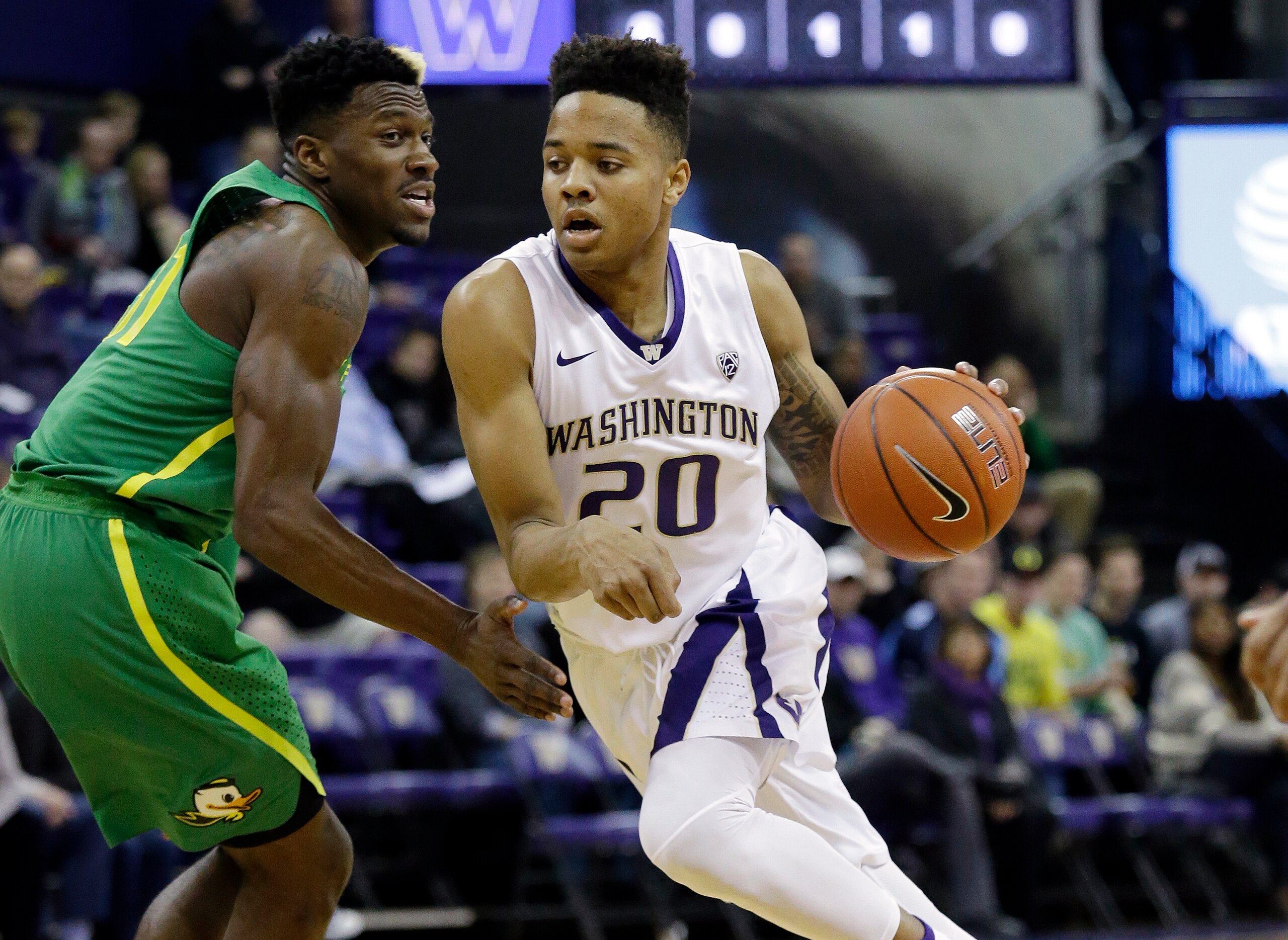
NBA comparison: James Harden
Draft projection: No. 1 overall
Strengths
Tools/Athleticism
Markelle Fultz's 6'4" size and 6'9 ¾" wingspan mirror John Wall's. He doesn't play as fast as Wall; instead, his athleticism is highlighted by leaping ability, coordination and body control, which show up on crafty drives, acrobatic finishes and exciting chase-down blocks (1.2 per game).
Playmaking
Exceptional ball-handling skills fuel Fultz's advanced shot-creating and playmaking. His ability to change speed and direction and break down defenses led to frequent drive-and-kick opportunities. He averaged 5.9 assists and ranked first in the Pac-12 with a 35.5 assist percentage.
Fultz creates shots with ease, both for teammates and himself out of isolation and ball-screen situations. Synergy Sports ranked him the country's second-most efficient pick-and-roll player, per DraftExpress' Jonathan Givony and Mike Schmitz.
Scoring
Having averaged 23.2 points and hit the 30-point mark five times in 25 games, Fultz created a scoring identity. He converted 69 shots at the rim, 88 two-point jumpers and 59 threes, showing a well-rounded arsenal and the ability to generate offense from all three levels.
With a knack for making contested shots, Fultz shot 42 percent on pull-ups, per Givony and Schmitz, arguably his most dangerous projectable weapon.
Weaknesses
Fultz's overall approach appeared too casual at times, especially when Washington was down, which was often. There will naturally be questions about Fultz's leadership and assertiveness, considering the Huskies won nine games all year.
Defensively, though capable of making the highlight play, his energy and level of alertness fluctuated. He got caught ball-watching too frequently.
Stats via Sports Reference or Hoop-Math.com unless otherwise noted. Measurements via DraftExpress or NBA.com.




.jpg?w=2560 "Love's Body Already 'Tired'")

.jpg?w=2560 "Mahomes' Wife Trolls Kubiak 💀")
.jpg?w=2560 "Tyreek Deal May Come Soon")