

Breaking Down Jurgen Klopp's Biggest Mistakes at Liverpool
A cliche more worn than a pair of lucky pants, it's said a football season is a marathon not a sprint. Whether you like the comparison or not, it's hard to deny Liverpool are faltering down the stretch.
Like a long-distance runner with cramp in the final mile, the Reds are blowing up at the worst possible time.
The finish is in sight—but will they cross it in front of their major rivals? Two wins—away to West Ham United next and then at home to Middlesbrough on the final day—would make sure they get over the line and finish in the Premier League's top four, something they've achieved just once in the last seven seasons.
TOP NEWS
Live Highlights and Viral Moments 🍿

Final Men's Ballon d'Or Rankings 📊

Carrick Replacement Options 📝
Anything other than a Champions League berth would feel like a failure now. All those wonderful results against the big boys would be wasted due to the squad's struggles to deal with supposed weaker foes.
Absences, injuries and a lack of depth in the first team have all hampered Jurgen Klopp, but he is not blameless.
Here, Bleacher Report breaks down five areas of concern under the current manager (and that's without mentioning the leaky defence and set-piece issues).
Window of Opportunity
After gathering a serious head of steam up until the turn of the year, Liverpool's season lost all momentum in January. Talk of a title challenge always felt fanciful, but no one expected a sudden run of form more akin to relegation candidates.
They managed just one win—and that was against League Two side Plymouth Argyle in an FA Cup replay, too—in a month that saw them slip off the Premier League pace and knocked out of both domestic cup competitions.
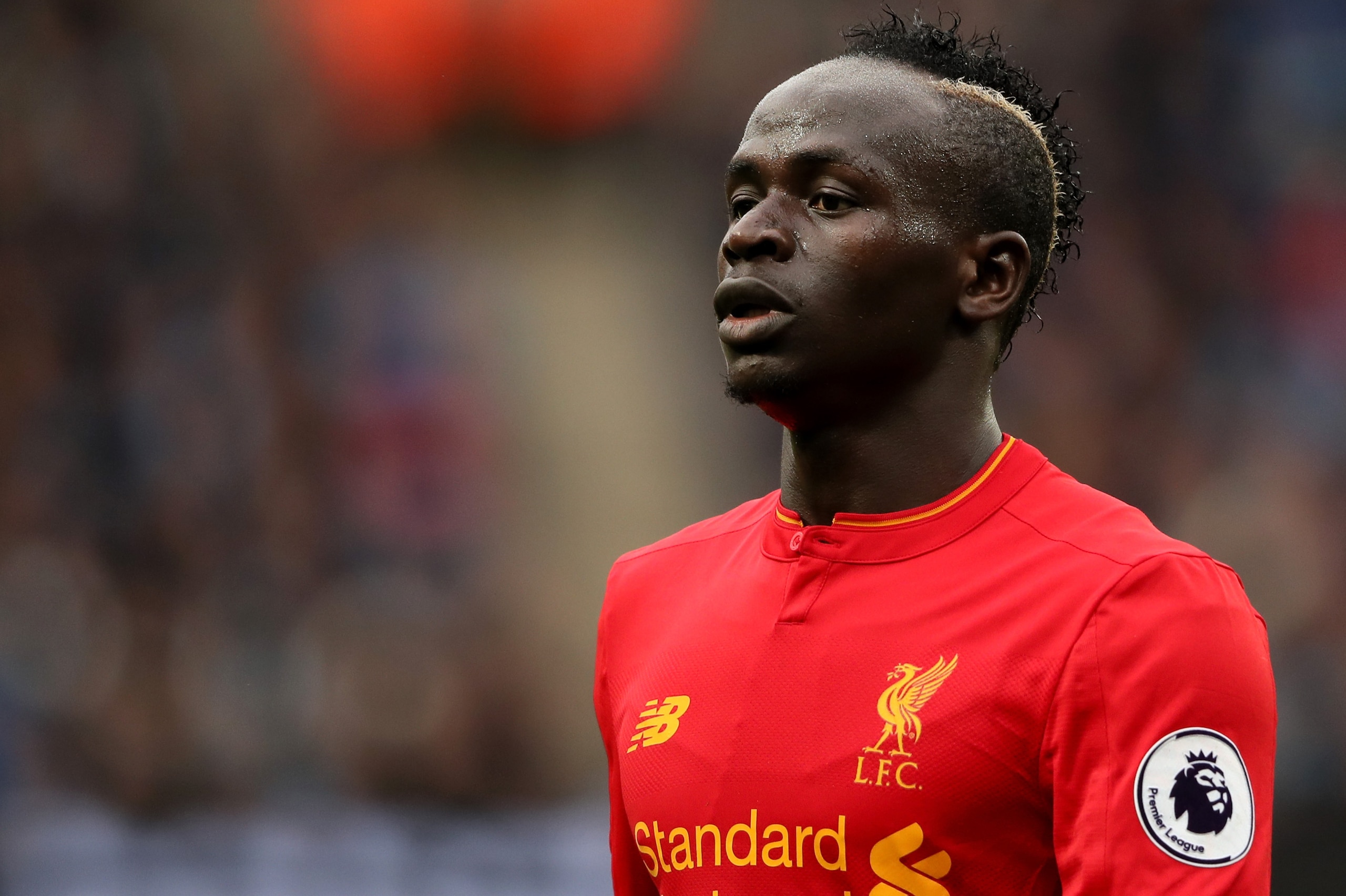
Sadio Mane's absence, coupled with a still-rusty Philippe Coutinho returning from injury, left Liverpool looking toothless in the final third. Adam Lallana worked hard, but he simply could not do it all on his own.
Klopp could have used January as an opportunity to bring in reinforcements, yet instead, he stood still. Rather than take a risk and dip into the transfer market, he held on to the hand dealt his way and hoped to bluff his way through. The decision backfired.
"Klopp rejects the British notion that spending is the solution to any problem and, much like Arsene Wenger, does not believe in retail therapy. He won't buy players he does not really want," Richard Jolly, a freelance football journalist based in the north-west of England, told Bleacher Report.
"But if Liverpool needed one player in January, it was another winger, preferably one with Mane's speed. None of their other first-choice forward players are slow, but nor are any electric, and that adds another level of incision.
"Mane has become indispensable partly because he is so good but partly also because no one can remotely replicate his contribution, and when he is missing, it in effect means two changes to the team, if Roberto Firmino has to switch to the right to deputise."
Mane, who was flown back by his club in a private jet from Gabon before he'd barely dried his tears after missing a penalty in Senegal's shootout loss to Cameroon, is now missing again for the climax.
A serious knee injury has seen him sit out the last six games—and the side have scored seven goals without him. As Empire of the Kop pointed out on Twitter, Liverpool just aren't the same without their leading scorer.
"The lack of January signings will be the big talking point if the Reds fall short," Paul Machin, creator, producer and presenter at The RedMen TV, told Bleacher Report.
"One more winger, or player with pace for the attacking positions would've made a real difference. Mane made himself integral so quickly.
"We were terrible when he went away, and we've struggled for goals since he got injured, so not finding someone who could at least do the basics of his job will rankle majorly if we miss out on the Champions League."
Going Through Changes
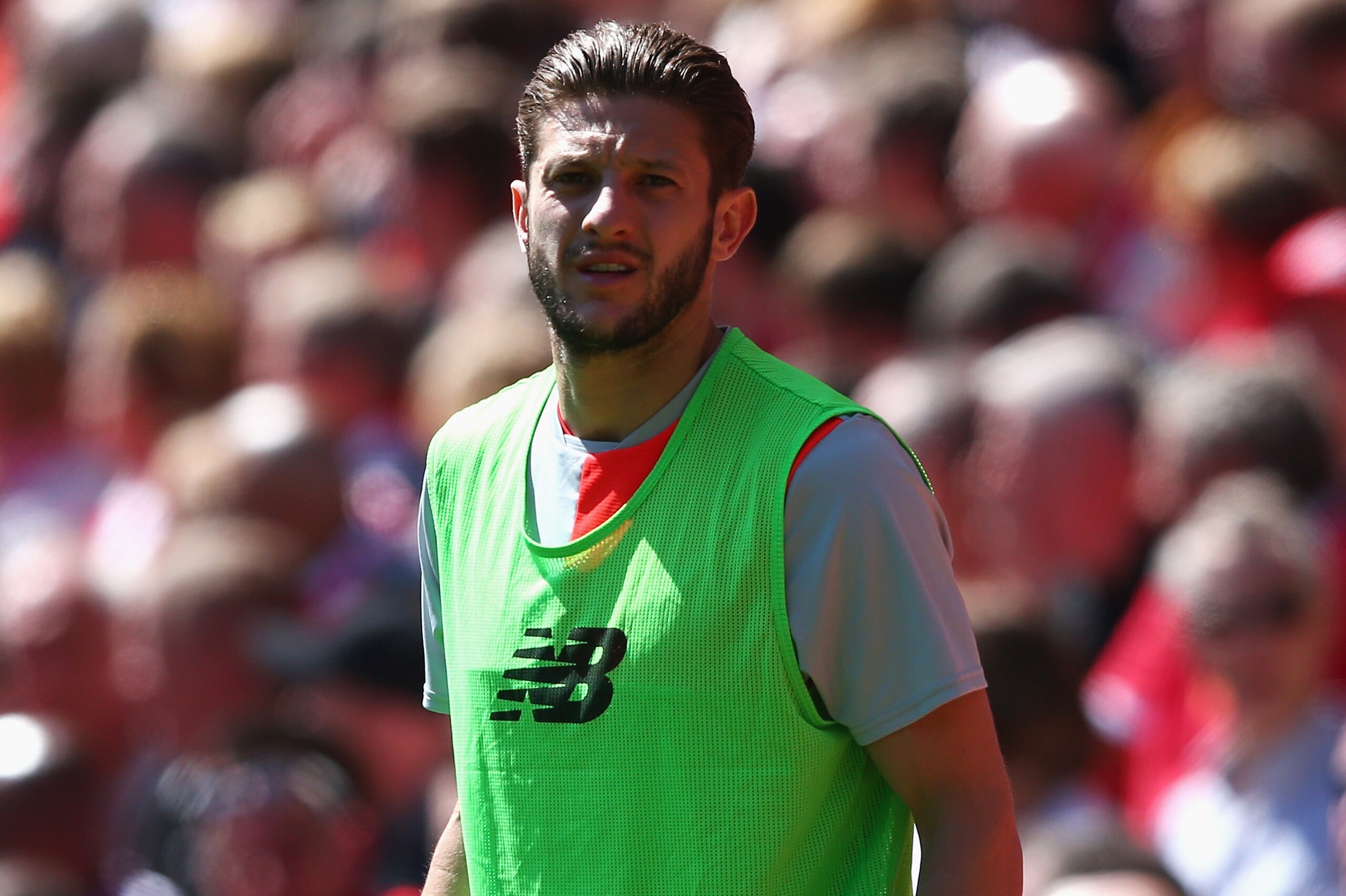
The sight of Lallana among the substitutes against Southampton last Sunday wasn't a huge surprise—but seeing the England international still sat in his seat after an hour of tepid football was a shock to most. As Liverpool stuttered against the Saints at Anfield, one of the squad's most creative players just watched on.
Lallana—admittedly only recently back from a hamstring injury—was eventually sent on after 69 minutes and, per WhoScored.com, made Liverpool's only accurate through ball in the 0-0 draw.
"I would have moved earlier," Graeme Souness said on Sky Sports. The Scotsman wasn't alone in wondering why it took so long to try to kick-start a lethargic display into life. Daniel Sturridge also looked lively in his cameo as the replacements offered a much-needed injection of sharpness in the closing stages.
For a man who oozes positivity in press conferences and patrols his technical area with such passion that you worry about his blood pressure, Klopp appears surprisingly cautious when it comes to substitutions.
In last month's 2-1 home loss to Crystal Palace, for example, he didn't make his first change until 11 minutes from time. Unless forced upon him, Klopp rarely switches things up before the hour mark.
So, is this the manager's personal preference, or just him cutting his cloth accordingly due to a lack of options available? History suggests the former, according to Lars Pollmann.
"Too-late substitutions is probably one of the most common criticisms of managers at every level, and it certainly was one even the much-revered Klopp could not avoid during his time at Dortmund," Pollmann, a freelance journalist who writes for The Yellow Wall, told Bleacher Report.
"Even during his early years, when squad depth was a real issue, fans wanted to see him introduce fresh legs or the necessary extra attacker sooner than he (often) did.
"I cannot remember a time when Dortmund were particularly successful off the bench under Klopp. Whether it is a part of his coaching style or just something people only realise when results are lacking, I do not know, but he seems somewhat reluctant to make changes to his team when they are not absolutely necessary."
Still, perhaps Klopp's desire to keep faith in his starting XI isn't entirely through choice...
Feeling the Strain
Klopp was brave with his changes at Stoke City in April as Coutinho and Roberto Firmino came on at half-time. The former scored an equalising goal before his fellow Brazilian smashed in a wonderful winner, justifying the risk of using two players who were initially rested from the starting XI for their own good.
"This was the moment when each alarm clock was ringing for both," the former Mainz boss said after the 2-1 win, per Stuart James of the Guardian.
His caution with substitutions can possibly be explained by concerns over keeping players fresh. With an already-thin squad shorn of several key members through injury, there are limited resources at his disposal.
"I think you can see that we have been forced to ease off significantly from the all-action style of the early games, because quite simply we don't have the legs left in the squad to maintain it," Machin said.
"The injuries certainly haven't helped, particularly the freak ones to Mane, Jordan Henderson and even Danny Ings.
"I think the main issue he's got is just how many minutes some of these lads have in their legs at this stage of the season. It's easy for us to say 'throw Lallana in at half-time,' but if he's not capable, he's not capable, and not even the most flippant of gamblers would put money on Sturridge's fitness these days."
Klopp asks a lot of his players without the ball, too. His counter-pressing style requires both physical and mental stamina; the whole system breaks down if one individual fails in their duties to react to the trigger.
Chris from The RedMen TV explained in great detail how Liverpool had adapted to the German's plan a year into his reign on Merseyside:
These tactics take a toll on individuals in different ways. Coach Raymond Verheijen, for one, has often criticised Klopp's approach to player welfare in the past, claiming the punishing training sessions—particularly in the pre-season—can lead to muscle problems further down the line.
"He rarely experimented with his formations throughout his time with Dortmund and rarely rotated his squad, which, in addition to the quite exhaustive playing style the British media love to define as 'heavy-metal football,' also led to [a] lot of injuries," Pollmann said.
Now, in the closing stretch, Liverpool's tank may be running on empty. Klopp has to accept responsibility for that, even if his demanding regime is not totally to blame for all the injuries suffered.
Jekyll-and-Hyde Reds

If Liverpool were as efficient at beating the lower sides as they have been picking up points against the rest of the top six, their biggest issue right now would be planning a route for the trophy parade around the city.
Here's the list of teams they've lost to in the Premier League this season: Burnley, Bournemouth (who also picked up a point at Anfield), Crystal Palace, Hull City, Leicester City and Swansea City.
In those half-a-dozen losses, Klopp's troops scored seven goals. His high-pressing, fast-tempo style works a treat against those who come to play, but it is less effective against those set up to stifle the Reds.
"Until Liverpool find a way of combatting teams who defend deep and narrow with protection in the central-midfield area, more opponents will adopt the same approach, especially lesser sides who lack the ability or confidence to attack," Jolly said.
"Having a predator like Sturridge on the pitch would be one option, to make the most of half-chances. Another might be to try and have more genuine width—there was a case from switching from 4-3-3 to 3-4-3 against Southampton to get the genuine wide players further up the field.
"The biggest issue is that while Liverpool can seem unstoppable when Coutinho, Firmino, Lallana and Mane all play, there is far less chemistry when any are missing. They either need to sign similarly high-quality players who can slot into the existing structure or someone who offers a genuine alternative."
Klopp's Liverpool rarely make life dull for their followers. At times an unstoppable force capable of sweeping away opponents, they can also be infuriatingly poor when up against opponents they are expected to beat.
Worryingly for his current employers, Klopp had similar issues towards the end of his tenure at Dortmund.
"Klopp's tactical limitations were on full display during his final season at the club, in which they were thoroughly unable to implement a possession-orientated playing style that would have been required against many of the Bundesliga's deep-sitting, counter-attack-loving sides," Pollmann said.
Square Peg In a Round Hole
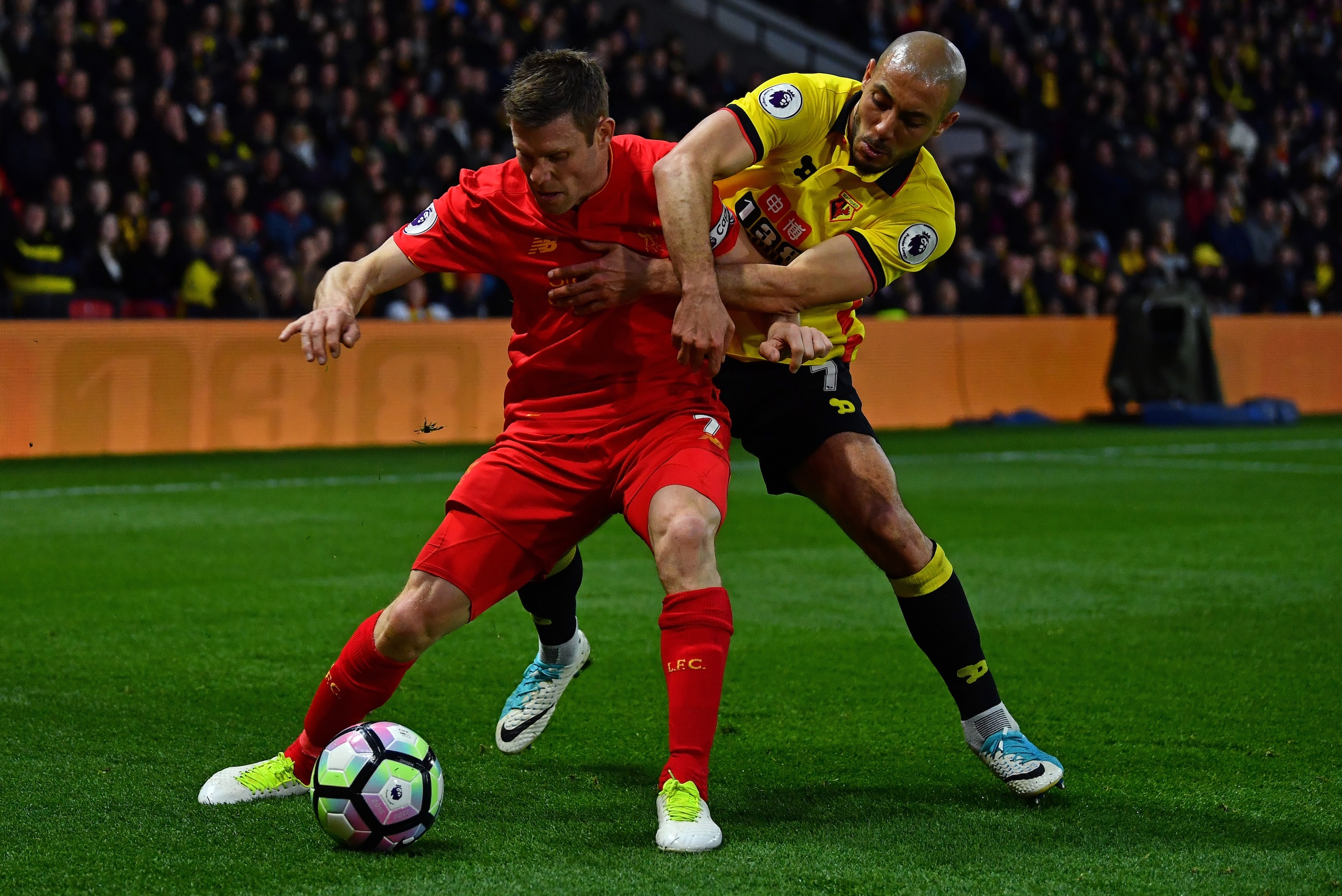
It is Liverpool's personalised version of Groundhog Day. Carrying the ball into space down the left wing, James Milner slows up, cuts back onto his right foot and then, finally, swings a cross into the penalty area.
Klopp experimented with the midfielder in the left-back role in pre-season and has preferred him to Alberto Moreno—a defender who struggles to comprehend the idea of defending—for the majority of the campaign.
It's not the manager's first defensive conversion job either; Pollmann made reference to how Erik Durm went from "middling fourth-division attacking talent to Germany full-back thanks to his athleticism" during Klopp's time at Dortmund.
Milner is a company man. The 31-year-old is the stand-in skipper with Henderson sidelined, a reliable lieutenant Klopp can trust to give his all, no matter where he's lining up on the field.
Klopp stated back in January that he has no plans to add a left-back during the summer, per James Pearce of the Liverpool Echo, yet that hasn't stopped persistent talk of a move for Fulham teenager Ryan Sessegnon.
If Moreno isn't considered up to the required standard, the Liverpool boss needs to find another left-back he can trust to not only cover for Milner, but potentially usurp him from the starting XI. Wherever they end up finishing in the table, the Reds will have to cope with the added burden of playing in Europe next season.
Yet the utilization of Milner shows why a top-four finish should be considered an overachievement in Klopp's first full season in charge. He has raised expectations with the resources available to him, and finding the right players to bolster the ranks could solve some of the concerns mentioned here.
While Champions League football won't necessarily make or break Liverpool's recruitment drive, finishing outside the top four will be a bitter pill to swallow through the course of what will be a pivotal summer.
Still, if Klopp is guilty of anything this season, it's allowing Liverpool fans to dream again.
Rob Lancaster is a featured columnist for Bleacher Report. All statistics used in the article are from WhoScored.com.
.jpg?w=2560 "Chiefs Giants Football")
.jpg?w=2560 "🚨 Week 8 AP Top 25 Poll")
.jpg?w=2560 "Baker Gets Glove From Rays 🧤")
.jpg?w=2560 "Steelers Roll Saints in Paris")
.jpg?w=2560 "5 Teams Eyeing Jonathan Taylor")

.jpg?w=2560 "NFL investigating Eagles")
.jpg?w=2560 "Updates from EVERY Game")