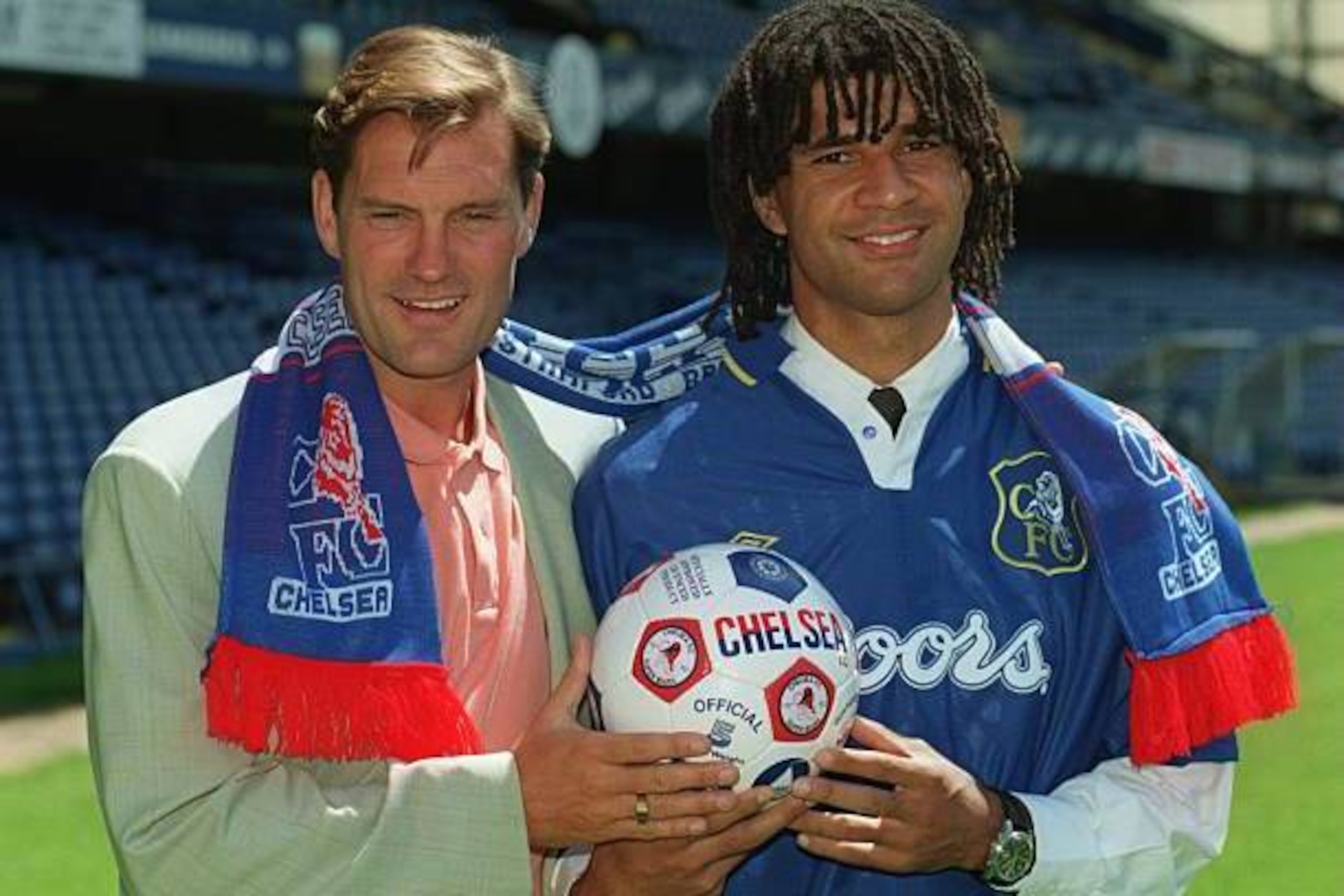

Ranking Chelsea's Greatest Over-30 Signings of the Premier League Era
Look at Chelsea now and we see a club built for the future. Manager Antonio Conte has a team blended with youth and experience; it's one ready to take the Blues into the next generation as they attempt to reassert themselves at the top of English football.
It wasn't always the case, though. Before Chelsea could afford to sign up-and-coming stars for multi-millions, the Blues had to be far more creative with their transfer policy. They couldn't cherry-pick the best players in their prime, so they had to go for golden oldies.
Time was when the Chelsea dressing room was no stranger to players the wrong side of 30 and ready to cash in their football pension slips. Not quite Dad's Army, the club lacked youth as they leveraged their future on the past.
While there were some failures along the way, the policy worked, however. Chelsea signed some greats of the game who helped make them reach greatness themselves.
To celebrate that, Bleacher Report counts down its top five over-30 players Chelsea have signed in the Premier League era.
5. Mark Hughes
1 of 5
Fans introducing themselves to the Premier League in the past decade or so will know Mark Hughes as a greying football manager. The Welshman has been in the dugout with the likes of Blackburn Rovers, Manchester City, Fulham, QPR and now Stoke City.
Before all that, however, Hughes was one of English football's most feared marksmen. So much so, he was signed by European giants Barcelona and Bayern Munich in his prime and was a major figure in the early Premier League years for Manchester United.
Hughes had helped Alex Ferguson's men start their period of dominance in the Premier League, but come 1995, his ageing legs went against the more youthful policy Fergie was introducing at Old Trafford. The much-talked-about Class of '92 that included Ryan Giggs and David Beckham was the future for United. That meant Hughes was very much a man of the past; a relic, almost.
Surplus at Old Trafford, Hughes proved invaluable to Chelsea, and Glenn Hoddle signed him for £1.5 million to bolster his attacking options in west London. He was 31 at the time, so the investment seemed a major risk for a club not known for having deep pockets, yet it proved a masterstroke.
It was a pivotal time at Stamford Bridge. Chelsea were attempting to reassert themselves in English football. After years of underachievement, Hoddle's appointment as manager was taking them in a different direction. Suddenly the club's ambitions were far loftier than they had been in a generation.
To achieve his targets, though, Hoddle needed bona fide winners, and Hughes fitted the bill. He had won everything in the English game, including the Premier League and three FA Cups. His presence in the Chelsea dressing room not only helped change perceptions of the club, it added a winning mentality that would serve the club well in the 1990s as they won the FA Cup, League Cup and European Cup Winners' Cup.
It was because of players like Hughes that Chelsea's revival was kicked into gear.
4. Gianluca Vialli
2 of 5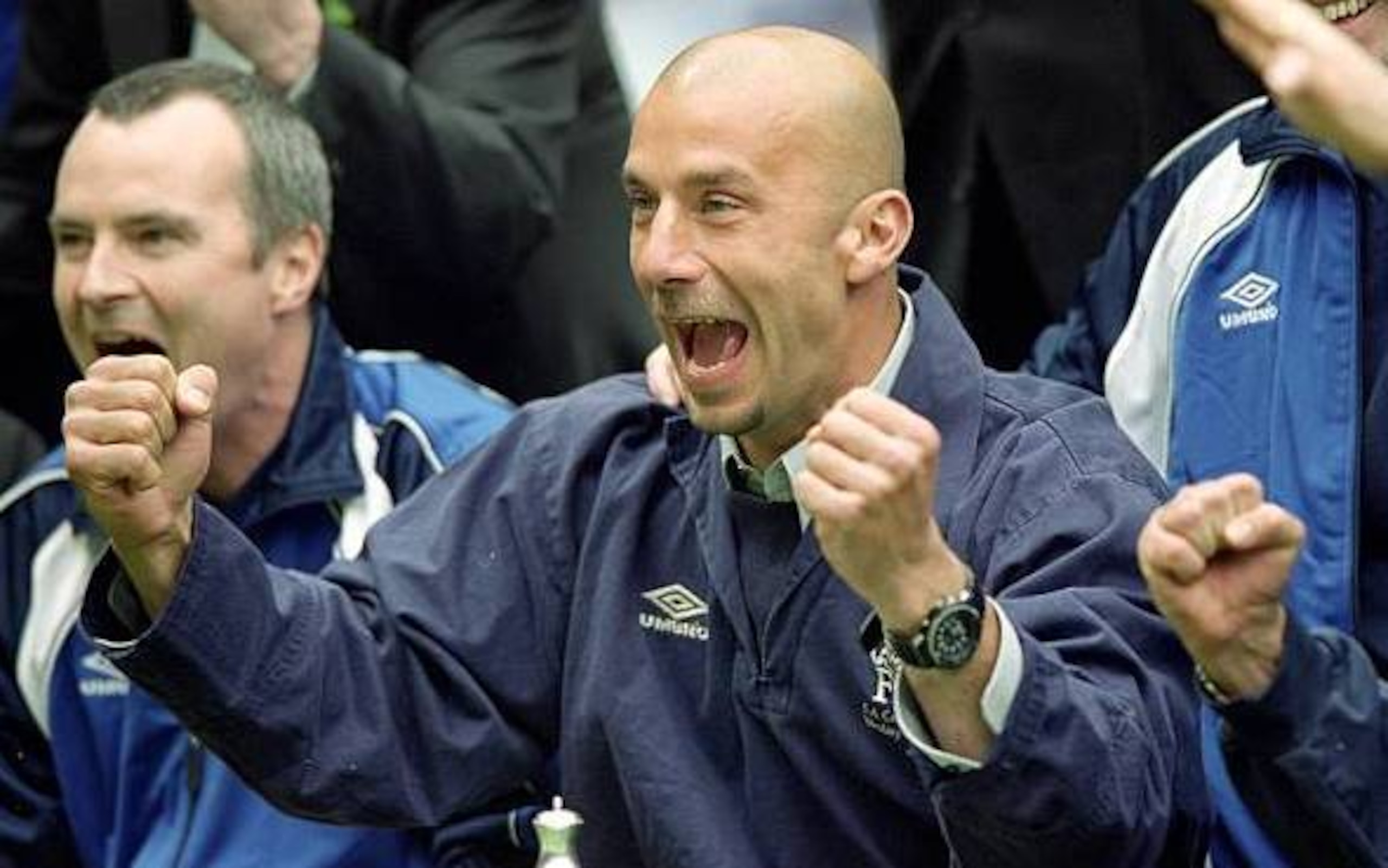
A year after Hughes arrived in west London, Chelsea upped the ante somewhat with their transfer policy in 1996.
Ruud Gullit was Chelsea manager by this time, replacing Hoddle, who had departed for the England job. Gullit broadened the Blues' horizons, looking to the foreign market to manipulate the newly introduced Bosman ruling that allowed clubs to sign some high-profile names for free.
The result was Gianluca Vialli. From signing a Premier League champion a year earlier, Chelsea now had a reigning European champion after Vialli had captained Juventus to the Champions League shortly before leaving Turin for London.
Vialli was an instant hit with fans. The flamboyance hinted at by Italian heritage brought an added swagger to the King's Road, and the supporters championed it. Suddenly Chelsea's appeal was stretching beyond their own borders as they embraced the cosmopolitan future that football was taking on.
Vialli was unlike any other striker Chelsea had had since Peter Osgood. He was glamorous, attractive and revelled in the limelight of it all. Oh, and he produced the goods on the pitch, too.
Vialli helped changed Chelsea's style, embracing the "sexy football" that Gullit craved. The Blues had a new dimension, with their foreign imports at the heart of it.
Not only did Vialli succeed as a player with Chelsea, he would also make a name for himself as manager. He took over from Gullit in 1998, winning the League Cup and Cup Winners' Cup. He followed those successes up by lifting the FA Cup in 2000.
That's not bad for a player who was 32 and apparently had his best days behind him when he signed.
3. Gianfranco Zola
3 of 5
From one Italian maestro to another. Actually, that's perhaps damning Gianfranco Zola with faint praise. Maestro doesn't quite cut it for him; he was a genius, a man described by anyone fortunate enough to see him, as a magician.
Zola was magical from the moment Chelsea signed him in November 1996, then aged 30.
There was a hint of scepticism in England at the time. Zola had been part of the Italy side that had failed so miserably the previous summer at Euro '96 and (slightly) the wrong side of 30, questions were asked about his intentions: Was he another foreign player coming to the Premier League for a final pay day?
Come the end of the 1996/97 campaign, we would have our answer. Zola had not only won over his critics by being named Player of the Year, but he had also inspired Gullit's side to FA Cup glory—Chelsea's first such success in the competition since 1970.
The addition of Hughes and Vialli before him were hints of where Chelsea were attempting to head as a club. But the addition of Zola changed the picture. He turned ambition into a reality; he made the dream come true.
Without players like Zola, there's an argument to suggest we wouldn't have seen the Chelsea we have in the past 20 years.
When we talk legends in west London, Zola's name stands alongside the best of them all. He was exceptional.


2. Ruud Gullit
4 of 5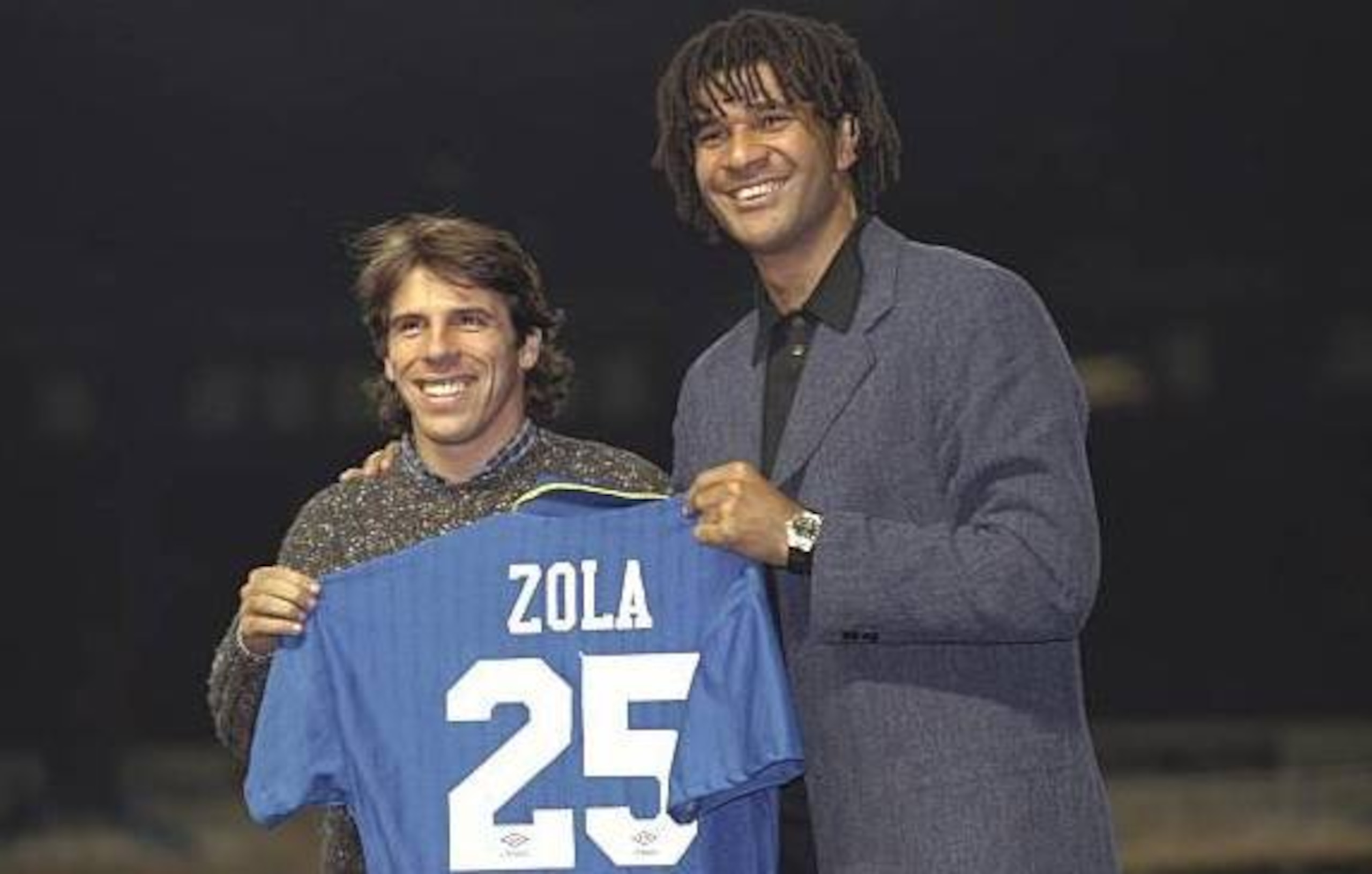
We've deliberately selected an image of Gullit as Chelsea manager here. Why? Because he was the man who changed the Blues at a time when they needed it the most.
The club was at a crossroads when he was appointed manager in 1996. Football in England was changing on the back of Euro '96, and by having him in charge, Chelsea suddenly found themselves at the front of the queue to bring in some glamorous names.
We know about Vialli and Zola (pictured above when Gullit persuaded him to join Chelsea from Parma), but the Dutch ace also brought in the likes of Roberto Di Matteo and Frank Leboeuf.
The Blues found themselves on another level with Gullit. The confidence and arrogance from the 1960s and 1970s was back—Chelsea were an appealing proposition again. It was Gullit who started to make it all happen.
His place in Chelsea's history is vital. The Blues needed a maverick with the vision to set the club up for the future and Gullit delivered on that mandate.
And, of course, that process all started when he joined Chelsea as a 32-year-old on a free transfer from Sampdoria in 1995. He spent a season playing for the club, where fans were visibly pinching themselves that a former World Player of the Year was lining up for them, before eventually settling down in the dugout.
Gullit was class in every aspect—as a player and manager. His capture was a game-changer in west London. It was the moment the landscape started to shift.
1. Glenn Hoddle
5 of 5
Glenn Hoddle is the jewel in Chelsea's crown when it comes to players signed over 30. That's not just for the Premier League era, but any era in the club's history.
You would have noticed a theme throughout this list. Chelsea's strategy was clear in the mid-1990s; the club had to chase established names to propel them forward and put them back on the map. They couldn't compete with Manchester United and Arsenal for those in their prime, so had to work in a different market and get value for those in so-called decline.
That's where the signings of Gullit, Vialli and Hughes came into the picture, helping change the face of Chelsea. The Blues weren't buying just the talent, but the reputation and experience of those players. The Stamford Bridge dressing room didn't have that, so they injected it.
Hoddle joined Chelsea in a player-manager role in 1993. He had just got Swindon Town promoted to the Premier League and was a rising star in management, close to retirement as a player.
His arrival would kickstart the change the Blues needed. Before Gullit could arrive and eventually bring in his foreign legion, Chelsea needed to flush out the years of waste and mismanagement that had crippled them. They needed a figurehead to sow the seeds, and that's what Hoddle did.
So much would pass in the decade between Hoddle's arrival as player-manager and Roman Abramovich's purchase of the club, but it was Hoddle who put Chelsea on the road to crossing paths with their current owner.
Abramovich changed Chelsea beyond belief. Without Hoddle, we can argue it would never have happened. Until his signing, Chelsea were very much the old school; they were a club out of touch, with a tired stadium and amateur facilities.
Hoddle would modernise them and set the wheels in motion for all that has followed. He wasn't their best player post-30, yet he has proved to be the most significant.
.jpg?w=2560 "Chiefs Giants Football")
.jpg?w=2560 "🚨 Week 8 AP Top 25 Poll")

.jpg?w=2560 "Baker Gets Glove From Rays 🧤")
.jpg?w=2560 "Steelers Roll Saints in Paris")
.jpg?w=2560 "5 Teams Eyeing Jonathan Taylor")

.jpg?w=2560 "NFL investigating Eagles")
.jpg?w=2560 "Updates from EVERY Game")