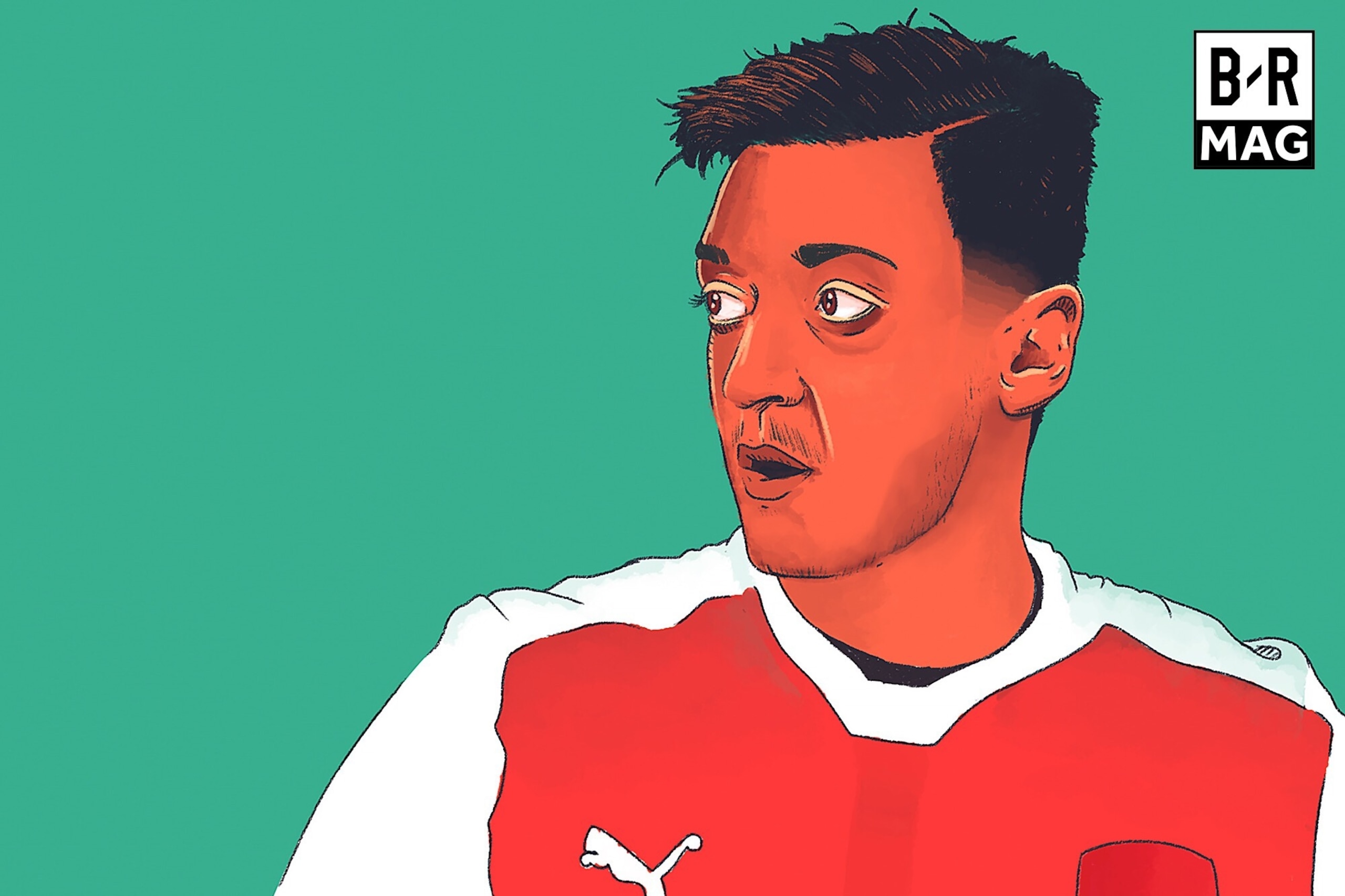

Inside the Trouble with Mesut Ozil: Is Arsenal's Star Brilliant, Hyped or Both?
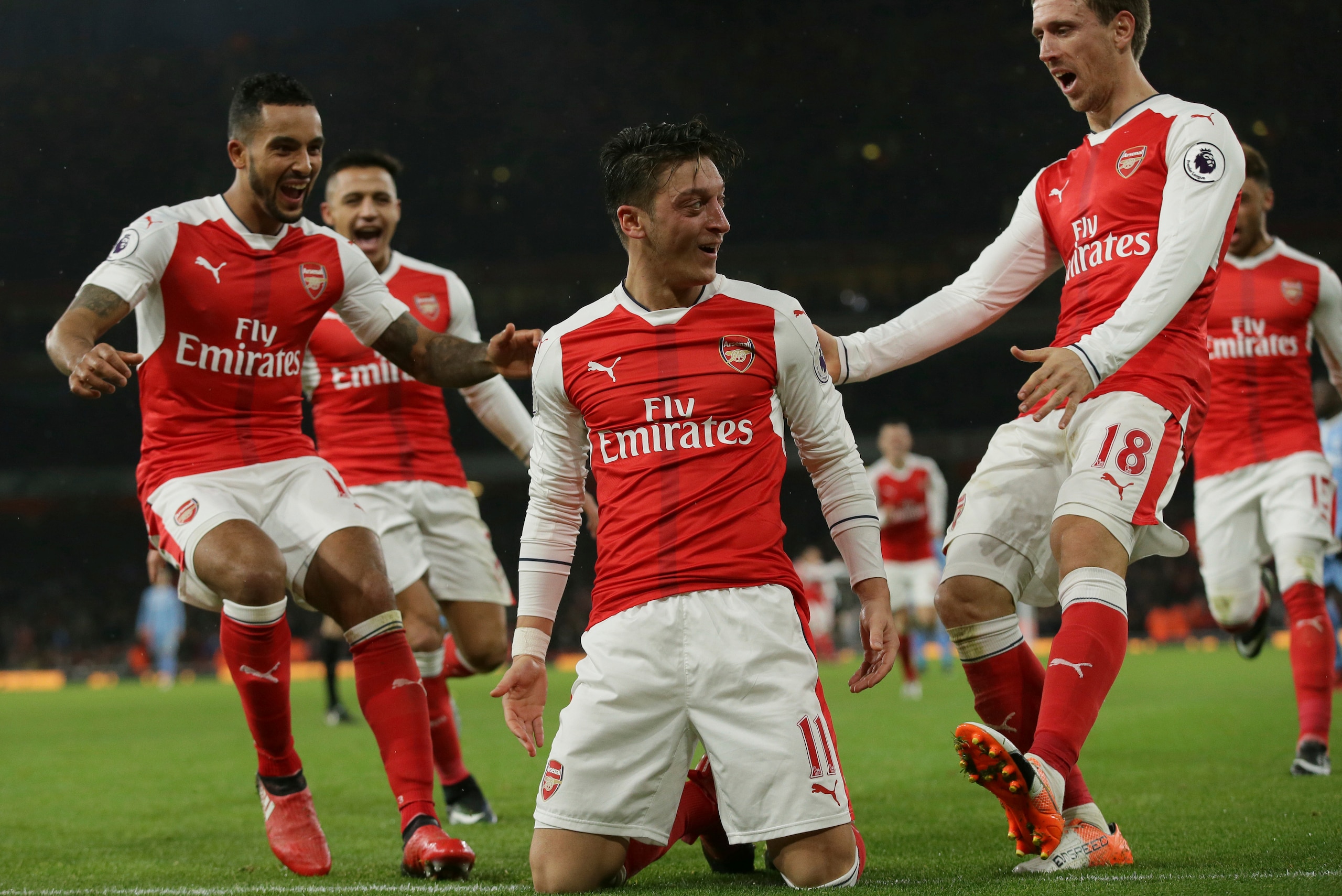
When it comes to Arsenal's Mesut Ozil, it's a question worth considering: Does anyone in the world game divide public opinion quite like he does? Fans either gaze upon the wispy 28-year-old and see sublime beauty in his delicate touches and feathery passes, or they see indolence and a glaring lack of any defensive skills.
He’s modern art, a Rorschach blot.
Take his goal against Ludogorets in November—the way he chipped the keeper, stopped abruptly, felled two defenders, then casually tapped in for a goal. Who else could do that, his supporters ask? Or the way he effortlessly whipped passes around the pitch for Germany against Brazil in the 2014 World Cup semi-finals.
TOP NEWS

Final Men's Ballon d'Or Rankings 📊
World Football Moments 🍿

Brown with an all-time summary of relationship with Tatum
Others fixate on his vanishing acts against Liverpool last season, at Manchester City last fall and his dismal performances against Bayern Munich.
Recently, his reputation has plummeted to an all-time low. His inconsistent play has contributed to the possibility that Arsenal could finish outside the top four and miss next season’s lucrative Champions League group play for the first time in manager Arsene Wenger’s 21-year reign. Arsenal fans have begun to turn their backs on him, and pundits line up to eviscerate him—he’s “lazy” and “lacks heart,” some have said. Jamie Carragher, a commentator and former Liverpool defender, stated the obvious on a recent telecast: “We love to criticize Ozil.”
Off the pitch, Ozil boasts more than 55 million followers across his social media accounts—Facebook, Twitter, Instagram (more than U.S. stars Kevin Durant, Mike Trout and Cam Newton combined). But knowing Ozil, who is a World Cup winner and perhaps the most famous Muslim athlete in the world, is nearly impossible. Each social media post is carefully curated by his marketing team and approved in a WhatsApp group that includes Ozil, allowing for only the briefest glimpses into his personal life. Aside from a handful of recent interviews promoting his autobiography, he rarely grants in-depth interview requests, and when he does they’re a tangle of cliches.
Even in his native Germany, where his face has been plastered across the country’s tabloids tracking the latest model or pop star he’s dating or the messy split from his father, Ozil remains a relative mystery. “It’s very difficult to draw a picture of this guy,” German journalist Andreas Bock says. “There’s a wall of social media around him.”
So who exactly is this mercurial superstar? A lazy genius? A selfish star? Or is he misunderstood—struggling to catch up with a public image he can never quite satisfy and a perception that doesn’t meet reality?
Is the problem him or us? Like most things with Ozil, it’s complicated.
With all this in mind, I sought to find out more. Ozil agreed to a lengthy interview, then time constraints turned that into a possible phone call, then his manager suggested a short email correspondence. Knowing I wouldn’t get the answers I wanted from him, I hopped on a plane to Europe—first stop, Germany.
To reach the office of Rot-Weiss Essen, Ozil’s childhood club, you have to drive until you’re nearly out of the city of Essen, once the house music capital of Europe. Turn right on a country road and you’ll find a rundown two-story structure. The building mirrors the state of the club: Once a German juggernaut after World War II, they now bounce up and down between the fourth and fifth division.
When I arrive, I’m ushered down a hallway to a quiet office filled with tchotchkes and tilted framed photos. Andreas Winkler, Ozil’s former youth director at the club, tells me about the time he met Ozil as an undersized 12-year-old. His father brought him in for a tryout, and the club put Ozil through some basic drills. Now, he says, some of the directors claim they were blown away by his skills, but the reality is they were only mildly impressed. “Ehhh, we’ll take him,” they said.
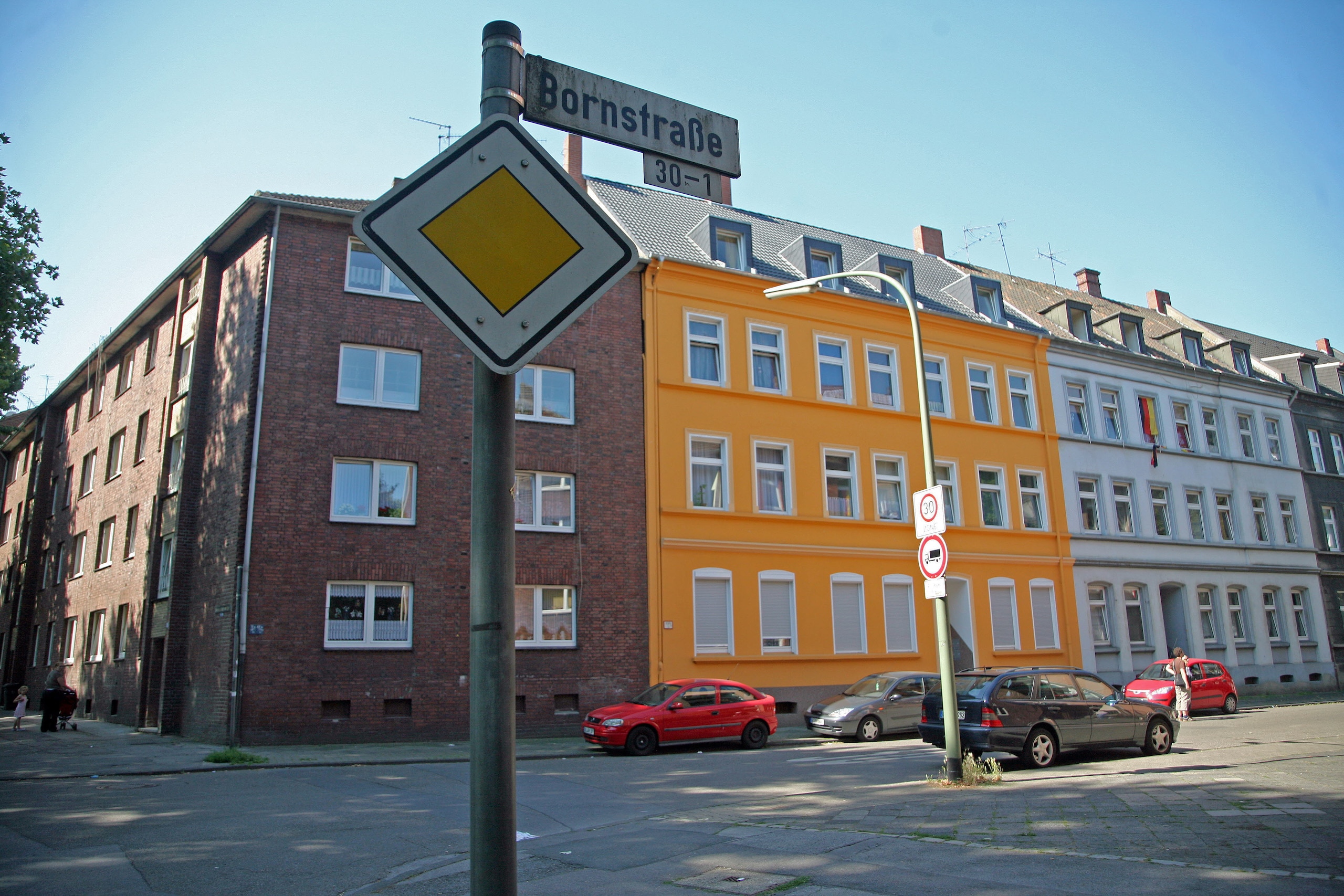
Ozil grew up in a two-bedroom apartment with his three siblings and parents in the working class town of Gelsenkirchen. The only time he left their Turkish neighborhood was to visit his grandparents a few miles south. When he signed on with Rot-Weiss Essen, it was only 10 miles away, but it could feel like traveling into another world. Occasionally he’d miss practices, and club directors would find him back at his local park playing with friends.
His father, Mustafa, worked in factories and a tea room, then a billiard hall, but Ozil was his great obsession. He convinced himself that his son would be the best player in Germany one day. During Ozil’s first games as a seven-year-old, his coach would shout commands in German on one sideline, while Mustafa shouted opposing commands in Turkish on the other sideline.
“He was controlling,” Winkler says of Ozil’s father. “He wanted to be bigger than he is.”
Confused, Ozil faded into the shadows. One of the only instances at Rot-Weiss Essen in which Ozil was ever heard saying more than a few words occurred the night before a match against crosstown rival Schwarz-Weiss Essen. He called the club’s manager, a former policeman, at home and pleaded: “We have to win. Tell me what I have to do.”
The next day during the game, Ozil lined up a free-kick 35 yards from the goal as the opposing goalie taunted him. “He can’t score from there. We don’t need a wall.” Instead of dinking the ball into the box, Ozil smashed it past the flailing keeper into the back of the net, then jogged back across the halfway line, silently.
He developed a bond with the manager, whose style Winkler likens to Ozil’s former manager at Real Madrid, Jose Mourinho. He recognized the push and pull within Ozil and gave him discipline. “Mesut needs this kind of man,” Winkler says. “You have to fight but only at the right time.”
The club was willing to offer Ozil a spot on its professional team, despite Mustafa’s abrasive negotiating style. They agreed on an offer of €4,000 ($4,370) a month, more than enough to move the family to a new apartment. Just before Ozil signed it, local powerhouse Bundesliga club Schalke 04 offered him a place on its under-19 team. Mustafa abruptly ended the negotiations and disappeared with Ozil back to Gelsenkirchen.
A few days later, Winkler received a package at his door full of Turkish food. The note was from Mustafa. It read: Danke—Thank you.
(Click here to get B/R Mag on the go in the new B/R app for more sports storytelling worth your time, wherever you are.)
In the creation myth of all great players, there’s the moment when they’re serendipitously “discovered” by a scout or a coach—the Brazilian great who spotted Pele at 11 years old, the cagey old scout who stumbled upon Zidane playing for a tiny club in Marseille at 14. Ozil spent most of his teenage years desperately seeking someone to create his own beginning.
When Ozil was 13, his father enrolled him in a school on the same grounds as FC Schalke. Ozil worked out in the mornings with the youth team and played in school tournaments. But even as a teenager, he was always an unwilling star. “He was not interested in scoring goals and being the best,” says Christian Krabbe, one of his teachers at the school. “When the goal was empty, he didn’t score—he would make a pass so his friends would score.”
What Schalke saw did not interest them. Ozil was undersized and “not good in headers, not good in defense,” Krabbe says. Ozil openly wondered if he was German and if his name were Markus or Matthias he’d get more of an opportunity. But near his 17th birthday in a game in driving rain for Rot-Weiss Essen, Bodo Menze, Schalke’s youth director, was struck by how well he controlled the ball.
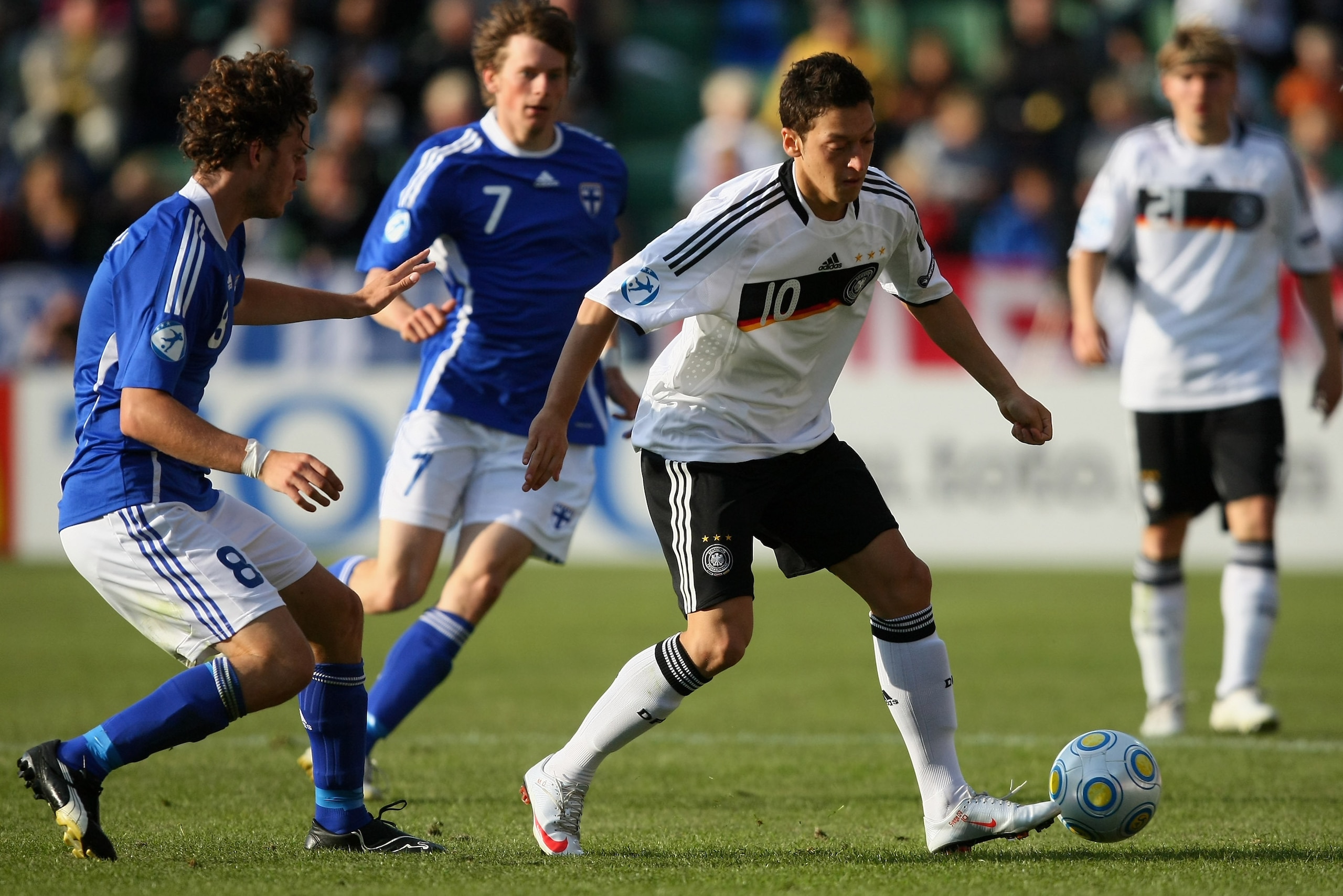
He was signed, and during his first training camp, the under-19 coach, Norbert Elgert, sat him down and asked him about his ambitions. In perhaps the first hint of Ozil’s searing drive, hidden deep beneath the timidness, he meekly said, “I want to play for Real Madrid or Barcelona and then a Premier League team.” Few local fans had heard of Ozil at an age when most future stars are already internationally known. Elgert didn’t laugh; instead he told him he had a plan for him.
He recognized his “extremely high football IQ,” Elgert says, but he wanted to speed up his mind. He taught Ozil to “see, understand, decide, do,” an almost rhythmic pattern of technical acumen. Within a year, he had moved from the rundown building at Rot-Weiss Essen to Veltins-Arena, Schalke’s football palace.
When I arrived that afternoon at FC Schalke to speak to Menze, it was the week before the biggest rivalry in Germany—FC Schalke against Dortmund, and dozens of fans were spread out in biting wind to watch their team run through a 45-minute workout.
I meet Menze in the team’s cafe. He’s tall with greying hair and glares straight at me. “I see the whole picture,” he says, “and in good form Mesut is the perfect player.”
I ask why then is this world-class athlete with a German pedigree considered to be “lacking heart” and why his performances are perceived to fluctuate more than almost any other star? He thinks for a moment.
Menze, who worked with Ozil for three years, finally says, in classic stoic German style, “He has his ups and downs.” Then he shrugs.
For any fan to watch Ozil at his best is to see no more than a shiny spoke on a wheel. And that’s the point. He allows the unit to function in perfect harmony. He can see an entire sequence unfold in mid-flow, sliding into open space, then elegantly skipping through midfield before finding a teammate with a neatly weighted ball, unlocking the defense—simplicity as art.
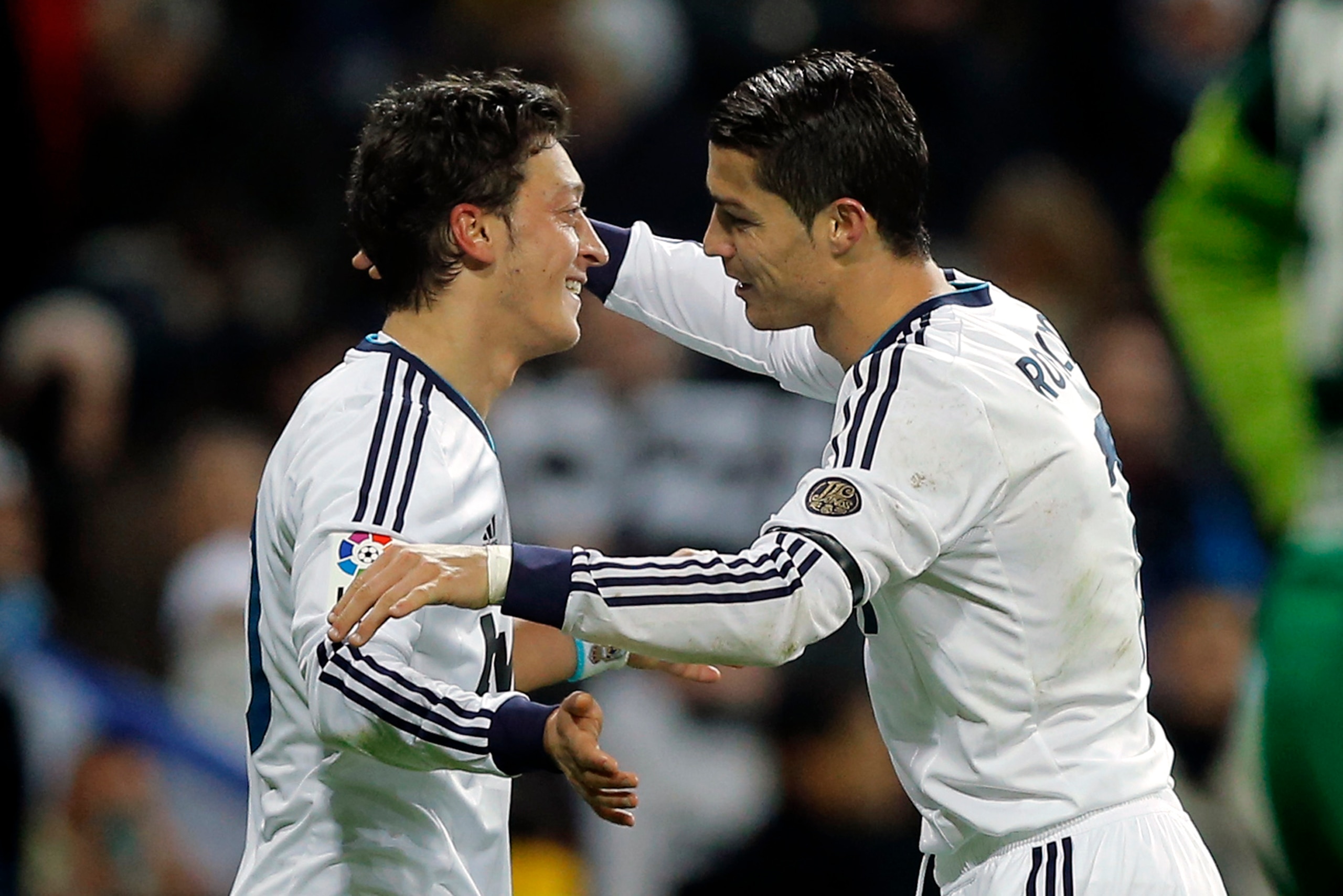
When he played at Real Madrid, Ozil gained a cult-like status. Under irascible manager Mourinho—who once famously berated Ozil in front of his teammates at the half-time of a game they were winning 3-1 and sent him to the showers—he was surrounded by superstars like Cristiano Ronaldo. And he was allowed, as Mourinho said in the foreward to Ozil's autobiography, to launch “attacks with brilliance.” At Arsenal, he was given more responsibility but quickly found the media wasn’t as forgiving with creative players the way it was in Spain.
Perhaps the most well-known example came from journalist Neil Ashton, then working at the Daily Mail, who wrote that Ozil is “a lost soul, lazy and disinterested” after a loss to Bayern Munich in 2014 and that Ozil was “nicking a living”—or stealing his salary.
James McNicholas of Gunnerblog, an Arsenal-centric website, explains, “We like to see physical effort in England and see exertion on the face.” He then adds that Ozil has an “unfortunate disposition.”
Perhaps that’s part of it. German journalist Bock, though, had another answer. He says Ozil is not disinterested. The opposite is true. “He’s thinking too much,” he said, “always analyzing himself.”
Jurgen Bergener, another German journalist, mentioned that some German fans think he’s too concerned with social media and it affects the perception of him.
Ozil’s agent, Dr. Erkut Sogut, when asked about the perception of Ozil, says: “That’s his body language. Other players are doing bullshit for the fans. Mesut will not do that.”
As I left Schalke, more questions swirled in my head. At the fence of the practice pitch, I stopped and watched the last few minutes of the workout next to a young couple, the woman draped in a blue and white Schalke scarf. When I tell them I’m headed to London to see Ozil, she says, “He was our favorite.”
In the 1960s the West German government opened its border to hundreds of thousands of Turkish migrants to work low-skilled jobs left vacant after World War II. Ozil’s grandfather, like many of the Turks who arrived in Gelsenkirchen, worked in the coal mines just outside the city. Today there are roughly 3 million Turkish-Germans, but the community is still largely alienated from the country’s political structure.
At Hukkas Gusagang, a shisha bar around the corner from where Ozil grew up near Bismarck Street in Gelsenkirchen, and less than 50 yards from the cafe Ozil’s uncle owns, Baris, a bartender with dirty blond hair and a soft smile explains the conflict: “In Germany we feel Turkish, and in Turkey we feel German.” Hookah smoke wafts through the bar, and Turkish music videos play on the TV. When I ask about Ozil, he says something I don’t expect.
“Some people here don’t like him,” he says. “They think he’s not a patriot.”
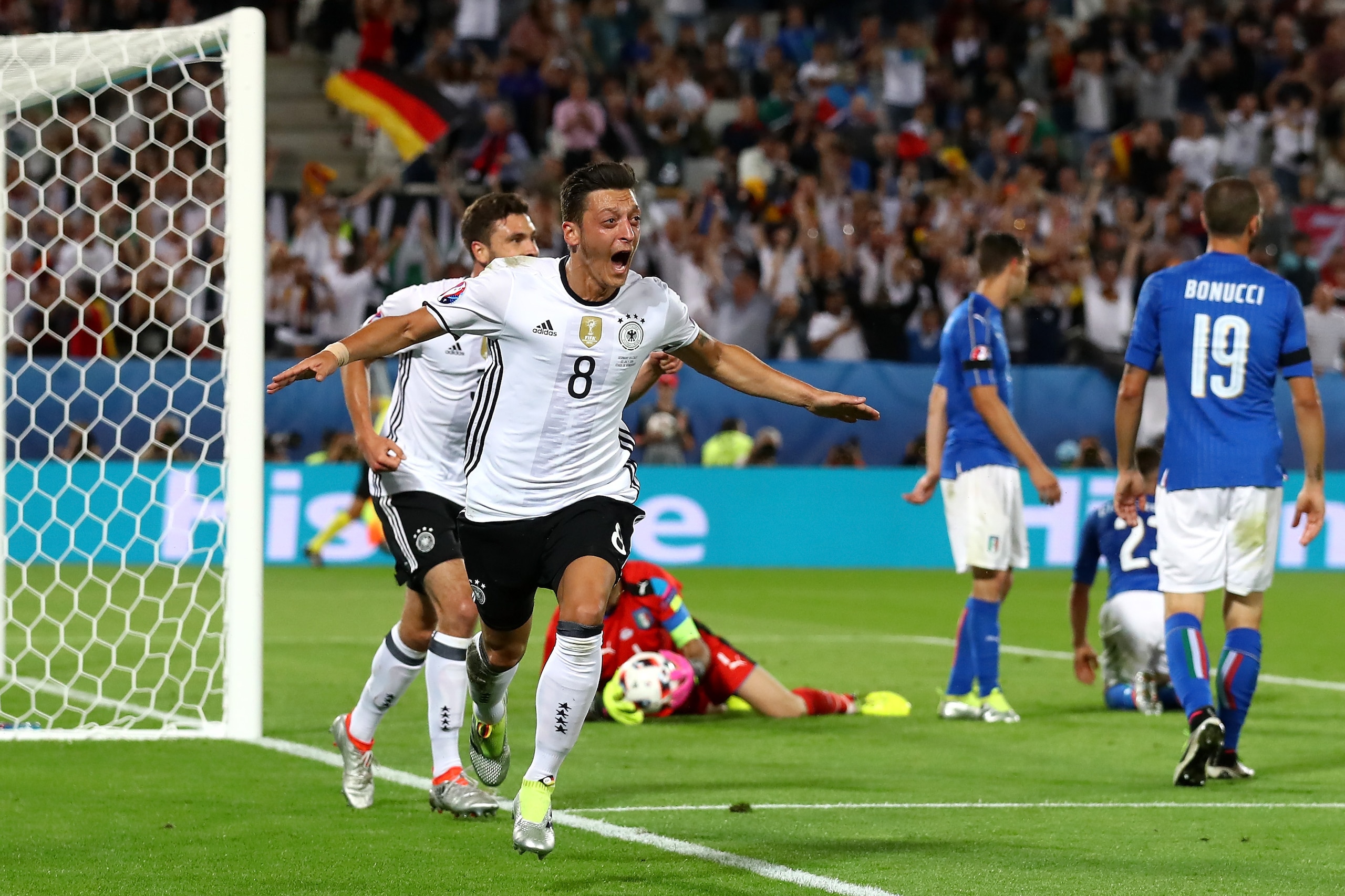
While at Schalke, Ozil was called up to play for the German under-19, then under-21 teams. The next logical step was the German senior team. However, because of his lineage, the Turkish national squad was also pursuing him. Eligible to play for either side before his first official senior game, he returned to his family's apartment in Gelsenkirchen for advice. But like him, they were torn. His mother and older sister encouraged him to honor his family’s origins, while his father and brother advocated for Germany.
After thinking about it for weeks, he went to the Turkish embassy, and in the days before dual passports in Germany, he had to physically hand back his Turkish passport.
On October 8, 2010, Ozil played for Germany against Turkey in a European Championships qualifier in Berlin. There was an ongoing national discourse about the role of Turkish-Germans and, more broadly, Muslims in Germany. Ozil’s participation in that game had turned it into a monumental occasion.
Every time he touched the ball, he was booed mercilessly by the Turkish section of the crowd. Still, he was scintillating. He scored the second goal, helping his team to a 3-0 win. Ozil recounts in Gunning for Greatness, his autobiography, that after the game, German Chancellor Angela Merkel greeted him, “You handled it well,” she told him, referring to the boos. In the German papers the next day, he was referred to as a “model immigrant” and as “our Ozil,” as if his success now allowed him, as a Turkish Muslim, to be accepted into the larger German society. On one TV program they debated how German he actually was. If he felt resentment at the notion that he had to prove himself to belong, he didn’t say anything, but others did.
Hamit Altintop, a midfielder on the Turkish team, who was born and raised in Germany just a few blocks from where Ozil lived, told reporters: “I respect Ozil’s decision, but I am against it. I also owe a lot to Germany, but Turkey is my country. I am Turkish.” Then he was more pragmatic. “The fact is that if you are a German footballer, you have more value on the market.”

It was true; Ozil’s place on the national team had raised his profile. He signed with Real Madrid and made more money than he could imagine. But he could feel the weight of his decision. He was publicly trying to come to terms with his own place in society and his own identity at the same time the country was trying to figure itself out.
At Hukkas Gusagang, games involving Turkey draw a raucous crowd, but during Germany games, even during the 2014 World Cup, the crowd is only mildly more intense than any regular game. As Germany marched toward the final, it had a lineup of players with international origins—Ghana, Tunisia, Albania, Poland—who represented the new Germany and with it a new understanding of what being German meant.
When the whistle blew and Germany defeated Argentina in the final, there were mixed emotions in Ozil’s old neighborhood. “Some people will never forgive him,” Taner Durmaz, a local resident who owns an ATV shop, says of Ozil’s decision to play for Germany. But others, especially the younger generation, understood the difficulty that comes with constantly negotiating two separate worlds. Many of them poured into the streets that night wearing Ozil’s No. 10 jersey.
His victory was theirs.
Slowly, I felt the man behind the social media machine was coming into focus. Still, there’s really only a handful of people who can say they know Ozil. On the way to the airport, I meet up with two of them.
In an office building on the outskirts of Dusseldorf, I sit down with Baris and Erkut, two of his oldest friends who met him at a concrete fenced-in pitch on Olga Street in Gelsenkirchen not long after they could run. Every free moment that Ozil had he’d be on the uneven concrete working on his dribbling, Baris says.
Years later, while riding in a car with a journalist, Winkler remembers that Ozil said that the only time he truly felt freedom was as a kid on the same Olga Street pitch. “No one is analyzing me or criticizing me,” he said.
In some ways, Ozil has been trying to recapture that feeling ever since. When he started Ozil Marketing in 2007, he hired Baris, who was selling cars, and Erkut, who was working at a gas station, to run his company. A third friend, Ali, walked up to Ozil at a restaurant a few years ago and began speaking Turkish. Something about him reminded Ozil of home, and he handed him his phone number.
The three of them call Ozil, Mesut-abi, or uncle. He takes care of them financially, but they give him a measure of stability that’s been so elusive recently. “He needs that,” Sogut says.
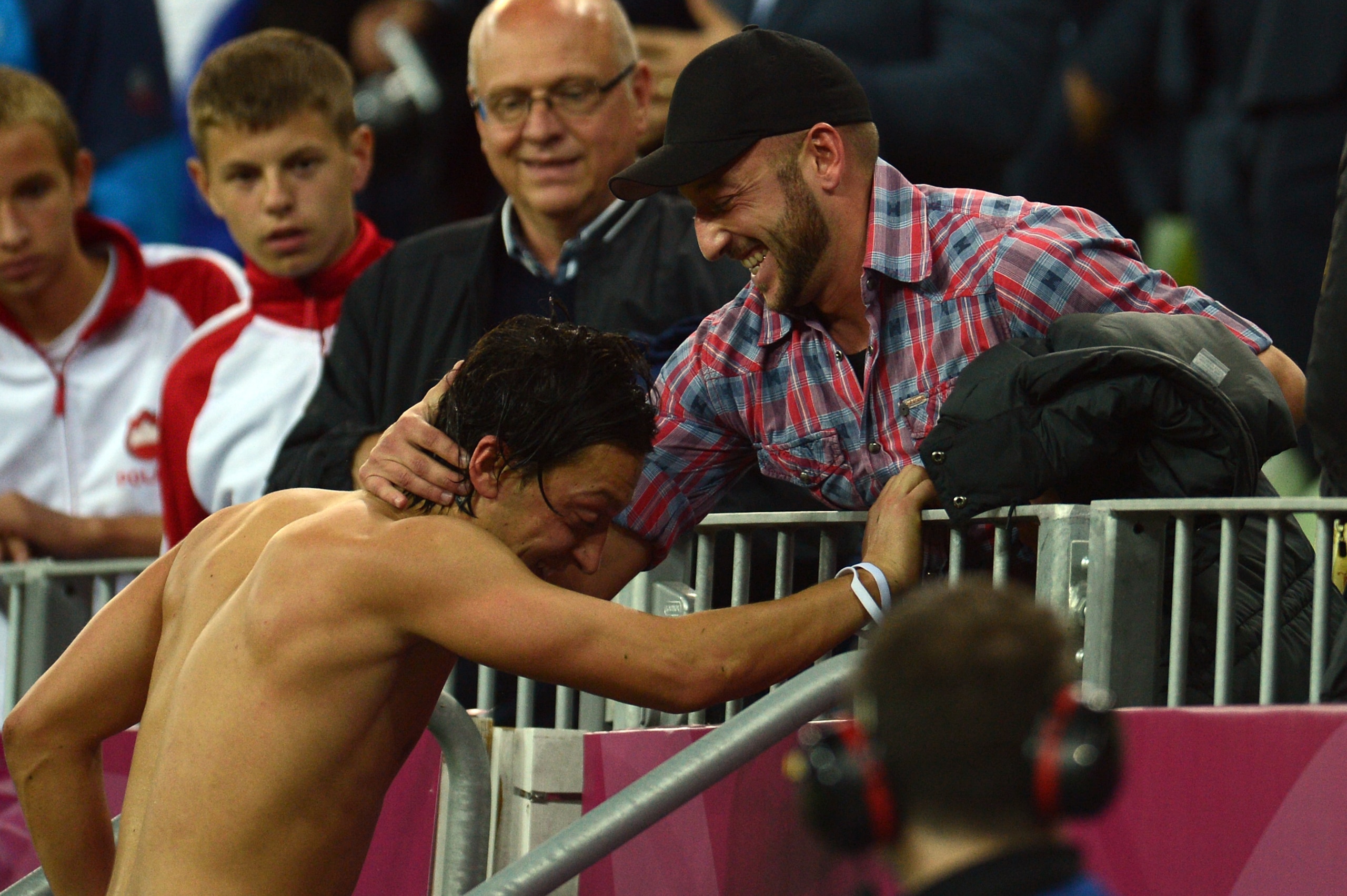
Just after Ozil signed with Arsenal, he had a bitter falling out with his father. Mustafa had worked as either an agent or adviser for a rotating cast of agents during his career. With more success, he became a “maniac,” Bock says, and lived in $300-a-night hotels in Dusseldorf. In 2013, he got into an embarrassing public spat with Real Madrid president Florentino Perez. At the same time, Ozil’s parents separated, and Ozil reacted by firing his father.
The estrangement was tabloid fodder in Germany, and Mustafa blamed Ozil’s pop star girlfriend, Mandy Capristo, for making him “crazy.” He then sued his son, and Mesut’s marketing company responded with a counter claim. It was a damaging episode and coincided with some of the most erratic football of his career. Ozil tightened his inner circle, hired his brother and Sogut to represent him, moved in with his cousin, and his friends vowed to drive to London at least once a month.
Before Ozil had split with his father, Mustafa had taken a trip to Mecca and upon his return shared his experience. Last summer, either to feel a connection to his father, his faith or both, Ozil began organizing a trip there with his friends. When they arrived in Mecca, they tell the story of Ozil walking toward the Ka’aba, the holiest building, in a sea of people, covered, with his head down. When he got close, Erkut recalls that Ozil said, "OK, it’s time to look up." Ozil’s eyes widened. He froze in awe. “It was amazing,” Erkut said of Ozil’s experience.
By the time Ozil returned home, Baris says the trip had changed him.
I ask how, but Baris has already changed the subject. I get up and shake their hands, then head toward the airport. I’m going to London.
In a rare moment of candor a few days before the Arsenal-Manchester City game last month at Emirates Stadium, after the team had just lost to Liverpool, then West Brom, and fallen into sixth place, Ozil told German newspaper Sport Bild: “People know what I have achieved. ... But when the team’s on a bad run, someone needs to be singled out. Sadly, most of the time, it’s me.”
When Ozil arrived at Arsenal at the end of transfer deadline day in 2013 for a club-record fee of €50 million ($66 million) from Real Madrid, it was seen as a major coup. The club had gone through a nine-year trophyless drought following the Invincibles, perhaps the greatest Premier League team ever. They finished the 2003-04 season undefeated and won the 2005 FA Cup. When he arrived, “there were parties in the street,” says McNicholas, who also writes about Arsenal for B/R.
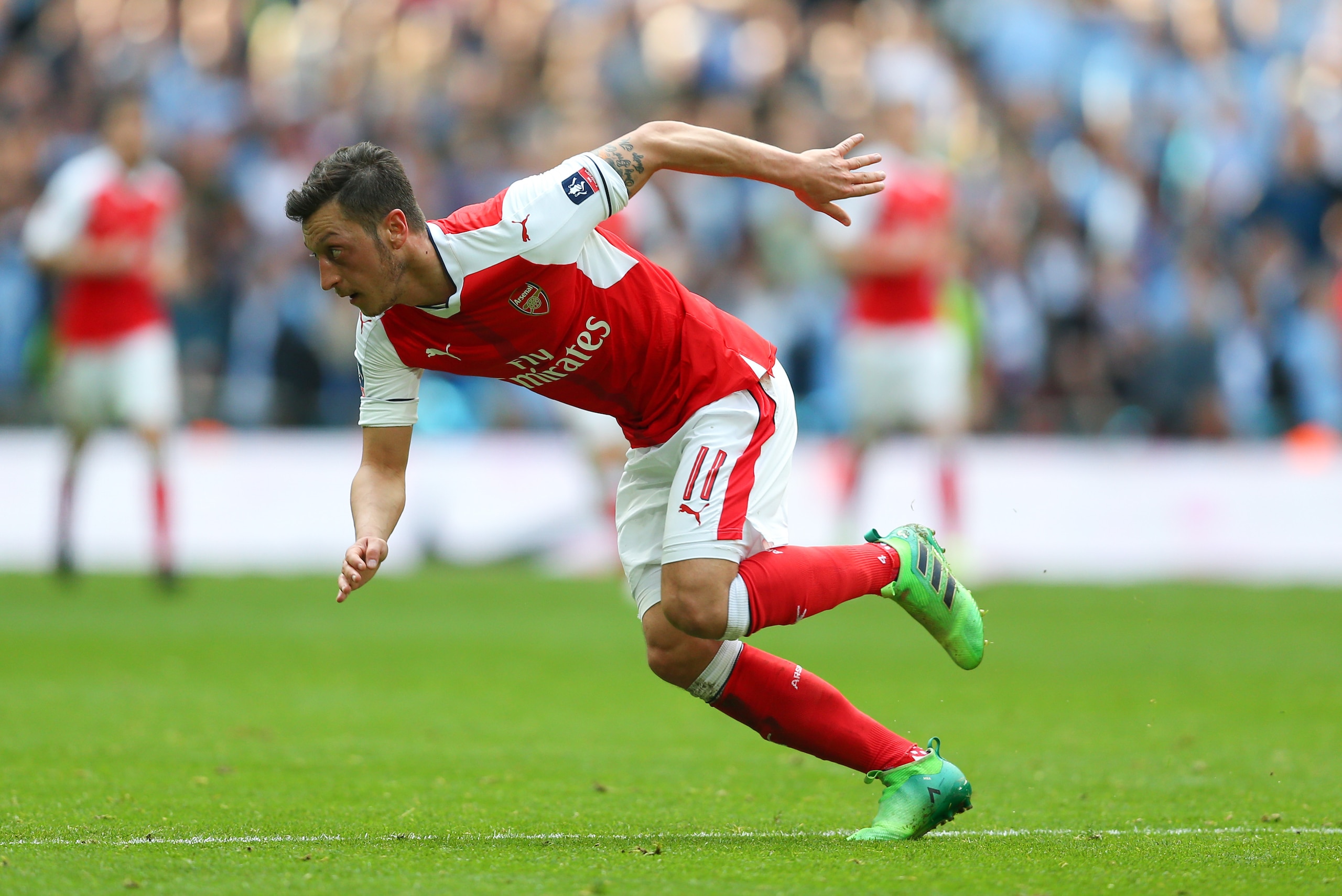
Alongside Wenger—who believes “football is an art”—the idea was that he and Ozil would help restore Arsenal’s reputation as both a successful club and an aesthetically pleasing one. But after nearly four years, the results have been mixed at best. The Gunners have won two FA Cups and are in the final again this year but haven’t realistically challenged for the Premier League or Champions League crown, and without consistent winning, beautiful football looks less beautiful.
With a little more than a year left on Ozil’s contract, Arsenal offered him a renewal earlier this year for an undisclosed amount, and it reportedly was large enough to make him the highest-paid player in club history. But so far, he’s rejected the offer, and rumors swirl that he’s ready to leave the club.
With Wenger’s status uncertain next year and the possibility Arsenal won't qualify for the Champions League, the ongoing battle for the heart of the club has only intensified. For a faction of the fans, Ozil represents all that’s wrong with Arsenal—style over substance, elegance over results.
A few hours before the Manchester City game April 2, it’s 64 degrees, with just one large cloud floating through the sky. On Drayton Park Road, a van with a large sign reads: “In Arsene We Rust,” alongside “10-2.” It’s a sort of medieval shaming of Arsenal’s two-legged drubbing by Bayern Munich earlier this year. Among the fans there’s a sense of preemptive mourning for the last days of an era.
During the game, Ozil assists on the levelling goal with a pinpoint corner kick. But in a microcosm of his Arsenal career, he also loses the ball deep in Arsenal’s half, then hangs his head, allowing City to score. The game finishes 2-2, giving the squad respite from recent losses and keeping a top-four finish possible.
But immediately after the match, well-respected pundit and former Manchester United defender Gary Neville is unforgiving. “Mesut Ozil, I can’t be doing with watching him play football sometimes,” he says on Sky Sports. “Messi and Ronaldo give their absolute all in every single match. I’m sorry, but I’m not going to sit here as a football person and accept someone who plays football like he’s down a coal mine.”
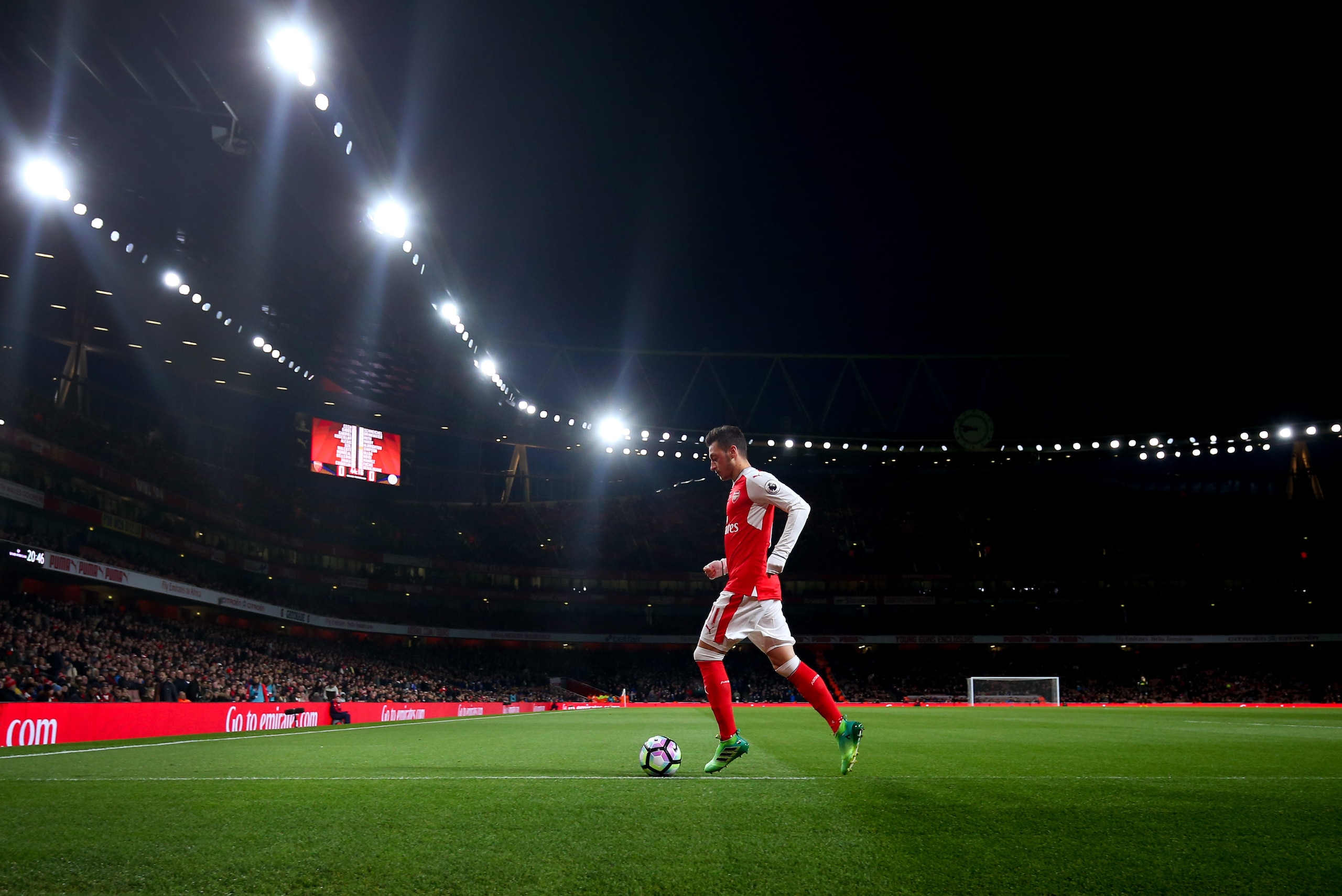
It was a tone-deaf analogy for the kid whose family has tried to escape the stigma of working in Germany’s coal mines. As the stadium empties, two scenes play out. Arsenal Fan TV, with its abrasive postgame fan interviews that have become YouTube sensations, posts up on a bridge above a statue of Arsenal legend Tony Adams.
As Arsenal Fan TV founder Robbie Lyle begins asking a fan a question about Ozil, a man comes up and rips the microphone from his hand. A small melee ensues, as the fan in-fighting which has engulfed the club continues.
Weeks later Arsenal would fall to Tottenham 2-0, ensuring they’d finish below their rivals for the first time in more than two decades. Afterward, Ozil would kick a door in frustration so hard it would leave stud marks.
But at the same time as the small melee, on nearby Hornsey Road, a few dozen supporters line the gates of the stadium hoping to catch a glimpse of their favorite players. A middle-aged woman from Egypt wearing a scarf with the face of Ozil stands with her son. When he spots Ozil’s Mercedes driving through the stadium gates, he lets go of his mother’s hand and sprints after the car.
When Ozil's car reaches a traffic light, the young boy catches up and asks for an autograph. Soon, other young fans approach. One girl says, “Ozil, sign my hand!” He does so silently, then slowly rolls up his window, fading into the distance, as elusive as ever.
Flinder Boyd is a writer-at-large for B/R Mag. A former writer at FoxSports.com, his work has appeared in Rolling Stone, Newsweek, BBC Online and more, as well as multiple editions of The Best American Sports Writing. Before becoming a journalist, he played 10 seasons of professional basketball across Europe, and now lives in Los Angeles. Follow him on Twitter: @flinderboyd.
Click here to get B/R Mag on the go in the new B/R app for more sports storytelling worth your time, wherever you are.

.png?w=2560)



.jpg?w=2560 "Jonathan Taylor Landing Spots")