

Liverpool's All-Time Premier League Matchday Squad Based on Shirt Numbers
There once was a time in English football when a starting XI was exactly that, as the team wore numbers one-to-11 on their backs.
Now, of course, every player has his own designated shirt. Are squad numbers just a fiendishly good way of earning extra income? Of course, but it also gives the players an identity to the watching public.
Some may pick a number because of the historical meaning at their club. Others just choose their favourites, while some don't seem to mind what digit, or digits, end up going on their back.
And we all have a mate who gets frustrated by squad numbers, right? That one, wonderfully weird person who died a little inside when watching Milan Baros running around up front for Liverpool wearing No. 5?
Here, Bleacher Report has trawled tirelessly back through the Premier League years (OK, we actually just clicked on one excellent page compiled by LFC History) to select an all-time Liverpool squad with a twist.
The idea here is to pick one—and only one—player for each jersey number. For example, Steven Gerrard wore No. 8, so no one else who also donned the shirt for the Reds could be considered (apologies to you, Oyvind Leonhardsen).
Our team lines up in a 4-3-3 system, allowing us to pick a well-balanced midfield that could offer protection to the defence while still creating plenty of opportunities for our trio of world-class strikers.
Goalkeeper: Pepe Reina (No. 25)
1 of 12
Pepe Reina is the obvious selection at No. 1, even if he actually wore No. 25 during his time at Anfield.
Signed from Villarreal by Rafa Benitez in the summer of 2005, the Spaniard played 394 games for Liverpool after controversially replacing Jerzy Dudek as first-choice keeper straight after the latter's heroics in a UEFA Champions League final.
Like predecessors Bruce Grobbelaar, David James and Sander Westerveld, and also the man who replaced him, Simon Mignolet, Reina was prone to the odd costly error.
Still, an FA and League Cup winner with the Reds, the son of former Barcelona goalkeeper Miguel Reina picked up the Premier League's Golden Glove award three seasons in a row from 2006 onwards.
In truth, Reina didn't have a lot of competition as the best player to wear the No. 25 jersey for Liverpool.
Neil Ruddock filled out the shirt at one stage, followed by the diminutive David Thompson and Croatian midfielder Igor Biscan. That is quite a foursome for a dinner party, by the way.
Right-Back: Steve Finnan (No. 3)
2 of 12
A Champions League winner in 2005, Steve Finnan gets the nod to start at right-back (even though he wore No. 3 during his Liverpool career).
The Republic of Ireland international played 217 games for the Reds yet always remained under the radar. That has continued in retirement, as he opted against staying in football to instead open a property company.
After a shaky start to life at Anfield, Finnan became a reliable performer under manager Rafa Benitez.
"He will be seven, eight, nine or even 10 out of 10 every week. Some players find a good level for individual games but don't do the same every week. Finnan does it for a whole season," Benitez said of the defender, per LFC History's player profile.
Finnan's selection comes at the expense of Markus Babbel, although the German's omission will become clearer later on when the rest of the squad is revealed.
Nathaniel Clyne and Rob Jones, the latter who started brightly with Liverpool before injuries hampered his career, were also considered to play on the right side of the back four but ultimately missed out.
Centre-Back: Jamie Carragher (No. 23)
3 of 12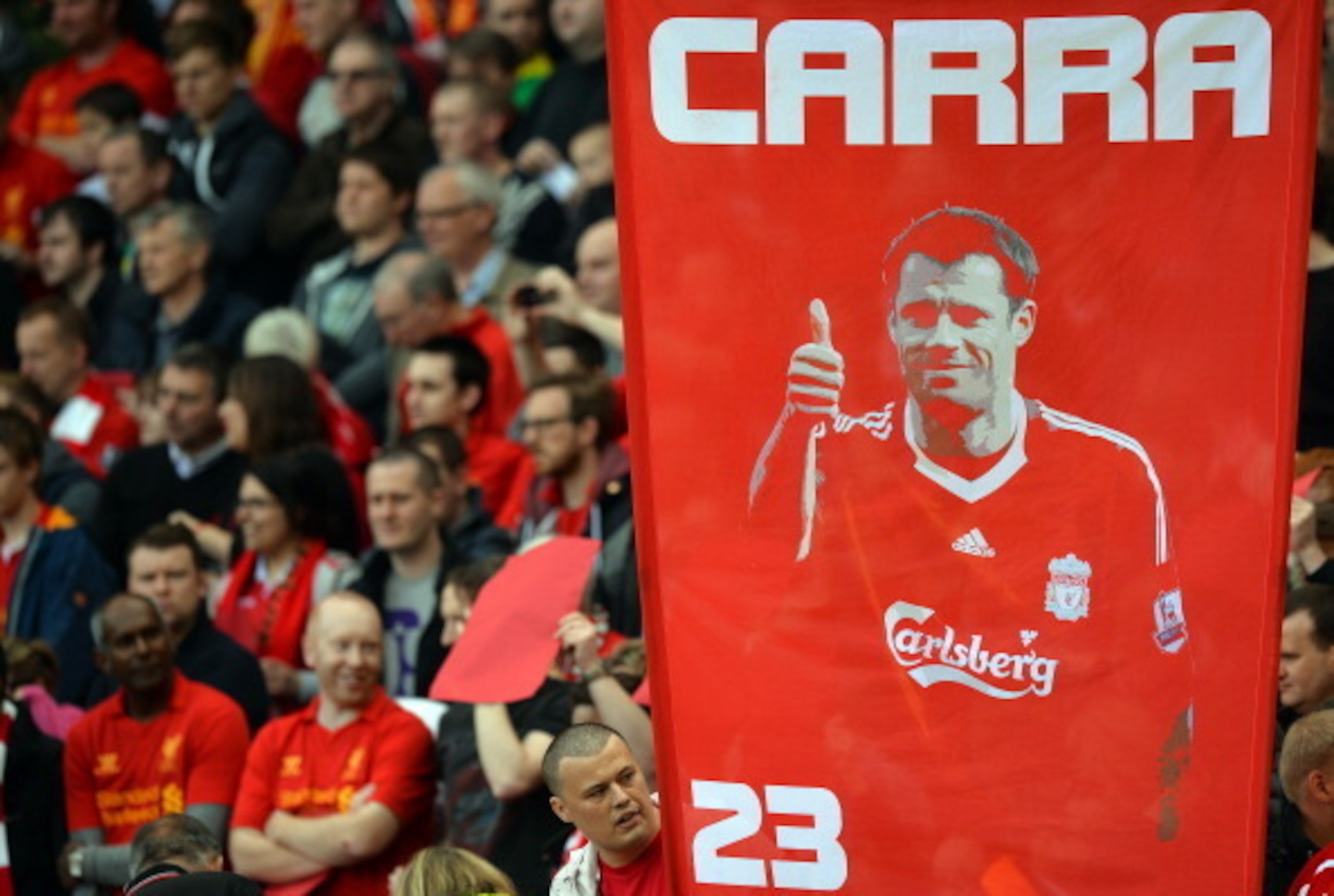
NBA legend Michael Jordan made the No. 23 shirt a popular choice for professional sportsmen all around the world.
However, only three different Liverpool players have had the number printed on the back of their jerseys during the Premier League era: Robbie Fowler, Jamie Carragher and Emre Can.
A teenage Fowler made his mark wearing No. 23, only to then switch to No. 9 once Ian Rush left.
However, Carragher has to be included in our all-time XI. The defender, who played 737 games in all competitions for the Reds, was used all across the back four during his distinguished club career.
He was at his best when deployed as a centre-back during the Benitez years, including playing in the side that turned around a 3-0 deficit to beat AC Milan in the 2005 Champions League final in Turkey.
Carragher wasn't that quick. He wasn't particularly great on the ball either. Yet he was a player heralded by a succession of Liverpool managers who relied on him to lead by example on the field.
"Jamie had something about him anyway but probably his commitment and desire made him a special player," Gerard Houllier—the boss who gave Carragher his big break—said, per David Wright of the Sunday Express.


Centre-Back: Sami Hyypia (No. 4)
4 of 12
Slotting into the centre-back spot next to Carragher is his old partner Sami Hyypia, a genial giant who arrived as an unknown quantity but left a legend.
Signed from Dutch club Willem II for £2.5 million, the defender wore the No. 12 jersey to start with at Liverpool before switching to No. 4 during his second season on Merseyside.
Hyypia initially formed a solid partnership with Stephane Henchoz at the heart of the back four, with the pair prominent in the Gerard Houllier-led squad that secured a famous cup treble in the 2000/01 campaign.
Carragher took over as the Finn's partner under Benitez, and they continued to maintain a tight ship.
Hyypia played 464 games for the Reds, and only the Premier League title eluded him during his career in England before he said a teary goodbye to Anfield at the end of the 2008-09 season.
The No. 4 shirt seems popular with Liverpool defenders. Steve Nicol had it at the start of the Premier League era, while Rigobert Song and Kolo Toure also chose to wear the number.
So, too, did the versatile Jason McAteer, along with three midfield duds in Alberto Aquilani, Raul Meireles and Nuri Sahin.
Left-Back: John Arne Riise (No. 6)
5 of 12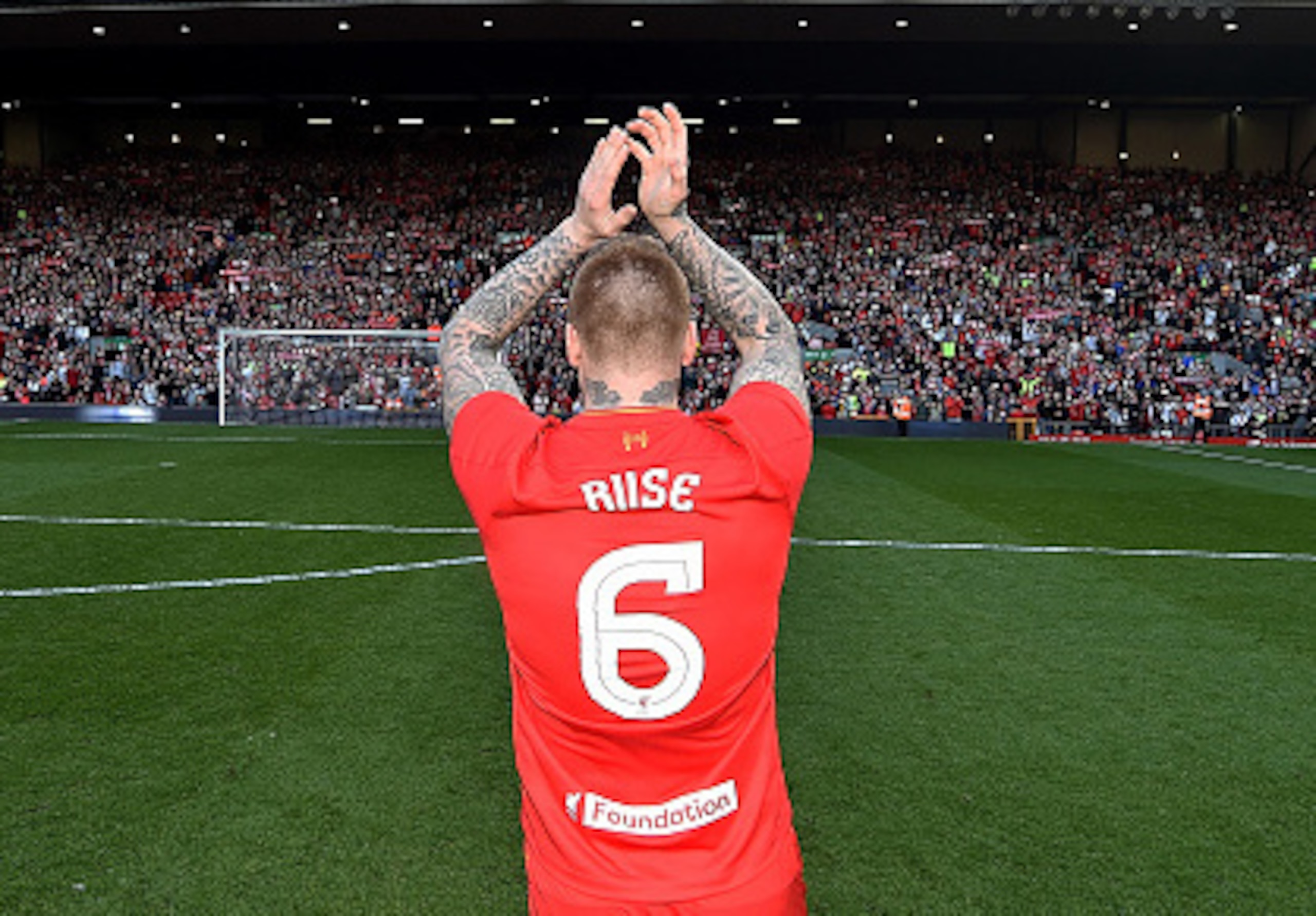
While No. 3 is normally a popular shirt for left-backs to wear, our pick to play in that position—John Arne Riise—instead opted for the No. 6 jersey.
The Norwegian wasn't great defensively, but modern-day full-backs are judged on what they offer in attack.
With Riise, it was all about his speed over the turf and his rocket-launcher of a left foot. He scored 31 goals for Liverpool, many of them long-range stunners that still stick in the memory now.
However, like the position of goalkeeper, left-back has been a problematic spot for Liverpool to fill during the Premier League years.
If the only options were players who wore No. 3, you're picking from this list: David Burrows, Julian Dicks, Christian Ziege, Jose Enrique and, last but by no means least, Paul Konchesky.
With Riise in from the start, fellow No. 6 wearer Babbel—who was excellent during his brief stint with the Reds—couldn't be considered for a position in the squad. The former also wore No. 18 for Liverpool, but that number was needed by someone else.
Midfielder: Javier Mascherano (No. 20)
6 of 12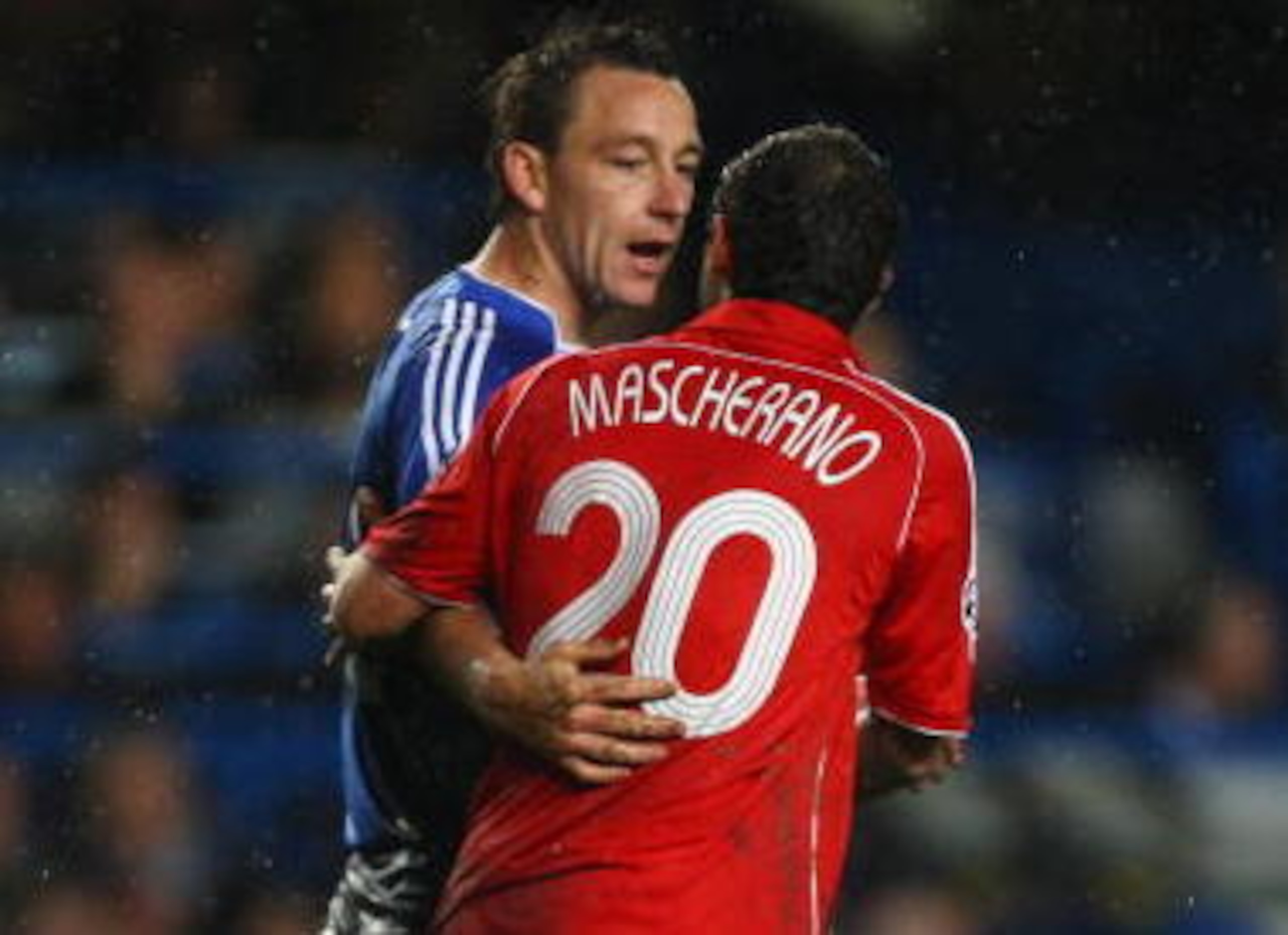
Plucked out of purgatory at West Ham United where he struggled for minutes, signing Javier Mascherano proved to be a sensational bit of business by Benitez.
Liverpool had to win a fight with FIFA (Mascherano had already played for two clubs during the same season) to bring in a player who didn't mind having a battle on the pitch either.
"He’s a monster of a player and is destined for great things. He can keep possession and he’s always in the right position. He wanted to show people he was good enough to play in England," said Benitez, per Jack Lusby of This Is Anfield.
Although he played less than 100 league games for the Reds (94 to be precise), Mascherano left a lasting mark during his time at Anfield (and also on a few opponents).
The Argentina international shone as the holding midfielder. The combination of his combative approach and technical ability sees him just pip Dietmar Hamann for the starting role, although it was a close call.
With Mascherano selected in midfield, Adam Lallana became the most notable other No. 20 to be ruled out of contention.
Reds fans should also fondly remember left-back Stig Inge Bjornebye, another player to wear the number, but won't have such good memories of Aly Cissokho's stint at the club.
Midfielder: Xabi Alonso (No. 14)
7 of 12
There were two No. 14s considered for selection in the middle of the park: Xabi Alonso and Jordan Henderson.
While Liverpool's current captain has silenced many of his doubters with his performances this season, he didn't stand a chance when pitted against Alonso, a Spanish import who quickly won over the locals thanks to his wonderful range of passing.
Steven Gerrard loved playing with him. Liverpool fans loved watching him, too, and he forever holds a place in Anfield folklore for scoring the equalising goal against Milan in the 2005 Champions League final.
The only one not completely infatuated by the midfielder was Benitez, as he foolishly pushed his compatriot's nose out of joint by openly chasing Gareth Barry. Yes, Gareth bloody Barry.
Alonso wasn't the first overseas pass-master to wear this squad number, though.
Jan Molby—a Dane who stayed so long on Merseyside he developed a Scouse accent—wore 14 in the Premier League's early years. So too did Vegard Heggem, a popular full-back who was blighted by hamstring issues.
Midfielder: Steven Gerrard (No. 8)
8 of 12
Although he played with 28 and 17 on his back at times during his long Liverpool career, Steven Gerrard will forever be associated with the No. 8 shirt.
There's an overwhelming case to suggest he doesn't just get into Liverpool's best Premier League team, but also the club's all-time XI from any era. He might well be the greatest Red that ever played.
Local lad Gerrard scored 186 goals in 710 games for Liverpool, many of them pivotal. There was his header that started the comeback against Milan in Istanbul in 2005, plus the dramatic late equaliser to spare his side losing an FA Cup final to West Ham United the following year.
Gerrard was a talisman, an on-field leader who dragged his team-mates along with him. At times he appeared to be a footballing force of nature, with no opponent able to stop him causing havoc.
While no one else was going to squeeze out Stevie G for the No. 8 shirt, Emile Heskey would surely come out on top if we ranked the best of the rest to wear it.
Paul Stewart, Stan Collymore and Leonhardsen were the others to have the jersey before Heskey, while no one has dared to follow in Gerrard's footsteps since his departure in the summer of 2015.
So, should Liverpool consider retiring the number? It would be a fitting tribute to their former captain.
Forward: Luis Suarez (No. 7)
9 of 12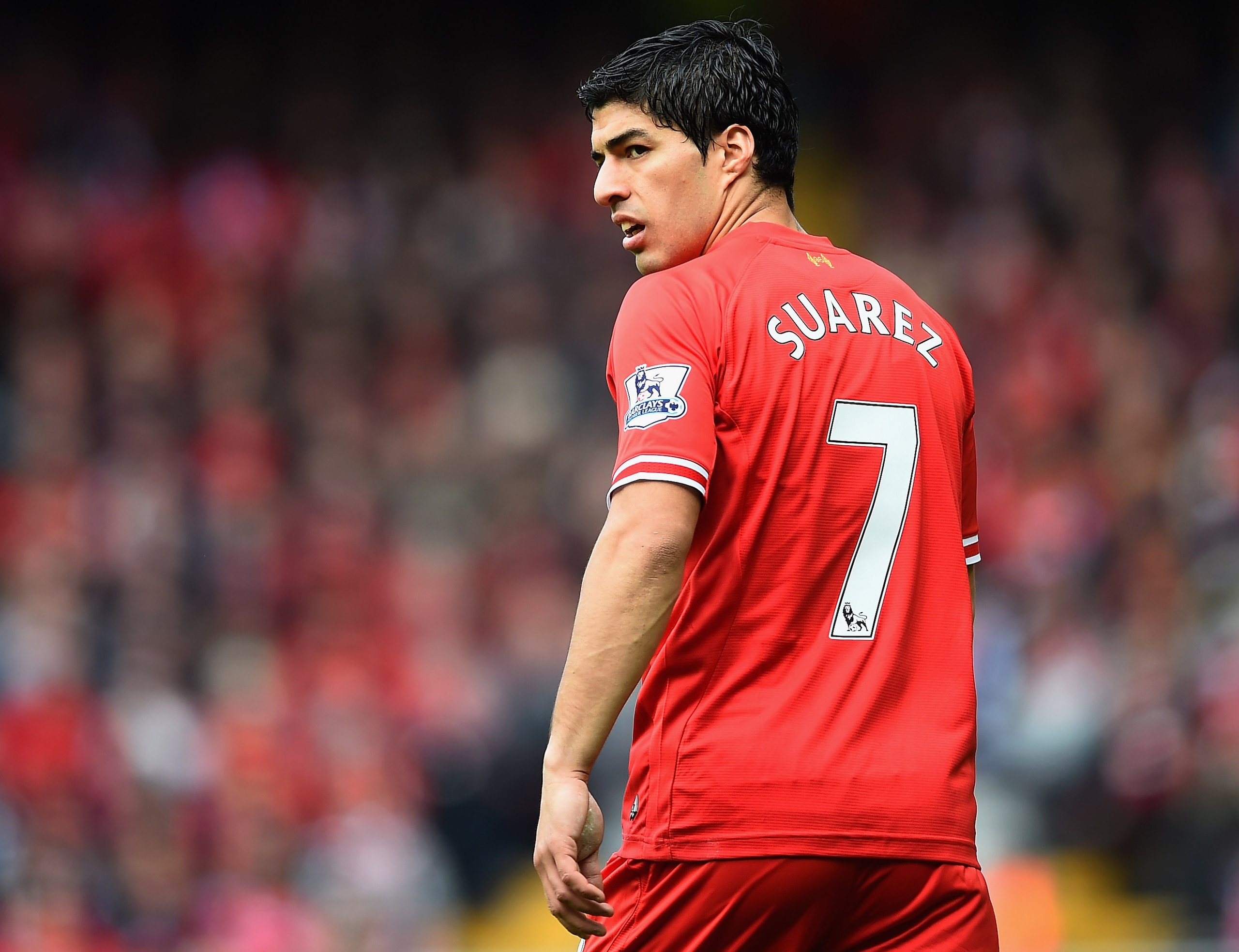
Luis Suarez did Liverpool's famous No. 7 shirt proud during his eventful time in England.
However, had the Uruguayan been informed of the history behind the number on his arrival from Ajax in January 2011, he may never have chosen to wear it.
"If I'd known, then there's no way I would have chosen it. When I arrived, the club told me there were five numbers," he told FourFourTwo (h/t Simon Sinclair of Goal). "I still don't know why I chose No.7. But when you're out on the pitch you forget what number you're wearing anyway."
Suarez did the shirt justice though, scoring 69 Premier League goals in 110 appearances.
He almost fired the Reds to a long-awaited championship in the 2013/14 season, only for their title charge to fall short. Suarez shed tears after a 3-3 draw at Crystal Palace yet played just one more game for the club.
Now part of the MSN forward line at Barcelona, the striker had a huge impact during his three-and-a-half years at Anfield (he definitely left an impression on Chelsea's Branislav Ivanovic).
The same cannot be said for Nigel Clough, the first player to wear the number in the Premier League. Steve McMamanam faired much better, but Vladimir Smicer, Harry Kewell and Robbie Keane all failed to live up to expectations when playing in the jersey made famous by Kevin Keegan and Kenny Dalglish.
Forward: Fernando Torres (No. 9)
10 of 12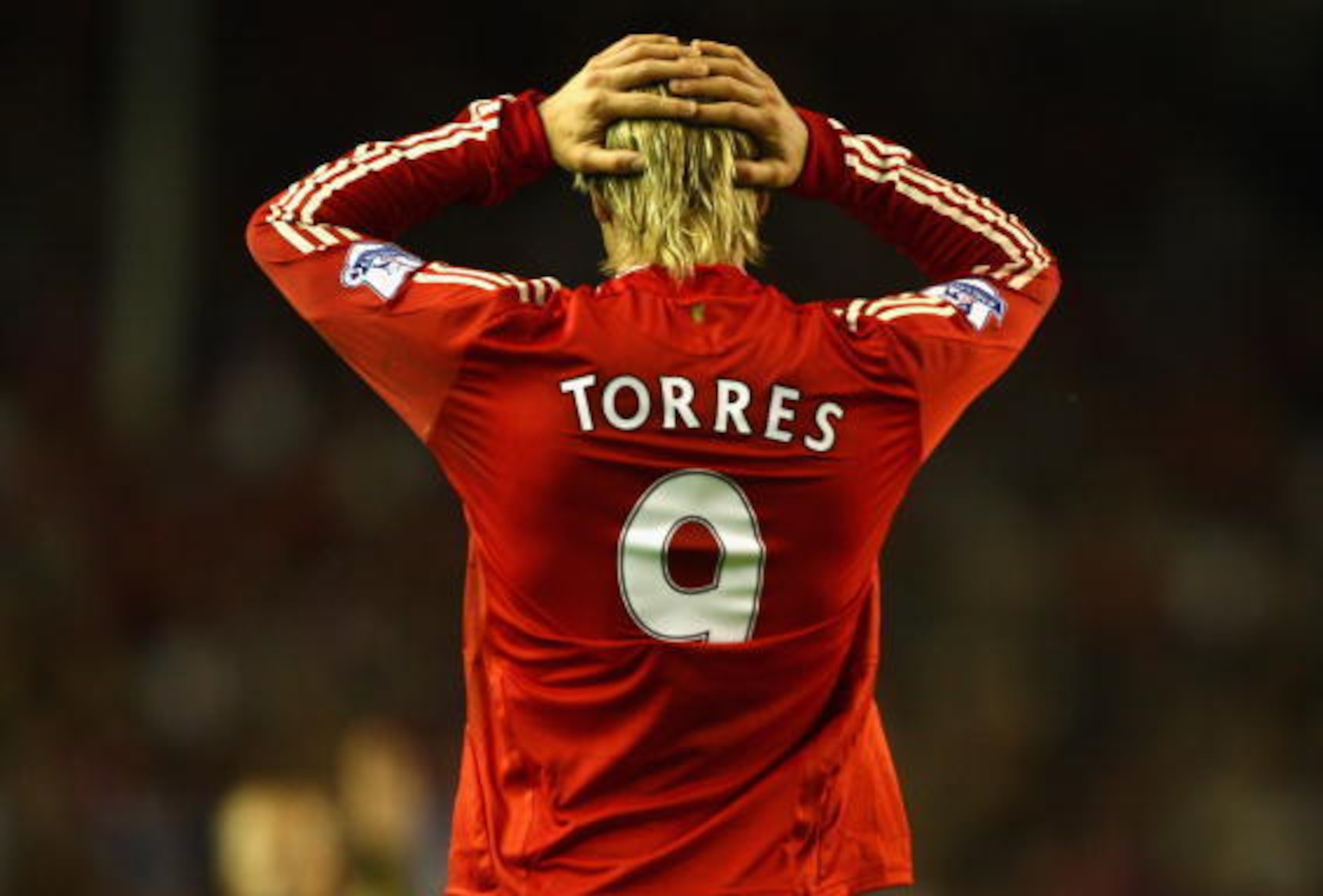
Yes, Fernando Torres' departure to Chelsea left a bitter taste.
However, in hindsight, Liverpool did pretty well out of the deal. Torres never justified his £50 million fee, and although the Reds recruited Andy Carroll with some of the cash, they also signed Luis Suarez in the same transfer window.
Time heals all (OK, some) wounds.
Torres still scored 65 times in 102 Premier League games, with his 0.637 goals-per-game ratio the best of any Liverpool striker since the competition began. Better than Suarez, Fowler and Michael Owen.
While injuries slowed him down, there was a period during his time with the Reds when the Spaniard was considered one of the best strikers in the world.
Robbie Fowler's second spell at Liverpool allowed us to avoid a tough decision over who should be in the No. 9 shirt, too.
Others, though, fell well short of the standard expected of such a famous number. For every Fowler there is an El-Hadji Diouf. For every Torres, an Iago Aspas. Or a Rickie Lambert. Talk about mixed results.
Forward: Robbie Fowler (No. 11)
11 of 12
Do you believe in God? Liverpool fans do, because he once played for them.
Actually, Robbie Fowler—AKA God—had two spells with the Reds. Sold to Leeds United in 2001, he spent three years at Manchester City before surprisingly returning to Anfield in January 2006.
However, by that stage he was a shadow of the player who had set the Premier League alight as a teenager.
The first chapter in Fowler's career was full of goals. Lots and lots of them. He scored five alone in just his fourth first-team appearance, against Fulham in the League Cup.
There was a hat-trick against Arsenal in only four minutes and 33 seconds, too, as Fowler scored over 30 times in three successive seasons from 1994-95 onwards.
Sure, we've bent the rules a little to fit Fowler in. He wore 23 and 9 on his back first time around, but both those numbers are not available.
Thankfully, though, he donned the No. 11 shirt when Benitez bought him back. It might only be a technicality, but Fowler's club-leading 128 Premier League goals merits him a place in this starting XI.
It also helps that there are no major competitors at 11. Roberto Firmino may get there one day, but it's a battle between Jamie Redknapp and Yossi Benayoun to be the best of the rest.
Substitutes
12 of 12
There are notable absentees from the final XI, but we've managed to squeeze a few of them on to the bench. Here's a list of seven high-class substitutes to round out Liverpool's Premier League all-time squad.
Goalkeeper: Jerzy Dudek (No. 1)
Gets in for his Istanbul heroics alone. Liverpool fans had a catchy song for the Pole, who started out in the No. 12 jersey. He's also used to life as a substitute following his time riding the pine at Real Madrid.
Defender: Stephane Henchoz (No. 2)
Henchoz's role in helping Liverpool secure a cup treble in 2001 gets him a seat on the bench, particularly as he physically saved the Reds from defeat in the FA Cup against Arsenal, handling Thierry Henry's shot on the line to prevent the Gunners going 2-0 up.
Defender: Daniel Agger (No. 5)
Dane Agger gets the No. 5 shirt ahead of Mark Wright, with the former providing us with a left-footed option in reserve. Excellent on the ball, Agger may well have made the starting XI if his body hadn't been made of glass.
Midfielder: Dietmar Hamann (No. 16)
Unlucky not to make the starting XI, German Hamann is comfortably the best player to wear 16 for Liverpool. Just take a look at the others: Michael Thomas, Sean Dundee, Jermaine Pennant, Sotirios Kyrgiakos, Sebastian Coates and Marko Grujic. Yikes.
Midfielder: Steve McManaman (No. 17)
Had Liverpool not been so blessed with forwards throughout the Premier League years, McManaman would've made the team in a 4-4-2 system. While he wore No. 7 for the majority of his Reds career, his stint at 17 makes him (sneakily) available for selection.
Forward: Dirk Kuyt (No. 18)
Kuyt is an ideal candidate to be a substitute, and not just because his number (18) isn't already taken. The Dutchman joined Liverpool after scoring plenty for Feyenoord in his homeland, but he was moved from a central position to a wide-midfield berth by Benitez.
Forward: Michael Owen (No. 10)
Owen also wore No. 18 at Liverpool. However, with that option gone, the striker came out on top for the 10 jersey ahead of John Barnes and Philippe Coutinho. It was a tough call, but Owen's pace and finishing suggests he's the more suitable option. Surprisingly, Andriy Voronin didn't factor into the equation.
All statistics used in the article are from LFC History unless otherwise stated.



.jpg?w=2560 "Mahomes Asked OT to Leave Meeting")
.jpg?w=2560 "Jonathan Taylor Landing Spots 📍")

.jpg?w=2560 "Five Teams Eyeing Taylor")

