

UNC's Isaiah Hicks on Doorstep of Redemption After 2016 Title Game Heartbreak
GLENDALE, Arizona — Kris Jenkins had visited Nate Britt in Chapel Hill, North Carolina, before, but this time, they both knew it would be different. Only months prior, Jenkins had sunk arguably the most clutch shot in history and, along with it, the North Carolina Tar Heels' goal of winning a sixth national championship. So before Britt told his adopted brother from Villanova to come down and play a few pickup games with the Tar Heels, he asked for his teammates' and his coaches' blessing.
He didn't encounter any resistance at the top—in fact, all UNC head coach Roy Williams asked of Britt was to bring Jenkins by his office so he could congratulate the title game hero again. In fact, the only objectors were two of the most notorious Tar Heels jokers—Kennedy Meeks and Theo Pinson. Britt can't remember what Pinson's reaction was, but Meeks had no issue sharing his.
TOP NEWS
5-Star Guard Commits to LSU 🐯
5-Star Jordan Page Picks UConn

New NFL contenders starting to emerge after Week 4
"I was like, I can't believe you want him to be here!" Meeks said. "But seriously, he is one of our friends, and we know what he means to Nate, so it was fine."
But the player Britt was most concerned about wasn't Meeks—it was classmate Isaiah Hicks. Although Jenkins hadn't been Hicks' assignment on that fateful play, the shot had soared over his outstretched arm. But Hicks had no issue with seeing Jenkins again so soon.
"I just told him: That's your brother," Hicks said. "I don’t mind at all. Between the lines, we're competitors. But outside of the lines, family is what matters."
In the wake of the shot last April, Tar Heels players appeared shellshocked. The distressed faces of Hicks, Joel Berry II and Brice Johnson would later become immortalized on the cover of Sports Illustrated. But in the desolate postgame locker room, Hicks made a decision: He told reporters he was to blame for not closing out on Jenkins. About a week later, Williams called a press conference in part to close out the season and in part to correct the record.
"I disagreed with Isaiah," Williams told reporters. "He took way too much responsibility. That shot was against North Carolina's team.
"We graded the film; we gave Isaiah two good [defensive grades] during that one possession. But yet I read these comments about I should've gotten up there, it was my guy. It was North Carolina's team. But Isaiah, it was not his man. But he was willing to take that responsibility."
For Hicks, the shot has had far-reaching consequences.
Although he had considered declaring for the NBA draft after his junior season, Hicks—who is a projected second-round pick for June 22's draft, according to NBADraft.net—made up his mind the morning after the title game that he would return to Chapel Hill and chase another national championship. He was so certain that when Williams called him into his office to discuss his 2016 draft evaluation, Hicks didn't even bother to hear it.
"His eyes got big," Hicks said. "He didn't expect it to go that way."

Although he thought about the shot incessantly during the first few weeks—Hicks says he didn't need to watch any replays because he had the entire sequence seared in his memory—he had moved on from the negative emotions of it within a month. Instead, he, like the rest of his Tar Heels teammates, used it as motivation to make a run at Phoenix in the 2017 NCAA tournament. Now, Hicks is 80 minutes away from redemption.
To advance Saturday, North Carolina will need more from Hicks than he's offered in the past three games. Throughout the season, he took on a larger role in North Carolina's offense. Using more possessions and taking a higher percentage of the team's shots, he increased his scoring average to 12.1 points per game from 8.9 a season ago.
But he hasn’t cracked double figures in his last three contests. Against the No. 4 Butler Bulldogs in the Sweet 16, he fouled out. And against the No. 2 Kentucky Wildcats in the Elite Eight, he mustered just four points and didn't record a single rebound in his 20 minutes on the floor. He watched from the bench as Luke Maye, his backup, hit the game-winning shot.
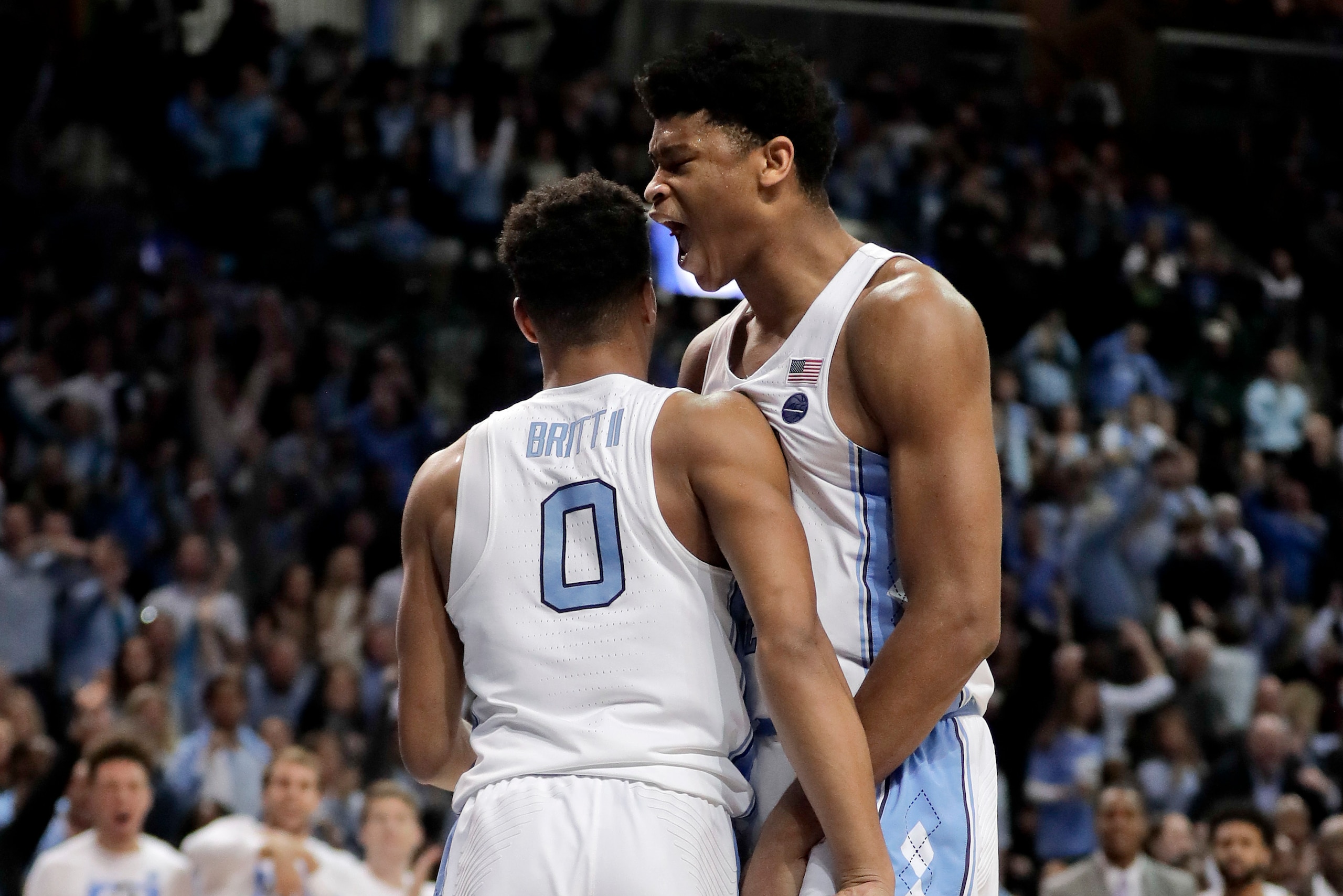
Against the No. 3 Oregon Ducks, Hicks will likely begin the game defending Dillon Brooks, who has played the role of small-ball 4 after his team lost power forward Chris Boucher for the season with a torn ACL. That would potentially create defensive mismatches on both ends of the court, with Brooks able to use his quickness around Hicks and Hicks able to bully Brooks in the post.
"A big guy is going to possibly be on Dillon Brooks to start with because we're going to start two big guys," Williams told reporters Thursday. "But that's who we are. And we're going to do that. And if it doesn't work, we'll try to make some changes. But I always say that if it's hard for our big guy to get out on the court and play them, I hope it's hard for the perimeter player to have a difficult time guarding our guy inside."
On Friday, Hicks said he ceased needing the shot as motivation a long time ago. The prospect of beating Oregon in the national semifinal and fulfilling the dream that began almost a calendar year ago, to get back to the national championship game, was plenty motivation. And in a twist of fate, he takes comfort in knowing that Jenkins will be right behind the North Carolina bench, cheering him on.
.jpg?w=2560 "Cardinals Giants Football")

.jpg?w=2560 "Report: Chiefs Contact Hill's Agent")
.jpg?w=2560 "OBJ Calls Out Giants 😳")
.jpg?w=2560 "Tyreek makes another cryptic post amid Chiefs rumors")



