


These are fun times for college basketball fans. The NCAA tournament is in the Sweet 16 now and will soon reach the Elite Eight. Good stuff if you're into that sort of thing.
There's only one thing for this envious baseball fan to do—roll up his sleeves and say, "That's not a tournament. This is a tournament."
In the name of what-the-heckery and just-for-funsies, the goal here is to imagine what would happen if the last eight World Series champions came together and went into battle in a single-elimination bracket.
Sounds fun. But first, some ground rules:
- Seeding: Will be determined by regular-season records.
- As They Were: Each team will be viewed as it was at the time it won the World Series. This entails both injuries and individual performances. For example, the San Francisco Giants didn't have Melky Cabrera in 2012 but did have an unfathomably hot Madison Bumgarner in 2014.
- One Game Only: Ah, the big plot twist. Rather than a short series between each of the seeds, just a single game will be played out. It'll only be each team's best players on the field; they'll either live by their strengths or die by their weaknesses.
Now let's meet the seeds and then have some imaginary fun.
The Seeds
1 of 8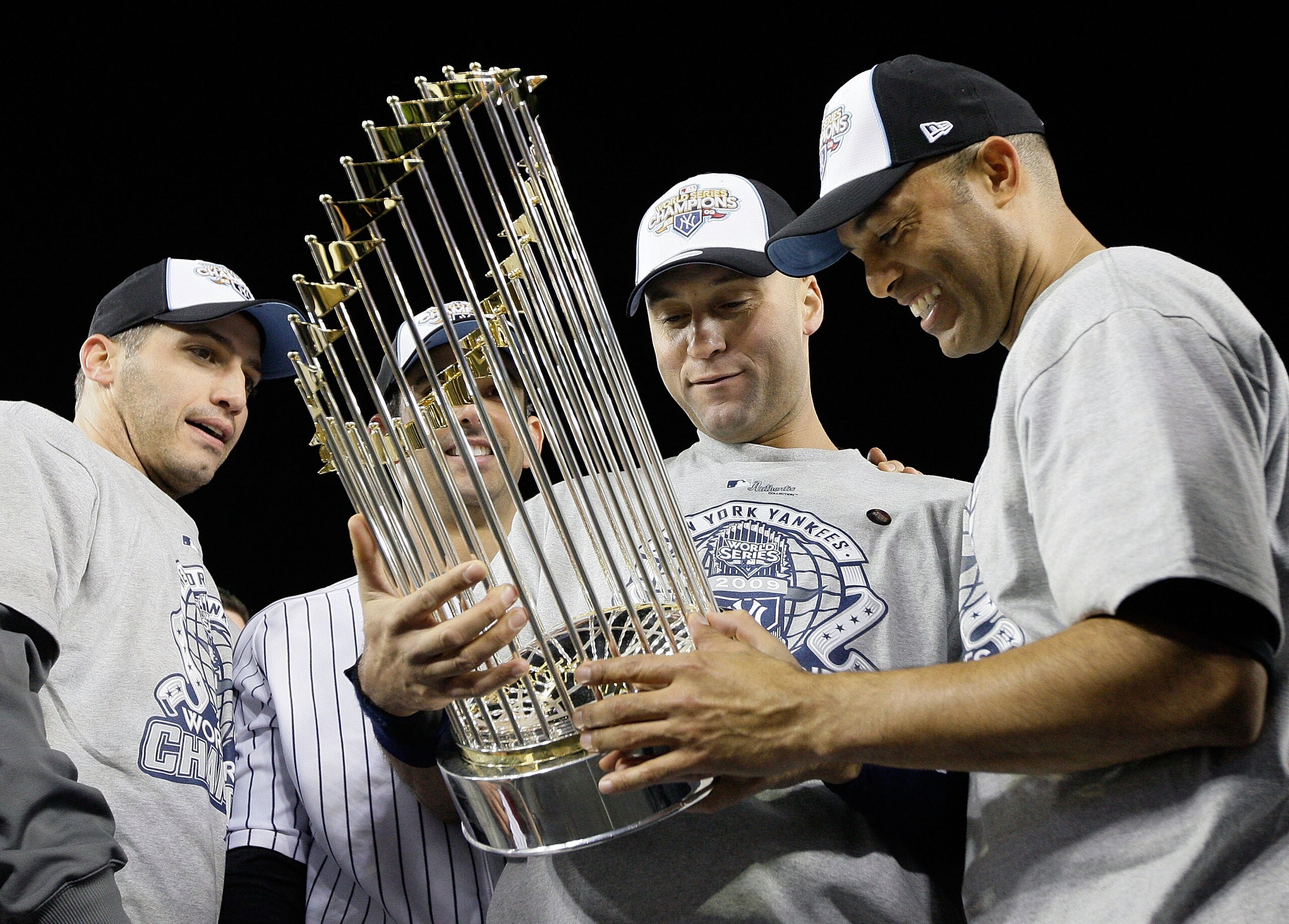
First, picture in your head what a single-elimination bracket for eight teams looks like. Or, you can just open another tab and look at this one.
1. 2016 Chicago Cubs (103-58)
The team that snapped a 108-year championship drought was a damn good one. Last year's Chicago Cubs had a lineup that excelled at both hitting and fielding and were also the best at pitching. A worthy No. 1 seed, indeed.
2. 2009 New York Yankees (103-59)
The 2009 New York Yankees were best known for a league-leading offense captained by Derek Jeter and featured Mark Teixeira, Robinson Cano and, come October, a scorching Alex Rodriguez. On the mound, they had CC Sabathia and Mariano Rivera at the top of their games. This was one of the best Yankees teams ever, which is saying something.
3. 2013 Boston Red Sox (97-65)
Led by David Ortiz and a deep cast of supporting characters, the 2013 Boston Red Sox also had a league-best offense. And while they had issues with their pitching here and there, by October they had Jon Lester pitching like an ace and Koji Uehara anchoring a strong bullpen.
4. 2015 Kansas City Royals (95-67)
Like the 2014 team that came up short, the 2015 Kansas City Royals specialized in putting the ball in play on offense, catching the ball on defense and locking down the late innings with their bullpen. This was more than enough to mask a shaky starting rotation.
5. 2012 San Francisco Giants (94-68)
The 2012 San Francisco Giants specialized in snatching victory from the jaws of defeat. It helped that they had a knack for clutch hits and a Sergio Romo-led bullpen that locked things down in October. Their starting pitching was uneven, but Matt Cain, Ryan Vogelsong and Barry Zito each had their moments.
6. 2010 San Francisco Giants (92-70)
The 2010 Giants weren't much for scoring runs, but they could get easy runs by way of the long ball. They also had the league's best pitching staff, and Tim Lincecum, Matt Cain and Brian Wilson were all at their best in the postseason. None of the other recent Giants champions could pitch like this.
7. 2011 St. Louis Cardinals (90-72)
Although the 2011 St. Louis Cardinals barely made it into the postseason, they came packing the National League's best offense and a pitching staff that was rounding into form. Chris Carpenter was hot in September and October, and Jason Motte was leading a deep and versatile bullpen.
8. 2014 San Francisco Giants (88-74)
2014 Giants (8) vs. 2016 Cubs (1)
2 of 8
Pitching Matchup: Madison Bumgarner vs. Jon Lester
Let's start with the big question: Could the 2016 Cubs take 2014 Bumgarner?
Ha ha! Good one.
But seriously, the answer's yes.
As incredible as Bumgarner was that October, he never went up against an offense as potent as the 2016 Cubs. That offense also had the league's second-highest OPS against left-handers.
By contrast, the 2014 Giants ranked in the bottom half of the league in OPS against lefties. That would bode well for Lester, who's a heck of a postseason pitcher in his own right. He also wouldn't have to worry about the Giants exploiting his weakness with the running game, as stealing bases wasn't their thing. Nor did they specialize in dingers, which would be the easy way of avoiding the Cubs defense.
If Lester were to falter, oh well.
Joe Maddon could call in Jake Arrieta or Kyle Hendricks before turning to Aroldis Chapman. Bruce Bochy's alternatives to Bumgarner would include the not-so-awesome duo of Tim Hudson and Jake Peavy, so he'd need his bullpen regulars (Santiago Casilla, Sergio Romo, et al) to bear a heavy load.
The shorter version: This is one playing field even 2014 Bumgarner couldn't level.
Moving On: 2016 Cubs
2011 Cardinals (7) vs. 2009 Yankees (2)
3 of 8
Pitching Matchup: Chris Carpenter vs. CC Sabathia
As hot as Carpenter was late in 2011, he'd be up to his neck against the 2009 Yankees offense. They had arguably the best regular-season offense in recent memory, and it stayed strong into October.
To keep up, the Cardinals would need to get to Sabathia. He authored a 1.98 ERA in the 2009 postseason after another excellent regular season. Fat chance, right?
Well, actually, the Cardinals offense was one of the best at hitting lefties in 2011. Plus, their hottest hitters from that October—Albert Pujols, David Freese, Allen Craig, Lance Berkman, Matt Holliday—would all have the platoon advantage against Sabathia, who was vulnerable against righties in 2009.
Thus, a bullpen battle would begin.
In Mariano Rivera, the Yankees would have the trump card. But Joe Girardi's other two favorite relievers in the 2009 postseason—Phil Hughes and Joba Chamberlain—were far from untouchable. And after Sabathia, other starters to turn to would include another lefty, Andy Pettitte, and an unpredictable righty, A.J. Burnett.
Tony La Russa, meanwhile, could mix and match to his heart's content. He had Jason Motte cleaning up and Octavio Dotel, Arthur Rhodes and Marc Rzepczynski doing solid work in October 2011.
In the parlance of our times: upset alert.
Moving On: 2011 Cardinals


2010 Giants (6) vs. 2013 Red Sox (3)
4 of 8
Pitching Matchup: Tim Lincecum vs. Jon Lester
Lincecum wasn't at his best in 2010, but he was good enough to win a third straight NL strikeout title and dominate with a 2.43 ERA in the postseason.
But Lincecum never went up against any of that season's very best offenses that October. That's precisely what the 2013 Red Sox would have in store for him.
The Red Sox led the league in OPS and runs in 2013, and they weren't slowed much when they went up against power pitchers. It's almost as if they had one of the best offenses in recent memory—hint: they did.
On the flip side, a 2010 Giants offense that wasn't good against lefties would be going up against a hot one. Lester shrugged off a slow start to finish hot in 2013, and he then had a 1.56 ERA in October.
The 2010 Giants would have to hope to make up ground in a bullpen battle, perhaps with Cain taking a handoff from Lincecum before handing off to Wilson.
But the 2013 Red Sox could also play that game. John Lackey had a strong regular season and an even better postseason. And by October of that year, Uehara was downright untouchable.
Thus, another fairly easy call.
Moving On: 2013 Red Sox
2012 Giants (5) vs. 2015 Royals (4)
5 of 8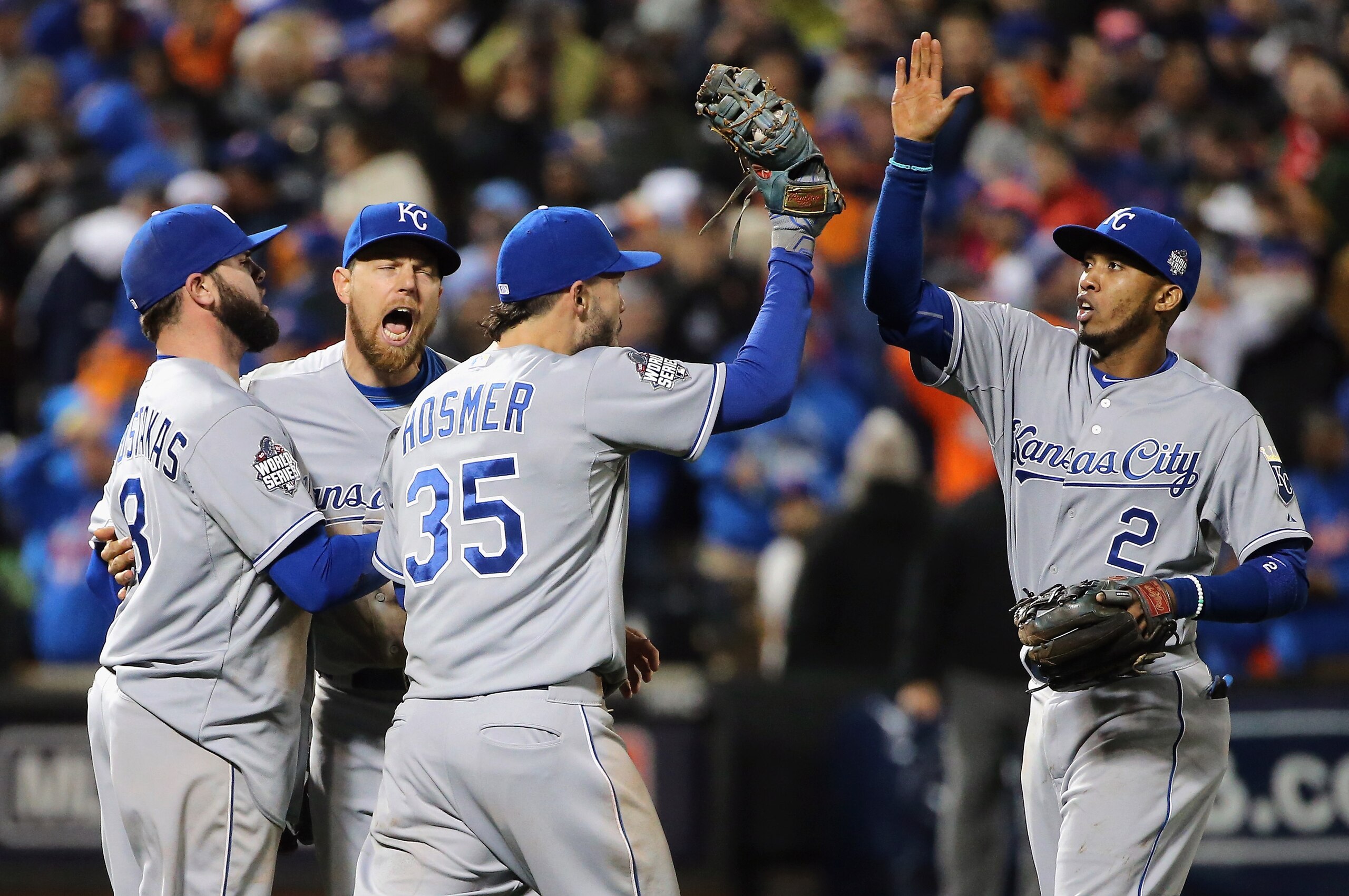
Pitching Matchup: Matt Cain vs. Johnny Cueto
Good news, 2015 Royals. The 2014 version of Bumgarner wouldn't be on the hill in this matchup.
Cain was the Giants' ace in 2012. And while he had a great season, he wasn't the same after his June perfect game and was just OK with a 3.60 ERA in five postseason starts.
Of course, Johnny Cueto wasn't much better. He had a rocky stint with the Royals in the regular season and was hit or miss in October.
Likewise, neither the Giants (Vogelsong and Zito) nor the Royals (Yordano Ventura and Edinson Volquez) had a threatening supporting cast behind their aces. So, let's call it a bullpen battle.
Led by Wade Davis and Kelvin Herrera, the 2015 Royals had a bullpen that was untouchable throughout the whole year. But in posting a 2.35 ERA, the 2012 Giants had a bullpen that caught fire in October.
Sounds like a battle to be won by an opportunistic offense, but therein lies a dilemma. Between their penchants for situational hitting and baserunning, "opportunistic" is the perfect word for both these offenses.
Ah, but the gloves. Although the defenses of the 2012 Giants (.711) and 2015 Royals (.714) compare well in efficiency, the latter takes the edge by reputation. It would be less likely to make a crucial mistake.
Either that, or the narrator just hates the Giants. Nobody will ever know.
Moving On: 2015 Royals
2015 Royals (4) vs. 2016 Cubs (1)
6 of 8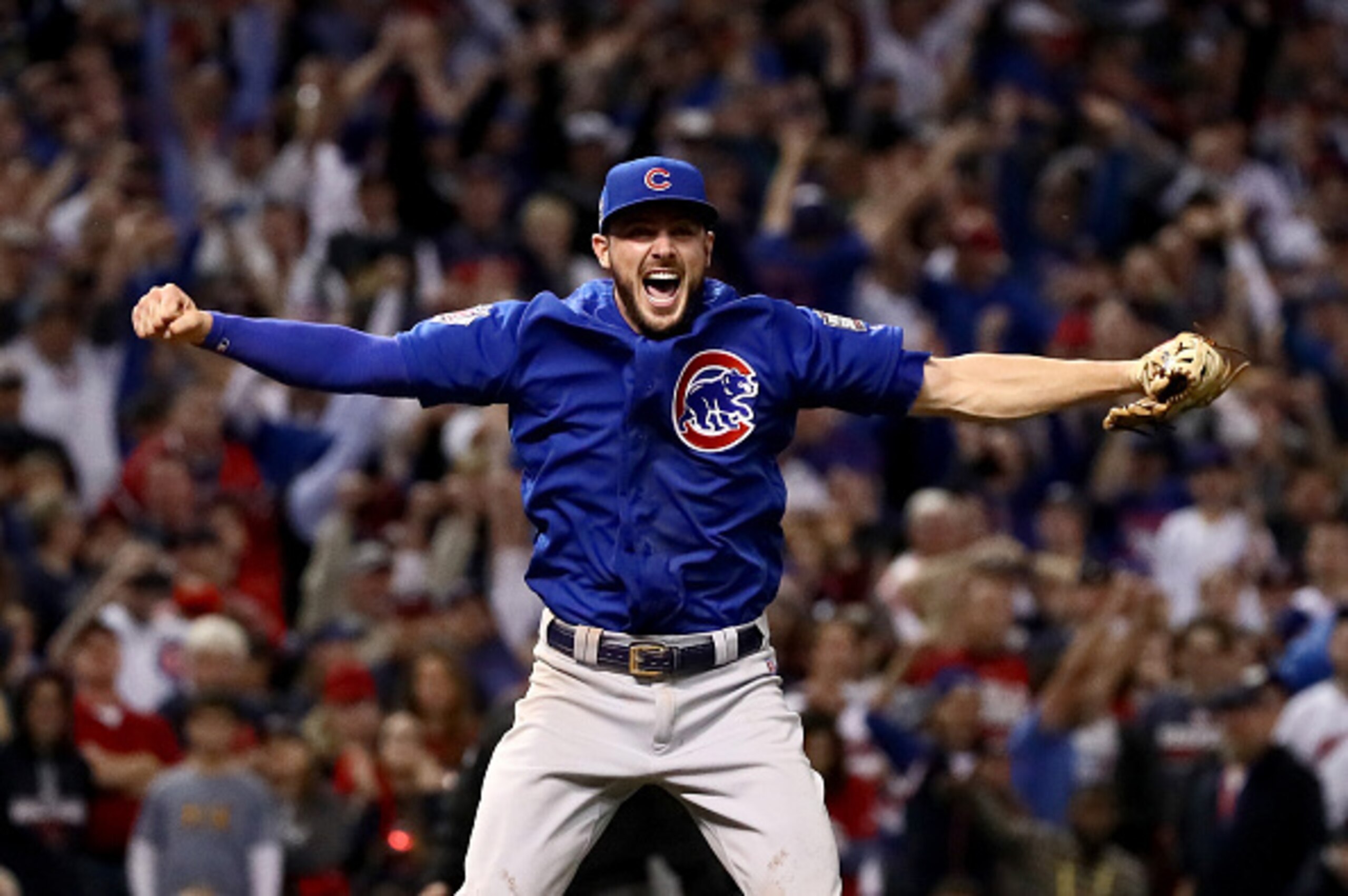
Pitching Matchup: Johnny Cueto vs. Jon Lester
The last thing Lester wants to see again is a Royals offense.
He was able to hold them down for seven innings in the 2014 American League Wild-Card Game, but he came unglued in the eighth once they started up with their pesky hitting and running.
The 2015 Royals would do the same thing against Lester. They were that year's best contact hitters and some of its most aggressive base stealers.
However, Cueto would be hard-pressed to hold up his end of the bargain. He lost his feel for the strike zone (39.3 Zone%) once he joined the Royals. Against one of the most patient teams in recent memory, that'd be a recipe for a quick hook.
Thus, the game would be in the hands of the long men. Arrieta and Hendricks would have the advantage by default, but perhaps doubly so in this case. They could answer the 2015 Royals' talent for making contact with their own talents for inducing soft contact.
Elsewhere, the Cubs would have an advantage not just on offense but on defense as well. The 2015 Royals were good at catching the ball. The 2016 Cubs were one of the best ever at catching the ball.
Thus, the Cubs get to keep dancing.
Moving On: 2016 Cubs
2011 Cardinals (7) vs. 2013 Red Sox (3)
7 of 8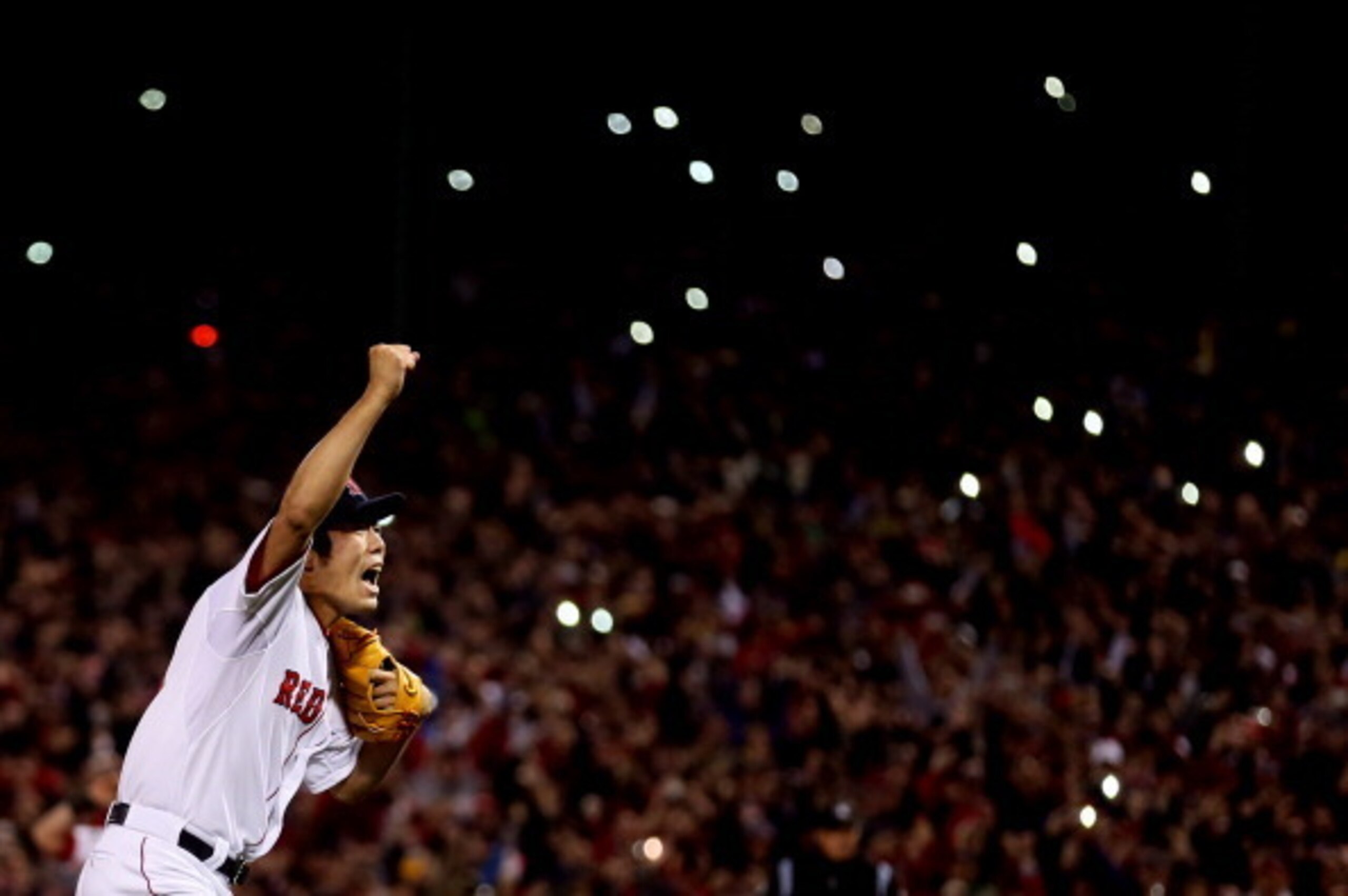
Pitching Matchup: Chris Carpenter vs. Jon Lester
Poor Carpenter. Having to go from facing the 2009 Yankees to the 2013 Red Sox would be the rawest of deals.
Fortunately for the 2011 Cardinals, Lester wouldn't match up better than Sabathia against them. Although Lester owned the 2013 Cardinals in the World Series, that Cardinals offense didn't hit lefties as well.
The 2011 Cardinals could also get to Lackey in relief. As good as it was against lefties, their offense didn't lose much against righties. They could dispatch him and turn the game into a proper bullpen battle.
That would be just fine with the Red Sox, though. La Russa's mixing and matching in the 2011 postseason mostly worked, but the 2011 Cardinals bullpen had just a 3.31 October ERA. Good, but nothing compared to the 1.28 ERA that Uehara and Co. put up in the 2013 postseason.
The 2011 Cardinals could hope for a big defensive mistake. However, the 2013 Red Sox defense was slightly more efficient (.706) than the 2011 Cardinals defense (.704).
As one of the best high-leverage hitting teams in recent history, the Cardinals would hypothetically be the better bet for a clutch hit. But. ... From Big Papi's grand slam to Shane Victorino's grand slam to Jonny Gomes' three-run homer, the Red Sox offense thrived on clutch hits in the 2013 postseason.
In the end, the Red Sox would once again avenge 1946 and 1967.
Moving On: 2013 Red Sox
2013 Red Sox (3) vs. 2016 Cubs (1)
8 of 8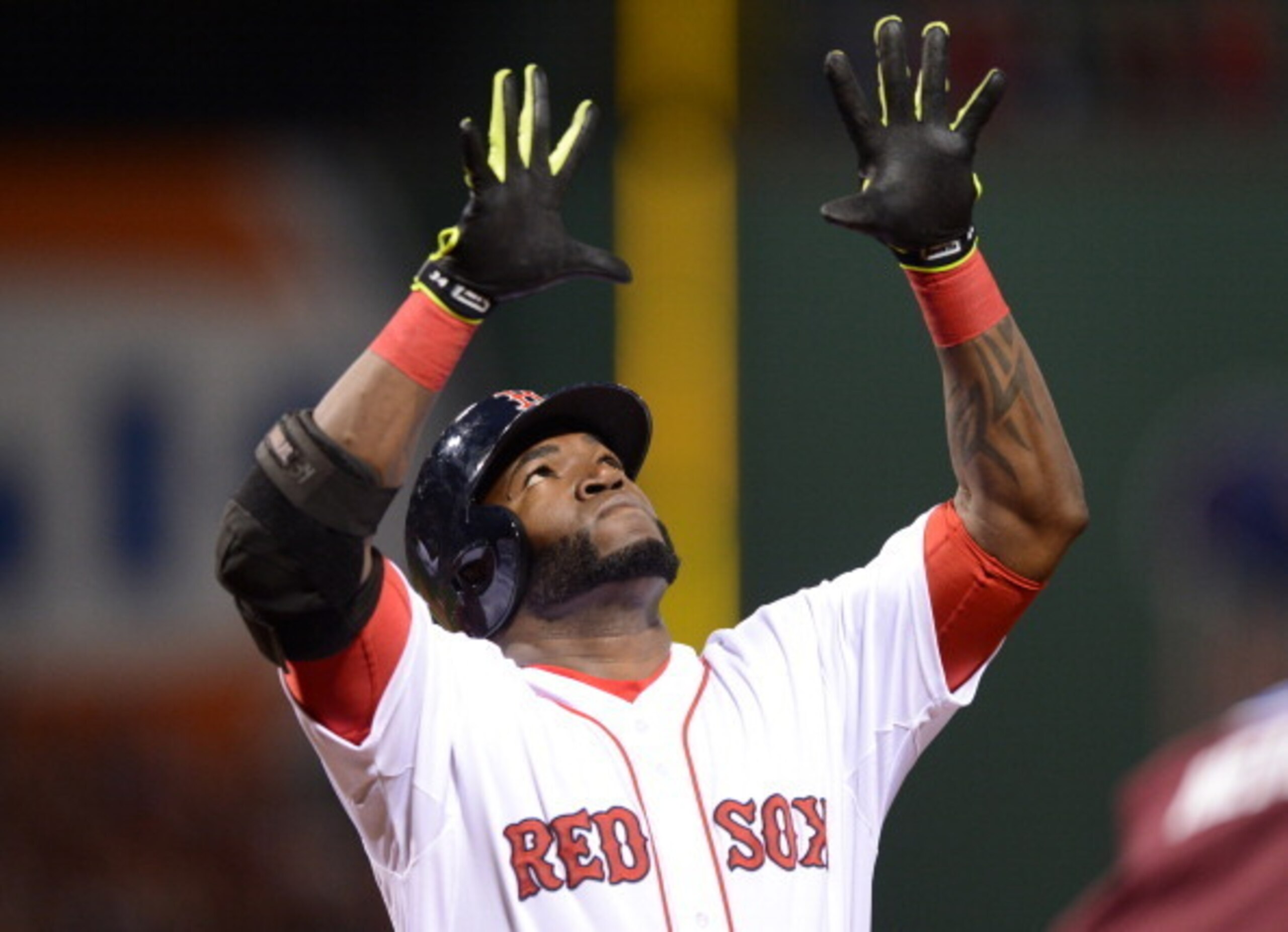
Pitching Matchup: Jon Lester vs. Jon Lester
If you think the Lester vs. Lester matchup is weird, just wait until you realize they'd also both be pitching to David Ross.
Because the 2016 Cubs hit lefties (.807 OPS) better than the 2013 Red Sox (.751 OPS), they'd have more of a natural advantage over 2013 Lester than the 2013 Red Sox over 2016 Lester.
Still, let's call it a draw. Although Lester was a better pitcher in 2016 than he was in 2013, there's little difference between the postseason versions of his two selves. Lester permitted a .560 OPS in the 2013 postseason and—gasp—a .560 OPS in the 2016 postseason.
That would put the game in the hands of the bullpens. The Cubs would attack with Arrieta, Hendricks and Chapman first and foremost. The Red Sox would attack with Lackey, Uehara and the rest of a bullpen that was so dominant in the 2013 postseason. So, let's call it another draw.
Deep into the night the game would go, with the 2013 Red Sox's superior offense trying for the big hit and the 2016 Cubs' superior defense refusing to give them away.
This is a game begging to be won on a clutch dinger. And only one of these teams has David Ortiz.
Better cue up "One Shining Moment." And watch out for a bat that was recently flipped.
Winner: 2013 Red Sox
Data courtesy of Baseball Reference, FanGraphs, Baseball Prospectus, ESPN and MLB.com.

.jpg?w=2560 "Raiders Could Start Mendoza")



.jpg?w=2560 "Rodgers Iced Out on Plane 💎")

.jpg?w=2560 "🚨 Week 8 AP Top 25 Poll")