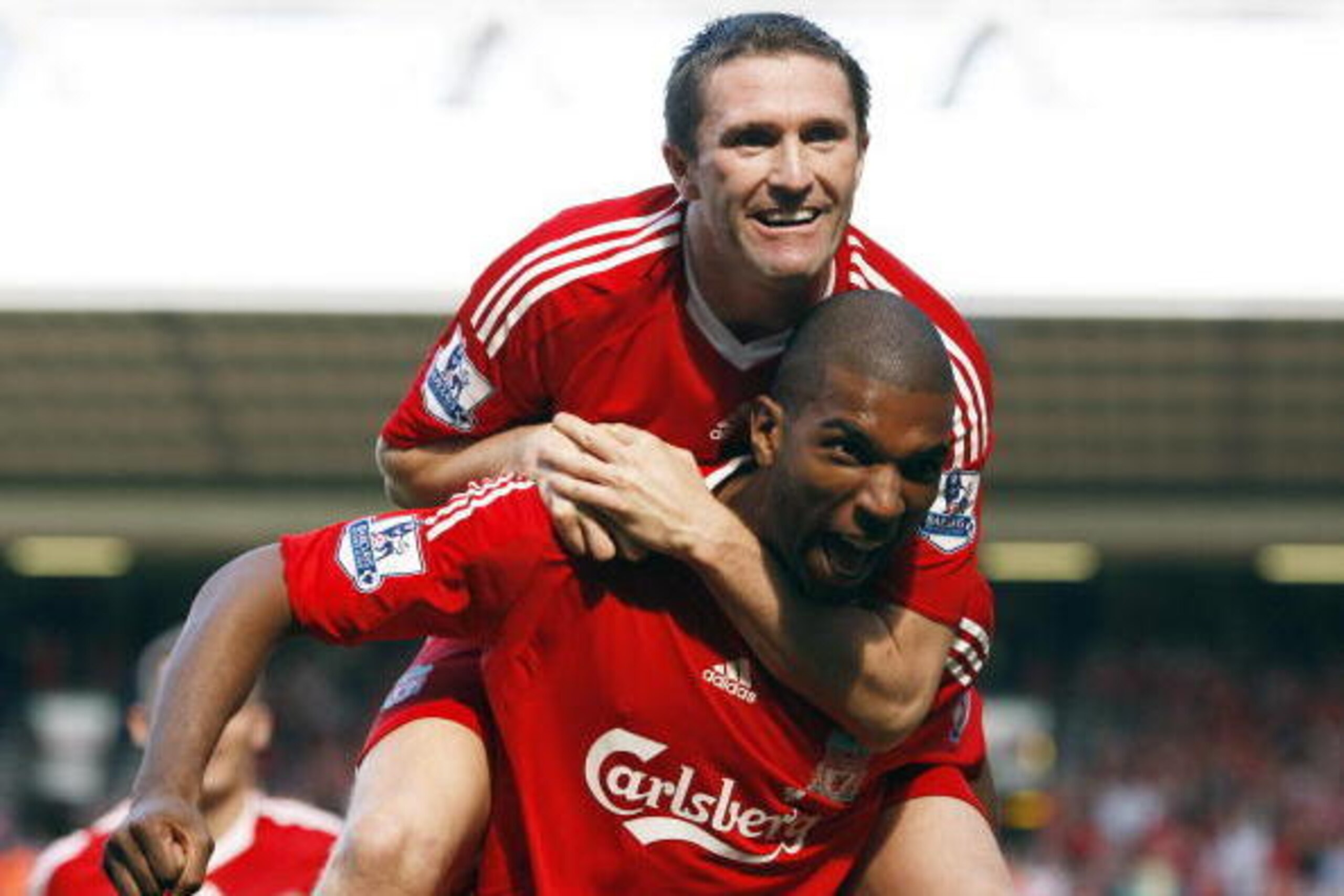

5 Modern Liverpool Players Who Were Better for Country Than Club
No fan of a Premier League team really enjoys the international break, do they?
As we approach the final stretch of the season, with key matters to be decided at the top and bottom of the table (even with leaders Chelsea a long way clear at the summit), players have now disappeared off to represent their countries.
Club managers can only cross their fingers and hope they all return safely for the critical run-in.
At Liverpool, however, that hasn't always been the case. Some found the pressure of performing at Anfield tough to handle, and the chance to represent their nation offered a welcome release.
Here, Bleacher Report picks out a quintet of former players (listed in alphabetical order) who stood out for their countries but struggled to make a difference during their time with the Reds.
Honourable Mentions
1 of 6
Considering Liverpool's hit-and-miss transfer record since 1992, this feature could have contained 20 or more players.
However, the (in)famous five selected are some of the most disappointing recruits when taking into account their contributions for their countries. For one reason or another, they just didn't pan out on Merseyside.
However, there are plenty of other international performers who also failed to cut the mustard.
Rigobert Song won 137 caps for Cameroon yet lasted less than two years with the Reds, while Salif Diao never repeated his performances at the 2002 World Cup with Senegal once he arrived in England.
Milan Jovanovic and Andriy Voronin were free transfers who provided no value to the team at all, despite their wealth of experience playing for Serbia and the Ukraine, respectively.
Sebastian Coates was snapped up by Liverpool after helping Uruguay win the 2011 Copa America, only to barely feature before making a move to Sunderland.
Brendan Rodgers saw less of the Mario Balotelli who starred for Italy at Euro 2012 and far more of the surly striker who had Roberto Mancini, his old boss at Manchester City, pulling his hair out.
Goalkeeper Brad Friedel perhaps arrived too soon in his career to be included, while striker Karl Heinz-Riedle was past his prime by the time he signed.
Then there's Joe Cole, plus Raul Meireles. Oh, and don't forget about Nuri Sahin, too. The list could go on and on.
El Hadji Diouf
2 of 6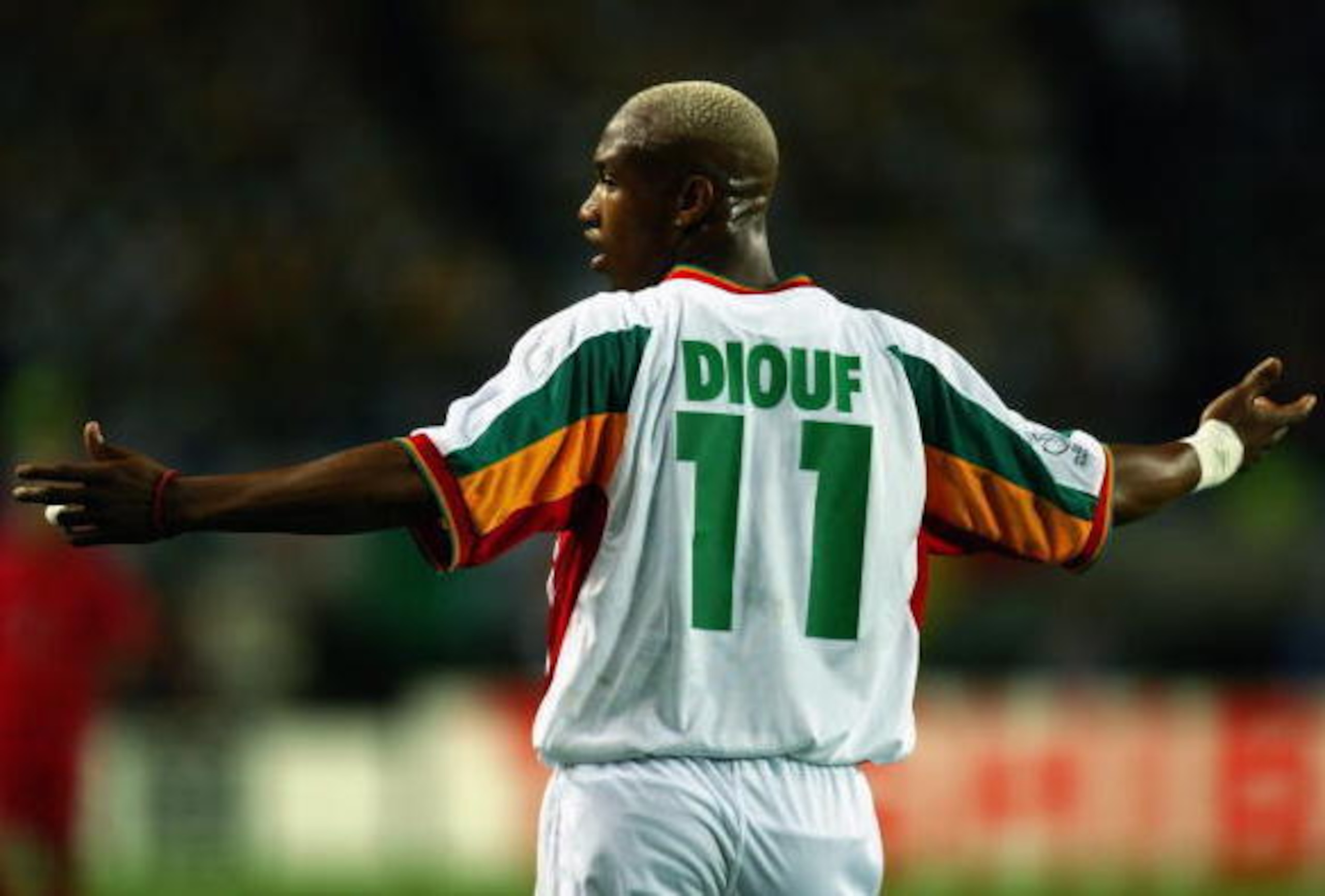
El Hadji Diouf's performances for Senegal at the 2002 World Cup gave Liverpool fans cause for optimism.
The forward was the star performer in his country's shock 1-0 win over France in the opening game, with his cross setting up Papa Bouba Diop to score the only goal in the first half.
The Reds paid £10 million for Diouf, who was not only named in the tournament's all-star team, selected by FIFA's technical study group, but was also the reigning African Footballer of the Year.
However, it didn't take his new team-mates long to work out manager Gerard Houllier had forked out a fortune for a dud. A dud with an attitude problem, no less.
Jamie Carragher wrote in his autobiography, Carra (h/t Ian Herbert of The Independent):
"I arrived for pre-season training anticipating my first view of the players who'd turn us into title winners.
I returned home the same evening in a state of depression. Do you remember being at school and picking sides for a game of football? We do this at Liverpool for the five-a-sides. Diouf was 'last pick' within a few weeks.
"
Diouf was a disastrous signing, managing only six goals (two of them coming on his debut) in 80 appearances. He also disgraced the club by spitting at a Celtic fan during a UEFA Cup tie in March 2003.
Liverpool cut their losses in the summer of 2005, initially sending Diouf on a season-long loan deal to Bolton Wanderers before the two clubs agreed terms on a permanent transfer the following year.
The Reds somehow managed to recoup £4.08 million. The money didn't matter really—they just wanted rid of a player who had done more harm than good during his spell on Merseyside.
Robbie Keane
3 of 6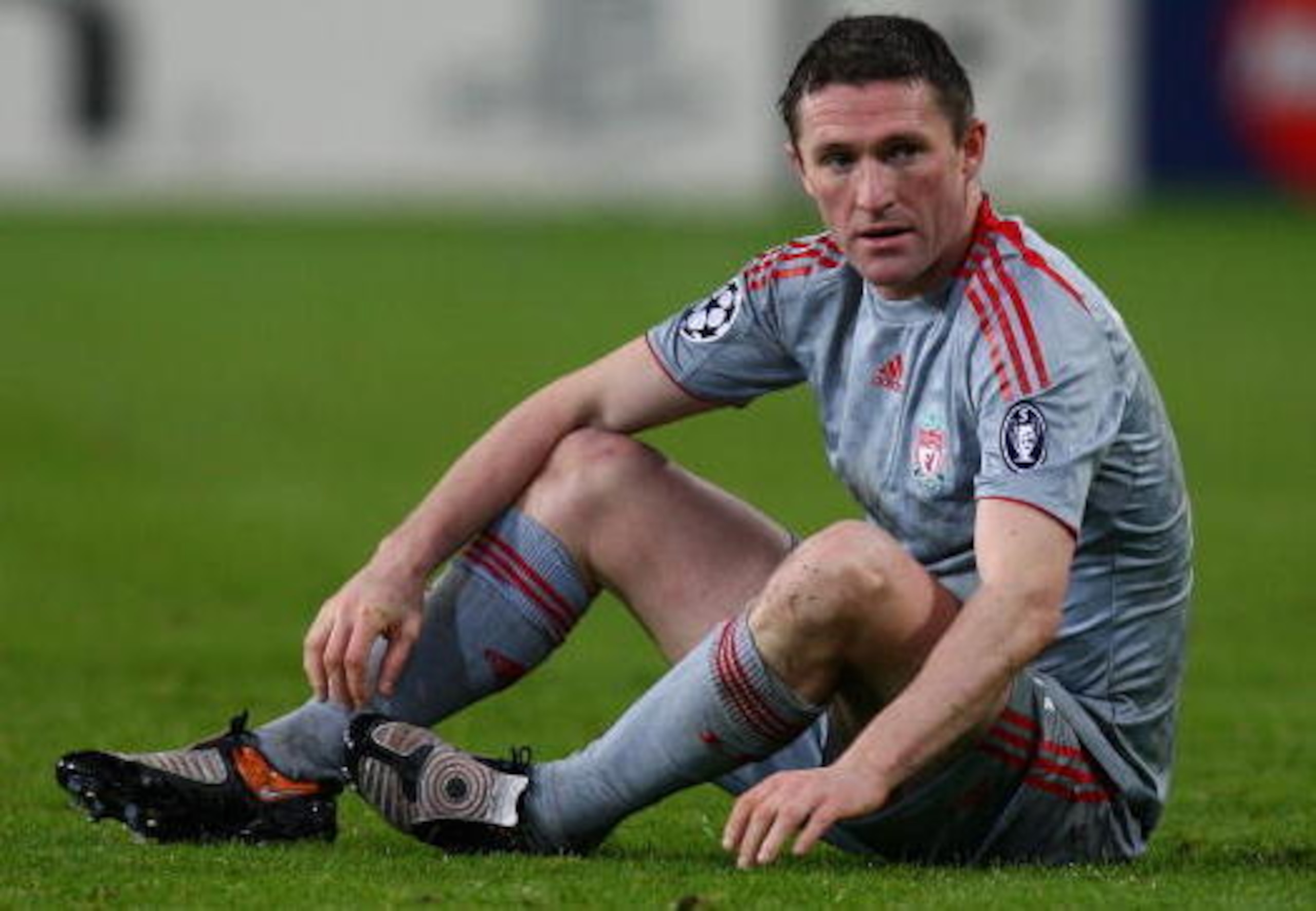
Robbie Keane described joining Liverpool in July 2008 as fulfilling a "lifelong dream," per BBC Sport.
However, in reality, the move from Tottenham Hotspur was more like a nightmare. The striker played just 28 games for the Reds, scoring seven goals in that time, before returning to White Hart Lane six months later.
"Sometimes good players cannot settle down in the team and when this happens you have to consider the situation and try to react quickly," then-manager Rafael Benitez said after Keane's departure, per the Liverpool Echo.
Liverpool had to accept a financial loss for a player who had appeared to be an ideal foil for first-choice striker Fernando Torres.
What appeared to be a match made in heaven turned sour quickly, as the boyhood fan failed to make an impact at Anfield during his surprisingly short stay.
There were occasional bright spots—including a stunning strike at Arsenal—but Keane didn't quite fit into Benitez's system.
He didn't hit the same heights in his second spell with Spurs, who sent the player out on loan to Celtic and then West Ham United before he left permanently to play for Los Angeles Galaxy in Major League Soccer.
Still, no matter where he played his club football, Keane carried on scoring for the Republic of Ireland.
His final tally of 68 goals puts him 47 clear of nearest rival Niall Quinn, his former strike partner, on his country's leading scorers list.


Fernando Morientes
4 of 6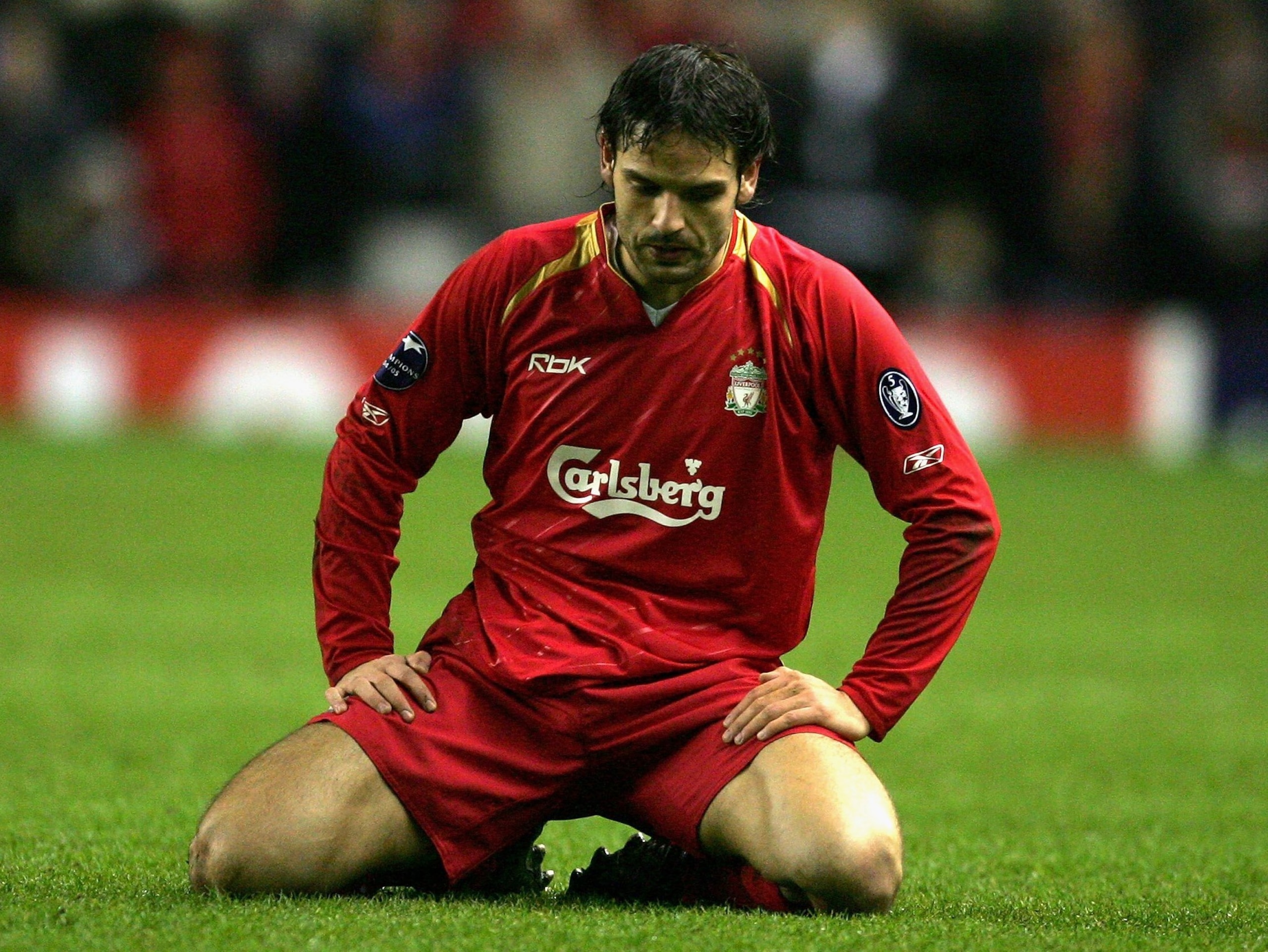
Like Keane, Fernando Morientes looked to be an ideal signing on paper.
The striker arrived from Real Madrid in January 2005 with a fantastic pedigree. A Spain international, he'd won the UEFA Champions League three times with Los Blancos.
However, already the odd man out behind fellow forwards Ronaldo and Raul, Morientes slipped further down the pecking order following Michael Owen's arrival at the Bernabeu Stadium in the summer of 2004.
A switch to Liverpool suited all parties; the English club needed someone up top alongside Milan Baros, their Spanish counterparts shuffled him out to an overseas destination and the player finally got to play games.
"Morientes is important to us. He is good in the air, he is a good finisher and can shoot with both feet," Benitez told the club's website (h/t BBC Sport) after recruiting his compatriot.
Sadly, though, what looked an ideal move on paper never quite worked out on the pitch.
A labouring Morientes mustered 12 goals in 61 appearances for the Reds, who won the 2005 Champions League final without the cup-tied forward.
Unable to get to grips with life in the Premier League, he returned to the more familiar surroundings of La Liga, joining Valencia in May 2006. His form back home led to a recall with Spain, and he finished his international career with a record of 27 goals in 47 games.
Christian Poulsen
5 of 6
Christian Poulsen could be considered a casualty of circumstance. It's also possible he just wasn't very good.
The midfielder—who cost £4.65 million from Juventus—was one of several unsuccessful signings made by former manager Roy Hodgson during his short tenure in charge of the Reds.
The pair had worked together previously at FC Copenhagen, albeit a fresh-faced Poulsen started out as an attacking midfielder in his homeland.
By the time he turned up at Anfield, Poulsen had dropped back to occupy a more defensive role.
Hodgson spotted his potential to replace the wantaway Javier Mascherano—and Dan Agger backed his fellow Dane to shine: "He is a top player and will make us stronger. We need to have big signings so we can compete and he is one of those players," the defender said, per the London Evening Standard.
In the same interview, Agger issued a warning that the pace of the Premier League could be a "culture shock" to his compatriot.
Poulsen—who won 92 caps for his country and was twice named Danish Footballer of the Year—did indeed struggle to adapt to life in England.
He was not helped by Liverpool's slow start to the 2010/11 season, but when it came to the midfielder's individual displays, slow seemed the appropriate word to use.
Hodgson left by mutual consent in January 2011 and, with Kenny Dalglish installed, Poulsen's opportunities became limited.
After 21 games and just over a year at Anfield, he departed for French side Evian.
Vladimir Smicer
6 of 6
Having played such a key role in the famous Champions League final comeback against AC Milan in 2005, Vladimir Smicer should be fondly remembered by Liverpool fans.
Thrown on to replace the injured Harry Kewell during the first half, the attacking midfielder drove in the second goal as Liverpool came from 3-0 down at the interval to draw level.
He converted a penalty in the shootout too, scoring from the spot with his last kick for the club.
"I said to myself, 'Come on, you're 32, you're an international, you've played so many games at the highest level for Liverpool, let's go, it's a big chance'," he told LFC TV, per David Lynch of the club's official website.
However, for the majority of his career at Anfield, Smicer flattered to deceive. Injuries didn't help, but a lack of consistency saw him struggle to hold down a regular spot in the starting XI.
Per his profile on LFC History: "Of the 184 matches he played he was substitute on no less than 74 occasions and he was taken off in 83 of the 110 matches he started."
A key member of the Czech Republic squad that reached the final of Euro 1996, losing to Germany at Wembley Stadium, Smicer joined Liverpool in July 1999, costing £5.78 million from French club Lens.
Signed to replace the departed Steve McManaman, and initially wearing the famous No. 7 shirt, he struggled to cope under the weight of expectation.
Still, Smicer—who also represented his country at the European Championships in 2000 and 2004, yet never played at a World Cup—signed off in style on that famous night in Istanbul.
All fees quoted are from TransferMarkt. All statistics used are from LFC History unless otherwise stated.

.jpg?w=2560)


.jpg?w=2560 "Viral Rams Coach Vid 🖕")

.jpg?w=2560 "Injury-stricken Seahawks signing veteran RB")
