

Pittsburgh Steelers' Updated Draft Big Board After 1st Wave of Free Agency
One of the most invaluable resources for NFL teams this time of year is the big board, or the list of the upcoming draft prospects who interest them the most. Whether because of talent level, scheme fit, positional need or a combination thereof, teams put together a comprehensive ranking of dozens, if not hundreds, of players who could be potential selections in April's NFL draft.
The Pittsburgh Steelers doubtlessly have an extensive big board this time of year, especially ahead of a draft that is very rich in talent at numerous positions they'd be smart to address. Here's our take on the Steelers' top 100 players, first ranked as a whole and then broken down position-by-position.
Pittsburgh Steelers' Top-100 Big Board
1 of 10
Though the Steelers will have players from every position in play for their eight 2017 draft picks, some, like outside linebacker, cornerback and tight end, will likely be more heavily featured given that they best reflect their biggest roster needs. But when best player available is the prevailing strategy, as it often is with the Steelers, the Big Board cannot just be limited to needs alone.
Our Top-100 Big Board for the Steelers thus is reflective of the entire spectrum that the draft has to offer this year, though it is weighed heavily toward the positions of biggest need:
LB Solomon Thomas, Stanford
TE O.J. Howard, Alabama
LB Takkarist McKinley, UCLA
WR Mike Williams, Clemson
RB Christian McCaffrey, Stanford
WR Corey Davis, Western Michigan
TE David Njoku, Miami
TE Gerald Everett, South Alabama
CB Sidney Jones, Washington
CB Jalen "Teez" Tabor, Florida
LB Haason Reddick, Temple
LB Taco Charlton, Michigan
S Jabrill Peppers, Michigan
S Obi Melifonwu, Connecticut
RB D’Onta Foreman, Texas
RB Kareem Hunt, Toledo
CB Adoree Jackson, USC
CB Tre’Davious White, LSU
LB T.J. Watt, Wisconsin
WR JuJu Smith-Schuster, USC
WR Chris Godwin, Penn State
WR Amara Darboh, Michigan
S Budda Baker, Washington
S Montae Nicholson, Michigan State
S Eddie Jackson, Alabama
TE Evan Engram, Mississippi
TE Jake Butt, Michigan
TE Adam Shaheen, Ashland
CB Cordrea Tankersley, Clemson
CB Desmond King, Iowa
CB Jourdan Lewis, Michigan
DL Tanoh Kpassagnon, Villanova
RB Alvin Kamara, Tennessee
RB Marlon Mack, South Florida
RB Curtis Samuel, Ohio State
OL Antonio Garcia, Troy
OL Ethan Pocic, LSU
OL Taylor Moton, Western Michigan
CB Rasul Douglas, West Virginia
CB Fabian Moreau, UCLA
LB Carl Lawson, Auburn
WR Zay Jones, East Carolina
WR Cooper Kupp, Eastern Washington
WR Malachi Dupre, LSU
RB James Conner, Pitt
RB De’Veon Smith, Michigan
RB Stanley "Boom" Williams, Kentucky
LB Derek Rivers, Youngstown State
LB Tim Williams, Alabama
CB Shaquill Griffin, Central Florida
CB Kevin King, Washington
CB Chidobe Awuzie, Colorado
DL Trey Hendrickson, Florida Atlantic
DL Glen Antoine, Idaho
WR Dede Westbrook, Oklahoma
WR Jalen Robinette, Air Force
CB Corn Elder, Miami
CB Marquez White, Florida State
LB Charles Harris, Missouri
LB Jordan Willis, Kansas State
LB Tarell Basham, Ohio
S Jordan Sterns, Oklahoma State
S Nate Gerry, Nebraska
TE Jordan Leggett, Clemson
TE Cole Hikutini, Louisville
WR Jalen Robinette, Air Force
WR Stacy Coley, Miami
DL Montravius Adams, Auburn
DL Jaleel Johnson, Iowa
TE Jonnu Smith, Florida International
TE Scott Orndoff, Pitt
OL David Sharpe, Florida
OL Will Holden, Vanderbilt
OL Adam Bisnowaty, Pitt
DL Vincent Taylor, Oklahoma State
DL Carlos Watkins, Clemson
LB Duke Riley, LSU
QB C.J. Beathard, Iowa
QB Jerod Evans, Virginia Tech
QB Alek Torgersen, Penn
RB Brian Hill, Wyoming
RB Matt Dayes, North Carolina State
TE Jeremy Sprinkle, Arkansas
TE Tyrone Swoopes, Texas
TE George Kittle, Iowa
DL Montravius Adams, Auburn
DL Jaleel Johnson, Iowa
S Fish Smithson, Kansas
S Jadar Johnson, Clemson
WR Ricky Seals-Jones, Texas A&M
WR Josh Malone, Tennessee
S Tony Conner, Mississippi
LB Garrett Sickels, Penn State
LB Lewis Neal, LSU
RB Elijah McGuire, Louisiana-Lafayette
RB Donnel Pumphrey, San Diego State
CB Dwayne Thomas, LSU
LB Devonte Fields, Louisville
QB Davis Webb, California
WR Damore’ea Stringfellow, Mississippi
QB Chad Kelly, Mississippi
Running Back
2 of 10
The Steelers have yet to bring on a true backup for starting running back Le'Veon Bell. Though it's not out of the question that DeAngelo Williams, Bell's backup for the last two seasons, gets re-signed on a one- or two-year deal later this offseason, that still does not address the running back depth chart for the long term. Though Pittsburgh signed free agent Knile Davis on Monday, the one-year deal does not mean Davis' presence is guaranteed once the 53-man roster is finalized in September.
With running back a deep position in this year's draft, the Steelers can grab someone with exceptional talent in nearly every round. While their first-round draft pick is not likely to be spent on a running back, first-round graded backs will certainly be on their Big Board, as will later-round options.
Christian McCaffrey, Stanford: McCaffrey is a standout rusher and receiver, the latter marked by impressive route-running for a running back. He's likely to be off the board by the time the Steelers make their pick at No. 30 overall, and if he's not, Pittsburgh would be more apt to take a top pass-rusher or cornerback than McCaffrey. But his proven collegiate production—21 rushing scores in two years and 10 receiving touchdowns in two—and leadership skills will certainly interest the Steelers.
Alvin Kamara, Tennessee: A knee injury and arrests saw Kamara leave Alabama for Tennessee, with a community college stint in between, but his trouble appears to be behind him. Kamara had nine rushing scores on 103 carries in 2016 and four receiving scores on 40 catches but also missed time with a left knee injury. Still, his reliable hands and his speed-power combo cannot be overlooked.
Marlon Mack, South Florida: Mack had three straight seasons with over 1,000 yards rushing and had 65 receptions over his three years at South Florida as well. The Steelers may be able to snag Mack as a third-down back on the second day of the draft, though they may look for more of a power-style back in the mold of Williams to pair with Bell instead.
Curtis Samuel, Ohio State: Samuel is a "tweener" receiver-running back who could project to either position in the NFL. While that may be a drawback for some teams, it wouldn't bother the Steelers, who have no problem with Bell being one of their top receiving targets. Samuel rushed for 771 yards and eight scores last year and had 74 more receptions for 865 yards and seven scores. Samuel is also a productive kick returner.
D'Onta Foreman, Texas: With over 2,000 rushing yards and 15 scores in 2016, Foreman is a bruising runner who would be a great complement to Bell from a style perspective. Foreman is not much of a receiver, however, and is not an asset in pass protection, plus he has a penchant for fumbling. This would make him more of a role player for Pittsburgh.
Kareem Hunt, Toledo: Hunt had 1,475 rushing yards and 10 rushing scores in 2016, but that's not what will most interest the Steelers. No, it's his breakout receiving year, with 41 catches for 403 yards and a touchdown that make him an ideal backup for Bell.
James Conner, Pitt: Conner not only had an ACL tear to rebound from in 2016 but also a cancer diagnosis. He since has been given a clean bill of health and played well on his reconstructed knee, with 16 rushing scores, four receiving scores and nearly 1,400 combined yards. The knee would be a bigger long-term health concern than his defeat of cancer.
De'Veon Smith, Michigan: If the Steelers want a Williams-style back to pair with Bell, Smith may be the answer and a third-day selection to boot, meaning they don't have to use precious early-round draft assets at the running back position. Even in a committee situation in 2016, Smith still had 846 rushing yards and 10 scores. Physical and downhill, Smith is a good yin to Bell's yang.
Stanley "Boom" Williams, Kentucky: Boom is an apt nickname for Williams, who has blazing speed that allows him to break off chunks of yardage at a time. He averaged 6.8 yards per carry in 2016 and had seven touchdowns and 1,170 yards. His lack of receiving experience, though, could keep him out of third-down duty in the early days of his NFL career.
Brian Hill, Wyoming: Hill could turn off teams looking for a feature back, given that he's had 630 carries in the past two years alone. But in Pittsburgh, he'd be an understudy for Bell, which would make moot his overuse in college. Feeding him leads to touchdowns, though, with 22 scores on 349 carries in 2016.
Elijah McGuire, Louisiana-Lafayette: McGuire is another runner who can catch. He had 42 career rushing touchdowns, three collegiate seasons with over 1,000 rushing yards as well as 1,394 career receiving yards and 10 scores. His 2016 was hindered by a foot injury, and he's likely a developmental or practice-squad candidate to start his NFL career. NFL.com's Lance Zierlein describes him as "a better athlete than running back."
Donnel Pumphrey, San Diego State: Pumphrey had 2,133 rushing yards and 17 scores in 2016 and also added another 231 yards receiving. But at 5'8" and under 180 pounds, Pumphrey is quite small for heavy-duty NFL work. Though he would not be a workhorse in Pittsburgh, Pumphrey's size will still give the Steelers pause.
Matt Dayes, North Carolina State: He is a similar back as Pumphrey, with a similar skill set and also comes in a 5'8", though he has a bit of extra weight on him at 205 pounds.
Cornerback
3 of 10
Cornerback is another talent-rife position in the 2017 NFL draft, but unlike at running back, it's likely one the Steelers will choose to address in either Day 1 or 2 of the event.
This could be the third time in three years that the Steelers use an early-round draft pick on a cornerback, but it would still make sense. Though the Steelers seem to have hit on their first-round selection last year, Artie Burns, 2015 second-round pick Senquez Golson has yet to take the field, spending his first two years injured.
Furthermore, 2017 could be the final seasons in Pittsburgh for William Gay and Ross Cockrell, making this a position of priority. Monday's signing of Coty Sensabaugh to a two-year contract offers more stopgap help and depth, but when thinking of the future as well as the depth at the cornerback position in this year's draft, it's hard to imagine the Steelers avoiding the position come April.
Sidney Jones, Washington: With so much depth at cornerback in this year's draft class, a talent such as Jones may have fallen to the Steelers at No. 30 in the first round. However, Jones ruptured his Achilles tendon at his pro day, likely pushing him to later rounds and making his rookie season essentially a redshirt one. Jones, who had 39 tackles, three interceptions and six passes
Jones, who had 39 tackles, three interceptions and six passes defensed in 2016, can handle man coverage with ease and sticks with receivers' routes in order to disrupt receptions. A speedy, physical quick study, Jones could be a first-team defender as long as his injury doesn't affect his ability to play moving forward.
Jalen "Teez" Tabor, Florida: In three years, Tabor has notched an impressive eight interceptions (three returned for touchdowns), 28 passes defensed and 11 tackles for a loss. His speed allows him to keep pace with wideouts and is the key to his ability to disrupt passes. A first-round talent, the only questions are personal red flags, including suspensions for positive drug tests and fighting with a Florida teammate.
Adoree Jackson, USC: Ball-hawking was the theme of Jackson's senior year at USC, when he notched 11 of his career 28 pass breakups and five of his six interceptions. Impressive punt- and kick-return skills—four touchdowns apiece—could make Jackson a Steelers draft target in either Rounds 1 or 2.
Tre'Davious White, LSU: White is a strong man-coverage cornerback who posted 14 passes defensed and two interceptions in 2016. He also has had three career punts returned for a touchdown and works in the special teams coverage unit, all assets for young corners making their NFL debuts. Whether the Steelers see him as a slot or boundary defender will determine if they like him as a potential Round 1 target; the latter would, the former would not.
Cordrea Tankersley, Clemson: Tankersley can handle both man coverage and Cover 2 duties and isn't afraid of tackling, all traits the Steelers would welcome in a secondary that has struggled to finish plays and handle versatile assignments. In his two years of starting, Tankersley had nine interceptions and 17 passes defensed and could be a true shutdown corner at the NFL level.
Desmond King, Iowa: King is a 5'11" cornerback, but the Steelers won't mind his size given his exceptional ball skills that led to 33 passes defensed and 14 interceptions in four years. Eight of those interceptions were in his senior season—all while collegiate quarterbacks were often loath to throw in his direction.
Jourdan Lewis, Michigan: Lewis is best suited to the slot in the NFL, as he's just under 5'11" but also possessing impressive fight. This would make him an understudy to Cockrell for 2016, but that's not necessarily a bad thing. Having insurance for the future at an affordable price is one of the tenets of NFL roster-building.
Rasul Douglas, West Virginia: Douglas was tied for first in interceptions in 2016 (eight) and also had 70 tackles and eight pass breakups. But it was his only true starting season, which limits his sample size and thus raises questions about reprising that performance as a professional player. That layer of doubt makes him a middle-round prospect.
Fabian Moreau, UCLA: The Shrine Game did wonders for Moreau's draft stock, where he proved he could be both physical and technical. But he hasn't worked in coverage schemes beyond press man and Cover 3 and doesn't snag as many interceptions as he should. Moreau is also a penalty magnet. He would need much coaching attention to contribute early in his career.
Shaquill Griffin, Central Florida: Griffin did not allow many receptions in his direction at Central Florida (only 32.9 percent) but that doesn't tell the whole story. Speed is not his strong suit, which allows faster receivers to easily separate. Griffin is a physical tackler who can also work in the run game, and his strengths fit the Steelers defense more than his weaknesses would make him a hard sell.
Kevin King, Washington: At 6'3", King isn't a typical Steelers cornerback prospect, with the team preferring smaller bodies in the secondary. But King's physical style of play, versatility all over the field (including at safety and in the slot) and ability to prevent scoring (just one touchdown allowed in his last 101 targets) could draw the Steelers' eye. King had two interceptions and 13 passes defensed in 2016.
Chidobe Awuzie, Colorado: Awuzie had 65 tackles, six tackles for a loss, 12 pass breakups and an interception in 2016, working both inside and outside in the secondary. His tackling is a question mark, though, especially when dealing with bigger receivers. He has pro-ready technique, however, and has blitzed, traits that should draw interest from the Steelers.
Corn Elder, Miami With 76 tackles, 12 passes defensed and an interception in 2016 alone, Elder should be a second-day pick. The problem? He's only 5'10" and 179 pounds. Still, Elder doesn't realize he's undersized, according to NFL Media, and plays with a confidence that could compel the Steelers to see what Elder may someday be able to contribute as a slot corner.
Marquez White, Florida State: A two-year starter, the six-foot White has good height to play cornerback in the NFL, but he'll need to bulk up from his billed 184 pounds to truly be competitive. Strength, conditioning and special teams will be his focus early in his career.
Dwayne Thomas, LSU: Thomas is another versatile corner who has played both the boundary and the slot, which gives up significant professional upside. He did suffer a significant knee injury in 2014 but rebounded in the following two years, with a total of 76 tackles, 10 tackles for a loss, 11 passes defensed and an interception. Thomas was not an NFL Scouting Combine invitee, and a relatively under-the-radar profile can lead to a value late-round selection for Pittsburgh.

.jpg?w=2560 "Rams Raiders Football")
Wide Receiver
4 of 10
Though the Steelers added depth to their receiving corps in free agency by signing former Tennessee Titan and Buffalo Bill Justin Hunter, they would be mistaken to completely avoid the position in the draft, given the plethora of talented receivers in this year's class.
Further, the Steelers need insurance at the position. Though Antonio Brown is the undisputed No. 1 on the depth chart, the pecking order behind him is muddy. Martavis Bryant remains suspended, Sammie Coates is coming off of multiple injuries, Markus Wheaton left in free agency, and while Hunter can be a big touchdown threat, he doesn't have the most reliable hands.
Adding a new receiver from this impressive crew of draft prospects would be a smart move for Pittsburgh's 2017 season and those that follow.
Mike Williams, Clemson: A neck injury suffered in 2015 limited Williams to one game, but it had zero effect on his production in 2016. A top—if not the top—receiving prospect in the 2017 draft, Williams had 98 catches for 1,361 yards and 11 scores in 2016. He's not going to kill defenses with speed, but he uses good footwork and his size to earn after-the-catch yardage and can win in contested red-zone situations. Pairing him with Brown would give the Steelers an offensive edge that few other teams could boast.
Corey Davis, Western Michigan: Davis has prototypical speed for an NFL wideout and, at 6'3", also has the size to match. He had 97 receptions for 1,500 yards and 19 scores in 2016, proving he can handle a heavy workload, and his after-the-catch skills fit into the Steelers' offensive style. Given the depth at wideout in this year's draft, Davis could be an option for the Steelers in Round 1.
JuJu Smith-Schuster, USC: Big and physical, Smith-Schuster also makes up for his lack of speed with polished route-running skills and a fearless demeanor. He had 3,092 yards and 25 touchdowns in three seasons for USC, with 70 catches, 914 yards and 10 scores in 2016. Like many of the receivers in this year's draft class who would suit the Steelers, he is a possession receiver.
Chris Godwin, Penn State: Godwin is a speed merchant. Though he had just 59 receptions in 2016, they totaled 982 yards and 11 scores. His speed makes him difficult to track and tackle, giving him after-the-catch advantages and also making him a deep threat. Godwin has some Brown to his game, and two players with such a profile would make coverages scramble to keep up.
Amara Darboh, Michigan: Darboh isn't a burner, but he makes up for it with his reliable hands and after-the-catch skills. Of his 14 collegiate touchdowns, seven came in 2016. Blocking is also one of his strengths, often a rarity among young receivers. Pittsburgh needs a possession receiver and Darboh fits the mold.
Zay Jones, East Carolina: Jones is the NCAA's all-time reception leader (399). Of those, 158 came in 2016, leading to 1,746 yards and eight scores. But Jones isn't a deep threat nor a dominant after-the-catch player; he earned many of those touches on short, high-percentage throws. He also needs work as a run-blocker. Jones is from a football family, and his drive to compete and improve is a major asset.
Cooper Kupp, Eastern Washington: Kupp has reliable hands and a pro-ready level of route-running prowess. In 2016, 17 was a lucky number, as he recorded 117 catches for 1,700 yards and 17 scores. Speed, however, is an issue—his trouble separating from faster receivers was put on display with a slow 40-yard dash time at the combine.
Malachi Dupre, LSU: Dupre had only 98 receptions for 1,609 yards and 14 scores in three seasons for LSU, thanks to an offense that does not emphasize the pass. That makes him a raw prospect in NFL terms, but his 6'2" height and ability to work out of multiple spots on the field also makes him worth coaching up.
Dede Westbrook, Oklahoma: Westbrook essentially doubled his production from 2015 to 2016, with 80 catches for 1,524 yards and 17 touchdowns. He'd be a slot receiver for the Steelers, trying to eat into Eli Rogers' playing time as well as Le'Veon Bell's receiving targets.
Jalen Robinette, Air Force: Size and speed are Robinette's trademarks, regardless of his slow 40-yard dash time at the combine. He is a big-play and after-the-catch threat—his 35 receptions for 959 (and six scores) in 2016 averaged out to 27.4 yards per reception. But his route-running and blocking both need work, putting him squarely in developmental territory to begin his NFL career.
Stacy Coley, Miami: Coley has speed, which he uses to gain after-the-catch yardage. But his route-running needs improvement and he's not a physical player. He also may not have much passion for the sport, a red flag that could further help push him to the latter rounds of the draft. The Steelers would have to believe they can tap his potential.
Ricky Seals-Jones, Texas A&M: Seals-Jones was not a very productive collegiate receiver, with no more than 49 receptions on a single season. He also has an injury history, including missing time in 2016 when he had only 26 catches for 333 yards and one touchdown. While his 6'5" frame gives him some upside, Seals-Jones is a late-round, practice squad-type player who needs time to develop.
Damore'ea Stringfellow, Mississippi: Stringfellow had a solid enough 2016 season, with 46 catches for 716 yards and six scores, before quarterback Chad Kelly suffered a season-ending knee injury. However, he has on his record a 2014 arrest and guilty plea for assault, which resulted in not being invited to the combine. This background could leave him off the Steelers' draft board entirely and, if he is there, low on the list.
Josh Malone, Tennessee: Limited by the arm and talent of quarterback Josh Dobbs in 2016, Malone had 50 catches for 972 yards, but he did turn 11 of those into touchdowns. The two-year starter could be much better served with a quarterback like Ben Roethlisberger throwing him the football.
Linebacker
5 of 10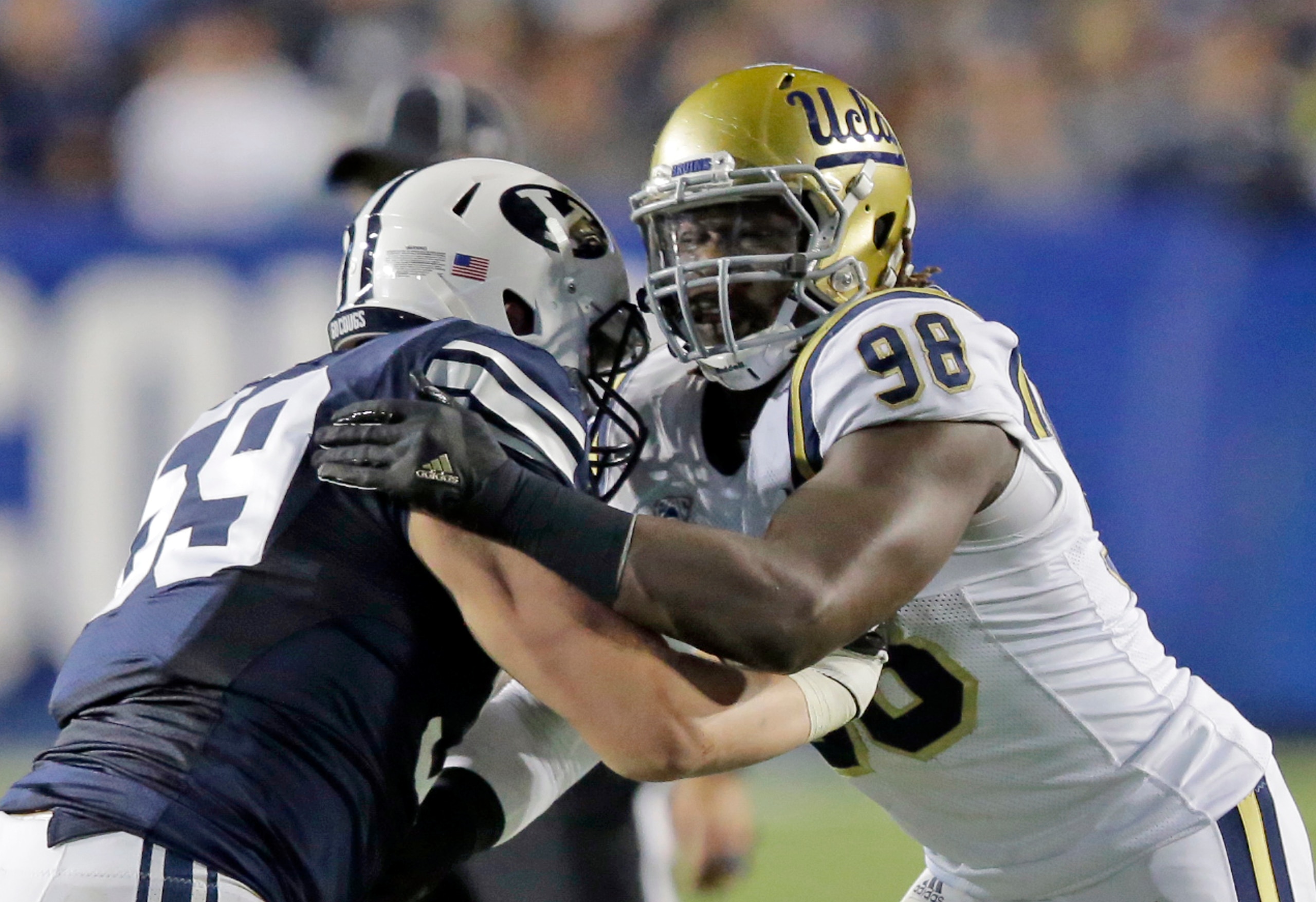
Rushing the passer is a priority of the Pittsburgh defense. And luckily for the Steelers, yet another bountiful position in the 2017 draft class is edge-rusher.
The Steelers will have the services of linebackers James Harrison and Arthur Moats for at least one more year. But Pittsburgh's only reliable, young starting outside linebacker at present is Bud Dupree. The Steelers need to not only find another starting-caliber player to work into the rotation in 2017 but also depth. Because of this, the Steelers could pick up multiple outside linebackers with their eight draft picks.
Interior linebacker could also be in play, with Lawrence Timmons leaving in free agency. Though Tyler Matakevich, Vince Williams and Ryan Shazier are all able to be first-team defenders, more depth is necessary.
Solomon Thomas, Stanford: Thomas could easily be the draft's top defensive prospect—he at least checks all the boxes when it comes to quickness, strength, explosiveness and effort—and he has the stat line to prove it. In 2016, he had eight sacks and 15 tackles for a loss, bringing his two-year totals on both to 11.5 and 25.5, respectively. Thomas can play inside and outside and could even be a defensive end in the Steelers system. Thomas, though, is likely to be drafted within the first 15 picks.
Takkarist McKinley, UCLA: McKinley is raw, as he started only two years in college. But he's a vicious pass-rusher with impressive speed who had 10 sacks to go along with 61 tackles and 18 tackles for a loss in 2016. ESPN's Todd McShay has penciled McKinley in as the Steelers' Round 1 pick this year, but post-combine shoulder surgery (with a six-month recovery time) could depress his draft stock.
Haason Reddick, Temple: Once a defensive end, Reddick's smaller frame makes him an ideal outside linebacker on the professional level. Reddick had 18 sacks in college (10.5 in 2016) as well as an impressive 46 tackles for a loss. Speed is his biggest asset. A strong combine performance may have just put him out of the Steelers' reach in Round 1.
Taco Charlton, Michigan: Though not a full-time starter until 2016, Charlton has an advanced skill set as a pass-rusher that makes him a Round 1 option for the Steelers in this year's draft. He had 9.5 sacks last year and 43 tackles, including 13 for a loss. Speed is his biggest weapon, something the Steelers love from their edge defenders.
Carl Lawson, Auburn: Lawson's injury history is a concern, having missed all of 2014 with a torn ACL and five games in 2015 with a hip injury. But in 30 games, he amassed 14.5 sacks and 24.5 tackles for a loss. He can also rush the passer from the interior.
T.J. Watt, Wisconsin: Watt is another one-year starter, but his 2016 was impressive with 63 tackles (15.5 for a loss) and 11.5 sacks. He also broke up four passes last year, and the Steelers do like linebackers who can reliably drop into coverage when needed. Though being the younger brother of J.J. Watt helps, T.J. has made a name for himself in a short period of time and remains firmly in the Round 1 discussion for Pittsburgh.
Charles Harris, Missouri: Like many of the projected 3-4 outside linebacker candidates in this year's draft, Harris is another collegiate defensive end making the professional switch. Harris had 61 tackles, 12 tackles for a loss and nine sacks in 2016, but there are questions about whether he can be more than a situational pass-rusher in the NFL.
Jordan Willis, Kansas State Willis' 2016 stats are impressive: 11.5 sacks, 17.5 tackles for a loss, three forced fumbles and three passes defensed. He also was a standout at the combine. If he lingers into the second round or even the third, the Steelers could have a steal on their hands. He could also skyrocket into Round 1, even with so many elite-level pass rushers in this year's class.
Tarell Basham, Ohio: Basham is physical and turns that into on-field production, with his 11.5 sacks and 16 tackles for a loss helping elevate him to the Mid-American Conference Defensive Player of the Year in 2016. An NFC scout told NFL.com's Lance Zierlein that Basham is like Lawson but could be had rounds later. If true, the Steelers should be salivating over that very real possibility.
Derek Rivers, Youngstown State: While a small-school prospect, Rivers was still a productive pass-rusher, with 14 sacks in his senior year and 37.5 over four seasons. A defensive end for Youngstown State, his size will make him an NFL outside linebacker. The Steelers should be familiar with Rivers' performance; his collegiate career was spent only an hour from the team's facilities.
Tim Williams, Alabama: Williams was a standout pass-rusher for Alabama, with 18.5 sacks and 27.5 tackles for a loss in his final two collegiate seasons. But positive drug tests and gun charges could affect his placement on Pittsburgh's draft board.
Garrett Sickels, Penn State: Sickels would be a late-round pick for the Steelers, serving as depth at the outside linebacker position in his rookie year. Though he had only six sacks in 2016, his 43 quarterback pressures led the Big Ten. His fundamentals need polishing, thus pushing him into the third day of the draft.
Duke Riley, LSU: More was expected from Riley in 2016, when he totaled only 3.5 sacks. He, like teammate Lewis Neal, is a developmental prospect, with Riley having more collegiate experience. Neal, however, might have more long-term upside. Both are backups initially.
Devonte Fields, Louisville: Fields had a significant foot injury early in his collegiate career, which began at TCU. He was also robbed and shot while at the school and arrested for domestic violence, thus leading to his dismissal. Those off-field issues are a major problem, and combined with inconsistent on-field production, would make him of interest to the Steelers only in the final rounds of the draft.
Safety
6 of 10
The Steelers currently have five safeties on their roster. While Sean Davis and Mike Mitchell (with a few cameo appearances by Robert Golden) can hold down starting duties, the Steelers would be wise to add depth and thus some training camp competition to the mix.
Safeties, much like nickel cornerbacks, are becoming more and more essential to NFL defenses. They don't just work in run support or blitz quarterbacks but must also work in coverage against speedy slot receivers, big and physical tight ends and even down-the-field wideouts.
The Steelers have struggled in coverage in recent years, leading to a bend-but-don't-break defense that could certainly use less bending when it comes to their pass defense. There are numerous safety candidates in this year's draft class who can help in those efforts.
Jabrill Peppers, Michigan: Peppers worked out both at the linebacker and safety positions at the Scouting Combine, which was a smart move as he's the perfect example of a player who can do both. These "tweeners" were once avoided by most teams in the draft, but now their skill sets are coveted; hybrid safety-linebackers can work inside and out, handle coverage and run support, and rush the passer. Putting him on the field alongside the likes of Cam Heyward, Stephon Tuitt and Ryan Shazier would make for a brutal Pittsburgh defense.
Obi Melifonwu, Connecticut: Melifonwu is CBS Sports' Rob Rang's latest choice for the Steelers' Round 1 draft pick, noting his strong showing at the Scouting Combine and his ability to handle deep coverage work. But it should be noted that Davis, Pittsburgh's second-round draft pick a year ago, was just as good in college. This could lead the Steelers to eschew the safety position in Round 1 this year.
Budda Baker, Washington: Baker is a willing tackler who also handled coverage well in 2016 with six passes defensed and two interceptions. He's not exceedingly big or strong, relying mostly on his speed and instincts. But those two traits go a long way in the NFL, and Baker could be a Steelers target on the draft's second day.
Montae Nicholson, Michigan State: Nicholson is a hard-hitting safety who could contribute as a run defender early in his career (as well as on special teams) while he works to improve his coverage skills. As evidence: He had only four interceptions and four passes defensed for Michigan State.
Jordan Sterns, Oklahoma State: Sterns spent most of his collegiate career as a run-stopping strong safety with over 300 tackles in his last three seasons. But his coverage skills improved in his senior year, leading to five passes defensed and three interceptions. His ability to learn and grow, and do so quickly, gives him significant NFL upside.
Nate Gerry, Nebraska: Gerry is more physical than he is fast, but he also has inherent football prowess that led to 74 tackles, four interceptions and eight passes defensed in 2016. A limited skill set, though, makes him a project in the NFL.
Fish Smithson, Kansas: Smithson is good in coverage and against the run and totaled 93 tackles, seven passes defensed and four interceptions in 2016. But he's quite small for a safety at 5'11" and 190 pounds. That automatically pushes him to later rounds.
Jadar Johnson, Clemson: As a one-year starter, Johnson should be a third-day selection in this year's draft. His 2016 was a strong one, though, with 60 combined tackles, five interceptions and seven passes defensed, all while being flagged for just one pass interference penalty.
Eddie Jackson, Alabama: Jackson is a coverage safety, working in single-high situations rather than helping stop the run or blitzing quarterbacks. He also suffered a broken leg in 2016 that cut his season short. But he can work on special teams and as a punt returner, and this versatility could be attractive to Pittsburgh.
Tony Conner, Mississippi: If it weren't for the torn meniscus Conner suffered in 2015 that limited his season to five games and affected his on-field performance in 2016, he wouldn't be a late-round prospect. But before the injury, in 2014 he had 69 tackles, nine tackles for a loss, an interception and two passes defensed. He's also played cornerback and rushed the passer, traits that could lead the Steelers to take a flier.
Tight End
7 of 10
Pass-catching, chains-moving, points-scoring tight ends have been coveted around the NFL for years, and for the first time in a long time, the NFL draft has a hefty supply of them. While the Steelers aren't the only team in the market for such a player, the sheer quantity of tight ends means they have a strong chance to land someone with exceptional talent.
Jesse James is a solid blocking tight end who can catch passes, but he's not particularly dynamic. Ladarius Green can bring that dimension to Pittsburgh's offense, but his injury history makes it uncertain if he can do so for a full 16-game season.
The Steelers also don't have much depth behind the two, especially when it comes to a modern receiver. Thus, Pittsburgh could address tight end as early as the first round. If they don't, though, Rounds 2 through 4 could still easily showcase numerous tight ends the Steelers could feature on the field in 2017.
O.J. Howard, Alabama: Howard is one of the three best players in this year's draft and guaranteed to be off the board when the Steelers make their selection at pick No. 30. But no team is going to keep a player with this much talent off its draft board simply because it won't be able to make him its own.
David Njoku, Miami: Njoku had 43 receptions for 698 yards and eight scores in 2016 despite being in a tight end timeshare in Miami. A highly impressive athlete, more than capable receiver and talented blocker, Njoku has the do-it-all traits that could remind the Steelers of Heath Miller.
Gerald Everett, South Alabama: Everett transferred to South Alabama in 2015 after the University of Alabama-Birmingham ended its football program. Though playing for a smaller school, that hasn't affected Everett's draft stock—he could easily be taken in the first round, if not in the first half of the second. He had 49 receptions for 717 yards and four scores last year, but that is only the tip of the iceberg of his potential.
Evan Engram, Mississippi: Engram has speed and great hands, two desirable traits for a pass-catching tight end. He also has proven production with 65 catches for 926 yards and eight scores in 2016. Though not a great blocker, he is willing and enthusiastic—a great jumping-off point for improvement in the NFL.
Jake Butt, Michigan: Though coming off of an ACL tear suffered in Michigan's bowl game, Butt is one of the top tight ends in the 2017 draft class. His recovery will be of interest to the Steelers, who would likely only select Butt on the second day if they believed he'd be ready to play in his rookie year.
Adam Shaheen, Ashland: A two-year starter at tight end, Shaheen is a former basketball player who began turning heads once he chose to leave Ashland early and declare for the NFL draft. In his last two seasons, he surpassed 800 receiving yards and had 10 touchdowns in 2015 and 16 in 2016. He's big—6'6"—and also fast and athletic, and he could easily be a Round 1 target for the Steelers.
Jordan Leggett, Clemson: Leggett is a blocking and receiving tight end in the mold of James but with more involvement in the latter in college. That means a bit less coaching up than James has required as well as more reliable hands. Given the depth at this position, the Steelers could get a Njoku-style player in Round 4.
Cole Hikutini, Louisville: Hikutini is still learning the fundamentals of blocking, but that's OK. Any tight end the Steelers draft this year will be primarily a receiving option. At 6'5", Hikutini would be a significant red-zone option for Ben Roethlisberger.
Jonnu Smith, Florida International: Smith is speedy and has good hands, which is a good thing considering he'd be limited to a receiving role as a tight end on the professional level. He had 42 catches for 506 yards and four touchdowns in 2016 and amassed 18 touchdowns in his four years at FIU.
Scott Orndoff, Pitt: Orndoff is a blocking-first tight end who will see most of his work on rushing downs, but he can also move the chains as a receiver in short-yardage and red-zone situations. His skill set makes him an understudy for James.
Jeremy Sprinkle, Arkansas: Though Sprinkle can catch passes when called upon, he has more upside as a blocker and would challenge David Johnson rather than James for playing time. He had 33 catches for 380 yards and four scores in 2016.
Tyrone Swoopes, Texas: Swoopes was a collegiate quarterback, but he's switching to tight end at the NFL level. At 6'4" and 249 pounds, he has the frame for the job, but he'd need time to learn and master his new position before hitting the field during a regular-season game.
George Kittle, Iowa: Though Kittle had only 22 catches for 314 yards and four scores in 2016, that has more to do with Iowa's run-heavy offense than any lack of receiving talent on Kittle's part. Kittle is a fast player who can obviously block; now he could have the chance to do even more.
Quarterback
8 of 10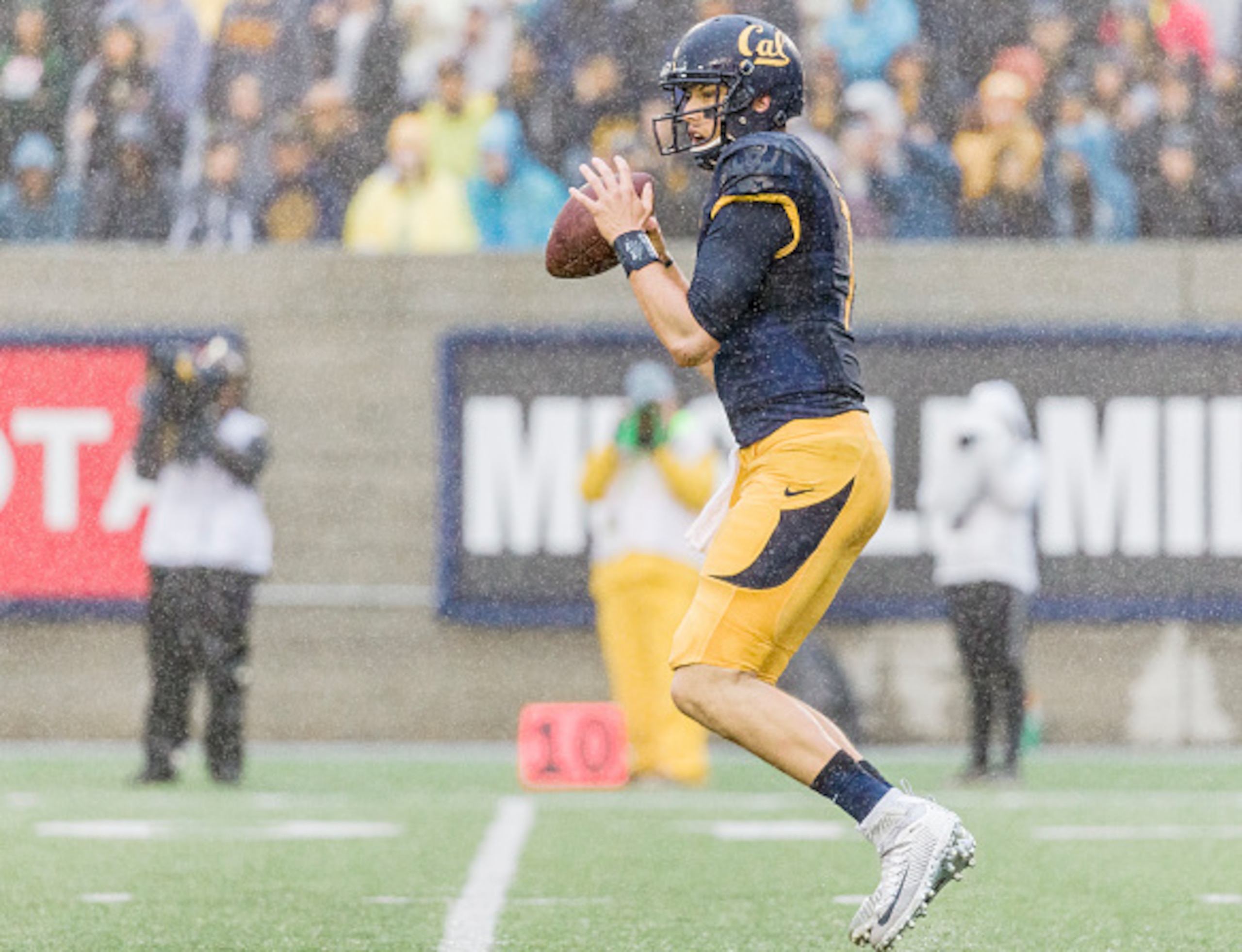
The Steelers are not in the market for a starting quarterback with Ben Roethlisberger under contract through 2020 and perhaps sticking around even longer. Their backup situation also appears set with Landry Jones re-signed in early March and Zach Mettenberger to serve as the third-stringer.
But the Steelers may want a bit of friendly competition behind Roethlisberger this year. Even if not, having a fourth quarterback on the roster is a common practice during the meat of the offseason when the roster grows to 90 players. Pittsburgh could choose to use a late-round (as in Round 6 or 7) pick on the position this year, especially if there's a player who it thinks could challenge Jones and Mettenberger.
C.J. Beathard, Iowa: A pocket passer, Beatheard struggled with completing passes in college with a 58.1 career completion rate that dropped to 56.5 percent in his senior year. But his footwork and mechanics are solid enough to bring him aboard as a developmental prospect to push Mettenberger at the No. 3 position.
Jerod Evans, Virginia Tech: If the Steelers want to add a dual-threat quarterback to their stable of backup passers, then Evans is the man they should target. His 3,552 passing yards and 29 passing touchdowns were supplemented by 846 rushing yards and 12 more scores in 2016. Evans was only a starter for one year, though, which likely means he wouldn't compete for the No. 2 spot on the depth chart immediately.
Alek Torgersen, Penn: The Ivy League product may be one of the most accurate passers in the draft, posting a completion percentage of 66.9 in 2016. He's also efficient with 17 touchdowns thrown on his 198 completions in 2016, compared to just four interceptions. His small-school pedigree, though, points to a backup career in the NFL.
Davis Webb, California: Webb's stat line in 2016 was impressive with 4,295 passing yards and 37 touchdowns thrown to 12 interceptions, but he must learn how to throw from the pocket to have a future in the NFL. Another team might see Webb as its quarterback of the future, but if he is still hanging around in Round 6 or 7, the Steelers could see him as a potential threat to Jones' or Mettenberger's roster spot.
Chad Kelly, Mississippi: Kelly is a serious character concern, having first been kicked off Clemson's roster and then disinvited from the Scouting Combine for that dismissal and his involvement in a bar fight. He also suffered a torn ACL at Clemson and ended his final year at Mississippi with another ACL tear and torn meniscus. He can throw with touch and had 31 touchdowns to 13 interceptions in 2015 along with 509 rushing yards and 10 rushing scores. Kelly is a boom-or-bust quarterback the Steelers might view as an interesting challenge to take on as a developmental backup.
Offensive Line
9 of 10
This isn't the strongest crop of offensive linemen to ever declare for the NFL draft, and the Steelers don't have immediate needs at tackle, guard or center. But bringing on an offensive lineman, even for depth or speculative purposes, is typical of the team's draft strategy. As such, it would not come as a surprise if the Steelers used a draft pick on an offensive lineman this year, particularly a versatile player who can handle guard and tackle duties, or guard and center.
Antonio Garcia, Troy: Athletic and quick, Garcia has proved to be a solid pass-protecting offensive tackle. But he has no power—though he weighed in at the Scouting Combine at 302 pounds, his playing weight is often 20 pounds lighter. That makes him a liability as a run-blocker. He'd be a backup tackle for the Steelers who would need to spend much of his time in the weight room.
Ethan Pocic, LSU: Though billed as a center, Pocic has played center, guard and tackle at the collegiate level, a great way to be a key backup and an eventual starter in the NFL. As a center, he needs to employ more power techniques, but he could serve as a quality run-blocker as a guard.
Taylor Moton, Western Michigan: Moton was a collegiate tackle who would work best at guard in the NFL. His size is prototypical for a professional offensive lineman, but he needs to improve his footwork. As a backup guard for the Steelers, though, Moton would be able to fill in if called upon.
David Sharpe, Florida: Sharpe is big, even for an offensive lineman, clocking in at 6'6" and 343 pounds and possessing exceptionally long arms. But the Florida tackle is likely an NFL guard; he's stiff and not athletic enough to protect quarterbacks at the professional level.
Will Holden, Vanderbilt: Holden was a three-year starter for Vanderbilt, working both at right and left tackle. But short arms and a lack of speed make him a right tackle in the NFL. He makes up for both, though, with strength and solid technique.
Adam Bisnowaty, Pitt: Bisnowaty was a four-year starter for Pitt but does have a history of both back and ankle injuries that have hindered what was already questionable athleticism. He'd be a right tackle in the NFL but could be moved into a guard spot because edge rushers will almost always beat him. His fundamentals also need polishing.
Defensive Line
10 of 10
There are only eight defensive linemen on the Steelers roster at present—four defensive ends and four defensive tackles. While two of those ends, Cameron Heyward and Stephon Tuitt, are cemented as starters, and Javon Hargrave seems like Pittsburgh's next big thing at tackle, adding depth is important as the Steelers become more multiple in the defensive front.
Further, Tuitt could hit free agency in 2018, and Heyward missed time in 2016 to injury. Bolstering depth at both the defensive end and tackle positions will be necessary for the Steelers this year, and there are draft gems they can unearth in numerous rounds.
Tanoh Kpassagnon, Villanova: Kpassagnon could be a defensive lineman or a linebacker at the NFL level, which is a good thing given the numerous sub-packages defenses work out of nearly 75 percent of the time. But Kpassagnon is more a collection of traits than the sum of his parts. A two-year starter, he had 21.5 tackles for a loss and 11 sacks in 2016 but doesn't have solid pass-rushing technique yet. He can help set the edge as a run defender but needs overall development.
Montravius Adams, Auburn: Adams projects to be a rotational nose tackle in the NFL, working mostly against the run and occupying space (rather than rushing the quarterback) in pass-rushing situations. The Steelers have been employing a nose tackle on fewer and fewer downs, but he still has a role. Adams' being just as specialized a player makes him a desirable Pittsburgh draft target.
Jaleel Johnson, Iowa: While defensive tackles are often thought of for their work stopping the run, Johnson's specialty is the pass rush. He was Iowa's leader in sacks and tackles for a loss in 2016 with 7.5 and 10, respectively. Pittsburgh loves interior linemen who can attack quarterbacks, and this puts Johnson squarely on the draft radar.
Vincent Taylor, Oklahoma State: Though powerful and strong, Taylor struggles to keep his balance and isn't much of a pass-rusher. The Steelers could have interest, though it would be limited to valuing Taylor as a depth piece and little more.
Carlos Watkins, Clemson: Watkins is good at everything but not great at anything specific. However, he is surprisingly athletic for his size that should lead him to a role in the NFL. The word "role" is key here, as he lacks both the skill set and endurance to maintain a consistent performance on an every-down basis.
Trey Hendrickson, Florida Atlantic: A 3-4 defensive end with plus pass-rushing skills, Hendrickson could be a Day 3 pick for the Steelers this year. In 2016, he had 50 tackles, 15 tackles for a loss and 9.5 sacks; in his career he totaled 125 tackles, 29.5 sacks and 41 tackles for a loss. Though Conference USA's Defensive Player of the Year for 2016, his weak lower body and short arms mean he possesses shaky fundamentals from an NFL standpoint.
Glen Antoine, Idaho: Antoine is a sleeper run-stuffing nose tackle who had 31 tackles, a sack and two tackles for a loss in 2016. He is a strong player, well suited to working in the middle of the defense and absorbing double-teams, but isn't much of an asset in the pass rush with athleticism not his strongest suit. But again, the Steelers rely on a true nose tackle on fewer and fewer snaps and only in the run game, which is where Antoine does impressive work.
.jpg?w=2560 "Steelers Saints Football")


.jpg?w=2560 "🚨 Week 8 AP Top 25 Poll")

