

You're going to see a lot of cockamamie ideas for picking brackets—coin flips, mascot fights, jersey colors, etc.—but what about an upset-filled slaughterhouse that could realistically occur?
No, we won't waste your time by trying to explain why a No. 16 seed will win it all. In fact, we have all the No. 1 seeds, three of the No. 2 seeds and three of the No. 3 seeds surviving at least until the round of 32.
But there will always be upsets—and usually a lot of them.
A couple of years ago, I looked back through a decade's worth of tournaments and found that, on average, there are 10 first-round upsets and five more in the round of 32. Granted, that includes a No. 9 seed beating a No. 8 or a No. 5 getting to the Sweet 16 by knocking off a No. 4, but, hey, those are still upsets.
Last year started a little more chaotic than usual. There were 13 first-round upsets, including victories by No. 15 Middle Tennessee and No. 14 Stephen F. Austin. But aside from No. 10 Syracuse making the Final Four, things calmed down a bit after that.
But my attempt at a chaos bracket last year didn't go so well. The national champion (Purdue) was eliminated in the first round, and not one of the Final Four picks got there. I did pick one No. 14 and one No. 15 seed to win a game; I just picked the wrong ones.
In hopes of doing a little better this year, I followed the script of the 2016 NCAA tournament: early chaos followed by great, juicy matchups.
If you want an analytical list of how to make the best bets for early upsets, my colleague Brian Pedersen has you covered here. But don't be surprised if you look back three weeks from now and determine this piece was just as good at forecasting what actually happened.
For the first three rounds, we'll go region by region to hit on—and justify—the noteworthy upsets. Once we're into the Elite Eight—which features four incredible matchups, by the way—we'll start breaking them down game by game.
And to get the chaos started right, let's arbitrarily begin in the bottom left quadrant of the bracket.
West Region
1 of 7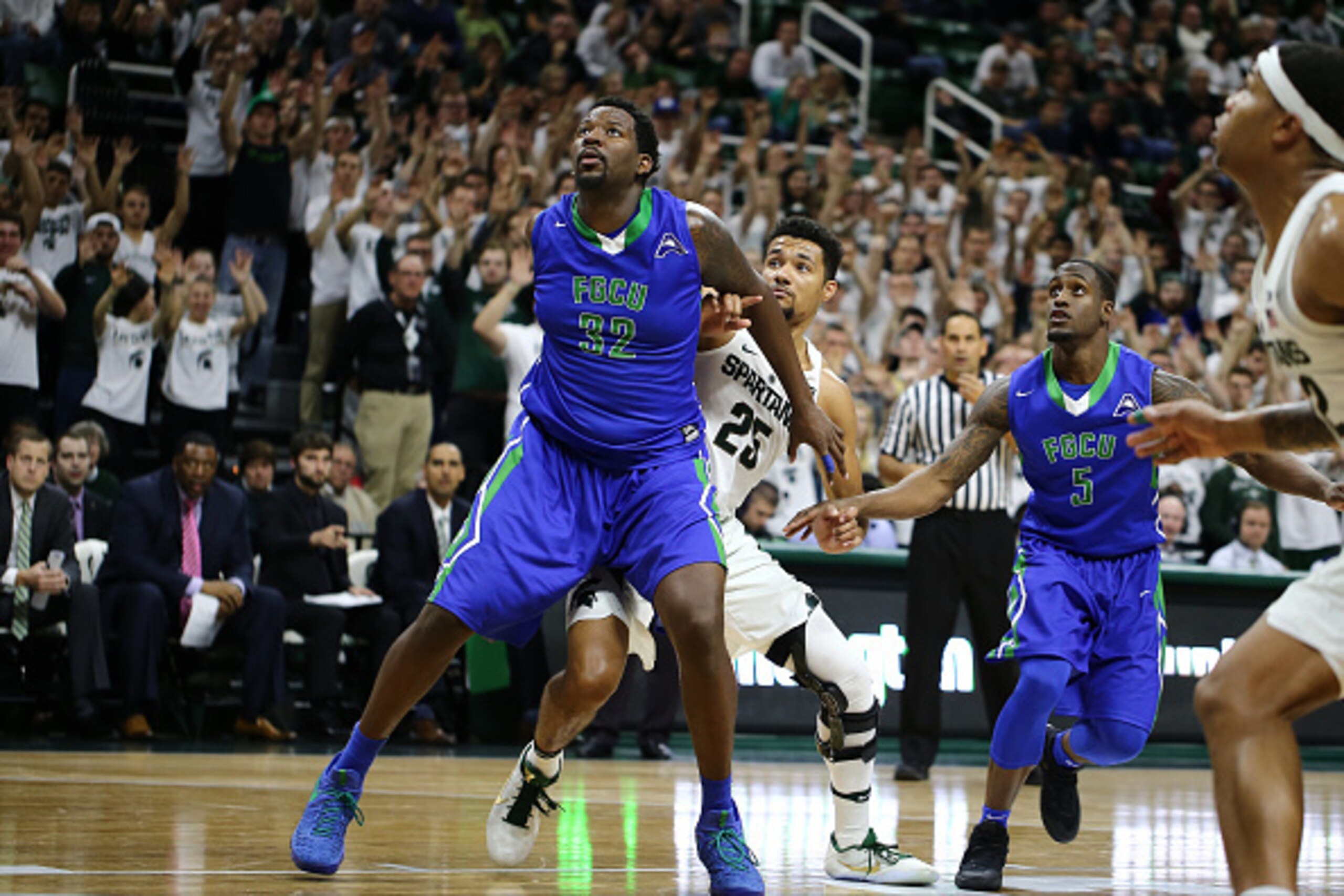
Biggest First-Round Upset: No. 14 Florida Gulf Coast over No. 3 Florida State
I suspect this will be the most popular major upset pick. Between the allure of another Cinderella story for Dunk City and the fact that the advanced metrics unanimously agree Florida State is the worst No. 3 seed, both experts who religiously follow the game and those who only casually pay attention in March will be riding Florida Gulf Coast for at least one round.
Don't get me wrong, Florida State had a great season and earned its No. 3 seed. The 'Noles went 11-4 against the RPI Top 50 and got the No. 2 seed in the Atlantic Coast Conference tournament.
But there are legitimate concerns about their ability to play away from home. They had a nice two-point win over Virginia way back on New Year's Eve, but only because Dwayne Bacon got hotter than the sun in the second half. FSU won by two at Clemson less than three weeks after a 48-point home win over the Tigers. All eight of the Seminoles' losses came away from home, including a neutral-court loss to Temple and three blowouts at the hands of Georgia Tech, Syracuse and Pittsburgh.
Florida Gulf Coast, on the other hand, proved early and often it can travel. The Eagles fell short in each game, but they held second-half leads in a neutral site game against Florida and road games against Baylor, Michigan State and La Salle. And aside from those close losses, they were undefeated away from home.
Factor in that one of FGCU's greatest strengths (offensive rebounding) and FSU's greatest weakness (defensive rebounding) go hand in hand, and the Eagles just might shock the world in Orlando, Florida.
Other first-round upsets: No. 11 Xavier over No. 6 Maryland, No. 10 VCU over No. 7 Saint Mary's
Biggest Second-Round Upset: No. 8 Northwestern over No. 1 Gonzaga
Whether you believe this could happen or not, what would be more chaotic than this?
All season, we've been telling you Gonzaga is for real, this is clearly the best Bulldogs team ever and that it might be one of the three best college basketball teams of the past decade.
But if there has been one issue with the Zags lately, it's motivation. After jumping out to an 18-2 lead in their season finale against BYU, they put it on cruise control and ended up with their only loss of the season. And in the first two rounds of the West Coast Conference tournament, Gonzaga looked downright impassioned against Pacific and Santa Clara.
The Bulldogs got so good throughout the year they got bored playing teams they were supposed to destroy. For that reason, I've been saying for the past month that their most dangerous opponent before the Final Four might be the team they draw from the No. 8 vs. No. 9 game.
Enter: Northwestern.
I'm not even convinced Northwestern beats No. 9 Vanderbilt, but the Wildcats have fared well lately against teams that rely heavily on the long ball, beating both Michigan and Maryland in the past two weeks. And it's not as if the 15-loss Commodores show up with any consistency against teams not named Florida.
If Northwestern wins its first game, it'll be playing with all sorts of house money against a Gonzaga team that will be desperately trying to break the stigma of always losing early in the tournament. There might not be another matchup in the entire tournament in which the underdog plays looser and has more fun.
West Region's Final Four Representative: No. 2 Arizona
First things first, No. 5 Notre Dame vs. No. 12 Princeton might have fewer turnovers and more three-point attempts than any game in NCAA tournament history. Whichever team emerges from that game will be well equipped to knock off Press Virginia in the second round. And after Northwestern topples Gonzaga, Notre Dame will have a clear path to the Elite Eight.
Arizona has even more of a cakewalk to the regional final, as the Wildcats are the only single-digit seed to make it to the second round in their half of the region. They should have little trouble getting by VCU and FGCU. (Yeah, that's right. Dunk City in the Sweet 16 again.)
In the West Regional final, though, size will become a major issue for Notre Dame.
No one gets more out of every inch of his body than 6'5" Bonzie Colson, who's averaging a double-double as the Fighting Irish's de facto center with three-point range. But how can he possibly handle an Arizona frontcourt of 6'11" Chance Comanche and a pair of 7-footers in Dusan Ristic and Lauri Markkanen?
Notre Dame might keep it interesting with threes, but the rebounding margin will be too much to overcome. Sean Miller finally reaches the Final Four. Bear down.
South Region
2 of 7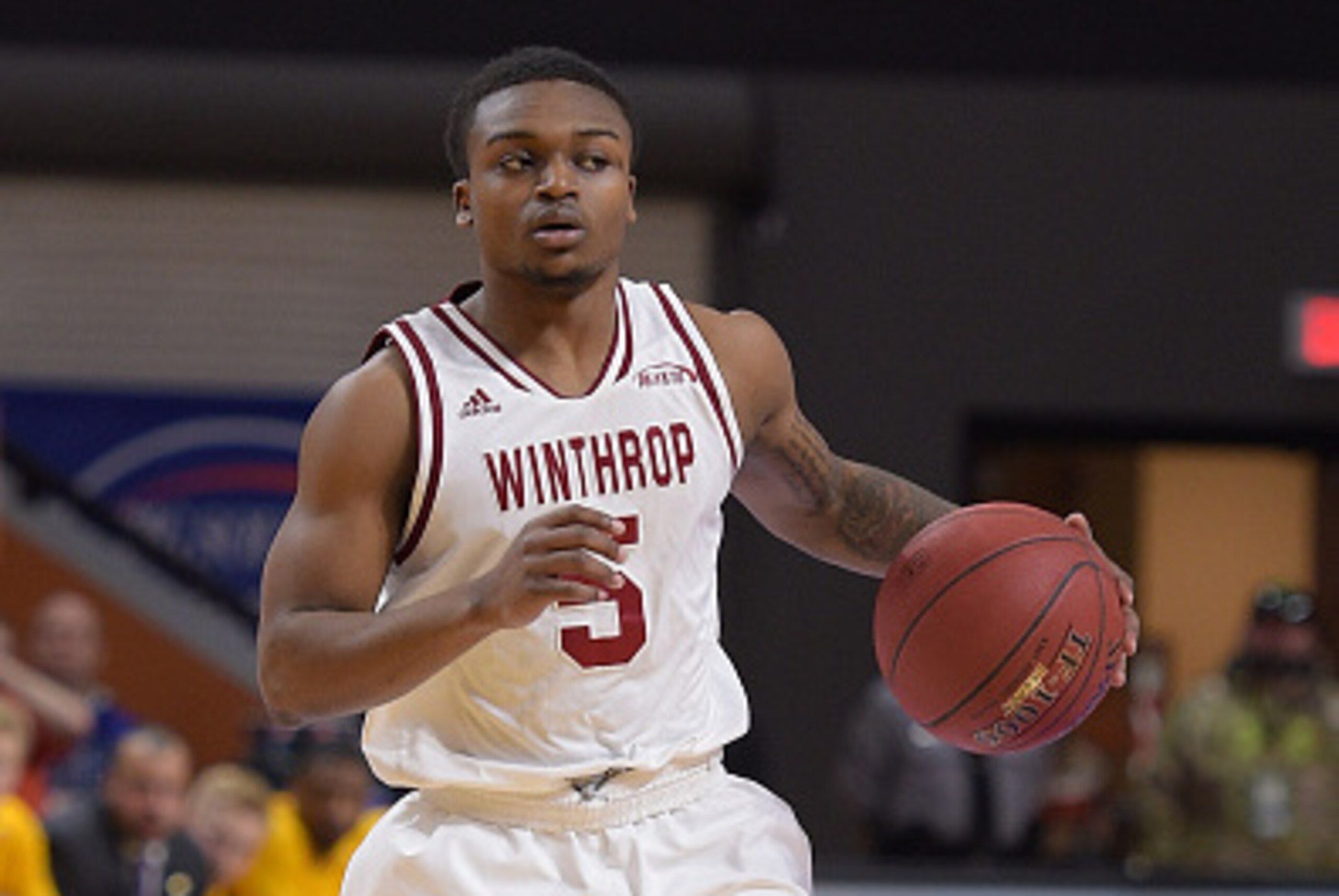
Biggest First-Round Upset: No. 13 Winthrop over No. 4 Butler
As a nation, we should have nothing but respect for the great season Butler had. The Bulldogs swept Villanova, Marquette and Xavier in the regular season and won early games against Arizona and Cincinnati. Were it not for their puzzling loss to Indiana State, they might have gotten into the conversation for a No. 1 seed if they had won the Big East tournament.
They didn't even come close to that goal, however, and stumbled to the finish line with back-to-back losses to Seton Hall and Xavier.
Meanwhile, Winthrop has won eight in a row, and its inside-outside duo is red hot.
The 5'7" Keon Johnson has averaged 26.5 points over his last 12 games, scoring at least 20 in 10 of them. And big man Xavier Cooks has tallied 19.2 points, 11.7 rebounds and 2.0 blocks over his last nine. In back-to-back games against major-conference opponents earlier this season, the Eagles scored 86 in a loss at Florida State and 84 in an overtime win at Illinois. They didn't have the best resume among minor-conference teams, but they're one of the most dangerous.
Other first-round upsets: No. 11 Wake Forest over No. 6 Cincinnati, No. 9 Seton Hall over No. 8 Arkansas
Biggest Second-Round Upset: No. 7 Dayton over No. 2 Kentucky
This is a double-dip of major upsets, as No. 10 Wichita State over Dayton is going to easily be the most popular pick of lower-seeded teams. In addition to rejecting that trendy selection, we're also going with the Flyers to topple mighty Kentucky.
To say the least, the Wildcats have found their stride. They have won 11 in a row since getting blown out by Florida and are following the exact script Louisville wrote in winning the 2013 national championship: early nonconference loss to a title contender; brief rough patch in late January; dominate for the next two months.
If you're picking Kentucky to win it all, you have good reason—particularly because De'Aaron Fox is shooting 58.3 percent from three over his last six games.
But we're riding Dayton, despite the same season-ending consecutive losses problem we had with Butler. (Chaos isn't consistent, after all.) Though they lost to George Washington and Davidson in the past two weeks, the Flyers are finally healthy and had been playing their best basketball of the season.
Moreover, Dayton's strengths match up with Kentucky's weaknesses. Not that anyone can guard Malik Monk when he's feeling it, but the Flyers had one of the best three-point defenses in the nation before the Colonials and Wildcats helped regress that to the norm. Dayton gets to the free-throw line about as often as any team in the tournament and doesn't commit turnovers. Coincidentally, Kentucky doesn't force many turnovers and commits a lot of fouls.
South Region's Final Four Representative: No. 1 North Carolina
I know. A No. 1 seed in the Final Four isn't chaotic. But we need to have at least one, and an Elite Eight pairing of North Carolina and No. 3 UCLA could be one of the most entertaining games in NCAA tournament history.
As was the case in our West Region, both the Tar Heels and the Bruins will benefit nicely from chaos elsewhere. North Carolina's trip to the Elite Eight consists of No. 16 Texas Southern, Seton Hall and Winthrop, each of which the Tar Heels should have little difficulty beating into submission. And UCLA's path of No. 14 Kent State, Wake Forest and Dayton is about as favorable as it gets.
(If you pick Cincinnati to survive against its First Four opponent, that defense could be a tough matchup for UCLA. But against Wake Forest, the Bruins might score 115 points.)
As was the case in our regional final in the West, rebounding margin will be a huge factor in the outcome. UCLA is just average on the glass and doesn't force many turnovers, while North Carolina is the best offensive rebounding team in the country. There will be a ton of points scored in this game, but the Tar Heels' plethora of second-chance points will prove to be the difference.
East Region
3 of 7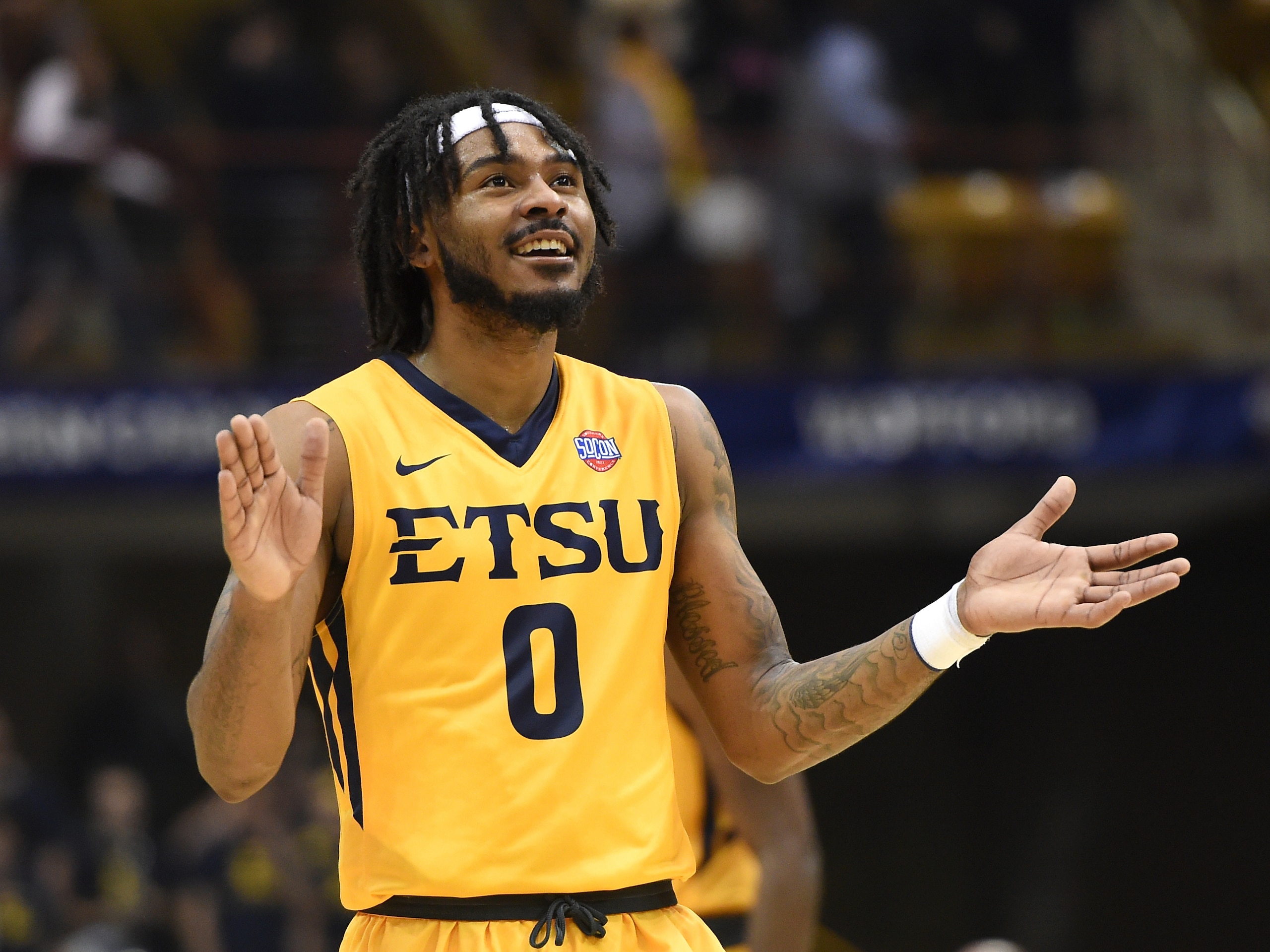
Biggest First-Round Upset: No. 13 East Tennessee State over No. 4 Florida
A lot of people are going to want/expect to see No. 14 New Mexico State over No. 3 Baylor in this spot solely because the Bears have made such a Gonzaga-like habit of disappointing in the NCAA tournament and have struggled to beat anyone over the past month. But even in a chaos bracket, we've given up hope on the Aggies ever pulling off an upset. New Mexico State had much better chances than this one and failed miserably in the past.
Instead, three cheers for the Buccaneers of East Tennessee State!
Aside from its propensity to cough up the ball, ETSU is surprisingly solid on both ends of the court. The Bucs shoot 38.3 percent from beyond the arc and 54.9 percent inside it, and they average nearly 25 free-throw attempts per game. And on defense, they rank 12th in the nation in block percentage and 11th in steal percentage. West Virginia is the only tournament team that's better in the latter category.
But this pick actually has more to do with Florida, as I talked myself into an early Gators loss long before seeing the bracket. Save for catching fire from three-point range in recent wins over South Carolina and Arkansas, this has not been the same team since John Egbunu tore his ACL in mid-February.
In its 22-point win over Kentucky in early February, Florida owned the offensive glass and kept Bam Adebayo in check. In their 10-point loss to the Wildcats in late February, the Gators couldn't buy an offensive rebound, and Adebayo went off. Factor in back-to-back losses to Vanderbilt to end the year, and Florida reeks of a first-round loss.
Other first-round upsets: No. 10 Marquette over No. 7 South Carolina, No. 9 Virginia Tech over No. 8 Wisconsin
Biggest Second-Round Upset: None
This may be a chaos bracket, but it still has to be realistic. Even in the wildest of tournaments, there is almost always one region in which the higher-seeded teams win all four second-round games. This year, we're going with the East Region to play to form. And, really, picking Baylor to reach the Sweet 16 is kind of an upset anyway.
East Region's Final Four Representative: No. 2 Duke
I promise an unlikely seed will reach the Final Four in our fourth region, but here we have another top seed advancing to the national semifinals.
At what point in the first three rounds can you possibly see Duke losing? Bring up Lehigh and Mercer all you want, but No. 15 Troy might not finish within 30 points of the Blue Devils team we just watched destroy the field in the ACC tournament. Whether you like South Carolina or Marquette to win in the first round, the former can't play offense, and the latter can't play defense, so Duke should have no trouble.
The one team in the Blue Devils' half of the region that poses a real threat is No. 6 SMU. The Mustangs are lethal from three-point range, dominate the glass and defend well without fouling. However, both SMU and Cincinnati are in for a rude awakening after two months of destroying American Athletic Conference teams. Baylor will be SMU, then lose to Duke.
There is a bit of chaos in this prediction, as we have No. 5 Virginia knocking off No. 1 Villanova to reach the Elite Eight. Those teams played each other about six weeks ago in one of the better games of the regular season. The Cavaliers led by 12 with 10 minutes to go, only to blow it like they did against Syracuse in last year's Elite Eight. Virginia will get revenge on the Wildcats before running out of gas against the Blue Devils.


.jpg?w=2560 "Rams Raiders Football")
Midwest Region
4 of 7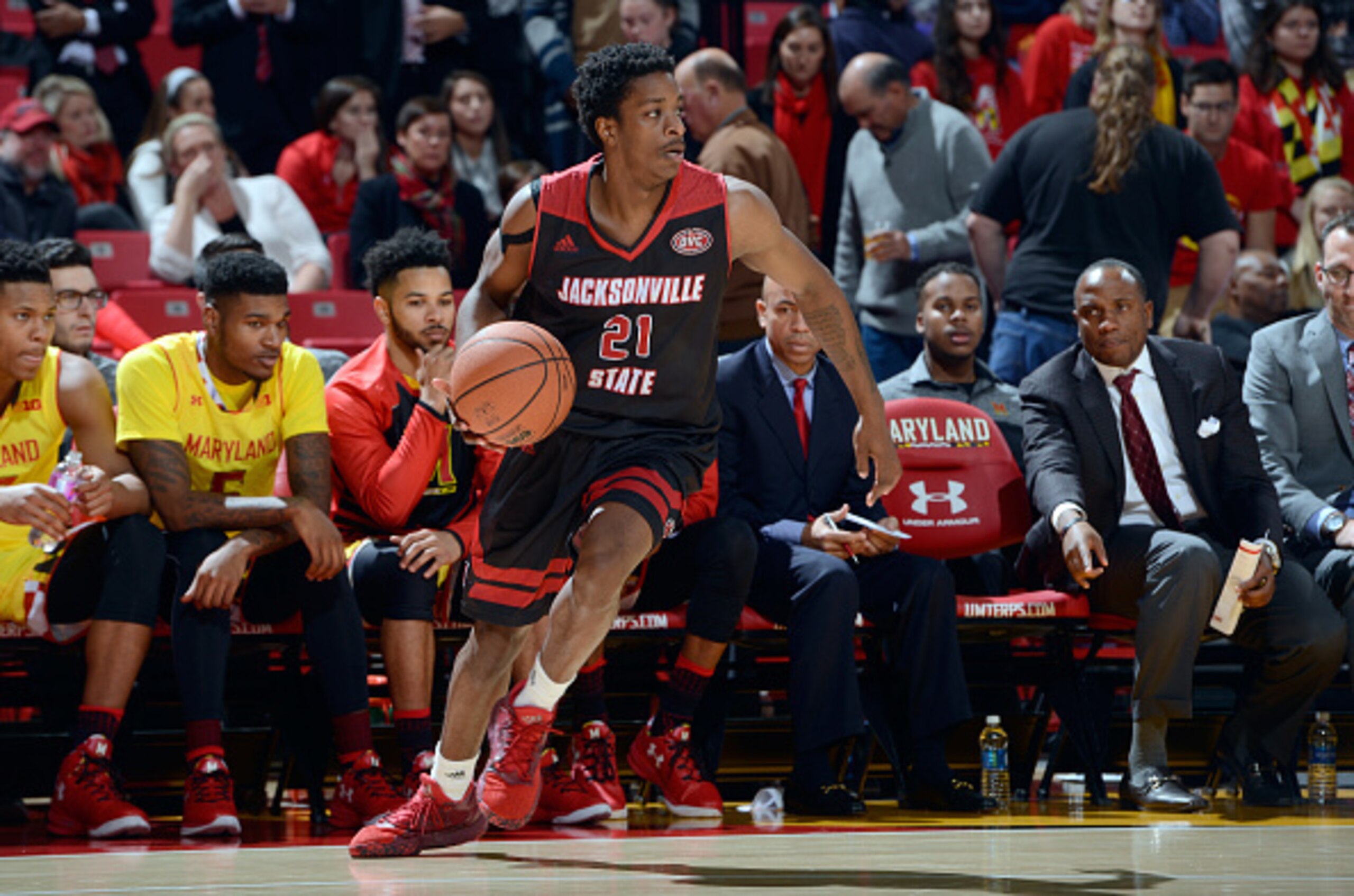
Biggest First-Round Upset: No. 15 Jacksonville State over No. 2 Louisville
Time to get weird.
Pray tell, what has Louisville done in the past five weeks other than prove it has no half-court offense and that its defense is slipping?
Excluding a five-overtime extravaganza against Notre Dame during the 2012-13 regular season, Louisville had allowed an opponent to score more than 80 points in a game just twice in the previous four seasons. But the Cardinals have allowed at least 81 points against three of their last six opponents—90 vs. Virginia Tech, 88 at Wake Forest and 81 against Duke in the ACC tournament.
If that defense remains porous, Louisville is beatable—even against a team like Jacksonville State that didn't beat a single RPI Top 100 team until it thwarted Belmont in the Ohio Valley Conference tournament. What the Gamecocks do well, though, is defend, having held each of their last three opponents below 60 points. And the last thing the Cardinals need is to face a defense that does a great job of protecting the paint.
Play this game 100 times, and Louisville wins by double digits probably five times as often as it loses. But the Gamecocks have a shot to upset the team that least deserved to be on that No. 2 seed line.
Other first-round upsets: No. 13 Vermont over No. 4 Purdue, No. 11 Rhode Island over No. 6 Creighton, No. 9 Michigan State over No. 8 Miami
Biggest Second-Round Upset: No. 11 Rhode Island over No. 3 Oregon
One week ago, there's no chance in Hades I pick this upset. But with Rhode Island having saved its best basketball for the Atlantic 10 tournament and Oregon losing Chris Boucher to a torn ACL during the Pac-12 tournament, there's a reasonable chance this one happens.
The Ducks lead the nation in block percentage and still have a pair of great rejection machines in Jordan Bell and Kavell Bigby-Williams. The Rams, however, are No. 2 in block percentage thanks to Hassan Martin and Kuran Iverson. And Rhode Island also ranks No. 2 in three-point field-goal defense. This begs the question: How do you score against the Rams?
Dillon Brooks will get his 20-plus points, and Tyler Dorsey will find a way to make a good number of buckets, but given the teams' combined defensive prowess and slow pace of play, I don't foresee either squad scoring 65. Perhaps Rhode Island can sneak away with a win.
Midwest Region's Final Four Representative: No. 7 Michigan
All hail the practice jersey heroes!
You didn't think Michigan's magical run was going to end in the Big Ten tournament, did you? Besides, because of the two big upsets we just discussed, the Wolverines won't face a single-digit seed until the Elite Eight, going through No. 10 Oklahoma State, Jacksonville State and Rhode Island.
In the upper half of the Midwest Region, you have to like Michigan State's chances of upsetting No. 1 Kansas, and if that doesn't happen, you really have to like No. 5 Iowa State's opportunity to knock off the Jayhawks again. Monte Morris and Co. are already annoyed Kansas dodged their third matchup by losing to TCU in the Big 12 quarterfinals, and the Cyclones (provided they can get by No. 12 Nevada and Vermont) will be out for blood in the Sweet 16.
That brings us to an Elite Eight pairing of two wildly efficient, senior-led backcourts that helped their teams win major-conference tournaments. Iowa State is probably the better team and is on a heck of a run with nine wins in its last 10 games, but the Cyclones don't have quite enough to derail the freight train that Michigan has become.
First Final Four Game
5 of 7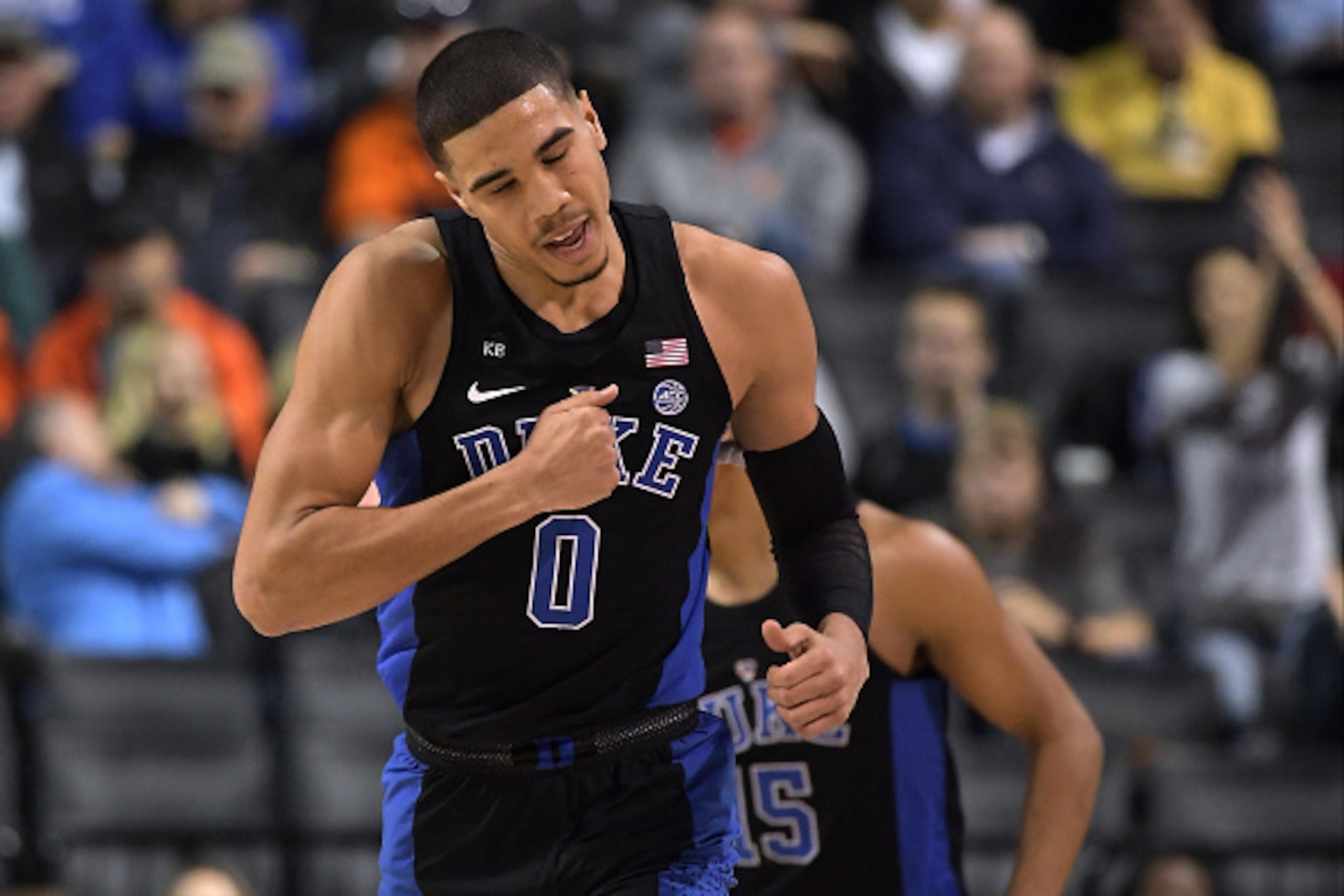
Subliminal Chaos Element
Before we jump into the Final Four, let's quickly point out a bit of chaos you probably didn't catch unless you were really paying attention.
Aside from not picking a No. 16 seed to win a game, the top annual rule is to always select at least one No. 12 seed to upset a No. 5 seed. And based on the strength of this year's No. 12 seeds (Middle Tennessee, Nevada and UNC-Wilmington were all egregiously under-seeded), there's probably a better chance of all the No. 12 seeds advancing than there is of all the No. 5 seeds moving on.
In my real bracket, I'm going to pick at least two No. 12 seeds and am torn on a third. But in my chaos bracket, I have each No. 5 seed winning at least one game, and three reach the Elite Eight. That would be outrageous.
No. 2 Arizona vs. No. 2 Duke
Not only is this a rematch of the 2001 national championship game, it's a battle between the two "Nobody believes in us!" teams who were denied No. 1 seeds.
Even when they didn't have Allonzo Trier, the Wildcats were sensational. Their four losses were against teams that earned a No. 1, No. 3, No. 3 and No. 4 seed.
But while Lauri Markkanen has been a matchup advantage all season long, the Blue Devils have the edge among the stretch 4s.
In a head-to-head battle between certain lottery picks, Duke's Jayson Tatum is going to take Markkanen to school. He'll blow by the big man anytime he wants, and he'll do a great job of defending him on the perimeter.
Elsewhere, the Blue Devils are just too talented. Frank Jackson, Grayson Allen and Luke Kennard vs. Trier, Rawle Alkins and Kadeem Allen is no contest. And while Dusan Ristic has been an outstanding development at center for Arizona, Amile Jefferson is better, and Harry Giles is finally making a positive impact on games.
Duke will advance to the title tilt.
Second Final Four Game
6 of 7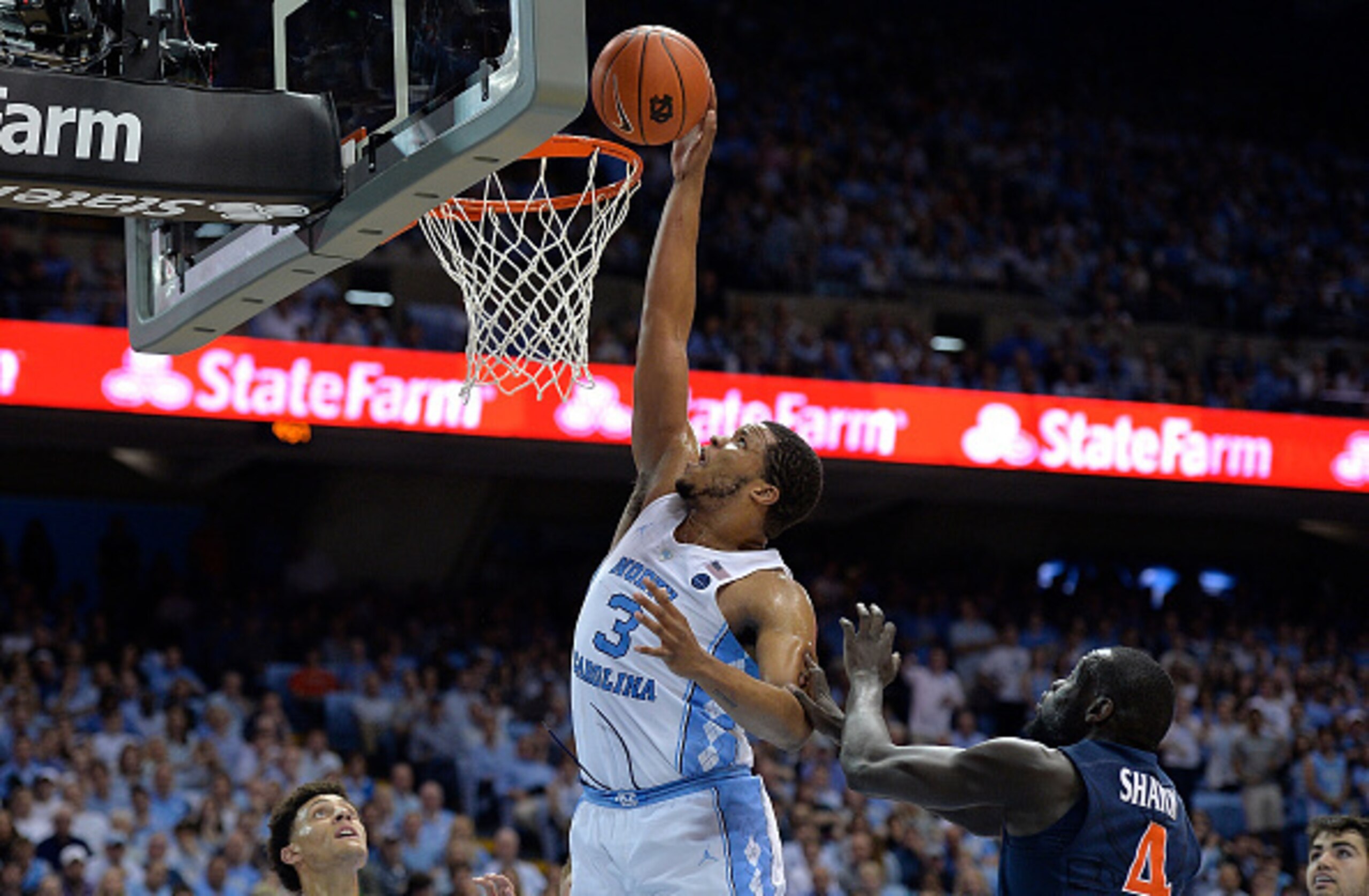
No. 7 Michigan vs. No. 1 North Carolina
Speaking of iconic tournament rematches, which team blows this game by calling a timeout it doesn't have?
Sadly for the Wolverines, this is where the magic will run dry.
One of the best ways to beat North Carolina is to get Isaiah Hicks in foul trouble. He's more than happy to oblige if you try. But Michigan draws fouls at one of the worst rates in the nation. Opponents average 17.2 personal fouls per game against the Wolverines, resulting in just 16.6 free-throw attempts per contest.
And with Hicks in the game, it will be impossible for Michigan to overcome the Tar Heels' biggest strength (rebounding). Junior D.J. Wilson has been a revelation for the Wolverines, but he isn't going to keep Hicks, Kennedy Meeks and Tony Bradley out of the paint and off the glass.
Granted, we've seen Duke twice beat North Carolina by exchanging threes for twos and getting to the free-throw line in bunches, but Michigan is unlikely to have enough offense to overcome the Tar Heels.
So, that sets up...
National Championship Game
7 of 7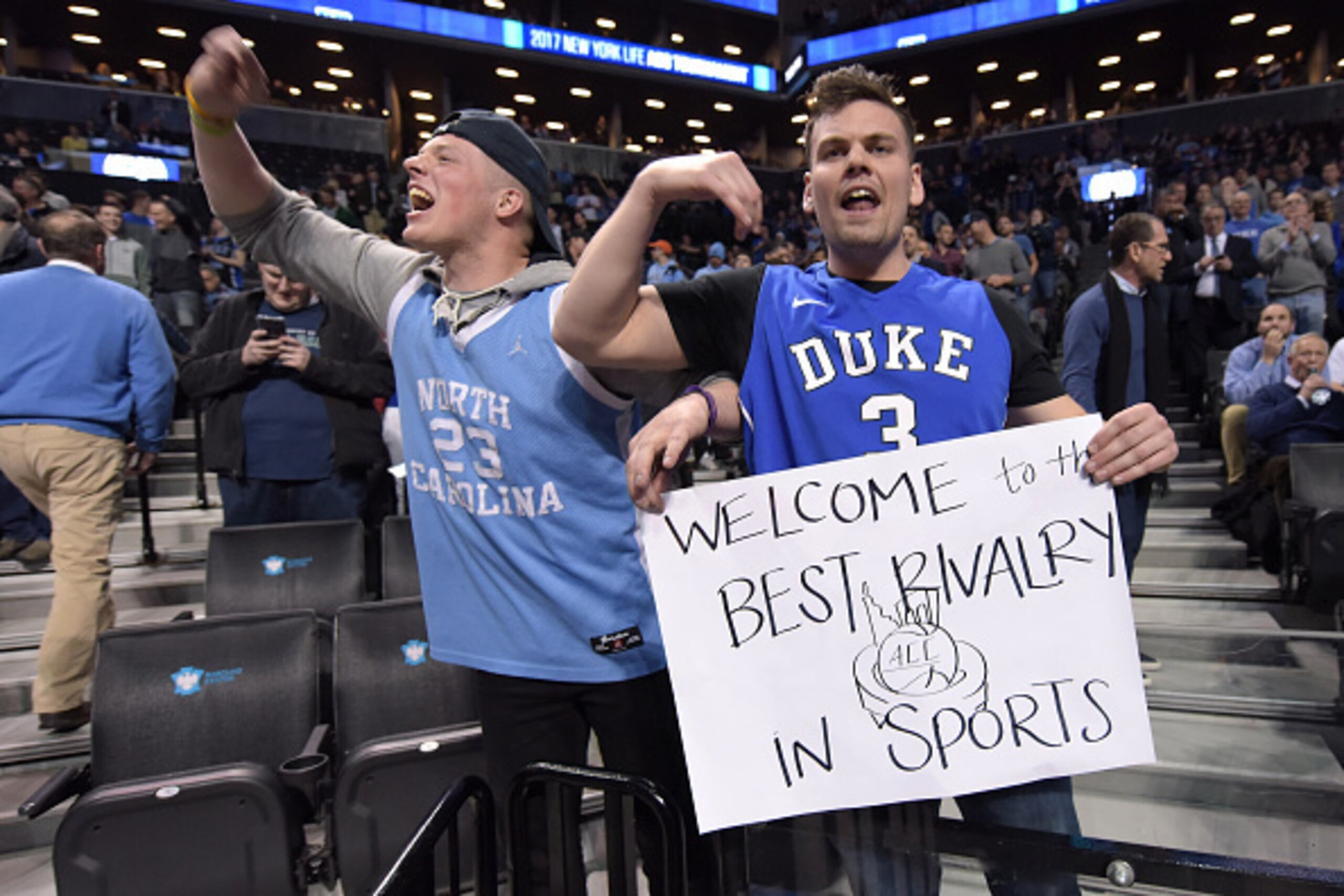
No. 1 North Carolina vs. No. 2 Duke
It's not the chaotic No. 5 vs. No. 9 final I projected last season, but there's not a possible national championship game pairing more likely to break the internet.
It's the greatest rivalry in sports and also a battle between the two biggest catchphrases in college basketball this season: "Duke is back!" vs. "The ceiling is the roof!"
Incredibly, despite a combined 35 trips to the Final Four, these two titans of the sport have never met in the NCAA tournament. They did square off once in the 1971 National Invitation Tournament, but never in this one.
That streak will come to an end with Round 4 between the Tobacco Road enemies.
There's no point in trying to predict how this one will go, other than to say it'll be a back-and-forth affair with North Carolina dominating the glass and Duke putting together a number of runs fueled by three-pointers—as is almost always the case when these teams meet.
The Blue Devils may be back, but the Tar Heels won't return to the national championship game for another dose of heartbreak. North Carolina will avenge its ACC tournament loss with a close win in the NCAA tournament final.
Stats courtesy of WarrenNolan.com, KenPom.com and Sports-Reference.com.
Kerry Miller covers college basketball for Bleacher Report. You can follow him on Twitter: @kerrancejames.



.jpg?w=2560 "Rodgers Iced Out on Plane 💎")

.jpg?w=2560 "🚨 Week 8 AP Top 25 Poll")