
NCAA Tournament 2017: Strengths and Weaknesses for Top Contenders
The beauty of the NCAA tournament is that all 68 teams feel like they have a chance to win it all. In reality, the pool of contenders is much smaller.
Since 1985, 31 of the 64 title-game finalists were No. 1 seeds, and roughly half of the Final Four qualifiers since then have been a top-seeded club. The majority of the other Final Four teams have been seeded near the top of their region.
Still, a high seed isn't a guarantee of postseason success. It's just as much a matter of having the right makeup as a team and who you end up facing.
For this piece, we're focusing on what's good and not so good about this year's top contenders, which we selected prior to the tourney field announcement and chosen based on their overall play.
This isn't a prediction of which teams will go farthest but rather one assessing what the most likely title contenders have going for them and what could end up being their undoing.
Arizona Wildcats
1 of 12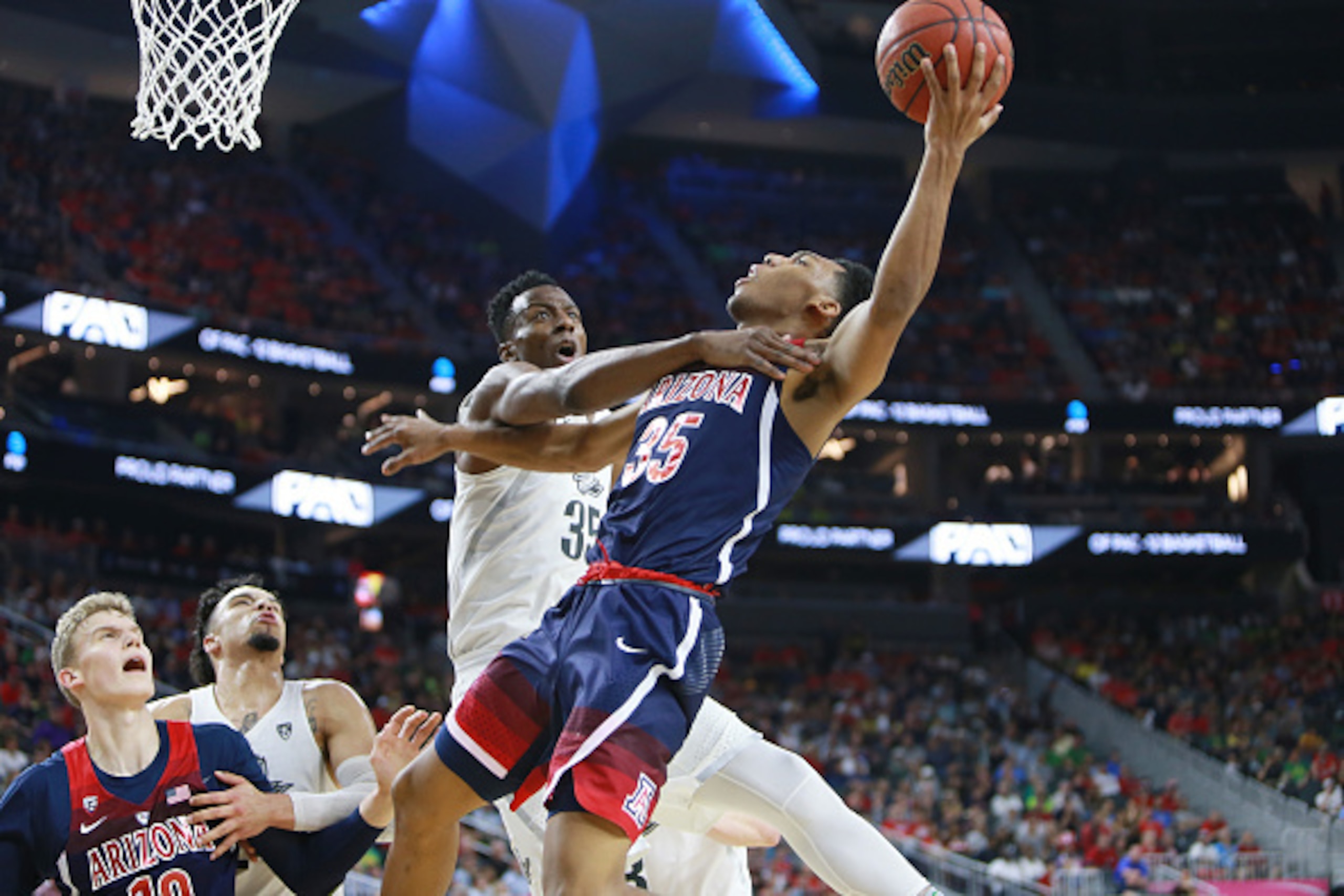
Strengths
For a team that regularly starts two 7-footers, you'd think Arizona (30-4) would be more effective making two-point shots, though 51 percent is only slightly above average for that figure. Instead, the Wildcats are better at hitting the long ones and those that come free, ranking high in three-point (39.8 percent) and free-throw shooting (75.8).
Freshman forward Lauri Markkanen is big in both areas; the 7'1" Finnish standout is shooting 43.2 percent from deep with a team-best 67 threes while also being Arizona's best foul shooter at 82.4 percent. Markkanen, junior center Dusan Ristic and strong rebounding guards all contribute to the Wildcats having an impressive 55 percent overall rebounding rate.
The return of Allonzo Trier in late January—he missed 19 games because of a failed performance-enhancing drug test—has aided each of these areas. The sophomore guard has averaged 17.3 points, 5.0 rebounds and 2.7 assists while making 41.4 percent of his three-pointers and 80.0 percent of his free throws.
Everyone is involved in a defense that allows 65.4 points per game and is in the top 20 nationally in defending the three.
Weaknesses
Arizona's strong perimeter shooting comes as a result of passing the ball around well, inside and out, and finding the best opportunity. When it settles for a contested three, as it did in the home loss to UCLA, the shots don't fall as frequently.
The Wildcats have been particularly vulnerable against teams that throw out a zone defense since that takes away its perimeter players' ability to drive.
Duke Blue Devils
2 of 12
Strengths
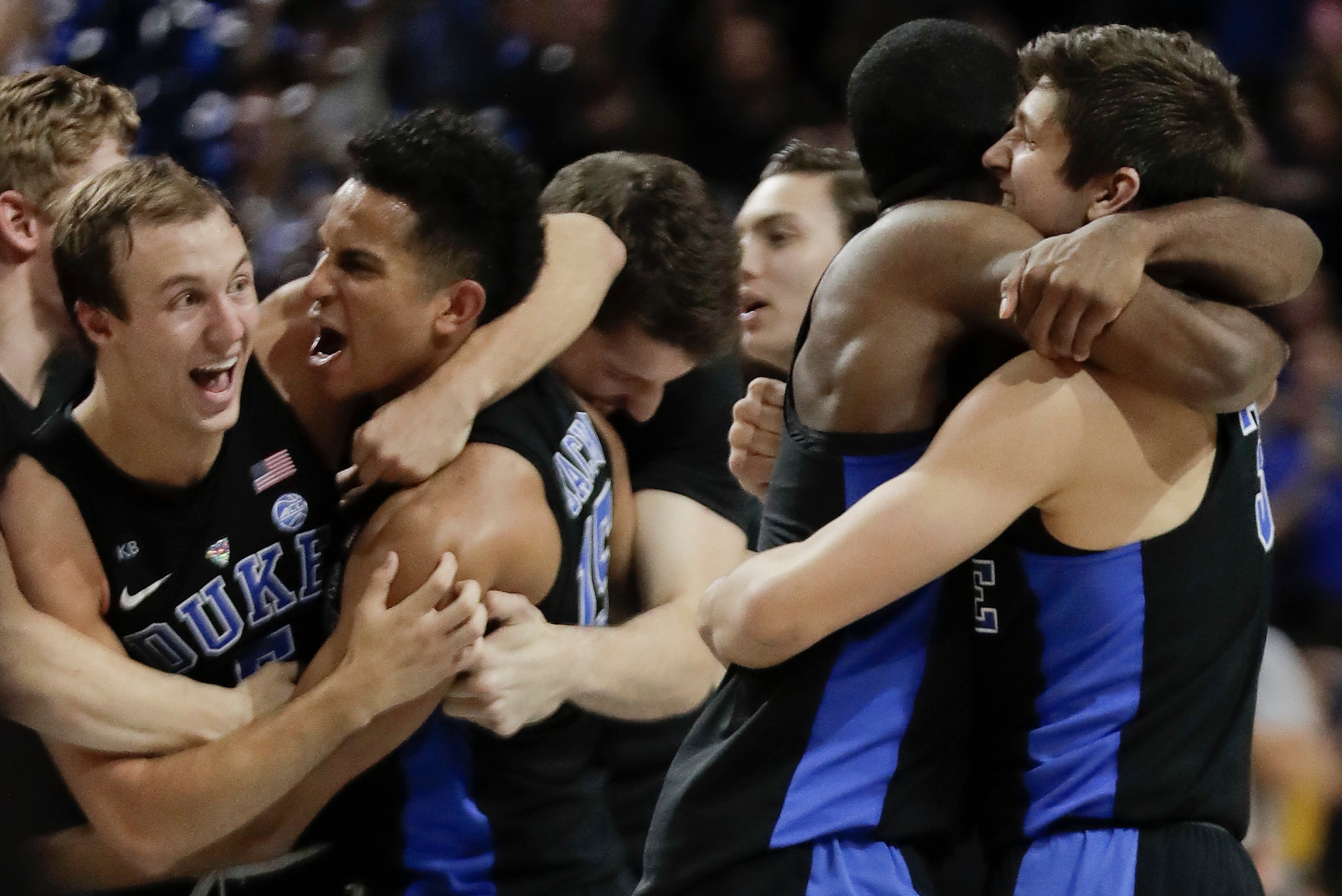
Duke (27-8) had to win four games in four days to take the ACC tournament title, and in that run it trailed every game yet had enough to come through in the end. The immense talent it was expected to have entering the season never fully materialized, but those who have come on strong of late are more than enough for the Blue Devils to be a major national title contender.
Sophomore guard Luke Kennard is the leading scorer at 20.1 points per game, and he's just one of five players averaging double figures, and each is capable of taking over a game (and has done so).
Freshman forward Jayson Tatum, who had 19 points and eight rebounds in the ACC championship, scored 88 in the four tourney games and has seven 20-point games. Freshman point guard Frank Jackson, meanwhile, has emerged over the past few weeks. Junior guard Grayson Allen has had an up-and-down year, but he can turn it on at any moment, and senior forward Amile Jefferson is the model of consistency.
Duke also has the luxury of having the winningest coach in NCAA history in Mike Krzyzewski, who, since missing time midway through the season because of back surgery, has made great moves in shuffling his lineup.
Duke's strengths aren't related to statistics as much as to intangibles, as was on display during its ACC tourney run.
Weaknesses
But the Blue Devils aren't without flaws, most notably their lack of an interior presence on the defensive end.
Jefferson is more skilled as a scorer and rebounder than a rim protector, and the rest of Duke's big men have been mostly ineffective this season. As a result, Duke allows 48.8 percent on two-point shots compared to 29.5 percent on threes.
In their eight losses, the Blue Devils have yielded 54.7 percent on twos, with seven teams shooting better than 50 percent.
Gonzaga Bulldogs
3 of 12
Strengths
In starting 29-0 this season, Gonzaga (32-1) showed an incredible amount of balance on offense, with five players averaging double figures and four of them shooting better than 50 percent from the field. The Bulldogs shoot 51.8 percent from the field and 38.2 percent from three-point range, with guards Jordan Mathews and Josh Perkins combining to shoot 40 percent from deep.
Gonzaga also rebounds the ball incredibly well, winning that battle 26 times. Four different players average at least five boards per game, including freshman forward Zach Collins, who pulls down 5.7 rebounds in just 17.1 minutes per game.
Turnovers have rarely been an issue for this careful team, with guards Perkins and Nigel Williams-Goss pacing a group that gives the ball away only 11.3 times per game.
Weaknesses
Gonzaga looked well on its way to being the first team to enter the NCAA tournament unbeaten since Kentucky in 2015 before it shockingly fell at home to BYU in its regular-season finale. That game saw the Bulldogs miss 13 free throws, lose the rebounding competition and turn it over 15 times to a team that has 11 losses.
Other than that setback, Gonzaga hasn't faced many challenges since finishing nonconference play outside of a trio of wins over West Coast Conference rival Saint Mary's, and it beat the Gaels by an average of 17 points en route to a season-long scoring margin of 23.4.
The BYU loss was the only time we've seen the Bulldogs face any sort of adversity, and it was minimal. It remains to be seen how they'd handle an adverse situation against a tough opponent during the NCAA tourney.


.jpg?w=2560 "Rams Raiders Football")
Kansas Jayhawks
4 of 12
Strengths
The Kansas team that shot 44.6 percent and missed 20 three-pointers in falling to TCU in the Big 12 quarterfinals isn't the one you're likely to see in the NCAA tournament. For one, freshman wing Josh Jackson is expected back after being suspended for the last contest, and his return should coincide with a resumption of the hot shooting the Jayhawks (28-4) have shown most of the season.
They shoot 48.7 percent overall and 40.5 percent from three, making at least 50 percent of their field goals in 15 games while draining at least 10 threes on 13 occasions. Senior guard Frank Mason III is a 48.7 percent three-point shooter en route to potentially being the first player since 1994-95 to average 20 points, four rebounds and four assists per game while shooting 40 percent from three.
Having your point guard average 4.1 rebounds per game is why Kansas is so dominant on the boards, with Jackson and senior forward Landen Lucas particularly adept at grabbing missed shots.
Weaknesses
Kansas gets to the foul line more than 22 times per game but rarely takes advantage of all those trips, shooting a dismal 66.6 percent.
Mason and junior guard Devonte' Graham both shoot better than 78 percent, but they account for only 41 percent of the foul shots. Jackson's 55.9 free-throw rate has been an issue in close games since he takes more than five free throws per game.
The Jayhawks can also be susceptible to good three-point shooting teams, allowing 35.7 percent overall, with six opponents hitting 10 or more triples. That includes a combined 33 yielded to Indiana and Iowa State in overtime losses.
Kentucky Wildcats
5 of 12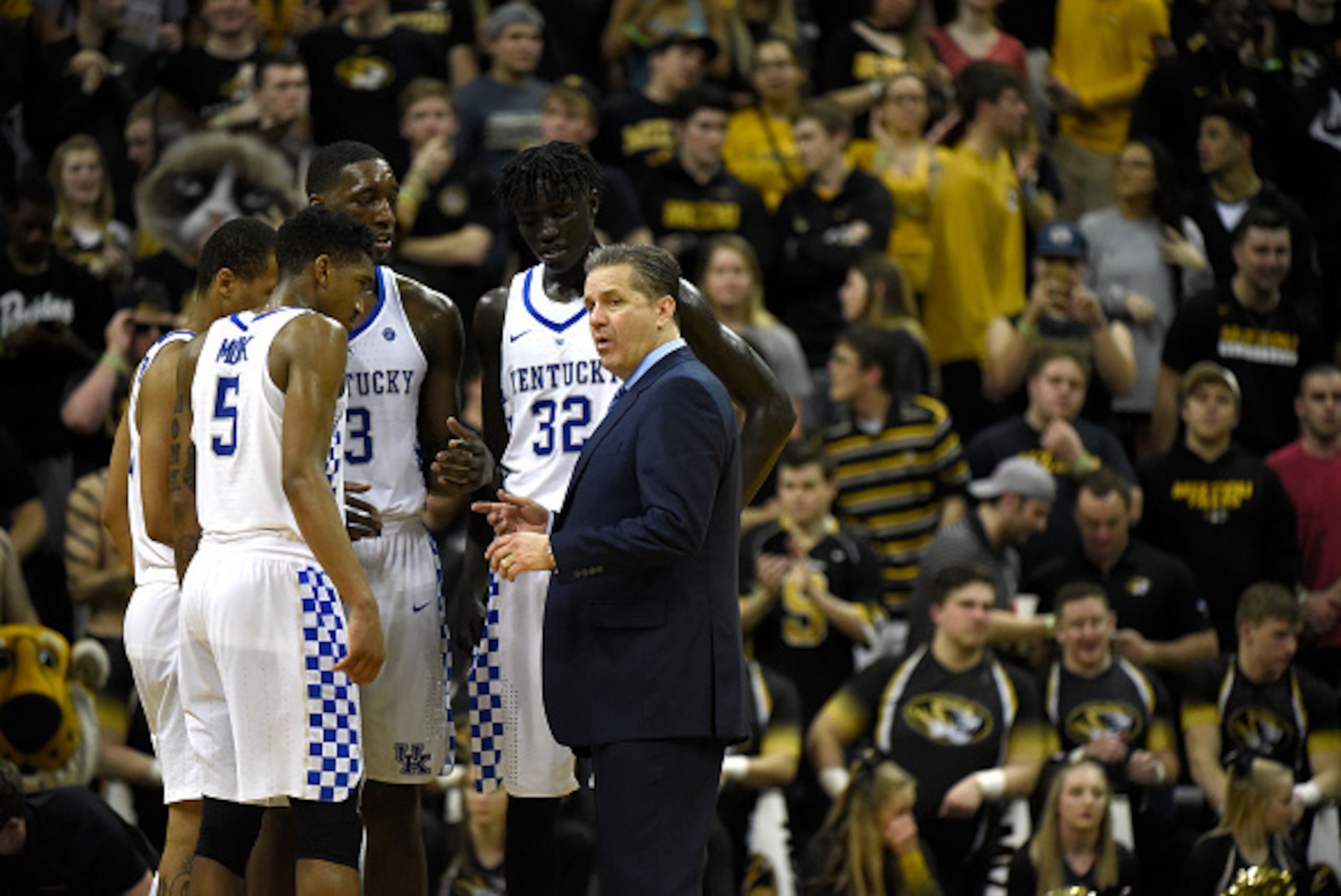
Strengths
The 2016-17 Wildcats (29-5) are similar to all previous Kentucky teams since John Calipari has been in charge in that youth is everywhere. For most squads, that could be considered a weakness. That's not the case for Kentucky since most of the freshmen on the roster are going to be in the NBA some day, possibly before this year is over.
This current crop of freshmen is quite talented, starting with the backcourt duo of De'Aaron Fox and Malik Monk and then heading inside to forwards Bam Adebayo and Wenyen Gabriel. That quartet logs more than 50 percent of available minutes and contributes more than 60 percent of the scoring.
Monk is the most explosive weapon of the group. He is neck-and-neck with Jamal Murray (from the 2015-16 team) as the highest-scoring player that Calipari has coached at Kentucky. He gets those points through a mix of three-pointers and drives to the basket, where he either finishes, gets fouled or both.
Getting to the line is a major asset for the Wildcats, who average more than 26 foul shots per game. Four different players average at least four free-throw attempts per game.
Weaknesses
If Monk isn't lighting it up from outside, there's not a consistent second option, at least in terms of volume. Senior wing Derek Willis and Mychal Mulder are accurate but don't take nearly as many perimeter shots, so if Monk struggles from outside it completely changes Kentucky's offensive makeup.
A tendency to go through lulls on offense has also plagued the Wildcats despite their being one of the top-scoring teams in the country. Four of their six worst shooting games have come in losses, and each instance featured at least one prolonged scoring drought.
Louisville Cardinals
6 of 12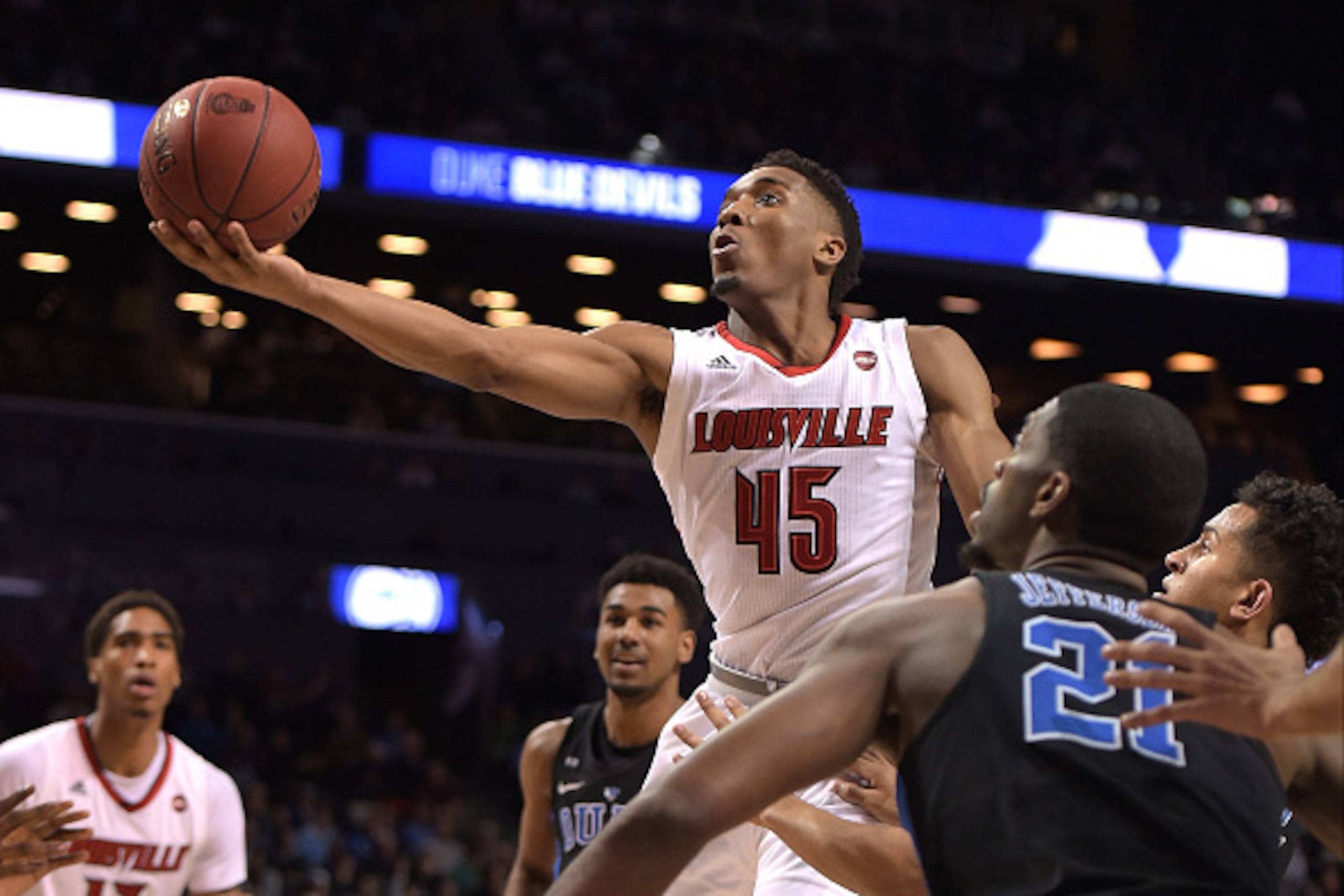
Strengths
Because of incredible length across the board, Louisville (24-8) makes it hard for teams to get good shots off, leading to an impressive 39.6 percent field-goal defense. The Cardinals are just as strong preventing the three, allowing 30.9 percent, with only four opponents managing to make 10 or more from deep.
That same length and athleticism pays off immensely on the offensive end because almost everyone in Louisville's rotation can drive the ball and get to the rim. Sophomore guard Donovan Mitchell is usually good for at least one highlight-reel flush per game, and the 36.3 percent three-point shooter is also its most prolific scorer from the perimeter.
Mitchell is the Cardinals' top scorer at 15.7 points per game, but all eight rotation guys score at least five per night.
Weaknesses
While Louisville prefers to keep the pace slow when on defense, it does love getting a chance to run out in transition. When that doesn't happen and it's forced to play in a half-court set, the problems start to surface.
None of the Cardinals' top three scorers (Mitchell, junior guard Quentin Snider and sophomore forward Deng Adel) shoot better than 41.3 percent from the field, and those numbers are much worse when you take out dunks and layups.
The Cardinals struggle with free throws as well, making 68.5 percent as a team despite Adel, Mitchell and Snider all shooting 72.5 percent or better. Five of their eight losses came in games when they shot 66.6 percent or worse from the line, including missing 11 of 26 free throws in the four-point loss to Duke in the ACC quarterfinals.
North Carolina Tar Heels
7 of 12
Strengths
North Carolina (27-7) is the top rebounding team in the country, and it's not even close, but then again most teams don't have the amount of frontcourt depth it has. Besides seniors Isaiah Hicks and Kennedy Meeks, the Tar Heels also have sophomore Luke Maye and freshman Tony Bradley, a quartet that has combined for more than 19 rebounds per game.
Bradley, Hicks and Meeks also shoot over 50 percent, and that frees up juniors Joel Berry and Justin Jackson to hit open three-pointers. That duo's 166 threes are only 58 fewer than UNC had as a team all of last season.
The Heels have the ability to score easily in the half court because of their inside-outside groupings, yet they're best when able to run the court. They've scored 80 or more points in 24 of 34 games, going 22-2 in those contests.
Weaknesses
Berry has a solid 1.95-to-1 assist-to-turnover ratio, and no UNC player averages more than 1.9 turnovers per game. But when its floor leader isn't on the court, the ball doesn't get moved around as well.
Berry missed two games in December, and the Tar Heels had two of their worst shooting games of the season. In Saturday's ACC tournament semifinal loss to Duke, his time stuck on the bench in the second half with foul trouble was key when a big lead quickly evaporated.
No other guard has managed to fill in adequately for Berry outside of sophomore Kenny Williams, who was averaging 6.2 points and 2.2 assists per game before suffering a knee injury in mid-February.
Oregon Ducks
8 of 12
Strengths
When Oregon (29-5) starts to heat up on offense, it's hard to cool it off, resulting in 48.1 percent shooting as a team, with comparable numbers for most of its rotation players. Junior wing Dillon Brooks makes 51.3 percent of his shots overall and is a 41.4 percent three-point shooter, nailing game-winning threes to beat UCLA and California en route to the Ducks sharing the Pac-12 title.
Brooks isn't the only lights-out perimeter shooter, though, as Oregon shoots 37.8 percent and makes more than eight triples per game.
As good as Oregon has been on the offensive end, what has enabled it to achieve contender status is how it stops others from scoring. Only four teams have managed to shoot 50 percent against the Ducks, compared to 17 that shot worse than 40 percent.
Much of that had to do with a back line that made trying to go to the rim a bad idea. With three blocks against Arizona in the Pac-12 tournament final, Oregon has swatted 226 shots to set the conference season record. However, a torn ACL suffered by senior Chris Boucher means his 79 blocks in 31 games won't be available during the NCAA tournament.
Weaknesses
Oregon tends to fall in love with the three-pointer, taking 39 percent of its shots from deep, and that's proved disastrous at times. It was 6-of-22 in the Pac-12 final, making it 36-of-124 (29 percent) in its five losses.
Losing Boucher might lessen the dependence on the three since he liked to stretch the floor and launch from outside, while his replacement—6'11" junior Kavell Bigby-Williams—is a more traditional center.
But Boucher's absence will have a negative impact on what was already shaky team rebounding, as Oregon has been outrebounded 12 times.
SMU Mustangs
9 of 12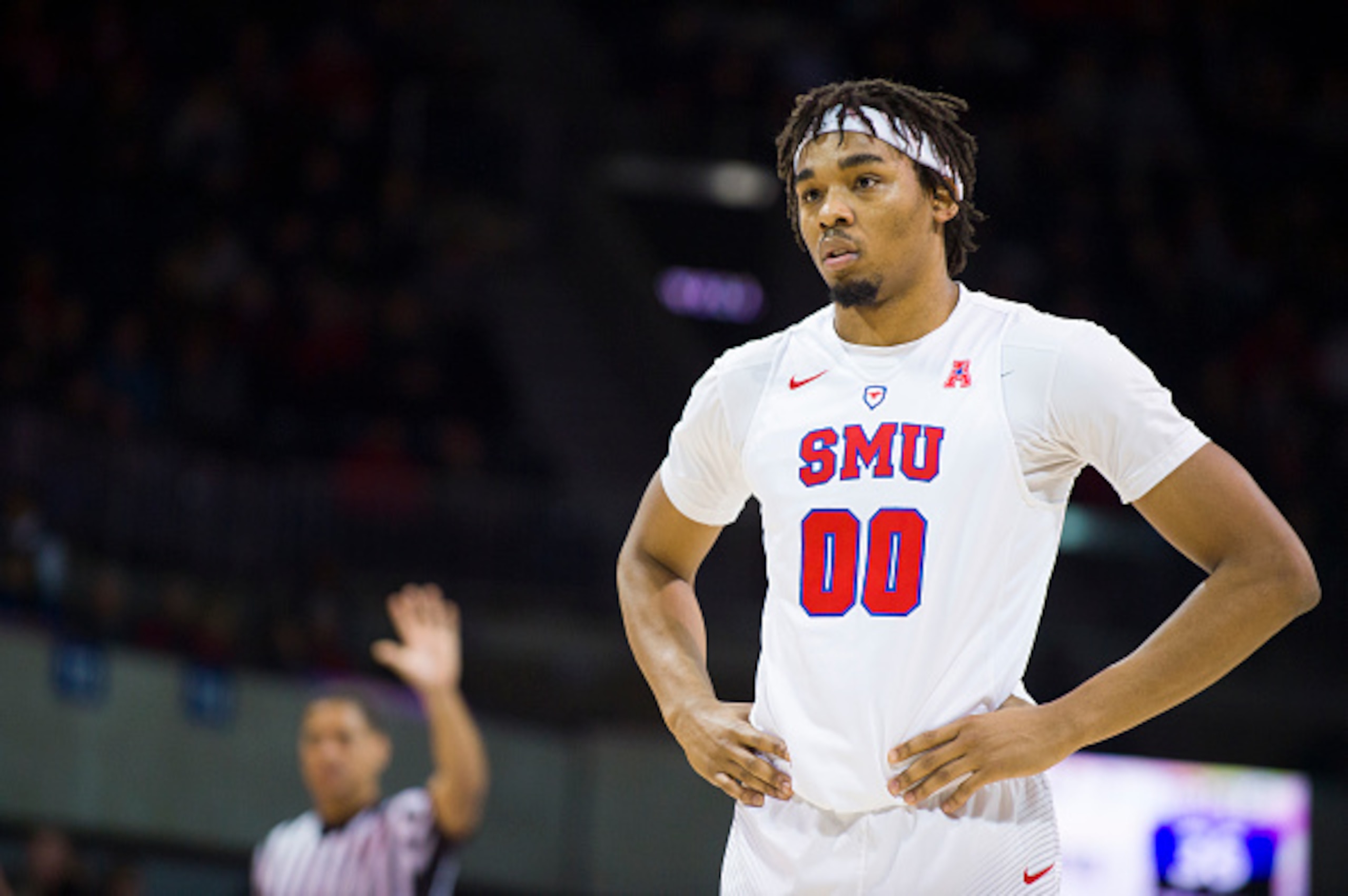
Strengths
SMU (30-4) has managed to slide mostly under the radar all season long, the product of being in an American Athletic Conference that, outside of itself and Cincinnati, has been unremarkable. That just means the Mustangs could make an even bigger splash over the next few weeks.
Not knowing much about this team could be a major positive, though opposing coaches are sure to be aware of the Mustangs' biggest asset: defense. SMU is in the top 10 nationally in scoring and field-goal defense and is quite effective guarding against the three-point shot as well. It's also good at what's best described as free-throw defense, meaning it doesn't foul much while defending and thus doesn't allow many foul-shooting opportunities.
The Mustangs offense is solid but not spectacular, with mostly good numbers across the board. There's great production balance starting with 6'8" junior forward Semi Ojeleye, a Duke transfer, and continuing with guards Sterling Brown and Shake Milton.
Hunger is also on SMU's side. It had an NCAA-caliber team last season but wasn't eligible for the tourney because of a postseason ban. With the majority of that group back for 2016-17, there's a drive to show the world what last season's tournament was missing.
Weaknesses
SMU's starting five can match up with almost any team in the country, but unless it manages to convince each opponent not to go to the bench, its lack of noteworthy depth could be a major issue. Sixth man Ben Emelogu, a 6'5" junior guard, plays about 20 minutes per night but doesn't contribute much statistically, and he's been scoreless six times.
Losing freshman big man Harry Froling to transfer after 10 games took away its only notable frontcourt reserve to spell Ojeleye and senior forward Ben Moore, both of whom play more than 32 minutes per game.
The Mustangs have been smart with their fouling to this point, but a savvy opponent would be wise to try to create foul trouble.
UCLA Bruins
10 of 12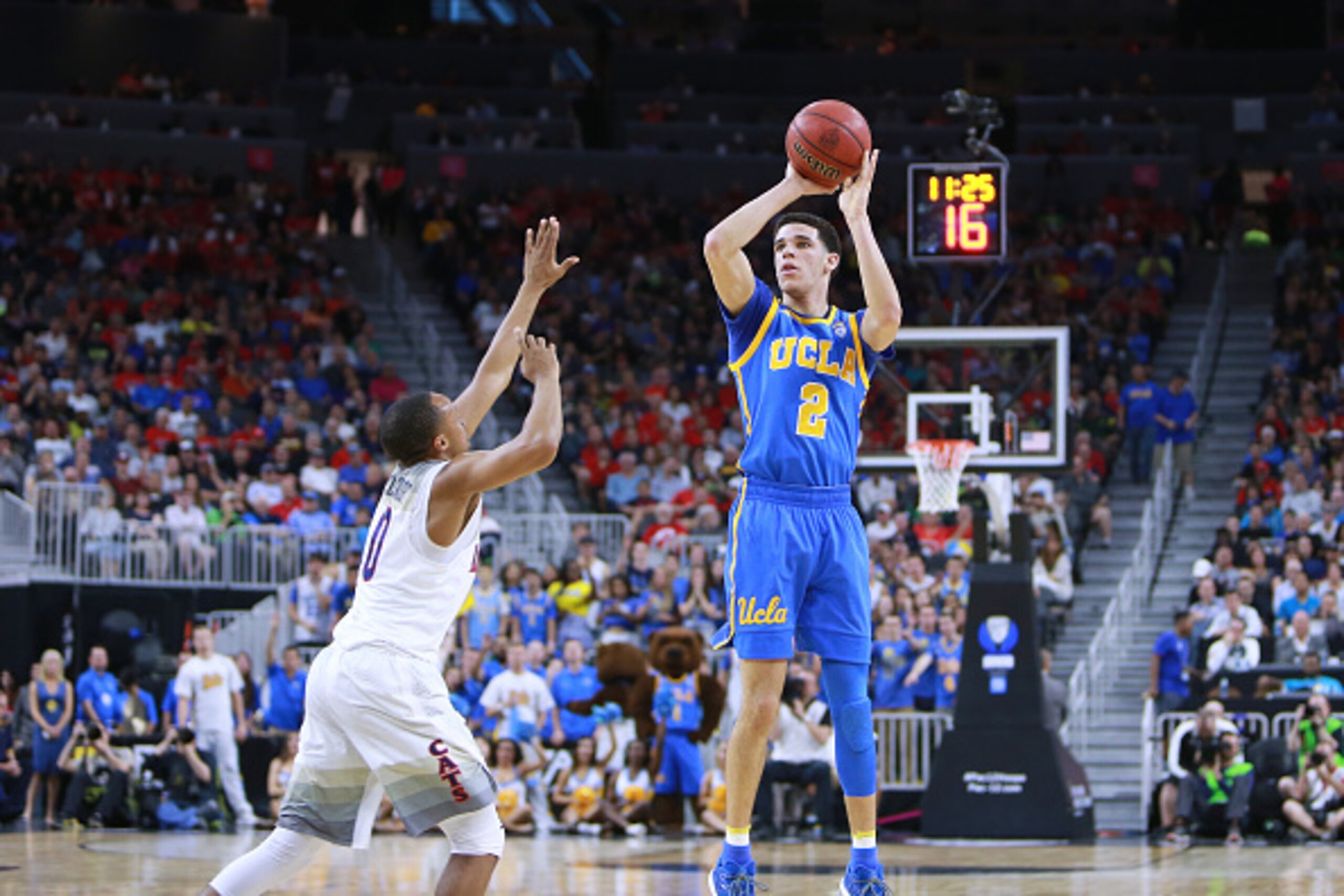
Strengths
It doesn't matter how you guard UCLA (29-4), because it won't stop the Bruins from hitting their shots. They're the No. 1 shooting team in the country at 51.9 percent, and their 40.5 percent three-point rate is also among the best in Division I.
Every member of its rotation shoots at least 45 percent overall, and its top five scorers all hit 35 percent or better from deep.
Speaking of top scorers, there are actually six who average double figures, so good luck keying on just one or two in an effort to shut down UCLA's attack. The only possible way to negate it would be to limit freshman point guard Lonzo Ball's passing, but while he leads the nation in assists per game at 7.7, he's not alone in being able to distribute, as the Bruins assist on nearly 64 percent of their makes.
Making them even more dangerous on offense is the scarcity of turnovers, only 11.5 per game.
Weaknesses
With such an efficient and explosive offense, UCLA doesn't need to do much on defense, which is good because it's not that great on that end. The Bruins allow 75.3 points per game, and their defensive rating of 100.6 is among the worst of the teams in the NCAA field.
Nine teams have averaged more than 1.1 points per possession, and that's resulted in all four losses, making it so the Bruins don't have a backup plan in the rare event when they don't shoot lights-out.
Villanova Wildcats
11 of 12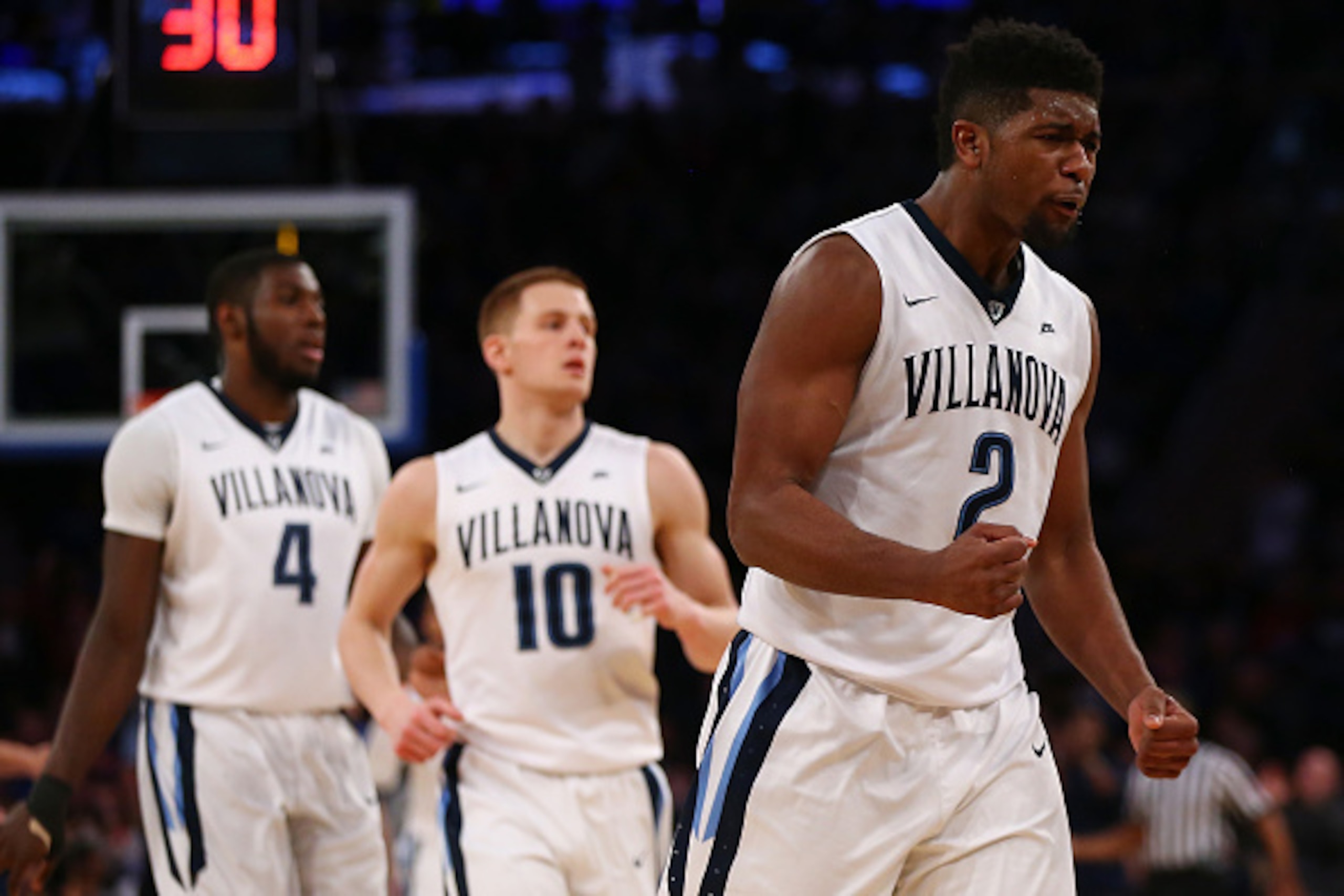
Strengths
Villanova (31-3) is the defending national champion, and many of the guys who got rings last April are still around, giving the Wildcats the best shot to repeat since Florida in 2006-07. Seniors Josh Hart and Kris Jenkins continue to make big, clutch plays, while sophomores Mikal Bridges and Jalen Brunson have taken on bigger roles.
That experience will be invaluable as the tournament progresses.
So will Villanova's ability to make shots from all over. It makes just under 50 percent from the field, among the best in the country, and nearly 37 percent from three. The Wildcats are also money from the line, making 79.4 percent of their foul shots, including 90 percent or better on eight occasions.
Villanova turns the ball over just 11.2 times per game thanks to its many capable ball-handlers. Outside of a home loss to Butler in late February, there hasn't been a game this season where the Wildcats didn't look like the best team on the court.
Weaknesses
Villanova has managed to go through most of this season with only seven guys playing meaningful minutes, an issue caused by junior guard Phil Booth going down with an injury in mid-November. It also was without senior forward Darryl Reynolds for a few games during Big East play, and fatigue started to show on those overworked Wildcats.
While adrenaline should be enough for the rigors of the NCAA tourney, there's still the issue of depth, particularly in the frontcourt, where 6'7" sophomore forward Eric Paschall is frequently considered their "big man."
Reynolds has more size at 6'9", but unless 6'10" redshirt freshman Dylan Painter suddenly becomes a more viable option, Villanova could be in trouble against bigger teams, especially if it gets into foul trouble.
Surprisingly, though, Villanova was only outrebounded seven times this season.
Wichita State Shockers
12 of 12
Strengths
Because it played in the underwhelming Missouri Valley Conference, where outside of co-regular-season champion Illinois State there wasn't much viable competition, Wichita State (30-4) heads into the NCAA tournament with some questions. The same came be said about what specifically the Shockers do well, since that's evident regardless of the foe.
The Shockers are proficient on the glass despite starting nobody taller than 6'8" sophomore Markis McDuffie. They make up for the lack of height with great positioning and strength, averaging 8.7 more rebounds per game than their opponents while getting outrebounded just six times.
Wichita State takes good care of the ball; its 13.8 percent turnover rate is among the top 30 in the country. Meanwhile, its defense averages 6.9 steals per game to go along with 37.8 percent shooting allowed.
Great depth has enabled head coach Gregg Marshall to spread out the minutes, with 10 players averaging 12.2 or more. None play more frequently than redshirt freshman guard Landry Shamet, who's at just 26.2 per game.
Weaknesses
Who has Wichita State beaten?
Its two victories in three tries against Illinois State were impressive, but those accounted for its only top-50 wins of the season compared to four losses (with three coming Dec. 17 or earlier).
In their four losses, the Shockers haven't been as strong defending or rebounding.
All statistics courtesy of Sports-Reference.com unless otherwise noted.
Follow Brian J. Pedersen on Twitter: @realBJP.



.jpg?w=2560 "Rodgers Iced Out on Plane 💎")

.jpg?w=2560 "🚨 Week 8 AP Top 25 Poll")