

Villanova's Josh Hart Finding with Age Comes Chance to Know Who You Really Are
VILLANOVA, Pa. — A three-word tweet, and the decision was official: It was May 24, 2016, at 9:05 p.m. ET, when Josh Hart announced he was coming back to Villanova for his senior season rather than entering the NBA draft.
"ONE MORE YEAR!!" Hart wrote on Twitter, echoing the chants at the Wildcats' national championship parade six weeks earlier—and those words were retweeted more than 2,500 times and liked more than 4,000 times, and all seemed well with a program that had just won the NCAA tournament on an iconic buzzer-beater and seemed poised to contend again.
But not all was well with Josh Hart.
TOP NEWS

J-Dub Suffers Gruesome Injury

Contenders starting to separate themselves after Week 7

Geno Explains Wilson Exchange
The decision tore at him. It was, in a practical sense, the right thing to do. He'd struggled at the NBA scouting combine earlier in May, perhaps because Villanova's championship run had worn him out both physically and mentally. He was projected as either a late first-round or early second-round pick, at best. Another year at Villanova, and he could reconstruct his unorthodox shooting style, hone his leadership abilities and prove that his low-key fundamental skill set could translate to the NBA.
All of that, Hart understood. So did his parents, who continually told him that he should do what's best for him and not worry about prematurely grasping for a pro contract that would potentially change all of their lives. But in the couple of days after he tweeted those words, he didn't much feel like talking to anybody. He felt lost. He felt, at least in the moment, as if he'd failed the parents who had struggled so hard to support him over the years.
The frustrations he'd carried with him since he'd been asked to leave Sidwell Friends, an exclusive Washington, D.C., high school, after his sophomore year—and his underlying insecurities about his financial and social status as a kid from a working-class family attending elite private schools—came flooding back.
"I would hate going into the mall [at Sidwell]," he says. "People would be like, 'We're going to Georgetown; do you want to come?' And I'd be like, 'Hell no. I don't want to go to Georgetown. I can't afford nothing in Georgetown; why would I go to Georgetown?' Even now, my friends [at Villanova], a lot of them are from private schools, and I never take nothing from them, but if we get something to eat, they're always like, 'Are you good? You need me to get you?' It's like, damn, I want to have this. I want to be in this situation right now."
As Hart closes out his senior season, Villanova is poised to make another Final Four run, and Hart himself is one of the top contenders for National Player of the Year honors. He is, by nearly every account, an eminently enthusiastic and likable teammate with a keen sense of self-awareness, a four-year player who has gradually blossomed into a solid pro prospect.
He's come a long way since those early years of high school, and yet even as he tries to relish the final moments of his college career, he cannot help but get frustrated at times that he can't do more to help the father who taught him to be self-disciplined, and the mother who literally hobbled herself to provide for her children. And he still fights to keep from falling prey to the critic that resides largely within his own head.
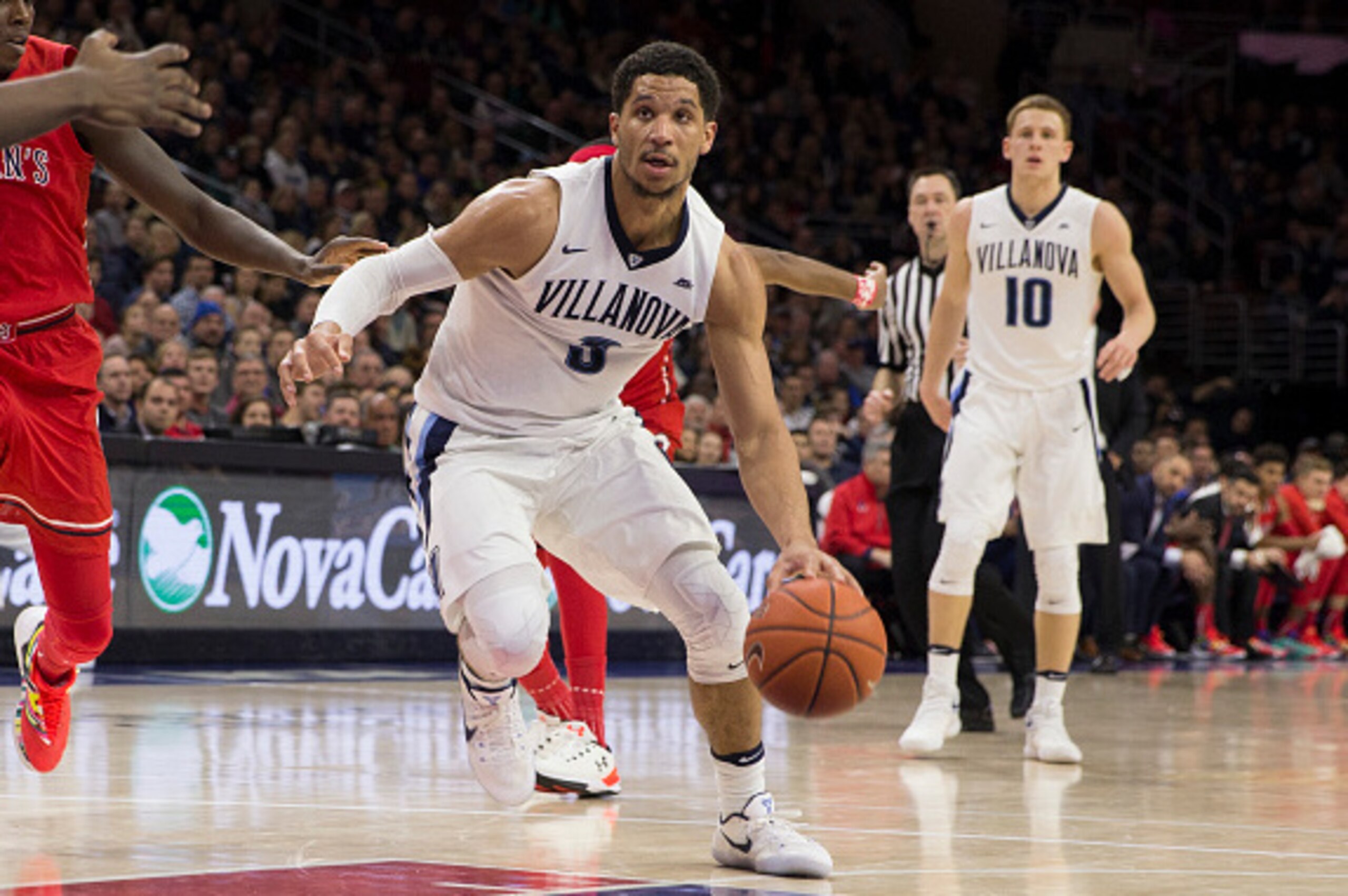
There's a story about a young Josh Hart that's been reported multiple times, about how his father didn't appreciate his effort in a game and took him to the park down the street from their house near D.C., shining the high beams from their old Volvo onto the basketball court as the two shot around until late into the night. This story is true, but there are a couple of caveats: The first is that this is the only time Moses Hart ever had to tell his son that he didn't give his all on a basketball court; given Hart's overactive competitive gene, this was the exception to the rule.
And the second caveat is that this didn't happen just once. Moses and Josh actually did this all the time.
Moses Hart is a chef, and he would work until eight or nine at night, come home and take a brief rest, and then they would hit the court at 10 or 11 (Moses' wife, Pat, was often working night shifts as a waitress at a nearby country club).
Sometimes Moses would bring out Josh's older brother as competition, at least until Josh (who is four years younger) got good enough to beat him on a regular basis. Often on hot summer nights, they would complete the evening with Slurpees from 7-Eleven. They'd go out there in the winter sometimes, too, shoveling half the court themselves and playing until they got too cold.
"I remember I read something about Michael Jordan, and he said while other people are sleeping, he was working," Moses Hart says. "That's when I came up with the whole idea. That's why we'd go up there at night, when most people were at home."
This was how Josh was raised: Find something you're good at, Moses would tell him, and then work to be the best you can be at that particular thing. Moses grew up playing baseball—his uncle was Yankees legend Elston Howard—but once Josh chose basketball, Moses held Josh to it. Not long ago, Moses made a joke to Pat about those parents who go crazy pushing their kids, and he said, "I wasn't that bad, was I?"
"Well," she said, and paused. "No. But you were out there a bit."
This is how Moses Hart saw it, though: The kid could make his own choices, but he was going to finish what he started—no matter how difficult it was. And things would get difficult soon enough.
The summer after Josh's freshman year in high school, he went on a Boy Scout camping trip. That weekend, an electrical fire destroyed his childhood home. The Harts had no insurance, and no money to rebuild. They lost nearly everything they owned, and moved into a two-bedroom apartment. Five of them crammed into that space, and when one of Josh's older brothers was forced to move in, there were six.
That fall, Josh transferred from a public school, where he'd earned most A's and B's without much effort, to Sidwell Friends, a demanding private academy that was more famous for its rigorous classes (Barack and Michelle Obama sent both their daughters to Sidwell) than its basketball team.

Josh was a genial, goofy kid who had no trouble making friends, but he had no idea how to properly handle the rigors of Sidwell. He didn't have study habits, because he'd never really had to study before. In his first days there, teachers would talk about explicating poems; he had no idea what that even meant. He would get disciplined for pulling his phone out, or eating in the hallway or showing up a few minutes late for class. At Sidwell, 8.5 penalty "points" led to something called a "loss of privilege," or LOP. Two weeks in, Josh had 16 points.
"You double-lopped?" his classmates marveled, and Josh had no idea what they meant. By the end of his first year, the Sidwell administration sent him a letter suggesting he transfer.
But Josh had one thing working for him: His classmates adored him. Why, they wondered, were they kicking out a kid who didn't have any serious disciplinary issues, a kid who often didn't have $10 in his pocket to go out to lunch with his friends and get a Chipotle burrito?
So those friends and classmates pleaded with the Sidwell administration; they started a Facebook group called, "Let Josh Stay." They wondered whether anyone at Sidwell had given Josh a chance to adjust to a culture that was largely foreign to him, whether they'd simply allowed him to sink without giving him a chance to swim. Here was a kid who wanted to succeed and just didn't know how.
Josh thought about transferring, perhaps to a basketball powerhouse where the academics wouldn't be as rigorous. He thought even if Sidwell did let him back, he could always transfer somewhere else if it didn't feel right. But Moses didn't like that idea at all. He saw it as an easy way out. (For that same reason, even as Josh became a top-tier basketball prospect through high school, Moses wouldn't let Josh quit the Boy Scouts until he passed his Eagle Scout requirements.)
If Sidwell was going to let him back in, he was going to graduate from Sidwell—if he transferred, Moses told him, calling Josh's bluff, "your basketball days are done."
Once Josh witnessed the outpouring of support from his classmates at Sidwell—many of them casual acquaintances he knew no better than to maybe say hello to in the hallways—he understood that he couldn't leave even if he'd wanted to. He'd grown particularly close to one of his basketball teammates, Matt Hillman, and had begun spending more and more time at the Hillmans' house with Matt and his little brother Charlie. "He's just really easy—so sweet and humble," says Pam Hillman, Matt's mother. "I just love being with him."
And so, as part of Josh's agreement with the school, the Hillmans agreed to take in Josh for several nights a week so he'd have more space and more quiet to study. They set him up in the basement, the first time Josh had ever had his own room; he hooked up his Xbox down there as a way to blow off steam. They paired him with a Sidwell parent, Nikki Bravo, who offered up free tutoring. It was a struggle for Moses and Pat, to give up so much time with their son for the greater good, but the Hillmans—his "host family," as Josh calls them—soon became his second family.

Josh gradually pulled up his grades, found his way both on and off the court, and got offers from several Division I schools, including Penn State and Rutgers. One thing he excels at, say those who know him best, is his ability to compartmentalize, so that even when he was struggling off the court, it never really bled into his on-court play.
At one point, Villanova head coach Jay Wright went to Sidwell to scout one of Josh's teammates and wound up mesmerized by Josh's production, by his ability to grab seemingly every rebound. That, Wright said, was the kid they should be targeting; that was the kid who fit Wright's ethos. He met Josh's parents—who wanted nothing more for their son than to see him grow up in the proper environment—and thought, This is almost too good to be true.
"He came in here not really a skilled shooter or passer—just a rugged, aggressive, hard-driving baller," Wright says. "But right away we saw how he loved to work at his game."
By his sophomore year at Villanova, Hart had begun to smooth out his ragged shot and become one of the leading three-point shooters in the Big East. Last year, he improved nearly every phase of his game, became Villanova's leading scorer and was perhaps the most dominant cog in the Wildcats' NCAA tournament run. And after the graduation of seniors Ryan Arcidiacono and Daniel Ochefu last season, Wright challenged Hart to shed some of his inherent "goofiness" (for lack of a better word), to make even better decisions on the court and become more of a leader.
Part of the issue with Hart, Wright and others say, is that he's almost too competitive. Often, he'll strive to win a drill in practice rather than actually working within the purpose of the drill itself. He's the same way when he plays Xbox, where he's been known to send controllers flying after defeats; sometimes, when he and his girlfriend are walking, he'll shout out, "First to the car," and race her to see if he can beat her there.
So much of this year has been spent balancing out those urges, finding the right mix between his need to win while making sure his teammates are progressing under his leadership.
"We were just amazed at his leadership qualities," Wright says. "He wasn't that kind of guy. He was just a fun-loving guy. We really thought it was going to be a struggle this year. We were shocked. It's like he flipped the switch and became a different person."
You can see it in the little things—his teammate Darryl Reynolds noted the way Hart began making better food choices, eating fruit at the pregame meals rather than going straight for a hamburger. You can see it in the time he spent rebuilding the mechanics of his shot with an eye toward the NBA, enduring grueling offseason sessions with Villanova assistant Baker Dunleavy in which he'd brick dozens of jumpers in a row. You can see it in the way Hart never seems to get rattled and the way he contributes with defense and rebounding even when his shot isn't falling.
In a game against St. John's on Feb. 4, Hart made only one of his first eight shots but still helped stake his teammates to an 18-point first-half lead; he finished the game with 26 points, nine rebounds and five assists, but most of what he focused on after Villanova's 92-79 victory were his uncharacteristic six turnovers.
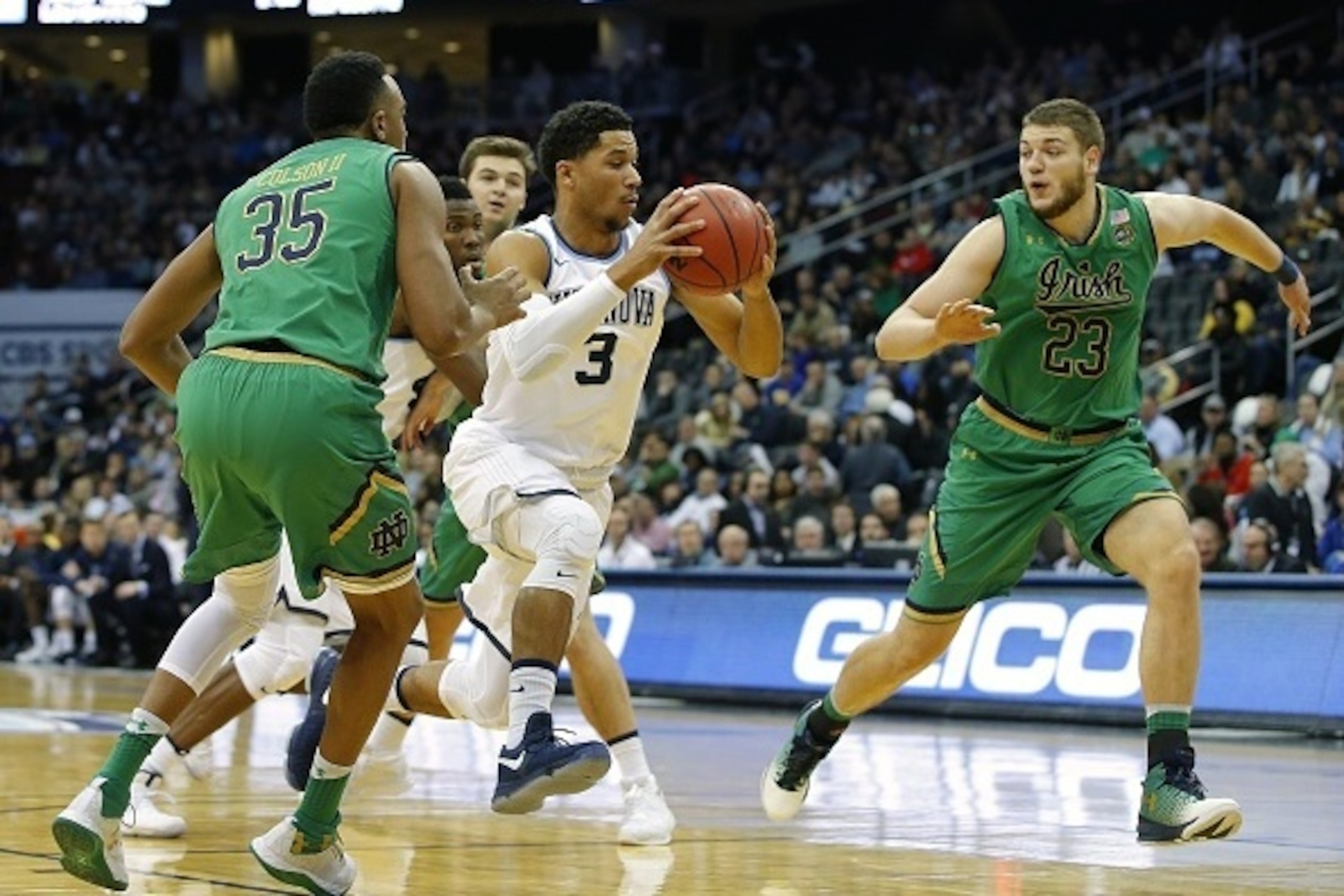
It's a strange place for the soon-to-be 22-year-old to be in: After years of building a game that's almost deliberately not flashy, he's getting noticed all over the place these days. Of course, it helps to be the leading scorer and rebounder for a defending national champion that has lost three games all season.
"He gets a knock for being one of the older draft prospects, but I think he's just coming into his stride," says Matt Hillman, who attends Carnegie Mellon. "He just gets so much better every year."
There's a scene in the Sidney Poitier film Guess Who's Coming to Dinner that Moses Hart spoke about to Josh as he was considering whether to enter the NBA draft last spring. It is a moment where Poitier's character, a doctor who is engaged to a white woman, confronts his father, a former mailman, telling him, "I owe you nothing!" This is how Moses wanted Josh to feel as he confronted his future.
"We should never, ever be a part of your decision," Moses told him.
But Josh couldn't help himself. His parents are in their 60s, and his mother recently had a knee replacement. In the roughly two years it took her to file the insurance paperwork to get the surgery done, she waited tables at the country club, often working double shifts while the bones in that knee ground together. His father still works part time as a chef at a catering company, though some months are more lucrative than others.
"I've never seen two harder-working people," Matt Hillman says.
At times, Josh Hart admits, he leaned hard toward the pros even though he knew it might not be the best thing for him. He wanted so badly to lift up his parents that it was hard to see the bigger picture, to reconcile himself with the notion that another year in college might provide him with a better chance at a longer pro career.
Sometimes, he says, he thinks about college basketball players who came up in far worse situations than he did; sometimes, he thinks, if "I were getting stuff from people" under the table, his parents would be in a far better situation. But he also understands that this is exactly what his father has long warned him against. On the AAU circuit, Moses Hart says, he saw so many kids who "were counting their dollar signs."
"We don't plan on relying on him to provide for us," says Pat Hart, Josh's mother. Lately, Pat says, the joke among them is that they'll follow Hart to whatever NBA city he winds up in, live in an in-law cottage and take care of the Rottweiler Josh and his girlfriend adopted whenever he travels.
"I think my parents loved who they raised," Josh Hart says. "I think they hated how they had to do it. I know for a fact, they'd say, 'I wish I could give you this,' or 'I wish I could do that, but we can't right now financially.' That's something I'm never gonna forget. The first chance I get to make sure they're in a different financial situation…right now, that's the be-all, end-all."
For now, much of Josh's time away from campus is spent with the Hillmans, who recently moved to Philadelphia to be closer to Pam's husband Michael's job in New York City. Josh often will catch a car-share or take a train to their house and play Xbox while giggling away with his extended family. He's always been a bit of a homebody, and now he has more than one home. "We got a third son out of this," Pam says.
That's how both families see it now—they're intertwined forever, part of a success story that began at Sidwell, in the moment when Josh Hart had to reckon with who he was and who he wanted to be. Whatever happens with the NBA—with any sort of big payday—won't change that, because Josh has already changed so much.
"I'm not struggling at all like I used to—I'm in a far better spot where I am, though at times, I'm still insecure," he says. "But when I am insecure, I try to look to the future and not worry so much about it."
Michael Weinreb is a writer based in San Francisco and the author of Season of Saturdays: A History of College Football in 14 Games. You can find him on Twitter: @michaelweinreb.
.jpg?w=2560 "Rams Raiders Football")
.jpg?w=2560 "Steelers Saints Football")

.jpg?w=2560 "🚨 Week 8 AP Top 25 Poll")

