

The NFL Scouting Combine kicked off on Tuesday with orientation and interviews in Indianapolis, Indiana. Which players have a chance at significantly boosting their stocks on the Oakland Raiders’ big board?
Draft needs could change over the next few weeks due to free agency. However, scarcity of talent at certain positions will affect decisions in April. General manager Reggie McKenzie has utilized the draft to address high-priority roster issues.
Despite signing veteran wideout Michael Crabtree during the 2015 offseason, the Raiders selected wide receiver Amari Cooper with the No. 4 overall pick to provide quarterback Derek Carr with a young perimeter playmaker for the long haul.
Last year, the front office signed safety Reggie Nelson to a two-year deal and added rookie safety Karl Joseph with the No. 14 overall pick in the draft. The acquisitions pushed Nate Allen into a backup role.
Currently, linebacker and defensive tackle stand out as the glaring weaknesses for a defense ranked No. 26 in yards allowed. With the No. 24 pick in this year’s draft, McKenzie shouldn't expect to see the best prospects available at each position of need.
Based on Fanspeak’s draft simulator, we’ll find out who may potentially fall to Oakland late in the first round and beyond.
Round 1: Malik McDowell, DT, Michigan State
1 of 8
Critics will point out Michigan State defensive tackle Malik McDowell’s poor work ethic, as documented in NFL.com draft analyst Lance Zierlein’s report. One NFC North scout went as far as to cast doubt about his motor:
"He has a chance to be a dominant player in our league. I mean dominant. It hasn't turned on for him all the way yet, but if it does, he could be like Mario Williams. He's just a little lazy, and I worry about whether he is going to be a self-starter."
We’ve heard this before about defensive lineman Mario Edwards Jr. coming out of Florida State. In fact, head coach Jack Del Rio called it senioritis.
However, when looking at McDowell’s film, he clearly possesses the size (6'6", 276 lbs) and ability to push the pocket in the pros. He must add to his pass-rushing moves, but that’s a job for the coaching staff. The Raiders absolutely need his skill set at defensive tackle in a four-man front or defensive end in nickel packages.
Furthermore, every prospect coming into the league doesn’t have to possess leadership qualities. McDowell can simply take the field, do his job, and it’s enough to excel at his position. With the No. 24 overall pick, the Raiders won't find a complete player available, so why not take a prospect with a sky-high ceiling?
Round 2: Anthony Walker Jr., LB, Northwestern
2 of 8
You’re probably asking about Ohio State linebacker Raekwon McMillan in this spot, but Northwestern product Anthony Walker Jr. shows more promise in coverage at inside linebacker. Though, he may have to shed weight to move more efficiently in space.
Based on his senior film, athleticism may be a question mark due to his size at 6'1", 245 pounds. Then again, earlier tape shows satisfactory ability to cover smaller areas and disrupt the short passing attack.
Walker’s ability to play downhill and shoot gaps remains constant. He’s the prototypical physical linebacker who looks for contact after the snap. He exhibits innate football instincts displayed by his ability to wreak havoc in the backfield. Through three seasons, he’s logged 39 tackles for a loss and 7.5 sacks.
The Raiders scouts will have to keep an eye on Walker’s 40-yard dash and shuttle-run performances to gauge quickness, agility and speed at his current weight.
Round 3: Taylor Moton, OL, Western Michigan
3 of 8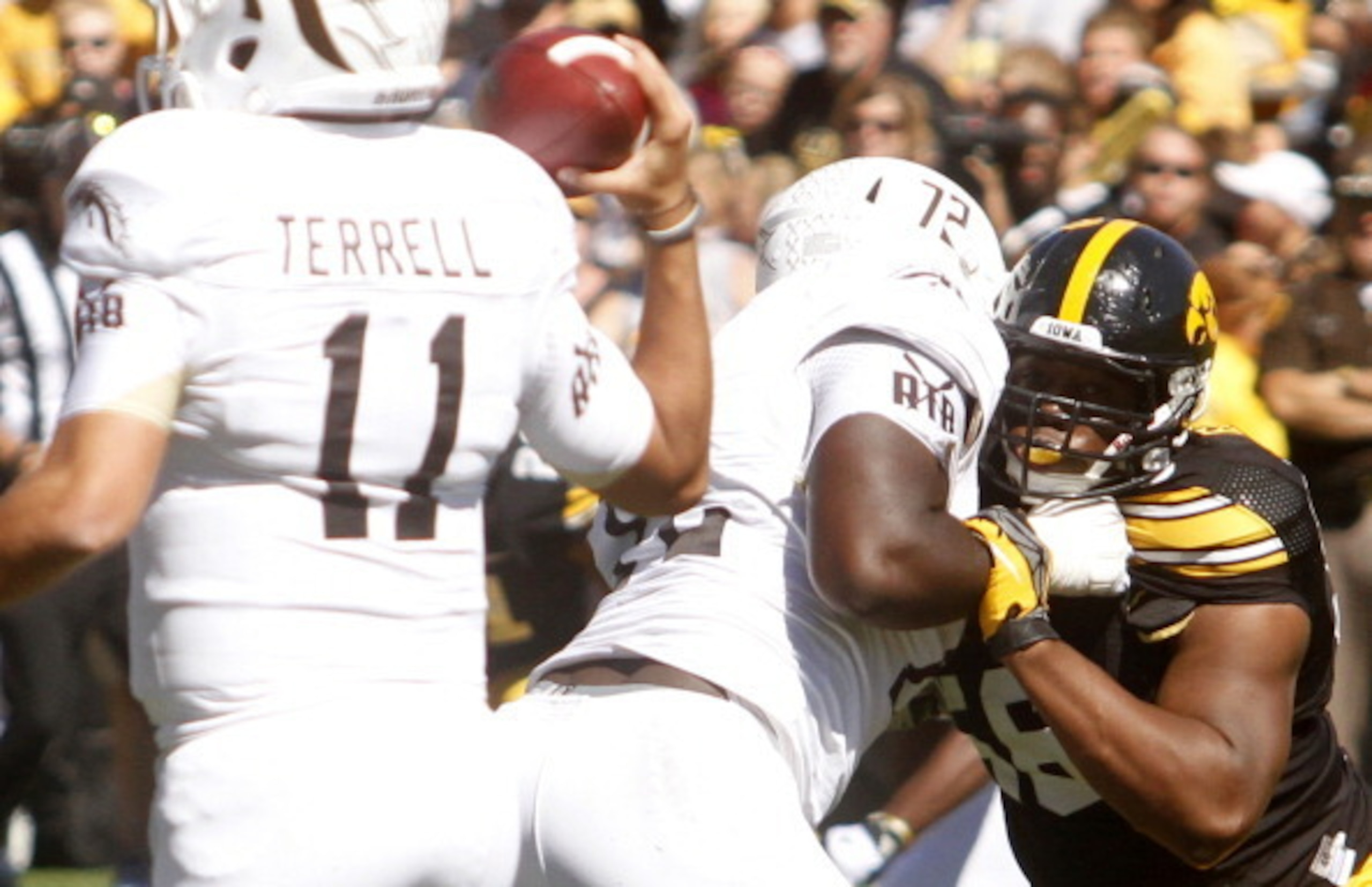
Right tackle Menelik Watson will hit the free-agent market, and Austin Howard didn’t play his best at the position during the 2016 season. Injuries likely factored into Howard’s subpar performance, but rotator-cuff surgery may jeopardize his availability through training camp and Week 1 of the 2017 campaign.
In the meantime, the Raiders should utilize first-team reps to develop another versatile offensive lineman. Taylor Moton lined up at right tackle and right guard at the collegiate level; he excelled at both positions.
Last year, opposing pass-rushers attacked the Raiders’ right tackles as the weak spot on the offensive line. Left tackle Donald Penn didn’t allow a direct sack until Week 16, which put Carr on the shelf with a broken fibula. Moving on from that painful memory, McKenzie must sew up the loose ends on the right side.
Moton played the majority of his collegiate career at right tackle, which allows him to challenge for the starting spot as a rookie. His experience at right guard could help the offensive line if the front office allows Gabe Jackson to hit the free-agent market in 2018.
.jpg?w=2560 "Rams Raiders Football")

Round 4: Damontae Kazee, CB, San Diego State
4 of 8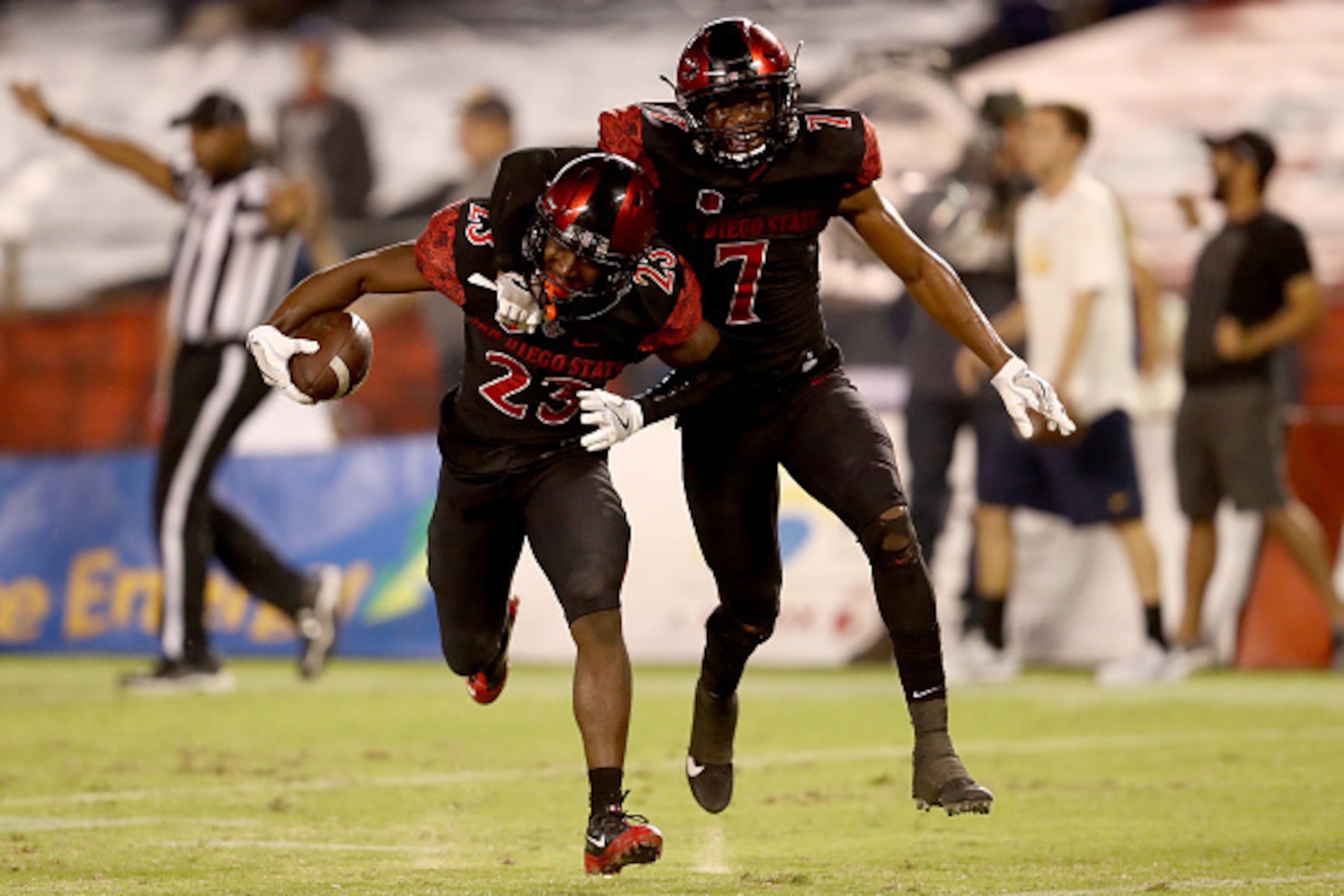
The Raiders' starting cornerbacks in a nickel package should be set in stone. However, McKenzie may consider adding depth and a possible replacement in the slot. Cornerback D.J. Hayden will gauge his free-agent market value. Defensive back T.J. Carrie’s contract will expire at the end of the 2017 season.
Cornerback Damontae Kazee grabbed 15 interceptions over the past two years, but he's the draft's best-kept secret because he's coming out of San Diego State. Additionally, the small-school prospect stands at 5'10", 183 pounds, which casts doubt about his ability to defend the perimeter in the pros.
However, in a pass-happy league, it's necessary to field three talented cornerbacks against three-wide receiver sets. Oftentimes, teams utilize their nickel packages more than base formations throughout a game. Kazee’s ball skills will allow him to stick around the league as a deep-cover safety spying on underneath routes.
Though, Kazee must learn to wrap up tackles while in pursuit or when playing downhill against the run. Due to his smaller size, technique will make or break him as a slot cornerback.
Round 5: James Conner, RB, Pittsburgh
5 of 8
All signs point to the exit for running back Latavius Murray, which leaves about 10-12 carries per game for the next man up. Ball-carriers DeAndre Washington and Jalen Richard will likely see increased workloads during their second seasons. Oakland’s backfield still needs a finisher who can churn out two yards for a first down between the tackles.
Pittsburgh’s James Conner will add size (6'2", 235 lbs), power and pass-protection skills to any NFL backfield. He’s a no nonsense north-south ball-carrier who sees the lane, doesn’t hesitate to run through it and mows down a defender in the process. His power-run play style appropriately fills Murray's void, if he signs elsewhere.
Conner's compact body frame should allow him to run through poor tackle attempts and move the ball after initial contact—a weakness for Murray in years past.
The Pittsburgh running back scored 52 rushing touchdowns through four seasons; he only played one game during his sophomore year. His nose for the end zone should intrigue the Raiders’ draft-day decision makers.
Round 6: Nathan Gerry, S, Nebraska
6 of 8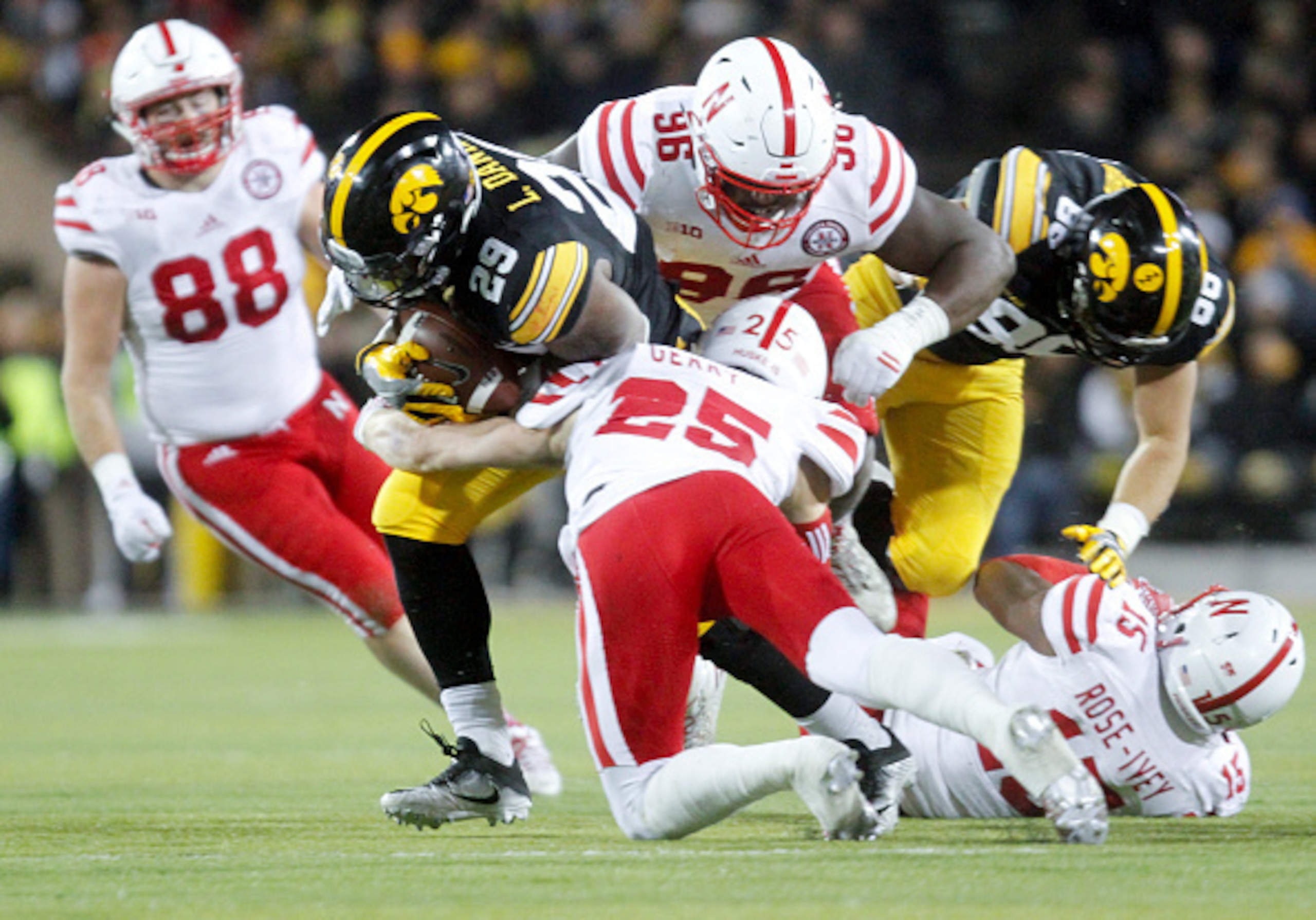
Nebraska safety Nathan Gerry played a few games at the linebacker position during his collegiate career, per Zierlein. He’s a physical defender who lacks top-gear speed but relies on instinct to sniff out plays. He also logged four interceptions in each of his last three years at the collegiate level.
It’s hard to argue with Gerry’s production, specifically 12 career interceptions. However, on tape, it’s clear he’s not a supreme athlete. His rugged play will likely fixate his spot at the strong safety position, but he’s a viable blanket against tight ends.
The Raiders could potentially utilize Gerry in Taylor Mays’ old role as a one-on-one defender against tight ends in passing routes. The Nebraska prospect could also step in as an extra coverage defender on obvious passing downs. In the early going, the coaching staff will have to experiment with Gerry’s role to tap into his full potential.
Round 7: Jayon Brown, LB, UCLA
7 of 8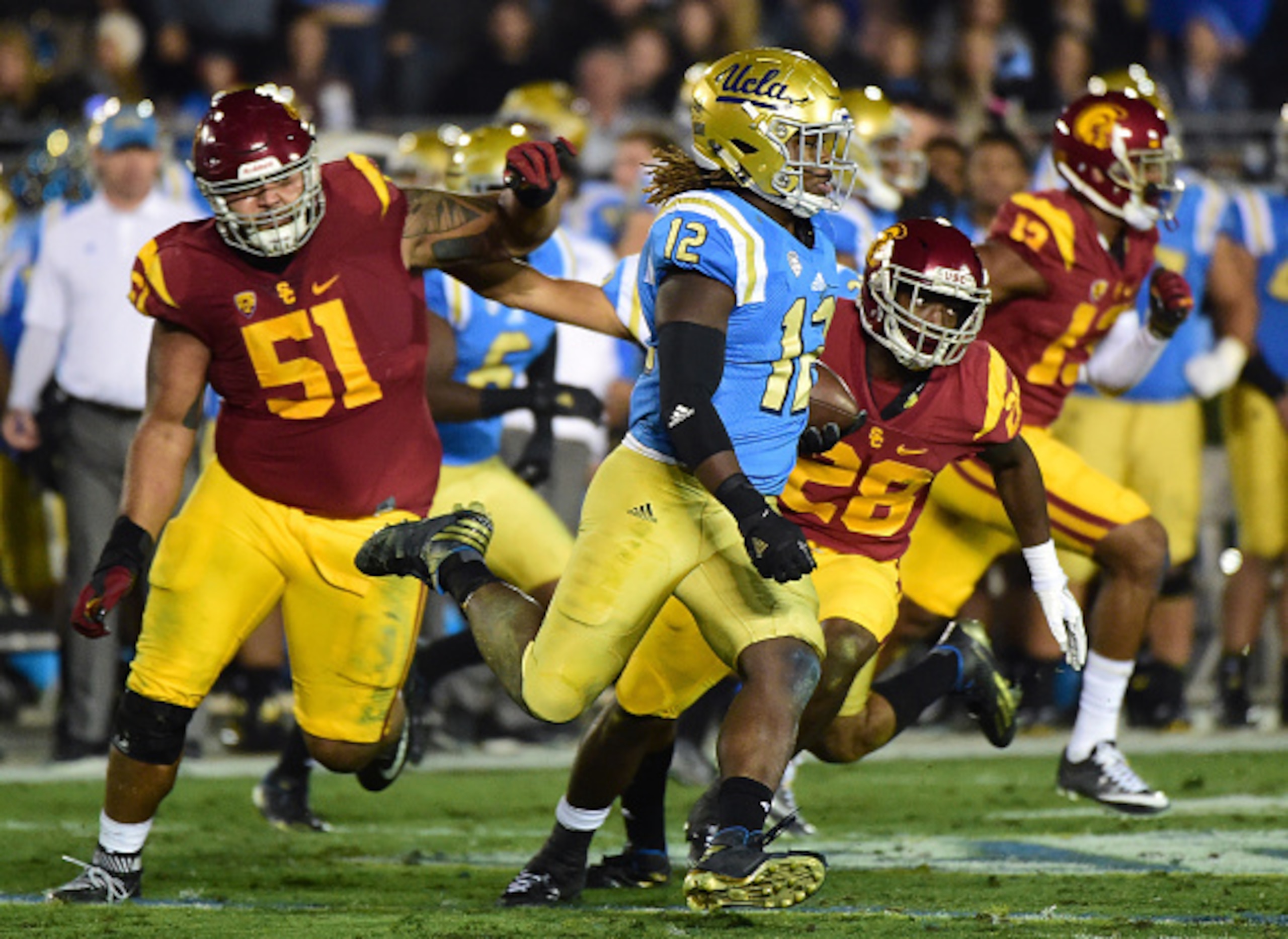
UCLA linebacker Jayon Brown flashed solid coverage skills during his senior year. He notched three interceptions and six passes defensed as a starter. As a smaller linebacker (6'0", 230 lbs) he’s fit to play on the outside in coverage and clean up plays flushed toward the weak side.
Linebacker Neiron Ball's injury history suggests more games missed in the future. Currently, he's the Raiders' best coverage linebacker on the roster. It's time to acquire some insurance on an injury-prone asset with chronic knee issues. Brown can’t play all the linebacker spots like Ball, but he's a seventh-round pick, who fulfills a need.
The Raiders must address their struggles in short-pass coverage. Brown could earn immediate snaps in nickel packages and against teams with tight ends heavily involved in the passing game. He may never develop into a full-time starter, but he can become a valuable asset to effective situational defense.
Round 7: Gabe Marks, WR, Washington State
8 of 8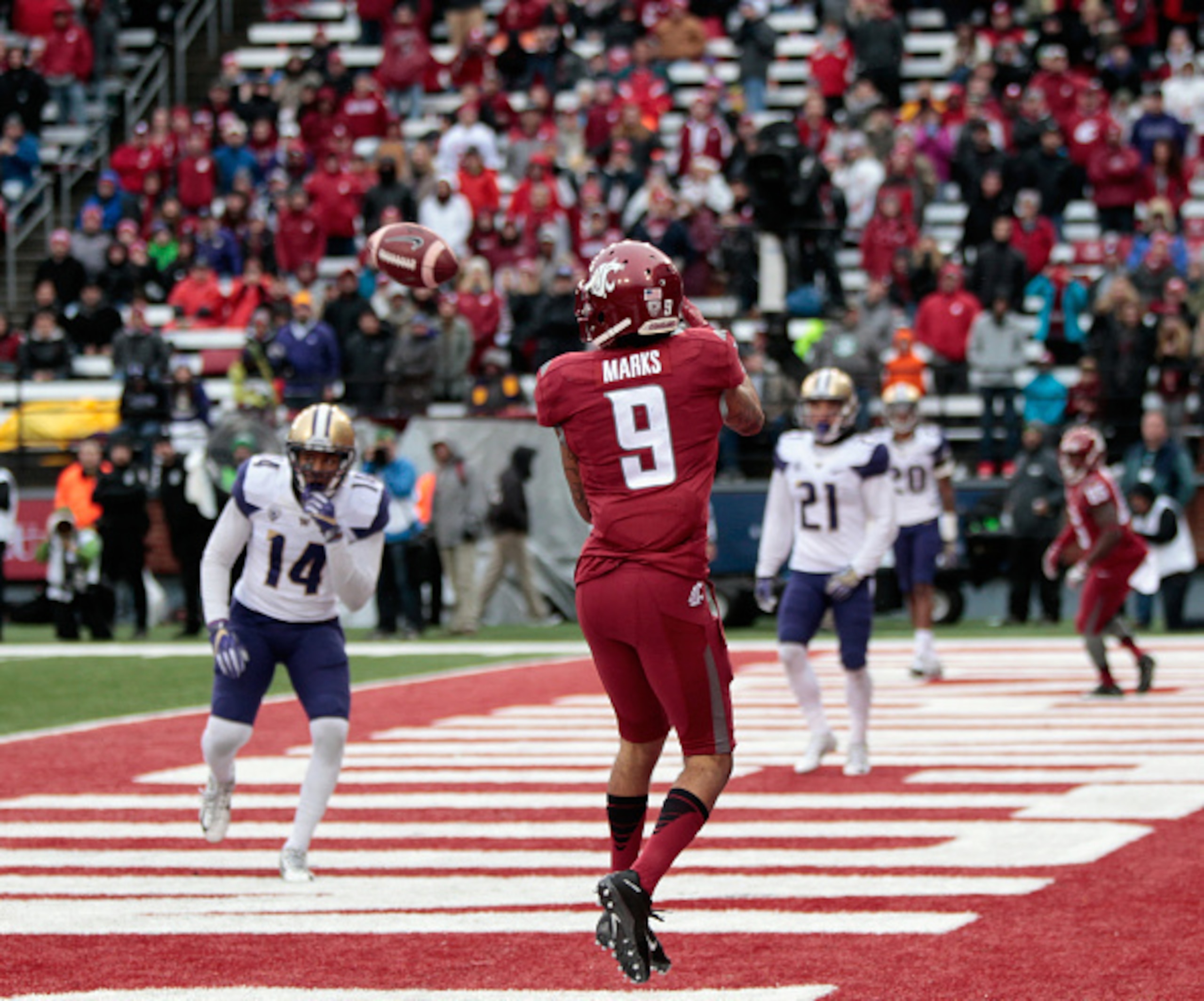
On film, Washington State wideout Gabe Marks doesn't exhibit any particular glaring strength. He doesn't show blazing speed, aggressive physicality off the line of scrimmage or blow the top off of a defense. However, he catches the football with consistency, which the Raiders wideouts failed to do last season.
Marks has enough talent to push Seth Roberts for the slot receiver spot due to his reliability to reel in passes in traffic, rack up yards after the catch on underneath routes and block downfield. He'll certainly upgrade the Raiders' short passing attack as a safe option running abbreviated routes.
The Washington State prospect won't burn a defender, but he showed enough quickness on his collegiate tape to envision a receiver who can break free on his routes in the pros. Marks won't lead a list of Day 3 draft sleepers, but he's just what the Raiders need in terms of sure hands.
Typically, Carr spreads his pass attempts around, and he'll immediately find confidence in going to a receiver, who rarely leaves the ball on the ground.
Stats provided by Sports-Reference.com and Pro-Football-Reference.com unless otherwise noted.
.jpg?w=2560 "Steelers Saints Football")




.jpg?w=2560 "🚨 Week 8 AP Top 25 Poll")