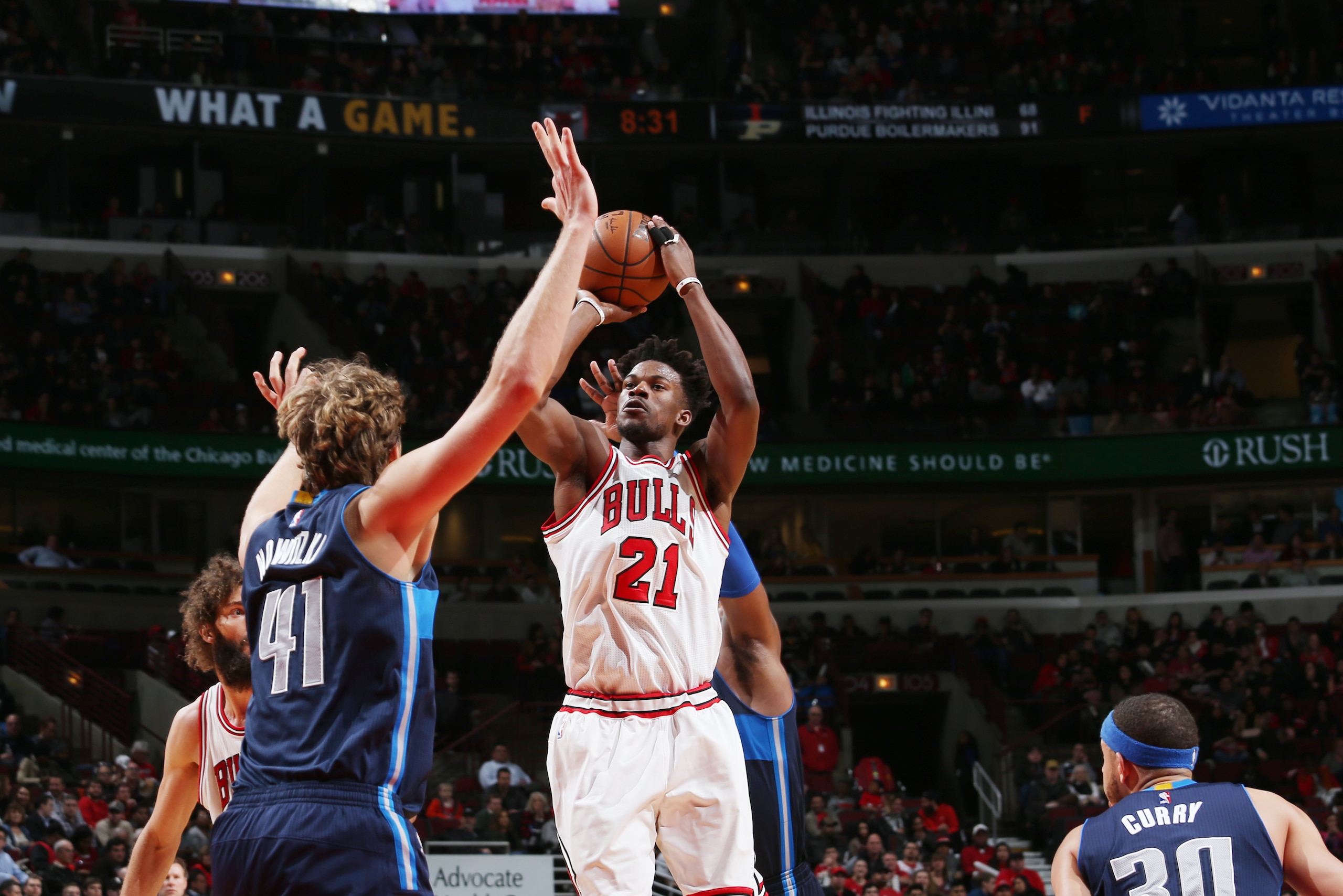

Midseason Player Grades for Each Chicago Bulls Player
It hasn’t been a very good season for the Chicago Bulls, and it hasn't been a particularly surprising one. Slightly more than halfway through the schedule, they’re still floating around the .500 mark.
But mediocre results here are a little different than just having a mediocre team. Individual performances range from counterproductive to bad to good to elite. And the hodgepodge of all this is average. I will grade each of the Bulls on the following slides, starting with the bench and then proceeding to the starters. I ranked them based on overall contributions and graded on a curve.
However, the Bulls' struggles are architectural as much as anything. So, the first grade goes to the front office of Gar Forman and John Paxson, which has done more to work against the success of its best player than any front office I have ever seen.
Rather than build around Jimmy Butler, Forman and Paxson made signings that obstruct his progress. In 2015, they fired a coach he connected with (Tom Thibodeau), hired a coach he had trouble connecting with (Fred Hoiberg), and this year surrounded him with players who are as incompatible as possible and who work against the scheme of the coach they just hired.
It's preposterously bad planning.
For its lack of foresight and its failure to improve the team by building around Butler, the front office gets a big, fat, thick-red-marker "F", underlined and with exclamation points.
Deep Reserves
1 of 7
14. Isaiah Canaan, PG
Isaiah Canaan was supposed to be the point guard with range. It hasn’t worked out that way. He’s 26.5 percent from deep on the season and a defensive liability as well. Contributing absolutely nothing was enough to exile him to the bench. He’s played in just three of the last 15 games, and those minutes were in garbage time.
Grade: F
13. Paul Zipser, PF
Paul Zipser barely saw the court until January 12. Then injuries got him three starts in four games, and he doubled his minutes to date through the next week.
He’s averaging 5.7 points and 6.3 boards per 36 minutes, his true shooting percentage is 29.8 and his defensive box plus-minus is minus-1.1. But he’s not as horrible as the numbers suggest.
He seems to be a smart player with decent skills who just needs more playing time. His stats with the Bulls’ D-League affiliate Windy City Bulls (available at RealGM) are more promising: 15.3 points and 9.7 rebounds in 35.4 minutes. He should be spending more time there and developing.
Grade: C-
12. Jerian Grant, PG
Jerian Grant has been hit and miss, occasionally having great outings—such as his 18 points, five steal performance against the Portland Trail Blazers on Nov. 15—and then having disasters, such as his when he scored only five points on 14.3 percent shooting against the Trail Blazers on Dec. 5.
He has dropped out of the rotation now, but rather than send him to Windy City—where he could learn some consistency—the front office seems content to leave him at the end of the bench watching games.
He’s logged just three minutes during the last three contests, as the Bulls have settled on a Michael Carter-Williams, Rajon Rondo point guard rotation. Obviously, you can’t send everyone to the D-League, but the Bulls aren’t sending anyone, and Grant should be there more than anyone.
Grade: C
11. Bobby Portis, PF/C
Bobby Portis had fallen out of the rotation, playing just 12 minutes and not scoring a point over an 11-game stretch from Dec. 19 to Jan. 7. The second-year power forward is back on the court due to injuries and playing marginally better over a six-game stretch (4.7 points and 46.2 percent from the field), but he has still regressed on the season. His player efficiency rating has fallen from 13.8 to 12.0.
He is the fifth big in the rotation—and he should be—but if that’s the case, (again) why don’t the Bulls capitalize on their D-League team and play him more there?
Grade: D
Bench Rotation
2 of 7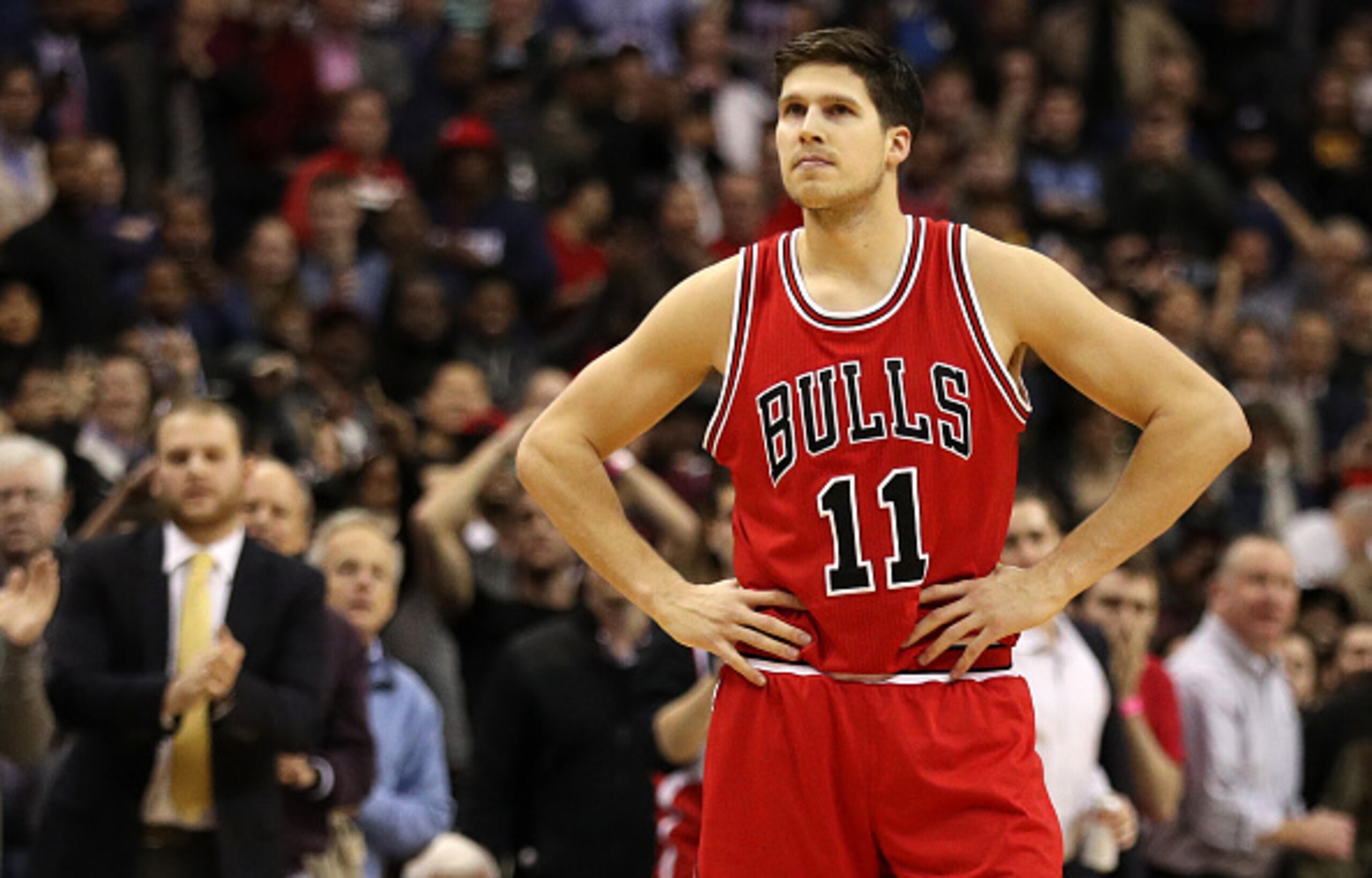
10. Denzel Valentine, SG/SF
Denzel Valentine is the Bulls’ first-round draft pick this year, and he fills the check boxes for where the NBA is headed. He can play multiple positions (anything from the 1 to the 3) and was a 40.8 percent three-point shooter in college.
He started slowly but has been better lately (when given a chance). According to NBA.com, he’s averaged 16.5 points and 3.3 assists per 36 minutes over his last five appearances. His effective field goal percentage is 62.5 percent, and the Bulls’ offensive rating is 117.7 with him on the court.
And despite all that, he’s only played five games once activated from injury—the other five were DNPs (although, one of those was due to illness). As such, he serves as yet another example of the team playing for the present rather than the future.
Grade: B
9. Rajon Rondo, PG
Rajon Rondo is the chief exhibit of where the front office went wrong. He provides little to no value to the team; According to ESPN.com, he’s added 0.2 wins.
By contrast, E’Twaun Moore, whom the Bulls let walk in free agency (and sign for less with the New Orleans Pelicans) would have been a perfect fit. Moore has range, guards multiple positions and was better playing off Butler. According to NBAWowy.com, the Bulls were 8.1 points per 100 possessions better with Butler and Moore on and Derrick Rose off last year.
This year, the Bulls are plus-1.7 with both Rondo and Butler on, and plus-6.6 with Butler on and Rondo off.
Hoiberg temporarily pulled Rondo out of the rotation and then reinserted him as a second-team point guard. Rondo is averaging 5.2 boards and 5.8 assists in 22.6 minutes there, according to NBA.com, but he’s shooting just 31.6 percent, and the Bulls are -0.4 points per 48 minutes.
Whether it’s taking away from Butler’s effectiveness as a starter or taking playing time from developing youngsters, there’s just no reason to have Rondo on this team outside of some delusion that they can make some noise in the playoffs.
Grade: C-
8. Cristiano Felicio, C
Cristiano Felicio should clue the front office in on what happens when you allow a player to work his way into growth: He keeps getting more playing time, and as he gets more playing time, he improves.
Felicio's averaging 10.1 rebounds and 13.0 points per 36 minutes and shooting 67.6 percent from the field since the calendar flipped. He’s making fewer defensive mistakes, and because of that, he’s become the Bulls' closing center. He is third, only to Butler and Dwyane Wade in fourth-quarter minutes, since the calendar flipped.
Grade: B+
7. Nikola Mirotic, PF
Mirotic is a barometer to a level approaching the truly bizarre; it’s almost to the point where you can just look at his stat line and know if the Bulls won or lost.
In wins, he has a 57.0 true shooting percentage, and it’s just 45.9 percent in losses. That extends to the defensive end too: When he’s scoring, it’s almost as if his shot going in gives him energy on the other side of the court. He blocks shots, gets steals, draws charges and is a borderline good defender.
But when his shot isn’t falling, he tends to mope and lollygag. The falloff is arguably even greater defensively than offensively; it’s just harder to establish statistically.
His value would increase immensely if he could become consistent, even in effort when not wet.
Grade: C
6. Doug McDermott, SF
In some ways, McDermott is slipping this year, what with his three-point percentage dropping from 42.5 percent to 34.7. While some of that is just due to an old-fashioned slump, that’s not the only (or even primary) reason why.
Hoiberg has him standing around a lot, usually just in the corner waiting for a pass. That results in a lot of contested shots. According to Synergy Sports Tech , 56.2 percent of his catch-and-shoot chances are in “guarded” situations, and he shoots 1.1 points per possession compared to 43.8 percent that are unguarded. (He scores 1.33 points per possession on those).
Running him through more screens (he has just 51 attempts off screens this season) would probably result in more open looks.
Grade: B
5. Michael Carter-Williams, PG
3 of 7
Michael Carter-Williams as the starter over Rondo at least makes sense in that he’s not past his prime. He is a bit hit-or-miss but seems to defend better than Rondo (at least he tries). He’s able to switch well with his size (6'5 ¾") and length (6'7 ¼"), per DraftExpress.
The main issue is that he can’t shoot or space the court either. He’s a dreadful 20.7 percent from three this season, which works against Butler’s effectiveness. Sadly, the Bulls don’t have a real three-point option at the postion anywhere. (Grant is the “best” they have at 31.5 percent.)
Interestingly, the Bulls' net rating is easily the best when Grant joins the starters.
With MCW, the Bulls' shooting efficiency goes down (as compared to Rondo) from a 53.1 true shooting percentage to 47.7, and their offensive efficiency drops from 106.3 to 101.5. But the defense improves by 5.1 points per 100 possessions.
Butler told K.C. Johnson of the Chicago Tribune that he likes what Carter-Williams provides: "He's just playing hard. He's changing the game at the defensive end, taking all the right shots. He gets the ball to people in scoring areas. He sneaks in there and gets a lot of offensive rebounds and putbacks. We need him to stay aggressive."
He's not the ideal solution, but he is usually palatable.
Grade: C

4. Robin Lopez, C
4 of 7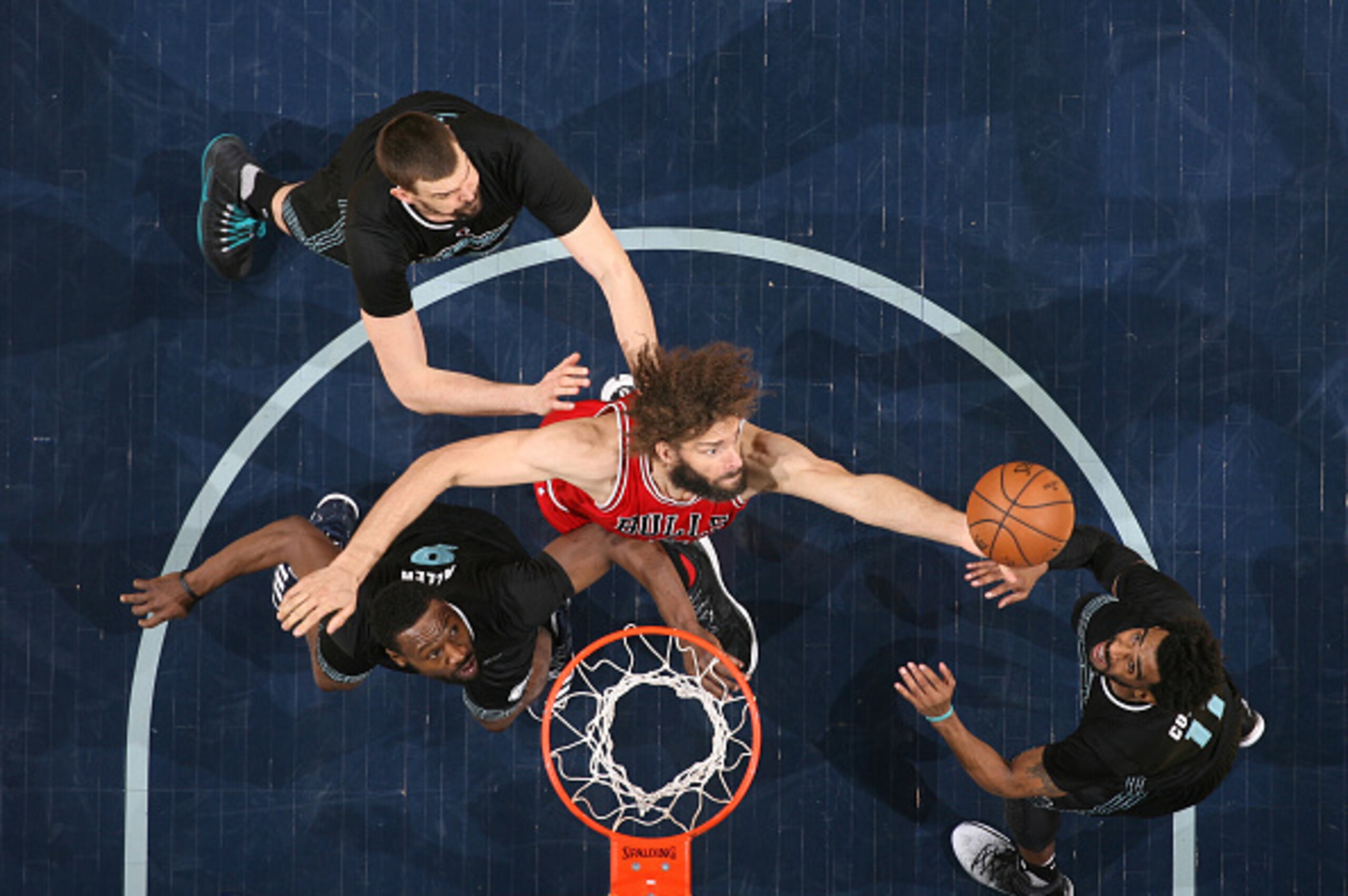
Robin Lopez is mostly helping the Bulls on the offensive glass, which is convenient considering the massive number of shots they miss (49.2 is second-most in the NBA, based on math).
His 1.7 blocks per game offer a level of rim protection, as opponents shoot 11.4 percentage points below their season average when they are within six feet of the rim. That works early in games, but when opponents start running high pick-and-roll action at closing time, Lopez is a little slow of foot to counter.
Ergo, Felicio has become the primary closer, as previously discussed. Still, Lopez adds value to the team—perhaps more than many Bulls fans expected.
He offered a reason as to why the Bulls struggle against losing teams. Johnson reports: "You go in against the Cavs or somebody, the champs, and you have that fear in your gut. That's a good fear to have because it drives you to stay focused, to be prepared. I don't think we have that fear or level of respect at times for other opponents.
"There are moments where we take certain situations for granted, and we have mental lapses."
Such a statement indicates Lopez also provides what most teams need—a mirror.
Grade: B
3. Dwyane Wade, SG
5 of 7
In spite of my steady diatribe about thinking for the future and spacing, I don’t think signing Dwyane Wade was a mistake. He was an elite NBA wing for several years and is a future Hall of Famer. He knows what it takes to be a top-five player in the league.
Some of Butler’s growth this year—as immeasurable as that may be—is a result of Wade’s influence. And even Butler acknowledges that, as he explained to Bleacher Report’s Josh Martin: "This is a job you’re supposed to have fun with it. When you’re having fun with something, you don’t ever want to stop doing it. So guys are constantly wanting to work on their games, constantly wanting to study film and be better to help this team win.
"If the older guys are doing it, and the oldest guy in Dwyane Wade is doing it, then these young guys, it’s easy for them to follow suit.”
Because of that pattern, Butler has gone from "trying to lead" as he seemed to do last year, to just leading by example and showing the younger players how to work. You even see it in games, as he’ll coach them after a blown defensive play by pointing things out. Because of that, the Wade signing was the right thing to do.
If you sense, the "but" coming, here it is: But he shouldn’t be starting,
As I wrote about more extensively for FanRag Sports, Wade still has flashes of "Flash," but his age is showing. His defense is a liability, and he doesn't offer much in the way of shooting outside of occasional, inexplicably hot games. His career-low 42.6 percent from the field is an indication he’s not the same player anymore.
What he has left would work better against second units.
Grade: C+
2. Taj Gibson, PF
6 of 7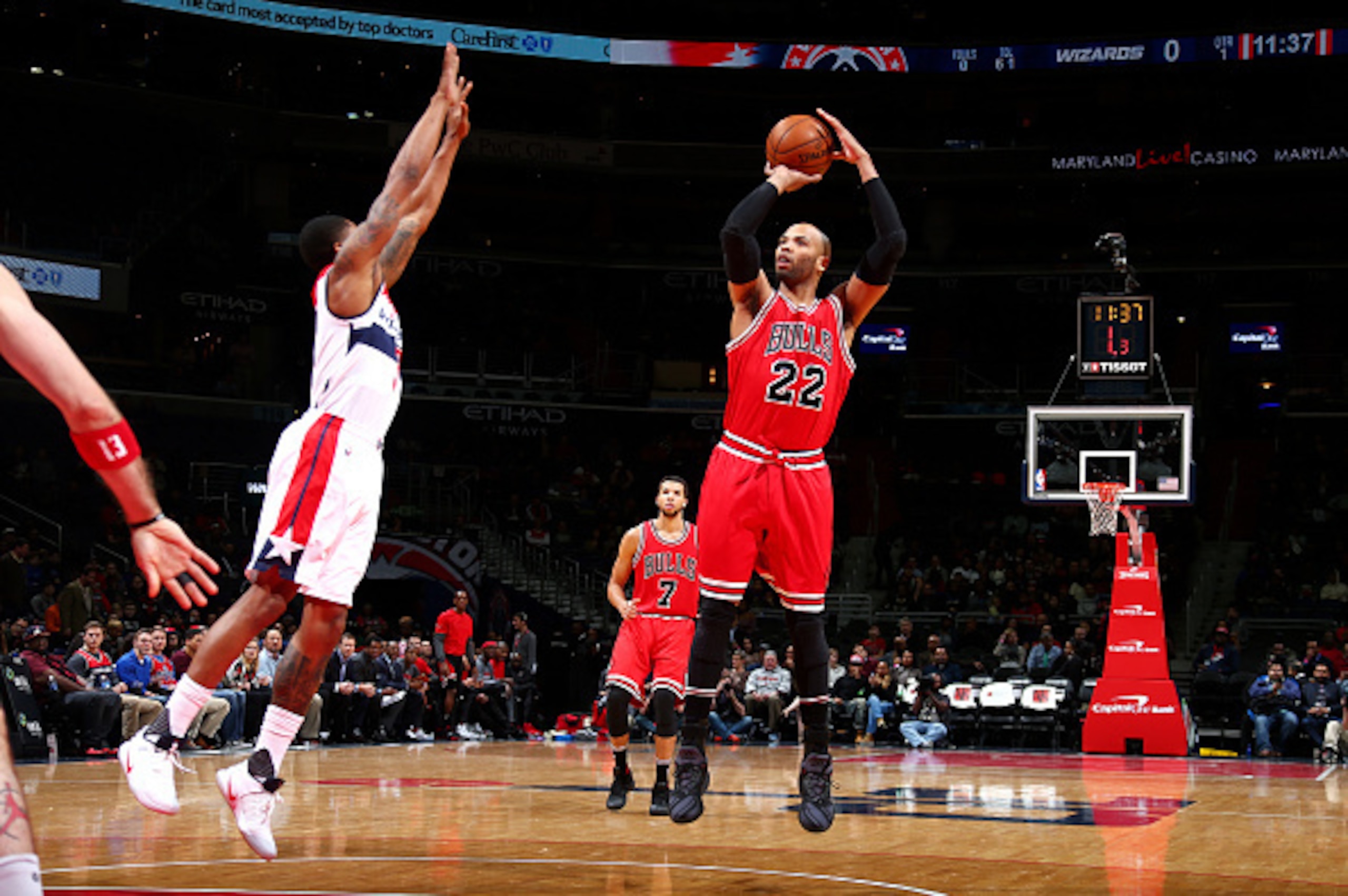
Taj Gibson has been a staple of the Bulls longer than anyone now. In all likelihood, this will be his last season in Chicago.
He’s making it his best, though: His 16.4 PER is the second-best of his career, but that is just the tip of the iceberg for him. He is the one constant other than Butler, and his effort never wanes. His jump shot has improved, (40.4 percent on 208 attempts), while the defense is 3.1 points per 100 possessions better when he’s on the court.
He would offer tremendous value to a contender, and his $9 million contract is easy enough to move. If the front office wants to think about the future more than the present, it should look for offers.
One team that may have an interest is the Toronto Raptors, which is presumably why Ryan Wolstat of the Toronto Sun asked him about it: "I’m just numb to (the talk) because I get good feedback from my agent all the time so I’m never really worried about what’s going on," Gibson said Saturday morning at the Bulls practice facility across the street from the United Centre.
"Normally, when you are in trade rumours it means the other team wants you, too, so, it’s like half and half. It’s part of our business."
While it would be sad to lose Gibson, getting something for him before he leaves via free agency makes sense. But it again makes you wonder if "GarPax" has the courage to prioritize the future over an early exit from the playoffs.
Grade: A-
1. Jimmy Butler, SF
7 of 7
Butler has been absolutely brilliant this season, and he keeps getting better as the campaign progresses.
That assessment goes well beyond his 24.8 points, 6.8 rebounds, 4.8 assists and 1.8 steals per game. Players who have topped those averages and his 58.8 true shooting percentage are Michael Jordan (twice), Larry Bird and LeBron James.
Butler's 52-point outing against the Charlotte Hornets was one of the 10-best games since 1983, according to Basketball-Reference.com. And he is emerging as arguably the best clutch player in basketball. His player impact estimate (PIE) in the clutch—defined as five minutes or fewer remaining in the game and the score within five points—is 35.2 percent, which leads all players with at least five clutch appearances and two minutes per appearance.
LeBron James is second at 33.2.
And the thing is, he’s getting better. Looking at just his performances since Hoiberg took Rondo out of the starting lineup—and excluding the game against the Oklahoma City Thunder Butler didn’t finish because of the flu—I calculated he's averaging 30.7 points, 6.5 assists, 8.5 rebounds and 2.7 steals with a 61.7 true shooting percentage.
This is what happens when you let "Jimmy Get Buckets." And this is why the front office not building for the future is such an awful misstep. Across two seasons, when Butler is on the court with Mirotic and McDermott and not Rondo or Rose, the Bulls have a 120.0 offensive rating and 13.9 net rating over 354 minutes.
That’s not a conclusive sample size, but it’s large enough to establish the Bulls need to stop dilly-dallying around with past-their-prime, aging players who can’t shoot.
Butler is an MVP-caliber star. It’s time to put the parts around him that let him win.
Grade: A
.jpg?w=2560 "49ers LB Suspended for Headbutt")
.jpg?w=2560 "Commanders OL HEATED After Tie ▶️")
.jpg?w=2560 "Buzz: MHJ Hired Agents for Trade")
.jpg?w=2560 "AD Trolls Bears WR on IG 😂")