

Welcome to the New Golden Age of College Football
Let's address the obvious while we're all still floating on this weightless football high. It is a convenient time to heap enormous praise on the sport.
This much is certain and undeniable. Rarely has the game felt as delightful and huggable as it does at this moment after all that has taken place over the past week. But the outcome of Monday night is only part of the reason such momentum will continue.
This is about far more than a single play or game or season. All of the ingredients required for such continued brilliance are in place for college football to flourish.
TOP NEWS
Report: UCLA QB1 Out for Season

New CFP Bracket Predictions 🔮
8 CFB Overreactions after Week 6 😮
That sentiment settled in during the wee hours on Tuesday morning, shortly before the sun climbed off the Atlantic Ocean and splashed Tampa Bay, home of Monday's College Football Playoff National Championship.
The game was a 35-31 football heart attack—a Clemson victory decided with a single second remaining.
It's a scene almost too good to be taken seriously: Deshaun Watson, 4-star quarterback and the face of his program, found a little wide receiver, Hunter Renfrow, who found his way to Clemson via a walk-on.
In that play, the Tigers took down mighty Alabama, the program they fell to the season before and a Teflon opponent in the minds of many.
"You know, I mean, I don't know if I can—I don't know if I'm going to be able to stomach watching that one anytime soon," an emotional Dabo Swinney told reporters. "That has to be one of the greatest games of all time, just absolutely incredible, to have to take the field and go down the field to win the game, that's what it's made of."
That is why we watch college football. It is why we invest an ungodly number of hours into something that offers up little in guarantees. It is these moments that often define the game and the generations of fans to follow.

But this specific finish—as brilliant as it was and as much as it will fuel these quiet few weeks of the offseason—is only a small piece of a suddenly brilliant landscape. It's much more about what this victory represents.
Never has there been such hope for so many. Clemson did it. The Tigers ended a 35-year title drought. They showed teams outside of the usual suspects—the programs that compete yearly for titles—it can be done. They created a sense of hope for fanbases doubting whether such a breakthrough is possible.
Oh, such false optimism has always existed. That is no different now than it was decades ago. But teams didn't enjoy the abundance of riches they do now, thanks in large part to gobs of television money piling up outside of traditional college towns.
Purdue will pay new head coach Jeff Brohm $3.3 million per season moving forward. Including incentives, Brohm's deal could reach nearly $5 million per year if all criteria are met. Brohm will also have a salary pool of $3.5 million to pay assistants, which is perhaps the most important aspect of his arrival.
A team such as Purdue, which has won a grand total of nine football games over the past four seasons, is investing large in football. This commitment is the result of financial success and also a strong desire to win.
Specifically, it's a product of the reported $32.4 million it received from the Big Ten in 2015, according to Steve Berkowitz of USA Today.
A profusion of money does not always equate to success. But in the instance of football, it allows programs not typically regarded as powerhouses the opportunity to hire better candidates, improve their facilities, spend more on recruiting and use it in other creative ways.
This, as a whole, improves the product a great deal. It's good for everyone else. The coaches, players and fans will all benefit from this groundswell, which is still growing.
It's how Clemson, which will debut a $55 million football operations hub in the coming weeks that has a slide and even nap rooms, arrived at this point. It invested, just like others are now.
But money is not solely why the sport is in such good standing. Although it fuels the operation, college football has always been about personalities.
This part can be tricky. Because the game's best players are cycled through every three to four years, one must appreciate the Watsons while you can. They appear, and then suddenly, they are gone, only to be replaced by someone else.
The constant in all this is the coaches, which is where the game is thriving.
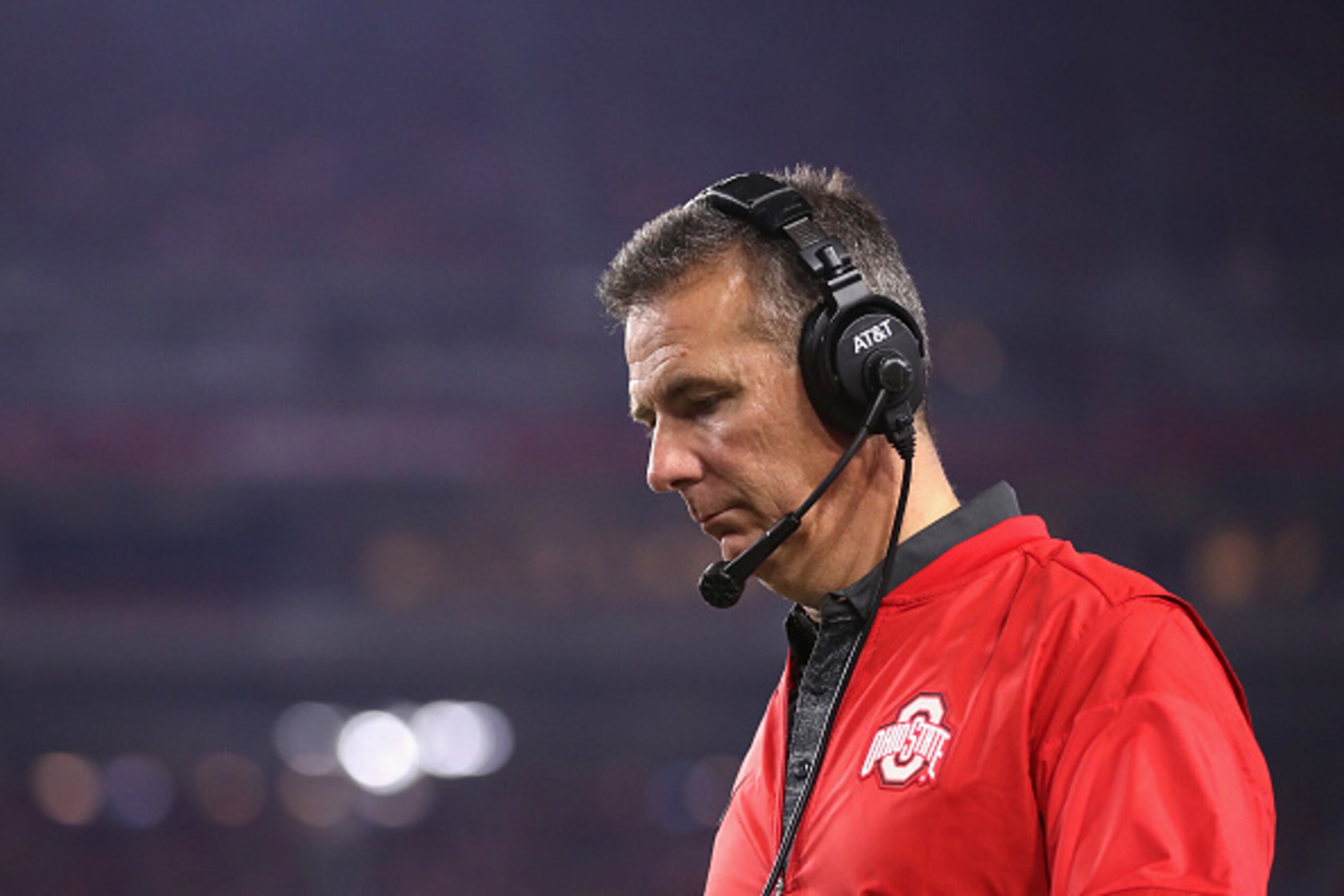
There is Nick Saban, the freakishly disciplined mastermind behind the greatest dynasty in all of sports, even with a loss, powering Alabama. There is Urban Meyer, fresh off the most disappointing loss of his coaching career, still doing a fantastic job at Ohio State, the state he was born in.
There is national championship-winning head coach Swinney, a title we can bestow upon him officially, looking nothing like the other mastermind CEOs. He smiles often. He dresses his own way. He says what is on his mind. He is a true original.
There is Jim Harbaugh, unquestionably the most authentic of them all. Harbaugh hasn't just brought Michigan back to relevancy; he's also capable of turning any offseason weekday into a national story.
He's equally brilliant as he is peculiar, which is a compliment. Despite the lack of titles and marquee wins after two years in Ann Arbor, he is exactly what the sport needs. And the rest is coming, too.
There is Oklahoma State's Mike Gundy, who grew a mullet fit for an '80s museum this season. There is LSU's Ed Orgeron, whose voice is somewhere between an aged concert hall speaker and a game of marbles. There is the uber-energized P.J. Fleck, the newly hired coach at Minnesota, who will share his WWE-esque motivational wisdom at a Power Five program.
There is Tom Herman at Texas, a Meyer disciple and the most coveted and perhaps significant coaching land over the past few months. His personality after only a few years as a head coach will continue to evolve. His presence at the program, however, is a jolt in itself.
There are many more, too. Too many to possibly name. These coaches are not just brilliant sound bites who make awesome sideline reaction shots; they are excellent at what they do.
And now, more than ever, they have a medium to face off against one another in a postseason format. Although only one of the six semifinal games to date has been compelling late in the second half, the CFP has given a format that is just open enough to create more meaningful games.
In time, the playoff will be about more than the title game, which has been nothing short of wondrous in consecutive seasons. These semifinals will eventually provide something more than lopsided finishes. And when they do, they will only validate a postseason that is just inclusive enough.
A four-team playoff is not exactly an open door. It still demands a near-perfect season from those that meet the requirements. But it does give off the perception of being just open enough that if all goes well for a given team, it can be included.
While the playoff semifinals have generally been uneven, just think about how much the sheer presence of this four-team playoff has impacted the regular season. So many more games have meaning in the moment for those within striking distance and others hoping to play playoff spoiler.
The working theory was that the removal of the BCS would take some of the interest away from the 15-week gauntlet. The opposite has happened.
We're only scratching the surface on what the playoff will accomplish for this sport. And with many of the most popular teams and established blue bloods seemingly finding rhythm all at once, the eyeballs and interest in the postseason will only grow.
Alabama, Southern California, Ohio State, Florida State, Penn State, Oklahoma and Michigan all finished in the Top 10 of the final AP poll. All seven of these blue bloods, given the talent returning next season, are likely to be ranked inside the Top 10 before the season begins.
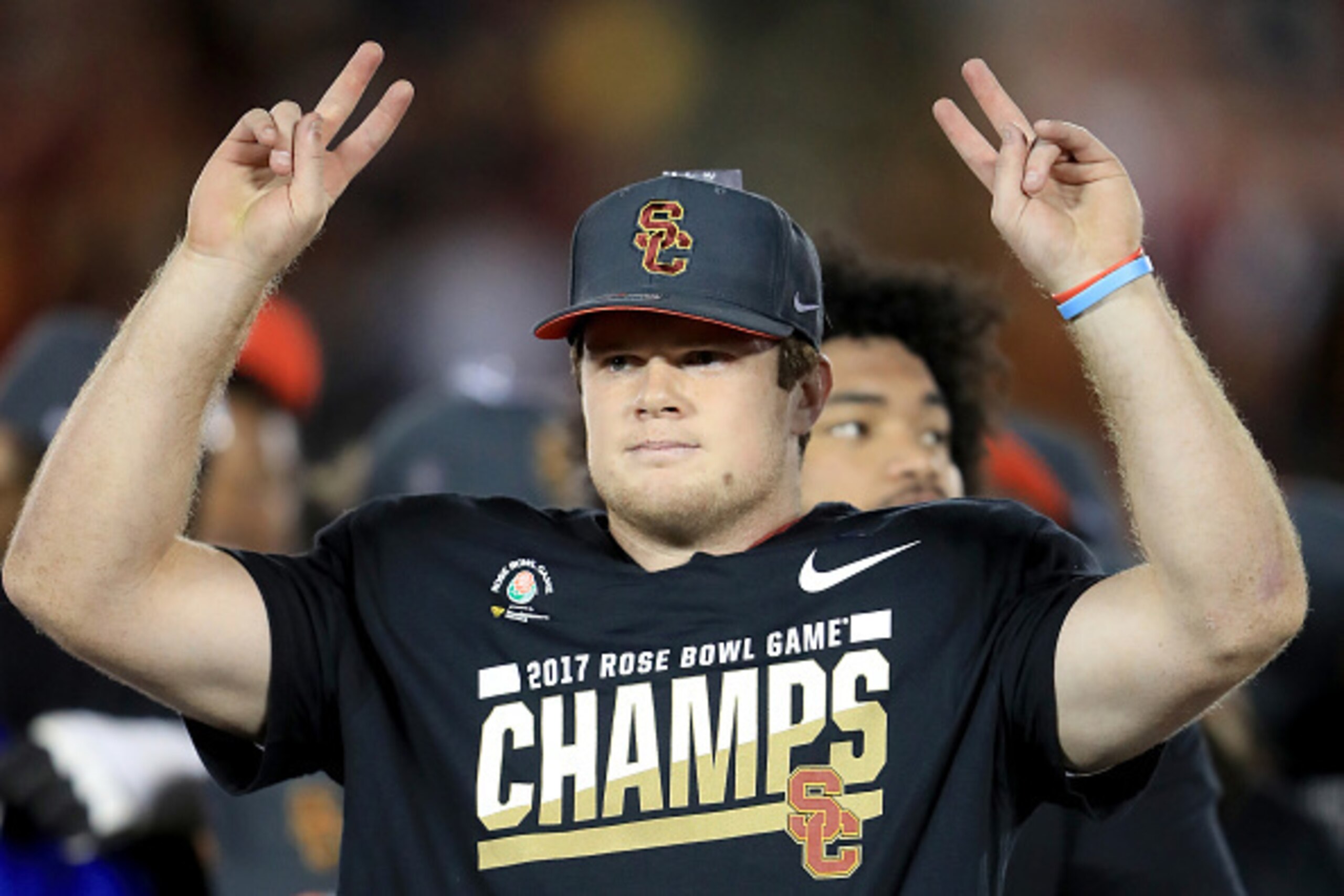
While preseason polls remain a meaningless, futile exercise, they do harvest expectations. When the expectations are as high as they will be for so many programs that are accustomed to such lofty goals, the sport is better off for it.
Whether there is a rooting interest for or against these teams, their presence is valued. They are there to be loved or hated, much like the robust personalities they are powered by.
Two of these teams, Alabama and Florida State, perhaps No. 1 and No. 2 in next season's preseason poll, will kick off the 2017 season by playing one another in Atlanta. Just thinking about it can cure those growing offseason blues.
But much like the most recent national championship still lingering in the air, the 2017 opener between two talented rosters does not define college football's current state of prominence. It cannot and will not be about two teams, no matter how talented.
It is a combination of things: a mixture of big money and larger-than-life characters.
Factor in the one thing that has never wavered over time—the sport's unpredictable core—and there is a growing sense that the latest championship game is more of the next chapter in a great run than a defining moment.
Business is good. Really, really good. Not just the business itself and those benefiting firsthand, but for the rest of us riding this tremendous wave, still attempting to process a magical end to a season. And perhaps the beginning of something more.
Recruiting information courtesy of Scout.com.
.jpg?w=2560 "49ers LB Suspended for Headbutt")
.jpg?w=2560 "Buzz: MHJ Hired Agents for Trade")

.jpg?w=2560 "AD Trolls Bears WR on IG 😂")
.jpg?w=2560 "Commanders OL HEATED After Tie ▶️")