

How Ronaldo's Latest Role Replicates Zidane's from His Real Madrid Playing Days
Cristiano Ronaldo and Zinedine Zidane are the two big faces of the current Real Madrid team: superstar player and successful manager, both legends of the club in different eras and now joined on the training pitch on a daily basis.
Footballing supertalents they might be, but their respective styles of play wouldn't be described as particularly similar by too many; one was all elegance, grace, superglue boots which killed a moving ball stone dead and unparalleled vision in his day, while the other is now all power, endurance, athleticism, movement and relentless goalscoring ability.
Extremely different, yet now, united not only in the club they represent together, but also in the areas of the pitch they do their damage in, and more fundamentally, how they are allowed to wreak havoc on the opposition due to their on-pitch relationships with team-mates.
TOP NEWS
Billboard Trolls Man City 👀

New NFL contenders starting to emerge after Week 4
.jpg?w=2560 "Cardinals Giants Football")
NFL investigating 2 referees for separate viral exchanges
Ronaldo: Complete forward
From wing terror at Manchester United to roving striker in the Madrid derby, Cristiano Ronaldo's overall approach to the game has always been the same: direct play in the final third, leading to nonstop shooting opportunities.
It doesn't matter that his starting position in a team graphic is on the left, any more than it does if the team plays with one striker, two, one behind another or none at all aside from himself—he's still always the chief goal threat, the player who gets most efforts away during the 90 minutes and the player who can fashion chances for himself in a variety of ways.
He's not (and never has been) a winger, or any variation of midfielder. Neither is he a striker, though. Rather, Ronaldo is simply an all-round forward, comfortable centrally or in the channels, lurking in the box during open play or splitting defences on the counter-attack with his lightning pace and determination to be furthest forward.
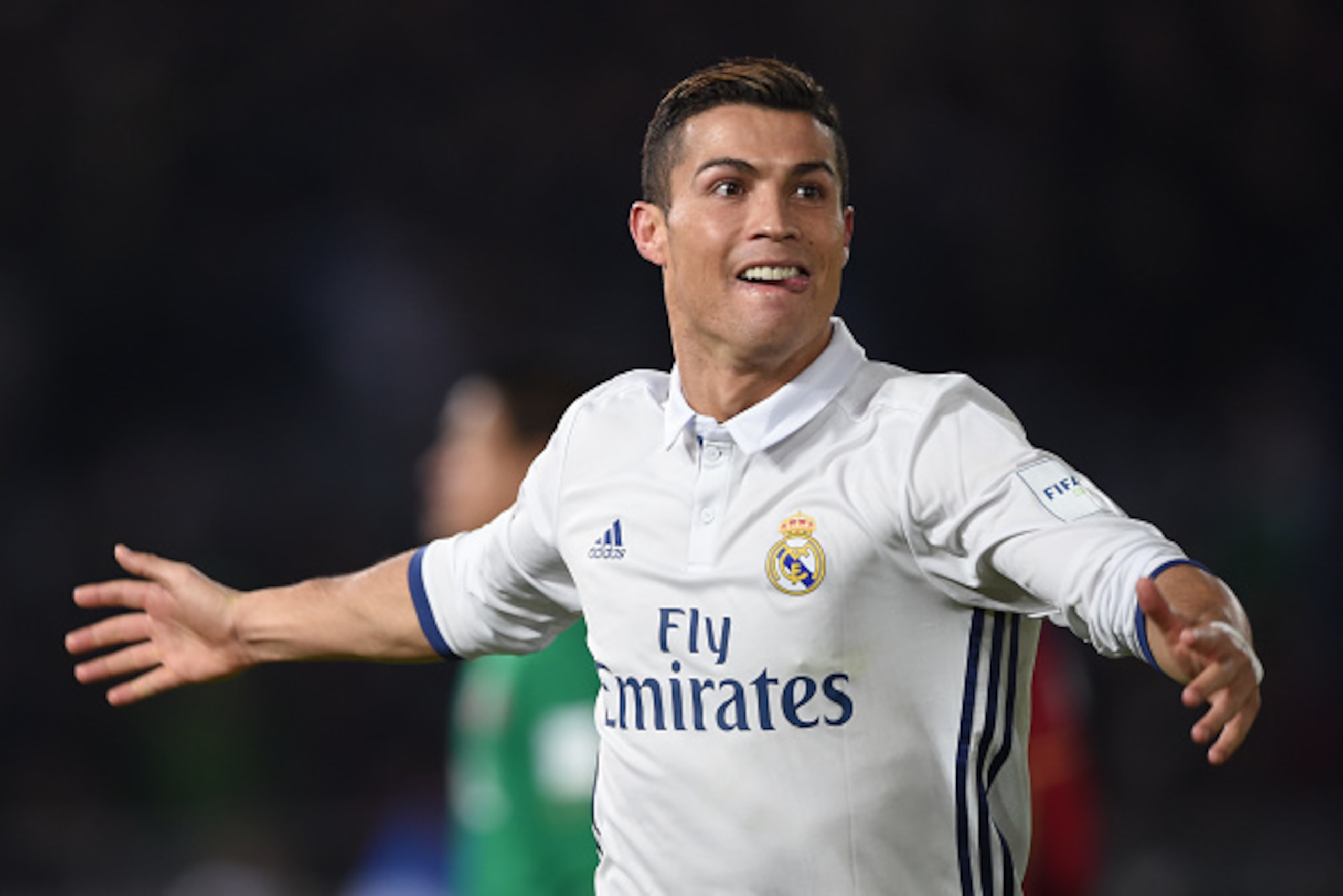
The No. 7 has had more shots per game than anyone else in La Liga this season, per WhoScored.com, with 6.2. It's a pattern which has been repeated over and over: top with 6.3 in 15/16, with 6.4 in 14/15, with 7.2 in 13/14 and 6.9 in 12/13.
Ronaldo's other noticeable traits have changed dramatically through his career—outrageous and pointless skill in his early United days, honed one-on-one effectiveness toward the end at Old Trafford, dribbling infield and shooting on the angle from the left after joining Real, now surging through spaces between defenders to go one-on-one—but that instinct of shooting at every available opportunity has always remained.
And, more to the point, has always yielded phenomenal goal tallies.
Latest iteration
While his approach to finding those shooting chances has altered, and his selflessness has increased in his more experienced years, Ronaldo has never been a playmaker and would never be mistaken for one.
He links play, but it's with the aim of getting himself into the next best position and space, rather than opening a defence up himself; he creates goals for others, but it's often because he can't quite get a clean shot away. That isn't a negative; it's simply the way he plays, and it works well for him, even if it can leave others frustrated at times.
Now, however, Ronaldo is more involved centrally than ever before with Madrid, thanks to Zidane switching his role once more.
While the Atletico Madrid match saw Ronaldo operate as the only striker, games since then have seen him start nominally on the left, yet rarely look to stick to that zone. Ronaldo's touch maps (via WhoScored.com) against both Barcelona and Borussia Dortmund showcase his freedom of movement:

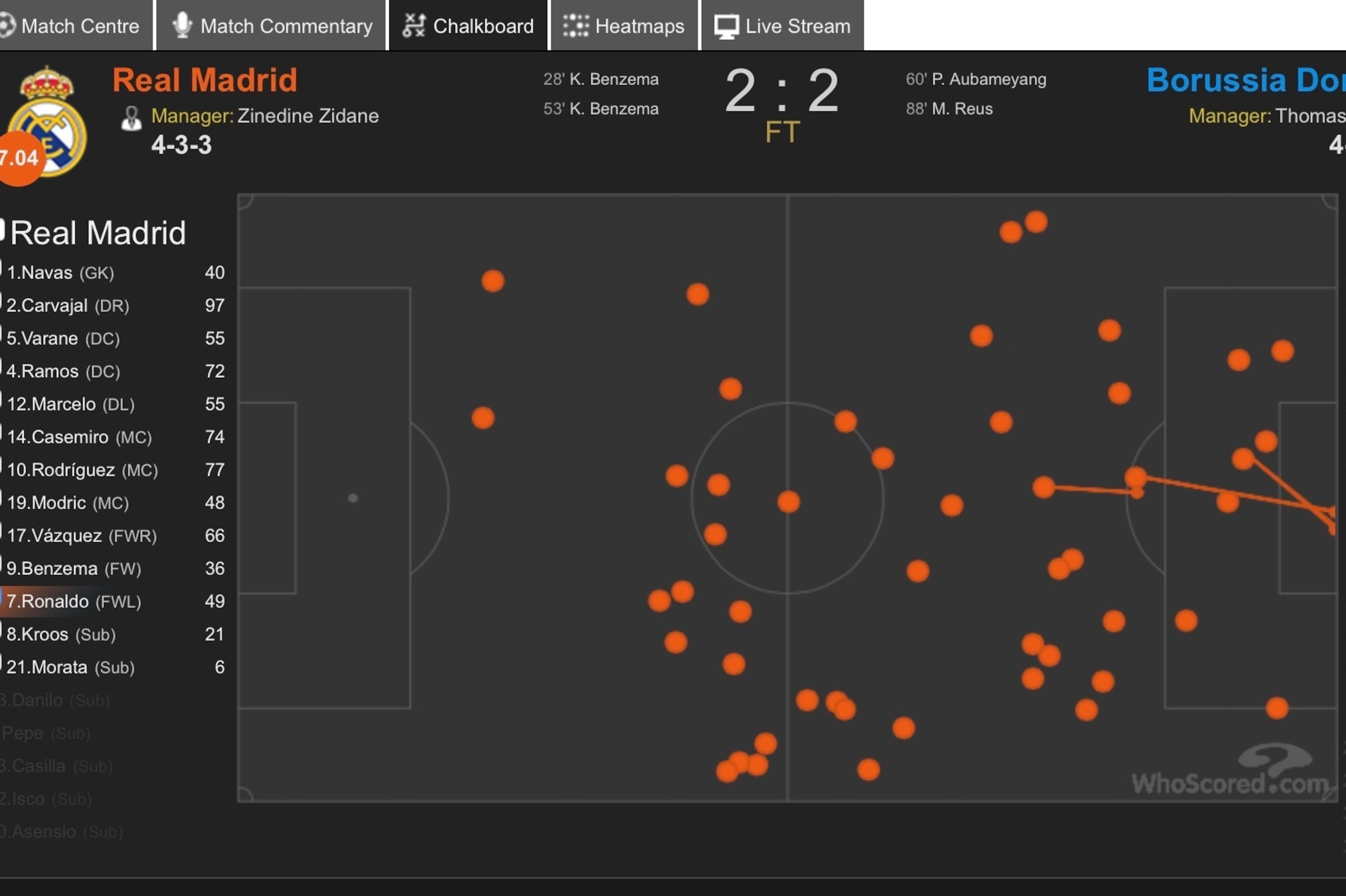
More and more often, there is an emphasis from Zidane in freeing Ronaldo from his defensive duties and from the necessity to cut infield from the left, instead starting his runs centrally or even doubling up down the right channel when he deems it pertinent to do so, just like his goal in the Club World Cup semi-final.
He's far from a No. 10 but is certainly operating as a second forward, and it's largely thanks to the athleticism and speed getting forward from left-back from Marcelo that he's able to rove freely without the team suffering dramatic tactical interruption.

Galacticos v.1
Casting back to Zidane's playing days, he was part of the Real Madrid side which won the Champions League in 2002, scoring in the final against Bayer Leverkusen.
That season to an extent and more particularly afterward, fitting in Zidane's offensive talents alongside the likes of Luis Figo, Raul, Fernando Morientes, Ronaldo and more besides, became an exercise in tactical juggling for each manager in turn. More and more often, Zidane was removed from a central role when two centre-forwards were already selected, switching from a central-midfield berth to a left-sided, free-roving role—though he spent very little time actually wide.
Instead, it was given to Roberto Carlos to utilise his pace and stamina nonstop, all game, to cover the entire left flank for the team.
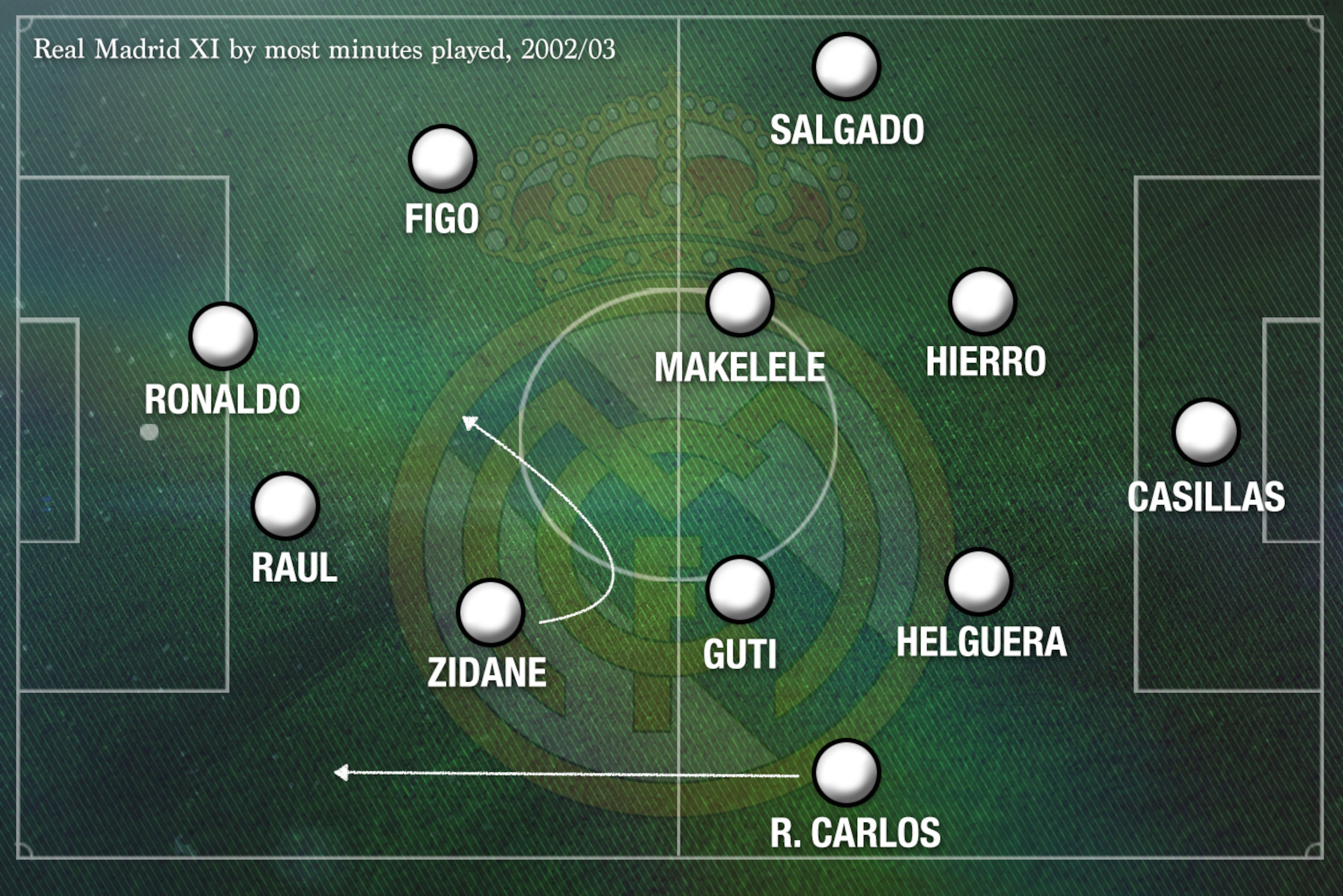
Zidane was the creative hub, the playmaker, the conduit for the team's attacks which saw Raul and Ronaldo score 55 between them in 2002/03, but it was Roberto Carlos who allowed Zidane to play as that central cog to be rotated around, as he occupied all areas on the wing. It gave opponents chances to overload on that side, and defensively they struggled at times, but such is always the problem with tactical imbalances.
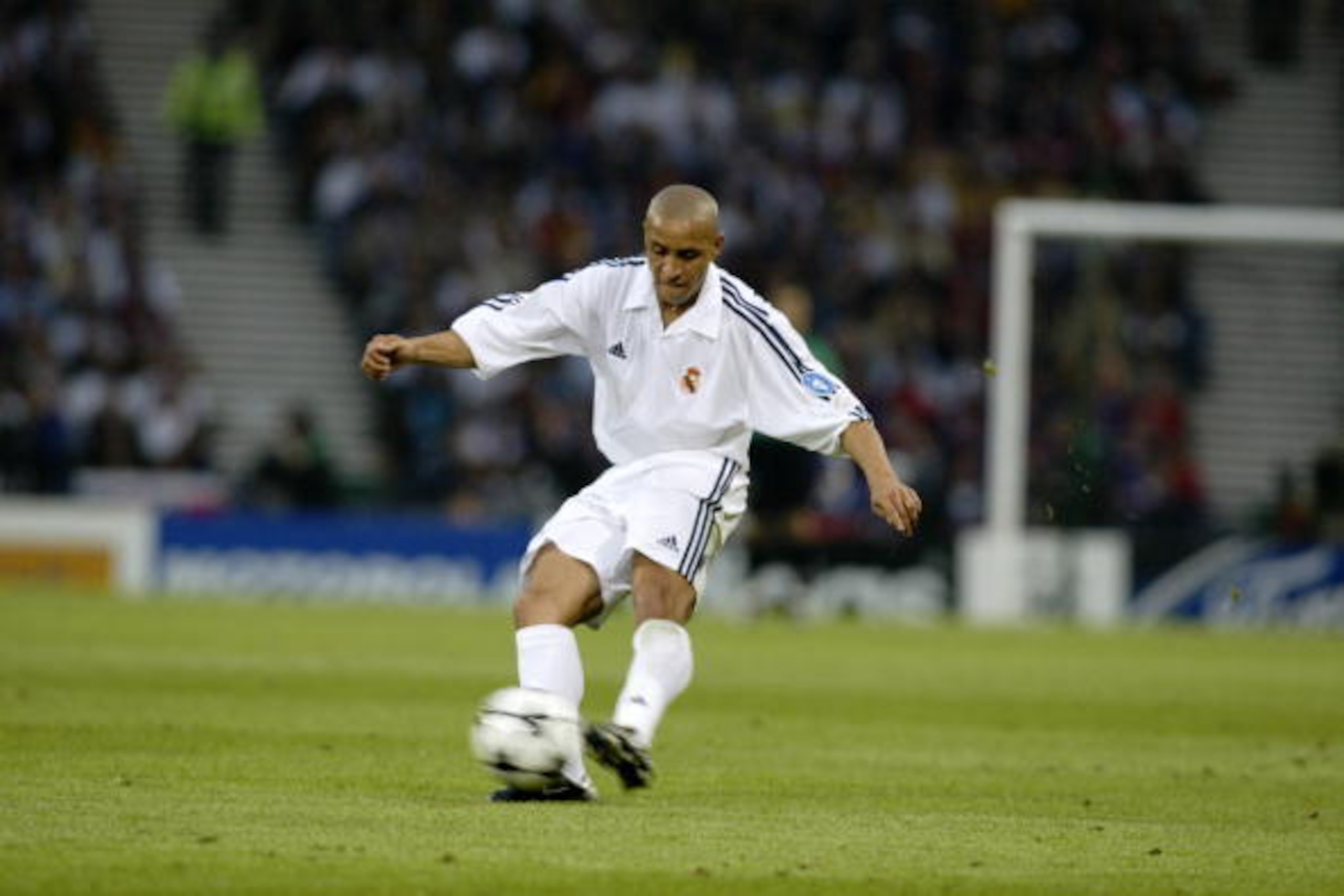
Madrid gambled on offensive power being able to overcome those deficiencies, and Zidane is hoping for the same now as manager by reprising the movement and overlap scenario he flourished in with his current-day squad superstar.
Past and future
With Portugal, Ronaldo is already a centre-forward, a role he's been expected to transition into more and more in the coming seasons, and it may be that this is Zidane's first step toward that at Real Madrid—using his movement and involvement between the lines first, then later as a second striker.
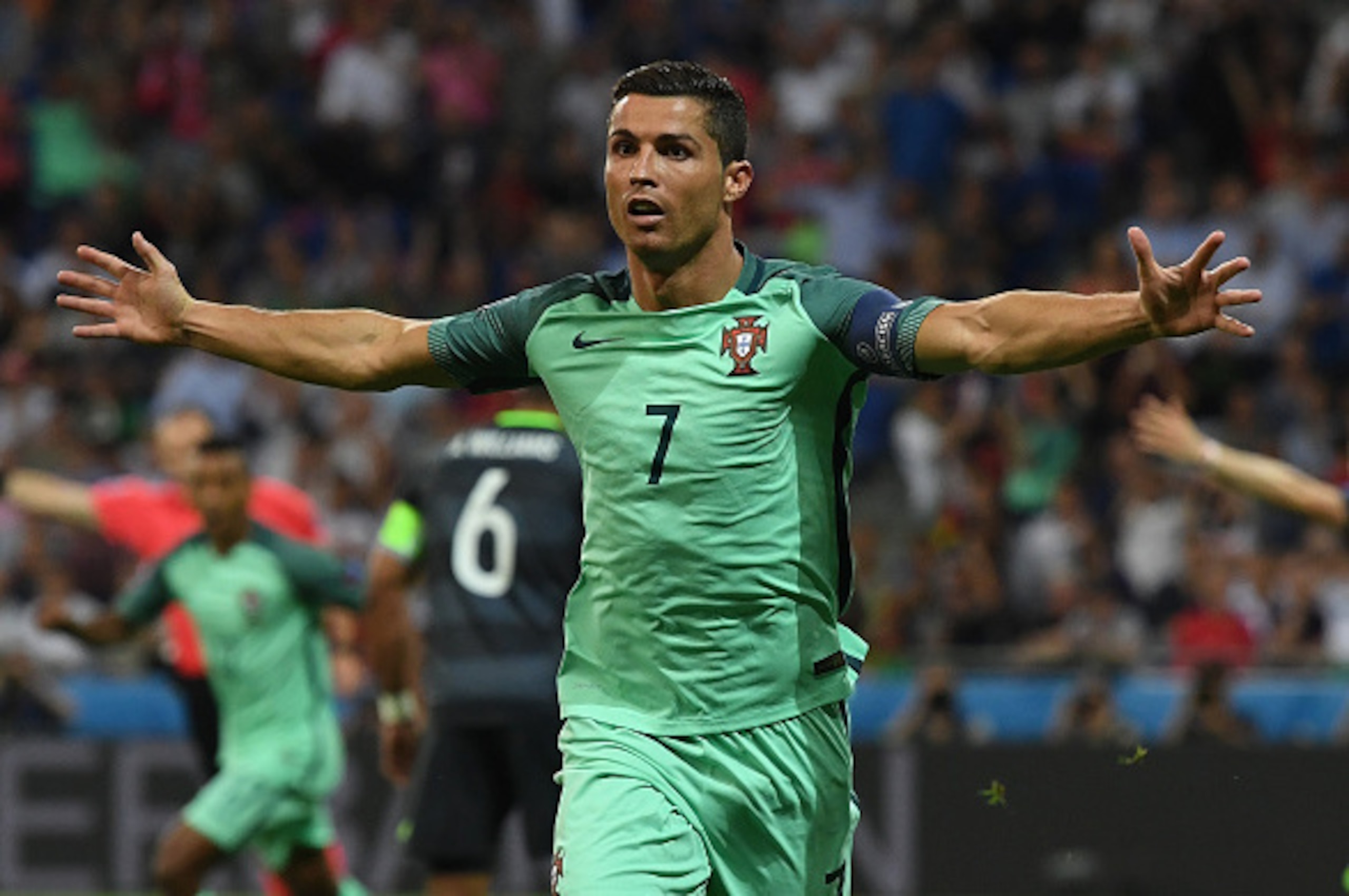
The point is, if not in a true two-man centre-forward setup, still keep Ronaldo high and central, immediately available once possession is won, and Madrid have both an outlet on the counter and a scoring threat if the ball is retrieved high upfield. The number of times Ronaldo now takes on defenders before shooting is dropping constantly, instead focusing on his acceleration in tight spaces and finishing ability. Continue that, instead of asking Ronaldo to cut in, dribble, find angles, and the 40-a-season mark is still attainable for years to come.
Zidane hasn't needed to look any further than his own experiences as to how to make it happen, and while stylistically he and Ronaldo may be very different as players, the methodology in getting the best of their respective traits out of them is eerily similar.
What works well for top players doesn't always translate into coaching, but in this particular instance, Zidane has been able to mirror the freedom and liberation applied to himself a decade ago to Ronaldo, and Real Madrid can benefit from it for years to come.

.jpg?w=2560 "Hill Injury Update Football")
.jpg?w=2560 "OBJ Calls Out Giants 😳")
.jpg?w=2560 "Tyreek makes another cryptic post amid Chiefs rumors")


.jpg?w=2560 "Greenlaw Talks Payton Exchange")
