

Assessing AC Milan's Champions League Qualification Credentials After Good Start
After an excellent start to the 2016-17 campaign, AC Milan are in a better place than they have been for several years. Having won nine of their opening 14 Serie A fixtures, there is a growing feeling that something special could be on the horizon.
Prior to this term, Milan had missed out on continental qualification for three consecutive seasons. However, they now sit in an impressive third place. Should they hold on to the position, a return to the Champions League would be on the cards.

TOP NEWS

Sullivan, Hall Lead USMNT to Big Win 💥
Int'l Break Goals and Highlights 🔥
.jpg?w=2560 "Saints Lions Football")
Rap: Lions, LaPorta End Contract Talks
Yet while the positive beginning to the season has sparked hope of soon mingling once again with Europe’s finest clubs, pragmatism continues to pervade.
Speaking in September, head coach Vincenzo Montella told the press: “I’m happy to be here. We have the highest aspirations, but you have to look at reality. The last Champions League match I saw was Milan 2-0 Barcelona [in 2013].”
Since those comments, however, Milan have won eight of 11 Serie A games, losing just once along the way to force their way into the league’s upper echelons. Here Bleacher Report assesses their chances of qualifying for next season’s Champions League.
The Montella Effect
The impact of Montella on Milan cannot be understated. Without substantial investment in the playing squad, he has taken a team that finished seventh last term and led it up the table, bringing in a more cohesive brand of football and an improved resilience along the way.
He has encouraged the youthful promise that already existed, giving concerted first-team opportunities to the 18-year-old playmaker Manuel Locatelli and the 23-year-old winger Suso while also maximising the abilities of Mattia De Sciglio, Gabriel Paletta and Juraj Kucka to build a solid unit capable of competing with anyone in Italy.

Former Milan centre-back Alessandro Costacurta praised the coach solely for the team’s resurgence. "What is responsible for this success? Montella," he told La Gazzetta dello Sport (h/t FourFourTwo). "He's brought added value. With his culture of holding possession, he's raised the level of the team. When you give precise direction, you reap the rewards."
If the Rossoneri are to build upon their recent form and launch a bid for a top-three spot, Montella’s tactical awareness and acute man management will undoubtedly play an important part.
The Cost of Inexperience
While Milan’s development of young prospects is admirable, it may have some short-term defects. The 17-year-old goalkeeper Gianluigi Donnarumma, the 21-year-old centre-back Alessio Romagnoli, the aforementioned Locatelli and the 21-year-old forward M’Baye Niang have all performed well but all are at formative stages in their careers. Occasional mistakes are to be expected.
In Saturday’s 4-1 win over Empoli, the goal conceded came as a result of a poor decision by Donnarumma, whose punch fell to Riccardo Saponara, who equalised from outside the penalty box. In the same game, Locatelli was caught out on a number of occasions; indeed, he was dispossessed more than any of his team-mates, per WhoScored.com.
While these are often isolated instances, they are in line with what is expected of young players in the highly competitive world of Serie A football. Their inconsistency must be accepted if they are to enjoy frequent game time, thus there are times when Milan’s youth policy may not always benefit the team as much as it does the individual.
Beating the Smaller Teams
Last term, the Rossoneri had almighty struggles with the three teams that were eventually relegated to Serie B. Frosinone and Carpi, both enjoying their maiden seasons in Italy’s top flight, took points from Milan. And Verona, who propped up the table, with just five wins from 38 fixtures, beat them 2-1 at the Stadio Marc’Antonio Bentegodi in April.
All in all, Milan took just seven of a possible 18 points from the doomed trio, with their sole win coming against Frosinone. When considering Sassuolo, who ended up clinching sixth place by a four-point margin, took 14 points from the same fixtures, this failing undoubtedly had a tangible influence on which team claimed the final European qualification spot.
Fortunately, this no longer seems to be a problem.
Of the bottom four sides in Serie A this season, Milan have played three—Empoli, Pescara and Palermo. And of the nine points on offer against these teams, they have dropped none. Evidently, since the arrival of Montella in the summer, they have experienced less difficulty in breaking down less ambitious opposition.
Luck Runs Out
There has been an underlying element of luck throughout Milan’s strong start to the season. In their opening fixture, it took a last-gasp penalty save by Donnarumma to secure all three points against Torino. It took a similar feat of acrobatics by the teenage goalkeeper to ensure victory over Juventus, a result that was also facilitated by a stunning strike by Locatelli.

Great saves and out-of-the-ordinary goals were also to thank for wins over Sassuolo and Pescara. But this reliance on individual brilliance covers an occasional collective shortfall, and it is clear Montella’s side remains fallible.
While they are third in the league, the Rossoneri’s defensive record is average. Only nine Serie A teams have conceded more the 18 Milan have let in. Meanwhile, their goals scored tally of 25 is, while respectable, generally the result of a clinical touch as opposed to consistent, quality moves. This is indicated by Squawka statistics, which show that Milan are only the 10th-best side in the league when it comes to chance creation.
It is difficult to envisage such good fortune lasting for a full season, meaning tactical improvement is necessary if Milan are to remain in the top three.
An Open Race
Thus far, 2016-17 has been one of the most open seasons in recent Serie A history. While Juventus have established a four-point lead at the top of the table, the race for second and third place is extremely tight and is being contested by a number of teams.
Roma and Napoli have each lost three times already, rendering their hopes for a Scudetto push unlikely. Meanwhile, Fiorentina and Inter Milan have both started the campaign poorly, consequently finding themselves in mid-table.
With other teams struggling to perform, the path to Champions League football looks surprisingly clear for Milan.
However...
Impending Rival Improvement
Milan must also expect an improvement from their rivals as the season wears on.
Napoli should begin to find more consistency once their many high-quality summer signings, including Lorenzo Tonelli, Nikola Maksimovic, Amadou Diawara, Piotr Zielinski and Arkadiusz Milik, have fully settled in and, in the latter’s case, recovered from injury.
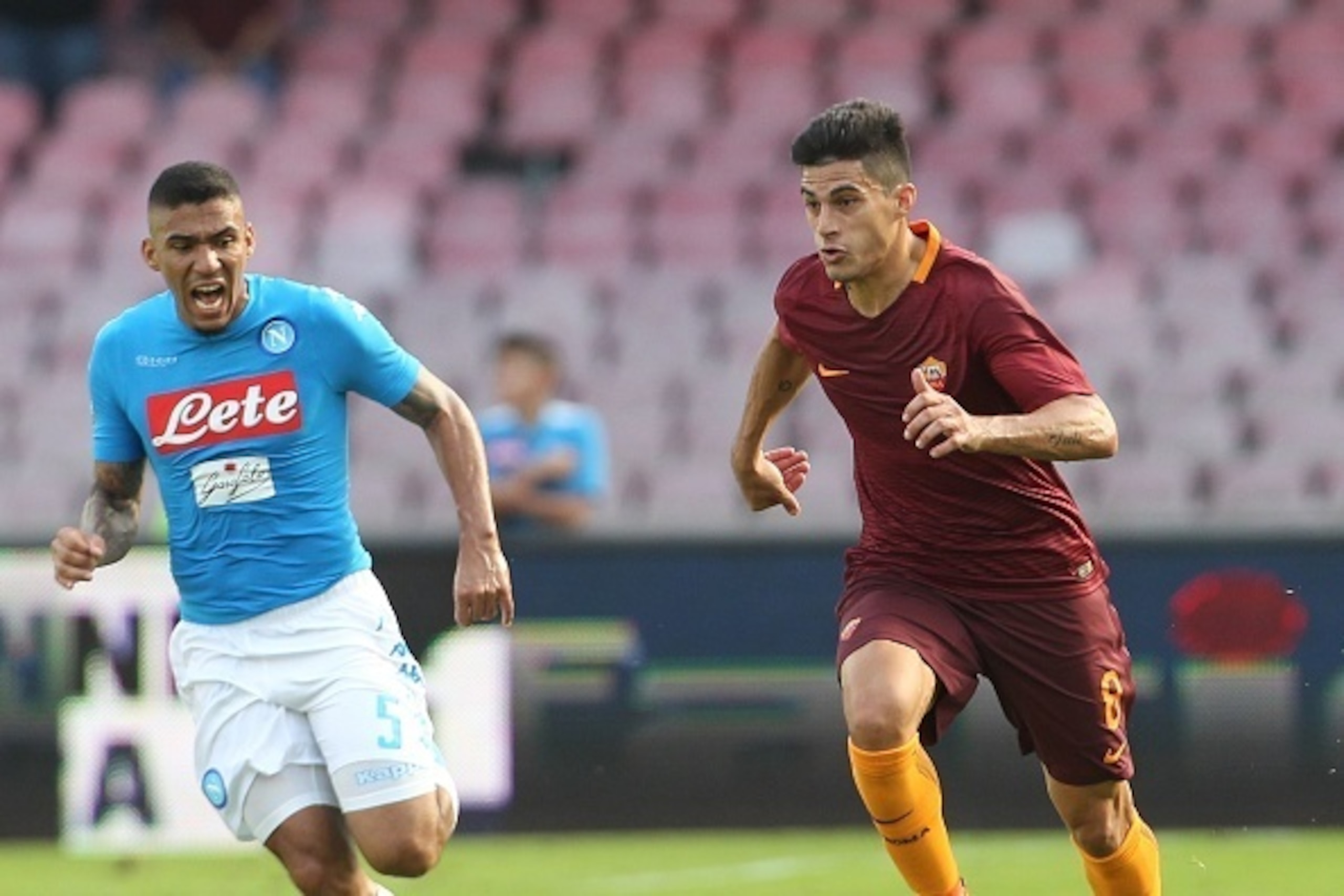
Inter have undergone two changes of head coach since the summer, with Frank de Boer replacing Roberto Mancini before being sacked in early November. Stefano Pioli is the new man in charge, and if his debut draw in the Milan derby was anything to go by, he will forge a more aggressive and cohesive team from a talented squad.
Furthermore, Roma are arguably still recovering from the loss of star midfielder Miralem Pjanic to Juventus in the summer. Once they have decided upon the best way to organise Daniele De Rossi, Kevin Strootman, Radja Nainggolan and Leandro Paredes, they should improve.
With their main competitors likely to gain momentum over the course of the campaign, there is a high chance that Montella’s youthful Milan could lose their grip on a top-three spot. As such, the prospect of Champions League qualification remains a distant one.
.jpg?w=2560 "Report: Baker May Miss Up to 6 Weeks")
.jpg?w=2560 "EVERY Fantasy Football Update")
_0.png?w=2560 "Week 5 Winners & Losers 📊")

.jpg?w=2560 "Commanders May Change Logo 👀")