

How AC Milan's Vincenzo Montella Became More Jose Mourinho Than Pep Guardiola
It is possible to simplify many football coaches into one of two broad categories. Either they are a pragmatist or an idealist. The former are generally more concerned with the league table, winning and collecting points. The latter tend to be more focused on implementing their own specific style of play.
For much of his relatively short coaching career thus far, Vincenzo Montella has been considered a member of the idealistic subset, a rare yet wonderful beast within the deeply practical environs of Italian football. Yet over the course of his first six months in charge of AC Milan, he has drastically altered this perception.
TOP NEWS

Sullivan, Hall Lead USMNT to Big Win 💥
.jpg?w=2560 "Titans Giants Football")
OBJ Calls Out Giants After Release

Pic of LeBron's Helicopter Commute 🚁
The Rossoneri have progressed since his appointment in June, rising to third place in Serie A. But if such positive results were unexpected so soon, the manner in which they have been achieved has been equally surprising.
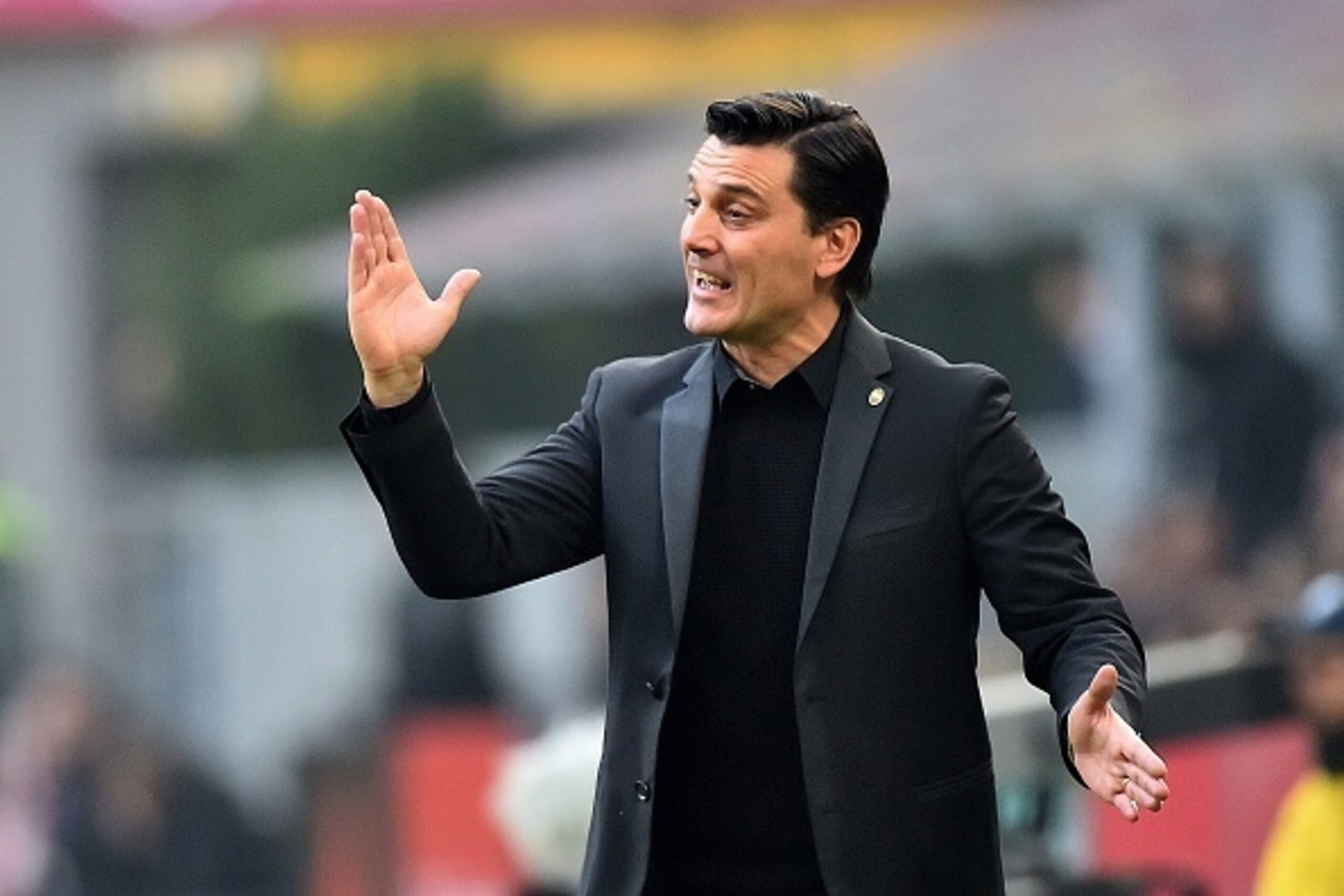
One of the great storylines within football in recent years has been the ongoing battle between Pep Guardiola and Jose Mourinho. In the past, the pair faced off during a period in which they were respectively in charge of La Liga giants Barcelona and Real Madrid. They have resumed their rivalry this season as managers of Manchester City and Manchester United in the Premier League.
However, while the duo are renowned as opposites simply for the clubs they represent, their clashes have always signified a meeting of contrasting worldviews. Both, undeniably, are obsessed by winning. Yet only one of them has a clarity of principle, a method from which deviation is rarely tolerated.
Guardiola is unquestionably an idealist, as the performances of his Barcelona, Bayern Munich and Manchester City teams have illustrated. They have all incorporated similar tactical themes, furthering their manager’s philosophy in praxis. At the same time, Mourinho’s sides have been open to change based on the circumstances, available players and opposition.
Consequently, whenever the two managers come together, a battle between romance and realism ensues; one is determined to prove his way is best, and the other is angling for victory as the ultimate form of validation.
"Jose Mourinho vs. Pep Guardiola: Man United and City manager watch #ManCityFC #epl #bpl pic.twitter.com/0lipiXNPcS
— Football Pointer (@FootballPointer) November 18, 2016"
In Serie A, it could be argued that almost all head coaches side more with Mourinho’s way than Guardiola’s. This owes a lot to Italian football culture, something that Gianluca Vialli touches on in his and Gabriele Marcotti’s book, The Italian Job.
"In Italy, we are far quicker to decide that a manager’s stint is a failure," he wrote. "Italian clubs will sack a manager based on the most recent results. Sometimes, even a month’s run of losses is enough for him to get the bullet. In that sense, their vision is incredibly short-sighted."
With such short-termism rife, coaches in Serie A are given little time to lay down their football visions at one club. Yet Montella was able to do just that over three successful years with Fiorentina between 2012 and 2015.
The Viola finished fourth in the league in each of the three campaigns Montella spent with them as head coach, also reaching the Europa League semi-finals and a Coppa Italia final. They did this while playing a distinct brand of football, one that—just like Guardiola’s—was considered aesthetically pleasing.
In 2013, Forza Italian Football’s Aran Sohal discussed the key aspects of their style, confirming that a "short-passing game has been the main focus," that "the three midfielders create triangles and pass the ball around the opposition’s midfield" and that each member of the central trident is "comfortable on the ball."
There was a clear focus on technicians and controlling the game through maintaining and utilising possession, something that was backed up by the statistics recorded during Montella’s time at the Stadio Artemio Franchi.
Over his three years in charge, Fiorentina’s average possession ranged from 55 per cent to 56.5 per cent, as they consistently racked up higher numbers in this area than most other Serie A sides. Their offensive emphasis was hinted at by their high shots-per-game tally, which ranged from 15.2 to 16.3. Meanwhile, their completed short passes per game ranged from 424 to 456.
Montella was also known to vary his chosen formation in accordance with the game, switching between 3-5-2, 3-4-3, 4-3-3 and 4-2-3-1 systems. However, this willingness to change setup belied a desire to enforce the same tactical principles at all times.
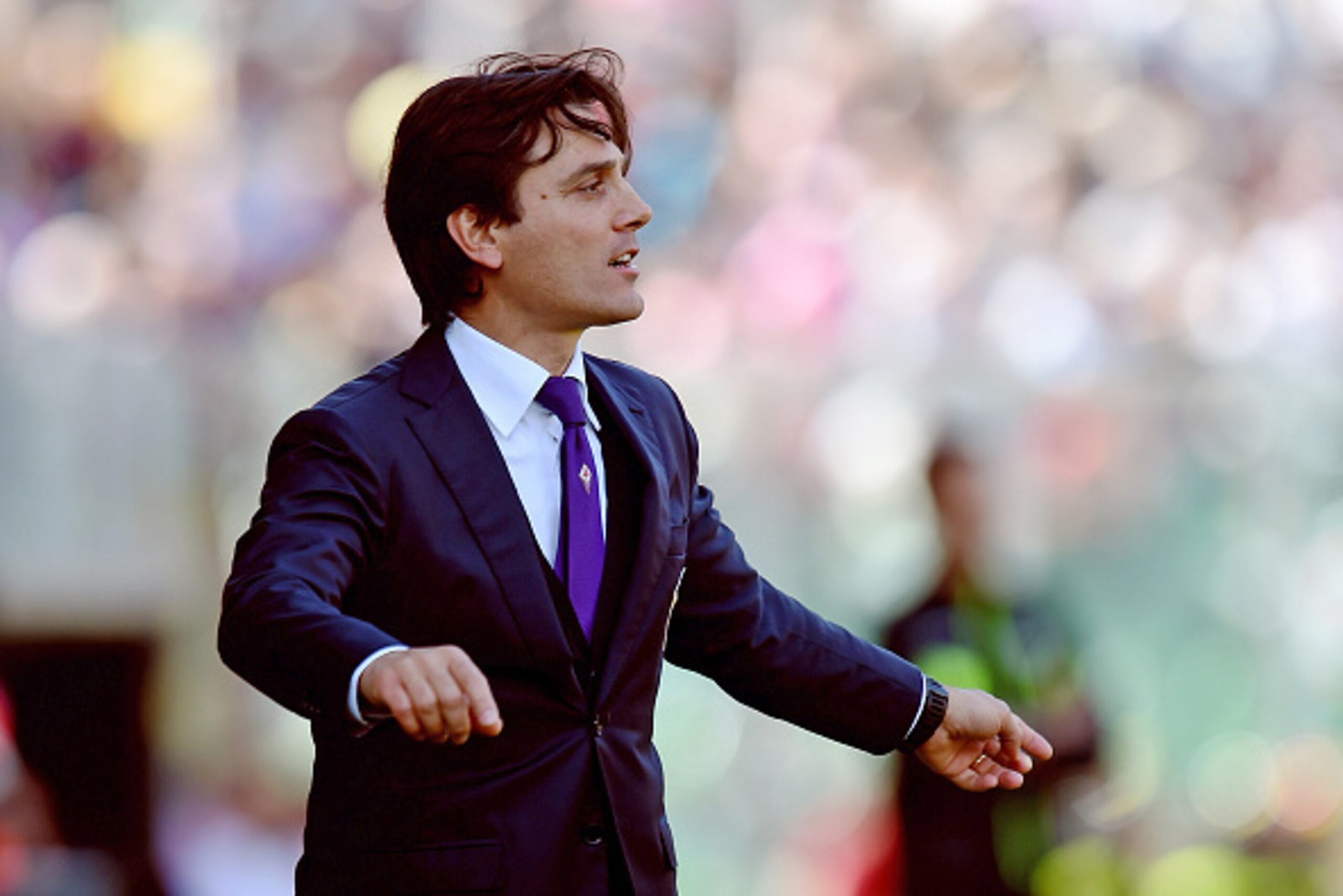
He discussed this in a March interview with La Gazzetta dello Sport (h/t Football Italia) while head coach of Sampdoria, stating that: “I don’t believe in formations but, if anything, in strategies. And those can change. I believe a lot in philosophy; it’s fundamental to have one. You choose it and bring it forward with conviction, otherwise you generate confusion.”
Montella’s versatility regarding formations and commitment to proactive, attack-minded football set him apart from his domestic coaching peers, and it also had a lot to do with his appointment as Milan coach in June, as the club sought an improvement in style after a 2015-16 season marred not only by underwhelming results but by dull, incoherent football.
Yet while his time at Fiorentina saw him align more with Guardiola and the idealists of modern football management, he has not continued in the same vein at the San Siro.
With Milan, Montella has clung steadfastly to a fluid 4-3-3 shape, with the only deviation away from this formation occurring during games, when it can sometimes resemble a 4-2-3-1 when Giacomo Bonaventura steps up from central midfield to press the opposition defensive midfielder.

And while he has brought in a more patient, considered form of buildup and improved movement in and around the final third, his team’s success has been as much to do with defensive solidity and grinding out results as it has been about the quality on the ball. Indeed, they have averaged less possession this term than they did last season—49.3 per cent compared to 52.1 per cent in 2015-16.
Montella’s Milan have also averaged fewer short passes per game than Mihajlovic’s side, 354 compared to 386, and have had fewer dribbles and shots. The numbers do not portray a team in the former Fiorentina coach’s pure, attack-minded image.
But this is no coincidence. Rather, this is the effect of a deliberate change in mentality. Montella has crossed over to the dark side and embraced his inner Mourinho.
This can be seen not just in the statistics but in the way his team forgoes possession and defends deep with 20 minutes to go or when the coach makes a defensive substitution to protect a slender, one-goal advantage.
Montella’s pragmatism has also shone through with his hardline approach to man management and his post-match psychology.
When star striker Carlos Bacca questioned the quality of service from his team-mates, he was immediately dropped to the substitutes' bench for the trip to face Sampdoria. And after Inter Milan equalised in the dying embers of Sunday’s derby, the enthusiasm of their celebrations was questioned.
Montella came to Milan as a stylist with a reputation for beautiful football, but he has shed the old labels with changes in his attitude toward tactics, squad management, in-game decision-making and verbal barbs. In doing so, he has shown himself to be a coach more concerned with winning than was previously understood.
All statistics per WhoScored.com unless otherwise stated.

.jpg?w=2560 "Rap: Lions, LaPorta End Contract Talks")

.jpg?w=2560 "Report: Baker May Miss Up to 6 Weeks")