

Sven-Goran Eriksson's Manchester City Revolution Brought Much-Needed Positivity
"It was the best of times; it was the worst of times," Charles Dickens wrote in his opening for A Tale of Two Cities
The author was actually describing the differences between London and Paris during the French Revolution—but it's almost a perfect foreshadowing of Manchester City's 2007-08 campaign, nearly 150 years before it happened.
That season was perhaps one of the biggest false dawns to which City have ever treated—if that's the right word—their fans. After an awful finale to Stuart Pearce's tenure in charge, where the club managed just 10 home goals in the top flight and didn't win at Eastlands in the league after New Year's Day, supporters were filled with hope and optimism.
TOP NEWS
Sullivan, Hall Lead USMNT to Big Win 💥
.jpg?w=2560 "Titans Giants Football")
OBJ Calls Out Giants After Release

Pic of LeBron's Helicopter Commute 🚁
By the following May, it would be completely beaten out of them.
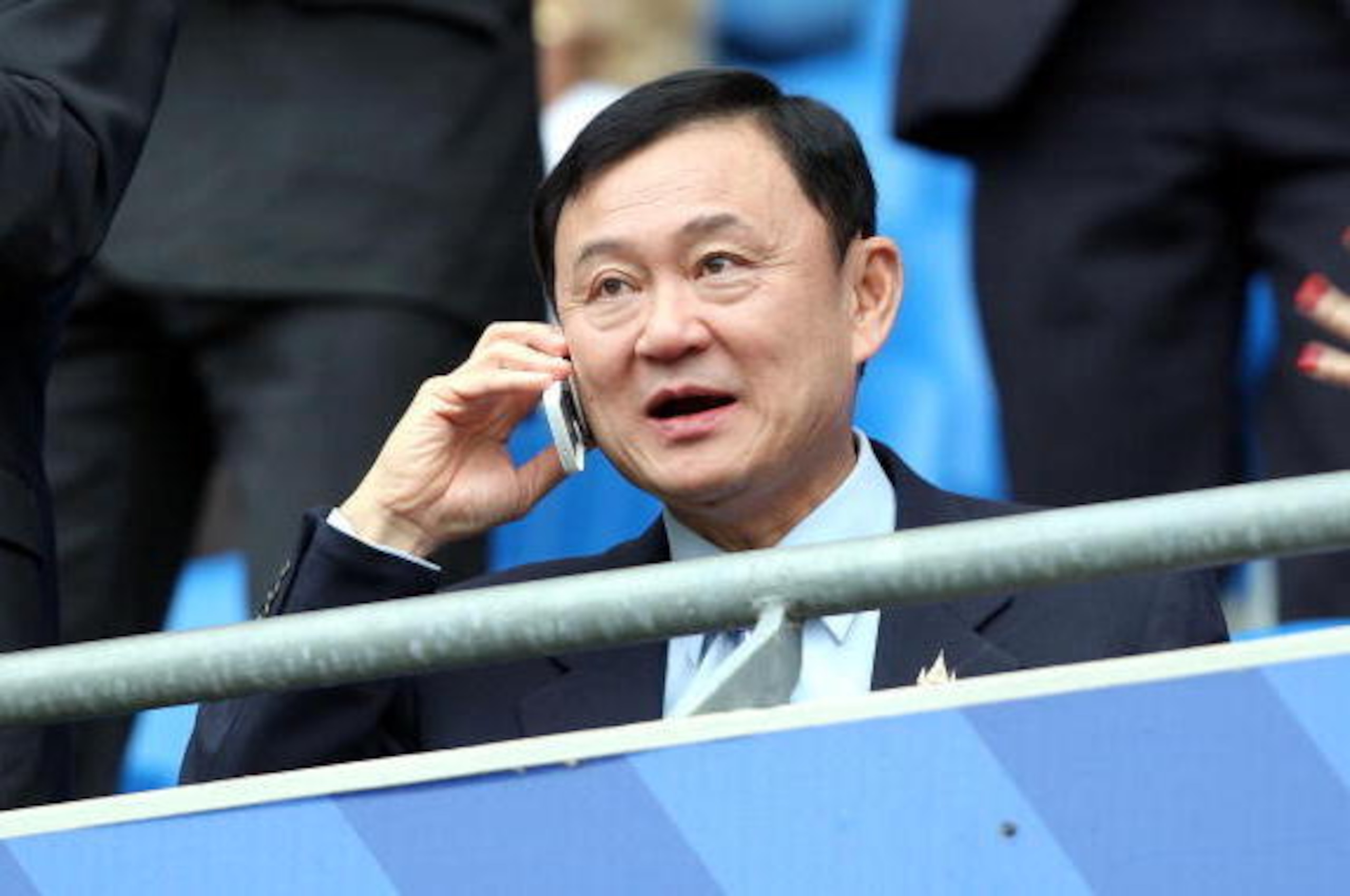
In August, it was all looking promising. New investment from former Thailand Prime Minister Thaksin Shinawatra and the appointment of the former England manager Sven-Goran Eriksson to the dugout was prompting excitement.
Of course, it all came with caveats. The Swede was much maligned in the English press, despite taking the national team from 17th in the FIFA rankings in 2001 to fifth by the time he left in 2006. Meanwhile, Shinawatra had clouds of human rights abuse allegations hanging over his head.
However, watching the new manager sit in a press conference surrounded by Javier Garrido, Valeri Bojinov, Vedran Corluka and Elano as four brand-new signings before the start of the season—having already been pictured announcing the acquisitions of Rolando Bianchi, Gelson Fernandes, Geovanni and Martin Petrov—was exciting. This was a new era at City and these were badly-needed improvements to a dwindling squad.

It started well on the pitch. The new signings ran the show in a 2-0 win over West Ham United at Upton Park. Bianchi slid home Elano's low cross, while Geovanni secured the victory in the closing stages.
Things got more exciting in the next couple of weeks. A 1-0 win over Derby County at Eastlands meant City had scored at home for the first time in over eight months—courtesy of a Michael Johnson outside-of-the-foot screamer from the edge of the box.
The first Manchester derby was a success, too. Quite how City were victorious remains a mystery—they only left their own defensive third once, when Geovanni managed to deflect a strike off Nemanja Vidic's bottom and past Edwin van der Sar.
For the rest of the match, rookie goalkeeper Kasper Schmeichel was busy, Richard Dunne and Micah Richards had their hands full with Manchester United striker and their future City team-mate Carlos Tevez, and the away side also missed an open goal late on.
But a win's a win, especially in a local derby.
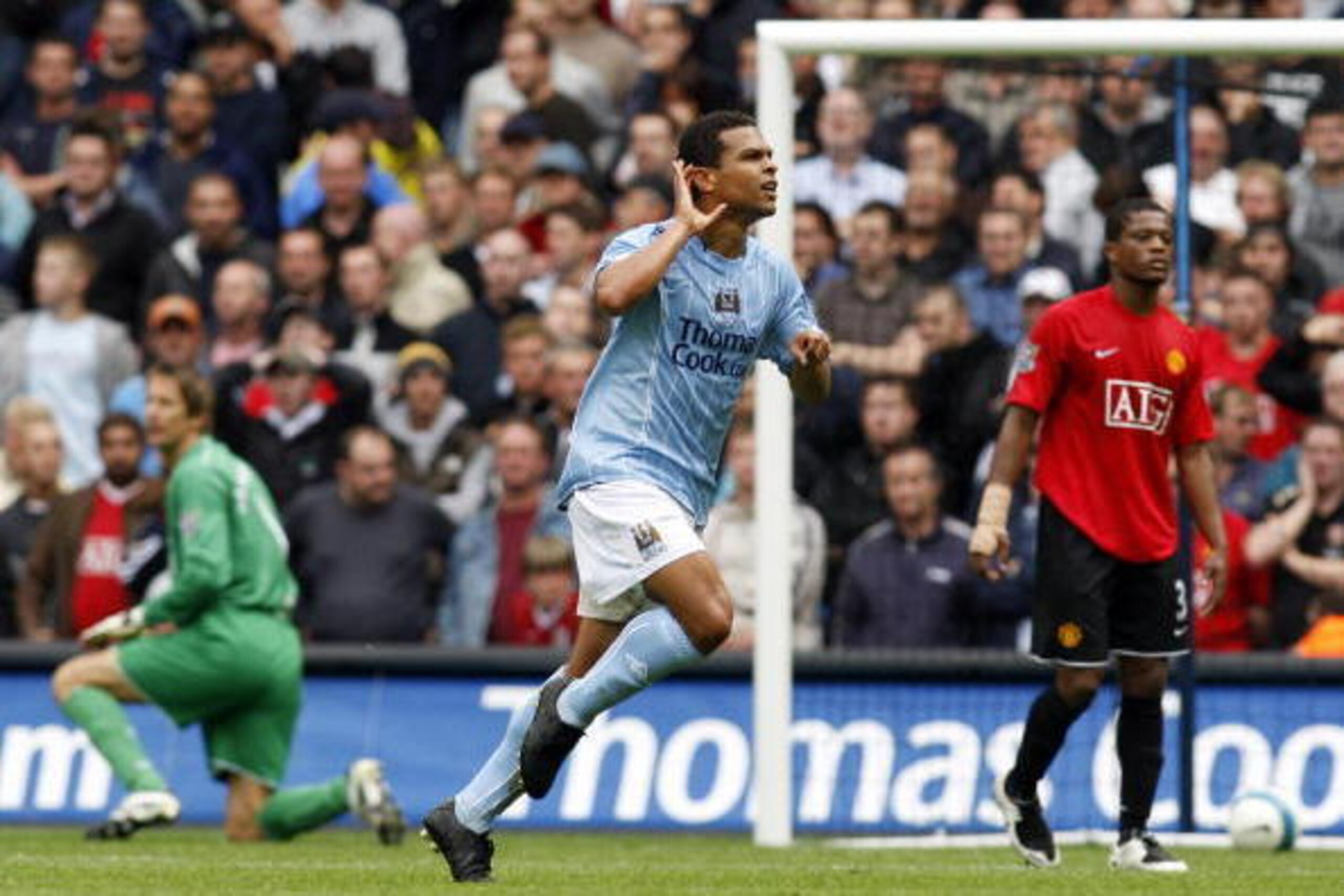
Defeats at Arsenal and Blackburn tempered the mood slightly, but City's home form was carrying them through the early parts of the season at the top of the table. Newcastle and Middlesbrough were both played off the pitch at Eastlands, with Elano settling into the team as the playmaker and scoring a pair of wonderful free-kicks.
Stephen Ireland was nicknamed Superman after he dropped his shorts to show underwear styled with the superhero's logo as part of his goal celebration against Sunderland.
Only Blackburn and Liverpool took points from City at home before the turn of the year, both leaving Eastlands with draws. The Merseysiders should have won—but Dunne was in stupidly good form to continually deny Fernando Torres.
As 2007 became 2008, City were fourth. The supporters were in dreamland, having witnessed such a stark contrast from the struggles of the season before. Talk wasn't just of qualifying for the UEFA Cup, but it was about getting into the Champions League and upsetting the established top four.
That quickly changed and form nosedived.
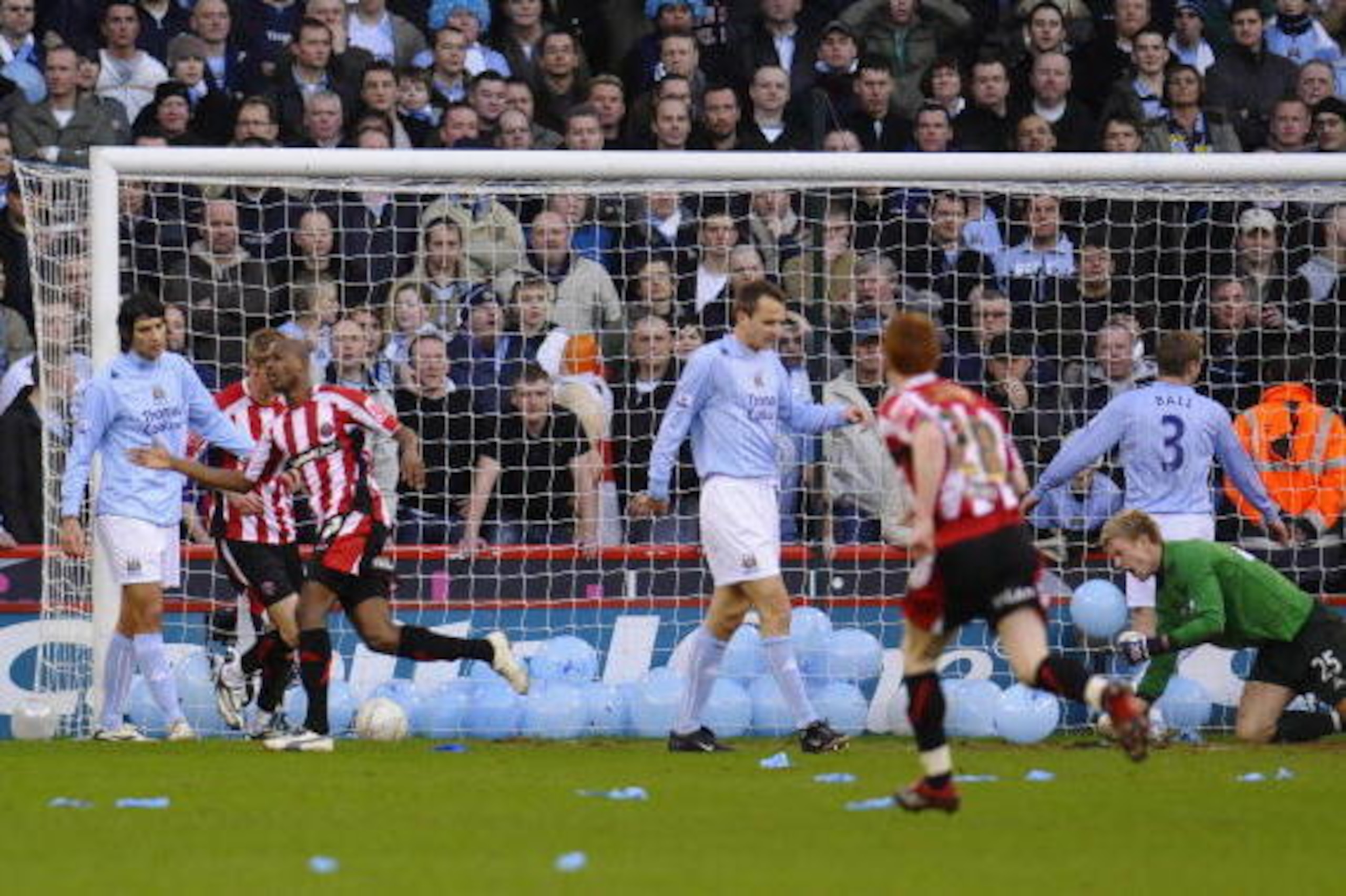
Everton, West Ham, Derby and Arsenal all took points off City, while Eriksson's side were knocked out of the FA Cup by a balloon—defender Michael Ball and goalkeeper Joe Hart lost the ball in among a scattering of blue balloons in City's box, allowing Sheffield United's Luton Shelton to open the scoring.
The only highlight of the second half of the season was an unexpected victory at Old Trafford. Manchester United were outplayed by their rivals on their own patch for the first time in 34 years, at a period when Sir Alex Ferguson's side were building momentum towards the title and City were sliding down the league.
It was built up as United's day. The silence marking the 50-year anniversary of the Munich air disaster was perfectly observed before the match and the two teams wore specially designed kits for the occasion. A win for the hosts was all that was missing—and it stayed missing all afternoon.
The away side weren't lucky, either. While they'd been fortunate in the reverse fixture, Eriksson's team played the better football when the two met at Old Trafford. Goals from Darius Vassell and Benjani Mwaruwari in the first half were enough to seal it and dampen the atmosphere.
Michael Carrick's late consolation couldn't stop it being City's first domestic double over United in nearly 40 years.

Despite that result, City continued to slip down the league alarmingly quickly. From being Champions League hopefuls in January, they'd reassessed their ambitions to the UEFA Cup by mid-February, having dropped to eighth.
In the end, they'd finish a disappointing ninth and only qualify for Europe via the Fair Play League.
The end of the season had become a circus. Rumours from behind the scenes that Shinawatra was going to sack the manager were made public far too soon, and Eriksson took charge of his final three games knowing he was for the chop.
Meanwhile, the owner's assets were being frozen in Thailand and the club fell ever closer to administration. Shinawatra was a fugitive on the run from the authorities, and former chairman John Wardle was lending City money to pay staff.
Chaos reigned, and it was reflected on the pitch as City fell to pieces. Fulham needed to win at Eastlands in the third-last game of the season to avoid relegation. Despite City leading 2-0 at half-time, the visitors came back to win—and ended up staying in the league that year.

City saved their biggest humiliation for the final match of the season, though. Assured of a place in the UEFA Cup through the Fair Play League providing they avoided too much ill-discipline, Dunne risked that by getting himself sent off within 15 minutes. It began an epic capitulation.
Middlesbrough won 8-1. It was one of those moments where the news media spelled out the score in words just so nobody thought it was a typo.
If City's players hadn't downed tools as part of a pre-planned protest—as many fans speculated they had—then it truly was the most embarrassing result in the club's history.
Eriksson took the club on a post-season tour of Thailand and China and was sacked shortly after. Despite such a poor end to the campaign, he still remains a cult hero for the positive mood he brought to Eastlands in August-December 2007.
The 2007-08 campaign was a tale of two Cities. It was the best of times; it was the worst of times.

.jpg?w=2560 "Rap: Lions, LaPorta End Contract Talks")

.jpg?w=2560 "Report: Baker May Miss Up to 6 Weeks")