Jesus Navas May Never Be a Fan Favourite, but He Is a Key Manchester City Option
Some players are just not fan favourites.
Down the years, Manchester City have had a fair few so-called “boo-boys.” Some endured long spells of criticism from the home support, others have moved on before it could change, and there have been some who have worked hard to turn it around.
Richard Edghill was one who frustrated many fans, and it took its toll in a poor first-half display against Coventry City at Maine Road in 2000-01. He was substituted just after the break, having scored an own goal and been blamed for allowing Craig Bellamy through to make it 2-0 to the visitors.
TOP NEWS

Sullivan, Hall Lead USMNT to Big Win 💥
.jpg?w=2560 "Titans Giants Football")
OBJ Calls Out Giants After Release

🚨 Week 5 AP Top 25 Poll
Edghill suffered the ignominy of being cheered off, and his City career—which had been more than 150 games old and quite successful by that point—was virtually over.
It’s often forgotten that Shaun Goater wasn’t popular when he arrived at Maine Road, too. Back then, he was seen as a lower-league slogger of a player and beneath what Manchester City were as a club—even as they slumped into the lower leagues.
He was nothing of the sort and actually became a hero as he spearheaded City’s rise from their lowest position in Division Two and back to the Premier League. It’s often swept under the carpet the abuse the Bermudan had to endure in his early years, understandably so as he went on to bag more than 100 goals for the club.
It’s probably fair to say that Jesus Navas falls into the “boo-boy” category. It’s also true that he’ll never hit the club-legend heights that Goater did, but equally, his treatment is often grossly unfair—similar to what happened to Edghill.
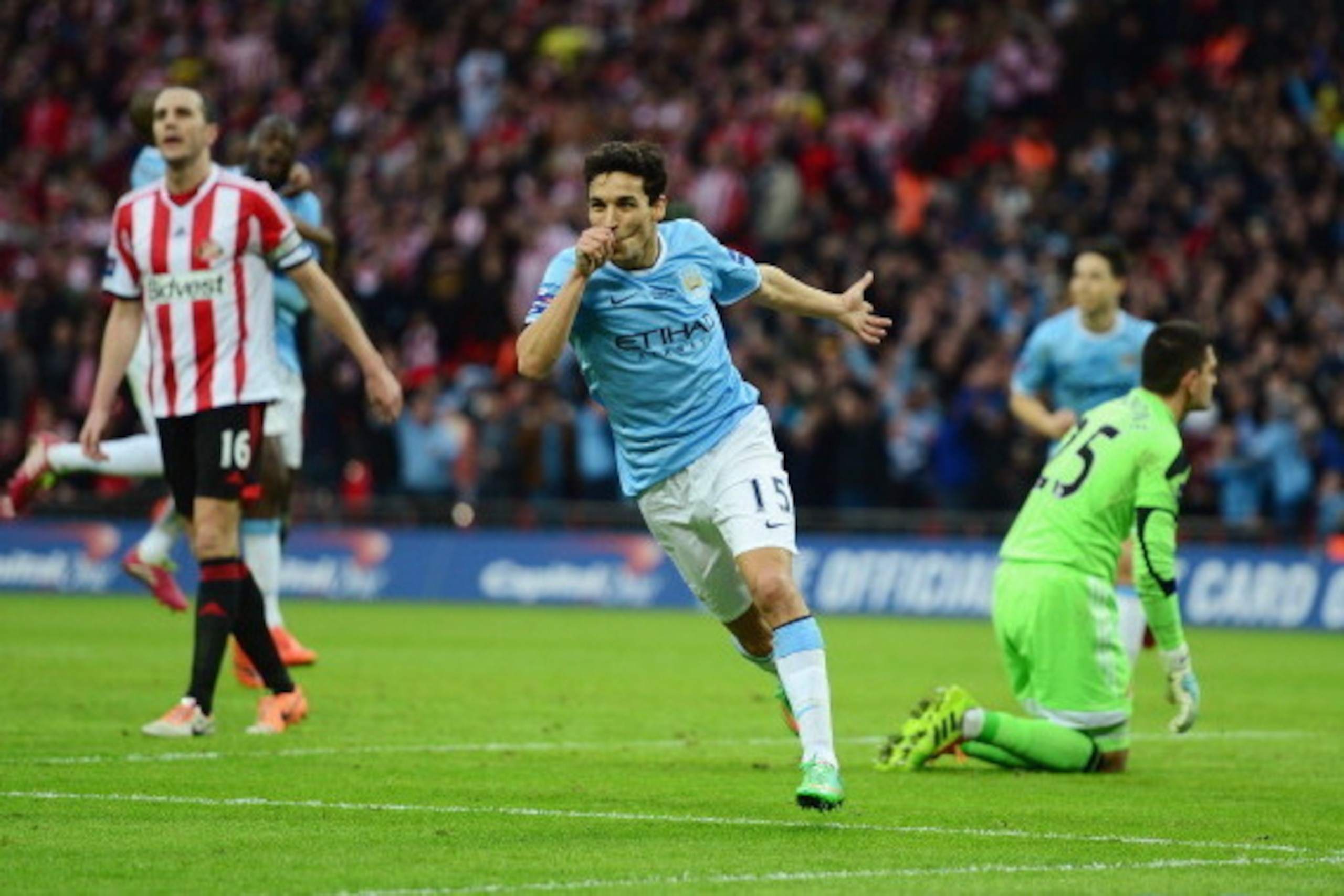
When he joined from Sevilla for an estimated £14.9 million in 2013, Navas had already had to battle his own demons to be able to move. He had previously needed to see a psychologist to overcome chronic homesickness—he’d been unable to train with the national team because they had been based too far away from where his family lived.
To actually take the gamble to uproot himself and not only leave his home town, but also switch to a new club in a different country was an enormous step.
In his first season, the winger was seen as a very useful option for Manuel Pellegrini’s team. Perhaps it helped him that the club were winning games regularly and were playing an open, expansive style. In his 48 appearances that campaign, he managed six goals and 13 assists—also scoring in the 3-1 Capital One Cup final victory over Sunderland, securing the win in the closing stages.
City’s football that season suited the Spaniard. With Sergio Aguero and Alvaro Negredo regularly in the box, the winger had two excellent targets to aim for when getting down the right flank. It often helped that David Silva was lurking around the edge of the box, feeding on any loose balls there, and Edin Dzeko was in some of the best form he had ever managed for the club.
Over the course of the next two campaigns, though, Navas rather quickly fell out of favour with those in the stands. City’s performances as a whole dipped, and they fell to pieces two seasons running.

In 2014-15, they were toe-to-toe with Chelsea for half the season—actually having exactly the same record as the eventual champions after 20 matches, second only to them on alphabetical order on New Year’s Day. But City’s form fell off a cliff, and by mid-March, they were six points behind Jose Mourinho’s side and had played a game more.
Navas was in the line of fire. Many didn’t see what he was adding to the squad—his goals had dried up, and he was frustrating supporters. He found the net once all season, during a 7-0 rout of Sheffield Wednesday in the Capital One Cup in September, though he did manage to lay on 11 goals across his 47 appearances.
His job had become much harder. City weren’t breaking as quickly as they had done in the previous season, and their attacks were becoming more laboured with slower buildup. Navas’ great ability that sets him apart from others is his speed—something he couldn’t use when facing a defender one-on-one from a standing start on the edge of the box.
He also had less to aim for in the box. Dzeko was vastly underperforming and was only sparingly used, Stevan Jovetic was permanently injured, Wilfried Bony was taking an age to settle into the team—something he’d never do—and that left a 5'8" Aguero as the winger’s sole target.
The following season was more of the same. Navas started brightly, but his confidence seemed to be shattered completely when he missed an open goal at Crystal Palace. He’d been played clean through, rounded the goalkeeper and just had to slot it home—but somehow, he sliced it wide.
The winger actually did something similar a few weeks later in a win over Bournemouth. Having got around the goalkeeper and faced with an open goal on his weaker foot, he delayed the shot so much it allowed the defence to get back into position and block. It took Raheem Sterling to finish the rebound.
He scored once all year—again in the Capital One Cup, this time at Goodison Park in the semi-final—and made 10 assists in 52 appearances.
It means his last Premier League strike came in January 2014, as City beat Cardiff City 4-2 at the Etihad Stadium. He’s made 86 appearances in the competition since and is regularly mocked for his lack of prowess in front of goal.
However, looking at the raw data doesn’t do the winger justice. His primary objective isn’t to put the ball in the net, but to create opportunities for his team-mates—and his assist figures have remained fairly consistent over his three full seasons.
He’s often reluctant to shoot, though he’s held up to unreasonable standards on that front. David Silva often turns down a shooting chance in favour of a pass, too, but he’s more of a regular influence on matches so fewer people complain.
While Navas may sometimes choose the wrong option, his array of crossing styles is better than most in City’s squad. He can drive a ball in low, dink it to either post, clip it back—and some of the responsibility for him failing to find team-mates has to fall to the players in the area, too.
He plays the percentages, and he can only do so much if nobody gambles on it.
As the only out-and-out winger at City wanting to stay wide in attacks, Navas is useful for Pep Guardiola, especially as teams come to the Etihad and pack the box. He’s an option for the manager to stretch the game—especially if the likes of Nolito, Sterling or Leroy Sane are hugging the opposite touchline—though he’s probably a better impact player than a regular starter.
Since Sterling has been switched to the right, the Spaniard has fallen behind him in the pecking order, but he is still solid and dependable.
Navas also provides an excellent amount of defensive cover. He knows how to work with his full-back to cut down opportunities on the City right, and at a time when Pablo Zabaleta’s performances are being questioned, that’s a useful facet to his game.
For £14.9 million three seasons ago, few should have been expecting Navas to be on a par with the likes of Silva or Kevin De Bruyne for creativity. Instead, he probably worked out at value for money—and he still has enough tools in the bag to be a useful option for the time being, too.


.jpg?w=2560 "Rap: Lions, LaPorta End Contract Talks")