Can a Back 3 Seal Borussia Dortmund's Leaky Defence?
For a head coach who is often lauded as an innovator and groundbreaker, Borussia Dortmund's Thomas Tuchel has been somewhat conservative in the way he's set his teams up this season.
The manager he looks up to the most, Manchester City's Pep Guardiola, busts out new formations seemingly every week, as he did during a highly successful three-year spell at Bayern Munich. Others who are held in high regard in the tactics community, such as Sevilla's Jorge Sampaoli, also place an emphasis on variability.
The Black and Yellows, though, have played almost exclusively in a 4-1-4-1 shape this season. They started the campaign with a Bundesliga-typical 4-2-3-1 alignment when key midfielder Julian Weigl was still overcoming the effects of Euro 2016, but since the 21-year-old has returned, Dortmund have made no major changes.


It is perhaps a reaction to the wholesale changes the club underwent in the summer. The three key players who left, Mats Hummels, Ilkay Gundogan and Henrikh Mkhitaryan, were crucial for Tuchel's tactical approach during his first year at the club.
With many new faces, most of them highly talented but inexperienced, coming in, the 43-year-old probably felt it would be overwhelming for his new team to try different formations.
Dortmund did go away from their 4-1-4-1 in the final match before the November international break, playing a 3-4-2-1, but one can presume that was more down to the fact Tuchel felt players such as midfielders Weigl and Mario Gotze and full-back Felix Passlack needed a break after a hectic schedule in the previous weeks.
The club's personnel situation should look much more relaxed following the international break, though. Even long-term absentee Marco Reus is close to making his season debut. Tuchel will have more options at most positions, which should not only lead to a better rotation and more competition but could also entice Dortmund's boss to open up his playbook a bit.
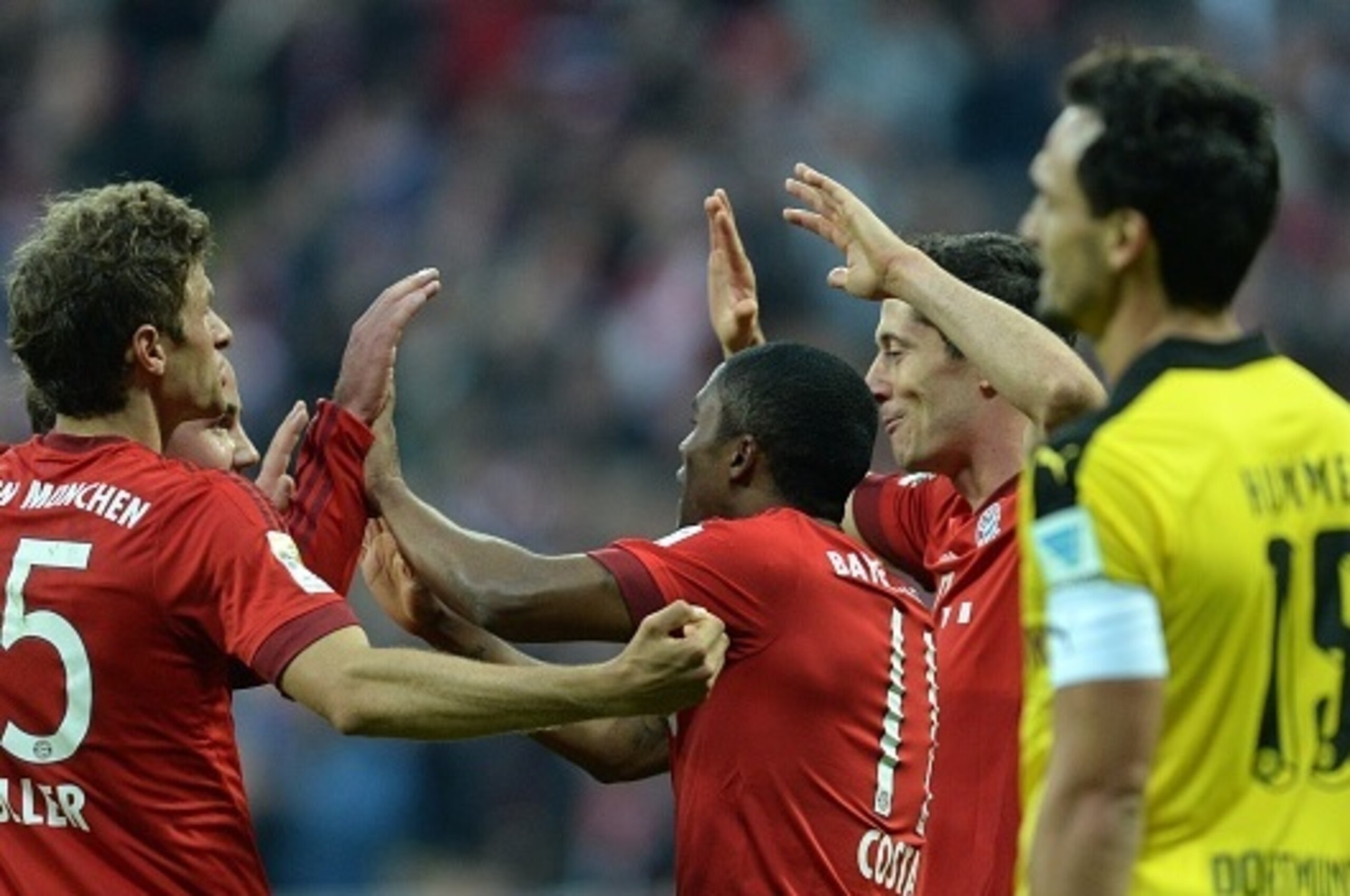
In his first season at the club, Tuchel played the entire first half of the season with more or less the same basic tactical concepts. Set up in a 4-2-3-1/4-3-3 hybrid, Dortmund looked mesmerising in attack but vulnerable in defence, scoring 47 but also conceding 23 goals over the first 17 Bundesliga matches.
In the second half of the campaign, they scored only 35—which still led the league—but conceded just 11 goals. How did Dortmund cut the number of goals against them in half?
Tuchel introduced a back-three system the Black and Yellows regularly went to, especially in bigger games. Even in games in which they nominally started with a regular four-man back line, one of the full-backs usually moved high up the pitch to give Dortmund a 3-2-4-1 shape, providing excellent width and allowing for even more dominance in midfield.
In turn, that helped against the team's biggest weakness in defence: a distinct susceptibility to counter-attacks. Three defenders gave Dortmund a more solid presence in front of their own goal, while the wing-backs would move behind to provide additional cover when opposing teams had longer spells of pressure.
With the team struggling in possession this season so far, moving to a three-man defence could be a decisive spark for the Ruhr side.
It would take some of the burden in the buildup phase off Weigl's shoulders and alleviate some of the issues the transfer of Gundogan to Manchester City—and the club's negligence to get a similar player in during the summer—raised.
Perhaps even more importantly, it may help seal the team's leaky defence.
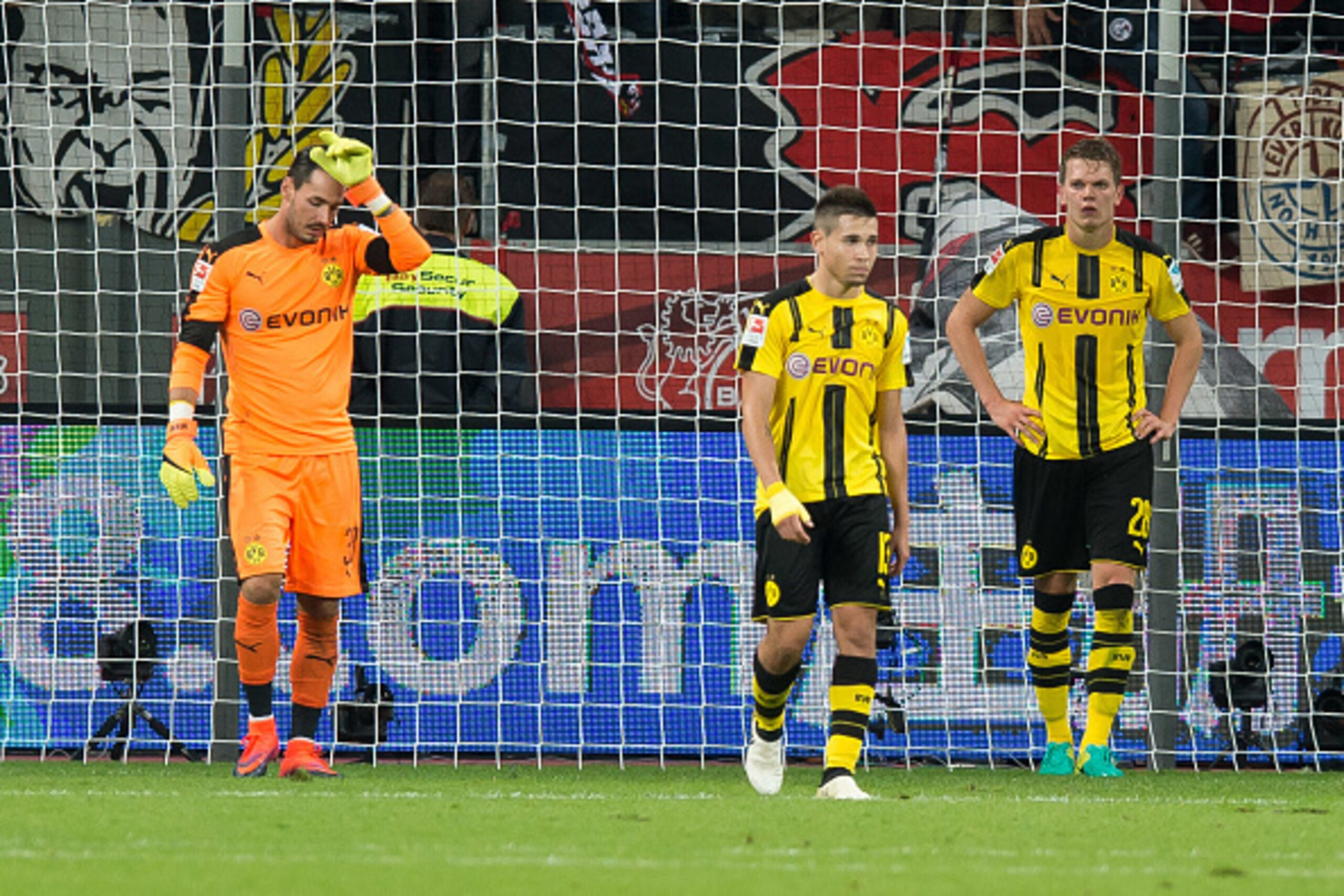
Dortmund have already conceded 12 goals in the Bundesliga alone, five of which came against the two teams at the bottom of the table, FC Ingolstadt and Hamburger SV, who have only scored a combined 11 times over the first 10 matchdays.
The Black and Yellows tie local rivals Schalke 04 for the seventh-best defensive record in the Bundesliga—and the Royal Blues lost their first five matches of the season.
It goes a long way toward explaining why Dortmund are not only six points adrift of Carlo Ancelotti's Bayern but also behind upstarts RB Leipzig, TSG Hoffenheim and Hertha BSC in the table despite boasting the league's best attack, with 25 goals.
Surprisingly, the Ruhr side has looked more solid defensively in the UEFA Champions League, where they conceded two goals at home against Real Madrid but have kept two clean sheets. It indicates that the domestic woes are not a question of quality but one of focus and intensity.
Michael Cox noted for ESPN FC that "Dortmund have made the fewest tackles, the fewest interceptions and won the joint-fewest aerial duels in this season's Bundesliga."
It has been far too easy to overwhelm Dortmund with two or three quick passes behind the last defensive line, even for teams of pedestrian-at-best attacking quality such as Ingolstadt. Committing three centre-backs as cover in their own defensive third could help in that regard.
One could point to the Hamburg match as a counter-example, but it seems likely that Dortmund lost their intensity against the northern Germans because the game was decided when Pierre-Emerick Aubameyang scored his fourth goal of the day within four minutes of the second-half kick-off.
Tuchel has solid personnel options for a back three and the wing-back spots.
Chelsea manager Antonio Conte has successfully implemented a back three that has led to a major surge up the Premier League table in recent weeks and described the demands on the three defenders to the club's official website.
"The central defenders on the right and the left must be very fast and aggressive," Conte stated. "The players who play in the middle of the three defenders must be more tactical, must reflect more and find the right position, and also call the line up and down."
Applied to Dortmund, Marc Bartra and Sokratis Papastathopoulos fit the bill as aggressive and quick defenders, while Matthias Ginter has experience playing in a more advanced role in defensive midfield, which should help him in the middle.
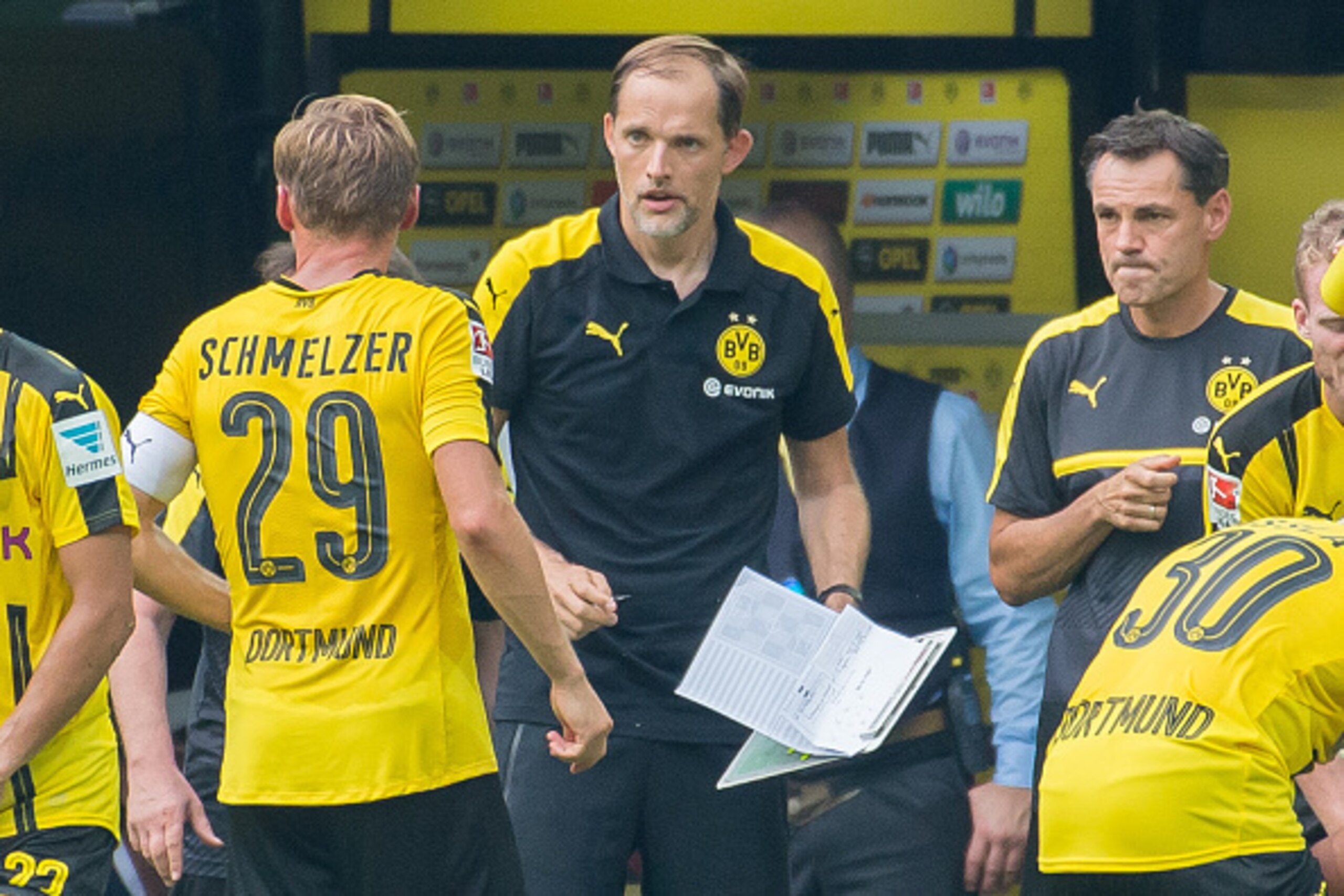
The wing-back spots are a physical challenge to whichever players fill them, but Dortmund have team captain Marcel Schmelzer, who excelled in that role during the latter stages of last season, for the left wing and the 18-year-old Passack for the opposite side.
Passlack's dynamism makes him a better fit than long-serving right-back Lukasz Piszczek, who would probably be a back-up central defender in this scenario. Mikel Merino, who has only played one game so far this season, would fit in well as a left-sided centre-back.
The Spaniard looked a bit overwhelmed in the first half of his club debut against Hertha BSC but improved dramatically when he was allowed to move up the field from his position at the heart of defence, resulting in a beautiful through ball hockey assist for Aubameyang's equaliser against the club from the capital.
Even disappointing summer signing Sebastian Rode could play as a wing-back thanks to his qualities as a runner and in counter-pressing.
Cox rightly pointed out that "Dortmund simply need to be more cohesive and more compact without the ball, which should come with more work on the training ground." But there is no reason to assume a move to a back three would not have the same calming effect it had during Tuchel's first season in charge at Westfalenstadion.
It is about time the Black and Yellows got a little more creative.
Lars Pollmann also writes for The Yellow Wall. You can follow him on Twitter.

.jpg?w=2560 "NFL Paris Football")
.jpg?w=2560 "Trevon Diggs Cut by Seahawks")