
B/R Experts' Picks for College Basketball Awards, All-American Teams in 2016-17
Last year was the year of the senior. The year before that was the year of the freshman.
How are we going to remember this college basketball season?
The preseason narratives have started to take shape, and based off our All-American picks, the freshmen will have a say in how this season plays out.
Scouts and talent evaluators consider this freshman class one of the best in recent years, and unlike last year, most of the top talent ended up choosing the blue bloods. (There was at least one exception in Washington's Markelle Fultz.)
There is also a trend of borderline first-round picks staying in school for one more year to strengthen their stock, which worked out pretty well a year ago for Buddy Hield. You'll find several of those guys on our preseason All-American teams.
These teams were selected by a panel of Kerry Miller, Brian Pedersen and myself. In addition to All-American, you'll find our picks for National Player of the Year, Freshman of the Year, Defensive Player of the Year, Sixth Man of the Year, Most Improved Player and Transfer of the Year.
First-Team All-American: Monte Morris, Iowa State
1 of 13
Iowa State has had one of the most efficient offenses in the country the last three years, and a big reason why is the smart playmaking of Monte Morris.
Morris' focus so far has been distributing the ball, but he told me at Big 12 media day he plans on being more of a scorer this year. When the Cyclones needed it, he proved he could do so last season, averaging a career-best 13.8 points per game to go along with 6.9 assists.
With Georges Niang no longer around, this is Morris' team and his turn to collect the postseason hardware.
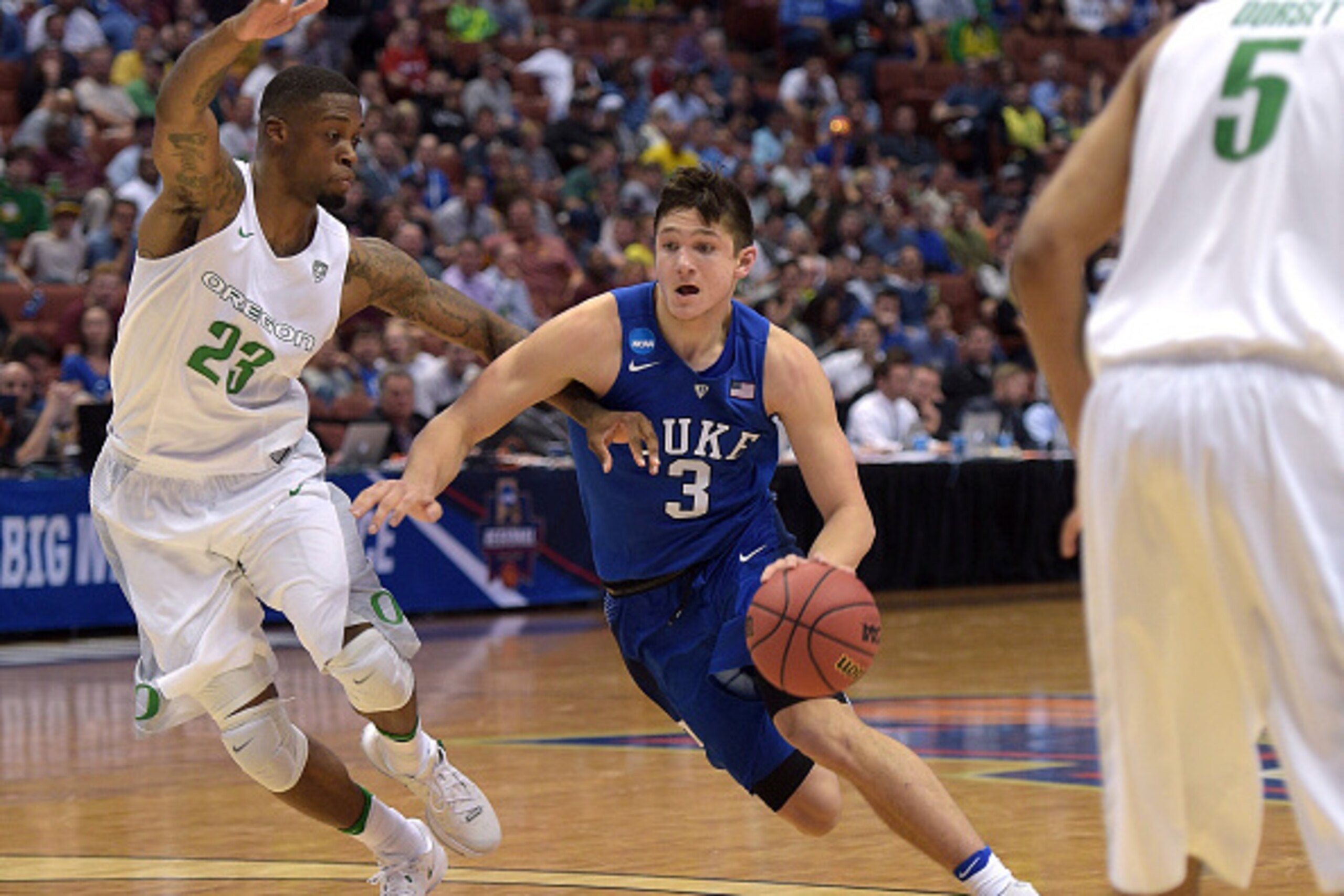
First-Team All-American: Grayson Allen, Duke
2 of 13
Allen is the only player who made one of the three Associated Press All-American teams to return to school this year, and he’s the one staple you can find on any preseason All-American first team.
And deservedly so.
Allen averaged 21.6 points and 3.5 assists last year. He’s surrounded by more talent this season, and that should only make life easier for the Duke junior. It’s also a big reason why Duke is preseason No. 1 and should go far deeper in the NCAA tournament than the Sweet 16, which is where Allen helped carry an undermanned squad last season.
First-Team All-American: Josh Hart, Villanova
3 of 13
Defense isn’t always recognized when it comes to All-American teams, but it should be considered more. It's certainly a big part of Hart’s candidacy.
Sure, Hart is no slouch on the offensive end. He averaged 15.5 points per game last season, and his mid-range game is elite. But what makes Hart and the Wildcats special is they make life miserable for opposing offenses. Other players are going to put up better numbers and more highlights, but Hart is a two-way star who brings value to his team no matter what numbers are next to his name at the end of the night.
The collective selflessness of the Wildcats—epitomized by their best player—helped them win the national title, and with Hart returning, they have a legit chance to repeat.

.jpg?w=2560 "Rams Raiders Football")
First-Team All-American: Jayson Tatum, Duke
4 of 13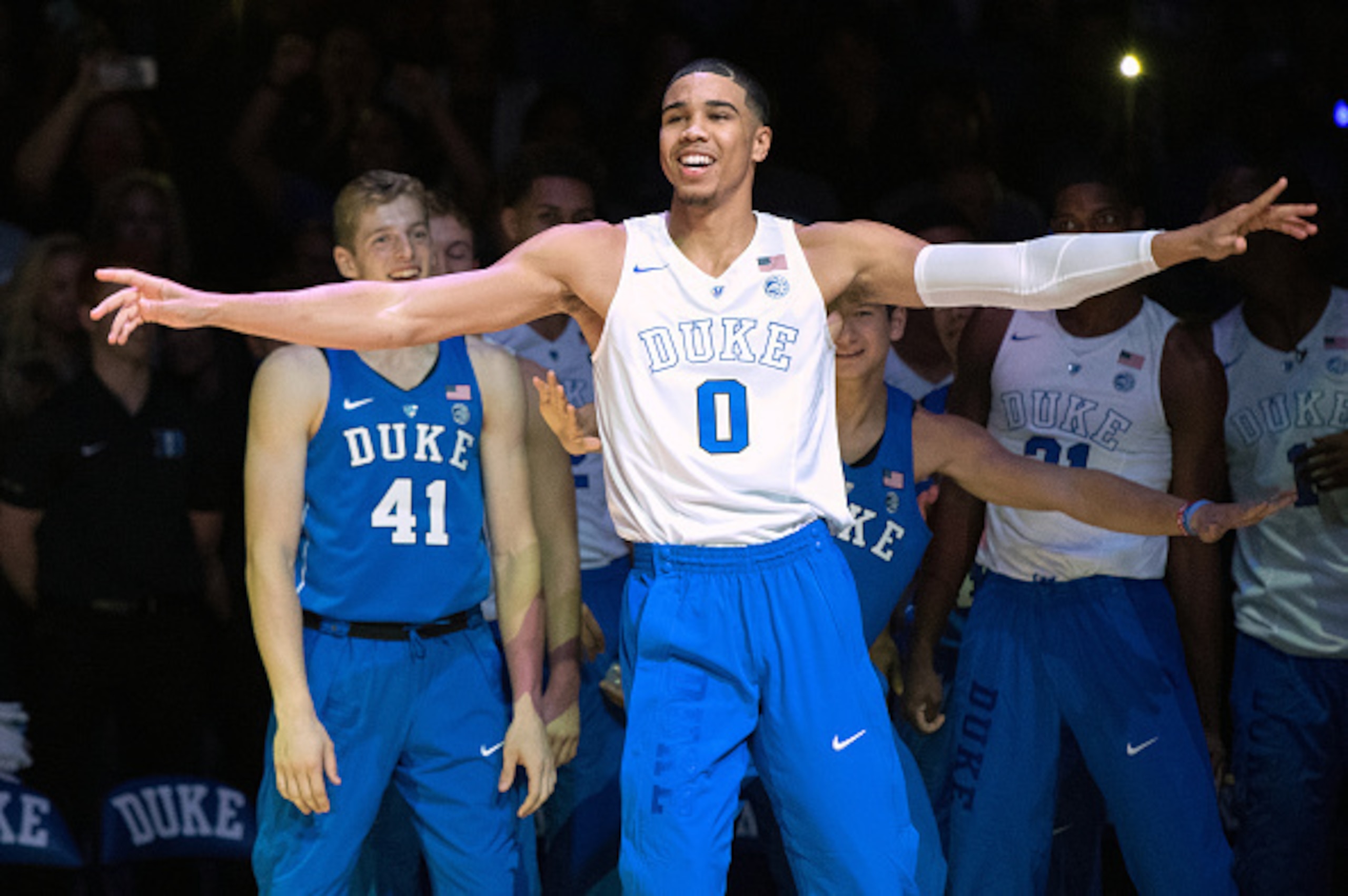
There haven't been two players from the same school on the the first-team All-American squad since 2010, when DeMarcus Cousins and John Wall represented the Kentucky Wildcats.
If any team could break that streak this year, it'd be the Duke Blue Devils. Mike Krzyzewski brought in one of his best recruiting classes ever, and it's a good bet Jayson Tatum will look nothing like a freshman.
Tatum already has an NBA body and skill set. His offensive game is more advanced than any of his peers, and he should be an elite scorer right away. It could end up that either him or Grayson Allen knock the other off the All-American level, but it's possible they're able to find enough shots for both to put up AA numbers.
First-Team All-American: Jaron Blossomgame, Clemson
5 of 13
Blossomgame has quietly put up awesome numbers at Clemson. Last year, he averaged 18.7 points and 6.7 rebounds while knocking down 44.6 percent of his threes. It’s time to start paying attention.
The Clemson senior could have easily bolted for the NBA. He tested the waters and performed well at the NBA draft combine, but he decided to try to increase his stock. That worked out well last season for Oklahoma’s Buddy Hield, Providence’s Kris Dunn and Utah’s Jakob Poeltl. All three made an All-American team. If Blossomgame can put up similar numbers and help the Tigers reach the NCAA tournament for the first time since 2011, he should do the same.
Second-Team All-Americans
6 of 13
G Markelle Fultz, Washington: This could be a case of an awesome player putting up crazy stats on a mediocre team. Ben Simmons did it last year and still made second-team All-American. Seems like a logical spot for Fultz.
G Melo Trimble, Maryland: Considering expectations, Trimble had a down year last season. He should look more like the freshman version of himself now that there’s less talent around him and he’ll need to score more. Trimble in attack mode is Trimble at his best.
F Josh Jackson, Kansas: Jackson has already played point guard, small forward and power forward for Kansas in two exhibition games. He’ll log some time at shooting guard as well. His scoring will not always be consistent, but Jackson should do a little bit of everything for the title-contending Jayhawks.
F Dillon Brooks, Oregon: Brooks would be on the first team if there weren't concerns over his foot injury and when he'll return. When healthy, he's a beast slashing to the basket as a small-ball 4. He led the Ducks to a No. 1 seed and the Elite Eight last year, averaging a team-best 16.7 points per game.
F Ivan Rabb, California: The big fella should eat well this year now that the shoot-first perimeter players who surrounded him last year (Jaylen Brown, Ty Wallace and Jordan Mathews) have left Berkeley. Rabb, who is ambidextrous, is the most talented back-to-the-basket scorer in college hoops.
Third-Team All-Americans
7 of 13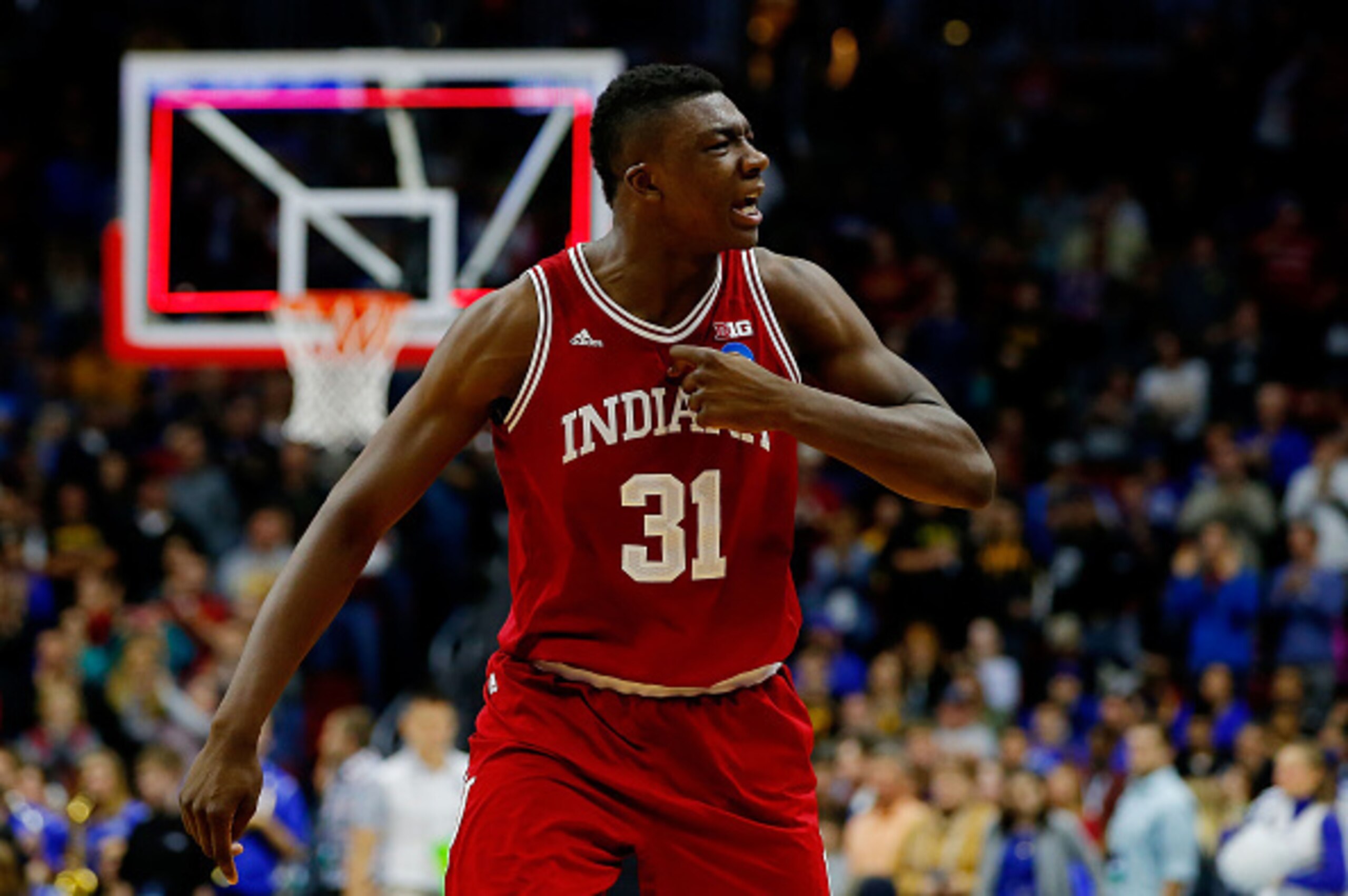
G Frank Mason, Kansas: The senior guard is the last piece left in a recruiting class that included Andrew Wiggins, Joel Embiid, Wayne Selden and Brannen Greene. He was an afterthought in that class but has turned into the face of KU’s program. Look for Mason to look to score more this season now that he’s playing alongside Devonte’ Graham and Josh Jackson.
G Dennis Smith Jr., NC State: Smith is in the mold of modern-day point guards like Russell Westbrook, Derrick Rose and John Wall. It should be a short stay in Raleigh, North Carolina, where he’ll be relied upon to fill the big scoring hole left by Cat Barber.
F Ethan Happ, Wisconsin: Happ was the Big Ten Freshman of the Year last season after filling up the stat sheet: 12.4 PPG, 7.9 RPG, 1.3 APG, 1.8 SPG and 0.9 BPG. Happ regularly puts on a clinic in the post, and the Badgers are always happy to play through a talented big man.
F Bam Adebayo, Kentucky: John Calipari was in desperate need of a post player who could rebound and play defense last season. Adebayo will solve those issues for the Wildcats this year, and he’s a powerful player from the blocks as well. He should benefit from playing in a starting lineup that should include two point guards.
C Thomas Bryant, Indiana: Bryant set an Indiana record by making 68.3 percent of his shots last season. Tom Crean surrounds the big fella with shooters, and the Hoosiers do a good job of getting him the ball where he can be successful. His percentages will probably go down a tick this year, but expect his averages (11.9 PPG and 5.8 RPG last season) to go up.
National Player of the Year: Grayson Allen, Duke
8 of 13
Four years in a row the Naismith Award has gone to a player who could have left for the NBA the year prior but decided to come back and dominate college basketball. Recent history shows next in line for National Player of the Year is Duke’s Grayson Allen.
Allen can be the guy he was last year and win the award. He thrived with a blend of slashing and three-point bombing last year when he was unleashed as Duke’s primary scorer after the Blue Devils lost most of their core from the national title team. Mike Krzyzewski has reloaded, and given better options around Allen, we should see a more efficient version of the dude who put up a solid 124.9 offensive rating a season ago, per KenPom.com.
Allen could have a tough time matching last year’s scoring average, but his NPOY candidacy will be strengthened by playing on a better team. The freshman class could present some challengers, including teammates Jayson Tatum and Harry Giles, but when a worthy veteran like Allen is a candidate, voters seem to lean in that direction.
Freshman of the Year: Josh Jackson, Kansas
9 of 13
Josh Jackson has the ideal setup for a star freshman. He joins an experienced team that has already had success—the Jayhawks were the top overall seed last year in the NCAA tournament and made the Elite Eight—and he’ll start next to two of the best point guards in college basketball in Frank Mason and Devonte’ Graham.
Head coach Bill Self is usually pretty set in his ways, but he’s already adjusting the way Kansas plays this season, and it should fit well with Jackson’s game. Self will still use his patented high-low attack, but he’s incorporating some small ball and trying to spread the floor.
Jackson is dynamite when he gets in space and can attack off the dribble. He’s also an elite defender who is super competitive, and Self is banking on him embracing the challenge of playing every position on the floor but center. That versatility makes Jackson the most valuable freshman in college hoops, and that’s why he’s our pick for National Freshman of the Year.
Defensive Player of the Year: Chris Boucher, Oregon
10 of 13
Chris Boucher was on the surprise gems of the 2015-16 season—a three-point shooting, shot-blocking freak not many people in the college basketball world had ever heard of.
Now we know Boucher, and we’re pumped the NCAA gifted us with another year of watching him swat shots and bury threes. Boucher was granted an extra year of eligibility after applying for a waiver.
Boucher set the Oregon school record for blocks last year (110) and also averaged a solid 7.4 rebounds per game. His rebounding and rim protection are vital for a team that often plays small. He should rack up the blocks again this year, and his presence on one of the nation’s top teams will give him a shot to win Defensive Player of the Year.
Sixth Man of the Year: Luke Kennard, Duke
11 of 13
The debate for Sixth Man of the Year came down to Syracuse’s Tyler Lydon and pick your Dukie. Lydon was awesome in a sixth-man role for Syracuse last year, but the argument made against him was there’s no way he’s not a starter this year, right?
So with Lydon taken out of consideration, it was down to the Blue Devils, and the logical choice was Luke Kennard. Kennard did start in both of Duke’s exhibition games, but he should head to the bench once Jayson Tatum returns from a foot injury.
Kennard was Duke’s leading scorer in both exhibition games, averaging 23.5 points per game. He’s perfect in the role of instant offense off the bench—he played it well last season, averaging 11.8 points per game—and in a Lydon-as-a-starter world, he was an easy selection.
Most Improved: Donovan Mitchell, Louisville
12 of 13
Rick Pitino has a solid history of player development; Louisville lost its three leading scorers off last year’s roster, and Pitino’s offense has favored perimeter stars the last few years. That combination of facts suggests that a role player off last year’s team is going to turn into a star, and Donovan Mitchell seems like the most logical choice.
Mitchell is one of the most athletic wings in the country and has the goods to take over his team. His jumper is a question mark—he shot 25.0 percent from deep as a freshman—but he’s such a speedster and so strong at the rim that he could put up big numbers simply relying on his slashing.
Louisville has other candidates for this award—Deng Adel and Ray Spalding would make sense—but we’re counting on Mitchell to be the man.
Transfer of the Year: Nigel Williams-Goss
13 of 13
The last time Gonzaga had a transfer as talented as Nigel Williams-Goss was the 2014-15 season. That was Kyle Wiltjer, and he ended up averaging 16.8 points and was one of the most efficient scorers in college hoops.
Williams-Goss is a much different player than Wiltjer, but his transition should be just as smooth. He also comes in as a more accomplished player. Wiltjer had yet to really take off as a star when he arrived. Two years ago, Williams-Goss averaged 15.6 points, 5.9 assists and 4.7 boards per game at Washington.
He has competition for Transfer of the Year from Virginia’s Austin Nichols and Creighton’s Marcus Foster, but Williams-Goss was arguably better than those two at his previous stop and is with a team that has a proven track record of successfully incorporating transfers.
C.J. Moore covers college basketball and football for Bleacher Report. You can follow him on Twitter @CJMooreBR.


.jpg?w=2560 "Rodgers Iced Out on Plane 💎")


.jpg?w=2560 "🚨 Week 8 AP Top 25 Poll")