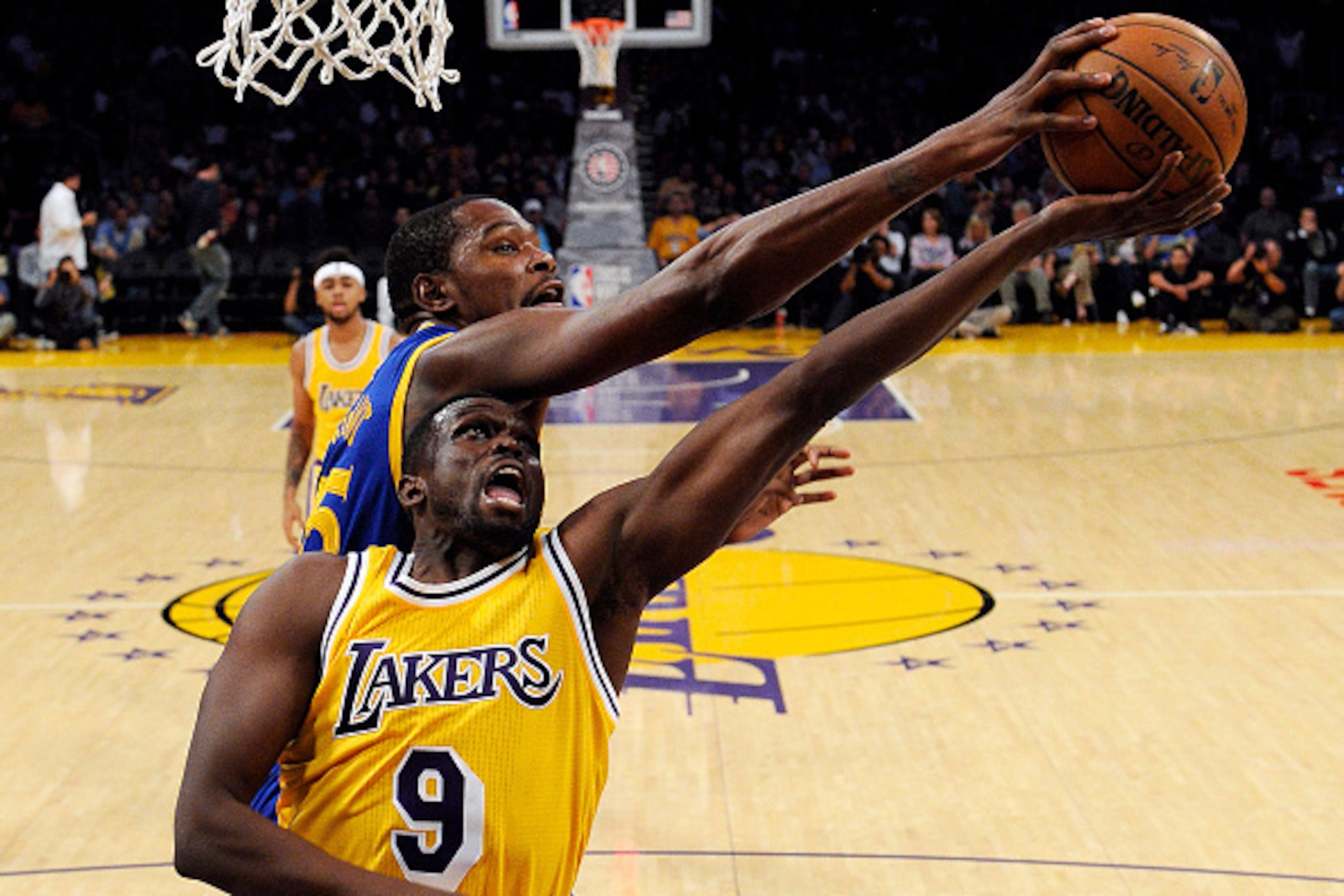

Diagnosing LA Lakers' Remaining Flaws
The Los Angeles Lakers are just seven games into the 2016-17 NBA season, but they've already used more competitive lineups than the underperforming units they trundled out over the past three years.
This is a young roster with a handful of veterans under first-year head coach Luke Walton. The positives include a faster pace, more scoring and a better effort on defense. But there have been many mistakes that have lost them winnable games.
Misreads, turnovers and unnecessary fouls are expected bumps in the road toward betterment. But stunning wins such as Friday's blowout of the Golden State Warriors are signs that something is going right again in Lakerland.
While early wins are welcome news, this is an evolving team that will have to battle against complacency.
"As far as the development goes, it's good to see the progress continuing," Walton said after the Golden State game, per Mark Medina of the Orange County Register. "Now the fear is we beat Golden State. Do we come out on Sunday and think we're that good?"
But Sunday came, and progress continued, as the Lakers upended the Phoenix Suns for their third straight win.
The team is 4-3. By comparison, it was 1-6 a year ago through seven contests. But achieving middle-of-the pack status isn't a long-term goal for a franchise with so many banners. There is still much work to do, from diagnosing flaws and fixing them to keeping an eye peeled for acquirable talent.
4. Perimeter Scoring
1 of 4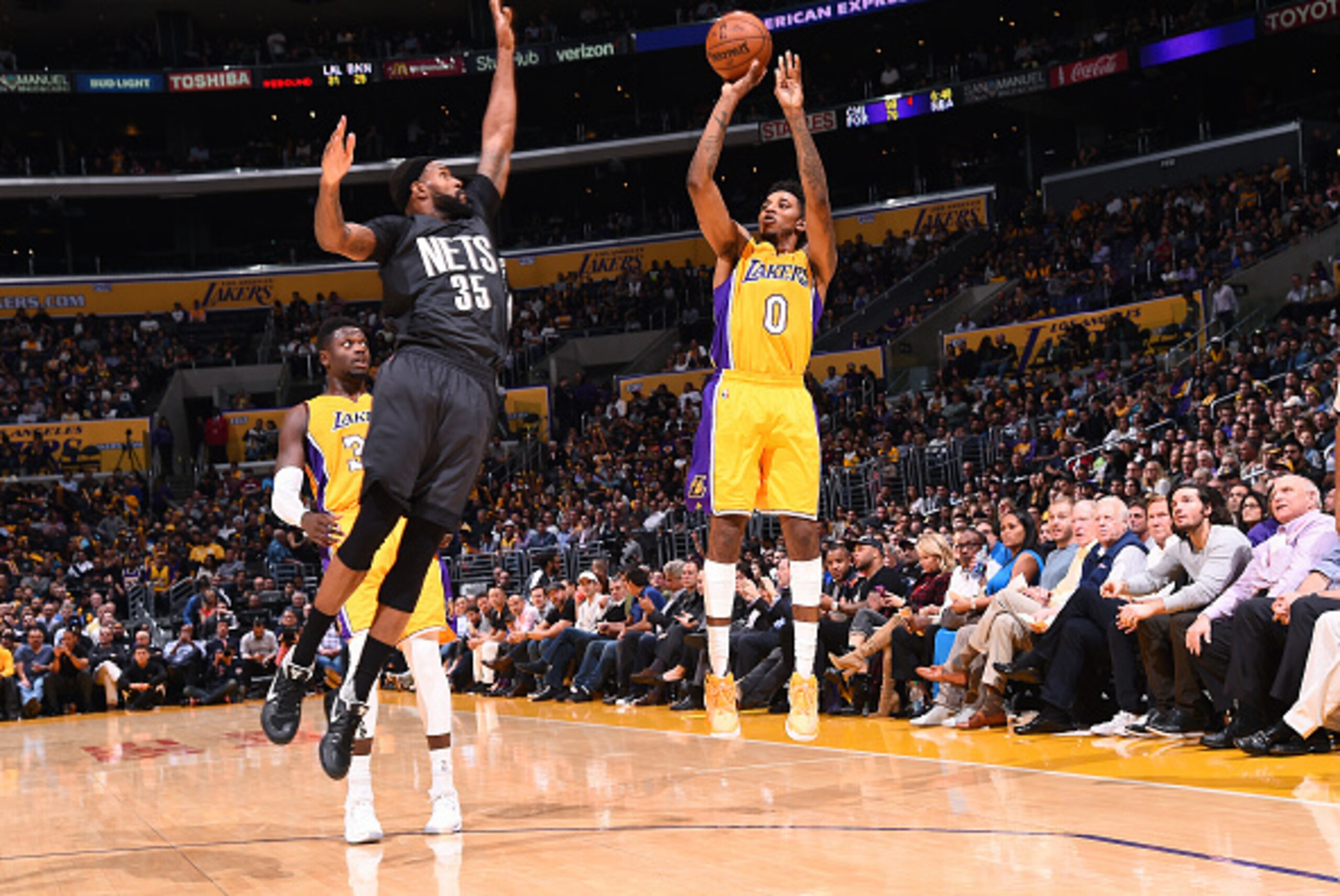
The Lakers are ranked a surprising third in the league at 110.3 points per game. That's scads better than last season, when they were last at 97.3 points.
But the team needs to improve in sniping from downtown, where it's ranked 24th.
L.A. is shooting more from long range, tossing up 27.6 attempts per contest. Compare that to 24.6 last season and a paltry 18.9 heaves the year before. But its efficiency is nothing to write home about at 31.6 percent.
So what's the problem?
It could be a matter of a small sample size. For instance, Jordan Clarkson is only converting 23.8 percent of his long-distance tries. Rookie Brandon Ingram is even worse at 20.0 percent. Their averages won't remain that meager for long.
On the other hand, Lou Williams has been lighting it up, connecting on a blistering 41.9 percent. And then there's Nick Young, who is enjoying an unexpected resurgence. He's attempting 6.4 treys per game and hitting on 33.3 percent of them. Swaggy P is a career 36.9 percent shooter from deep, while Williams has connected on 34.3 percent career threes.
Once players such as Clarkson and Ingram adjust to new offensive sets under Walton and find their proper spacing and rhythm, perimeter catch-and-shoots will become more automatic. But it sure wouldn't hurt to have a genuine stretch shooter in the frontcourt, especially at the 5.
L.A. is investing substantial minutes in small-ball rotations; now it needs an outside menace to complete the big picture.
3. Inconsistent Effort
2 of 4
This year's edition of the Purple and Gold is showing enthusiasm and desire. But there have been lapses.
The team came out sluggish on the road against the Indiana Pacers on November 1. Despite a strong second-half effort, it still lost 115-108. Afterward, a generally patient Walton called out his guys, per Mark Medina.
"I would've thought after losing two games, we would have come out chomping at the bit to play again and try to get a win," Walton said. "I don't know why we didn't come out with the intensity and hunger we should after early losses."
The message seemed to resonate. L.A. had a much stronger team effort the next night, beating the Atlanta Hawks on the road.
There is an obvious difference between Walton's overall positivity, which is mixed with small doses of well-placed criticism, and Byron Scott's heavy-handed complaining in years past. But this will continue to be a challenge with a team that is mostly young, especially as the toll of inevitable losses mounts.
Fortunately, the Lakers have an energetic bench mob led by Lou Williams, Jordan Clarkson, Larry Nance Jr. and Brandon Ingram, whom the team is bringing along at a measured pace.
Walton is spreading the minutes among his players, helping to keep them fresh and motivated. But he'll have his work cut out for him when it comes to consistency and turning close losses into wins.
2. Fouls
3 of 4
Fouling has been an issue throughout the young season. L.A. is committing 23.1 infractions per game, a dismal 26th in the league. The obvious result is way too many freebies at the charity stripe for opponents.
So how are the egregious muggings happening?
Julius Randle is the worst offender with 4.1 violations per game. This is a jump from 3.0 last year, but there's a silver lining: He is playing like a monster, fully trusting his body after a broken leg sidelined him during his rookie campaign two years ago.
Randle has always had defensive challenges due to lateral quickness. He's showing improvement but will have to hone his timing and defensive reads.
Fouling can also be a matter of new expectations. Nick Young has played himself back into the Lakers' good graces with an increased effort on defense, chasing the likes of James Harden and Klay Thompson all over the floor. But in the process, he's committing 3.9 fouls per game, well over double his career average of 1.9.
For Young, playing harder defense gives him license to jack up shots. But the 31-year-old will have to further improve his ball-stopping tactics to continue to be effective.
That said, this block against Klay Thompson on Friday night was appetizing.
A dubious shoutout also has to go to backup center Tarik Black, who is piling up 2.9 fouls in just 14.1 minutes per game. Yes, Black is often the last line of defense and can never be accused of lacking effort or hard-nosed instincts. But his 0.4 blocks per game are much too low.
Time your jumps, dude; don't just hammer your opponents.

1. Turnovers
4 of 4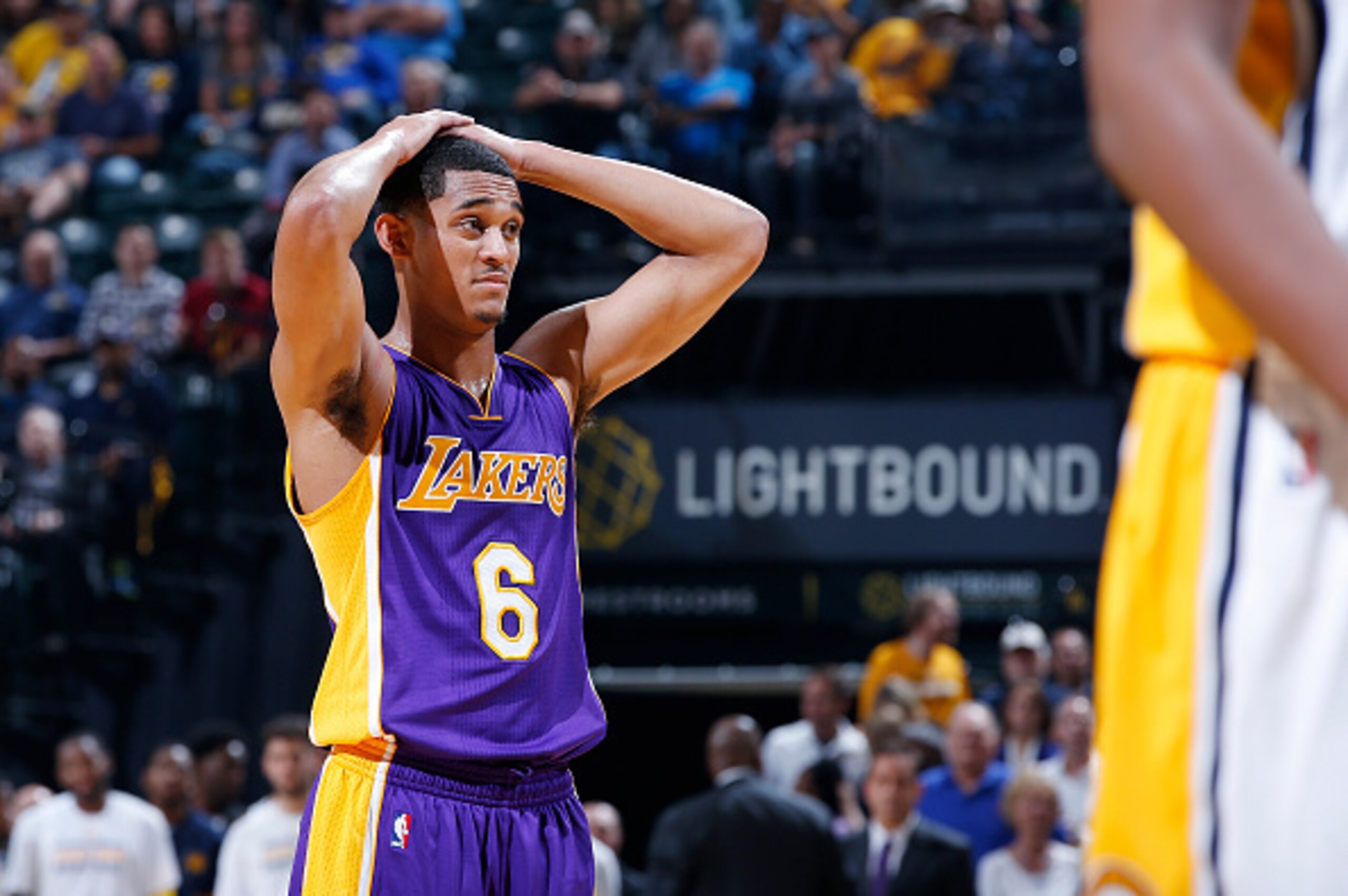
The Lakers are the NBA's worst team in turnovers, coughing it up 17.9 times per game. That results in an average of 20.0 points off turnovers, according to NBA.com.
There isn't one player who is extraordinarily loose with his handles. It's more of a team effort. D'Angelo Russell gives away the ball 3.0 times per outing, followed by Jordan Clarkson and Julius Randle at 2.6 and 2.4, respectively.
None of those stats are shocking. John Wall (5.4) and Russell Westbrook (5.3) are Nos. 1 and 2 in the league in giveaways, for example. But those dudes play a ton of minutes and hand out plenty of assists—Wall at 9.6 and Westbrook at 9.9.
By comparison, Russell is the Lakers' leader in dimes at a decent 4.9 per game.
The real problem has to do with a combination of factors—a new coaching system, young players and an eagerness to do too much. Experience will help with more reps and better anticipation. But Walton will also be working in a lot more offensive sets, and that will take getting used to.
Still, there have been recent signs of improvement, as the Lakers turned the tables Friday, forcing the Warriors into 20 turnovers while committing 16 of their own.
The Lakers are a work-in-progress. Roster flaws exist. But this team is on the right path.
Stats courtesy of ESPN.com and Basketball-Reference.com. Stats accurate as of Nov. 8.

.jpg?w=2560 "NFL House in Paris Closes for Protests")
.jpg?w=2560 "Trevon Diggs Cut by Seahawks")

.jpg?w=2560 "Jonathan Taylor Landing Spots")