

Does AC Milan Coach Vincenzo Montella Have a Carlos Bacca Problem?
When AC Milan appointed Vincenzo Montella as manager in the summer, Carlos Bacca must have drooled merely at the thought of the quantity and quality of chances that would surely come his way.
In theory, the Colombian couldn’t have asked for a coach better prepared to maximise his attacking talents.
As a player, Montella was as ruthless a goal-poacher as they come. At his peak, he hit double figures in Serie A for six consecutive seasons, establishing himself as one of the finest strikers in Italy in the process. Short, quick and opportunistic, he wasn’t always fully appreciated in spite of his effectiveness.
TOP NEWS
Sullivan, Hall Lead USMNT to Big Win 💥
Int'l Break Goals and Highlights 🔥
.jpg?w=2560 "Saints Lions Football")
Rap: Lions, LaPorta End Contract Talks
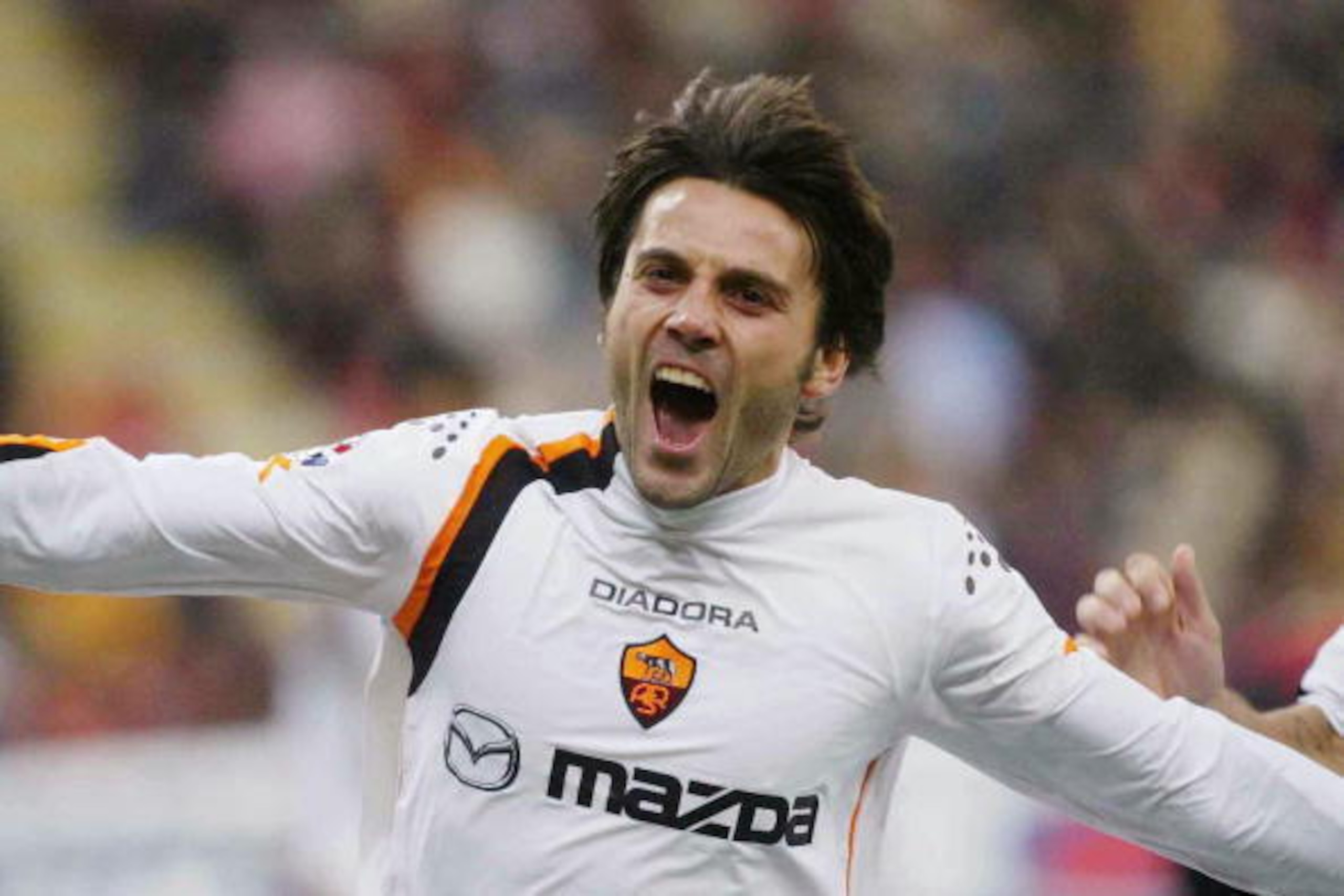
And that description could quite easily be applied to Bacca.
The 30-year-old both enjoyed and endured his debut season with Milan. While he hit an impressive 18 goals—a tally made all the more remarkable by the fact he had never before experienced Italian football and its notoriously rigorous defences—and came third in Serie A’s scoring charts, behind only Gonzalo Higuain and Paulo Dybala, there were periods when he seemed underutilised.
But with a coach in Montella who knows exactly what it feels like to plough a lone furrow, to seek chances without guarantee of their arrival, it was difficult to fathom Bacca suffering any further. His best form would surely be on show with greater frequency.
And in line with such notions, the beginning to this particular player-coach relationship was extremely positive.
On the opening Sunday of this season, Milan defeated Torino 3-2 at the San Siro in a riveting, back-and-forth game. Bacca made good runs and, unlike large parts of last term, received service of a similar quality. This alignment led to three goals, each of which was typical Bacca.
For his first, he raced ahead of Torino’s defenders and stooped to head home an excellent cross from Ignazio Abate, triumphing as he almost always does in one-on-one situations. His second once again came from a cross, this time from M’Baye Niang, which he controlled expertly before firing low and hard into the net. His hat-trick was sealed with a composed spot-kick.

Every one of Bacca’s goals had come from within the penalty area. Yet while this fact acted as a representation of the striker’s playing style, it also hinted at problems that would boil to the surface in the near future. For while his relationship with Montella began productively, it would quickly sour.
On Sunday, Milan won 1-0 at home to Pescara. The victory was the team’s sixth in eight games, form that has seen them rise into Serie A’s top three. However, the game meant something different for Bacca; he failed to score for the fourth consecutive game.
Worse than his inability to score, he openly expressed his dissatisfaction upon being substituted on 84 minutes. He trudged past Montella, scarcely acknowledging his coach and throwing his training top to the floor.
Afterward, Montella brushed off the incident. "I changed things because I needed a player who holds up the ball more," he told La Gazzetta dello Sport (h/t Football Italia). "[Bacca] wasn’t happy when he exited the pitch, but I do not know what he was referring to. I have seen worse reactions by players who have been replaced.”
On the face of it, Bacca’s response was not completely out of the ordinary. A significant element of his poaching quality is his selfishness, a constant desire to play and score. But while his coach’s attempt to play the reaction down was valiant, this was not the duo’s first run-in.
Milan’s 1-0 defeat at home to Udinese in September was undoubtedly the team’s worst performance and result since Montella’s arrival. And between that game and the following one, away to Sampdoria, the coach fell out with his star forward.
La Gazzetta dello Sport reported (h/t Football Italia) that Bacca had complained about a lack of service from his team-mates and that Montella had promptly responded by instructing the player to position himself better in future.
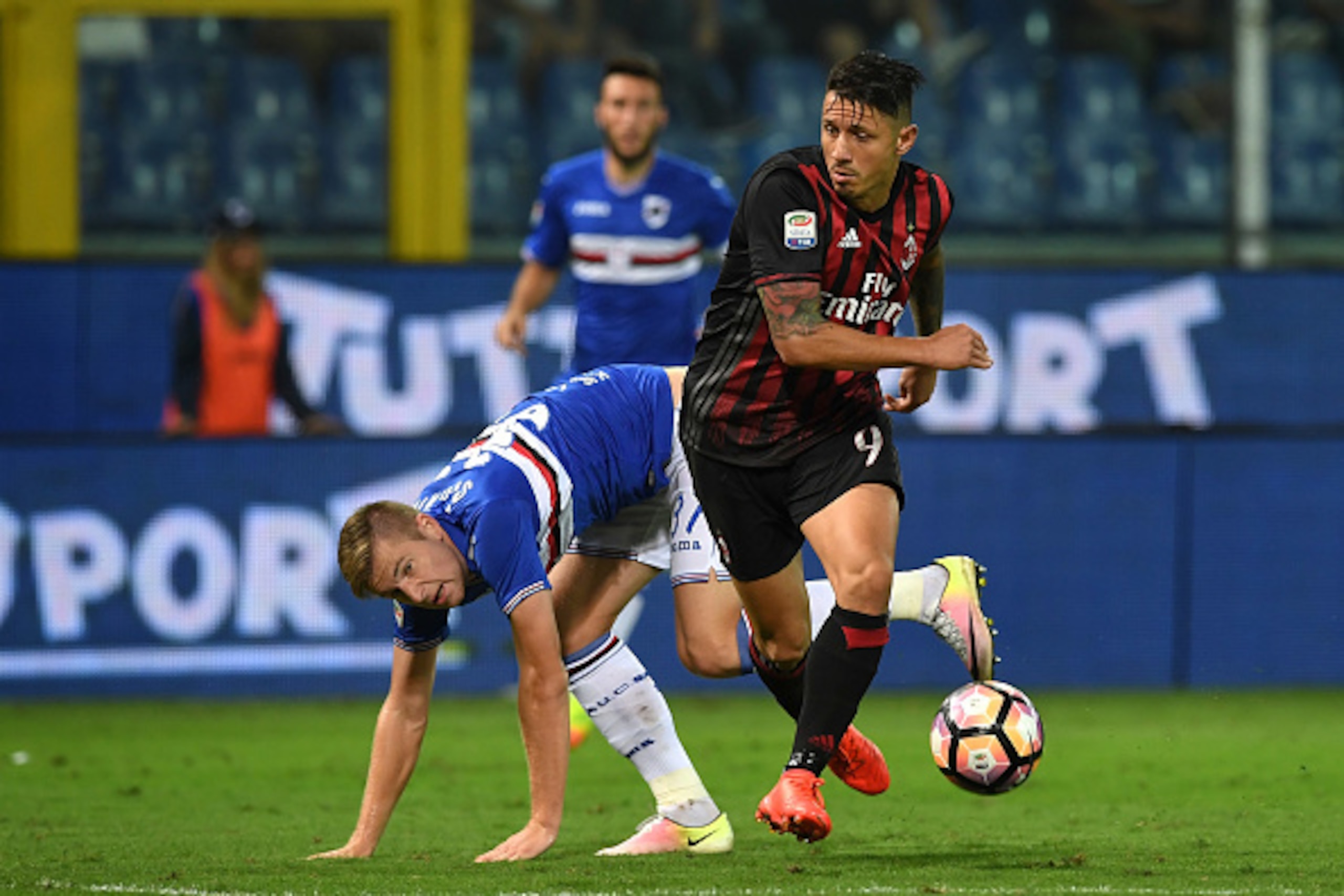
Irrespective of exactly what was said, Montella’s decision to drop Bacca was a clear statement. The striker had to shape up or sit out. And with Bacca coming off the substitutes' bench to score the winner against Sampdoria, it felt like a corner had been turned. However, Sunday’s events suggested the problem has not yet been solved.
Clearly, Bacca is frustrated. And while his negative reaction during the Pescara match came following his withdrawal, it is wrong to pinpoint that moment as the source of his anger. The issue between Milan’s boss and their top goalscorer does not seem personal in nature. Rather, it is to do with tactics.
Dropping Bacca wasn’t the only decision Montella made in the wake of his side’s defeat to Udinese. He also made a more holistic change—namely in his approach to games.
Since then, while his team continues to build out from the back, playing through the lines and attacking through concerted possession, Milan also take up a deeper defensive structure when necessary. And when it comes to defending a lead, Montella often removes an attacker for an extra midfielder with around 20 minutes to spare.
The combination of playing deeper when in the defensive phase and an increasingly pragmatic attitude when seeing out a game has led to Bacca receiving fewer and fewer scoring opportunities. Instead, he has often been left isolated up front, as he was against Pescara, without viable connections nearby for him to work with.
In essence, then, the Colombian’s frustration emanates from a growing sense of loneliness.
It is also arguable, however, that Bacca’s disconnection stems in part from the fact he simply does not offer enough to the team.
He is a precise finisher with astute movement and positional awareness, traits that make him one of Milan’s finest strikers of recent times. But he is also lacking the strength to hold the ball up, while his link-up play is foiled by his limited passing ability. Additionally, he lacks the athleticism and pure speed to play on the counter-attack, which Milan have been doing more frequently of late.
As such, Bacca is not fully cut out to thrive in the newer, more pragmatic version of Montella’s Milan. There will be times in such a setup when he will see minimal amounts of the ball and will contribute little to the team. And so his frustration will continue.
Solving this problem lies with the coach.

Bacca is highly unlikely to adapt or improve in the future. At 30 years of age, he is at the peak of his powers. Rather than attempt to alter his game, the more practical course of action would be to focus on his existing attributes.
Therefore, Montella is left with two rational courses of action.
One would be to make the team conform to the individual, changing approach to ensure Bacca is not so isolated in future games.
However, the more viable option would be to drop Bacca and opt for a better all-around option, such as Gianluca Lapadula, up front. Per Squawka, Lapadula makes comparably more passes and creates more chances, and his greater quality in deeper areas could suit the Rossoneri's current style.
Milan are winning games again, and no individual should be prioritised ahead of team form. Bacca is an exceptional player, but until Montella adopts a more offensive stance, he will suffer from occasional isolation.
If he is unwilling to accept and work within such circumstances, he should make way for someone who will.
.jpg?w=2560 "Report: Baker May Miss Up to 6 Weeks")
.jpg?w=2560 "EVERY Fantasy Football Update")
_0.png?w=2560 "Week 5 Winners & Losers 📊")

.jpg?w=2560 "Commanders May Change Logo 👀")