

Manchester City Are Title Favourites but Pep Guardiola Has Problems to Solve
The assumption from many, six games into the Premier League season, was that Manchester City would walk away with the title.
They’d looked awesomely good in winning all of those games, racking up 18 goals as they did so, and cuffing aside both Steaua Bucharest and Borussia Monchengladbach in the Champions League.
Then came Celtic, a 3-3 draw and intimations of mortality. And then came the defeat at Tottenham Hotspur.

.jpg?w=2560)
In the black-and-white world of social media and modern commentary, the assumption is that to raise a question is to indicate a crisis.
This is not a crisis. This is a long way from being a crisis. But those last two games suggested that this season might not be quite the procession it seemed it would be. Once the window of doubt has been opened, concerns flood in.
City won their first five games last season, scoring 11 without reply; after five games this season City’s goal difference was one poorer than last. How different, really, is this season to last then?
It’s a legitimate question, particularly given the sense that an attitude of complacency had fallen upon City under Manuel Pellegrini.
A couple of the flakier characters have been offloaded, or at least relegated to the reserves, and Pep Guardiola’s constant intensity is as guaranteed as anything to drive out laxity, but once a culture settles at a club, it’s not always easy to eradicate.
The draw against Celtic and the defeat at Spurs came after Kevin De Bruyne damaged his hamstring. There are reports he could return for Saturday’s home game against Everton, although more likely is that he will be held back for next week’s Champions League match against Barcelona. But are City overdependent on him?
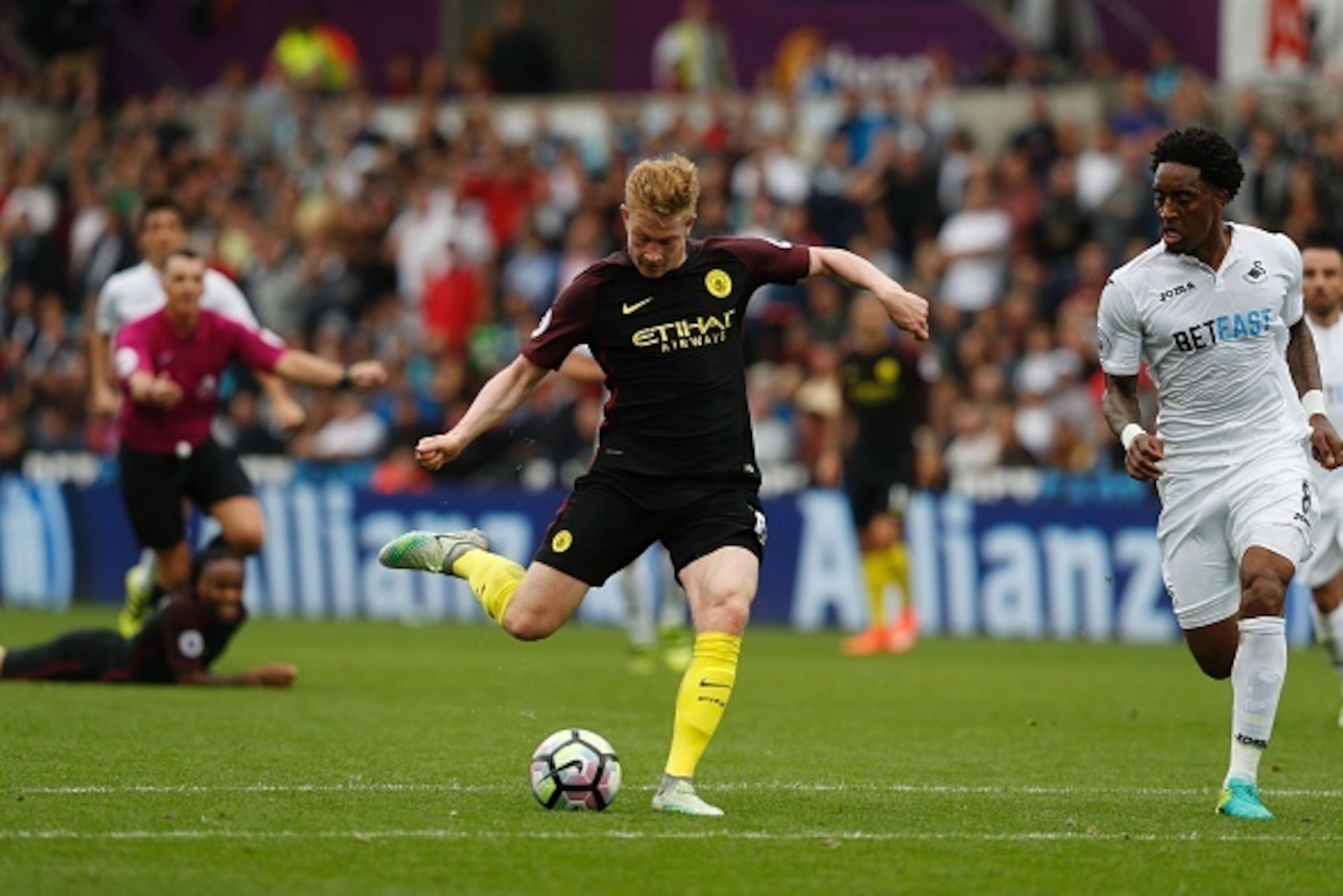
De Bruyne has spoken of he and David Silva playing in a “free eight” role, both operating as playmakers but both expected also to track back and support the holding midfielder.
De Bruyne, with his work rate and imagination, is perfect for the role, and it’s understandable if they miss him. That doesn’t make them overdependent, particularly not when they can field Ilkay Gundogan in the Belgian's position.
The oddity came at Tottenham when Guardiola used Fernando alongside Fernandinho and Silva in midfield. The idea, presumably, was to add muscle to counter the ferocity of the Tottenham press, but all that happened was that City’s use of the ball was poorer.
City have kept only one clean sheet in the league so far. Are they good enough defensively to win the title?
Only one side in the past 19 years has won the league conceding at an average of a goal a game or more. Leicester City last season let in 36 in 38 games, but even they kept 15 clean sheets.
Guardiola’s way of playing is high-risk, but that’s not a cover-all excuse for how vulnerable they have been at times at the back, particularly from crosses. Claudio Bravo, for all his excellence in possession, does not inspire confidence under high balls, while Nicolas Otamendi and John Stones remain inconsistent.
There have been consistent reports that Guardiola is keen to recruit a new pair of full-backs, as noted by the Manchester Evening News' Simon Bajkowski, but he seemed genuinely surprised after the Tottenham defeat when it was put to him that his full-backs had been a decisive weakness. It’s reasonable to assume that City’s defending will improve as the season goes on and players build up a mutual understanding.
The fixture list has been kind

That is true. Of their seven league games so far, City have played all of the bottom four and the team in 13th. Although it was away, facing Manchester United when they did—with the out-of-form Wayne Rooney still in the side and Jose Mourinho searching for rhythm—was probably fortunate.
It’s true that Guardiola had been in charge for the same period of time and deserves credit for having City so well drilled so early in the season, but it’s also true that barring something remarkable, United will get better.
Even the Champions League fixtures have been relatively straightforward. As soon as City faced a good side in form, they lost. To suggest they will always do so is overly simplistic, and of course, part of the reason those five sides are in the bottom half of the table is that they lost to City, but it means there are reasons for doubt.
That’s why this next week, as City face Everton and then Barcelona, is so critical in determining what point of their development they are at.
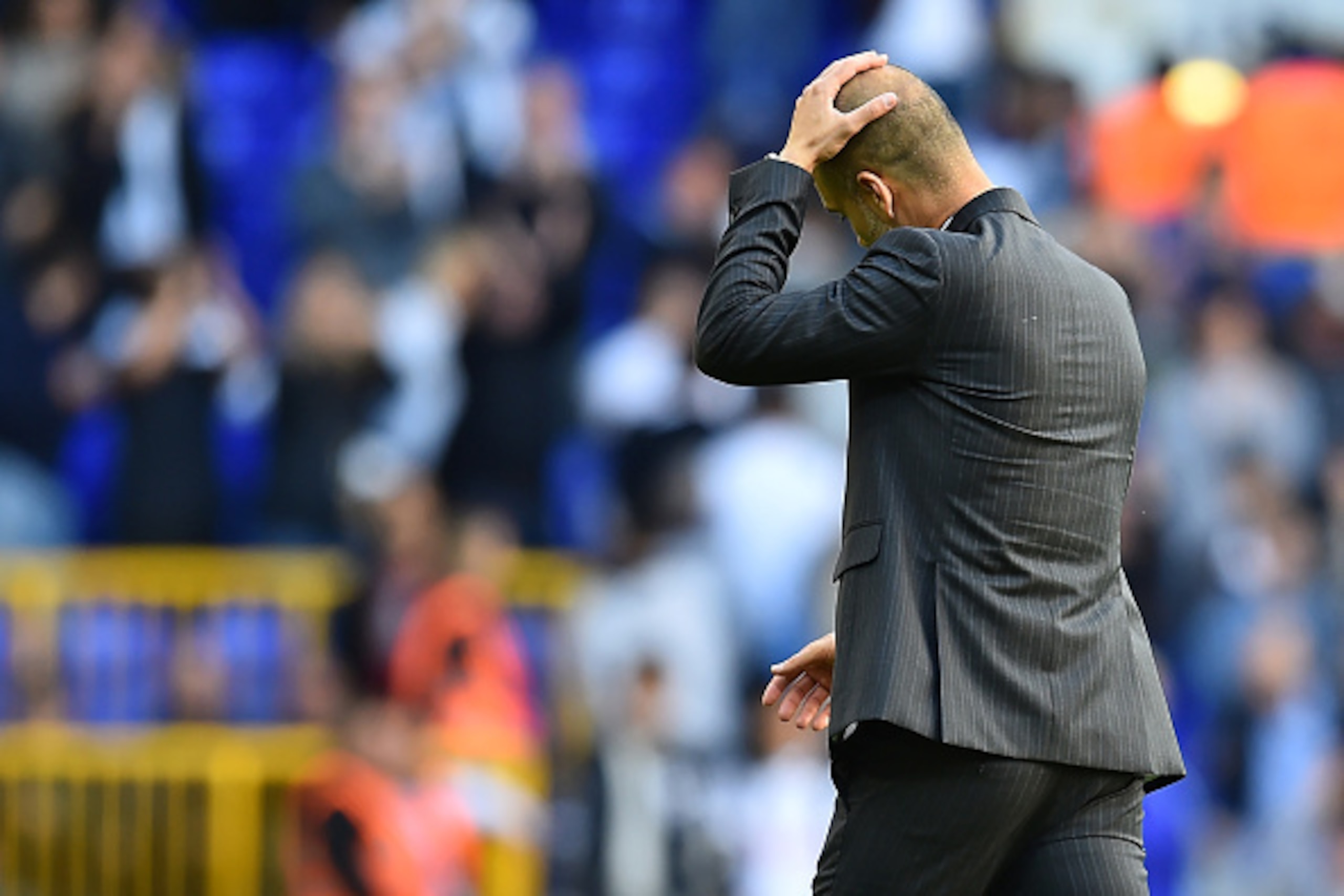
What happened against Tottenham?
Although Spurs beat City 2-0 and missed a penalty, they only had four shots on target to City’s three, per stats from WhoScored.com. The Dutch website 11tegen11 suggested that the two sides' expected goals were broadly similar and that Spurs’ victory was largely a matter of better finishing:
"Sorry to spoil this one, but #Spurs beat #MCFC more with efficient finishing than anything else.#xGplot pic.twitter.com/DovPzWleHb
— 11tegen11 (@11tegen11) October 2, 2016"
That was not how the game felt in the ground, but the wider point remains that, even with De Bruyne and Nolito absent, City pretty much held their own.
There is also a theory that Guardiola’s teams go in cycles: that he takes advantage of international (or winter) breaks to plot new ways of playing. It may take a few days for those to bed in, but his sides then soar, falling away again towards the next break as teams work out how City are playing.
Given the variation in fixture list, that’s hard to quantify, but it makes sense given Guardiola’s method as detailed by Marti Perarnau in Pep Confidential.
Again, the test of that will come over the rest of this month as City face, as well as Everton and Barcelona, Middlesbrough and West Bromwich Albion in the league and Manchester United in the EFL Cup.
Those are the doubts. Only the defensive issue is a major one, and similar, if not longer, lists could be made about every other challenger. But there is perhaps a sense that, while City remain favourites for the league, the rush to anoint them after the derby was a little hasty.

.jpg?w=2560 "Rams Eagles Football")

.jpg?w=2560 "Injury-stricken Seahawks signing veteran RB")

