
CBB Players Returning from Injury Who'll Have a Big Impact in 2016-17
Injuries are an unavoidable part of men's college basketball, something you can't really prevent and are hard-pressed to prepare for. When a key player gets hurt, either limiting his ability or keeping him out of action, all a team can do is hope everyone else steps up to fill the void.
You can never predict how good he'll be once he returns from injury—if the time away or the ailment had a negative impact on his game or if he comes back like nothing happened.
Several of the top programs in college basketball are dealing with this situation as they prepare for the 2016-17 season. We've picked out 12 players who were hurt at some point last year—whether in college or at the high school level—but who are expected to play key roles for their teams this winter.
James Blackmon and Juwan Morgan, Indiana
1 of 9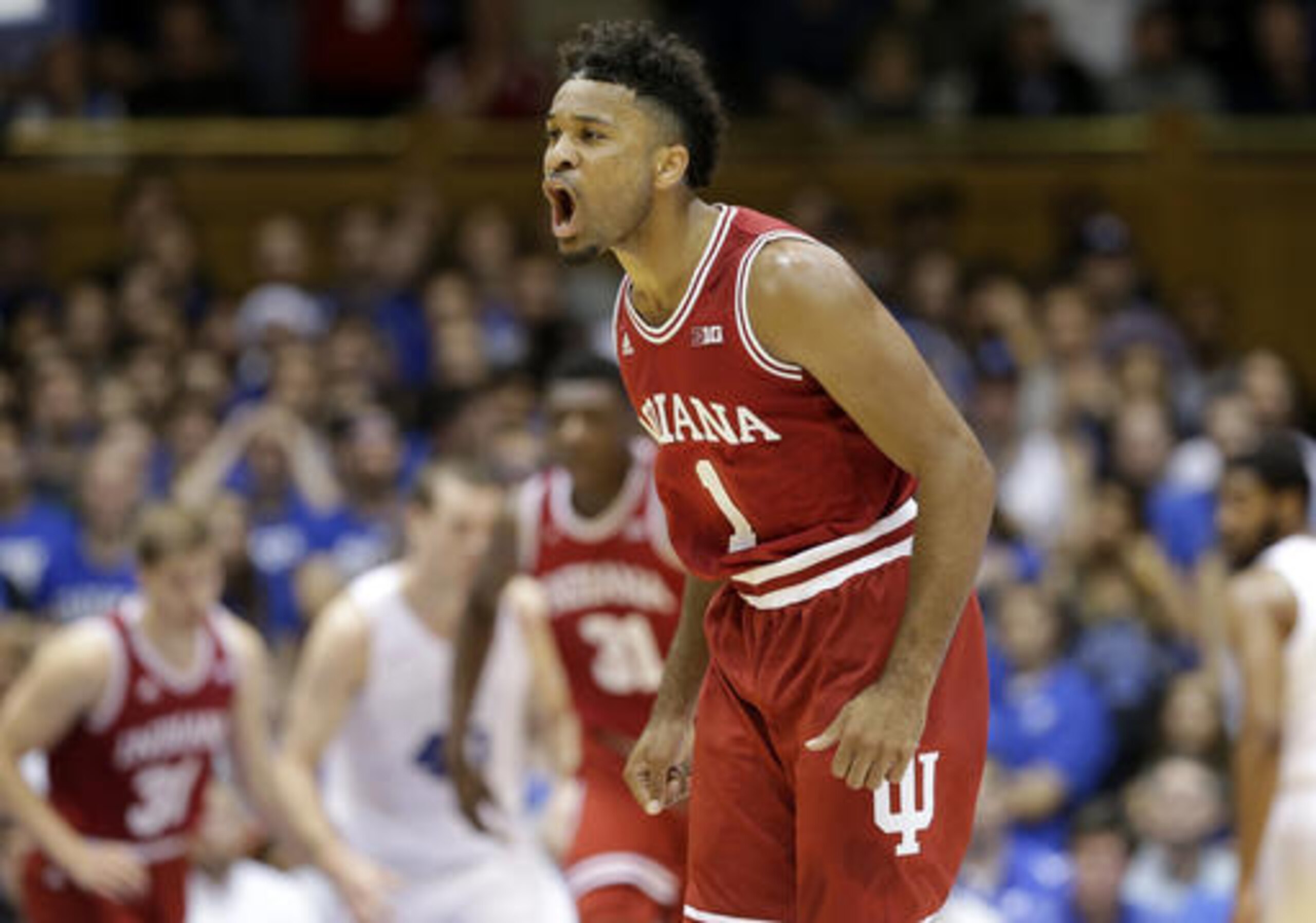
Indiana won the Big Ten and reached the Sweet 16 in 2015-16 despite losing its most deadly perimeter shooter in December and having an important wing gimpy because of multiple injuries. Had both been available and at full health, a deeper run might have been in the cards for the Hoosiers.
We'll never know how that could have gone, but with guard James Blackmon returning from knee surgery and forward Juwan Morgan no longer dealing with leg and shoulder issues, Indiana shouldn't face the normal backslide of a team that lost more than half its scoring.
Blackmon was lighting up from deep at a record pace before getting hurt. He shot 46.3 percent from three-point range and made at least three triples in eight of 13 games, averaging 15.8 points per game, but then a non-contact injury just before Big Ten play began ended his season. His return gives Indiana another outside shooter to pair with Robert Johnson, who shot 44.7 percent.
Morgan could step into the starting lineup after averaging just 2.4 points, 2.1 rebounds and 9.1 minutes per game as a freshman. He missed games early in the season with a leg injury and then dealt with a recurring shoulder ailment down the stretch.
Dylan Ennis, Oregon
2 of 9
As happy as he probably was for his former teammates, Dylan Ennis had to wonder if he was jinxed after he opted to transfer to Oregon for his final college season only to see his previous one (Villanova) win the national title. Even worse, Ennis' contribution to the Ducks on their run to the Elite Eight was limited to 21 minutes in two games.
A foot injury kept the guard from making his Oregon debut until late December, then he reaggravated it after scoring two points with two assists in a Jan. 3 loss to rival Oregon State. Since Ennis had already used his redshirt year in 2012-13 (following a transfer from Rice to Villanova), his shot at a sixth year of eligibility was considered slim.
But the NCAA granted his waiver in June, giving him a second chance to finish his career on a high note. And with Oregon unsure when wing Dillon Brooks will be able to return from an offseason foot injury, having a veteran presence like Ennis in the backcourt is critical.
Ennis has averaged 7.8 points, 3.3 rebounds and 3.1 assists in his career, with his best season at Villanova in 2014-15 when he averaged 9.9 points, 3.7 rebounds and 3.5 assists while shooting 36.3 percent from three-point range.
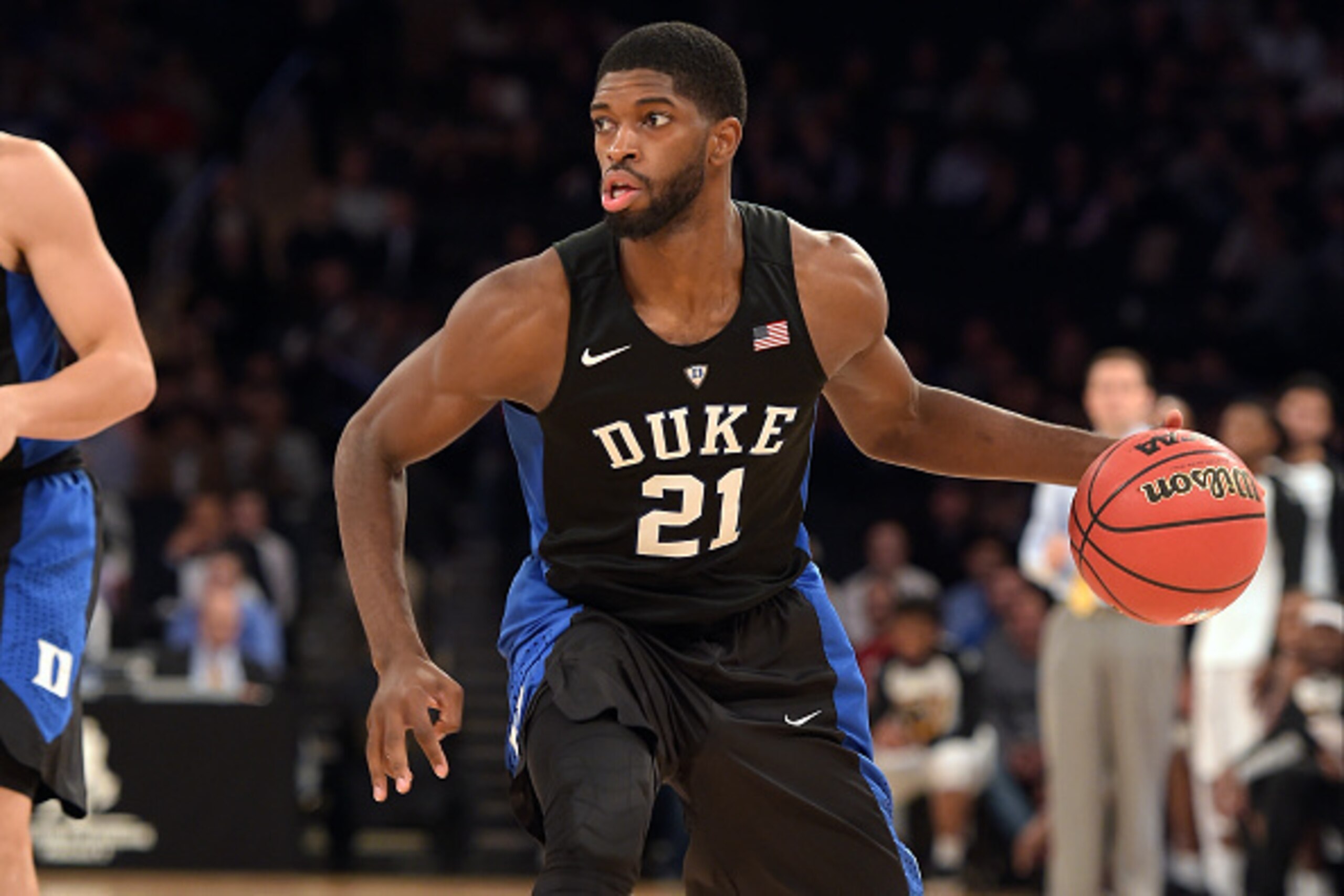
Harry Giles and Amile Jefferson, Duke
3 of 9
Duke's frontcourt depth last season was, in a word, nonexistent. And that was before Amile Jefferson suffered a foot injury in early December, putting him on the shelf for the remaining 27 games and forcing some major shuffling just to stay afloat in the paint.
Center Marshall Plumlee went from role player to ironman, logging 421 more minutes in 2015-16 than in his previous three seasons combined, while Brandon Ingram had to be shifted from his natural wing spot to power forward. And though that duo did yeoman's work, when foul trouble came up or fatigue set in, there wasn't anyone to turn to on the bench beyond a few token minutes from Chase Jeter or Sean Obi.
The 6'9" Jefferson finished as the unofficial team rebounding leader at 10.3 per game, and his 93 rebounds still ranked fourth on the roster.
Duke won't be in such bad shape this time around thanks to Jefferson's return for a fifth season, the further maturation of Jeter and the addition of two major prospects in power forward Harry Giles and center Marques Bolden. But Giles' impact is in limbo since a knee injury suffered in November continues to linger.
The 6'10" Giles, rated as the No. 2 player in the 2016 recruiting class (as well as a projected top-five pick in the 2017 NBA draft), tore his right ACL just as his senior year of high school was beginning. He'd already recovered from torn ligaments in his left knee from his sophomore season, and earlier this month, he had an arthroscopic procedure on that knee.
The recovery timeline for that surgery is six weeks, putting Giles in line to be ready to return to the court just as the 2016-17 season begins.

.jpg?w=2560)
Terry Henderson and Dennis Smith, North Carolina State
4 of 9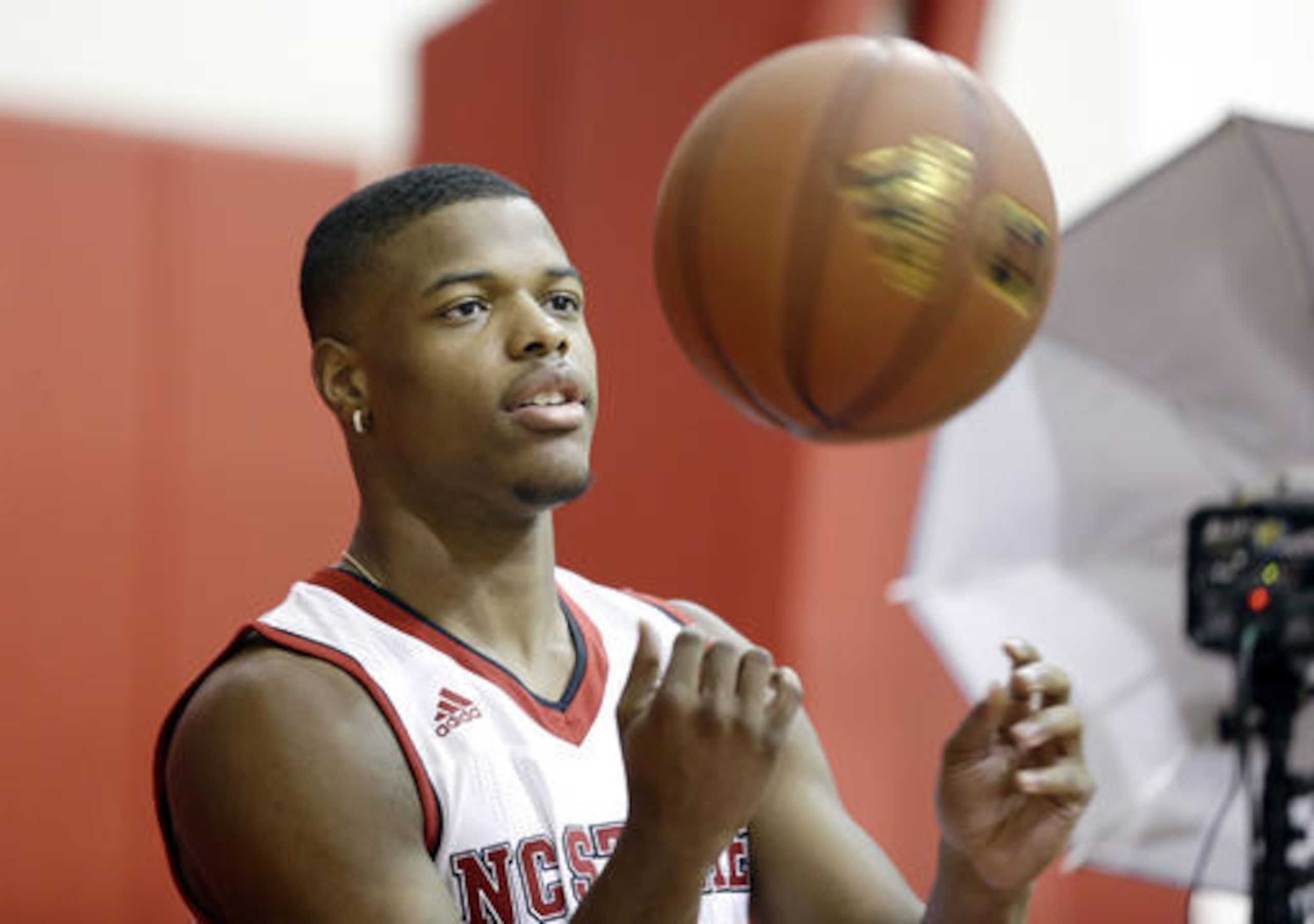
It will be almost a completely new team for North Carolina State in 2016-17, and not in the way you might think after losing three key contributors, including one who ranked sixth nationally in scoring. The Wolfpack will sorely miss Cat Barber and his 23.5 points per game, as well as the Martin twins, but if two injured players are able to play at full strength, those departures will be soon forgotten.
Terry Henderson spent all of last season with NC State after transferring from West Virginia, where he averaged 11.7 points and shot 37.6 percent from three in 2013-14, but the guard suffered an ankle injury seven minutes into his debut and was out for the year. Dennis Smith joined the program in January, having graduated early after he tore knee ligaments that prevented him from playing his final year of high school.
Smith, the fourth-rated point guard prospect in the country, was able to rehab with the team and learn head coach Mark Gottfried's system but didn't get cleared to play until April.
Along with sophomore Maverick Rowan and Charlotte transfer Torin Dorn, NC State's backcourt could be one of the most feared in the country this season.
Przemek Karnowski, Gonzaga
5 of 9
At 7'1" and 300 pounds, Przemek Karnowski isn't easily replaceable. Gonzaga discovered this when the Polish big man was shut down five games into last season with back issues, though it helped having two other stellar frontcourt players at its disposal in Domantas Sabonis and Kyle Wiltjer.
Those guys are no longer in Spokane, though, so getting a version of the Karnowski from 2013-14 or 2014-15 would mean a lot for the Bulldogs. In those seasons, he averaged 10.7 points, 6.4 rebounds and 1.4 blocks while shooting 60.9 percent.
Karnowski looked good in Gonzaga's recent intrasquad scrimmage, telling Jim Meehan of the Spokesman-Review he's "really happy with the progress so far" in coming back from surgery.
He won't need to play big minutes right away, not with some talented freshmen on board, including 7-footer Zach Collins as well as Missouri transfer forward Johnathan Williams III. Eventually, though, the Bulldogs will lean on Karnowski for both production and leadership.
E.C. Matthews, Rhode Island
6 of 9
Rhode Island last made the NCAA tournament in 1999, a drought that was projected to end last season before E.C. Matthews hurt his knee 10 minutes into the Rams' opener. They still managed to go 17-15 and finish 9-9 in the Atlantic 10—good for seventh in the standings—but with Matthews' contributions, the ceiling would have been much higher.
Most of the 2015-16 goals have been carried over to this year, with head coach Dan Hurley spurning interest from power programs such as Rutgers to follow through with what he's built. Having Matthews back to his old self can help with that.
The 6'5" guard averaged 16.9 points per game as a sophomore, with 10 games of 20 or more points as the Rams won 23 games. He'll pair with some returning talent, such as forwards Kuran Iverson and Hassan Martin and guard Jared Terrell, who after having to learn how to play without him now get a chance to succeed alongside him.
Landry Shamet, Wichita State
7 of 9
Wichita State was blessed with a program-defining backcourt pair in Ron Baker and Fred VanVleet, who during their careers helped the Shockers go from a strong mid-major to a nationally elite program. And when VanVleet dealt with a hamstring injury early last season, it offered Landry Shamet an opportunity to start becoming a successor to those senior guards.
That is, until he got hurt as well.
Shamet, considered Wichita's highest-rated recruit under coach Gregg Marshall (per his online bio), suffered a stress fracture in his left foot after only three games. Surgery followed, cutting short his freshman year and putting a hold on grabbing the baton from Baker and VanVleet.
A return in time for the NCAA tournament was possible, but it would have also kept him from redshirting.
"He's a good player who wants to have a great career and be part of something special," Marshall told Blair Kerkhoff of the Kansas City Star.
Ray Smith, Arizona
8 of 9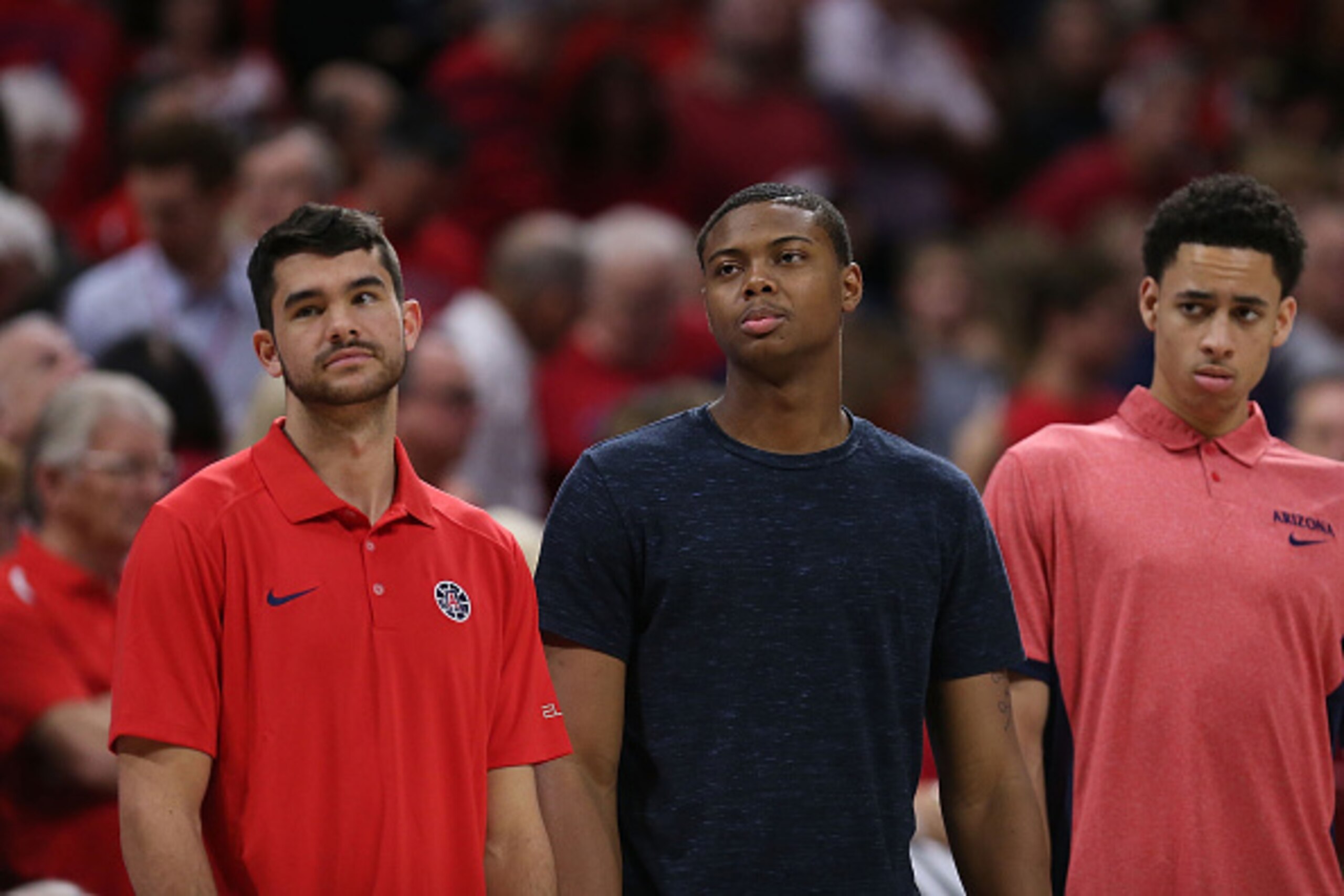
If Ray Smith plays in Arizona's opener Nov. 11 against Michigan State, it will be the first time he's participated in a game that counts in over two years.
The 6'8" forward missed his final season of high school because of a torn ACL in his left knee, then weeks before the Wildcats began the 2015-16 season, he suffered the same injury in his left knee. Had he not been hurt, Smith would have been part of Arizona's rotation and might have helped it advance beyond the opening round of the NCAA tournament.
"Imagine someone who starved for two years," Smith told Anthony Gimino of TucsonNewsNow.com.
Finally cleared to play this summer, Smith will help with a frontcourt that lost its top two rebounders. He could also be counted on as a defensive stopper in the mold of former Arizona wing Rondae Hollis-Jefferson.
Mike Thorne, Illinois
9 of 9
Injuries have been as much a part of Illinois' steady decline under head coach John Groce as anything performance-related, bottoming out last season with a 15-19 record in which the Fighting Illini used 14 different lineups. Only three players appeared in all 34 games, while guard Tracy Abrams missed the entire season with a torn Achilles.
Mike Thorne got into seven games before a torn meniscus in his left knee required surgery. The 6'11" graduate transfer from Charlotte had two double-doubles and was averaging 13.4 points and 8.4 rebounds, managing 10 points and seven rebounds in 13 minutes against Iowa State before getting hurt.
He returned in mid-January against Indiana, with nine points and nine rebounds in 16 minutes, but he was 1-of-6 from the field and was shut down again.
Given a sixth year of eligibility, Thorne's health gives Illinois a shot to make some noise in the Big Ten.
All statistics courtesy of Sports-Reference.com unless otherwise noted. All recruiting information courtesy of Scout.com unless otherwise noted.
Follow Brian J. Pedersen on Twitter at @realBJP.


.jpg?w=2560 "Viral Rams Coach Vid 🖕")

.jpg?w=2560 "Injury-stricken Seahawks signing veteran RB")
