How Chelsea's Italian Job Helped Make the Club Great Again
It's the Serie A derby at Stamford Bridge on October 15 in Week 8 of the Premier League season. It's Italy versus Italy, ex-Juventus against ex-Juventus; Chelsea's past facing Chelsea's present and future.
Blues boss Antonio Conte and Leicester City manager Claudio Ranieri have plenty in common, not least the fact they are connected by an affiliation with Chelsea. Ranieri may have different loyalties these days with the Foxes, but his affection for Chelsea still runs deep.
It's fitting that two Italians should come head-to-head at Chelsea in this season of all seasons. It was 20 years ago this year that Chelsea's fortunes really changed for the better, and it was done with an Italian influence at its core.
.jpg?w=2560)
The Blues had hit hard times for well over a decade. Bad business deals had put Stamford Bridge at risk, and on the pitch, they were more used to relegation battles than fighting for titles.
By the mid-1990s, they were desperate for some inspiration to lift them from a slump that had come to define a generation. Then three Italians arrived in 1996, and it changed the club's history for good.
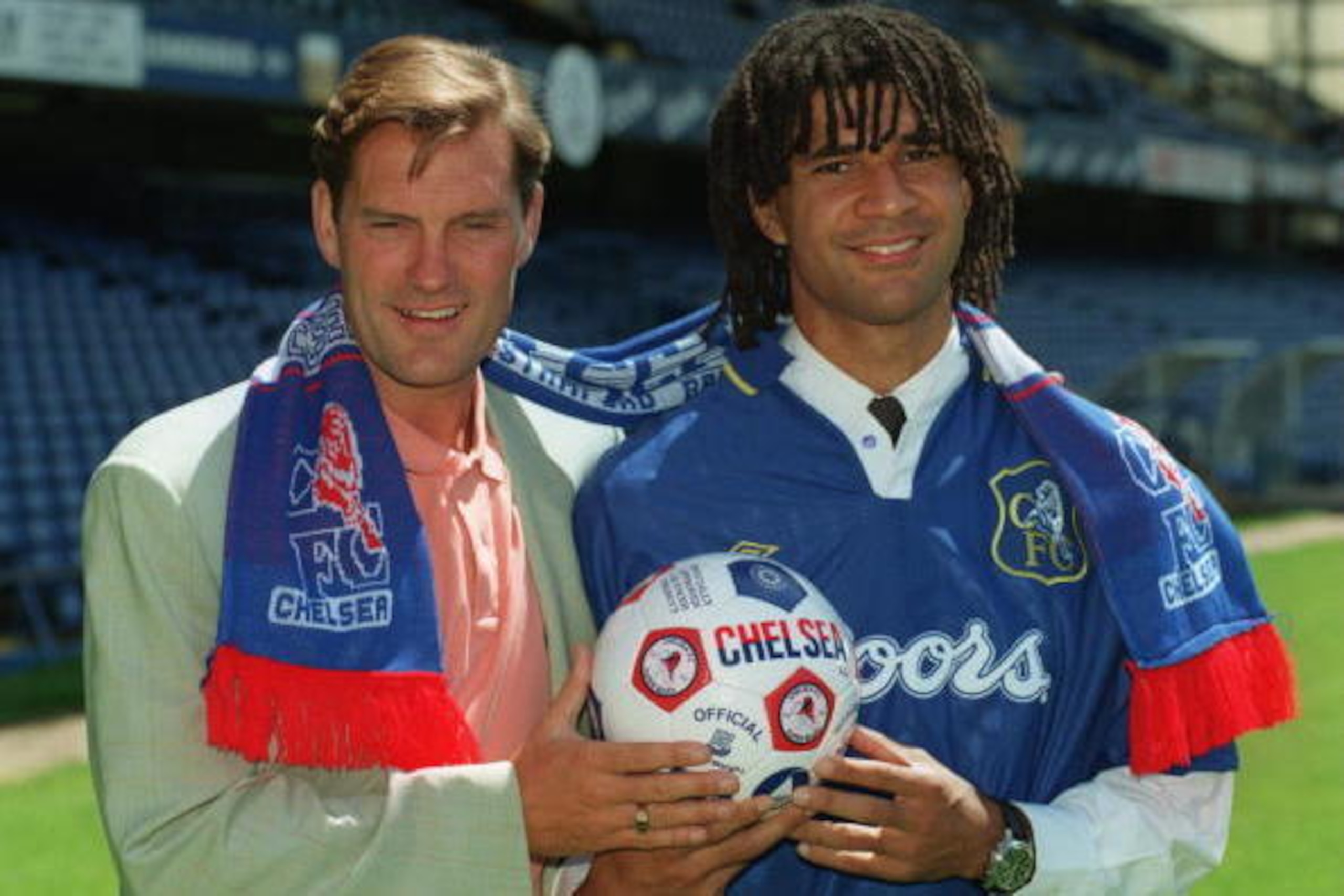
In truth, the revolution at Chelsea had already started 12 months earlier when Glenn Hoddle signed Ruud Gullit from Sampdoria. Having been a team made up largely of unglamorous names, suddenly the Blues had a superstar in their midst.
Gullit was in his twilight years, but that mattered little. His arrival gave Chelsea a significant boost to their ego; the swagger was properly returning to west London for the first time since those halcyon days of the 1960s and 1970s.
Gullit wigs became a common sight on the terraces as Chelsea fans revelled in having him at the club; his effortless displays from central midfield would mesmerise fans who were more used to watching this sort of thing on Channel 4's Football Italia than they were their own football stadium.
It didn't change things much in terms of results. The Blues had finished 11th in the season before Gullit's arrival, and in 1995/96, it was where they remained. It was more about the perception of Chelsea as a club; they had just attracted one of the world's biggest names. It was big news. To put it into context now, it's akin to a 33-year-old Cristiano Ronaldo joining Stoke City.
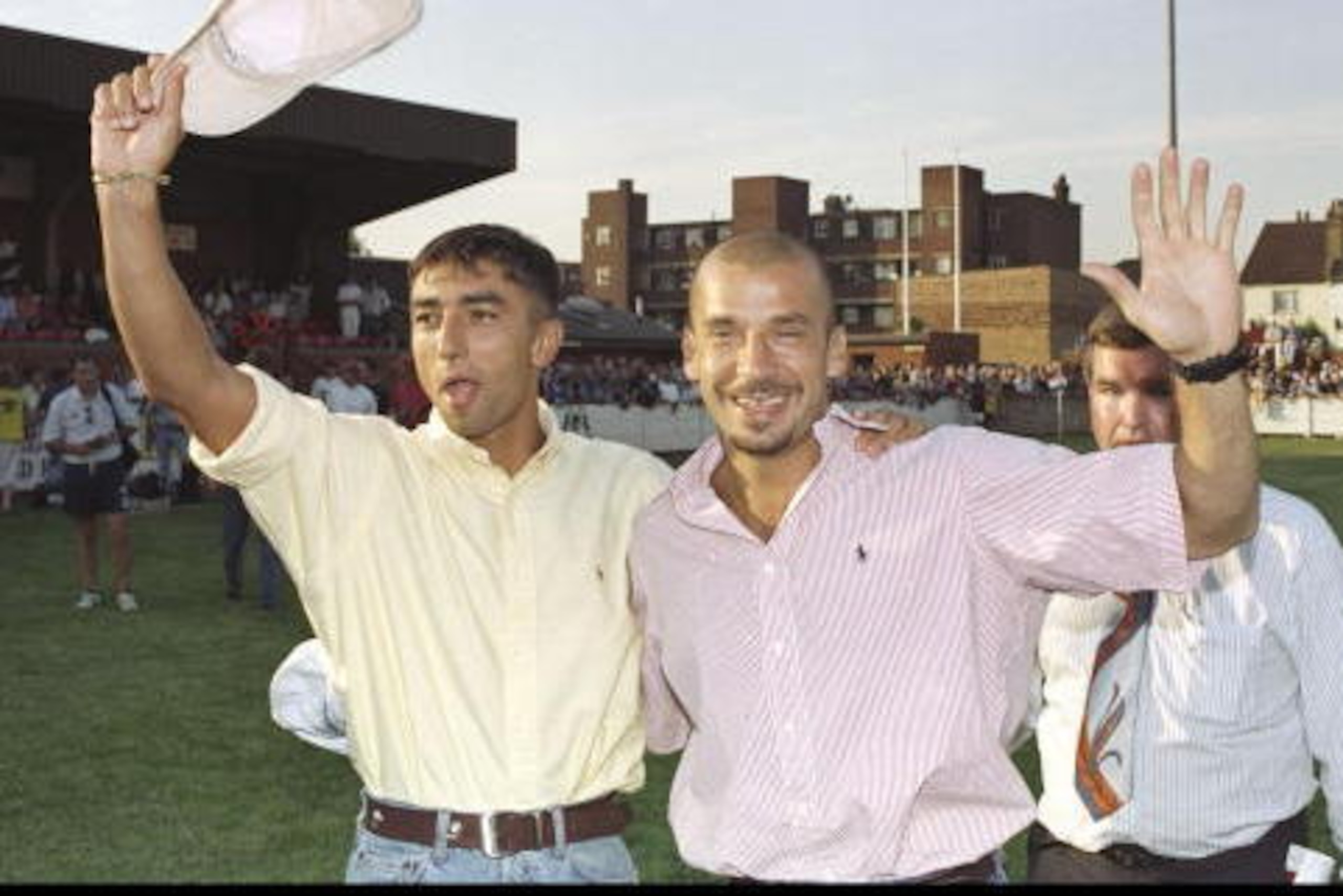
With Hoddle becoming England manager at the end of 1995/96, Gullit took charge of managerial duties and was able to use his profile to attract the sort of player to Chelsea that had been unattainable before. In his first summer, Gullit signed Italian midfielder Roberto Di Matteo from Lazio, with another Italian, striker Gianluca Vialli, joining him.
Similar to when Gullit had joined the club a year earlier, Vialli was the wrong side of 30. He had just won the Champions League with Juventus, though, showing he was far from being finished. Yes, Chelsea had a reigning European Cup champion in their team.
From the off things changed significantly, and it took just two matches for Di Matteo to make his mark when he scored a late winner against Middlesbrough to secure a 1-0 victory at Stamford Bridge.
That result set the tone, as did the celebration that night. Choreographed and performed to perfection, five Chelsea players—led by Di Matteo—got into position to pose in front of the old West Stand as they toasted victory.
It was just a celebration, yet it meant something so much more. It symbolised the newfound confidence at Chelsea that their overseas players were bringing. Gullit was blending the Anglo-Saxon grit with the finesse of Italy, and the likes of Di Matteo were leading the way.
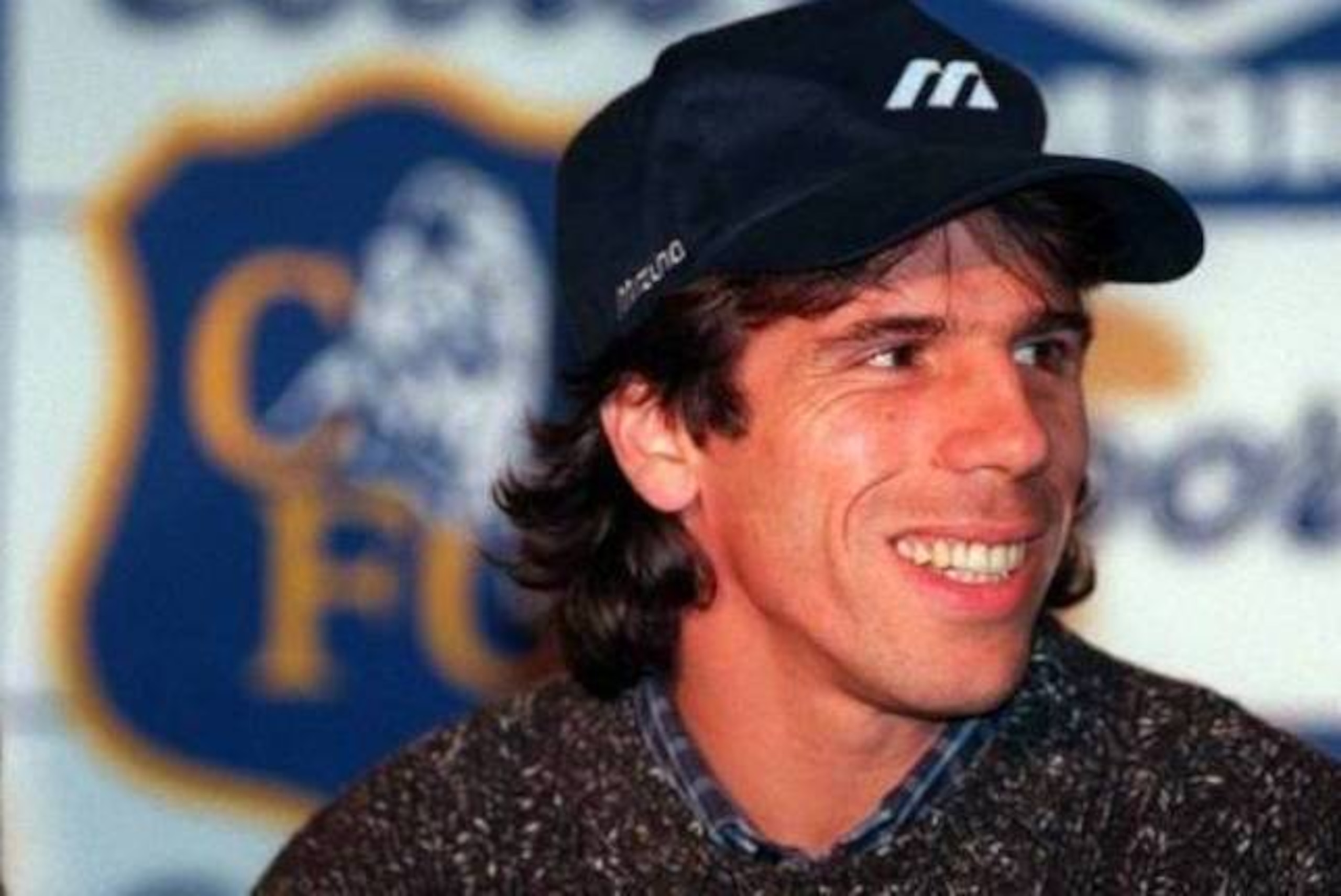
Later that season, Gianfranco Zola would arrive from Parma in November. From that moment on, Chelsea's Italian influence would hit overdrive. Zola was a revelation; a player not seen in west London since Pat Nevin was marauding up and down the wings in the 1980s.
Nevin was just one of few back then; it was in the 60s and 70s when Chelsea last boasted a side that was capable of achieving something collectively. And with Mark Hughes, Frank Leboeuf, Dennis Wise, Vialli, Zola and Di Matteo, Chelsea had a combination that was hinting at doing the same.
It was that Italian flavour that really defined it all. Zola was the epitome of it as he tormented defenders—think Manchester United's Dennis Irwin, who was left chasing shadows in a 1-1 draw at Stamford Bridge that year.
Until that point, overseas footballers had been viewed with an air of suspicion. There were always the success stories, like Ossie Ardiles and Ricky Villa at Tottenham Hotspur, or Eric Cantona at Manchester United, but league-wide, English football had never been welcoming to foreign talent. They just didn't fit.
At Chelsea at least, the influx of Italians changed that. Zola, Vialli and Di Matteo set out a new blueprint for the club's future and where they were headed. While it was bad news for the England national team, it was good news for Chelsea, as the club celebrated having a cosmopolitan squad.
Watching Zola succeed, it gave confidence that the European market held value for Chelsea. Soon the Blues would follow up his signing with Albert Ferrer from Barcelona, Gustavo Poyet from Real Zaragoza, Pierluigi Casiraghi from Lazio and Marcel Desailly from AC Milan. More would follow, including Desailly's fellow World Cup-winner Didier Deschamps.
These players were coming in to replace the likes of Craig Burley, John Spencer and Gavin Peacock; all good players in their own right, but not at the same standard as those replacing them. Chelsea were buying Champions League players.
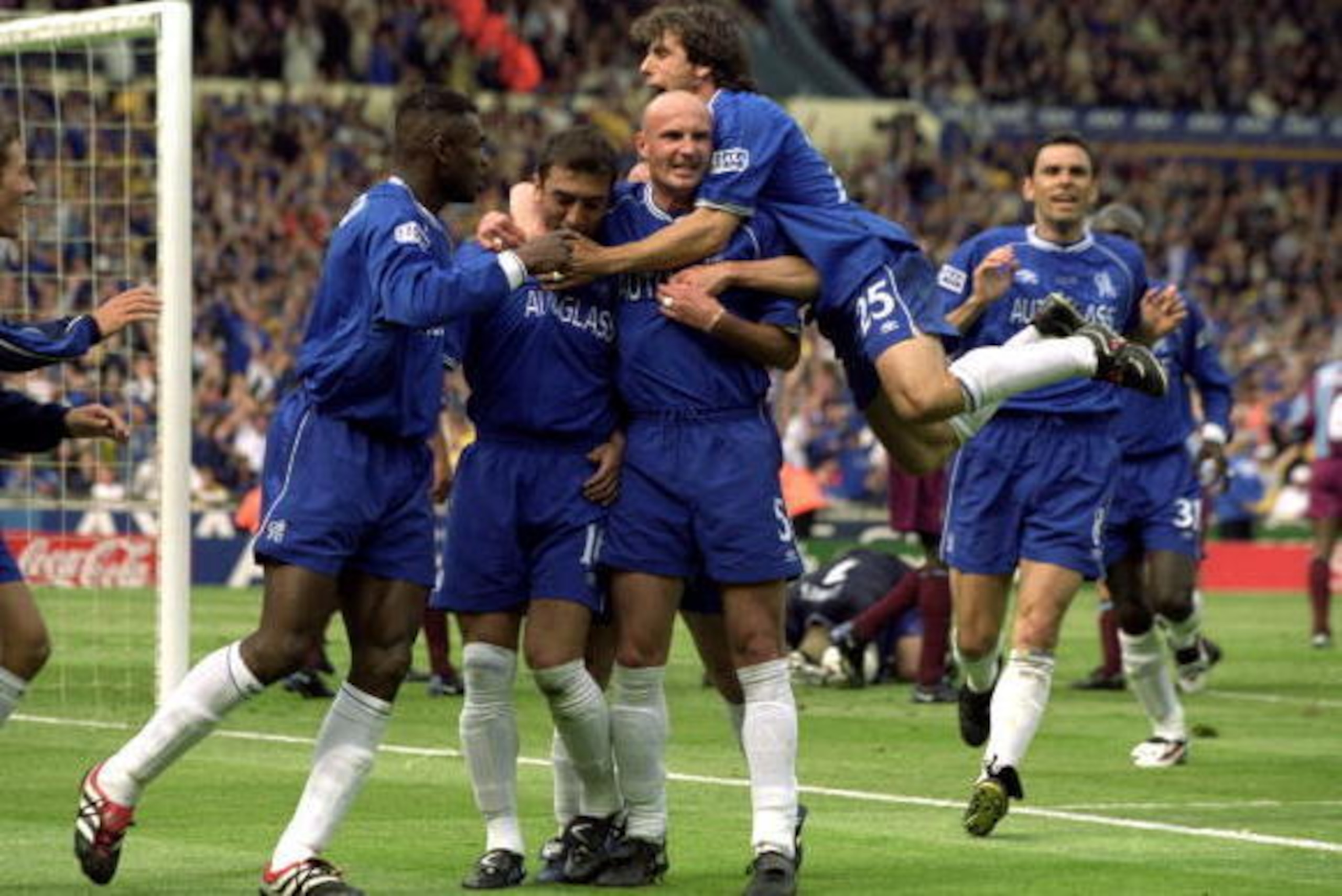
They started to cast their net far and wide; they were no longer limited to British shores, adding the odd sprinkling of stardust here and there. Watching how their Italians performed in that first season was an epiphany; it was a watershed moment in the club's history.
No more would Chelsea see their fortunes swing from feast to famine and back again. The pathway to greatness was set out, and they followed it.
With their brand of "sexy" football, Chelsea had the momentum in the Premier League. They were back competing again, climbing the table to finish sixth in 1996/97.
The league form was impressive enough, but winning the 1997 FA Cup was the jewel in the crown. It was the first time in the club's history that the Blues had won a major trophy at Wembley Stadium. Indeed, it was their first major honour since 1971's Cup Winners' Cup victory against Real Madrid.
Inspiring that 1997 victory was Di Matteo again. Like he had done nine months before, it was he who scored the crucial goal against Middlesbrough. Rather than waiting 86 minutes this time, he couldn't even hold himself back for one—Chelsea were leading the game after just 41 seconds thanks to his thunderbolt that caught the goalkeeper cold.
Eddie Newton scored Chelsea's second to seal the cup, being assisted by Zola.
That campaign built the Blues into the club we see now. They would go on to win the League Cup and Cup Winners' Cup in 1998, adding another FA Cup in 2000. That same season they tasted Champions League football for the first time, with Vialli the manager leading them into battle with Europe's elite.
Come 2003, a little known Russian businessman named Roman Abramovich purchased Chelsea. Without all the success from the late 1990s leading up to that, we'll never know if he would arrived on Stamford Bridge's doorstep to change the face of English football.
Still, with Abramovich in charge, that Italian influence remains strong at Chelsea. It's been 20 years since Italians helped change the face of the club, and in the present, with Chelsea at a similar crossroads, it's another Italian in Conte that the club has turned to in order to get back to the top.
Garry Hayes is Bleacher Report's lead Chelsea correspondent. Follow him on Twitter @garryhayes


.png?w=2560 "Muncy Sums Up NLCS Offense 💩")