

Isco Misses Another Big Chance to Establish Himself as Real Madrid's Playmaker
Real Madrid picked up a fourth successive draw on Sunday, as Eibar held them to a 1-1 scoreline at the Santiago Bernabeu, leaving fans frustrated at the final whistle and making their feelings known as the players left the pitch.
The entire performance from Madrid was disturbingly limp and one-dimensional, and manager Zinedine Zidane knows he'll have to find a more uptempo, positive display on the first game back after the international break, away to Real Betis on Oct. 15.
Club legend and director of international relations Emilio Butragueno has already called for changes, per Marca, and one of those who can be considered extremely likely to drop out of the XI is Spanish playmaker Isco, who passed up his biggest opportunity of the season to stake his claim for a regular spot with a languid, uninspiring performance.
TOP NEWS

EPL Transfer Window Grades 🔠

Adams Named USMNT Captain 🫡

Sullivan, Hall Lead USMNT to Big Win 💥
Positional Play
Real's template for the match was clear very early on: 4-3-3, with Mateo Kovacic and Isco to the left and right respectively of Toni Kroos. The unfamiliar midfield perhaps went some way to explaining Madrid's lack of tempo from kick-off, but in truth, there were below-par performances all over the pitch, particularly from striker Karim Benzema.
James Rodriguez was due to start but pulled up injured in the warm-up—Kovacic replaced him—which left Isco as the only real offensive playmaker in the team. The opportunity he had been waiting for all season was right in front of him, at home against a mid-table side that had never previously scored against Real Madrid.
He couldn't take it.
Whether by coaching design or because Isco was trying hard to make up for deficiencies of the team elsewhere, he was frequently—especially in the second half—found as the deepest of the trio, behind Kroos and trying to take possession or win back the ball. It's an area of the pitch he's patently not suited to, and the result was a confused and disjointed Real Madrid when trying to move the ball from back to front.
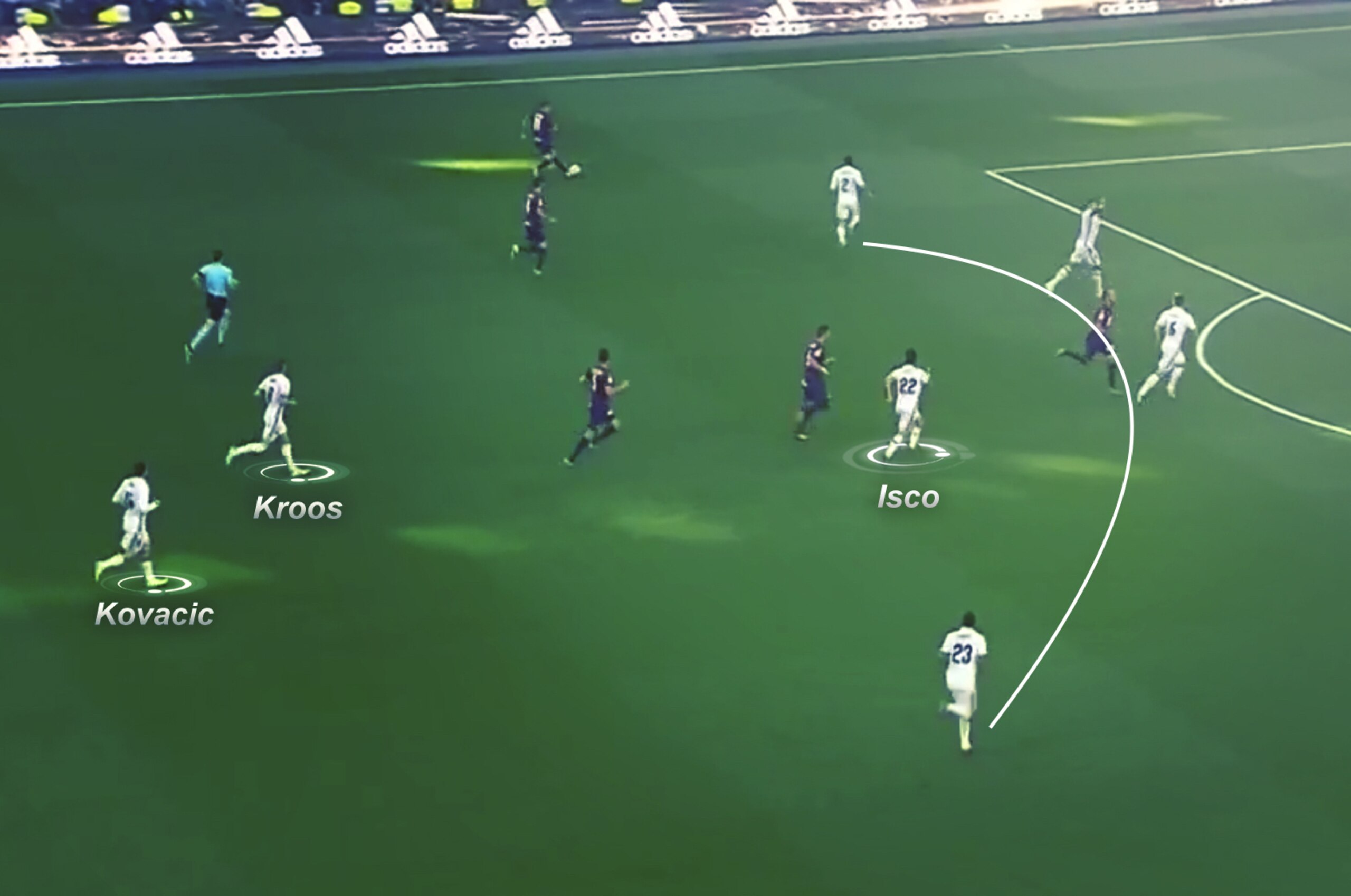
Going forward, where he needed to have his biggest impact, Isco failed to take the ball between the lines and in the channels to open up space often enough. Instead, Isco dribbled into danger, his timing of when to release was off, and his usual good technique was seen only sporadically, doubtless due in part to not having started a match for some time.
Cutting Edge
Rusty or not, chances in central midfield don't come around too often at Real Madrid, and the emphasis for players is very much on proving you cannot be dropped rather than being handed chances until you get it right. In that regard, Isco failed once again.
The stats read that Isco created three chances in the game, as many as Gareth Bale and more than the rest of the team, per WhoScored.com. But these were not carefully crafted openings, rather a set piece and a short pass a team-mate happened to shoot from. They also show he was dispossessed five times, more than anyone on the pitch and more than twice the number of occasions of any other player in white—and that's without counting the dribbles he failed to complete.
Isco's biggest moment came just shy of the hour mark.

Played through on goal, he simply had to take a touch, burst into the area and shoot—instead, his first touch was an attempted check back on to his right foot. He fell, the defender made the tackle and the ball ran for Alvaro Morata, who dived to try and win a penalty and was consequently booked.
It summed up Real Madrid's attack for the day in the space of three seconds.
Kovacic
James had already impressed in two or three sub appearances, enough to win himself a starting role, and the Colombian also took his chance in those fixtures from the first whistle. He would have been in the team against Eibar on merit were it not for the untimely injury he suffered pre-game.
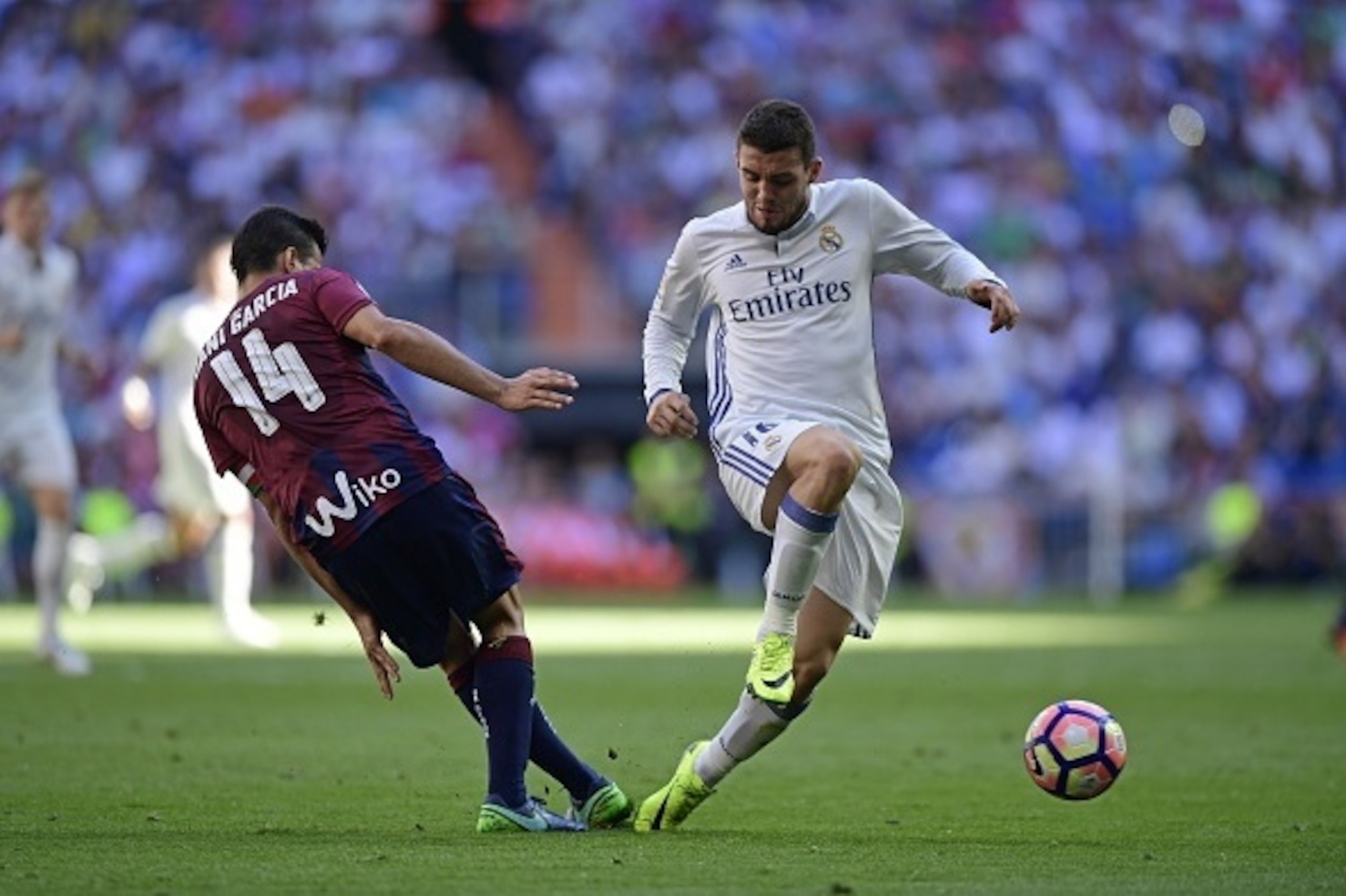
Marco Asensio also started the season well enough to help the team ease through the absence of Cristiano Ronaldo, but perhaps the biggest impact from the fringe players has come from Kovacic.
The Croatian has provided the drive and directness the team lacks without Luka Modric on the pitch, mixing a style of running with the vision to pick passes in the final third and the aggression to ensure the middle third isn't overrun.
He was the best of Madrid's midfield troika against Eibar, and one instance in particular saw him showcase the kind of determination and insistence sadly missing from Isco's attributes.

It was no surprise that when Asensio entered the pitch on 71 minutes, Zidane decided to hook Isco rather than Kovacic.
Marca's Jesus Sanchez reported the home crowd "made their feelings clear" toward the Spaniard and criticised him for failing miserably.
What's Next?
Simply put, Isco is extremely likely to have to wait for his next chance to shine and can have no complaints about the matter.
For too long he has lacked the consistency required to be a regular starter, his touchline demeanour is absurd at times—the strops, the public pantomime at managerial decisions, the entire body language repertoire of discontent—and should not be tolerated from a player who just isn't as good as the individuals keeping him out of the team.

Much depends on Modric's fitness.
Real Madrid have to start winning again quickly, which means a best available XI needs to line up against Betis. If Modric is mostly fit, it's a safe bet he'll be on the pitch. Either way, Isco should be out, and perhaps the UEFA Champions League fixture against Legia Warsaw on Oct. 18 will present his next opportunity.
This one, though, with his team in dire need of an intelligent and creative performance and all the other competition for the role unavailable, was Isco's biggest chance of all, and he blew it.

.jpg?w=2560)



.jpg?w=2560 "Viral Rams Coach Vid 🖕")

.jpg?w=2560 "Injury-stricken Seahawks signing veteran RB")
