

Jurgen Klopp's Liverpool: Charting the Changes on German's 1-Year Anniversary
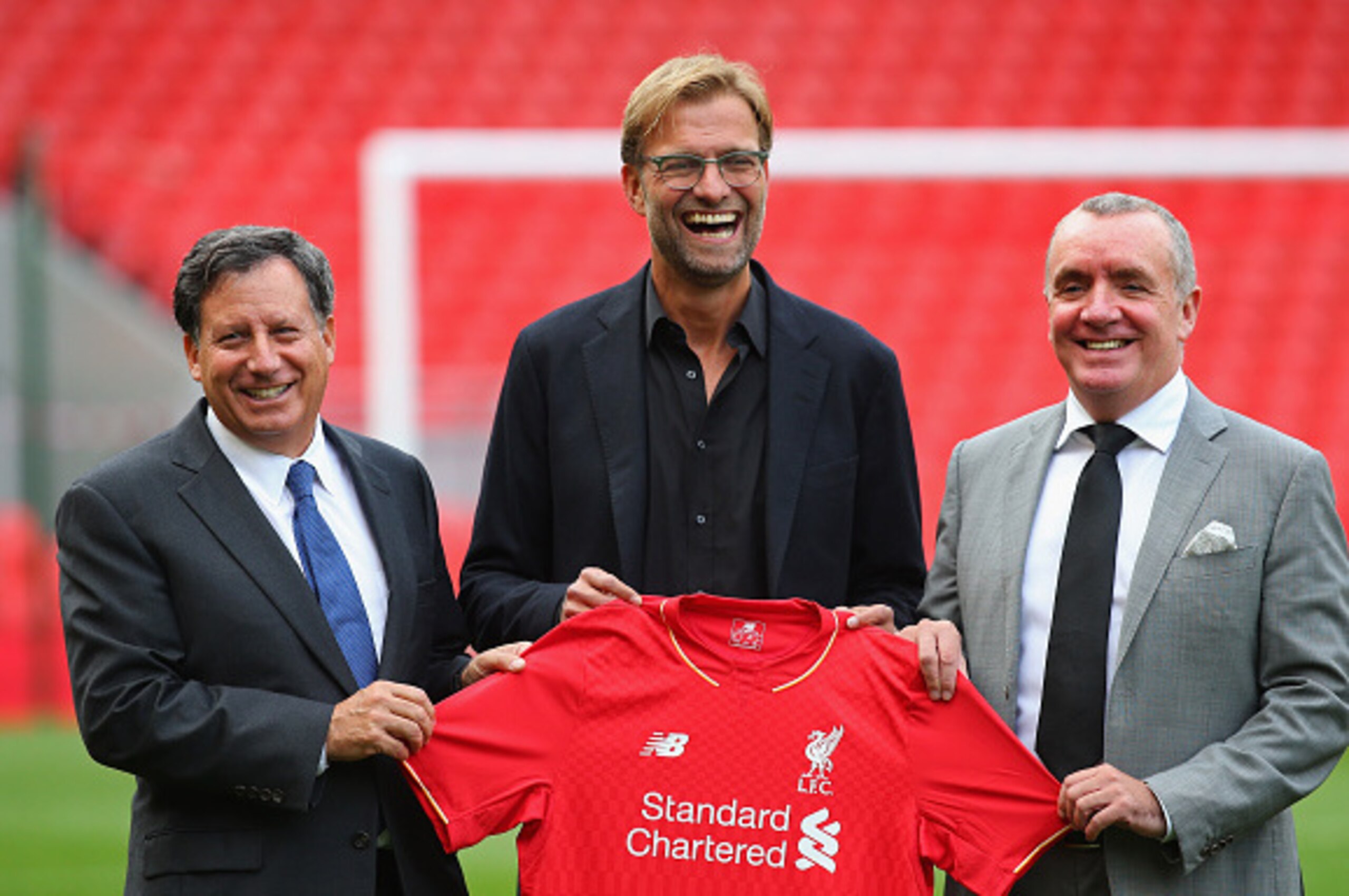
Saturday, October 8, marks the one-year anniversary of Jurgen Klopp's appointment as manager of Liverpool Football Club, with the contrast in atmosphere between then and now stark—the German has overseen a seismic change on Merseyside, with this set to continue long into the future.
The Reds parted ways with Klopp's predecessor, Brendan Rodgers, four days earlier, relieving the Ulsterman of his duties after a dismal 1-1 draw away to rivals Everton in the Premier League—a result that summarised a disappointing 14 months for the club.


.jpg?w=2560)
After the euphoria of a title challenge in the 2013/14 season, Liverpool finished sixth in the league in 2014/15, and three of their key stars—Steven Gerrard, Raheem Sterling and Luis Suarez—had departed.
Klopp arrived with a club in turmoil, enduring a fractious relationship with a fanbase ground down by the monotony of perpetual failure—and speaking to the club's official website, the former Borussia Dortmund manager delivered an emphatic mission statement: "We have to change from doubters to believers, now."
Continuing his inaugural address, Klopp explained how he wanted to write a "new story" with this historic club:
"The Liverpool family is a little bit too nervous, a little bit too pessimistic, too often in doubt.
They all celebrate the game, it’s a great atmosphere in the stadium, but they don’t believe at the moment.
They only want to see five years ago, 10 years ago, 20 years ago. History is great but it’s only to remember.
No, we have the possibility to write a new story if we want.
"
Given the condition on Merseyside in the aftermath of Rodgers' departure, this required a considerable makeover, so how has Klopp improved Liverpool, and what does it promise for the future?
Here, on Klopp's one-year anniversary, we chart the changes made at Anfield over the past 12 months.

Playing Personnel
In the summer months prior to Klopp's arrival, Rodgers sanctioned an outlay of £73.8 million, bringing in seven new faces in Adam Bogdan, Joe Gomez, Nathaniel Clyne, James Milner, Roberto Firmino, Danny Ings and Christian Benteke—but while these largely proved positive purchases, the squad was in bad shape.
Bogdan served as a meagre deputy to questionable first-choice goalkeeper Simon Mignolet; the acquisition of Gomez and Clyne stabilised Rodgers' full-back ranks, but there remained problems at centre-back; and Milner told the Guardian's Jamie Jackson that he had been earmarked for a role in central midfield, despite this being a position he had played just 13 times in the past three seasons.

Perhaps most troubling were Rodgers' choice of options in attack, as while an initial £60.3 million had been spent to bring Firmino, Ings and Benteke to Merseyside, the former Swansea City manager seemingly had little plan of how best to utilise them.
Ings and Firmino were at times deployed as wing-backs, Benteke failed to adjust to Liverpool's attacking ideals, and Rodgers was left relying on the injury-prone Daniel Sturridge as his primary option at centre-forward.
In his 12 months as Liverpool manager, Klopp has seen 13 high-profile names—including Benteke—leave the club, with another seven brought in to replace them, with the German overseeing an overhaul of his playing personnel ahead of 2016/17:
- Alex Manninger, from Augsburg, free
- Loris Karius, from Mainz 05, £4.7 million
- Joel Matip, from Schalke 04, free
- Ragnar Klavan, from Augsburg, £4.2 million
- Marko Grujic, from Red Star Belgrade, £5.1 million
- Georginio Wijnaldum, from Newcastle United, £25 million
- Sadio Mane, from Southampton, £30 million
Karius' arrival as new first-choice goalkeeper, with Mignolet demoted to the German's deputy in recent weeks, has reinforced Klopp's options between the sticks; the addition of Matip and Klavan, ostensibly replacing the exiled Mamadou Sakho and the departed Martin Skrtel, have strengthened the core of the Liverpool defence; and Grujic, Wijnaldum and Mane have given further flexibility in midfield and attack.
"After all the transfers, this time it is my team," he told reporters in July, and this is certainly clear seven games into the new Premier League season, with the Reds producing a series of emphatic performances, taking five wins, a draw and a loss, leaving them fourth in the table and two points off first place.
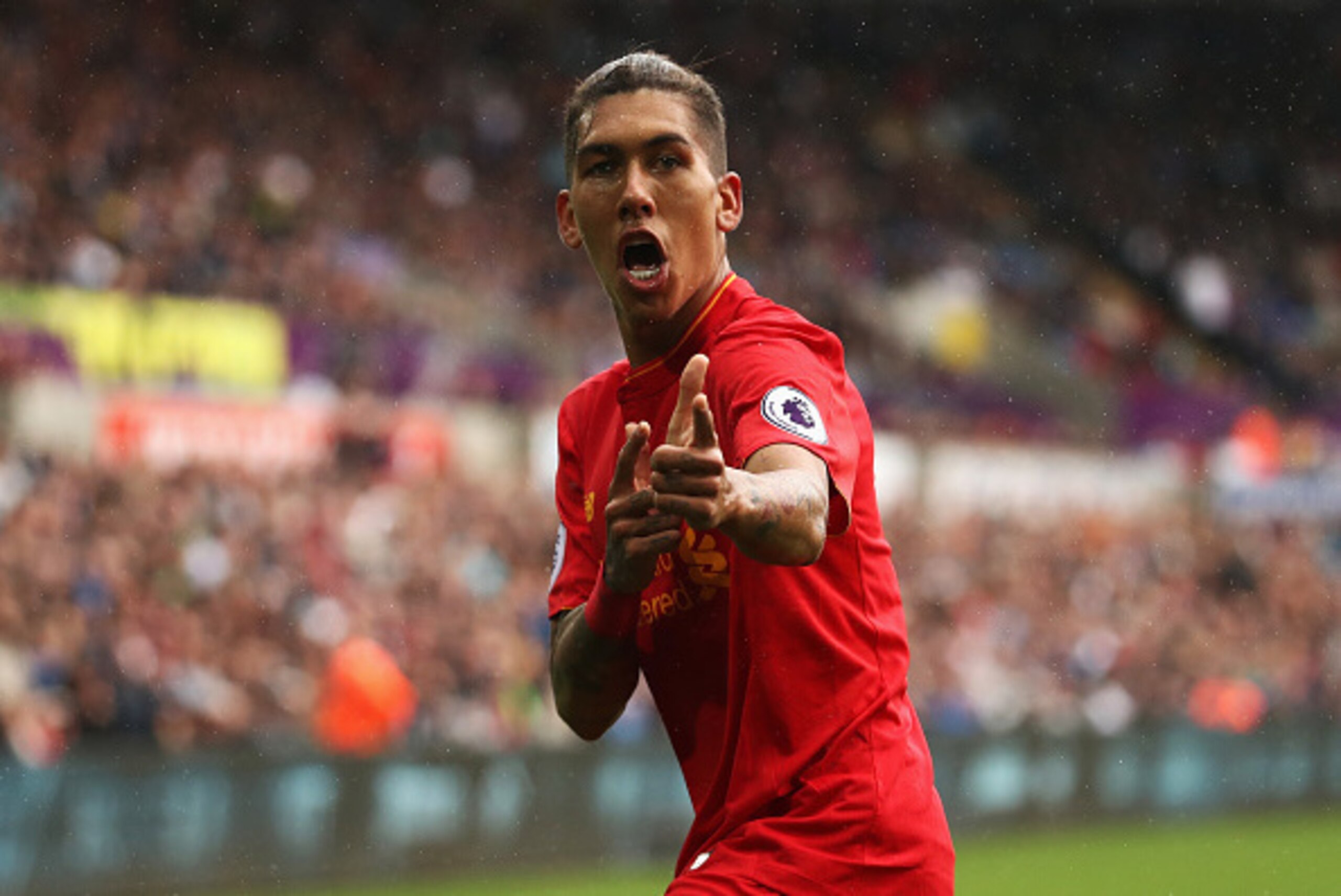
Perhaps most crucially, however, is how Klopp has worked to reinvigorate the players already at his disposal, namely through an altering of their tactical duties and positional roles.
Milner (as left-back), Firmino (as primary centre-forward), Emre Can (as dominant midfielder), Adam Lallana (as box-to-box general), Jordan Henderson (as No. 6) and Dejan Lovren (as first-choice centre-back) are six key names who have improved in their performances since Klopp's arrival, with the latter telling the Express' Paul Joyce that Klopp "is a perfectionist and so everyone wants to be like him."
It isn't just in his first-team squad that Klopp demands perfection, however, with his work off the field just as important.
Backroom Staff
Rodgers' departure was followed by a further reshuffle of staff on Merseyside, with assistant manager Sean O'Driscoll, first-team coach Gary McAllister, head of performance Glen Driscoll and head of opposition analysis Chris Davies all either dismissed or, in McAllister's case, moved into an ambassadorial role.
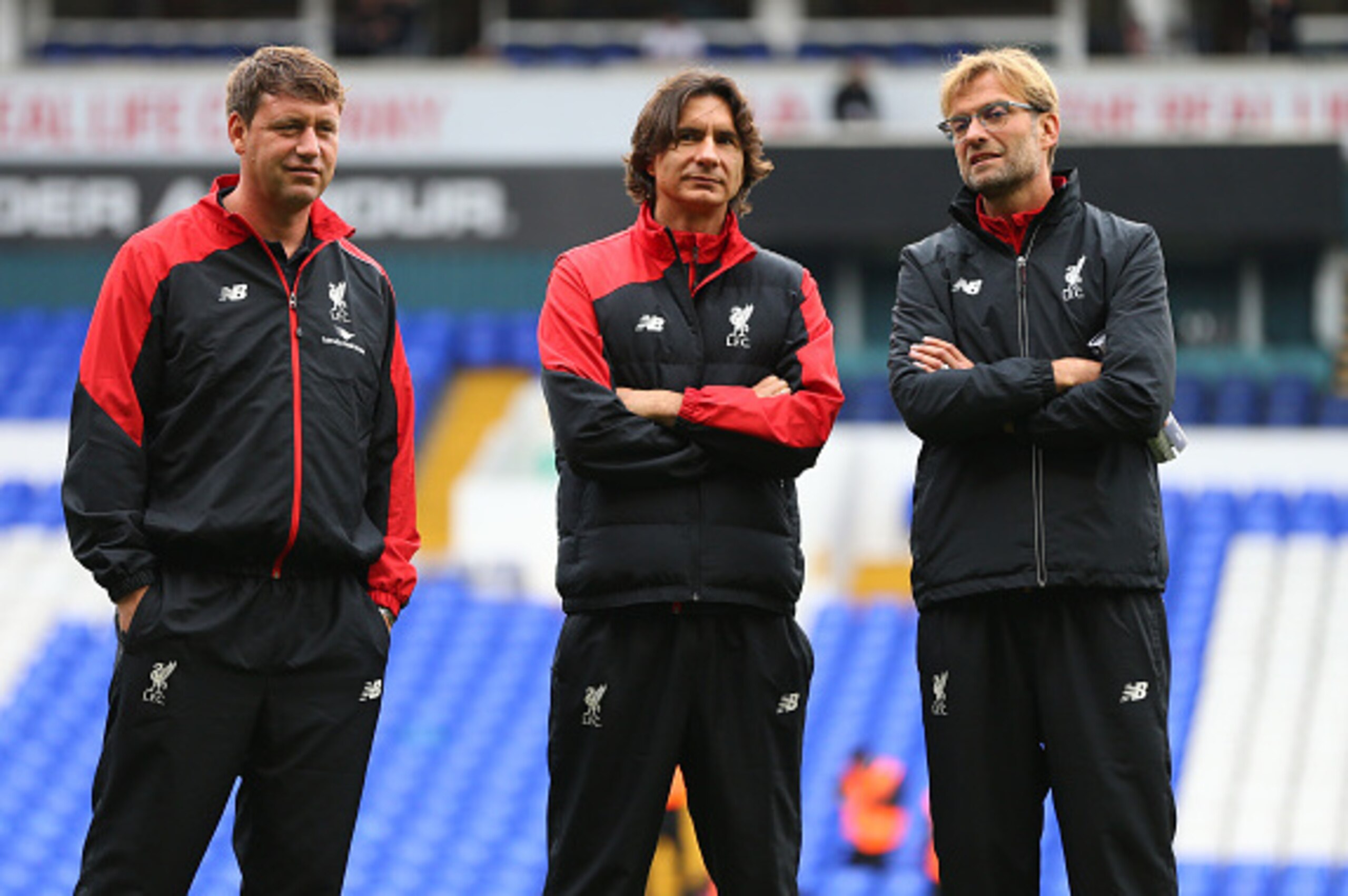
This saw Liverpool make way for a series of appointments to complement Klopp, with long-serving assistants Zeljko Buvac and Peter Krawietz following the German through the Shankly Gates and heavier focus being placed on Pepijn Lijnders as first-team development coach—Klopp's liaison between first team and academy.

Later in the season, both fitness and conditioning coach Ryland Morgans and head physio Chris Morgan left the club, pre-empting a further shakeup of Klopp's backroom staff ahead of his first full campaign as Liverpool manager.
Over the summer, former Bayern Munich duo Andreas Kornmayer and Mona Nemmer took up roles alongside the German, with the former combining Driscoll and Morgans' roles as head of fitness and conditioning and the latter serving as the club's new nutritionist.
Speaking to Goal's Melissa Reddy during pre-season in August, Klopp praised the support of Buvac, Krawietz, Lijnders, Kornmayer and John Achterberg, who was retained in his long-held role as goalkeeping coach:
"Zeljko is the best coach I’ve ever met, he is unbelievable, like a football book! Pep is in a very good way, heading in the right direction. He is young, with wonderful skill which will see him become a great coach in future, I’m sure. I was happy to bring in Andreas. He has top experience, is really educated in his job and is a good guy as well.
John Achterberg—more passion for goalkeeping is not possible! Pete—he’s watched I don’t know how many games in the last 20 years, he can tell you everything. He’s another who has to see everything, and so in total we have 10 plus eyes on things and then after training, it’s not over. We sit together and discuss what we’ve seen.
"
Most crucially, Klopp summarised his backroom reshuffle, saying: "I am lucky because I’ve had the possibility to bring the best people together."
As with his first-team squad, Klopp has cherrypicked his ideal backroom staff, identifying key names for key roles, and ensured they match his vision of success on Merseyside—and this has proved fruitful so far.
'The Best Atmosphere'
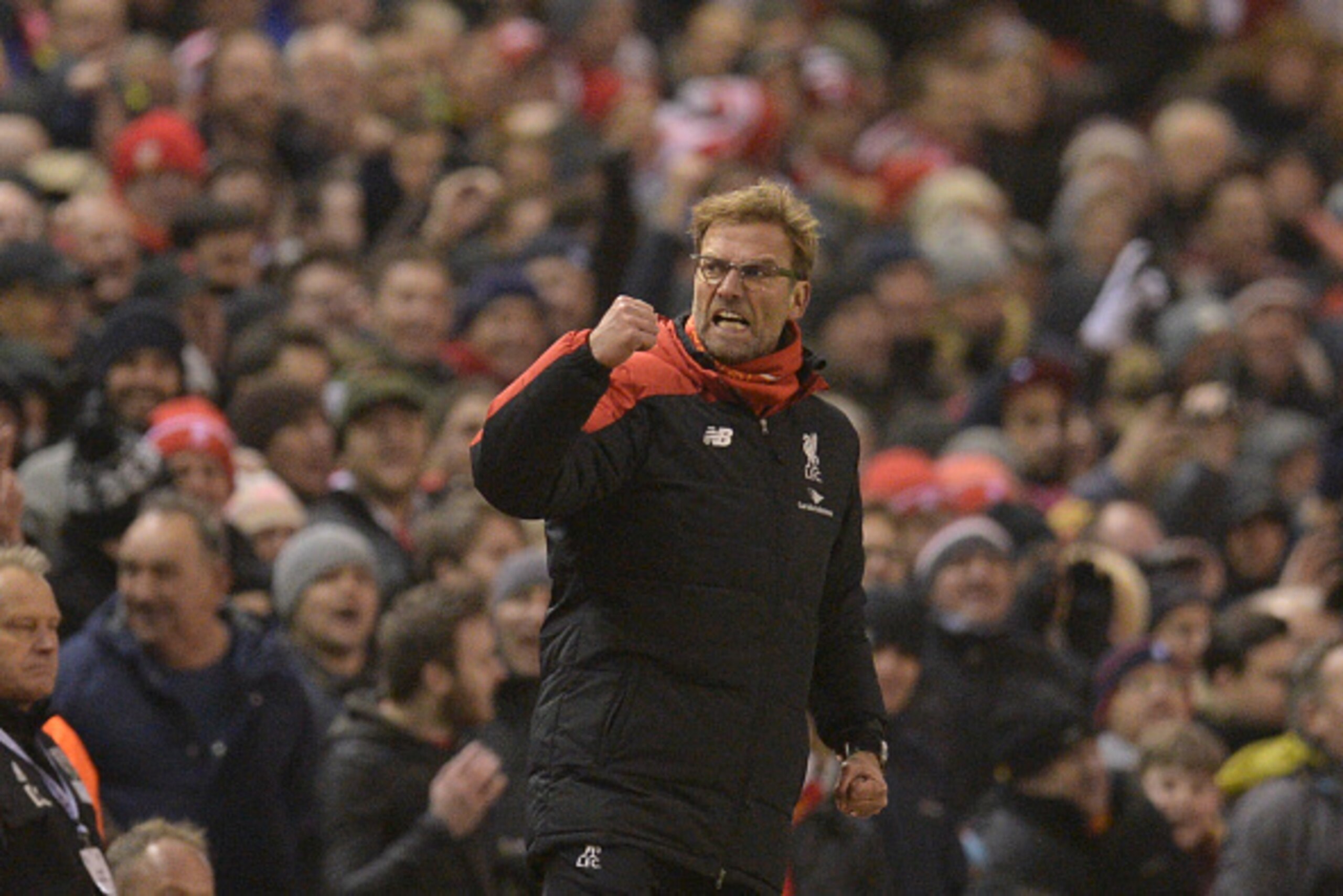
"When we come together on Sunday we should all be prepared for a very special moment," Klopp told reporters ahead of Liverpool's home clash with West Bromwich Albion in December. "Maybe we can create the best atmosphere in the last 10 years."
Stemming from his vow to change the club "from doubters to believers" in October, Klopp has spent much of his Reds reign so far addressing concerns with the atmosphere surrounding matchdays—and rightly so, as for a lengthy period prior to his arrival, the response from the stands was often muted.
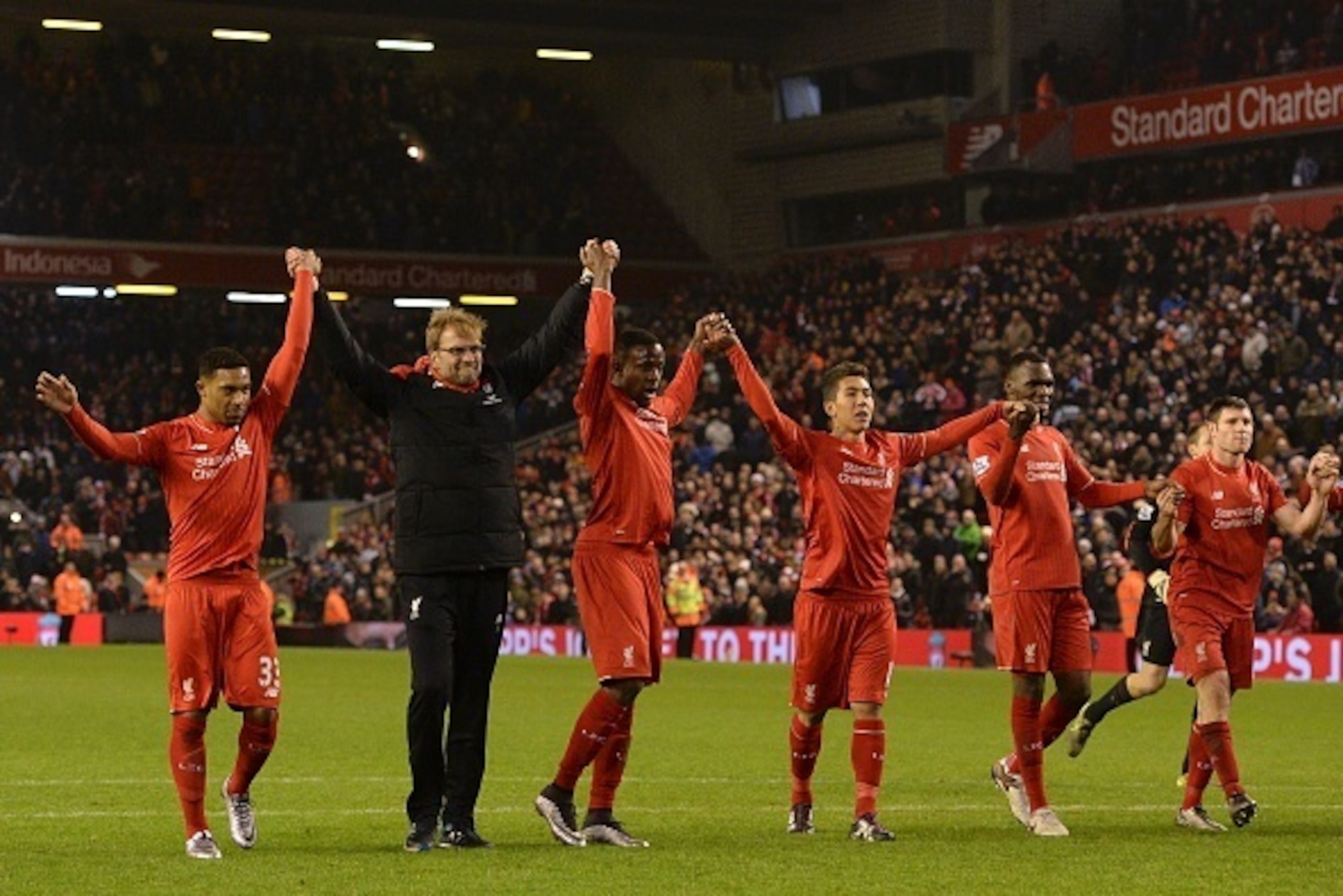
After Divock Origi's late effort sealed a 2-2 draw with the Baggies at Anfield, Klopp led his side over to the Kop in salute of what he later described as "the best atmosphere since I've been here."
Nine months later and work to add 8,500 extra seats to Anfield's Main Stand was concluded, with Liverpool playing their first home game of 2016/17 against Premier League champions Leicester City—the Reds ran rampant, producing an excellent showing in a convincing 4-1 victory.
This is something, as he explained ahead of their next home outing, against newly promoted Hull City, that Klopp felt should be maintained in every game, regardless of the situation and regardless of the opposition:
"Two things are important for atmosphere: the crowd and the team.
I would really love to see everybody goes with the right expectations, not disappointed we miss a chance in the first 10 minutes.
[...]
So let’s try to really create an atmosphere where everyone is in the performance, in the game, happy with moments, creating chances, to show how we can cause them problems.
Then if we stay concentrate and patient, but greedy and direct, we’ll have the next [chance] and it’s more likely you’ll use one.
"
This arguably remains a work in progress, but despite Liverpool's excellent start to 2016/17, this could also be argued of his first-team squad and their performances on the pitch.
While they have so far averaged 2.6 league goals per game, they have also conceded an average of 1.4 per game—the latter worse than in 2015/16, when the Reds' conceded an average of 1.3 goals per game.
But in the past 12 months, Klopp has led the Reds to two cup finals—in the UEFA Europa League and the Capital One Cup—seen his side run farther, press harder and attack with more vibrancy, foster a big-game mentality and, as victories over Hull and Swansea City this season have proved, maintain this against lesser opposition.
By making alterations to his playing personnel and his backroom staff, and demanding more from Liverpool's supporters, Klopp looks set to lead the club into a more successful era; and after just one year, this is a hugely commendable effort.
Jack Lusby will be covering Liverpool throughout 2016/17 as one of Bleacher Report's lead correspondents. Quotes obtained firsthand unless otherwise noted; statistics via Transfermarkt.co.uk.
Follow Jack on Twitter @jacklusby_ and Facebook here.
.jpg?w=2560 "Rams Eagles Football")
.jpg?w=2560 "Texans-Mixon Released Football")
.jpg?w=2560 "Bijan's INSANE 1st Half 🤩")

.jpg?w=2560 "2 NFL Officials Suspended")

