

Ranking the Streakiest Shooters in College Basketball in the 2016-17 Season
Santa Clara's Jared Brownridge made at least seven three-pointers in four separate games last season and will enter his senior year with the title of streakiest shooter in the country.
Before we dive in, it's important to note the distinction between a streaky shooter and a good shooter who occasionally catches fire. For example, Michigan State's Bryn Forbes made 11 three-pointers in a game against Rutgers last season, but he also shot 48.1 percent on the year. He was a good shooter who also happened to be really feeling it that night.
What we're looking for are the Marshall Henderson types of shooters. Most of these players won't even approach the volume of shots that Henderson took in his two seasons with Ole Miss, but there's no telling what you'll get out of them from one game to the next. Case in point: Henderson's collegiate career ended on a 2-of-16 shooting performance, and it wasn't a surprise to anyone.
To find those guys, we started out by reducing the pool of candidates to players who made at least seven three-pointers in a game last season yet finished the season shooting worse than 40 percent from the perimeter. From there, it was just a matter of picking out the ones who oscillate the most between hot and cold.
Honorable Mentions
1 of 10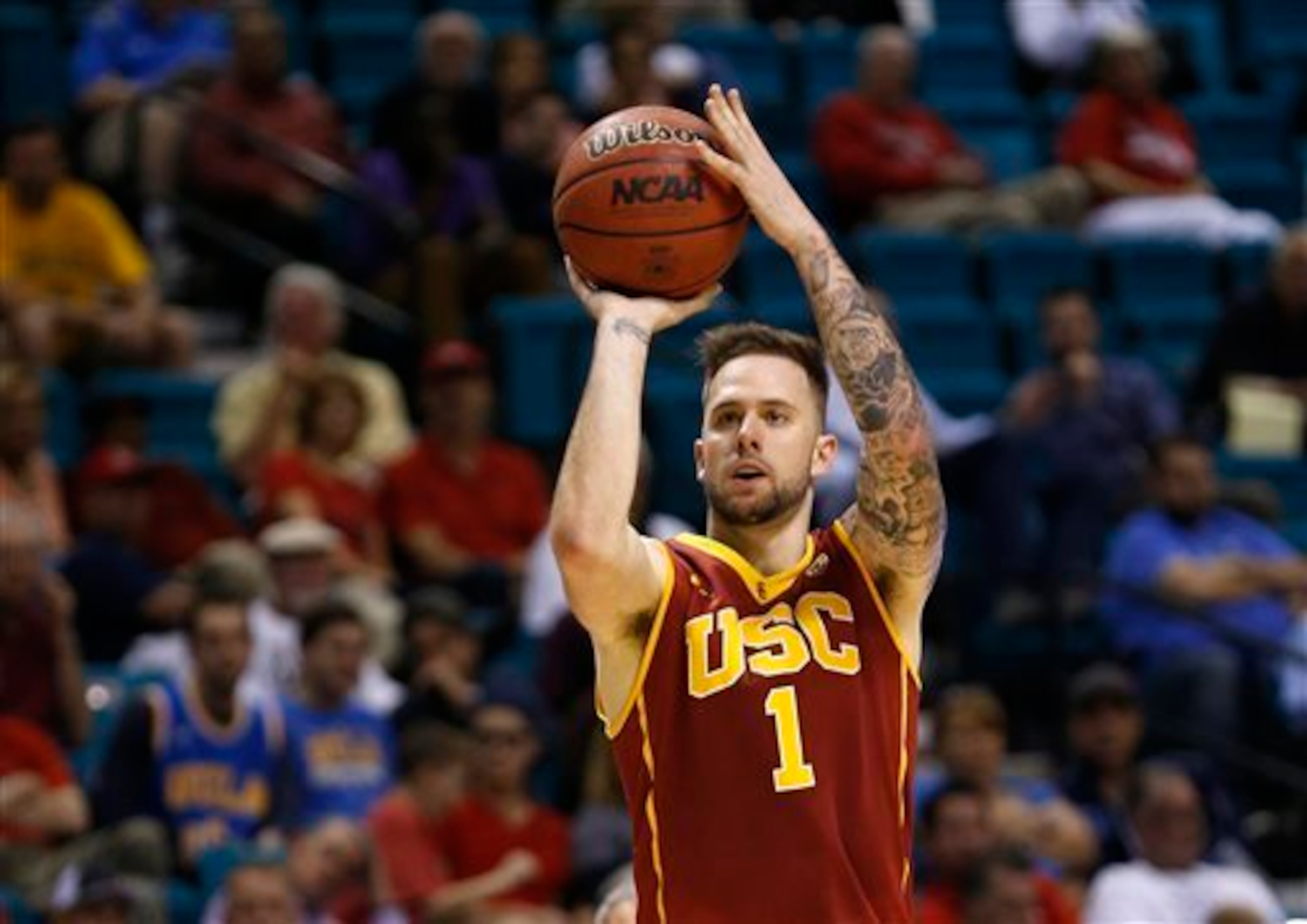
Katin Reinhardt, Marquette
During one four-game stretch last season, Reinhardt went 7-of-9, 0-of-3, 6-of-9 and 0-of-2 from three-point range. He was painfully hit-or-miss for the USC Trojans, but it's tough to forecast how streaky he'll even have the opportunity to be in a loaded Golden Eagles backcourt.
Kenny Kaminski, Ohio
Michigan State's former stretch 4 resurfaced in the Mid-American Conference last year, averaging just a shade under seven three-point attempts per game for the Bobcats. He shot 50 percent or better in 11 games, including an 8-of-11 performance against Ohio Dominican, but he also shot worse than 25 percent 10 times.
Raven Lee, Eastern Michigan
Lee isn't nearly the three-point specialist that most of these guys are, but he did catch fire in one game against Miami (Ohio) last year. He made nine of 11 triples in the process of scoring 46 points in 24 minutes.
Brandon Gfeller, Montana
Gfeller had a couple of big games for the Grizzlies, draining eight three-pointers against Northern Arizona and another six two nights later against Southern Utah. But for the most part, he didn't do much. In 30 games against Division I opponents, he only scored in double figures 10 times. He made fewer than two three-pointers in 17 of those games. Sorry, but one red-hot New Year's weekend doesn't equate to one of the streakiest shooters in the country.
9. J.R. Harris, Texas-San Antonio
2 of 10
Texas-San Antonio didn't have much to brag about last year. The Roadrunners finished the season with a 5-27 record, including a home loss to Division II Texas-Permian Basin. Nineteen of their losses came by a double-digit margin, highlighted by the 116-50 loss to Texas.
But in J.R. Harris, they did have a shooting guard who was liable to catch fire on any given night.
His masterpiece came in a blowout loss to UAB. Harris scored 36 of UTSA's 82 points, shooting 10-of-14 from three-point range. Though the Roadrunners lost by a 22-point margin, he was named the KenPom.com MVP of the game.
Even more bizarre than that MVP designation is that Harris entered the night having shot 9-of-39 from three-point range in his previous eight games. It had been more than a month since he made more than two triples in a game, but that didn't stop him from doing five weeks' worth of work in one game.
Later on in the season, Harris had a stretch of six games in which he made just one three-pointer in 22 attempts. But he ended that dry spell by shooting 15-of-28 (53.4 percent) over his next three games. In fact, he made at least four three-pointers in four of UTSA's final five games, yet he managed to go 0-of-7 from distance in the regular-season finale.
Harris wasn't even a starter until January, but with leading scorer and three-point assassin Ryan Bowie out of the picture, there should be quite a few games during the 2016-17 season in which Harris jacks up a dozen or more shots.
8. Shep Garner, Penn State
3 of 10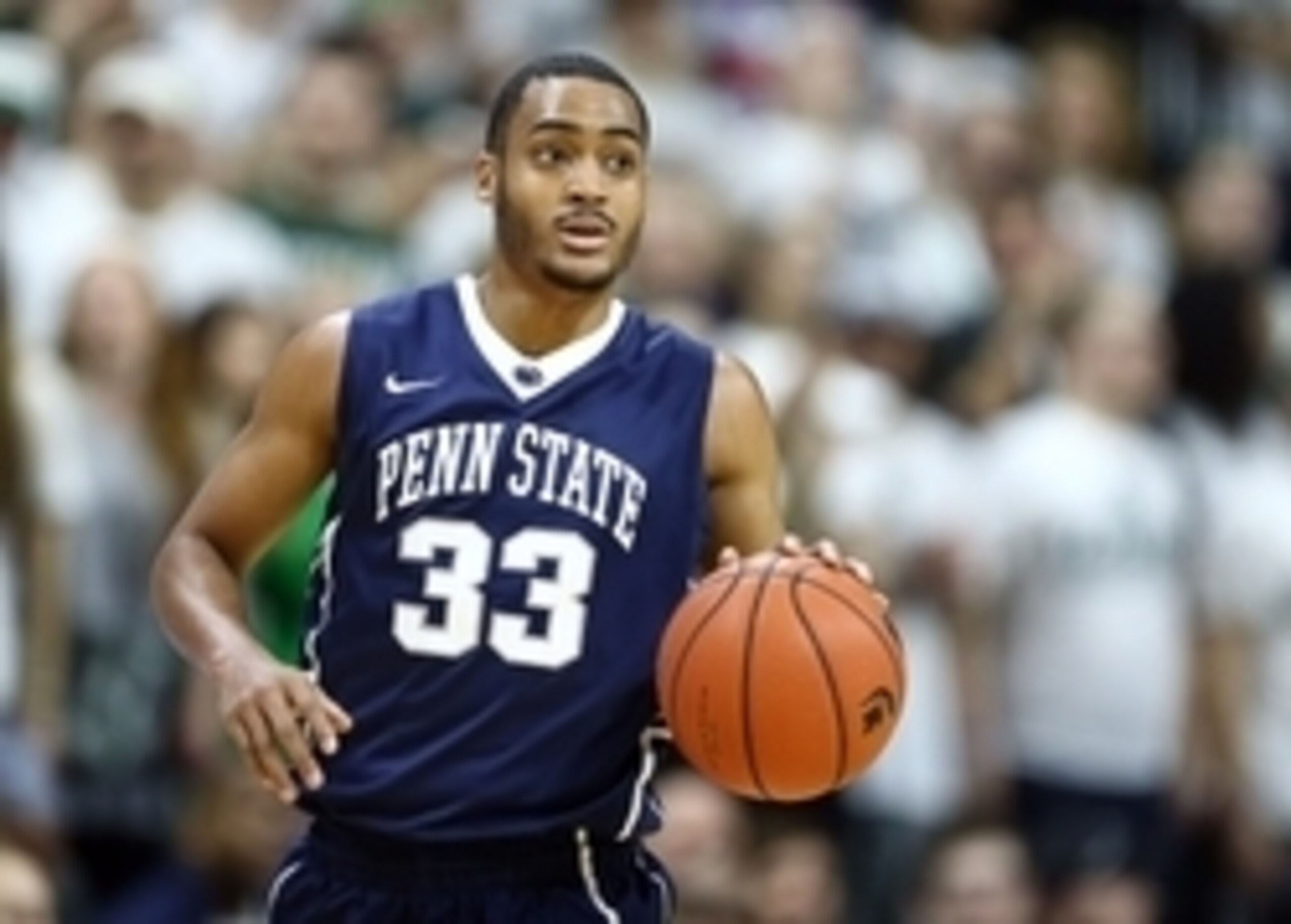
The primary ball-handler and secondary scorer for a middle-of-the-road team, Shep Garner had to do a lot for the Nittany Lions. Despite shooting just 38.2 percent from the field, he averaged more than 12 field-goal attempts per game.
For the first three months of the season, all that shooting merely resulted in the occasional gem in a sea of inefficiency. In the ACC/Big Ten Challenge game at Boston College, Garner popped off for a career-high 30 points by draining eight three-pointers. But he made just seven triples in the four games before that performance and only sank six in the four games after it.
A more jarring example of Garner's all-or-nothing pattern, he made five three-pointers without committing a turnover in a late-January game against Michigan, but in the five games before and the three games after that neutral-court peak, Garner was a combined 4-of-37 (10.8 percent) from beyond the arc with 24 turnovers.
But it wasn't all doom and gloom for the sophomore. Rather, he ended with a flourish, averaging 20.3 points in his final seven games, shooting 27-of-56 (48.2 percent) from three-point range.
Though the Nittany Lions lost three of their top six scorers from last year, Garner's finish helps fuel optimism for the upcoming season. Between Connecticut transfer Terrence Samuel, redshirt freshman Mike Watkins and a pair of top-100 incoming freshmen, Penn State gained more than it lost. If Garner can more frequently tap into that late hot streak, perhaps the Nittany Lions make the NCAA tournament for just the second time since 2001.
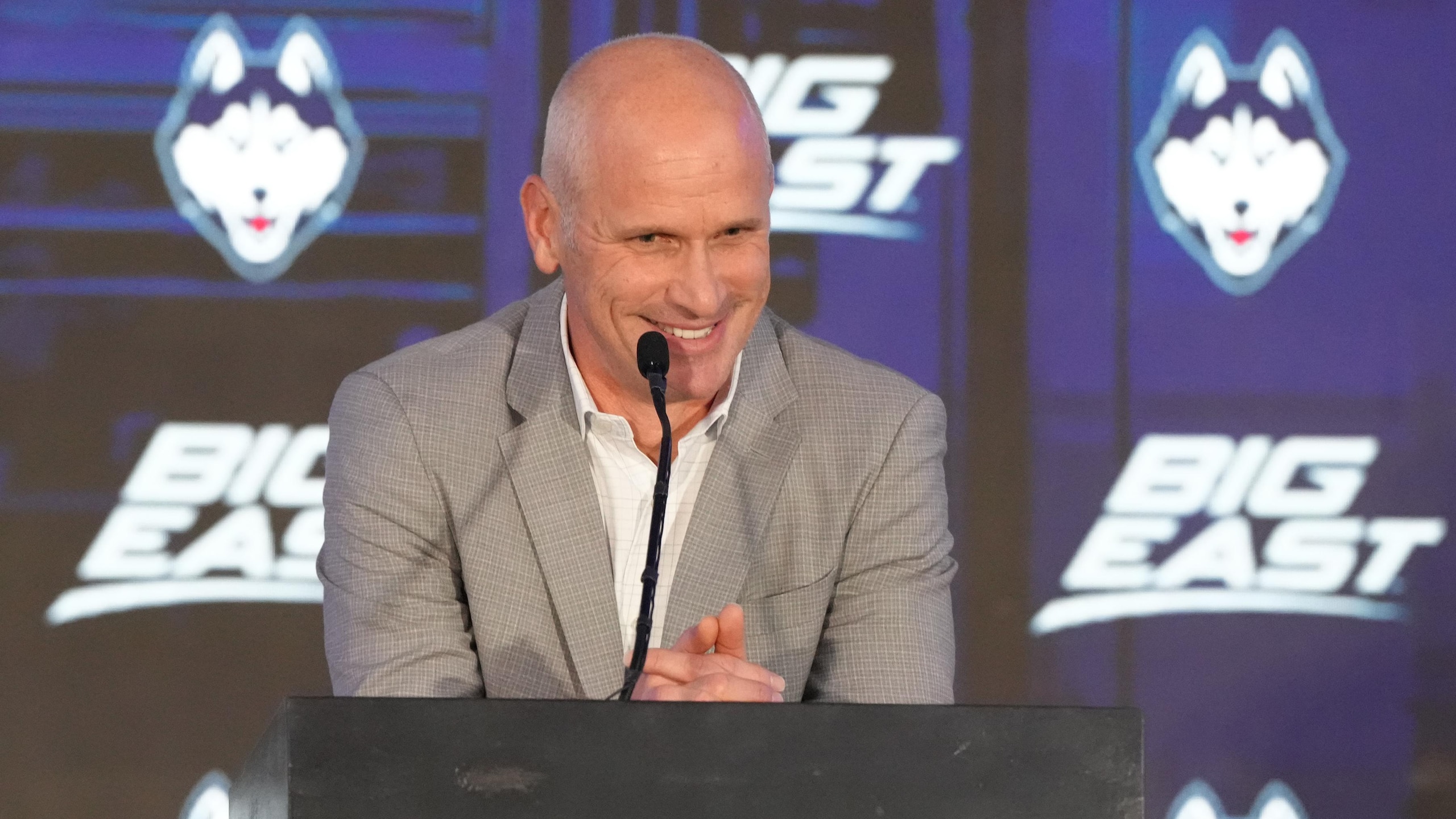

7. Bryce Brown, Auburn
4 of 10
Heading into the 2015-16 season, Bryce Brown was not on anyone's radar. He was the fifth-highest-rated player in Auburn's 2015 recruiting class, per 247Sports, and he wasn't anywhere close to the top four. With impact transfers Tyler Harris and Kareem Canty also joining the Tigers, it wouldn't have been much of a surprise if Brown had opted to take a redshirt season.
Instead, the freshman was one of Auburn's most valuable players, averaging 10.1 points despite playing a grand total of 13 minutes in the team's first three games.
Though it would be a month before the first of Brown's five stints in the starting lineup, he came out hot, draining 10 of his first 23 three-point attempts. He would go on to have seven games with at least four made three-pointers, including a 9-of-14 performance in a road win over Arkansas.
But when he wasn't draining threes, he wasn't doing anything else. Brown shot just 23.8 percent from inside the arc, hardly ever got to the free-throw line and averaged a combined 4.7 rebounds, assists, steals and blocks per 40 minutes.
As a result, there were nights where his offensive rating was laughably putrid, even though he finished the season with a 101.2 in that category, per KenPom.com. In a 24-point loss to Xavier, Brown compiled an O-rating of 28 by scoring two points on seven shots with no other contributions to the box score aside from a turnover. He also had a two-point game in a blowout loss at Vanderbilt in which he missed all six of his three-point attempts.
But he shot 37 percent from three-point range while averaging more than 11 three-point attempts per 40 minutes. Whether he's going to shoot 1-of-8 or 6-of-13 on any given night is anybody's guess, though.
6. Xavier Rathan-Mayes, Florida State
5 of 10
Of the players who qualified for consideration, none had a worse three-point percentage than Xavier Rathan-Mayes. After two consecutive years of shooting 28 percent from distance, you might think he's less of a streaky shooter and more of a ball hog who simply doesn't know his range.
But red-hot Rathan-Mayes is a thing of beauty—even if he does only show up once every six to eight weeks.
The phenomenon began in the first month of his freshman season. In a home game against The Citadel, XR-M scored 26 points on just nine shots, sinking each of his five three-point attempts. He then disappeared for a while before resurfacing for a 35-point game against North Carolina in late January 2015.
Rathan-Mayes would finish the season scoring at least 25 points on four separate occasions, including quite possibly the most ridiculous hot streak in college basketball history. In a late-February game against Miami, he scored 30 points in a span of less than five minutes.
He didn't do anything nearly that ridiculous as a sophomore, but he did shoot 7-of-9 from three-point range while scoring 30 points in a loss to the Tar Heels—an individual performance that will be forever forgotten since Brice Johnson had 39 points and 23 rebounds in the same game.
The Seminoles simply didn't need him to be a one-man show as often as he was in 2014-15. However, with Malik Beasley turning pro, Devon Bookert graduating and even Benji Bell transferring out of the program, Rathan-Mayes is one of the only returning three-point threats on the roster. It seems safe to assume there will be at least a handful of games this year where he's just letting them fly.
5. Nick Emery, BYU
6 of 10
Save for Kentucky's Jamal Murray, no freshman shooting guard packed more of a scoring punch than BYU's Nick Emery. He scored at least 15 points 20 times and topped 20 points on 11 occasions. He made at least three triples in more than half of his games, which pushes him close to simply a consistently good shooter.
But there were a few games in which he was either hotter than the sun or cold as ice.
Emery had a dreadful start to the month of February, shooting just 1-of-12 from beyond the arc in his first two games. On one of those nights, the Cougars lost by a slim margin to lowly Pacific, definitively killing what slim hope they had of receiving an at-large bid.
It appeared Emery was hitting the proverbial wall that so many freshmen run into roughly 70 percent of the way through the season.
Instead, he was apparently conserving energy for the following week, as he drained 10 three-pointers in a 37-point game against San Francisco before dropping 31 on Santa Clara just two days later.
Emery was often the third scoring option in BYU's backcourt as a freshman, but with Kyle Collinsworth and Chase Fischer both graduating, he's now the primary scorer. Even Zac Seljaas—68-of-136 from three-point range as a freshman—won't be around to help shoulder the load, as he will be serving his LDS mission for the next two years.
We're not about to declare that Emery is going to be the next Jimmer Fredette, but don't be surprised if he's firing up shots almost as often as his predecessor did.
4. Jack Gibbs, Davidson
7 of 10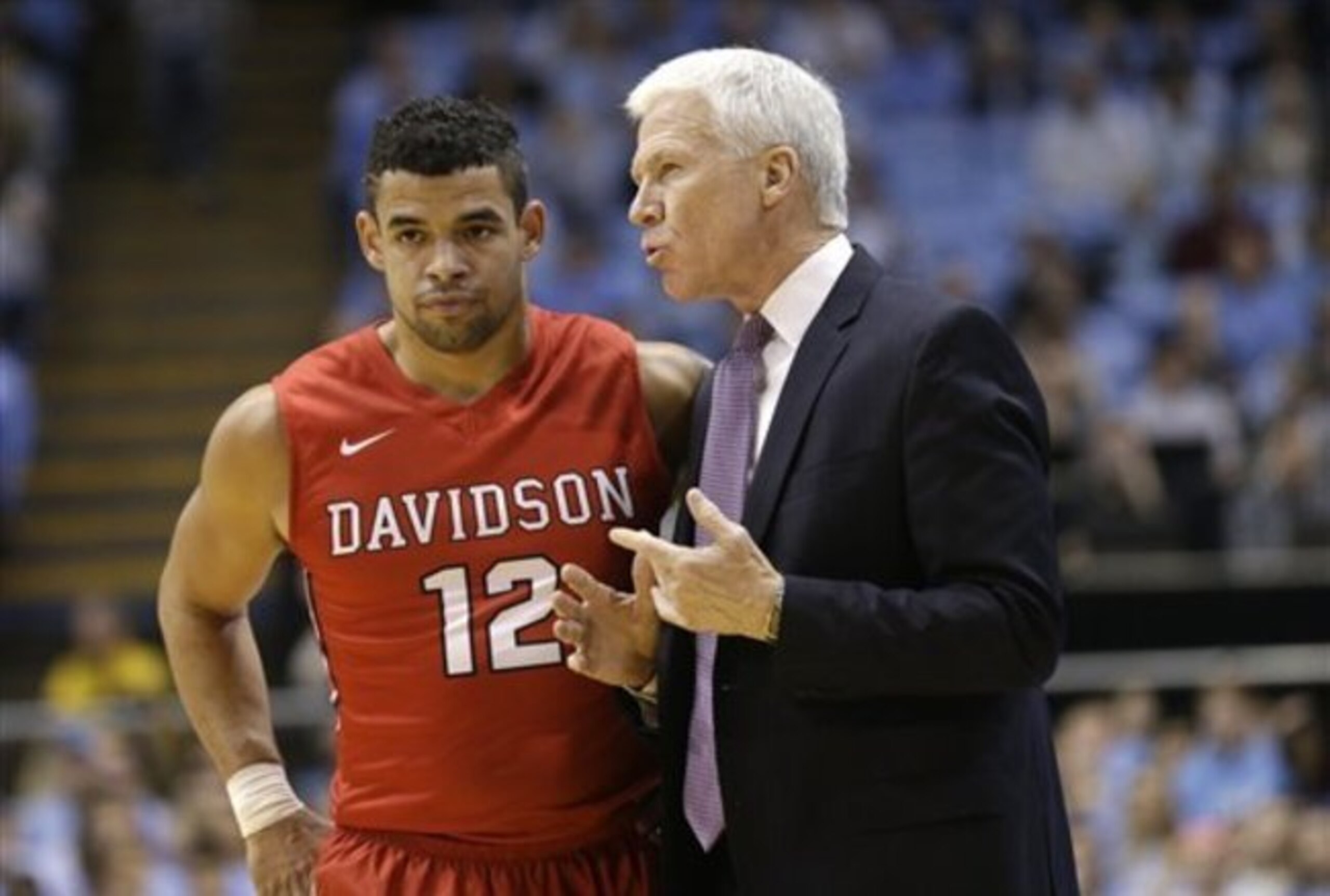
Per Sports-Reference.com, there were 24 instances of a player scoring at least 41 points in a game last season, and Davidson's Jack Gibbs had three of them. But he was also held to less than 10 points four times and failed to make a single three-pointer in a game four times, so he isn't always an unstoppable scoring machine.
Two years ago, Gibbs was lethally efficient. He shot 42.5 percent from three-point range and averaged 1.55 points per field-goal attempt. After Tyler Kalinoski graduated, though, Gibbs' volume increased while his efficiency plummeted. He scored just 1.29 points per field-goal attempt as a junior and shot 33.2 percent from distance.
March was particularly brutal, as he shot just 10-of-49 from beyond the arc over his final six games.
Even in December, though, before the fatigue would have been an issue, it was a blend of duds and gems. In the span of a little more than three weeks, Gibbs made at least six triples in a game three times but was held without a three-pointer twice. Charlotte and Morehead State couldn't do anything to slow him down, but he couldn't get anything going against North Carolina or Pittsburgh.
Could his shooting volume increase even further as a senior? Both Brian Sullivan and Jordan Barham graduated, leaving behind nearly 23 points per game for another Wildcat to claim. And in the two games that both of those seniors missed last season, Gibbs played all 80 minutes and attempted 48 shots.
Even Stephen Curry only averaged 20.2 shots per game in his final season at Davidson.
3. Damon Lynn, NJIT
8 of 10
Damon Lynn is probably going to finish at No. 2 on college basketball's list of three-pointers made in a career.
He's at 349 after making at least 100 in each of his first three seasons, but he would need to make 155—nearly five per game—to match Oakland's Travis Bader at 504. Considering only two players in history have made more than 147 three-pointers in a single season, that's asking a bit too much.
But J.J. Redick is No. 2 at 457, which is definitely attainable since Lynn has averaged slightly more than 10 attempts per game in his career.
In terms of volume of shots, Lynn beautifully fits the Marshall Henderson mold we're seeking. He isn't all that streaky from game to game, though. Only once in his career has he strung together consecutive games with fewer than two made three-pointers, and he has never shot better than 66.7 percent from distance in a game against a D-I opponent.
While his totals remain fairly stationary from game to game, he's the type of player who can orchestrate a brief one-man run when he's feeling it. In the second round of the CIT against Boston University, Lynn immediately drained three-pointers on three consecutive possessions to give NJIT a 9-0 lead. It ended up being one of the 17 games in his career in which he made at least six triples.
2. Pat Birt, Tulsa
9 of 10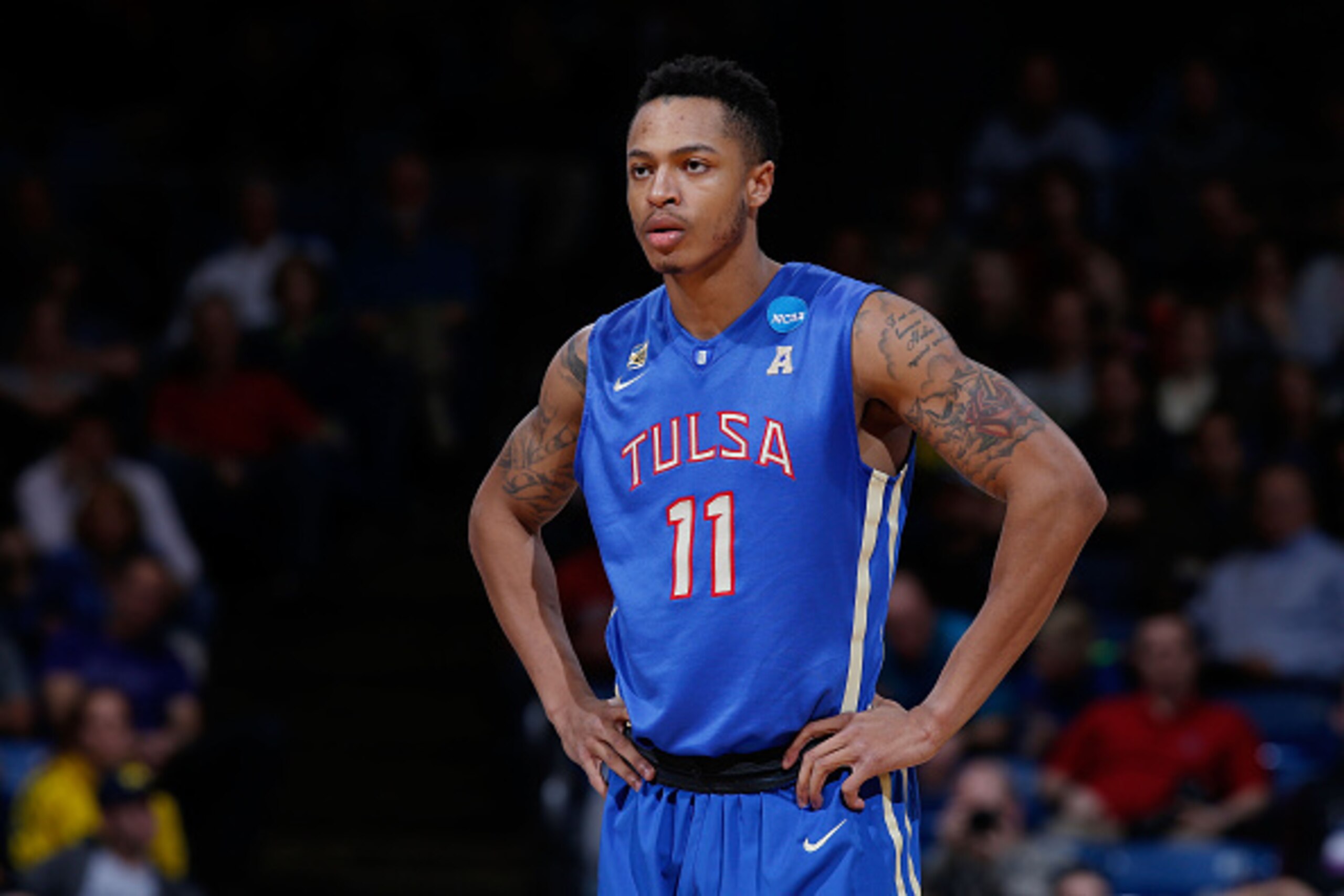
If you thought Tulsa's Pat Birt was a streaky volume shooter last year, just wait until you see how many shots he takes in 2016-17.
Birt averaged 6.7 three-point attempts per game and 10.0 per 40 minutes as a junior. But virtually everyone he played with was a senior. Sterling Taplin is the only other returning player who scored so much as a single point for the Golden Hurricane, and he only averaged 2.6 per game last year as a freshman.
In the past three years, no player has been responsible for more than 39.1 percent of his team's shots while on the court, but Birt might put an end to that streak.
And given the spurts Birt went through last year, there's no telling what the result will be.
As an example, let's take a look back at Tulsa's first six games of conference play, shall we?
AAC Games No. 1, 3 and 5: 2.0 PPG, 1-of-14 from three, 2-of-20 from the field
AAC Games No. 2, 4 and 6: 20.0 PPG, 15-of-25 from three, 19-of-36 from the field
When he showed up, he was great. Birt scored at least 22 points in five of his eight games in February.
But there was no rhyme or reason to when he would show up. In the final game of February, he shot 0-of-8 from three-point range and committed a career-high four turnovers. And he was held scoreless for 28 minutes in the NCAA tournament loss to Michigan.
Relying so heavily on a player that unpredictable could make the Golden Hurricane the most sporadic offense in the entire country.
1. Jared Brownridge, Santa Clara
10 of 10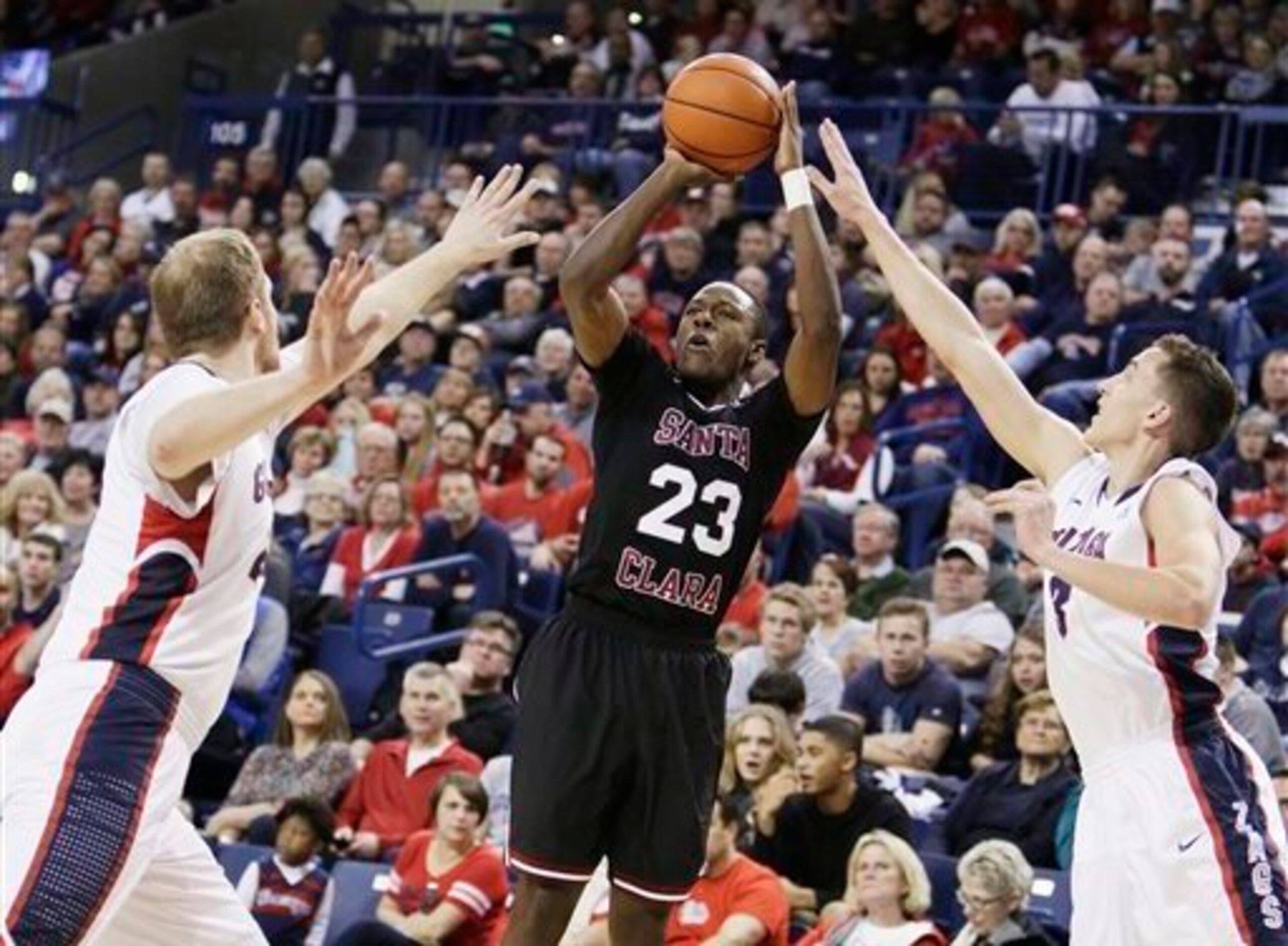
Jared Brownridge became somewhat of a household name when he scored 44 points against Arizona in the Wooden Legacy, but that was just one of several ridiculous individual performances he would have as a junior.
Brownridge made at least seven three-pointers in four different games last season, including back-to-back road games in December. He shot 7-of-13 at Nevada before making 8-of-12 at Pacific three days later.
Somehow, the Broncos lost both of those games, repeatedly putting his Herculean efforts to waste. In fact, Santa Clara has gotten gradually worse since his arrival, even though he has put up remarkable numbers.
Usually, when a player is the only option for a bad team, his efficiency metrics are dreadful. However, Brownridge is stellar in those areas.
According to Sports-Reference.com, he has a career player efficiency rating of 21.2 and a career O-rating of 117.9. For point of reference, average numbers in those categories are 15 and 100, respectively, so he's significantly more efficient than most, even though every opponent knows he's just about the only scoring threat on the roster.
But that doesn't even remotely make him immune to hot and cold spells. Brownridge shot just 16-of-61 (26.2 percent) from three-point range through his first nine games before going 23-of-40 (57.5 percent) over the next four games. He shot 7-of-11 one Saturday in January and 0-of-6 the next.
Opponents need to hope he's feeling mortal when they face Santa Clara, though, because a hot Brownridge is one of the least extinguishable flames in the country.
Kerry Miller covers college basketball for Bleacher Report. You can follow him on Twitter @kerrancejames.
.jpg?w=2560 "Cardinals Giants Football")

.jpg?w=2560 "Report: Chiefs Contact Hill's Agent")
.jpg?w=2560 "OBJ Calls Out Giants 😳")
.jpg?w=2560 "Tyreek makes another cryptic post amid Chiefs rumors")



