

Return of Cristiano Ronaldo Alters the Early Season Balance at Real Madrid
Real Madrid left it late, but they got their UEFA Champions League defence off to a winning start by beating Sporting Lisbon 2-1 at the Santiago Bernabeu on Wednesday night.
It took a last-minute equaliser from Cristiano Ronaldo and an injury-time winner from Alvaro Morata to ensure Zinedine Zidane's team didn't suffer a first loss of the season. Despite not being at their best for much of the game, it was clear from the last half-hour or so that Los Blancos had another two or three gears to surge up through and force the victory.
The fixture was the second in succession that Portuguese star Ronaldo had started after his injury over the summer, and already there have been clear deviations from the team to accommodate his talents and preferences of movement, compared to the early weeks when Marco Asensio filled the left-sided berth.
TOP NEWS

New NFL contenders starting to emerge after Week 4
.jpg?w=2560 "Cardinals Giants Football")
NFL investigating 2 referees for separate viral exchanges

Deion Playbook Found at Hotel
Front foot forward
It took only a few minutes in Ronaldo's opening game, in LaLiga against Osasuna, to see him change the balance of the side in terms of starting position and affect the buildup play of Real Madrid.
Quickly, he looked to surge high and central, taking up a centre-forward role and being rewarded for those runs with a goal inside six minutes, with Los Blancos going quick and direct down the channels to get the front three in behind the defence rather than the structured approach seen for much of the first three games.
That continued against Sporting and, while at times those runs means he forced the centre-forward wide, it gave Real Madrid great rotation of the front three and made it difficult for the opposition defence to track them or close out spaces down the channels.
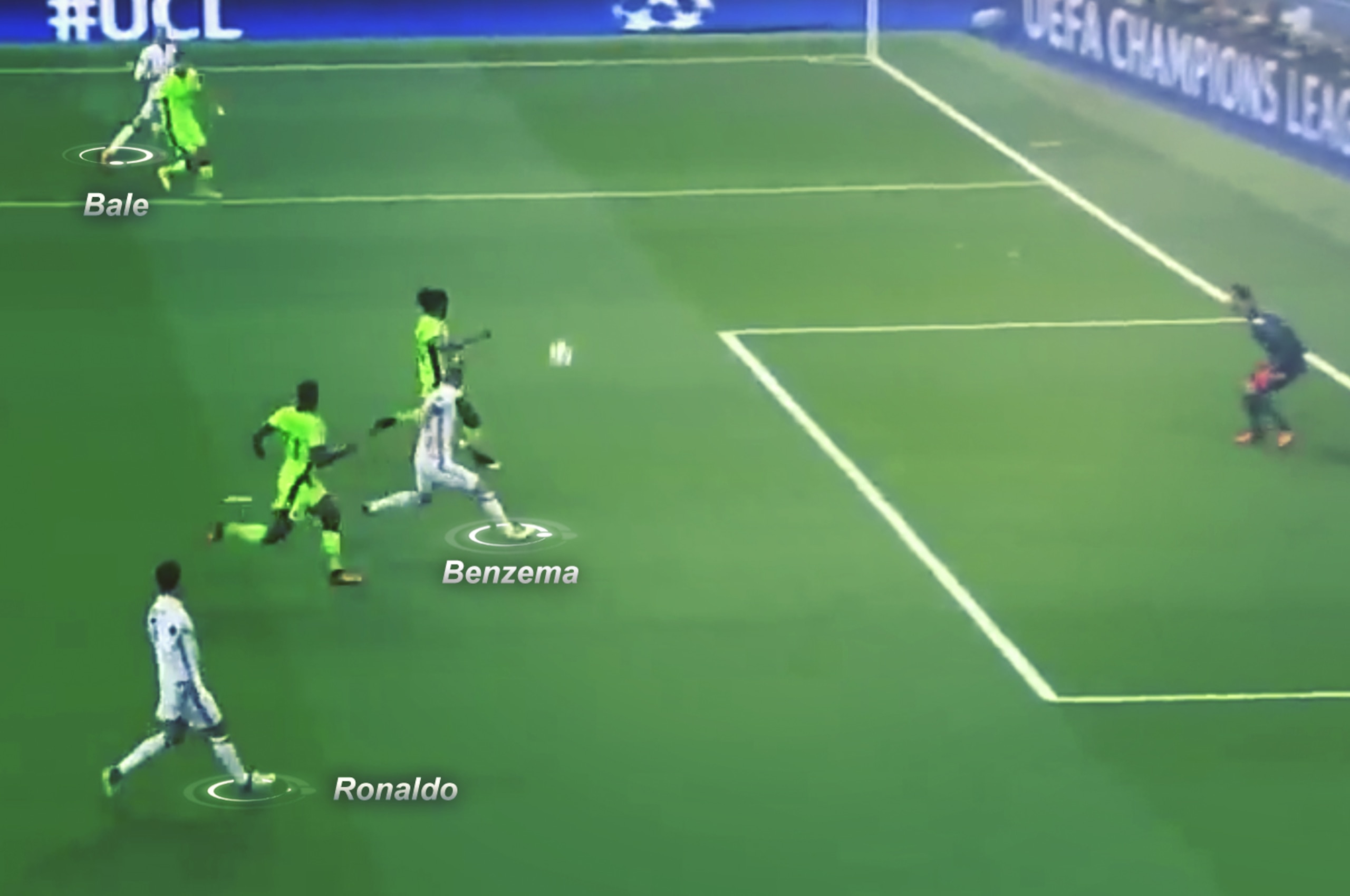
It was evident from the outset of both games that there had been a departure from the 4-1-4-1 off the ball in the early games to a much more offensive-minded attack remaining in a 4-3-3 shape, much like last season, and therein lies the impact in switching a creative midfielder for a forward.
Defensive arrangement
It's widely accepted by everybody involved that, as he turns 32 late this season, Ronaldo's game will have to alter somewhat, and everything in the first couple of games back has been geared to giving the No. 7 less running to do in the course of the match.
In the first instance, this will help save his energy and explosive ability for the moments that matter, producing the final-third danger and taking advantage of turnovers in play, while the longer-term hope will be that Ronaldo is fitter for longer. In a season where Real could easily play 60 games again, they'll want him available for as many as possible, particularly in the home stretch when silverware is won and lost.
A small, but significant, tactical switch to back up that conservative approach has been from goal kicks for the opposition, where Morata and Karim Benzema have been asked to drift to the left and allow Ronaldo to maintain a higher starting point.

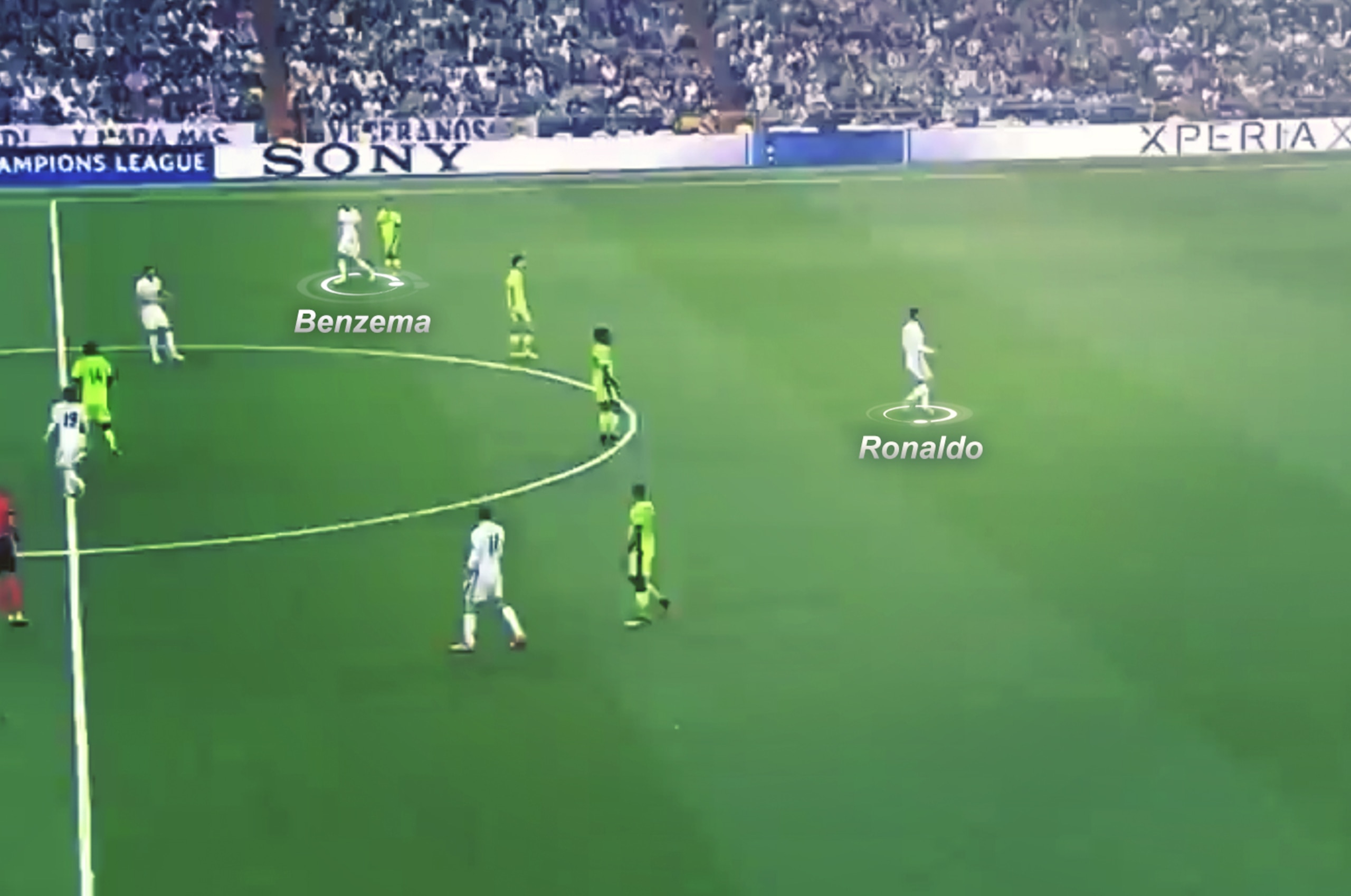
In open play, Ronaldo will still filter over to the left when Madrid don't have possession, but he isn't going to track back 40 or 50 yards in a manner that Gareth Bale or Lucas Vazquez might do, or indeed how Asensio did in the opening games.
The buildup for the Sporting goal on Wednesday night shows as much.
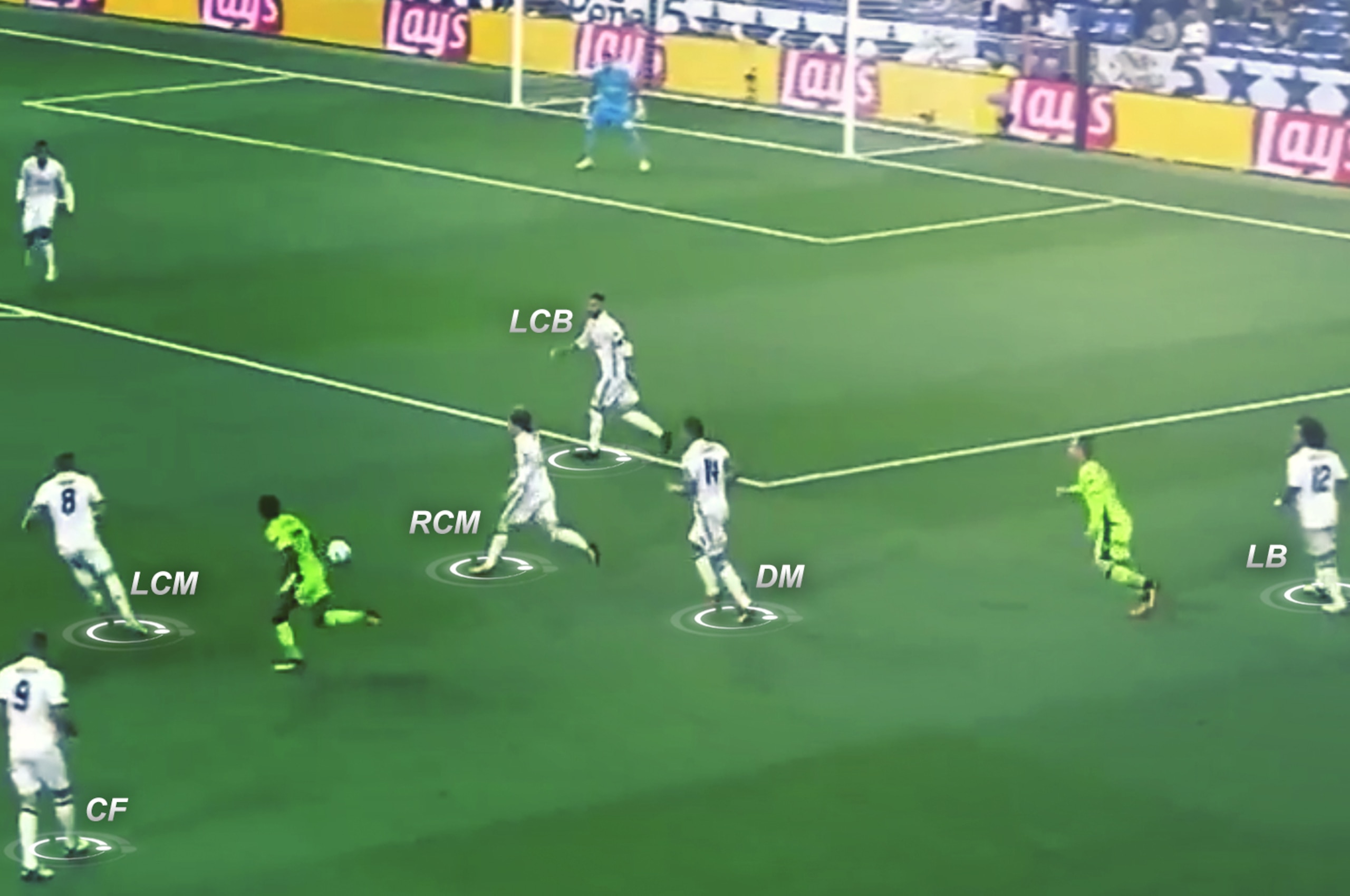
With six Real Madrid players defending the left flank and channel, Ronaldo was nowhere to be seen. There's no suggestion that the goal was his fault, of course, and that number of defensive players should have coped and cleared the ball before the goal was struck, but it's indicative of just how little emphasis there is on Ronaldo defending his wing.
Instead, when Madrid are on the back foot, he has another role to play.
Central threat
It was seen last season, and many times before, but before Ronaldo has hit top gear after a reasonably serious injury, he has already contributed in telling moments to Real's ability to strike on the counter-attack. Just a few minutes into the Osasuna game and already leading, Madrid's emphasis on overloading central areas with pacy players to swarm between the opposition line was in full view.
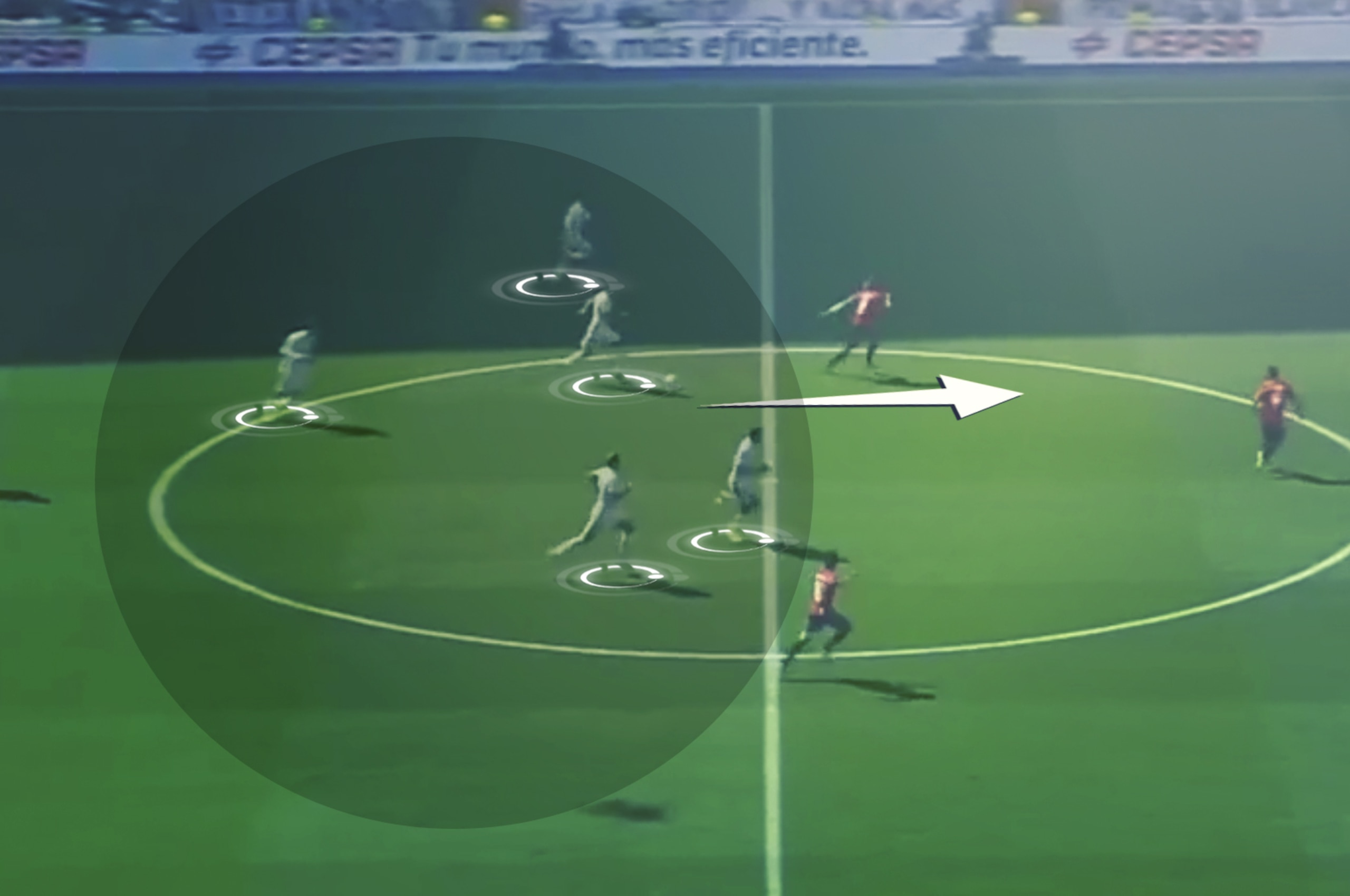
Ronaldo's big drive is, of course, to get himself into the penalty box or even six-yard box, just as he managed for his goal against Osasuna after only six minutes.
It's nothing new for teams to deal with Ronaldo attacking in this way, but it is different to how Real Madrid flooded the box in the opening games. Then, it was frequently a striker with a line of four surging forward behind him; it was noticeable that Luka Modric in particular sat more centrally against Sporting, while Toni Kroos tried to surge into the left channel at times to make use of the space vacated by Ronaldo's infield runs.
Perhaps it doesn't quite make the best use of Kroos' skills—James Rodriguez's impact from the bench for the German in the same area of the pitch and making those same surging runs into the channel was somewhat more influential on the outcome against Sporting—but it's another switch in Zidane's approach when Real are with, and without, Ronaldo.
Compromise or adapt?
A question nobody wants to ask is, is the best of Ronaldo still the best of Real Madrid?
It isn't a question that needs answering immediately to turf him out of the team or anything so drastic, but it might over the course of several months mean Zidane tries to alter how his team plays from midfield into attack and who becomes a key figure in midfield.

Ultimately, goals at both ends count. Madrid have scored seven goals in 156 minutes with Ronaldo on the pitch—one every 22 minutes—and managed eight in 324—one every 40.5 minutes—without him. It's a small sample size to draw conclusions from, but if it persists between now and March, for example, it'll show Zidane is right to allow Ronaldo such freedom of movement even if the buildup play and defensive work suffers as a result.
Ronaldo himself has two in two games and came off after just over an hour against Osasuna, while his important strike in the Champions League came after he had already missed one or two good chances.

Perhaps as the season goes on, part of Ronaldo's change will be not only in accepting reduced game time, but also in not being quite as direct and single-minded, aiding buildup play initially to give prolonged periods of attacking possession where he can then be a substantial threat in the box.
If Zidane can find the right mix of keeping the structure of the team from the early games, and also still giving Ronaldo the room to show his best offensive traits, Real Madrid will be extremely difficult to stop against any type of opponent—and, perhaps more importantly, have an alternative approach that works when the No. 7 is unavailable.
.jpg?w=2560 "Titans Giants Football")


.jpg?w=2560 "Ward Nearly Walks Out of Presser 😳")
