

What Is the AC Milan Way and Can Vincenzo Montella Restore It?
A football team’s "way" has a lot of power. Failure to adhere to it can get a manager fired, or a player shunted to another club. Fans, particularly those of prestigious teams, regularly proclaim it, though there is little common understanding of what it is.
Usually, a "way" is tied to a rough set of stylistic traditions, footballing tenets laid down in years gone by that have retained their resonance in the modern day. The desire to maintain these principles is one often borne of nostalgia and romance, a wish to return to the glorious past.
TOP NEWS

Live Ballon d'Or Ceremony Winners 🎉
Alexia Wins Ballon d'Or 🏆

Final Men's Ballon d'Or Rankings 📊
AC Milan have their own way. Indeed, it is this—along with a five-match winless streak—that ultimately precipitated Sinisa Mihajlovic’s dismissal in April.
Following the coach’s sacking, club president Silvio Berlusconi explained the decision in a post on his Facebook page (h/t Football Italia). There, he stated that: “Milan must return to a style of play and results worthy of our history.”
And the Milan way also informed the appointment of Vincenzo Montella in June.
The 42-year-old, who has had spells in charge of Roma, Catania, Fiorentina and Sampdoria, was brought in not only to inspire a revival of results, but to implement a style of play more befitting of the club’s illustrious history.
Consequently, one of the most important questions when assessing Montella’s suitability is: Can he restore the Milan way? However, before we are able to answer this question, we must first gain an understanding of what the Milan way is.
The Milan way
Milan have historically been a highly successful football club. Domestically, only Juventus have won more Scudetti; continentally, only Real Madrid have won more Champions Leagues and European Cups.
As a result, if the club does indeed possess a stylistic tradition, it is likely to be rooted in their greatest achievements.
At a time when the WM formation was the tactic du jour within Italian football, Giuseppe Viani decided to shake things up. He instigated change during his time as Salernitana’s director of football and head coach in the 1940s, formulating a tactic that became known as the vianema.
The change in shape involved the removal of the WM’s centre-forward to facilitate the installation of a fourth defender, who would play with greater freedom behind the back three. Breaking with the more traditional 3-2-2-3, he introduced a 1-3-2-4 shape.
The principal objective of Viani’s alteration was to capitalise on increased defensive numbers by inviting opponents on before counter-attacking them through the speed, skill and movement of the wingers and inside forwards.
In this respect, the vianema laid down crucial foundations for "catenaccio," a style of play that would come to define Italy’s greatest clubs, Milan included, in the following decades.
After a spell as coach in which he won the Scudetto in 1957, Viani became Milan's director of football. By that point his ideas had already had a formative impact both on the club and upon Nereo Rocco, an influential coach who would be appointed his replacement in 1961.
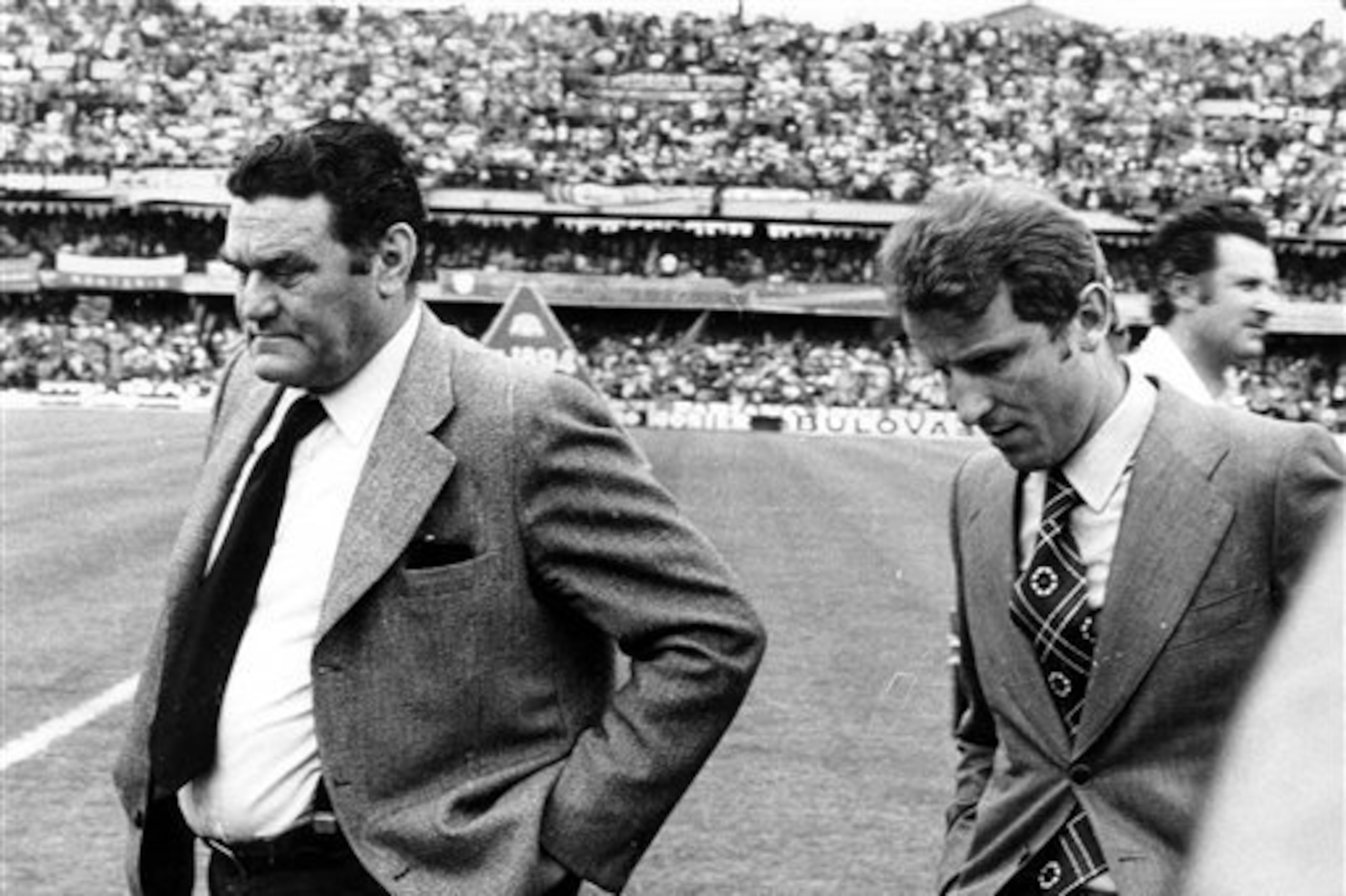
Bringing with him the defence-first, counter-attacking football with which he had enjoyed success at Triestina, Rocco would lead the Rossoneri to two league titles and two European Cups over two separate but equally distinguished spells in charge.
However, while his ideas were grounded in Viani’s thinking and in line with the catenaccio style of the era, it was also exciting to watch. As Jonathan Wilson wrote in Inverting the Pyramid: “His (Rocco’s) form of (catenaccio), though, was far removed from the negative stereotype. In winning the scudetto in 1961-62, for instance, Milan scored 83 goals in 34 games, 22 more than Roma, the next most prolific side.”
Evidently, Rocco’s philosophy, even if its ideals were resolutely defensive in nature, produced attacking results.
Berlusconi bought Milan in 1986 with the ambition of returning the club to the top of European football after years spent yo-yoing between Serie B and Serie A. His first major decision was to hire Arrigo Sacchi as head coach.
The appointment changed the course of football history.
Sacchi was a relative unknown having previously coached Parma and Rimini in the second and third tiers of the Italian league structure, but his methods would revolutionise the way Milan played and take the club to their first league title in nine years as well as two consecutive European Cups.
Man-marking, or a variation of it, was still the widespread defensive manoeuvre in Italy at the time, but he would implement zonal marking, something that in turn would allow for greater collective pressing.
Milan became a more proactive, aggressive team in the defensive phase under Sacchi, while their attacking play, inspired by three Dutchmen in Frank Rijkaard, Ruud Gullit and Marco van Basten, was full of speed, skill and guile.
One of the midfielders in that great team, Carlo Ancelotti, would go on to lead another exceptional era in the club’s history.
Fabio Capello had built on and refined Sacchi’s principles between 1991 and 1996, though Milan would struggle when he left for Real Madrid. The appointments of Oscar Tabarez, Alberto Zaccheroni, Cesare Maldini and Fatih Terim would fail to inspire a turnaround as the club endured a difficult five years in which only one league was won and Champions League football proved elusive on three occasions.
While not as idealistic as Sacchi, Ancelotti would bring exciting and effective football back after his appointment in November 2001. He would gradually fill his midfield with creative maestros including Andrea Pirlo, a former trequartista who was used in front of the defence, while emphasising the need for central control for the purposes of both defensive solidity and attacking possibility.
As football formations and ideas have changed radically over the course of history, it is important to reflect the predominant culture of the era when assessing a team’s style.
The Milan way of Viani and Rocco was innovative at the time, though it was essentially reactive and counter-attacking. This pragmatic tradition was seen, albeit to a lesser extent, in Ancelotti’s Rossoneri.
Sacchi’s side, with their proactive, idealistic and attacking form of football, were arguably the most iconic in the club’s history, though the coach’s radicalism was not something seen frequently prior to his time in charge and has rarely been seen since.
Montella’s mission
Montella’s primary aim throughout his coaching career has been to teach his teams to be able to retain and utilise the ball. His three seasons with Fiorentina exemplified this; per WhoScored.com, the Viola averaged 55.8 per cent possession during this period.
It is through this aspect of play that the former Roma striker seeks to attack and exert control on games, an approach that is not widely seen in Italy, where there remains a great deal of focus on defence and counter-attack.
In this respect, Montella fits in with Milan traditions in his innovative streak. And, at least in the defensive phase, his preference for man-oriented marking and general avoidance of a high-pressing scheme fit in with the club's past.
His willingness to rotate players and alter formations evinces a reactivity present in the Milan teams of Viani, Rocco and Ancelotti. He also mirrors those coaches in that he has a clear vision of the way football should be played.
He elaborated on this in an interview with La Gazzetta dello Sport’s Alessio Da Ronch (h/t Gazzetta World), saying: “I don’t believe in formations, instead I look at strategies, and those can change. I believe in a philosophy as it is key to have one. You pick one and move forward with it, or else you will just create confusion.”
Speaking about Montella’s appointment, club CEO Adriano Galliani told the press (h/t Football Italia): “He was chosen not only for the results that he obtained, but also for the beautiful game by which he obtained them. Vincenzo puts his faith in good football, and he plays the way we've spent 30 years believing football should be played.”
But, while the club hierarchy associate Milan with glamorous notions of "good" football, this is not a true reflection of the team’s resultist traditions.
In the past, the Rossoneri have dominated Italian and European football through idealistic tactics, though these have not always had entertainment at the core. Sacchi aside, the priority has almost always been to win; winning well has been viewed as a bonus.
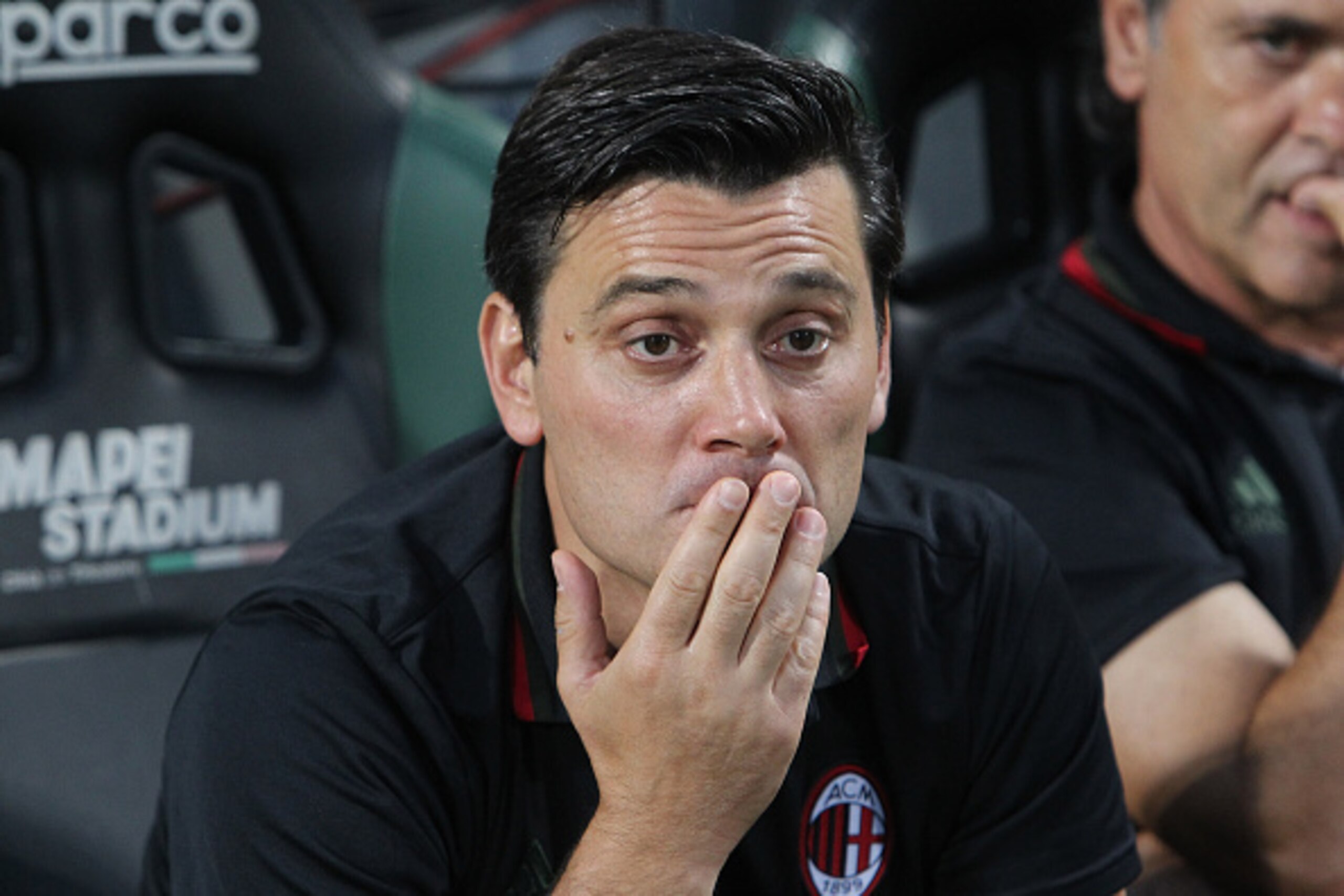
Here, Montella's aims are a continuation on the past.
While the means he focuses on are different, the end remains the same. He pursues his philosophy not because it appeals to the neutrals, but because he believes it to be the best strategy to win.
The Milan way is an abstract concept, though if it looks anything like the tactics and mentality of the club for many of their greatest historic achievements, Montella can restore it.
.jpg?w=2560 "Seahawks Chiefs Football")






