Vincenzo Montella's AC Milan Given Lessons in Possession by Napoli
AC Milan are exciting to watch again. After a season of turgid, functional and, at times, outright defensive football under the auspices of Sinisa Mihajlovic, Milanisti are becoming reacquainted with the edges of their seats.
Unfortunately, much of the excitement has less to do with the quality of the team’s play than the sheer uncertainty over what might happen next, as was the case during the Rossoneri's 4-2 away defeat to Napoli on Saturday night.



.jpg?w=2560 "Seahawks Chiefs Football")
After a promising beginning, which saw Ignazio Abate blaze over the bar from close range following an M’Baye Niang cross, Milan found themselves 1-0 down on 18 minutes. Arkadiusz Milik, signed by Napoli this summer, scuffed home a rebound after Dries Mertens’ shot had hit the post.
The Polish forward doubled his tally later in the first half, rising to head home from a simple curled corner. Gianluigi Donnarumma, who had pulled off some good saves, could do nothing but gaze wistfully at the ball as it angled its way into the top-right corner of his net.
But Milan pulled themselves level within the first 10 minutes of the second half.
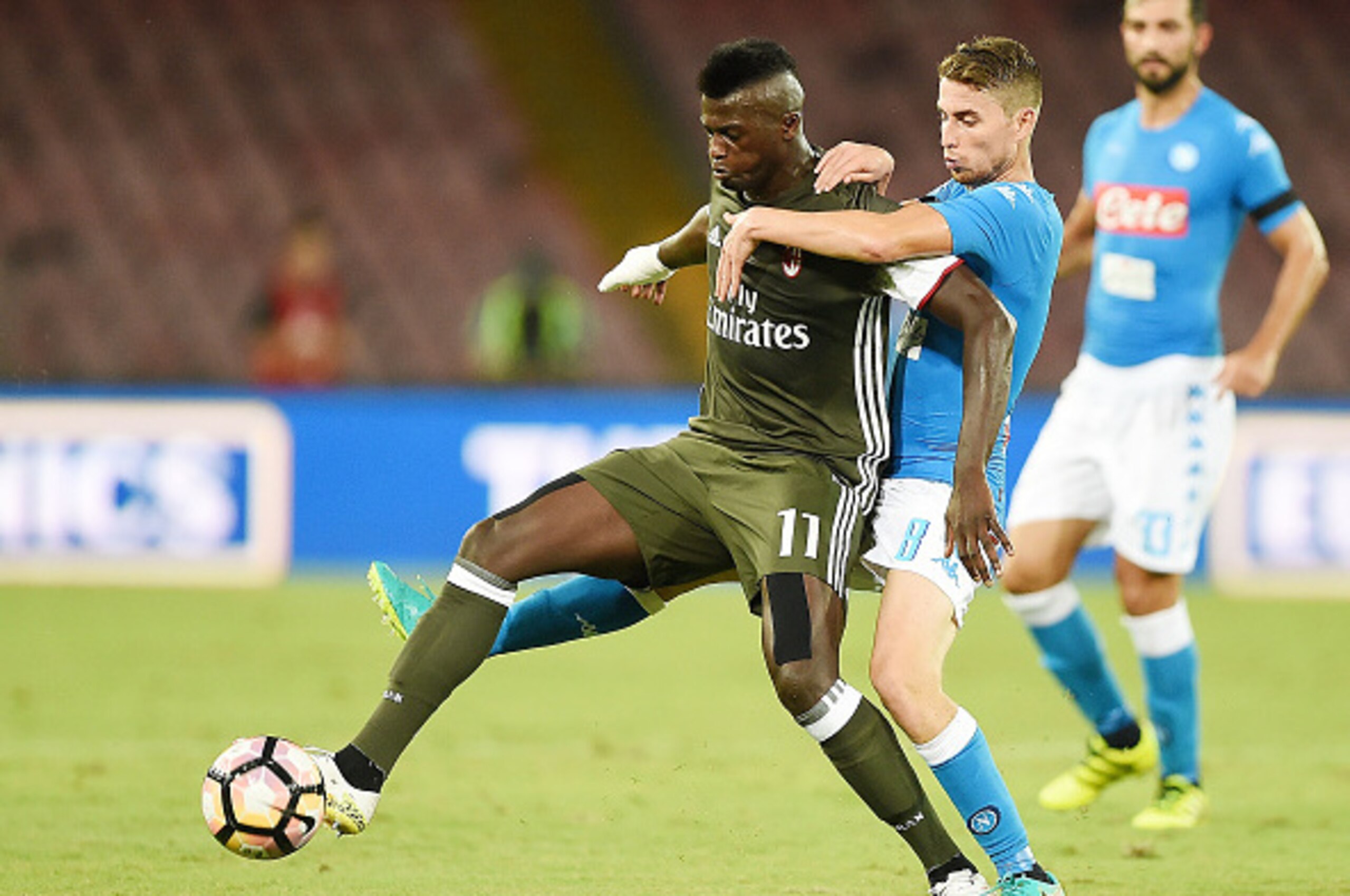
First, Niang went beyond Elseid Hysaj before driving a left-footed strike underneath Pepe Reina in the 51st minute. And four minutes later, Suso blasted in a stunning effort with little backlift from outside of the penalty area to equalise.
However, Milan’s parity was undeserved, and it wouldn’t last.
On 74 minutes, Jose Callejon tapped in after Donnarumma parried a Mertens strike. Juraj Kucka and Niang were then sent off for entirely avoidable offences—the Slovakian walked for talking back to the referee; the Frenchman went for obstructing Reina.
Napoli sealed the three points when Callejon steered home his side’s fourth goal in spite of Alessio Romagnoli’s attempt to keep the ball out with his hands, for which the 21-year-old received a yellow card.
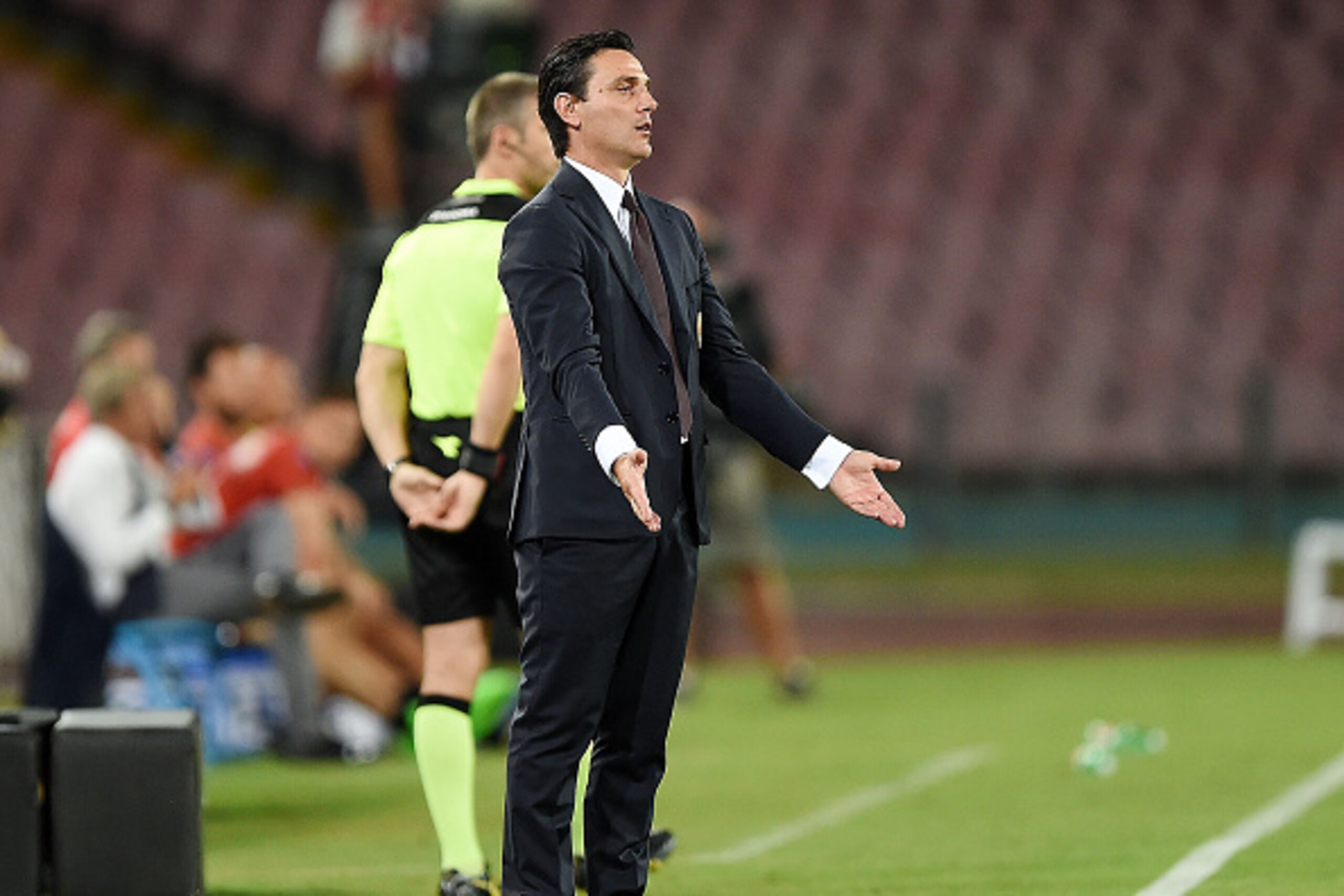
The match provided high levels of entertainment, though much of it was at Milan’s expense. Vincenzo Montella was brought in as head coach to restore order to the team through his possession-based philosophy, but chaos has reigned in his first two competitive games, which have seen six goals conceded, three red cards and one penalty given away.
Afterward, he told Sky Sport Italia and Mediaset Premium (h/t Football Italia):
"We started very well and created several chances until their opening goal changed the inertia of the game. That is something we have to work on, keeping our mentality when things go wrong.
I am happy with the performance, but also let down, because we can’t emerge from a game like that empty-handed. In the first 20 minutes we were clearly superior to Napoli, but lost confidence after their goal.
After the break we reacted like a great team. The objective is to play like that for 90 minutes.
"
Montella has had some success in implementing his desired style of play, but his players were handed several lessons by Maurizio Sarri’s Napoli, who were arguably the most attractive and cohesive passing team in Serie A last term.
There is a common misconception in football that defence and attack are not interlinked. In reality, the two phases of play tie in closely to one another. The effectiveness of a team’s setup without the ball can have a tangible impact on their chances of building productive attacks.
Thus far, Montella has favoured a man-oriented marking scheme in the defensive phase. This was applied with rigour against Napoli to little success, with the home side’s movement and positional fluidity leading to gaps opening up.
Milan midfielders Kucka and Riccardo Montolivo often left vast amounts of space between them while focusing on marking their opposite men, space that was often occupied either by Milik dropping deep or by Marek Hamsik pushing on.
On top of the dangerous defensive issues it can lead to, this kind of marking, especially when applied this resolutely, is not particularly conducive to building attacks. Players are dragged out of position by their opponents, and when the ball is won, their shape lacks the coherence to circulate the ball effectively.
In contrast to Milan, Napoli opted for a ball-orientated marking style, meaning their principal reference point when defending wasn’t each individual opposite man but the ball itself. They applied this alongside an intensive high press, which was backed up by a high defensive line.
This defensive setup ensured they had men around the away side’s ball-player, reducing the number of possible passing lanes and disrupting the Rossoneri’s buildup. As a consequence, Napoli not only had a higher quantity of possession but—with the team retaining its shape—were in a better place to create quality possession.
Attacking moves are often punctuated by those setting up and scoring the goals. As such, flashes of individual brilliance often stand out. However, good use of the ball isn’t simply about allowing star players some extra creative licence.
Like all good attacking teams, Napoli incorporate individuality rather than rely upon it. They have a clear attacking setup built on rotations, movements, positioning and interconnection. Their centre-backs and midfield pivot Jorginho often form a triangle in the build-up; Hamsik often swaps positions with left-back Faouzi Ghoulam; the front three constantly look to combine.
This was juxtaposed by Milan, whose second-half fightback came thanks to two moments of skill from two different players. Niang’s speed and dribbling took him past Hysaj for the Rossoneri’s opening goal, while Suso’s thunderbolt was a testament to the Spanish winger’s exceptional technique.
As a consequence of those goals, Montella’s side looked to be mounting a comeback. But rather than coming as part of some holistic resurgence, they instead went against the flow of the match. Thus, there remained a sense of inevitability that Napoli would retake the lead.
One area in which Milan have clearly improved under the new coach is in the type of passes they play. Whereas they were easily stymied and forced into less dangerous areas of the pitch last season, they now have greater success with more centralised, penetrative possession.
The inward movements of Suso from his station on the right flank were especially helpful in this sense, offering a vertical forward option to break Napoli’s midfield line. Essentially, his movements enabled the possibility of playing through the opposition rather than in front of them.
However, there remains an unhealthy amount of indecision within Milan’s ranks—something that doesn’t help when trying to progress possession through the thirds.
Mattia De Sciglio struggled to find his team-mates; his 75 per cent pass-success rate was the second-worst among the Rossoneri’s outfielders, per WhoScored.com. And in midfield, Kucka and Montolivo failed to play one single key pass between them. Furthermore, the latter gave the ball away cheaply at times and appeared to stutter at vital moments when distributing the ball.
Napoli, as they have done throughout Sarri’s time in charge, passed with far more purpose and direction, which perhaps explains their higher pass-success percentage (85), per WhoScored.com.
Milan are improving as an attacking force under Montella; they are more patient and more penetrative in possession than they were before. However, Saturday night’s defeat reinforced that improvements still need to be made before they can consider themselves back among Italy’s elite.