Team USA continued its trend of doing just enough to win, advancing to the gold-medal game with an 82-76 Friday victory over Spain.
Klay Thompson led the U.S. with 22 points on 8-of-16 shooting and, for much of the time the contest was in doubt, represented the only consistent scoring threat. As it's wont to do, though, Thompson's shot selection got more dubious as it became clearer he was the only American hitting.
"Just constant movement," Thompson said on the NBC broadcast. "Not trying to change what I do in the regular season. I know my shot will come."
TOP NEWS

J-Dub Suffers Gruesome Leg Injury
Mazzulla on Tatum-Brown Drama

Blockbuster Trade Idea To Shake Up the East
The shots came, but only for Thompson, as Tim Bontemps of the Washington Post commented:
Call it a microcosm of an American squad specializing in "yeah, it was fine, but..." performances.
The win won't satisfy the expectations that have been attached to Team USA throughout the tournament, and maybe now that we're on the verge of the final game in this competition, it's time to accept there may not be a transcendent, wholly dominant effort coming.
That's not to say the U.S. was bad against Spain, an opponent with considerable talent and massive victories in its preceding four games. The Americans played with mostly consistent effort and were phenomenal on the glass. Team USA outrebounded Spain by a margin of 53-41 and was particularly overpowering on the offensive boards, where the advantage was 21-14.
On one early second-quarter possession, the U.S. secured four extra shots by chasing down its own misses.
Credit the Americans for also capitalizing on a Spanish squad that got in its own way a bit. Antsy from the start, Spain gambled for steals and dove into passing lanes at the slightest ball fakes. The results were generally poor, with a couple of backcourt deflections failing to outweigh more consistent breakdowns elsewhere.
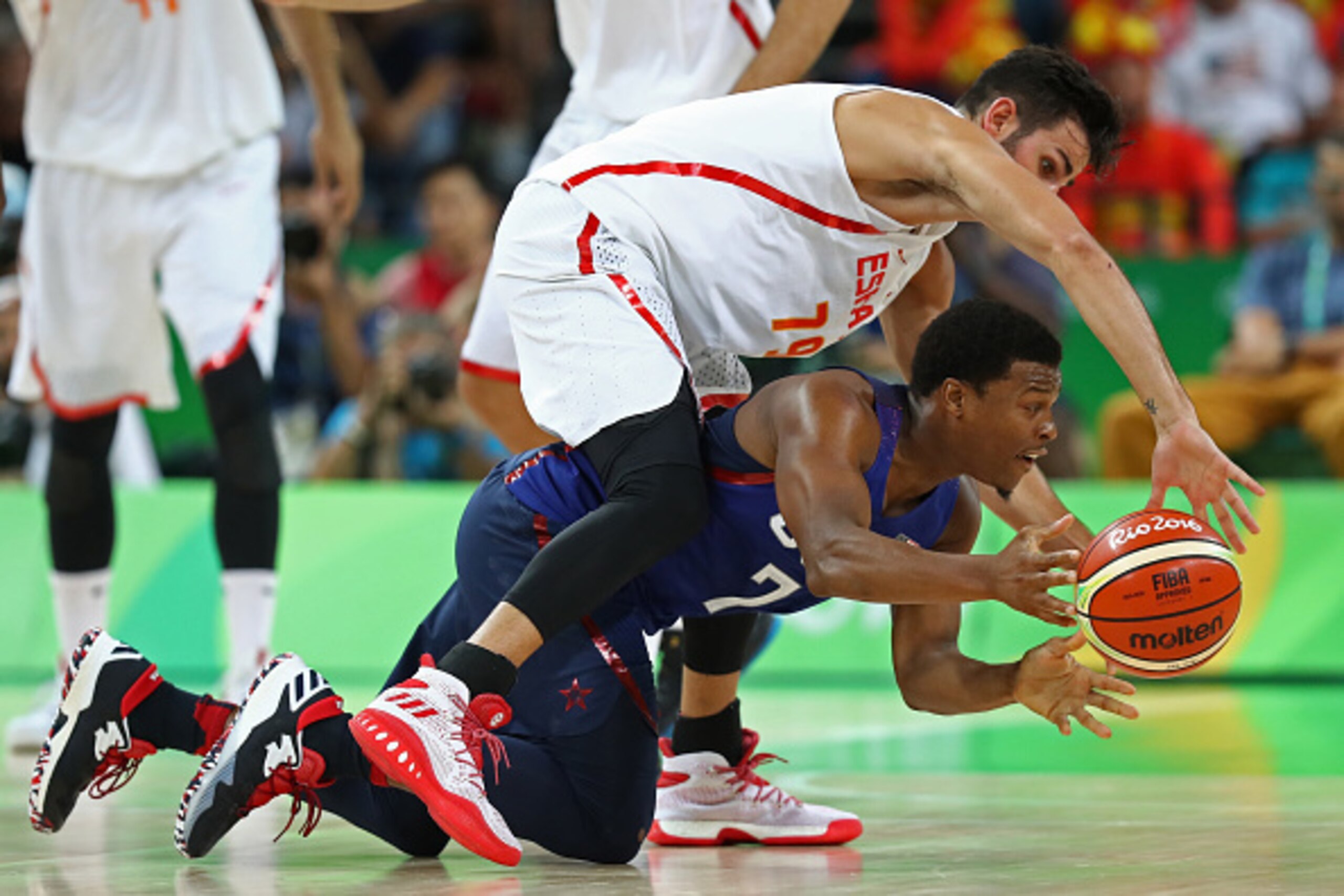
DeAndre Jordan posted a handful of highlight stuffs and dunks, while both Kyle Lowry and Paul George reprised their two-way spark-plug roles, as RealGM's Danny Leroux observed after Lowry's initial stint:
Jordan ended up with nine points, 16 rebounds and four blocks. Lowry finished as a minus-one in 15 minutes, so even that early bright spot dimmed eventually.
Those isolated positives were enough to survive, but they existed, as usual, alongside persistent negatives.
Head coach Mike Krzyzewski continued his refusal to utilize Draymond Green at center, no matter how many open perimeter shots, botched pick-and-roll coverages or uncontested layups DeMarcus Cousins yielded. Pau Gasol scored 23 points, hitting threes over bigs (often Cousins) too slow to close out and ducking in for good position against inattentive interior defenders (Cousins, again).

It's clearly falling on deaf ears at this point, but NBA analyst Nate Duncan continued to beat the drum for more sanity...and more Green, the center in the NBA's most dominant five-man unit last year who played less than two minutes:
If anything, the U.S. was lucky Spain failed to capitalize on a couple of obvious shortcomings. Kyrie Irving was again invisible defensively, but the Spanish offense rarely targeted him and Cousins in pick-and-roll sets. Moreover, Spain's disjointed 2-3 zone allowed Thompson far too many clean looks from the corners.
Opponents' missteps helped, but Team USA suffered from its own consistent one-way play. Either the defense was stifling or the shots were falling, but rarely both. Stagnant offense to start the second quarter prevented the game from being decided much earlier, and though the points eventually came, they came ugly, as Monte Poole of CSNBayArea.com noted:
All along, we've treated this Team USA experience as a process, hoping the rare sensible rotations and signs of defensive engagement portended future dominance. If Coach K sort of pushed the right buttons and the ball hopped around for a quarter or so, it made sense to believe those developments would lead to a new level of performance.
We kept thinking they'd figure it out.
Instead of progress toward that level, toward form that would meet our lofty expectations, we've seen a familiar loop. The U.S. keeps winning but keeps doing it in the same underwhelming way.

Now, though, with just one more victory necessary, all that process stuff doesn't really matter. It's about results now. And for all the flaws we've seen from Team USA in these Olympics, the results have been there.
It probably won't be pretty, and it'll almost certainly fall short of our demands, but the U.S. looks poised to deliver one more time.
Serbia Demolishes Australia, Sets Up Final
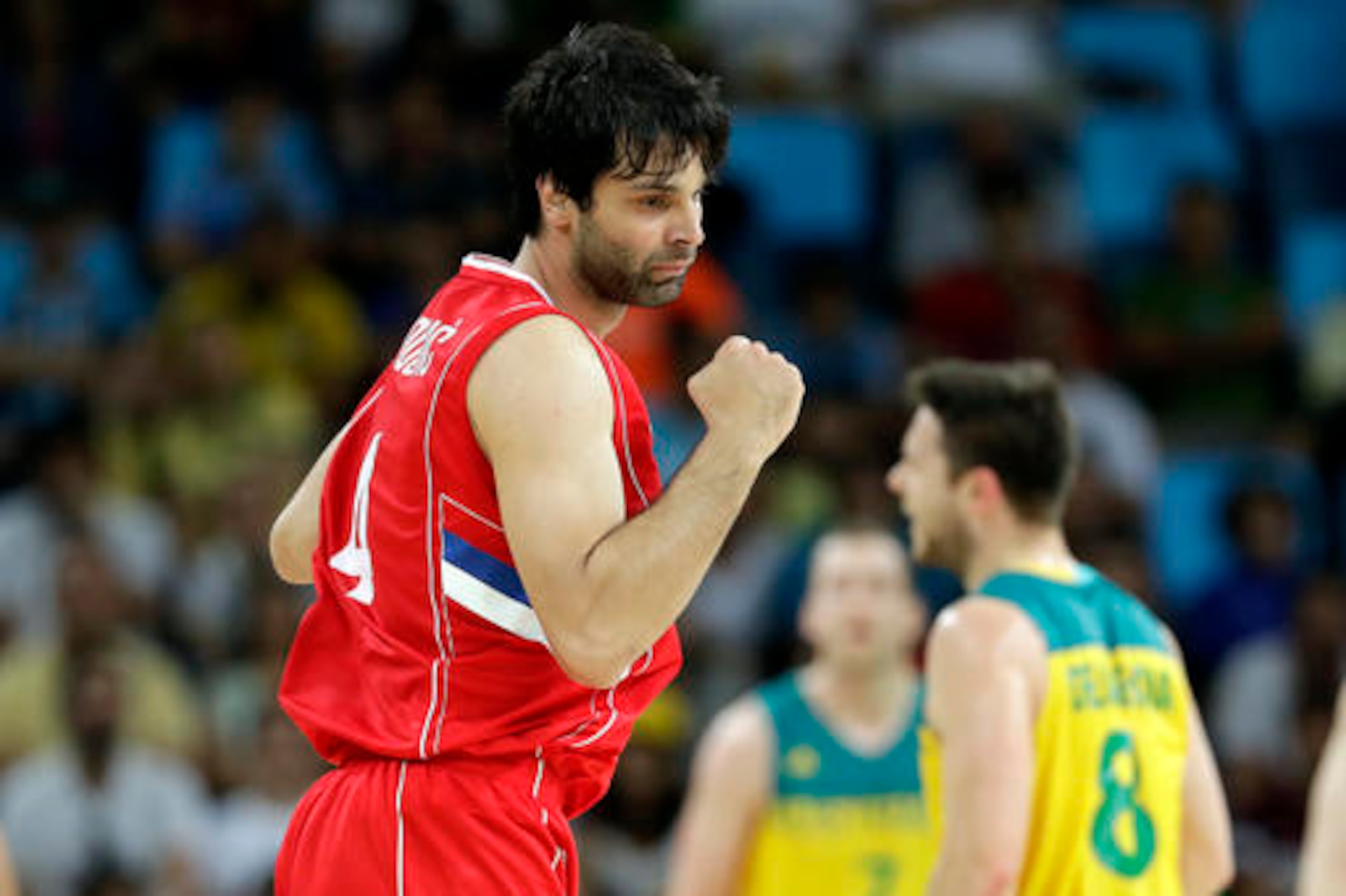
If mucking up the game with physicality and dialed-in defensive intensity is the best way to compete with Team USA (and it is), Serbia's 87-61 asphyxiation of Australia during Friday's other semifinal match points to a competitive final round.
Australia came in with the second best offense in Rio, built on free-wheeling cuts and precision passing that turned most games into layup parades and three-point shootouts. Serbia, unimpressed, choked off the angles, denied the ball and squeezed the Aussies into a five-point first quarter.
It got little better for the Boomers from there, who shot just 33 percent from the field and 13 percent (4-of-31) from deep while registering 16 turnovers against 14 assists.
Milos Teodosic led the offensive charge with 22 points and five assists, while an inefficient Patty Mills topped Australia with merely 13 points on 6-of-16 shooting.
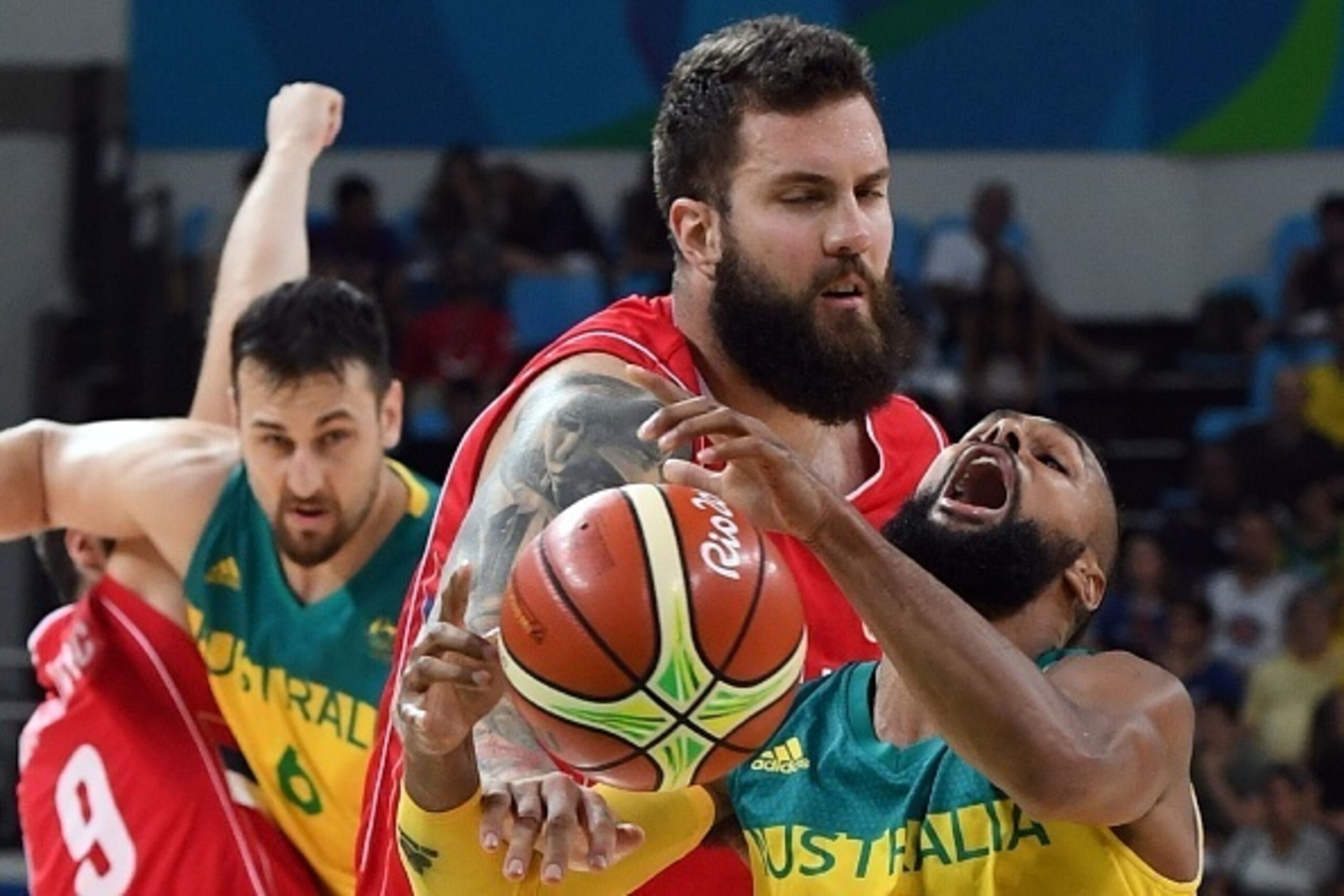
Officiating will play a major role in the gold-medal game, as Serbia will likely be just as physical and aggressive against Team USA's offense. If the whistles stay quiet, American frustration mounts and transition chances disappear, Serbia could make things interesting.
Conversely, tighter enforcement could render the Serbs' tactics useless.
Serbia came within a single possession of knocking off the U.S. in group play, and its massive turnaround against Australia (it lost the first meeting by 15 points) suggests it knows how to make adjustments.
With two contenders left and a gold medal at stake, Team USA should be the heavy favorite. That's been the case all along, though, and it sure hasn't kept most of these games from being close.
Stats courtesy of FIBA.com.
.jpg?w=2560)



.jpg?w=2560 "Latest Peyton-Colts Rumors")