Time Has Come for Theo Walcott to Deliver or Be Sold by Arsenal
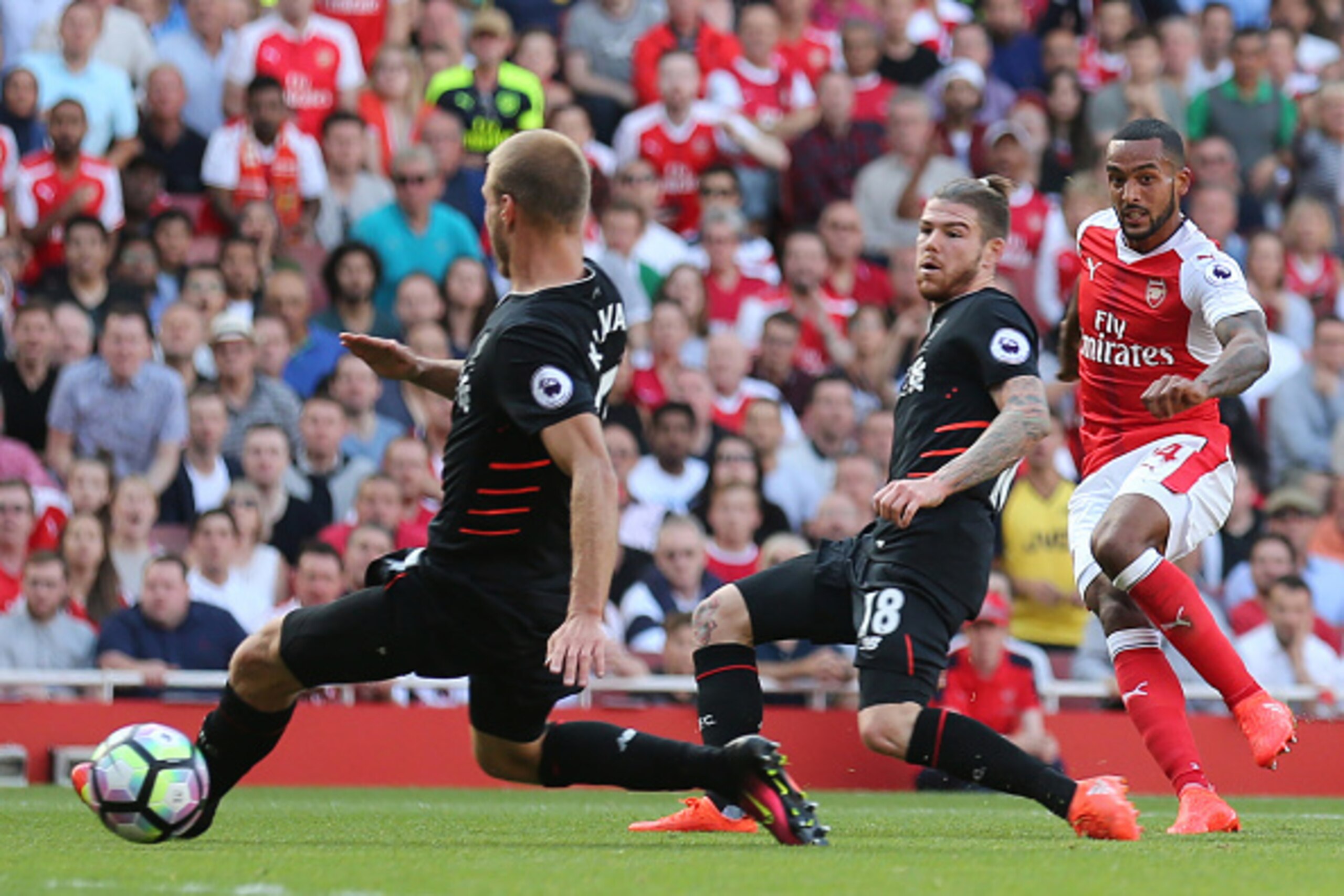
There has been so much fallout from Arsenal's opening-weekend defeat to Liverpool that the performance of Theo Walcott has passed largely without discussion. However, his time on the field was a microcosm of his career to date; there were flashes of promise as well as moments of desperate underachievement.
This is a massive season for Walcott. Can he finally deliver and justify Arsene Wenger's huge faith in his talent?
We saw the good and the bad of Walcott against Liverpool. He missed a penalty, scored a well-taken goal and then faded into obscurity. He must acknowledge the need to be more consistent, both within games and across the course of a campaign.



If you'd told Arsenal fans at the back end of last season that Walcott would start the first game of 2016/17, they would have been surprised.
After barely figuring in the final few months of the campaign, Walcott was linked with a move away from north London—James Olley of the Evening Standard, for example, named him as a transfer target for West Ham. After a decade at the Emirates Stadium, it seemed as if Walcott had grown stale at Arsenal. His omission from England's Euro 2016 squad seemed symptomatic of his decline.
However, 2016/17 has arrived, and Walcott remains an important part of the squad. There are a couple of factors that may have influenced that, the first being Danny Welbeck's long-term knee injury. With Welbeck likely to miss the first half of the season, the Gunners will be without his pace and versatility in attack.
Although Walcott was disappointing in 2015/16, those are at least attributes he can offer.
Things might have been different had Arsenal been successful in their bid for Jamie Vardy. Wenger triggered the Leicester City man's release clause prior to the Euros, but the pacy striker chose to remain with the English champions instead.
Had Vardy arrived, it's possible Walcott might have been deemed surplus to requirements. With the Gunners—frustratingly, as far as the fans are concerned—still awaiting an attacking signing, he remains an important squad member.
Almost as surprising as having Walcott start was his position. After spending most of last season operating through the middle, granted a long-awaited opportunity as a central striker, Walcott found himself back on the right against Jurgen Klopp's men.
Any onlooker could be forgiven for being confused. Walcott has spent much of the last decade bleating about his desire for a chance as a centre-forward. Back in September 2012, he told Jack Pitt-Brooke of The Independent his tactical role played a huge role in his contract negotiations:
"I am not affected by money. It is a case of having trust in me up front. I was signed as a striker and it is about time, I want to play up front. I have learnt my game on the wing. When you look at what I did last year I think I can do even more. Hopefully I will be given the opportunity. I am desperate for it.
"
Last season, that opportunity finally came his way. Walcott started well, shining in performances against the likes of Leicester City and Manchester United. However, the goals soon began to dry up—and with them, so did the effort and the belief.
This summer, he declared he wanted to return to the position where he served his apprenticeship: the right wing.
"I want to make my position on the right—that's where I know where I am now," Walcott said, according to ESPN FC. "I've told the manager that I want to be known for playing on the right again, although I can play up front. I want to know where I want to play."
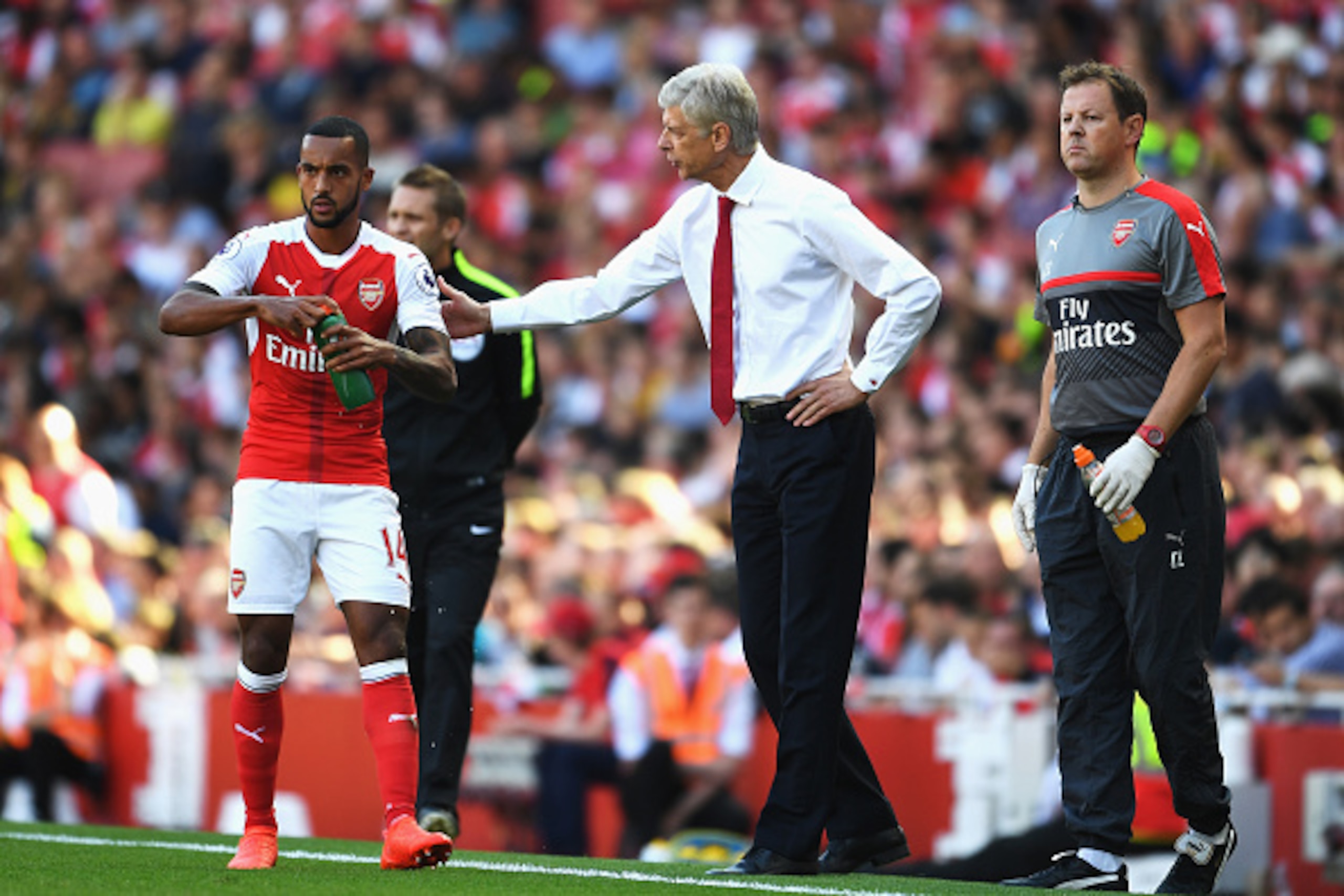
The dramatic change of heart does make Walcott appear somewhat foolish. At Arsenal, there are a whole host of players who do not play in their ideal position.
Aaron Ramsey would like to operate as a No. 10 every week but is forced into deeper and wide roles. Jack Wilshere has to make do with appearances on the flank, while even Alexis Sanchez would probably like more freedom than he is granted on the left. However, you do not hear those players regularly complaining about it. They simply get on with the job and serve the team to the best of their abilities.
Walcott demanded a chance through the middle. When he failed to take it, he performed a risible U-turn.
Interestingly, Wenger did not initially appear to agree with his player’s assessment. He told Sami Mokbel of the Mail on Sunday:
"I believe [Walcott] has all the ingredients to become a great striker.
He has the quality of the runs, he is a very intelligent player and he's a good finisher.
He's not a great defender, so I believe to use his runs in the final third could be very efficient.
Scoring goals and playing there will give confidence and slowly convince him, maybe, he can be absolutely fantastic there.
On the flank, today, you need to do so much defensive work that you lose a lot of his qualities. I don't rule it out, but for me I will use him more up front.
[...]
He is a confidence player. A year ago he was more confident to play through the middle, so I'm convinced the fact he didn't go to the Euros changed his mind. It was a big blow for him.
"
That seemed to be a fairly emphatic response from Wenger—he still views Walcott as a central striker. Yet come the Liverpool game, Walcott was indeed back on the right.
Does the player know his best position? Does the manager? And if not—with Walcott turning 28 later this season—is that acceptable?

It feels as if Walcott is in the last-chance saloon here. He's effectively been granted a reprieve; based on his performances last season, he deserved to be sold. Injuries and transfer-market ineptitude have enabled him to remain at the club, but that stay of execution may only be temporary.
The transfer window is still open, and Arsenal are surely actively pursuing additions to their forward line. What's more, it will hopefully only be a matter of months until Welbeck is back in contention. If he performs as he did when fit last season, he will figure prominently in Wenger's plans.
Walcott has had 10 years to cement his place at Arsenal, but now his Gunners career could hinge on a matter of months. Speed has already been his greatest asset. With time of the essence, he had better set about making himself integral to Wenger's plans as quickly as possible.
James McNicholas is Bleacher Report's lead Arsenal correspondent and will be following the club from a London base throughout 2016/17. Follow him on Twitter here.

.jpg?w=2560 "Seahawks Chiefs Football")



.jpg?w=2560 "Latest Peyton-Colts Rumors")