
Summer Olympics 2016: Winners and Losers in Rio on Day 9
Usain Bolt's defense of his 100-meter crown was one of the most anticipated moments of the Olympics.
Bolt justified the hype on Sunday night with another awe-inspiring performance to win gold.
But in a bit of a surprise, Bolt was nearly upstaged on Sunday by South African Wayde van Niekerk, who broke Michael Johnson's world record in the 400 meters and even shocked the fastest man in the world. Bolt was seen on camera watching Van Niekerk's race on a screen backstage, and he was obviously blown away by what just happened.
We all were.
A group we expected to be dominant at these Olympics but has underwhelmed is the United States basketball team. The U.S. continued its run of so-so play with a three-point win over France on Sunday. The Americans are still undefeated in Rio, but their defense has left a lot to be desired.
The same could be said for NBC's decision-making when it comes to airing gymnastics. Watching Simone Biles soar through the air for gold and already knowing the result takes some of the pleasure out of witnessing the accomplishment.
NBC can defend its ways. But the answer would probably be tape-delayed.
I'm here all week, folks. Now let's get to the winners and losers from Sunday in Rio.
Winner: U.S. Golfer Matt Kuchar
1 of 9
If any of the top Americans think twice about golfing in the next Olympics in Tokyo, they should be forced to watch video of Matt Kuchar after winning the bronze medal in Rio.
"I was amazed by the nerves," Kuchar told Golf Channel. "I've never been so excited to finish top three in my life. It's just never happened. I can't explain to you the pride that I feel now just busting out of my chest. It's a thing I've not felt many times before."
Kuchar's excitement was genuine, and it was the absence of top American golfers that made it possible for him to play in the Olympics. He made the most of his stay by playing some amazing golf in the final round to win a medal. His final-day 63 was tied for the best round all week—Marcus Fraser also shot a 63 on Thursday—and at 13 under par, he almost caught leaders Henrik Stenson and Justin Rose.
Kuchar nearly made it a 62 with a birdie shot on 18 that was one revolution short of dropping in.
"The one on 18 I told myself do not leave a putt short today, and I was 17 for 17 on not leaving a putt short and the one on 18 was just so close," he said.
That putt eventually led to a bronze medal, as Stenson finished just one stroke ahead of him. Great Britain's Rose won gold. But Kuchar's final round and his run of birdie, birdie, eagle on holes No. 8, No. 9 and No. 10 won the day.
Loser: Safety in Rio
2 of 9
The golfers and athletes who decided to skip out on the Rio Games now have a story to point to that justifies their decision. U.S. swimmer Ryan Locte and three teammates were robbed at gunpoint early Sunday by thieves posing as police officers.
Lochte gave details to NBC's Billy Bush:
"We got pulled over in our taxi, and these guys came out with a badge, a police badge, no lights, no nothing, just a police badge and they pulled us over. They pulled out their guns. They told the other swimmers to get down on the ground. They got down on the ground. I refused, I was like, "We didn't do anything wrong, so I'm not getting down on the ground.
"And then the guy pulled out his gun, he cocked it, put it to my forehead and he said, "Get down," and I put my hands up, I was like, 'Whatever.' He took our money, he took my wallet...he left my cell phone, he left my credential.
"
Adding fuel to the public relations fire was Brazil's sports minister, Leonardo Picciani, who told Stephen Wilson of the Associated Press (h/t U.S. News & World Report) that the swimmers were "outside their places of competition and outside the appropriate time.'' He added no athletes experienced trouble at the venues or the athletes village.
Yes, shame on the swimmers for going to a party after they had finished competing.
Stories about the safety concerns in Rio dominated the news coming into the Games. Thankfully, Lochte and his teammates are fine. But one of the goals of the International Olympic Committee should be picking a location where safety is not a concern. This isn't enough to paint Rio as a disaster, but it's still a bad look.
Winner: Klay Thompson
3 of 9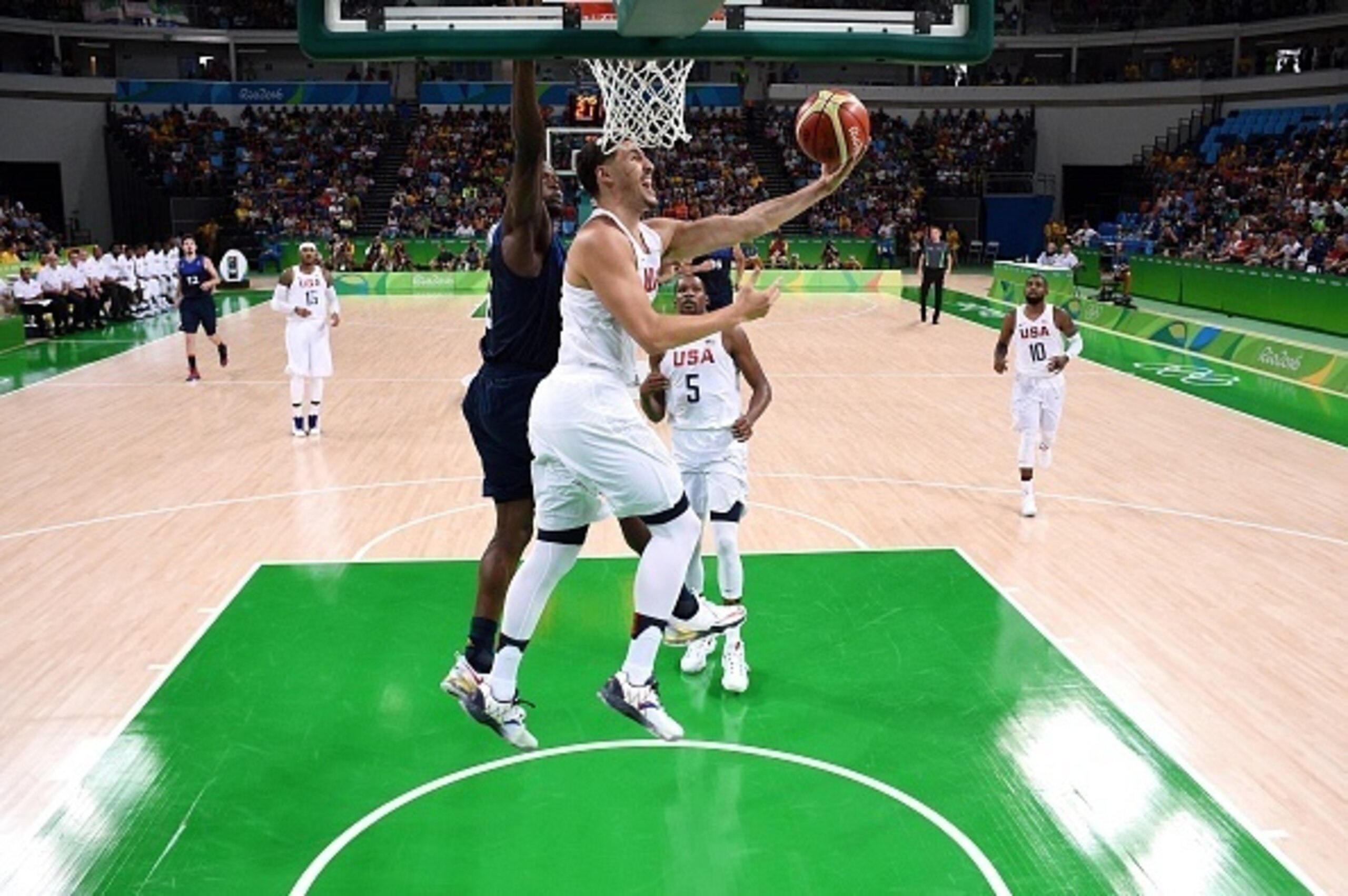
Poor ball movement has stalled the U.S. offense in Rio, but fire flying from Klay Thompson's fingertips should help cure that ill.
Thompson broke out of a major slump on Sunday to score 30 points and nail seven of 13 threes in a 100-97 win over France to finish pool play. Prior to Sunday's game, Thompson had made just three of 16 threes and scored 11 points over the first four games of the Olympics.
Mike Krzyzewski put him back in the starting lineup against France, and he finally looked like a Splash Brother again.
It can take time to get used to the international ball, which has a slicker texture than the NBA ball. That may not be entirely to blame for Thompson's shooting, but it likely played a role. The last thing a shooter wants is to not feel comfortable, and it's obvious something has been off for one of the world's purest shooters.
The U.S. offense definitely could use his shooting and team-first approach to the game. The Americans were too reliant on isolation ball through the first four games in Rio, and too many possessions featured everyone standing. Thompson is one the team's best movers off the ball, and his shooting touch should encourage better ball movement in an effort to get him looks.
The offense certainly was closer to humming on Sunday when Thompson was in the game, and his shooting will be one of the biggest keys to success for the U.S. attack going forward.


Loser: Team USA Defense
4 of 9
The United States was expected to be a defensive juggernaut in Rio. Jerry Colangelo had put together a roster of long athletes who would be able to employ the type of switching the best NBA defenses feature. Think Golden State's "Death Lineup" on steroids.
But the U.S. defense has been underwhelming, and Sunday was one of its worst performances, giving up 97 points to a Tony Parker-less France.
The main issue is a lack of focus and intensity. Great defenses play as a unit and with max effort.
It's not surprising that there's a lack of cohesion for an All-Star roster that hasn't played together long, but the lack of awareness off the ball and lapses in effort are discouraging. One example that is frustrating to watch is how susceptible the U.S. is to simple back cuts that lead to easy buckets.
"[The key is] not to take breaks on the defensive end," U.S. guard Klay Thompson said on the NBC telecast after the 100-97 win over France. "We're playing a lot of great pick-and-roll teams, and we're just missing coverages and not trusting each other enough, but we'll get there.
"We'll improve. I guarantee it."
The thought coming into the Olympics the U.S. was invincible. Even if the offense stalled, the defense would be too tough to beat. That's no longer the case.
The Americans should still win gold. But their invincibility has faded after close calls to Australia, Serbia and France, and it's no longer unfathomable that an upset could occur.
Winner: Simone Biles
5 of 9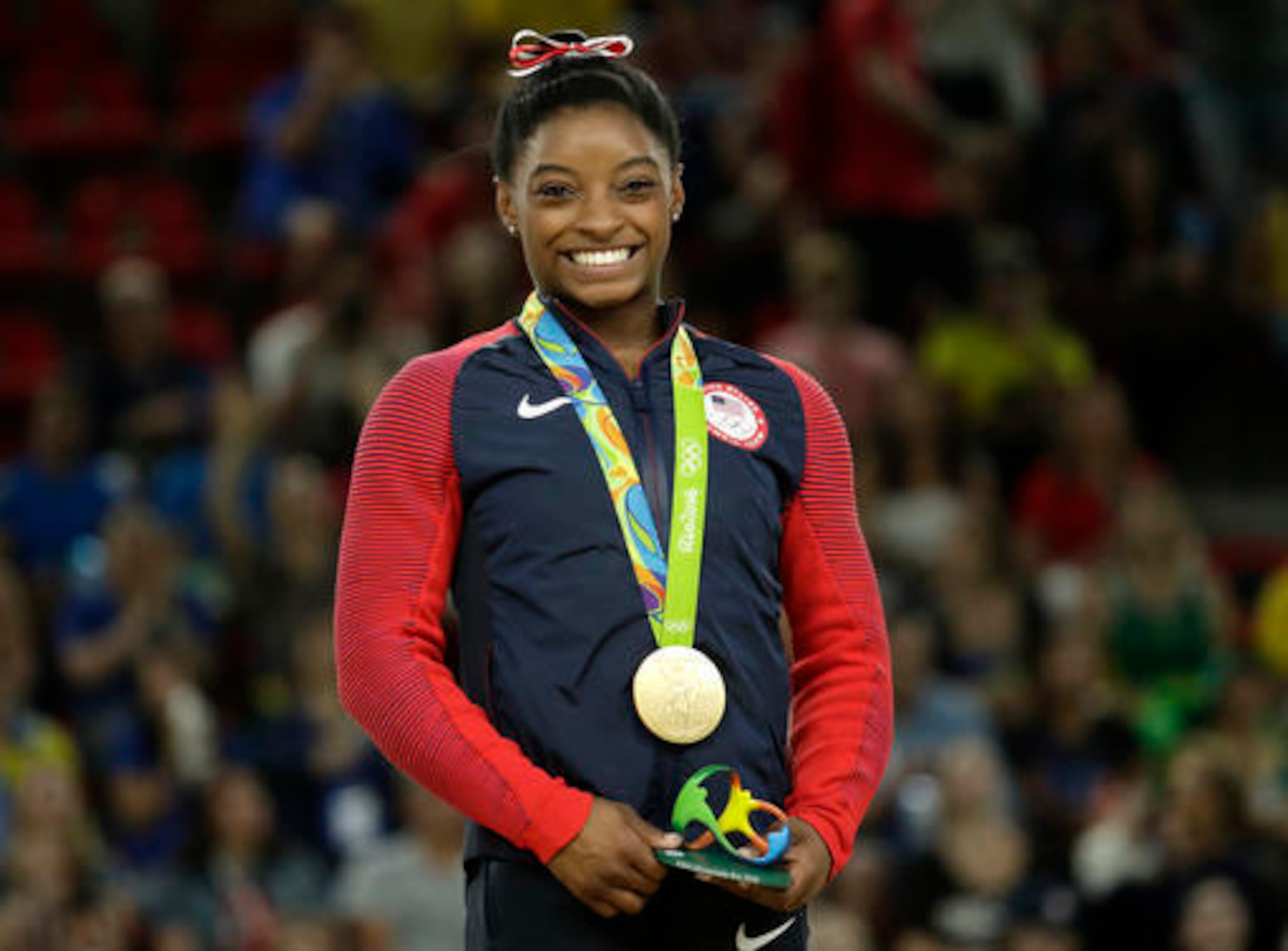
The greatest gymnast in the world continued to dominate at these Olympics.
Simone Biles claimed gold in the vault on Sunday, giving her three gold medals so far in Rio.
It was a typical performance by Biles. She performed two challenging vaults—the Amanar and Chen—and as she always does, she made the difficult moves look easy.
Biles scored 15.900 on her first vault, the Amanar, and then scored even better on the more challenging Chen with a 16.033. Her average of 15.966 was more than enough to win by a wide margin over Russia's Maria Paseka, who put up a 15.253 average.
Biles has two more events left with the balance beam on Monday and floor exercise on Tuesday. She's the favorite in both, and it's hard to imagine her leaving Rio with anything but gold around her neck.
Loser: NBC's Programming Decision to Tape-Delay Gymnastics
6 of 9
NBC made the curious decision to continue tape-delaying gymnastics at the Olympics on Sunday.
It's weird enough that the network chooses to tape-delay events for prime time during the week, but to do so on a Sunday is another level of dumb.
Sure, you could have streamed Simone Biles winning another gold early Sunday afternoon—and a sincere bravo for offering streaming—but I'm sure anyone going to the effort to stream would much rather have the option of watching live on their televisions.
The rationale of tape-delaying the sports that are in high demand for prime time during the week is at least explainable. People work.
Only the Internet makes it almost impossible to not learn the result. And if folks are going to go through enough effort to go dark and stay offline and away from news, they're probably willing to set their DVR during the day so they can watch as soon as they get home. That offers some convenience as well.
So it's ultimately silly to tape delay at any point, but at least there's some sort of logic (faulty as it may be) to tape delaying during the week. But what's the rationale on a Sunday afternoon?
Quit trying to maximize ratings with this dated practice, NBC. You're only frustrating your viewers, and that's never good for business.
Winner: Usain Bolt
7 of 9
Usain Bolt is a tease.
The fastest man on earth gave just a glimmer of hope to Justin Gatlin on Sunday night when the American was able to race out to the lead in the 100 meters. But Bolt showed the world he has another gear no one else possesses, pulling ahead of Gatlin and winning the 100 meters at the Olympics for the third time.
Bolt's 9.81 seconds wasn't the fastest time this year. Gatlin, who won silver on Sunday, ran a 9.80 at the U.S. trials last month. But Bolt is only as fast as he needs to be. Had Gatlin repeated his 9.80, it's a good bet Bolt would have been in the 9.7 range.
By winning gold, Bolt kept his streak alive of never entering a race at the Olympics and finishing anything but first. He'll try to go a perfect 9-of-9 this week by winning the 200 meters and 4x100-meter relay, as he did in Beijing and London. If he's able to do so, he'll join the elite company of Carl Lewis, Mark Spitz, Paavo Nurmi and Larisa Latynina with nine golds—only trailing Michael Phelps.
As great as those athletes were, none won every event they ever entered like Bolt has a chance to do.
Loser: Trayvon Bromell
8 of 9
Trayvon Bromell has the best 100-meter time in the world this year recorded by anyone other than Usain Bolt and Justin Gatlin. That fact put him in medal contention in Rio. Both USA Today and Sports Illustrated predicted Bromell would win bronze.
So the American has to be disappointed in his eighth-place finish on Sunday.
Bromell had run a 9.84 at the U.S. trials, but he wasn't able to break 10 seconds in Rio. He was one of only two runners in the final not under 10 seconds with a 10.06. His best time (10.01) came in the semis.
Had Bromell repeated his performance from the trials, he would have won silver.
Winner: Wayde Van Niekerk
9 of 9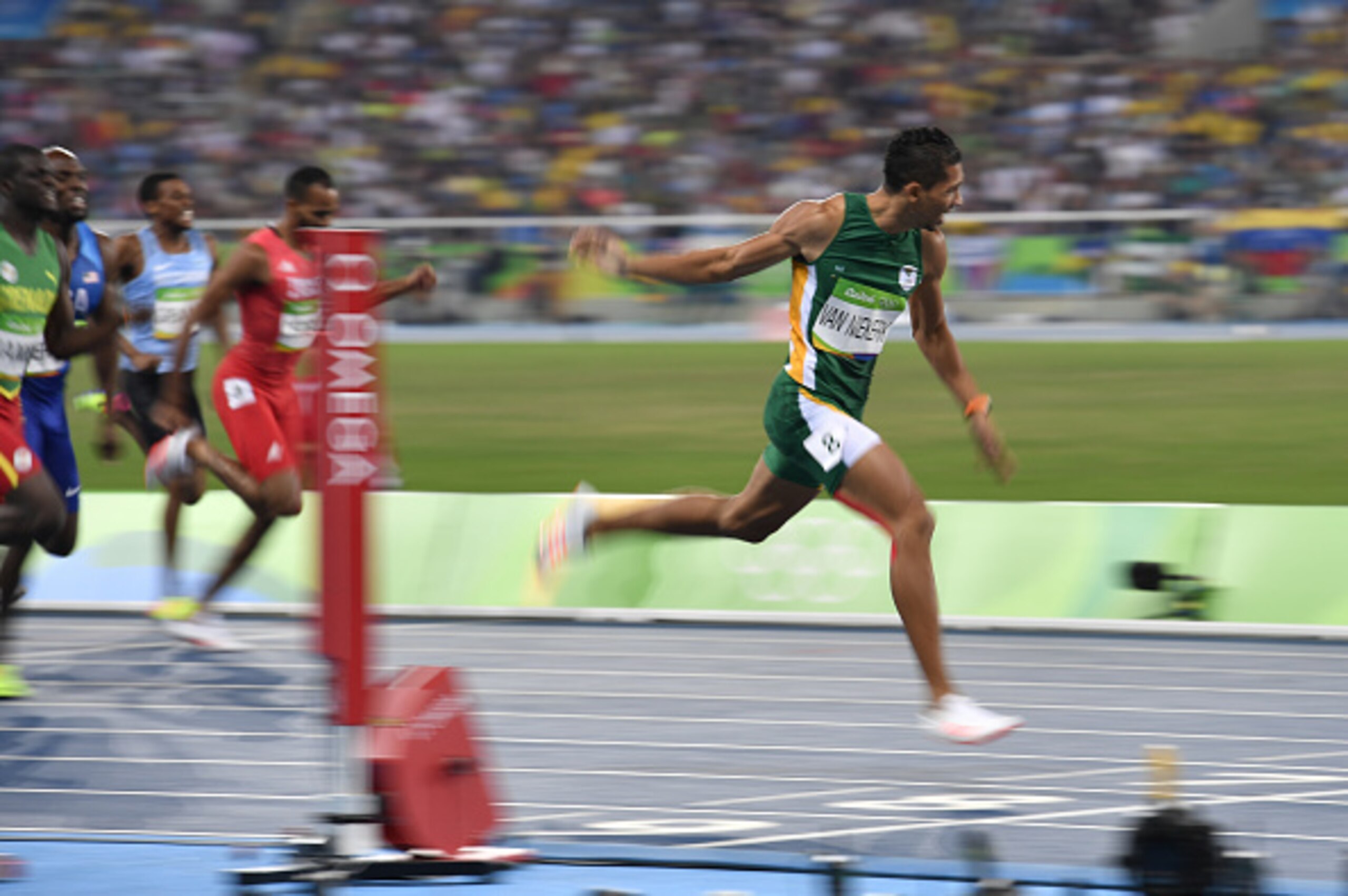
Wayde van Niekerk set a world record, and he won from a lane where no one has ever conquered the 400 meters.
Van Niekerk's 43.03 broke Michael Johnson's 43.18 world record that was 17 years old, and he did it essentially running blind from the eighth lane.
To say this wasn't expected would be a bit of an overstatement—Van Niekerk did win last year's World Championship in 43.48—but he hadn't shown that kind of speed in Rio.
The South African had the eighth-best time in the heats and finished second in his semifinal, running a 44.45. He had yet to break 44 seconds in 2016 until Sunday.
Adding to the awesomeness of his accomplishment and story, Van Niekerk is coached by a great-grandmother, Ans Botha, who is 74. She was the white-haired grandma the cameras cut to after the win. That'll be one of the top made-for-TV moments of these Olympics.
.jpg?w=2560 "LA Premiere of \"Chad Powers\"")



.jpg?w=2560 "Landing Spots for Trade Candidates 📍")
.jpg?w=2560 "Ugly Jets Scoring Stat 😳")